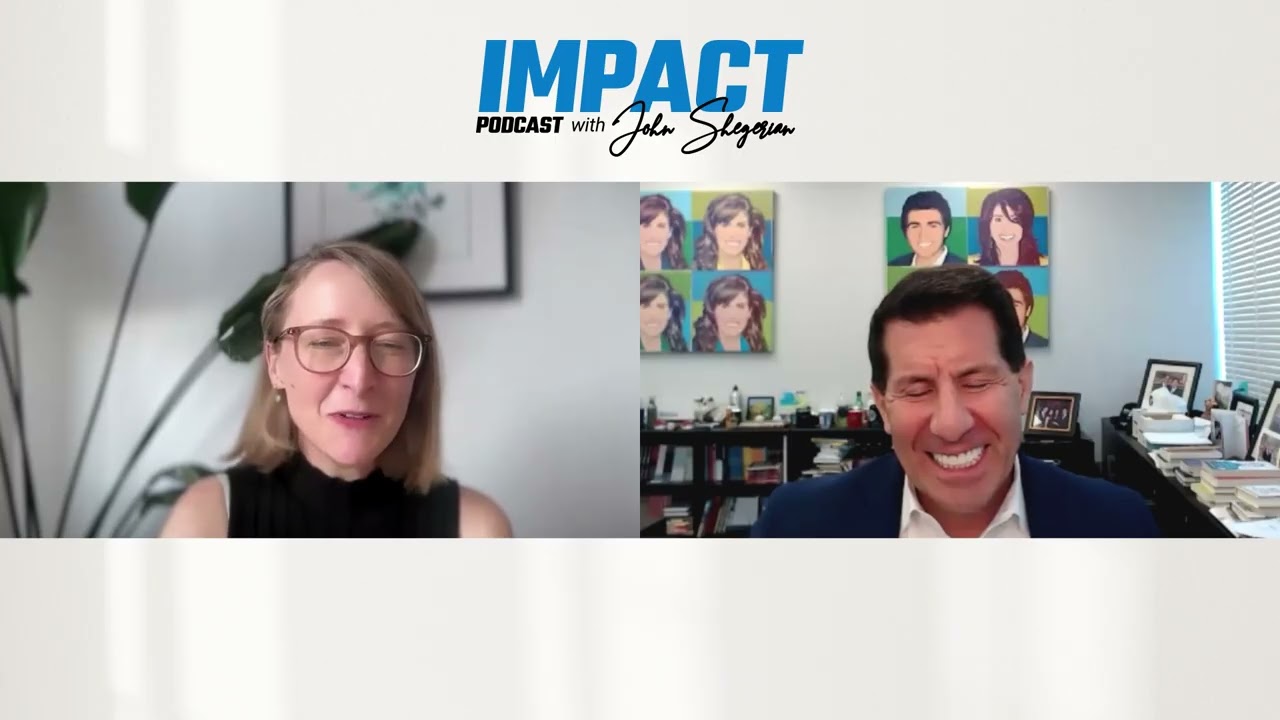
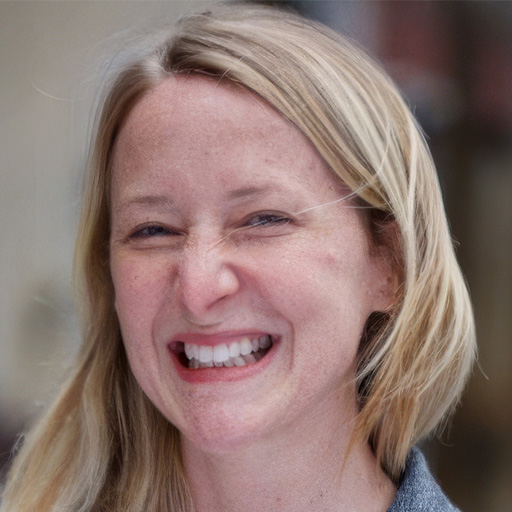
Tilly Josephson has spent the last 15 years forging impact at the intersection of business, technology, and social good. Her career has taken her across continents and sectors—from leading corporate social impact programs at tech giants like Zoom, Salesforce, and Microsoft, to advising nonprofits and global coalitions on how to harness technology for systems change. Tilly currently leads Zoom Cares, the social impact arm of Zoom— a global company with the mission to provide an AI-first open work platform for human connection with over 8,000 employees. At Zoom, she oversees philanthropic investments, cross-sector partnerships, and employee engagement efforts. Zoom Cares has contributed $66M to communities since 2020 and is focused on supporting and connecting communities to create positive impact for people and planet. She is also leading Zoom’s latest philanthropic initiative: AI for Good, which supports educators, workers, and nonprofits in responsibly and creatively harnessing artificial intelligence create positive societal impact.
John: Do you have a suggestion for a rockstar Impact Podcast guest? Go to ImpactPodcast.com and just click, be a guest, to recommend someone today. This edition of The Impact Podcast is brought to you by ERI. ERI has a mission to protect people, the planet, and your privacy, and is the largest fully integrated IT and electronics asset disposition provider and cybersecurity-focused hardware destruction company in the United States and maybe even the world. For more information on how ERI can help your business properly dispose of outdated electronic hardware devices, please visit ERIdirect.com. This episode of the Impact Podcast is brought to you by Closed Loop Partners. Closed Loop Partners is a leading circular economy investor in the United States with an extensive network of Fortune 500 corporate investors, family offices, institutional investors, industry experts, and impact partners. Closed Loop’s platform spans the arc of capital from venture capital to private equity, bridging gaps and fostering synergies to scale the circular economy. To find Closed Loop partners, please go to www.closedlooppartners.com.
John: Welcome to another edition of the Impact Podcast. I’m John Shegerian. I’m so honored to have with us today, Tilly Josephson, she’s the Zoom Cares Team Lead at Zoom. Welcome, Tilly, to the Impact Podcast.
Tilly: Oh my goodness. Thank you, John. I’m thrilled to be here. Thank you for having me today.
John: We’re thrilled to have you at Zoom’s first time on the Impact Podcast. And I’m just going to tell and share this with our listeners and viewers around the world. Zoom is the technology that powers the Impact Podcast. We tape all, we record all of our shows over Zoom. And Zoom has just been a flawless brand that we depend on. And we’re so grateful to all of you and your colleagues at Zoom that do such a wonderful job with your product and services.
Tilly: So flattered and proud to hear that. Thank you, John, for saying so.
John: Tilly, before we get talking about everything you’re doing in terms of Zoom Cares and being the team lead there with your colleagues, I want you to share the Tilly Josephson story; where did you grow up and how did you get on this wonderful and fascinating journey that you not only get to make a wonderful living at, but you get to make a tremendous impact at.
Tilly: Absolutely, and yes, I feel so lucky and fortunate to do what I get to do every day. But you can probably hear in my accent, I’m originally Australian, so I grew up on the beaches of Sydney. And I guess if I go back and think about how I got into this work, it’s not really a huge surprise. My father worked in technology and my mother worked in nonprofits always when I was growing up. So she was really focused on the environmental movement and worked in indigenous health. And so they were kind of like a yin to their yang. And that combination of technology and social impact kind of feels naturally like it’s in my DNA. I followed in their footsteps somewhat. But I went to the University of Sydney where I got deeply involved in a student-run nonprofit called ISEC. It’s actually the world’s largest youth-led organization and was founded after World War II to promote peace, to ensure that what happened would never happen again by promoting cross-cultural understanding through global immersion, so placing young leaders abroad to work and learn for a period. And that really sparked my career. Through ISEC, I was placed into an internship with Microsoft working in the community affairs and corporate citizenship team in the Middle Eastern Africa based out of Istanbul. So, it was certainly a career that I was really excited to have and didn’t necessarily plan, but I’ve been able to build on from some of those early experiences that I’ve had.
John: That’s so interesting. From Sydney, you then moved to Istanbul?
Tilly: That’s right. Yes. This was shortly after the global financial crisis. So as you’d remember, unemployment was soaring, economies were contracting, and our corporate citizenship teams focus was on supporting nonprofits, building employability skills and entrepreneurship. So, that experience really opened my eyes to how macro trends shape local realities and the experiences of people in communities and the important role that business can play, both positive and sometimes negative. So a huge formative experience there for me.
John: And again, your parents’ DNA was shining through there at Microsoft as one of the greatest technology software companies on the planet. And again, making a nonprofit, making impacts with nonprofits. So again, as you said, your DNA really has been true to true to form.
Tilly: Absolutely. Yes. And then from there, I returned back to Australia, much to my family’s pleasure, and joined a then small company that I’d never heard of called Salesforce.com. I was invited to lead their philanthropy programs across the Asia Pacific, and what a great company to get on board with an organization that was really leading the way in the field at that time. And in that period working across Asia, I fell in love with India and I ended up working there for a few years with a really inspiring social enterprise, doing technology consulting with non-profits. And then I fell in love for the second time and this time with a person, and that brought me to the United States, where I’ve now been for eight years. So, yeah, it’s been a really exciting journey. But the way I found Zoom is the COVID-one9 pandemic hit. And at the time, I was finishing up a job and watching as Zoom became critical and essential in that tragic moment. So helping people stay connected to their families to school and education, but then also to work and employment to help them stay afloat. So I was just incredibly inspired by Zoom’s technology and the philanthropic response that I saw in that company at that time and knew that I really wanted to be part of it.
John: You know, Tilly, I don’t think there’s any- at my age, I get to think about things retrospectively at a lot of ways. We know retrospective thinking is probably a lot clearer than prospective thinking. When I hear about your career, I don’t think there’s a lot of accidents. You have some sort of innate wisdom that when you laid out your career path, you want to talk about three of the most iconic and wonderful brands on the planet. I mean, Microsoft, Salesforce, and Zoom, pretty much a trilogy of greatness right there. And so you’ve had some career. But also I find fascinating and that’s why I always ask origin stories, but I’m finding this more and more with the wonderful type of leaders that I meet now that are making the real impacts on this planet, that are not virtuous singling, that are actually doing the real work, is that you also have a fascinating background. When I met you on camera before we went on air here, you have a natural chemistry that’s unbelievably social fluency that’s unbelievably attractive. And I think that comes from what you’ve honed over the years, the ability to go from Sydney to Istanbul, back to Sydney, then to United States, and always be comfortable of who you are and feel comfortable in your surroundings and succeed and thrive in your surroundings. That’s a skillset and an art that’s sort of become a little less obvious than it used to be. Now, think about it this way. I’m 63 now. When I was 23, everything was done in person, and social skills were absolutely ubiquitous because it was on in-person rule. There was no technology to lean on. But as technology took off, and I’m going to use ’98 as sort of a starting point, the year Google was founded and that’s a mere 27 years ago, we’ve become more and more isolated as we’ve all leaned on more technology and as you brought up COVID a little earlier, that isolation sort of got accelerated for better or worse, especially during COVID. There was some positive in that. But in terms of general long-term trends, there’s a negative. So when young people come to me and say, “Well, what about AI? Are they going to take my job?” I’m like, “Listen, the next generation are all going to be digital natives now and understand how to access technology and all the wonderful digital tools that exist.” But having the skill set that you have is what I’m impressing upon young people, what’s going to carry the day and set them apart. The ability to have cultural and social fluency and feel comfortable and thrive wherever you’re at and be able to connect with people, I think is a skillset that again helps great leaders like you continue to thrive and succeed and where others get a little bit more challenged now when they really haven’t honed their skill set like you have.
Tilly: Well, thank you. And I certainly agree. I think adaptability, resilience, leadership, these soft skills are critical, as well as fluency with these important tools that are coming through with AI, knowing how to use them, but having good judgment, knowing how to build relationships, knowing how to care, having empathy for others, those things will just be even more important than they have been in the past.
John: And it’s going to continue to grow. I think that trend is going to continue to grow. For our listeners and viewers who aren’t familiar with Zoom, first of all, you can find Zoom, and we’re going to give specific links in the show notes. So you don’t have to write anything down here, but to find Zoom, you go to www.zoom.com. Their annual revenue is over four and a half billion dollars, over 7,000 employees serving over 200 countries around the world. I just want all our listeners and viewers to understand the size and scope and scale of Zoom. Talk about a little bit when you joined, how many years ago you joined, what was Zoom then doing in terms of the Zoom Cares situation? Or did you come in and were you giving a mandate to create it from scratch?
Tilly: No, I mean, I joined about three and a half years ago, so in March of 2023. I was really impressed with the philanthropic work they were doing. So basically Zoom Cares was initiated in 2020. So our leadership had the foresight to set aside company equity after the company went public to fuel our philanthropic endeavors into perpetuity. So our leaders knew that as our business grew and our footprint grew, particularly coming from some fairly tragic circumstances with being in the face of the pandemic, they wanted to make a really positive impact on communities around the world. And so that’s where Zoom Cares comes from and why it plays such a central role in our business. But so no, I didn’t start the team. I joined the team and today, I lead the team. So Zoom Cares is our social impact arm. And our mission is to harness Zoom’s people, products and resources to support and connect communities and to drive positive impact for people on the planet. So we have three programmatic pillars, philanthropy. So that’s funding community organizations using our resources. We have a nonprofit product access program. So that’s helping nonprofits use Zoom’s platform to collaborate and scale their work and missions, and then people. So that’s empowering our 7,000 plus Zoomies to volunteer, to give, and to advocate for the causes that matter to them.
John: That’s wonderful. When I was prepping for this podcast, I read that Zoom was awarded the TrustRadius 2025 Tech Cares Award for generous donations. Can you explain what that means in reality?
Tilly: Oh, thank you. Yes, we were very honored to be recognized and I think it really reflects the generosity of our Zoom employees, but also, it’s actually just five years since Zoom Cares has started. And so it’s been a really helpful inflection point for us to think about what we want to accomplish over the next five, but we’re very proud to have contributed over $66 million to organizations around the world. And I think close to $40 million of that is in cash grants. So, really proud and grateful to our founders for setting us on this path. And yes, of course, grateful for the recognition, but more pleased that we can be making this impact in supporting our communities.
John: That’s so wonderful. What’s the methodology with 7,000 employees around the world? How do you motivate them and get them to become bought into your the mission of Zoom Cares?
Tilly: I mean, an interesting question, but over the course of my career, I don’t think it’s a hard sell, John. I think the reason why social impact is still so present and visible in corporate America and globally is because employees really value it and their companies know it. They know that it helps to recruit and retain talent. They know that it makes people happier at work, and there’s great evidence for this. We see it all over the place. So I don’t think it’s a challenging thing to sell to our employees. But I do think from an operational perspective, there’s some things that businesses can do to set it up really well for success. And I think that is sort of like building internal networks and champions sort of regionally in our offices that become great ambassadors to champion the work and the culture. I also think that the culture comes from the top. So, businesses where this work is really growing, it’s a reflection of the values of the leadership team and their commitment. It really trickles down from there. And I’m sure I’m not the first person to have said that to you.
John: Oh, but it’s important, that bears noting that the culture is set by the leaders and then the culture will set the tone for all the employees then. And so that’s really wonderful. And then you create and produce a report at the end of the year on all the great wins and all the successes that your team has created around the world?
Tilly: Yes, of course. So we partner with ESG. We kind of sit in separate teams from ESG, but we’re allies and great friends and partners on so many different things. And so, yes, we partner around our annual impact report. And we’ll give links in the show notes to that impact report so people can enjoy reading that too. And this is an old reference, it was a great movie once—Meryl Streep was a star called Sophie’s Choice where she had to choose between her children. So you’ve been there three and a half years now. Do you have, I know as I’m asking you Sophie’s Choice though, do you have a favorite one or two or three wins and accomplishments with Zoom Cares that you’re really excited and it continues to be a shining light in the work and the mission that you’re on?
Tilly: Oh my goodness, that is such a hard question, John. And you’re right. I’m like, thinking through all the amazing things that not only me, but like my team members and colleagues and partners do every day. So it is really hard. But a couple of things that just immediately come to mind, this year, we launched Zoom for nonprofits. So that was a huge moment of celebration for us. Zoom has over 180, 000 nonprofit customers. This year, we enabled a discount for our online customers that have budgets under $10 million to access Zoom at 50% off. And it has been just amazing. We are so proud to support so many change makers with discounted access to Zoom and learning about all the different ways that they’re using it to drive positive change. That was like a huge moment for us. That would be number one.
John: Yeah, that’s wonderful. So really, Zoom, you went out of your way to democratize technology so nonprofits could leverage it to further their missions. 180,000, that’s amazing.
Tilly: It is and growing.
John: Wow, that’s tremendous. And the ripple effect of that kind of vision and of execution is just massive when you have 180,000, virtually ambassadors who then get to multiply, becomes like a multiplier in terms of what you’ve done with technology then. That’s tremendous, tremendous.
Tilly: Absolutely.
John: That’s awesome. AI, let’s talk a little bit about AI. We were off the air, I was thanking you for the brilliant AI that gets to be part of now when I record a podcast, it immediately within minutes, or maybe two minutes sends me a full transcript all done by AI now, which I get to review and helps us in post when we produce these shows. Talk a little bit about how Zoom is thinking about AI from a business standpoint and how that interrelates with the great and important work you’re doing in social impact.
Tilly: Yeah,, absolutely. At Zoom, we see AI as a way to enhance human connection and productivity. So our mission is to build an AI first work platform that helps people to connect, to collaborate, and to reach their goals faster. And back in, I think, 2023, we launched something called Zoom AI Companion. So it’s an AI assistant that’s integrated all across Zoom. So maybe just an example, I can type into AI Companion, prepare me for my day, and it scans my calendar, summarizes who I’m meeting, the agenda, key decision points. Or after a meeting, it can generate next steps and action items and follow-up emails, freeing me or any user from administrative tasks so that they can focus on doing what people actually do best. So building relationships, making decisions and collaborating. So AI is really central to everything that we are doing at Zoom. And how does that influence the work that I do? Well, this year at Zoomtopia, it’s our annual technology conference. It just happened actually in September. We were really excited because our Chief Marketing Officer, her name is Kimberly Storin, announced a $10 million three-year philanthropic commitment to support ethical and inclusive use of AI for social impact. And it’s what we’re calling our AI for Good initiative. So that’s kind of something that I think is really exciting to share. That effort, AI for Good, has sort of three funding lanes, if you like. So the first is education. So you mentioned this earlier, everyone is using AI now. Did you know that 92% of students now use AI in their studies? And that’s an increase from 66% last year. So it’s everywhere in classrooms today, but what does that mean for teachers? How do they navigate the rapidly changing landscape? Zoom and Zoom Cares, we’re supporting educators and students to use AI responsibly, helping young people to engage with these technologies thoughtfully and also building the skills that we know they will need for the future workforce. So that’s the first stream, education. The second stream in this $10 million commitment is around workforce development. So, we know we’re in the middle of a profound digital transformation, and our goal is to really ensure that workers and job seekers and especially vulnerable communities aren’t left behind. So we’re going to support them in gaining the skills and confidence to thrive in an AI-powered economy. So that’s number two. And then number three is nonprofit AI readiness and innovation. So, we know technology shifts can widen the digital divide, we’re really getting behind nonprofits to ensure that they can adopt and benefit from AI. So AI can be super helpful for nonprofits who are often really resource constrained to support their fundraising efforts, to support program delivery, to support data analysis, or just all of the little productivity hacks that I mentioned before that things like AI Companion can help with. So yeah, this was a big announcement for us. We are geared up to make a big impact to support our communities over the next three years with AI readiness.
John: That’s so wonderful. What a great mission and what a great way to use AI, again, like you said, to help forward all and transform all the great work you’re doing in social impact. It basically hyperscales it. You’re using technology like you said for all the right reasons.
Tilly: That’s right.
John: This is wonderful. For our listeners and viewers who just tuned in, we’ve got Tilly Josephson with us today. She’s a Zoom Cares team lead at Zoom. To find Tilly and her colleagues and all the wonderful work they’re doing in social impact, please go to www.zoom.com. During the pandemic, as we talked about earlier, Zoom, of course, became ubiquitous and a household name. We were all on Zoom around the clock. Can you talk a little bit about the start of Zoom Cares and how education related donations became a big deal to kick the Zoom Cares off back in 2020?
Tilly: Yeah. So Zoom Cares, when it originated, had a big focus on education. It was a moment when all of us can remember, particularly those of us that have children, what that experience was like. But Zoom made some large donations to education institutions all over the world to ensure that education was not disrupted in that really critical time. And we know that being able to continue education and ensure that young people had access has meant big things, both from an employment perspective and also like costs to economy if education had been disrupted. So we’re really proud of the support that we provide to education institutions and still continue to do so today. We love to see how remote and rural educators, for example, are using Zoom or connecting people in disconnected areas, ensuring that they can get access to a high quality education and also access to employment. That’s something that we see showing up right across our nonprofit users, but also within our education portfolio.
John: That’s so wonderful. Given that you’re a true global citizen from your career path and personal journey, how does that inform you when you’re doing social impact work? Because you now cover the world with Zoom, and your global citizenship and worldview is a lot different from a perspective vision than someone who had grown up in one area and just lived and stayed in that one area. Social impact, do you find massive differences from continent to continent and culture to culture?
Tilly: Definitely. And thanks for raising that. I mean, I definitely have been blessed to do this work on multiple continents and cultures. And looking back at all of my experiences in different companies, I think one really key lesson is trust communities and listen to communities. And I don’t know that there’s a culturally specific element to that. I think it’s just that wherever you’re working, I think knowing that the people that are the closest to the challenges often have the best solutions. And so whatever you’re doing, building from the bottom up and listening is really key. So definitely there are radically different approaches to how communities work and collaborate and deliver impact programs around the world. And there’s a lot of nuance to that. But I think wherever we work at Zoom, we’re trying to make sure that we’re listening really strongly before taking action.
John: You know, as you and I were just chatting before we started recording about my previous guests over the last 17 years, and this goes for you as well. I get the honor and the blessing to meet and interview so many wonderful and cool and impactful people who historically had been known as the nerds of society and now are actually the cool people of society, getting important things done that people really care about. Given that’s a truth and that it’s one of the greatest fraternities on the planet that all of you represent, how much do you inspire other brands to do what you do? Because you’re obviously all in on this and Zoom is all in on this and doing great work. And how much do other brands inspire you, other great leaders from other brands inspire you? How much is that cross inspirational work going on? And what learnings do you get to share with and teach other impact officers across other brands?
Tilly: It’s a great question and I think it’s also changed a lot since I started my career. So when I started out at Microsoft, I remember a kind of corporate responsibility environment in tech that was quite competitive. So you didn’t see a lot of collaboration across tech brands. And I’m so thrilled that that has really changed. I have a really amazing network of social impact leaders across technology and other industries, and we all coach and support and assist each other and guide each other on strategic questions or just colleague-peer therapy when the challenges hit us, all kinds of things. But yeah, I mean, Zoom is also part of an amazing community. I’m sure other people have mentioned them to you, they’re called Pledge 1%. So these are companies that have put aside 1% of equity, 1% of product and 1% of employee time and dedicated that to social impact. And the organization Pledge 1% hosts an amazing network of social impact leaders and brings those people together to learn from each other, to build community and to teach. So I’m really grateful to that organization and have learned so much from leaders in that organization.
John: Tilly, you’ve had a fascinating career as we talked about earlier with now three tremendously iconic and successful and wonderful brands that actually are also very socially minded. And you already had a few years now at Zoom and now you’re the team lead at Zoom Cares. You’ve had wins. I asked you already about the Sophie’s Choice and you’ve brought up a great one. What are you most looking forward to in the now the next two or three years ahead as being that you’re the Zoom Cares team lead?
Tilly: I think as I said, we’re like at an interesting inflection point after five years and there’s been so much change in the external environment even in the time that I’ve been at Zoom but at this five-year point, we’re being granted this opportunity to really look back at what really has worked, what really is making the biggest impact, both for the community and for our business, and then really double down. So I’m really excited about taking on the next five years at Zoom Cares and how that can help our business grow and succeed, how that can support our communities to become more resilient and to support people in different ways. I think it is that challenge. We are getting more detailed and gritty about exactly what that impact looks like and how we’re going to measure it. And I think now is a good time to bring in a lot of different people from our business to have a really co-designed sense of what that kind of strategy and what that work is going to look like.
John: That’s so interesting. There’s a large following that we have here at the Impact Podcast of young people around the world that need career advice, that want to be like you. They want to make a living, but they want to make an impact. What’s your best career advice you could give to the next generation that are that are looking for guidance on how to move their career forward in the impact and socially minded space, but still pay their bills and make a nice career for themselves?
Tilly: I mean, if I think about what has driven me, a lot of it has been curiosity and like having a thirst to learn. So don’t move because it’s a great job title or that’s what’s driving you. Follow where your natural curiosity lies. Really listen to what you’re interested in. And then I guess the other thing that I have benefited from is, in every role, I became aware of like, what were the gaps? What were the things that I couldn’t do or didn’t have? And how could I step into those gaps and learn from other people? So every job I had, I then moved somewhere else where I could extend out more skills and therefore offer more value to the community or to my employer. I’m not someone that’s stayed in one company for 25 years, and I don’t think I ever could. I love being in a place for, five years, 10 years would be a big max. But I think, use each stepping stone to learn, to deepen your impact, follow your intuition.
John: That’s wonderful advice. Tilly, I just want to say thanks for your time today. And as you and I know, the impact business and the social impact business has no finish line. It’s a continued journey. So I just want you to know, you’re always welcome back here to share the continued journey that you’re on professionally and personally at being the team lead at Zoom Cares. For all listeners and viewers, to find Tilly and her wonderful colleagues at Zoom Cares and Zoom, please go to www.zoom.com. Tilly, thanks for the generosity of your time today to share your wisdom, to share your journey. What’s clear to me right now is that the world needs a lot more Tilly Josephson, that’s for sure. But more important than your just time today, thank you for taking your career and just making the world a better place.
Tilly: Thank you, John, and thank you for everything you do.
John: This edition of the Impact Podcast is brought to you by Engage. Engage is a digital booking platform revolutionizing the talent booking industry. With thousands of athletes, celebrities, entrepreneurs, and business leaders, Engage is the go-to spot for booking talent, for speeches, custom experiences, live streams, and much more. For more information on Engage or to book talent today, visit letsEngage.com. This edition of the Impact Podcast is brought to you by ERI. ERI has a mission to protect people, the planet and your privacy and is the largest fully integrated IT and electronics asset disposition provider and cybersecurity focused hardware destruction company in the United States and maybe even the world. For more information on how ERI can help your business properly dispose of outdated electronic hardware devices, please visit eridirect.com.
 Spotify
 Apple Podcasts
 Amazon Music
 iHeartRadio
 YouTube
 YouTube Music
 Audible
 Pandora