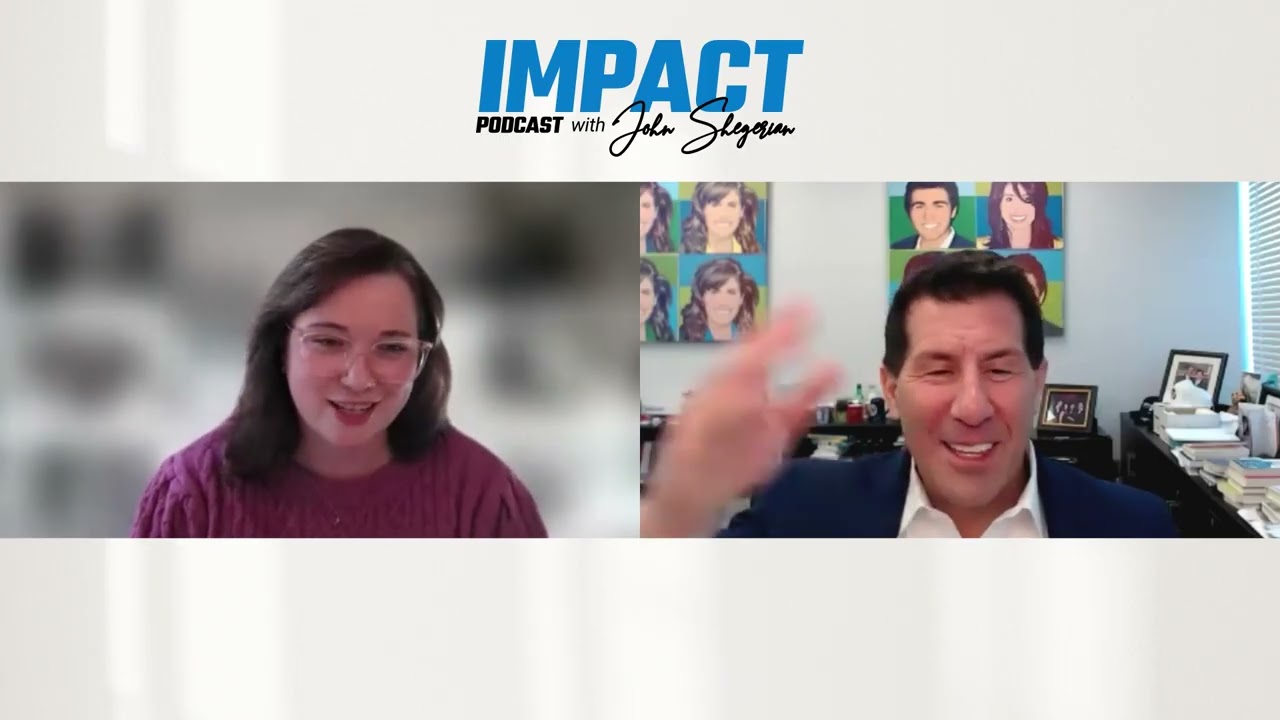
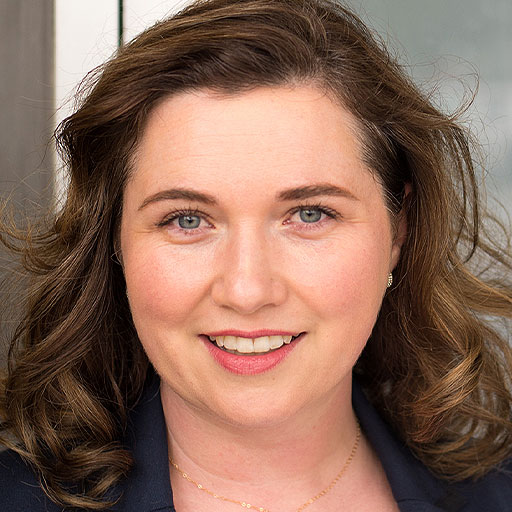
Erin Archuleta is the Head of Global External Affairs and Social Responsibility at Block, Inc. where she leads stewardship, sustainability, and impact investments. Block, Inc. builds technology to increase access to the global economy through Square, Cash App, Afterpay, Tidal, Bitkey, and Proto. Erin helps organizations strengthen their connections to the communities they serve. A seasoned leader in corporate social responsibility (CSR), public policy, and community engagement, Erin is dedicated to building integrity-driven strategies that foster positive social and economic impact.
John: Do you have a suggestion for a Rockstar Impact Podcast guest? Go to impactpodcast.com and just click “Be a Guest” to recommend someone today. This edition of the Impact Podcast is brought to you by ERI. ERI has a mission to protect people, the planet, and your privacy, and is the largest fully integrated IT and electronics asset disposition provider and cybersecurity-focused hardware destruction company in the United States, and maybe even the world. For more information on how ERI can help your business properly dispose of outdated electronic hardware devices, please visit eridirect.com. This episode of the Impact Podcast is brought to you by Closed Loop Partners. Closed Loop Partners is a leading circular economy investor in the United States, with an extensive network of Fortune 500 corporate investors, family offices, institutional investors, industry experts, and impact partners. Closed Loop’s platform spans the arc of capital from venture capital to private equity, bridging gaps and fostering synergies to scale the circular economy. To find Closed Loop Partners, please go to www.closedlooppartners.com.
John: Welcome to another edition of the Impact Podcast. I’m John Shegerian, and this is a very special edition. Today, we’ve got with us Erin Archuleta. She’s the head of global external affairs and social responsibility at Block. Welcome, Erin, to the Impact Podcast.
Erin: It’s a pleasure to be here.
John: Really a pleasure to have you. Before we get talking about everything you’re doing in impact and social responsibility over at Block, can you tell us a little bit about your background? Where did you grow up, and how did you get on this very interesting and important journey that you’re on?
Erin: So, I am from Flint, Michigan. It’s a factory town. It’s a town that, when I grew up, lived in three shifts, I would say, just like the factory lines. One of the things that I grew up with was a real model of community, of interconnectedness, of how a sense of place can bring pride and define who you are and really weave joy into what defines your local community’s wins. So, Flint, I know sometimes it gets other headlines, but I would say that in the era in which I grew up, it was an era in which the auto industry was in decline.
John: [inaudible].
Erin: The 80s, the 90s. What I have found is that the generations to follow have redefined community and small business there. In fact, I know we’ll get into this later when we get into Square, but some colleagues there came to me and said, “What’s going on in your hometown? We’re noticing these weird small business trends where small businesses jumped 128% over the course of 2 years. What’s happening there? What magic is happening?” The magic really was neighbors coming together, supporting one another, helping each other build small business communities. I got to work on a film about my hometown and its resurgence and rebirth. That film is called ‘Forged in Flint,’ which you can find at squareup.com/dreams. It’s all about what it takes to make a thriving downtown, the different pieces. That’s the where-I’m-from piece. How I got there is a non sequitur. I went to school to be a theatre major and classroom teacher. I was a theatre and English teacher, a reading specialist, and I loved every single second of teaching middle school, which is maybe not something you hear from everybody. I really hope that everybody who has been a teacher got a chance to really love teaching sixth, seventh, and eighth grade. It’s a special time. It’s a time when kids are still dreaming and possibility and are imagining and building their world and schema. I also taught high school and junior American literature and theatre. So it was really fun. I moved from Michigan to the Bay Area, and I was part of the founding team at a literacy organization called 826 Valencia. What we did there was actually a front for children’s literacy. We had this funny retail storefront requirement for our nonprofit. When we first inked our lease, we were required to be a small business from the beginning. So we looked around at the building for cues, and one of our co-founders is a prominent author, Dave Eggers. Dave was standing with some other volunteers and said, “You guys, what does this building really look like?” The way the rafters were built and the warmth of the old wood, the building was more than a hundred years old, told the story of a pirate ship. Then we built, in the front of the storefront, a pirate supply store. So our retail model was for the working buccaneer.
John: [inaudible].
Erin: I know. It actually became this magical third place that did not feel like a punitive homework help after-school center. It felt like this funny, magical, delightful room you’d step in. And then we were able to, in the early days, fund up to 10% of our nonprofit revenue by being a small business. So this model worked really well. We scaled it nationally. I got the opportunity to work on international education licensing, began to work with nonprofits around the globe, and learned from other nonprofit executive directors. I rose through the ranks as a nonprofit employee and helped run the organization for a while, and began working on education public policy, advocating for students in classrooms, their families, and what they needed to participate in the economy long term and be successful. At the same time, I married a sushi chef. When that happened, we began to fulfill our dreams of opening and running a catering company, a little sushi deli, and a fine dining restaurant. So we owned multiple restaurant properties over the course of 10 years. We lived with food reviewers, Zagat, Michelin, and celebrities who had come in and dine, and the pressure of waiting on Martha Stewart, all of the things.
John: [inaudible].
Erin: Yeah. You’re standing in front of a legend, you’re like, “Don’t drop [inaudible].” But in that work and the day to day of the practicality of running a small business, being an employer, thinking about what it meant to show up for my neighborhood, my community, and my industry, on the restaurant board, running a merchant association, and advocating for small business policy, I was then invited to join Square and be a part of their team in the early days in 2015. So that’s what brought me to Square. It was this sort of nonlinear path through education, nonprofit, restaurant ownership, and through all of it, all of the tenets of what it means to be an important, invested corporate citizen, even at the smallest level, mattered. What kind of fish I sourced mattered. What kind of neighbor I was to my neighborhood association mattered. So all of this work, you can talk about it on a global scale, but it comes back to the people you’re serving.
John: I love it, and it comes back to the common thread of your life, you are a community woman. You started in the community. You love where you were raised in that community feeling, and everything you’ve done throughout your life in education and then in food is all about community and service. That’s wonderful.
Erin: [inaudible].
John: That is just wonderful. So is there a restaurant that still exists, or is there any food that’s [inaudible] in the family? [inaudible]?
Erin: My husband and I have had a little Japanese sushi deli in the Flint, Michigan, farmers market for the last couple of years. It’s been really wonderful to make our food in my hometown and to bring [crosstalk].
John: [inaudible].
Erin: Yeah, like family [inaudible].
John: It’s so amazing. He is from originally Japan?
Erin: So he is from Sacramento, California.
John: Oh my gosh.
Erin: I convinced him to move to Michigan and live in the snow. He’s been making sushi for 30 years, and he trained for 10 years under a master sushi chef, just like ‘Jiro Dreams of Sushi’.
John: Right, that’s so wonderful. It’s so funny you brought up Flint, Michigan. When I started my company, it was banked by Comerica Bank, the environmental services division, which they’re still in Detroit. I started going to downtown Detroit when they started banking me in 2007, and the transformation I’ve seen in downtown Detroit in 18 years has been magical. Talking about magical, it’s a whole different city. Same thing like you said: small businesses came in and backfilled, what is now a wonderful newborn downtown as well. So Michigan’s got something good that’s happening all throughout the state. Good things are happening.
Erin: I agree. Thank you.
John: How many years ago you joined Block? Back in what year?
Erin: In 2015?
John: Okay. What was your first job there? What was your first title and job then?
Erin: I was on the experiential marketing team, and many of my same colleagues are still at the company, though within different business units, projects, or roles.
John: [inaudible].
Erin: I think that even in the earliest days of marketing, it was so clear neighborhoods mattered, the small businesses we were serving, and their individual stories mattered. We’ve always had a real approach around our purpose of economic empowerment: to listen to what customers and communities need and then try to find the simplest solutions that we can to provide to them to really support them. So I got this opportunity to do storytelling and creative work, and all of the pieces that I would use in a classroom, or that I would use in nonprofit, or even in a restaurant. Frankly, I feel like that’s more theater than theater sometimes. With that, I got to deploy and employ those skills, but the nerd in me really wanted out, so I began volunteering to work on public policy projects. I think that part of what I love, and what anyone who’s looking to work in this field could lean into, is where your individual strengths are. A lot of my individual strengths are really around enjoying the long path to fruition with work. I don’t need immediate results on something; I need to know that whatever I’m doing day to day will build toward something better for someone. I remember signing up to work on projects in the early days that would help with making sure that small business owners would have access to capital. I knew firsthand what it meant. I remember when Tim and I started our catering company; this was before Square existed. We started back in 2006. We were dating when we started our business. I don’t know. I won’t give marriage advice on this podcast. When we started our company, we actually could not get a credit card terminal because catering was a risky industry. I had to leverage my used Volvo to get a credit card terminal so that we could cater weddings. I remembered what that felt like, and then when Square launched its capital product, I went out and interviewed hundreds and hundreds and hundreds of customers about where they experienced barriers to capital, then we have this opportunity then Square capital to them. And when that happened, what we found is that even in the earliest pathway of just lending to businesses based on their performance using Square, nothing else, we were already lending to more businesses that were not being reached through traditional capital pathways. So we were already lending to more women, more minority owned businesses, and rural businesses. We found at that time that more than 85% of our sellers were outside of the bubble of big urban centers. So we were real wherever they needed to be at that in that moment. Of course, things grow, people grow, companies grow. Now our portfolio is much larger.
John: I want to share with our listeners and viewers, if you’re not familiar with what Block is: Block’s predecessor company was called Square. There’s a beautiful little white thing that attaches to a cell phone. Just so people understand how big Block has become over the years: as of 2024, it serves 57 million users, 4 million sellers, processing over $241 billion in payments annually. Right now, over $24 billion in revenue, over 11,000 employees, and you’re serving over 95 countries. So you have a big platform you’re part of now. This is no longer just a wonderful startup by Jack Dorsey back in 2009. This is really quite a big company. Talk about how your role continued to evolve over the last 10 years at Block.
Erin: I joined the public policy team. I knew in my heart I wanted to advocate for small business owners. I had a role called seller advocate, and I had the opportunity to go to the Hill in the United States, to work with my colleagues who were in other countries where we operate: Square Canada, the United Kingdom, Australia, and Japan, and to really learn what mattered to small businesses. What were their barriers to growth, or what would enable them to operate and thrive? I got to work on all kinds of wonderful opportunities, with everything from how a restaurant could scale, which I knew in my bones. I remember when e-commerce was new. It’s funny to say that, but to think about what principles they needed to really make their day-to-day lives smooth. For instance, a big part of that hero story about Flint, Michigan, when I talked about the film earlier, is that most of those small businesses, yes, they’re selling to their neighbors, they’re keeping dollars local, but they’re also reaching customers from all over the world online. We all know we shop with our phones, and so do they. You were able to tap into customers beyond their mileage or their few square blocks of wherever the foot traffic would be. This was something I got to watch grow and help accelerate through the years as small business has changed and evolved. As that role continued to grow and mature, I was able to step into running our public policy partnerships to really advocate for whomever our customer was. I remember when we brought on TIDAL music streaming service, I had already been talking to musicians for years who used us, Square, for their merch, for their tours, who were excited about integrations to sell tickets to events or festivals. I knew that Cash App was how you were paying your friend who bought the tickets or picking up dinner to say thanks, or whatever it was. And so, in all of these different intersections, I had this opportunity in my role to really be across the business. I feel like I could kind of unpack that a little bit. So Square, as you said, and people knew us first as that little white [inaudible]. We’re powering stadiums. We are supporting the largest of large businesses, and yet still showing up for whatever your dream is. In that, we’re making commerce and financial services accessible to all sellers. Cash App is how folks can send, spend, or store money. Then we have Afterpay, which transforms how customers are managing their spending over time. We also have TIDAL, which I mentioned, a music platform for artists and entrepreneurs. And then, this is something maybe you haven’t encountered. This is Bitkey. So Bitkey is a simple self-custody wallet built for Bitcoin, and we have Proto, which is a suite of Bitcoin mining products and services. So there’s a lot more that’s happened since I’ve joined, and now my role in this global format allows me to show up for each audience.
John: So let’s go back to your first important discussion of purpose and mission. What’s real purpose, then, as you said, could be said in a couple of different ways. It’s about economic empowerment, and also what you’re doing. You’ve democratized the opportunity for all entrepreneurs around the world to actually participate in the entrepreneurial journey. That’s fascinating.
Erin: That’s so kind to hear that reflected.
John: But it’s really true. The way you explained it makes so much sense. As you said, over the years, you’ve developed different tools. So you could go big, like a stadium, and small like a single artist, and everything in between, including now different forms of capital such as Bitcoin. That’s fascinating.
Erin: Absolutely. Jack Dorsey, who you mentioned earlier, co-founded, along with his mentor, Jim McKelvey. Jim is a brilliant coder and a brilliant engineer, but also, little-known, incredible glass artist. So Jim makes the most beautiful blown glass pieces, whether they’re giant vases. He had an entire line of homewares. Back in 2008–2009, Jim was trying to sell a glass faucet, a custom faucet, for a home at a houseware show, and the person on the other side of the purchase only had a credit card. And Jim, because he was an artist, like I mentioned earlier, when I was a caterer, it was hard to get a credit card terminal. Imagine being an artist, Jim, struggling to get a credit card terminal, lost that sale. That sale, as you could imagine, something like a glass faucet, is a high-ticket item. So Jim thought, “This is a solvable problem,” and so he and Jack together came up with that first Square reader that you mentioned. Creating the opportunity for everyone to participate in the economy is just core to who we are. That mission, that purpose driving us, economic empowerment, is really across our whole ecosystem. It’s how we think about social responsibility. There’s quantitative, there’s qualitative, and at the end of the day, it’s how are you showing up and how are you impacting your local economy, your neighborhoods, and an individual’s experience. What are you doing to make their lives more sustainable overall? So that purpose drives our profit, not the other way around.
John: Got it. So Jim took the hit on the sale?
Erin: Yeah.
John: So millions of entrepreneurs wouldn’t have to. I love it. Let’s talk about purpose, mission, and profitability, and tie it back to the grander theme of sustainability. As you and I know, sustainability has had some fits and starts, the last 20 years in North America, especially. It’s been more embedded in Europe and parts of Asia, developed parts of Asia, before the United States, because they’re smaller countries. They were geographically constrained and had to be more sustainable and more circular in their behavior than we ever had to be because of our size and scope of this great country. But now we’re trying to get with it, and it’s been fits and starts. As we know, there’s been an alphabet soup of acronyms that were polarized and potentially politicized. Let’s talk about what I feel that leaders like you are talking about more than ever before, both in the impact sector, social responsibility sector, and sustainability sector, and tie them all together. It seems as though we’re leaving the acronyms behind now, and everyone’s focused on materiality: materiality to the core mission. So how does what you do, both in global external affairs and social responsibility and sustainability, and what Block is doing, sustainability tied back to the material mission of economic empowerment?
Erin: Yeah, I think that you’re right. There’s this piece where historically, businesses may have layered sustainability on top of their existing business. But we’ve built it directly into our foundation. So every product decision, every partnership, all the investments we’ve made are evaluated through the lens of long-term community impact. So we’re not just trying to do less harm. We’re in fact trying to do more good. The importance of place in driving that growth and that sustainability for local neighborhoods, it’s critical. I think, as a product example, I talked a little bit earlier about Proto, our Bitcoin mining rig. But something like hardware, which we’ve been building for years, we know hardware. Bitcoin mining is incredibly sophisticated hardware, but it also had a really short shelf life. Most rigs were burning out after 3 years, 5 years. It wasn’t a long-term piece of hardware. What we’ve done is we’ve created interchangeable parts that allow the lifetime of that product to go up to ten years. So when you’re able to take something that people will have, a material object, and you’re able to extend the life of that, the usefulness of it, then you’re going through less. I know your background a bit, I know the recycling piece, and I know that’s so critical. But when we’re thinking about what we’re producing, we’re thinking about the end outcome of what that product will do. Similarly, I think with something like even a climate investment, we’re thinking about what the outcome of that investment is, something that might appear even kind of old-fashioned. At home, I’m like a farmer. I run a little small farm, and I think about the yield of trees. So often, there’s a lot of talk in climate about what does climate sequestration mean, or when you’re thinking about climate opportunities, you’re talking about, really, what are we actually physically doing with the earth. We have a partner called WithOneSeed that is part of the Expand Foundation. Our climate partners at Watershed connected us. WithOneSeed based out of Baguia, they’re out of Timor-Leste, and it’s a cohort of farmers that are planting trees. If you are a subsistence farmer, a tree is a hard sell because you’re not making profit for like 20 years on a tree. If you were planting a vegetable crop, you would make money in a season. So, when this project started, WithOneSeed figured out a way whereby tracking tree growth and the health of the trees using RFID technology on trees. They were able to identify and then pay those farmers directly, so that they were seeing more immediate benefit to the planting of a tree for long-term climate impact, for long-term community impact. Where Baguia is located has an incredibly intense rainy season and not a lot of infrastructure. So, by planting these trees, you’re actually creating more stability for roads, for pathways, for schools to be built. When we had a recent meeting with the farmers from WithOneSeed, it was incredible. People there don’t have access necessarily to cars or trains, so they were waking up two or three hours before sunlight, walking in the dark to a local community center to be hosted for a Zoom chat, just like we’re doing today, so that we could come together in more than four languages to talk about why this project matters so specifically to their community. With that, what the RFID technology meant, what it meant in terms of being able to even track their own progress in real time, and this piece that we know to be true through technology; technology can really enable smart decision making. You can course correct, you can amend soil, you can do all sorts of things to really enhance the project. And so, with that, it’s been an incredible boon to the community there, and we have felt really lucky to participate in a program like that.
John: I love it. So, do you get to work, Erin, directly with the chief or head of sustainability at Block?
Erin: So, I am that, which is [crosstalk].
John: Erin, so nice [inaudible].
Erin: [inaudible]. No, we’re really humble. So, what’s really funny is in the early days of Block, there’s been much written about this, is that we’re not big on titles. Our titles are more of a descriptor of the action that you’re performing, which is running. Even our CEO does not refer to himself as a CEO; he refers to himself as the Block Head. So, just know that. You have to delight in [crosstalk].
John: That’s great. I love it. I love the humbleness. It’s a self-descriptor that’s humble but effective, and no one can misunderstand that. That’s for sure.
Erin: No, I should say that something like WithOneSeed, they’ve already reinvested $2 million in their community. When you think about the scale of that, in a project that, just in a number of years, is creating real economic impact at scale, it’s something that I’m excited about. Other commitments are, we talked a little bit about how so often other countries were forward-looking, and not everyone in North America has had this lens on the work for so long. One other partner that I’m really, really excited about is Laguna Om. They’re out of Quintana Roo. They have [inaudible]. So, a commons, and it’s actually been active since 1938. What’s wonderful about community is often this great work is happening, and it’s a matter of, to your point, being hands-on, listening deeply, showing up for our customers, figuring out. In this instance, the tool that supports sustainability is investment. But if I think about sustainability in the financial system, it’s a different type of investment. We have a hundred-million-dollar social impact fund, and that fund is going to community development financial institutions, minority depository institutions, and local banks. That is creating impact, creating additional capital for additional lending from the institutions, and building their balance sheets so that they can better support their communities. So, I think about everything from how does a tree build a road for people who need a school to be able to operate in rainy season in Baguia. And then I think about what does an investment in someone like Southern Bancorp look like to its small business lending portfolio? It’s an exciting job. I frankly have my dream job.
John: No kidding. I didn’t know this when I first introduced you, but you’re really not only the Head of Global External Affairs and Social Responsibility, but that also encompasses sustainability and impact. So you’re really doing it all. [inaudible]. How big is your team, by the way, just so I understand? How big is your…Yeah.
Erin: Sure. So our model, again, we’re maybe a little non-traditional. I love this model. There’s four of us on the team, and each person is a specialist. So I’ve got a Financial Inclusion Lead and ESG Investment. It’s so fascinating because his brain works in the sense of true investment and return, qualitative, quantitative impact. And then an Education Lead, really thinking about how we show up and support and protect customers too. And then a Social Impact Corporate Citizenship Lead. So each of those roles, we all align with partners across every aspect of the business. So no matter what, everyone is a stakeholder in the work together. What’s nice about not being removed or separate and doing that work is that you’re able to lean right into the earliest conversations and begin to make impact from day one.
John: So I love that model, but like you said, how do you then take your team of four, and then how do you exponentially get your 11,000-plus to be your impact ambassadors or evangelists? How does that work? How does getting the word out and getting everyone bought into the DNA of the company?
Erin: Yeah, I think there’s a few different ways. One is that we are super lucky, and that many of the employees who come to Block come because of our purpose of economic empowerment. I find more inbound requests for “How can I help?” than ever needing to ask someone to help. So that is a gift. That is rare. When I ran a community radio station, I wish I had that. I was just running whenever there wasn’t someone on air.
John: [inaudible] great retention tool, you’re saying. It’s great [inaudible] retention. Love it.
Erin: [inaudible] a retention tool, and it’s also an indicator of how people are showing up to work. They’re showing up to serve our customers, which is just this really beautiful thing. Like many places, we have a strong volunteam. Recently, in San Francisco, out at Crissy Field, which is one of the landmark, beautiful parks, right on the water, there was a local natural habitat restoration effort, and everyone was out working literally in Crissy Field to clean up and make sure native plants were present, and the invasive plants were out. But then there’s things like, “How can I show up in my local community and participate and serve?”” And so we get this opportunity to be across volunteer efforts, across product efforts, marketing teams, insights teams, and all of this really allows one another to do our best work together.
John: And you’re also, I assume, encouraging those 11,000-plus employees to share best thoughts or practices up to you in case there’s some great ideas in different parts of the globe that could be really beneficial to the company as a whole and to the communities that you serve as a whole.
Erin: Absolutely. And to interact with our customers. The very best thing you can do is go see a Square seller or go, “Oh my gosh, go listen to a title-rising artist when they’re performing in your hometown.” So these are the ways that we can show up and learn. Also, you find out how to be cool. I love title[?]. I’m learning a lot.
John: Do you put out an annual social impact report?
Erin: So we had historically, but what we’re finding is the annual just takes too long. So we’re doing it now through constant communication, through blog, through LinkedIn, through social media, all the different channels that are the right format for storytelling. And some ways, like if you’re launching something that you’d like engagement or feedback, social media is your tool. Waiting for an annual report is not the right format. There are annual reports, of course, that we’re putting out sustainability [inaudible], but really, to have a live conversation by publishing regularly and consistently, I think it’s just a more rich program.
John: Since sustainability rolls up to you, talk a little bit about, obviously, there’s global benefits of being a worldwide company and having a platform like yours in terms of diversity of ideas and thoughts from communities all around the world that you get to hear and learn about and benefit from, and benefit the company as a whole. But go back to the challenges that exist because of the regulations that exist in the world right now, and the fact that they are a patchwork quilt of regulations from Asia to Europe to North America and other parts of the world. How do you rationalize that since they’re not harmonized yet? And when do you see some harmonization coming into the marketplace to make it somewhat easier on leaders like you, so you don’t have to focus on the paperwork, you can actually focus on the real work that needs to be done?
Erin: I don’t know that I have an answer on the when. I do think that there are these beautiful conduits for information exchange that are new. I think that right now we’re in this moment with AI, with open source, with learning and sharing and best practice, that is an absolute gift. And people are recognizing the speed at which we can communicate with one another to ensure that we’re using real data, fast responses when appropriate, thoughtful, methodical responses, but reacting in real time. This is a simple analogy, but the RFID chip on the tree telling us health. We can now use advanced computing. One of the things that our founder has said many times, one of our founders, Jack Dorsey, has said many times, is that AI is growing, open source is growing, and it’s pretty hard to predict what a year from now or 3 years from now looks like. But to not take advantage of the gift of the tool right now, we’d be missing out. So I think that there’s this way to really look at the data. From a regulation standpoint, the nerd in me, to go back to my nerd side, I love the ability to learn how another market does something because often, especially in the regulatory landscape, you get this opportunity to look at what problems people are solving for in other places. Is this a problem that your market experiences now or not yet? And if not, why? Why not? So you get to, again, just model that deep listening methodology and understand, take back, ingest, and make best decisions from informed approaches by other dedicated stakeholders who deeply care. But to use the data, this is the piece that even 2 years ago would have been a different answer.
John: So interesting. So you’re saying let’s take AI day by day, leverage it for what it’s great for right now, and not worry about some existential crisis that’s going to cause us in the years ahead, if it even ever comes to that, by the way. Talk about this. There’s a whole new generation of young people that listen to this show that really want to be you, Erin, that want to learn how to be you in terms of making a good living but making a great impact on this planet on a daily basis. But all they’re hearing about now from traditional forms of media and also social media is that AI is coming for their career. AI is going to wipe out whatever job opportunities they have. What would you say to the next generation of high school graduates, postgraduate students, both in university and younger, that are feeling the anxiety and the pressure of the constant messaging about AI and the potential traps that it has for their future careers?
Erin: I’m an educator first, and as an educator, there’s always a tenet to lean into the curiosity. And so, with that, lean into the learning, lean into the opportunity. We released an AI tool called Goose, and that is the ability to integrate different large language models. I think that for many younger people, what’s great is that you have a home court advantage. Everyone is learning this technology at the same time. We’re all on the same footing. We’re all growing together. There’s this beautiful opportunity to take what you, as an individual listening, perhaps are passionate about, solve the problems that matter to you, and benefit. This is actually the thing that I deeply love about AI tools: the ability to aggregate listening. So, whereas it’s not a replacemen, I want to be very clear, the one-to-one human experience, or group listening, or community listening approach is essential. But also, to have this incredible tool where you can take and ingest large amounts of data and better understand problems, it simply allows you to test and practice and see if your approaches can evolve to better serve and solve your problems. I have found that throughout my career, the thing that makes me useful is showing up and solving the next issue that supports whatever the outcome is. So whether that’s a problem, whether that’s creating an opportunity, whether that’s finding novel ways to access capital, or whether that’s figuring out what bespoke regulation a small business needs to operate in a new community. I think that this is an opportunity moment, not a fear moment. I would encourage them to really embrace an experiment. I think there’s three things that ground the team that I work at Block: the preservation of local culture, its support for small businesses and our customers, and creating economic opportunities for local residents. In any problem I’m approaching, or any opportunity we’re looking at, I’m thinking about those three things. So, as a young person, figure out your bunch. What are your one-to-three things? What do you want to solve for? And then figure out what you could learn about it. Use these tools to accelerate your learning at a pace that never existed before.
John: That’s really great advice. Erin, I’ll ask you one last question, and I’ll let you go then.
Erin: Oh my gosh, thank you.
John: You’ve been there 10 years already, and you’ve accomplished so much, and it’s so exciting what you’re doing right now. What are you most excited about for 2026 in terms of what you want to accomplish at Block next year?
Erin: Wow, such a good answer. Okay, so a personal goal [crosstalk] is to listen to a title-rising artist each month in a genre I’m not as deeply familiar with. So, I’m trying to really up my music game.
John: Wow, [inaudible]. That’s cool.
Erin: Maybe not a global goal, but I am here to say that I’ve got some learning to do. And then, as a team, there’s this very exciting moment for us to show up for our small business communities and customers, actually thinking about the ways in which we can make their lives easier. So, what AI tools might support them? What sort of hardware could help their community? I think figuring out where there are gaps, where there are opportunities to be curious, figuring out who the next cohort of business owners are, and what those models will look like. 2 years ago, I would not have predicted that blended storefront models would be such an important hit in creating an experience within retail, but we’ve learned that that’s what keeps people coming back to Main Street businesses. We’ve learned that restaurants providing unique dining experiences, that’s the thing that you remember and that you come back for. So, I’m excited to see how community continues to build itself and in what ways we need to show up.
John: I love it. For our listeners and viewers to find Erin and her colleagues and all the great work they’re doing in social responsibility, impact, and sustainability, please go to www.block.xyz. We’ll put it in the show notes so you don’t have to stop what you’re doing and write it down or any of that kind of stuff. Erin, thanks, first of all, for your time today and for sharing your personal journey and the journey of impact, social responsibility, and sustainability at Block. But most importantly, thank you for a lifetime of making the world a better place. This edition of the Impact Podcast is brought to you by Engage. Engage is a digital booking platform revolutionizing the talent booking industry with thousands of athletes, celebrities, entrepreneurs, and business leaders. Engage is the go-to spot for booking talent for speeches, custom experiences, live streams, and much more. For more information on Engage or to book talent today, visit letsengage.com. This edition of the Impact Podcast is brought to you by ERI. ERI has a mission to protect people, the planet, and your privacy and is the largest fully integrated IT and electronics asset disposition provider and cybersecurity-focused hardware destruction company in the United States, and maybe even the world. For more information on how ERI can help your business properly dispose of outdated electronic hardware devices, please visit eridirect.com.
 Spotify
 Apple Podcasts
 Amazon Music
 iHeartRadio
 YouTube
 YouTube Music
 Audible
 Pandora