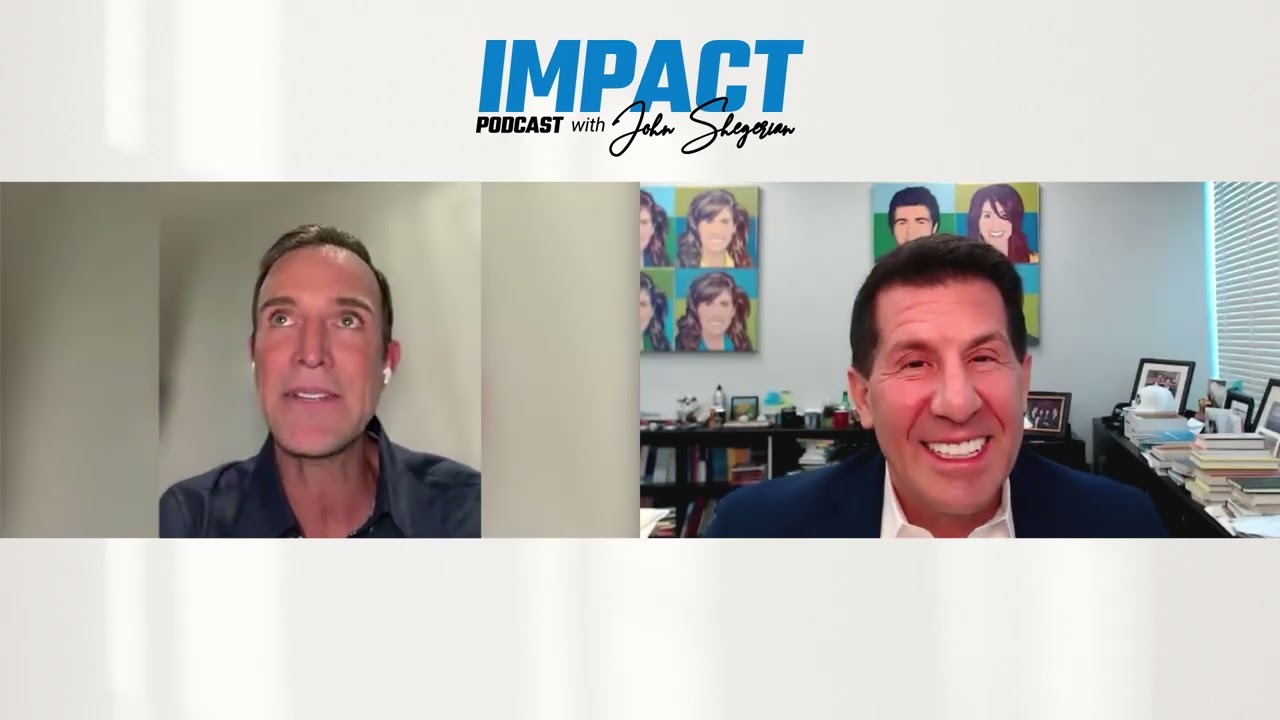
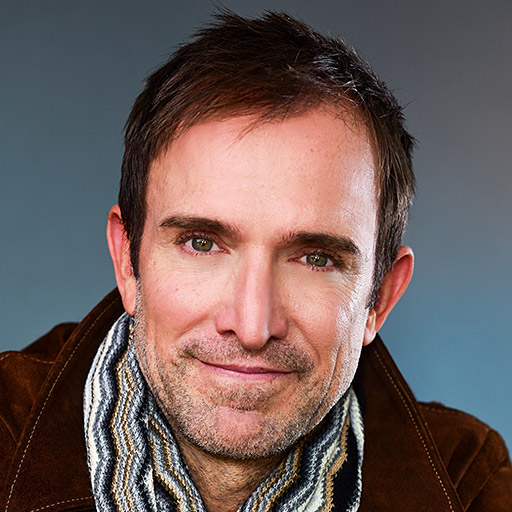
Host of CBS’ ‘The Visioneers with Zay Harding,’ Zay is perhaps best known for his role on the popular, long-running PBS series Globe Trekker. He has captivated television audiences for more than 25 years as host or guest star on more than a dozen television shows on ABC, Discovery Channel, FX, History, MTV, Nat Geo, Netflix, PBS, Travel and, now, CBS. Born and raised in Hawaii, he spent his childhood scouting and exploring the outdoors, all perfect preparation for the many outdoor adventure shows for which he’s become known.
John: Do you have a suggestion for a Rockstar Impact Podcast guest? Go to impactpodcast.com and just click “Be a Guest” to recommend someone today. This edition of the Impact Podcast is brought to you by ERI. ERI has a mission to protect people, the planet, and your privacy. It is the largest fully integrated IT and electronics asset disposition provider and cybersecurity-focused hardware destruction company in the United States, and maybe even the world. For more information on how ERI can help your business properly dispose of outdated electronic hardware devices, please visit eridirect.com. This episode of the Impact Podcast is brought to you by Closed Loop Partners. Closed Loop Partners is a leading circular economy investor in the United States with an extensive network of Fortune 500 corporate investors, family offices, institutional investors, industry experts, and impact partners. Closed Loop’s platform spans the arc of capital from venture capital to private equity, bridging gaps and fostering synergies to scale the circular economy. To find Closed Loop Partners, please go to www.closedlooppartners.com.
John: Welcome to another edition of the Impact Podcast. I’m John Shegerian, and we’re so honored to have with us today, Zay Harding. Welcome to the Impact Podcast, Zay.
Zay: Thank you, John. Nice to be here. Thanks for having me.
John: Zay, you’re the host of ‘The Visioneers with Zay Harding’. We’re going to get into that in a little bit, but first, I want to hear about your background. Before ‘The Visioneers’, where did you grow up, and how did you get on this fascinating journey that you’re on?
Zay: Well, I was born and raised in Hawaii, on Kauai. Then, when I was eight, we moved to Oʻahu, where I went to Punahou School. This was monumental, and I had no idea how it was going to be affecting or impacting my life. I was a Boy Scout, and someone in our troop ended up being my brother’s best friend. He is the one who, eventually, we were surfing one day, and he started a foundation later in his life. He did really well creating algorithms for stocks and predicting things that would do well. He took all his money and decided to put it into helping the planet. So he started the VoLo Foundation with his wife, and they wanted to raise awareness of what was going on in the environment. I was out surfing with him, and I knew he was working on that for 10 years and not getting the attention that he wanted. So I said, “Look, I’ve been doing a travel show for 20 years. Why don’t we merge forces and use my travel show with purpose?” So, target people, seek out people doing amazing things for the planet, and also showcase where they are in the globe. The travel show really affected me because it opened my eyes to see that there are a lot of things that are changing in our atmosphere. Storms are getting stronger, [inaudible] sea levels are rising, and warming. Fishermen are complaining that the fish are less, more and more scarce, corals are dying. Ice caps are melting. I experienced that in Antarctica when I was down there filming. So this guy, David Vogel, and I were surfing, and I pitched this idea to him, and he was like, “Absolutely, let’s go.” So we shot a pilot with the same team that we filmed this travel show, Globe Trekker, and we pitched that to Hearst Media Production Group because they’re into educational informational programming, and they loved it. They have contacts with all the major networks. So we picked CBS, and we’re super excited to live there every Saturday morning now. This show literally goes around and meets the people behind these amazing initiatives that are trying to make this world a better place.
John: That’s so awesome. I want to come back to that in a second. So every week it’s on CBS, and you can check your local listings on Saturday mornings to see where it is, so you can find ‘The Visioneers with Zay Harding’. Also, it’s on cbs.com. It will reside on cbs.com.
Zay: Yeah, and Pluto TV.
John: Okay. So let’s talk a little bit about a couple of things. Besides Dave, who was, like you said, you credited with being a great inspiration and help to get this launch, just growing up in Hawaii itself had to give you an innate genetic DNA of love and appreciation for this beautiful, wonderful environment that we all get to share and live in.
Zay: I could not have said that better myself, John, that it absolutely lives within me how beautiful Hawaii is. Together, that’s one of the things David and I said while we were out surfing, enjoying the planet, wanting our kids to be able to enjoy it, and knowing all the things we’re doing are affecting it in a bad way. Whereas if we make changes, we can affect it in a good way. So, yeah, the beauty in Hawaii, going camping all the time, running on the beaches, surfing in the seas, it is a big part of who I am and always will be. I’m constantly comparing places I go to Hawaii and realizing that I did grow up in one of the most beautiful places in the world.
John: Especially, I’ve got to be honest with you, you mentioned Kauai, you were born on. Kauai is by far my favorite island. It is so beautiful. It just reminds me what a great world we live in every time I’m there. So what a nice thing to have a chance to grow up there and to grow up, like you say, running on the beach, surfing. What a paradise of environment. So the show was picked up by Hearst. You get on. You choose CBS. Just talk a little bit about what you expected that happened, but also what you didn’t expect that’s evolved since you launched the show.
Zay: Well, I was hoping to be on PBS, where we had been doing the Globe Trekker show, and which was always a great place to live, but in my eyes, CBS is way bigger. And so this is incredible to become a household name, to be able to cater to kids, like our show is ultimately catered to kids. I remember growing up, the only time we could watch TV was on weekends. My brothers and I got up early, and we’d turn on the TV and watch cartoons, and eventually the government decided, “Okay, this is when kids watch TV. We need to regulate this time space and make sure that the networks are catering to kids.” That’s how the educational informational time blocks came about, and Hearst owns those time spaces. So we’re aware of our influence that we have on kids. That excites me because I’ve got a nine-year-old daughter, and she loves the show. That, to me, is motivation and proof that what we’re doing is actually in the right space, and life’s about timing. This is the best time to actually have a child in that space of who we’re catering to. So I get to throw in dad jokes, which is really fun. My daughter says, “What’s the difference between a dad joke and a bad joke?” Nothing. Ultimately, she repeats those jokes to me, and I’m like, “Oh, this is great.” That was the winner. [inaudible].
John: Couldn’t be better. That was awesome. So how does it work? In terms of the visioneers that you choose, talk a little bit about the process of choosing the visioneers that you’re going to highlight, and give us a couple of examples from your first season, some of your favorite visioneers, and episodes that you’ve filmed and aired the first season.
Zay: Okay. So, how we get these, obviously, this was, we had 10 stories in our pilot that we just wanted to show a range of what we could do. We do sprinkle those throughout the show as well, but the style was very different. So we’re completely re-editing voiceover because we were aiming towards PBS. It was a more scientific show, whereas now it’s a more fun, entertaining show. Energy is huge in our pieces because they’re quick clips, they’re basically 5 to 7-minute pieces now, and they’re evergreen. So each story lives within its own segment. At the end, we do a little tiny segment called ‘Visions of the Future.’ So we ask each visioneer, “What’s your vision of the future?” So it’s inspiring, leaves people with something to think about. But within that little block, that’s what you’re watching. How we pick them? There’s a team of researchers, including myself, and I got one of the guys that we worked on the pilot with in Shagaluga[?]. I’ve worked with him for 20 years on Globe Trekker. He’s a great researcher and knows how to tell a good story. So we put together what we thought, pitched it to the producers at Hearst, and they’ve got a team. There were a lot of heads pulling stories, finding what we could, and then that team digs deeper, researches who’s available, who’s actually going to be ready to talk about it, who’s available during our shoot schedule. There are a lot of factors, and they’ve done an incredible job of lining stuff up. A lot of it didn’t make it to season one, and we were hoping for a season two. So, season two was a lot easier to kick off because we had a whole list of stuff we wanted that wasn’t available already. We had that to start with, and then, obviously, as time goes on, new things pop up. People who saw the show started referring us groups that had a lot of initiatives going on. We just did one in Zurich ETH, the MIT of Switzerland, and there were some incredible stories, and each student is coming up with their own initiatives. But season one, we had some of the most impactful. There was a kid, he’s 12, and when he was five, he started thinking about this and putting it together. He actually had these diagrams that he first drew. His friend’s house got blown away in a tornado, and he wanted to come up with a quicker way to warn people of tornadoes. He and his dad worked on a sensor that he eventually built with a 3D printer to house it, put it on a drone, and send it up towards storms. It senses this infrasound that only tornadoes have; it’s such a low frequency. He’s now working with the National Weather Service, but that beats the Doppler system by 30 minutes. So now we have 43 minutes of warning instead of 13 minutes, which is incredible. He’s 12 years old, and they developed this app together with his dad. That was one impactful story. It just proves you don’t have to be a certain age; you just have to care. There’s a lot of kids we feature on our show for that very reason. We realized that the kids watching are connecting with these kids on TV. Our goal is to get people to see someone they want to be when they grow up and realize that, “I don’t have to wait to grow up. I can start now.” So it’s really motivating and inspiring. There’s a place in Copenhagen called Copenhill, which they did a national search to design a waste-to-energy project because they knew it doesn’t sound pretty, and ultimately, it’s not. But if they could disguise it into something fun, and they knew they could make it clean on the outside, no one would really know what was going on inside. But what was going on inside was every day, hundreds of trucks are driving 200 miles every which way around Copenhagen, grabbing trash from landfills and bringing it back and dumping it into a giant inferno that was burning this trash into energy. This energy gives the entire city its electricity. They figured out a way to carbon capture as well, so that all that’s released is steam, water vapor. What this designer did, who won the competition, is he created a shell for this thing that looks like a mountain and allows people to ski down and also rock climb up. So, they’ve made an amusement park out of something that would have been horrible. Now, the real estate around that is selling for more in the city because it’s so close to this, and people utilize this activity space. It doesn’t stink. It doesn’t look bad. It’s just a fun place on the outside and on the inside, all of this waste to electricity is going on.
John: Personally speaking, Zay, this must be such a wonderful way to make a living for you in that you get to not only be one of the greatest ambassadors and evangelists of these wonderful scientists, vendors, inventors, and visioneers, but then you yourself must get your cup of hope filled up daily when you’re meeting all these great people and able to share these stories. It must be just so rewarding personally.
Zay: Yeah, absolutely. That is something I marvel at every single day. I’m super grateful. Hands-on learning is the best way to learn, and to be sent around the world meeting these incredible people who want to give you the time, they want you to understand. I don’t have to be an expert on any of this stuff. My job is to make sure the audience is following along. So if I don’t understand, it’s actually better. I get to ask the questions to help me understand. So, it is absolutely exciting, inspiring. It’s eye-opening. It’s gotten me to think differently. I’m starting to realize I can connect some of these people. So, this is becoming a great resource for the entire planet. I’ve already put some of the people together to collaborate on certain projects, which is really exciting. My whole crew is in a happy place. The producer from VoLo was like, “Well, I want to keep the same team.” So, as much as possible, you guys are feeding off each other’s energy of positivity. It’s just such a fun place and rewarding place to be around you guys. We’re all fulfilled because we’re getting to meet such positive people and seeing such exciting changes going on.
John: For our listeners and viewers who just joined us, we’ve got Zay Harding with us today. He’s the host of CBS’ ‘The Visioneers with Zay Harding’. You can find it every Saturday morning on CBS. Just check your local listings to find out what time it’s playing on your own television in your home. If you can’t find it there, please find it on cbs.com or on Pluto TV. Zay, talk a little bit about what our listeners and viewers can expect from season two. How many shows will you tape? How many will air? And how many episodes do you have coming up in season two?
Zay: So, season one was technically a half-season because when we pitched this, they had half their season left, and they wanted to jump right into it. So, it was a go-go-go situation. Then, season two was almost the same thing, but this time, we had to go-go-go with double the episodes. So, there were 13 episodes of the first season, the half season, and now there’s 26. We are having a great time. We’re nearing the end of our season, but we’ve been going strong since July, and it’s now going through December 18th. What to expect? Gosh, we spent three months in the US going around showcasing incredible people. Then, we went to Portugal, Germany, Switzerland, Kenya, and now we’re in the UK. One of the fun projects that stands out in my mind, actually, the very first one we went to was amazing in New Jersey. There’s a girl at CELIA Energy, and they are going around to companies and asking for all their excess plastic, stuff that they would just normally be throwing out. They have figured out a way to break it down, then by its elements, split them so that they’re in hydrogen and then carbon. They’re using the hydrogen gas to refuel. It’s a machine they have which converts it. In fact, they’re working with NASA. NASA heard about it and asked them to create one of these reactor machines inside the spaceship so that all the astronauts can take their excess plastic, put it in this machine, and end up with building materials for space. Instead of shipping stuff up there, they’re actually creating their own repurposing, which is incredible. That’s one that stands out. Another one is these kids from college, they’re living in Louisiana. So, New Orleans, it’s known for a lot of their shores are washing away, their protection for their land. They don’t have it anymore because the hurricanes are washing it away. So, they thought, “We need to make more sand to grow more trees.” Cypress trees are what used to be there, but they’re not able to because there’s no more sand. So, it’s just these marshlands are turning to just water, and then storm surges are becoming a real problem for them. So, they were looking at glass, thinking, “Well, glass comes from sand. Why can’t we put it back to sand?” So, they just started crushing it up and pulverizing it into sand-sized glass. It turns out that the plants will grow in that. So, they started building these little fences in the bayou and filling them with the sand, this glass sand. Then, they’re replanting the cypress trees, and it’s incredible. They’re really creating a new front to protect them. It would just be going to landfills or being recycled.
John: So, a common theme I keep hearing about these wonderful stories and visioneers that you get to share with your viewers is that people now, these really smart people, are taking materials that were historically becoming part of the waste stream and going into traditional waste areas, such as landfills. They’re getting all this material back into the circular economy, as you pointed out in Copenhagen, as you pointed out in New Jersey, as you pointed out on the bayou. So, the circular economy, this shift from the go-and-throw society and from the legacy society that we all grew up in, is now shifting to the circular economy. These visioneers the ones emerging that are helping thrust us into that circular economy, and not too soon. So, this is wonderful. This is just wonderful what you’re covering.
Zay: Yeah, this is a common theme. You’re right. It’s exciting because landfill is a problem. We’ve got plastics that are dissolving into microplastics, which end up in our soil, which drift down to the ocean throughout, scattered in the water, and the fish eat it. Then we eat the fish. So, we get it into our brains. We’re all walking around with microplastics in our brains, which is a real problem. So, we want to clean up our landfills for one, and a lot of these initiatives that reuse stuff from the landfills is fantastic. The other thing is that when we don’t have to create new plastic or anything to make these materials, then we’re actually saving ourselves as well. So, we’re fixing a problem and creating a new solution. There’s a kid who started Recycle My Battery, and he’s now got thousands of volunteers around the US that are helping him just set up boxes and collect them, then put tape on either end of the battery and ship them back. They’re able to reuse the insides of these batteries instead of mining more, instead of destructing our earth more to get more materials we already have, but we’re just throwing away. We can reuse the insides. There’s a guy in Lamu, Kenya that we just spoke with. He’s a master shipbuilder, the eighth generation of master shipbuilders. Instead of having to chop down all these trees he kept in his lifetime, he’s an older guy now, he’s watched bottles just build collections of water bottles collect in the oceans that aren’t even from Kenya. So, he thought, “Well, how can we use this?” So, there were flip-flops as well, slippers, and he took the flip-flops and padded. Using the traditional style of dhow boats, he built an entire boat of repurposed plastic. He melted them into little pieces that look like wood, and he worked just like he would, as if it’s wood, but he’s using recycled plastic. Then he used all the flip-flops to put along the top to make cushions. It’s very colorful. It’s beautiful. It floats. I rode on it. It’s smoother than a normal boat. And it’s really exciting because now the plastic problem is cleaned up from his beach, and he didn’t even need to cut down a single tree. So, he’s able to do his carvings in it as he would traditionally. It is a recurring theme, but it’s an exciting theme. There’s another guy in California, this was in season one, called ‘Plastic Beach’, and he’s taking all the wrappings. You don’t even think about this stuff, but every time you go to a store on a delivery, each little piece is individually wrapped because they want to keep it pristine and able to sell. So, the stores take off this plastic, and what do they do with it? They just throw it away, but this is soft plastic. What I learned is that the soft plastic gets caught in the recycle machine. So, nobody likes it, but he figured out, “If I can collect all this from all the different stores,” it’s not a huge drive for him to just go around all the stores. So, he actually gives them each a little container, and they’re happy to contribute. He picks those up once a week, then he compresses them into these big blocks, and those blocks are able to be recycled. He’s been repurposing them into asphalt for roads and also those hard deck materials. So, it’s incredible that they’re able to make this stuff out of things that would otherwise be problematic.
John: Zay, how many stories do you cover per episode, approximately?
Zay: There are about three to four. Some of them are too good to just leave as a one-act, so we make two segments out of them, but each segment’s about 5 to 7 minutes. So, it varies on time, but we try to get enough time to tell the whole story. It’s a very fast-paced show, and the editors do an incredible job of using graphics and making sure everyone understands it visually. Then, I go back and do the voiceover and keep it fun, and when they add music, it’s very emotional and inspiring. You end up seeing about three to four different amazing things [inaudible] each episode.
John: So let’s just take [inaudible] three. So 3 times 26, at least 65 different visioneers you’re covering this season. That’s amazing. So, talk a little bit about the two different types of visioneers. I’m sure there are some visioneers that, when you show up, are already local heroes in their community, and others are these sort of lone rangers operating in obscurity. What happens after you do your show with them? The local hero, I’m sure, that expands his or her reach, but how about the one that no one has ever heard about before, and then all of a sudden, you get to do a show on them? Talk a little bit about what you hear about the aftermath after their shows air.
Zay: I don’t really hear the aftermath as much as we should. I always think a fun thing to do would be to go back and follow up on these things. Like in Norway, we featured the first hybrid cruise. They were working on the first completely electric cruise, which won’t be ready for 2 more years. I think that would be fun to follow up on. There are some we’re going up on. I don’t actually know what the aftereffect is, but I’m sure they’re going to get attention after being on CBS. As far as the different types of visioneers, I think there’s that moment that they’re all are grateful. You can tell that finally, someone’s giving them accolades because this is such an individual thing. You come up with this idea. For a long time, everyone, including this show, I had thought of something green, and people were always like, “Nah, nah, no one’s interested.” And it’s like, “Okay.” Well, it always sat in the back of my mind, but I thought, “Well, let me try a little harder and let me get the right team together.” This is an amazing team. I couldn’t have asked for a better one. Everything lined up this time around. So, because doing the show, the Globe Trekker show, I could see it going on, and I thought, “Well, maybe it’s time to address it,” but everyone’s like, “Nah, it’s a downer subject.” But by focusing on the positive, it doesn’t have to be. In fact, it’s very exciting. This is one of those shows that can go on and on and on because everyone is trying within their own worlds. One guy that’s popped into my mind right now was a musician in Guster, and his wife pointed out, “You’re doing concerts all the time. You get annoyed that you’re walking through a sea of water bottles at the end of each concert. Why don’t you do something about it?” He’s like, “What am I supposed to do?” And she said, “Well, you could ban people from coming in with water bottles and make them bring in a reusable refillable bottle.” He said, “Oh, that’s a good idea.” So, they started Reverb, and that grew. Now they’re doing completely sustainable venues. Even if they’re pop-up, they’re bringing their own solar power generators. They’ve got that whole thing with the water bottle. They’re involving local farmers to sell their produce there. Their foods are all coming locally. They’re getting a lot of big names, Billie Eilish is on board, Coldplay, Jack Johnson, Reba McEntire. So, it all starts with just, “What can I do in my own life?” You’ve got a lot of cooks, you’ve got athletes. We can all do something. And so, when we’re featuring these people, you see it in their eyes. They’re like, “Thank you. Finally, someone’s giving me accolades for doing this.” But in each case, they really are visioneers. They’re pioneers, they’re engineers, they’re visionary, and they’re making it happen. Even if we didn’t give them that credit, they are doing it. It’s nice to be able to shine some light on it and, at the same time, inspire other people, including myself.
John: What a hopeful message. Like you said, you have your own nine-year-old daughter, and if she’s getting excited about the show, you know there’s a whole generation that she lives in, that’s getting excited as well. I have grandchildren. I’m going to turn them on to the show because they need to see this. The hope that you’re evangelizing and sharing because, honestly, Zay, unfortunately, the rest of the media doesn’t really share that big of a message of hope anymore.
Zay: Yeah, and that just gives me excitement because I think, “Well, then it makes our show more unique, and there’s a reason it needs to be here.”
John: Zay, where do you live now, if you don’t mind me asking?
Zay: I’m from Hawaii. I went to college in Texas. I lived in LA for 20 years, and now I’m in London. My brother lives there. My wife always wanted to live there. The producing team from Globe Trekker was there, so it made sense to shoot the pilot there. As we’re there, we’re having a good time. My daughter loves the education system there. So, it’s up in the air. I like to travel, I like adventure, and what I’m doing doesn’t require me to be in any particular place. We still have our place in Los Angeles as well. So it’s nice to be able to go back and forth. But what you said about the kids is so true. How do we make it happen?
John: You said July through December. I just want to understand. You travelling [inaudible]. How many days of a month are you on the road doing this great show? That’s what I’m trying to get to.
Zay: Got you. It takes a supportive family, that’s for sure. All of us on a crew, most of us are married. We’re a family of our own, and we have a supportive other half at our other homes. We’re on the road a lot. We did have a couple of breaks of a week, maybe three little breaks of a week in between. We celebrated Thanksgiving in Kenya. We had a giant turkey. We had our own Thanksgiving. Luckily, we’ll be back for Christmas. We have supportive families. Right now, being back in the UK, I got to see my daughter and my wife last night. That was really rewarding and rejuvenating because my daughter is excited for the show. She watches a lot of YouTube. She’s like, “Hey, you guys are even on YouTube now.” I’m like, “Yeah.” Well, to her, that matters. Whatever matters to you. More importantly, we’re making a show. It’s an award-winning show, which is really exciting. But the kids are the future. It is really exciting to see them so involved. They’re more inspiring than anybody. When I’m talking to the adults, I realize that these ideas came to them when they were kids, or they were inspired by when they were kids. There’s one guy at UCLA. He’s a professor there. He started this whole project, which is really exciting. He grew up in Goa, India. He loved looking at shells with his dad, picking them up, collecting them. He studied them, and he wanted to know how were these made. He realized that it’s all the elements already in the water that are coming together and forming these shells. Basically, it’s limestone that are making these. He wanted to know what makes those. He has figured out just by taking ocean water, he can recreate these bits of almost like sand, but it’s what a shell would be made of. The neat thing about a shell is it captures carbon. The ocean is like a sponge for CO2. That helps our environment. By pulling out the carbon from the ocean, it’s able to catch more. How he’s pulling it out is adding negative charge to the ocean water. It’s speeding up the process to create these calcium shells that are limestone. It’s capturing the carbon, so it’s not able to be released back into the air. It’s pulling it out of our waters, which is pulling it out of our air. That all started when he was a kid. Now he has the knowledge how to do it. It’s these kinds of things. They always talk about when they’re kids or for their kids. So, it’s really important to recognize that the kids are the future. This is their world. They are the ones right now who are demanding that we start changing our ways. I grew up, things were the way they were, and you just accept that, “Oh, okay.” Now it’s like, “No, we don’t have to create more plastic. We have so much. Let’s just reuse it.” Single-use plastic is not fantastic. My brother’s daughter taught me that. She did that for a project. That goes through my head all the time. I’m thinking of throwing something out that is made of plastic. Plastic is good in the sense that it won’t leak, but it was designed to never break down. That’s the problem. Let’s use it as much as possible. That goes through my mind. Can I reuse it or not? If I can, I will and try to stay clear of it, but if I have to, I’m not just going to use it once.
John: Let’s give a little promotion and shout out to your benefactor, the VoLo Foundation. What’s the mission of the VoLo Foundation, Zay?
Zay: VoLo Foundation exists to raise awareness of climate issues. Lately, their purpose is finding solutions. They want more solutions. This show is perfect. It’s drawing attention to them. They’re at volofoundation.org. Two amazing people run that. Their team is all hand-selected. It’s a tight group. I’m happy to be supported by them. It’s very enjoyable to have such. It’s a family-run place, so they’re very hands-on, accessible. We talk about it all the time. Their kids watch the show every weekend, which gives my heart delight. It’s really nice. It feels like we’re helping each other.
John: We’ll put that link in our show notes. That way, our listeners and viewers can find the foundation.
Zay: Thanks.
John: Zay, I just want to say thank you for coming on the show today. I want our listeners and viewers, please watch every week on Saturday mornings on CBS, ‘The Visioneers with Zay Harding’. If you can’t find it, just go to your local listings. You’ll find it there. It’s every week on Saturday mornings, ‘The Visioneers with Zay Harding’. If you can’t find it there, we’ll put in the show notes the link to cbs.com, Pluto TV. Also, you can find Zay Harding, @zayharding1 on Instagram, or @visionariestv on Instagram. They’ll all be in the show notes. Zay, not only thank you for almost an hour of your time today, but most important, thank you for making the world a better place.
Zay: John, thank you for having me. Thanks for doing this show. I love the title, Impact. You are having an impact by featuring shows like ours, as well as other people who are happy to make this world a better place. We all live in it, so let’s make it the best we can.
John: This edition of the Impact Podcast is brought to you by Engage. Engage is a digital booking platform revolutionizing the talent booking industry. With thousands of athletes, celebrities, entrepreneurs, and business leaders, Engage is the go-to spot for booking talent for speeches, custom experiences, live streams, and much more. For more information on Engage, or to book talent today, visit letsengage.com. This edition of the Impact Podcast is brought to you by ERI. ERI has a mission to protect people, the planet, and your privacy, and is the largest fully integrated IT and electronics asset disposition provider and cybersecurity-focused hardware destruction company in the United States, and maybe even the world. For more information on how ERI can help your business properly dispose of outdated electronic hardware devices, please visit eridirect.com.
 Spotify
 Apple Podcasts
 Amazon Music
 iHeartRadio
 YouTube
 YouTube Music
 Audible
 Pandora