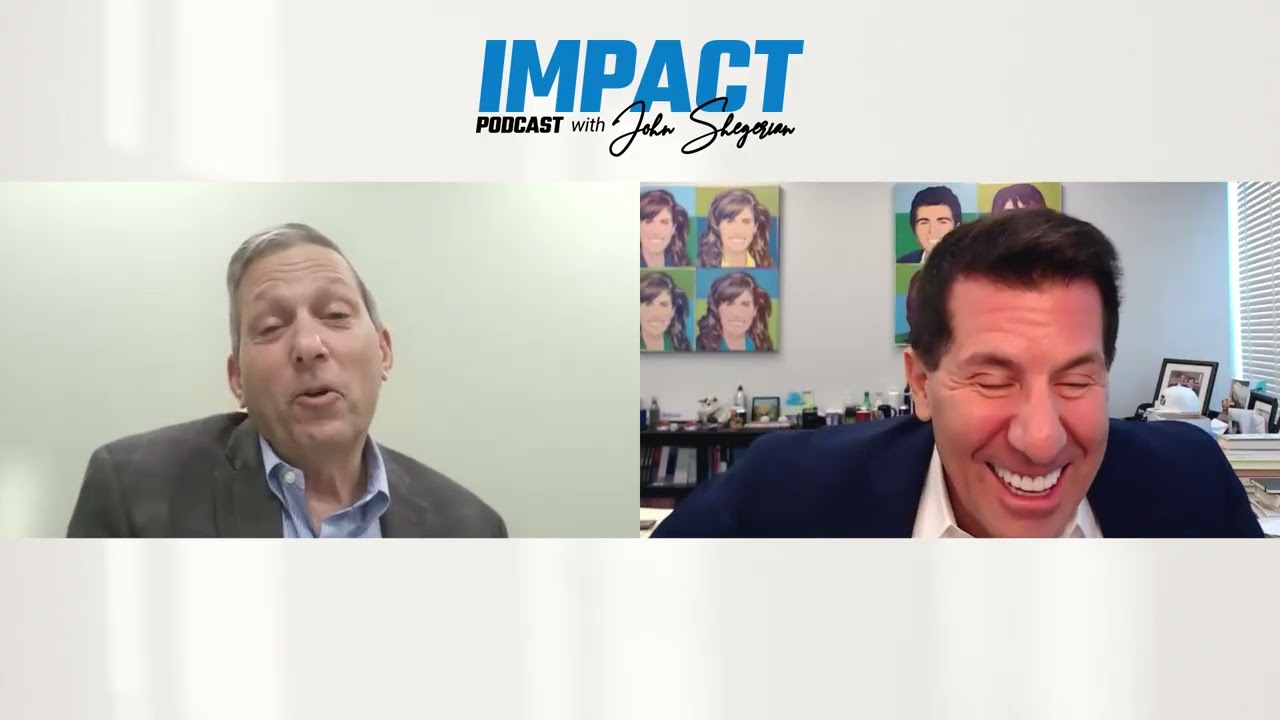

Alan Schoen, President and CEO, directs all company operations at Labelmaster and its sister company DGeo. They are leaders in providing products, software and services for the safe transportation of hazardous materials worldwide. Alan oversees product development, manufacturing, sales and marketing, financial management, consulting services and strategic growth. He also is a member of the company’s Board of Directors.
John: Do you have a suggestion for a Rockstar Impact Podcast guest? Go to impactpodcast.com and just click, be a guest, to recommend someone today. This edition of the Impact Podcast is brought to you by ERI. ERI has a mission to protect people, the planet, and your privacy, and is the largest fully integrated IT and electronics asset disposition provider and cybersecurity-focused hardware destruction company in the United States, and maybe even the world. For more information on how ERI can help your business properly dispose of outdated electronic hardware devices, please visit eridirect.com. This episode of the Impact Podcast is brought to you by Closed Loop Partners. Closed Loop Partners is a leading circular economy investor in the United States with an extensive network of Fortune 500 corporate investors, family offices, institutional investors, industry experts, and impact partners. Closed Loop’s platform spans the arc of capital from venture capital to private equity, bridging gaps, and fostering synergies to scale the circular economy. To find Closed Loop Partners, please go to www.closedlooppartners.com.
John: Welcome to another edition of the Impact Podcast. It’s a New Year’s edition. We are now in 2026, and I’m so honored to have with us today Alan Schoen. He’s the President and CEO of Labelmaster and DGO. Welcome to the Impact Podcast, Alan.
Alan: I am thrilled to be here, John. Just thrilled.
John: Well, thank you for being here. Our companies have long history together. We’ll get into that later, but before we get talking about the history of our companies, and more importantly, what you do at Labelmaster, I’d love you to share a little bit about your life and your journey. How did you get on this fascinating and both impactful journey that you’re on?
Alan: Well, it’s been a fun and crazy ride, let me say that. I started off actually in accounting and finance. I graduated from Indiana University, go Hoosiers. I started off working for a very large national public accounting firm, and my roles there were auditing and working with medium-sized companies. Then I wound up in the consulting group, and then I wound up in the mergers and acquisitions group. And I would go to companies and take a look at their operations, and I learned a ton. Some of it good, some of it not. You got a little bit of both in there, but I really enjoyed the hands-on feel of working at different types of companies, seeing how they operated. There’s a lot of finance and accounting that I did, but in the role of looking at finance and accounting, you also got to talk to a lot of people. And I think in some ways, people miss out when they think of accounting and finance. They don’t realize the actual people aspect of it. And that’s what I love the most. And so I had a great 11-year run at my public accounting firm. And one of my assignments, I got called in and they said, Labelmaster wants to buy a company. Why don’t you go out there and give them a hand? So we were engaged to help Labelmaster do an acquisition. I came out to Labelmaster, and I started working on the acquisition. The first thing I told them was, okay, you do not want to buy this company, because that was my role. And I thought, okay, that’s kind of it. Then I got a call from what turned out to be my future boss, Dwight. He says, hey, why don’t you come out to lunch with me? I’m thinking, uh-oh, John, this is not going to be good. I just told him to kill this acquisition, but I should go out to lunch. So we went out to lunch, and he said, hey, we’re looking for a chief financial officer. We’d really like you to make an offer, which you’re very flattered about. Anyways, I decided, I love talking to people. I want the hands-on. While I had a great 11-year run, I decided to take the position of Labelmaster. What I say, John, to people is I came to Labelmaster for the job, and I stayed for the mission, because I love the mission of Labelmaster. Every day isn’t sunshine and roses, but our mission is to make dangerous goods safe for transportation, helping people transport things safely. I could wake up every day and look in the mirror and say, wow, I’m helping people. I was able to advance. My boss did something, which I’ve never forgiven him for; he retired. I was fortunate enough to be made president, and 32 years later, here I am still at Labelmaster and really still enjoying it. I work with some great people. I have a great company here. John, you know what else I have? I have great customers. Obviously, I count you as one of them. When you work for someplace for 32 years, your customers become more than customers. They become friends. They become confidants. And I really enjoy it. I got lucky on the career lottery. That’s what I tell people.
John: What I love about your story, Alan, is you put yourself in the position that luck would shine on you, in that you evolved over. You could have stayed in one division at your accounting firm, but you said yes. You raised your hand every time they said you want to move here, you want to move there. You stayed in flow. You put yourself in the room. When you put yourself in the room, opportunities come. Interesting opportunities. As a kid growing up, was the mission for you to be an accountant and stay an accountant? Or did you have an entrepreneurial bug from someone who influenced you, whether it’s a family member or non-family member? Was an entrepreneurial journey ever part of what you were dreaming of, even during your accounting days before you made the big change?
Alan: John, that’s an interesting question. My real goal was to play first base for the Chicago Cubs in that second.
John: Hey, that’s a good goal, by the way. Good goal, Alan.
Alan: It was a great goal. Unfortunately, by around, let’s say, seventh grade, I realized that was not going to pan out, so I had to pivot pretty quick there. What I tell my kids, and I would tell anyone now, is when I hear people being bored at their jobs, I say you’re not trying, because you have to raise your hand. You have to look for different opportunities. Every company that people work for, there’s other opportunities there, and you need to put yourself in a position that you’re ready to jump in when that opportunity presents itself. People leave, people quit, people go on maternity leave, there’s growth, there’s acquisitions, there’s reductions. You need to be in the position that when the company says, wait, we need someone who’s able to run our finance department. Can you do that? You need to be able to say yes. My career path, going into college, I knew I wanted to be in business. I had no idea what I wanted to do in business. If I’m going to be 100% honest, I just lucked into accounting and finance. I was good at it. I took the accounting class, and everyone was complaining how hard it was. And I was like, hmm, what am I missing here? Because I actually thought it was relatively easy. I thought, well, I’ll go ahead, and I’ll take a second class in it. All of a sudden, I realized I could major in it. When I went into my public accounting firm, I did think I would be the partner and get the gold watch at the end of it. I really did. I just frankly saw, though, that being a partner and what I really wanted to do was being involved in the strategy of running a business, being part of that team, building something, selling something, that excited me. Look, I’m a numbers guy. You can take the guy out of the numbers, but you can’t take the numbers out of the guy. And so I’m still that guy. I will admit it. But I have an opportunity now, which I did put myself in when I was at my accounting firm, to now I sell things. Now I’m in product management. Now, when I’m meeting with my friends at ERI, we’re sitting there and saying, wait, does this battery fit in this box? What happens if this doesn’t work? Will it work? And there are days that you sit there and you go, oh, my God, what did we do today? And you have to solve that. And that’s the part that I would tell young people when they’re looking for what their career goals are. Don’t just say this is a job. Look at it as more of a career, as a wide open opportunity for yourself. My kids right now, if they’re sitting here, they say, oh, dad. But I’m thrilled to say they’re kind of following along that same path.
John: How old are your kids?
Alan: I have a 24 year old, a 22 year old and a 20 year old.
John: Okay, great. So this is a road that you’ve been before in terms of leading your children and mentoring them as to skills they should focus on. One theme I’m picking up from you, Alan, is throughout your career, including right now, as we sit here today, like you said, every day is not sunshine and roses, but you love the people aspect of what you do.
Alan: That’s part of it.
John: But let’s talk about that. As you and I know, we’re of the age that we got to see, we grew up in an analog world, you and I did, where everything was done ubiquitously in person, [inaudible]. Then we watched in 98 as Google was founded, the rise of the technological revolution and isolation started to happen as people got more technologically oriented. Covid hits, it then created the Zoom world, which allows people like you and I to connect today and have a conversation, but more isolation. So now we have a generation or generation and a half of young digital native people in this country. Some of them don’t have the soft skills, [inaudible] in fear of the people skills and the people aspect of what they have to do to succeed in business. Talk a little bit about mentoring both your own children and other people that you get to work with and get to touch on a regular basis and the importance of leaning into our people skills. And although technology is wonderful and important and we’re not leaving it behind anytime soon, but that one of the secret superpowers of guys like you and me, because I’m so much like you, but this show is about you, is people skills and really focusing on continuing to not only hone them, but practice them on a regular basis.
Alan: John, I think that is a great challenge for people like me and like you; that’s what we’re facing. Technology is fantastic. Look, for me to sit there and say that the advent of the Zoom and Teams is bad and it’s not going away. And it does save a lot of time. You and I are talking, 10 years ago, I probably would have been on a plane sitting across from you. The loss of that is I would 10 years ago, I’d be sitting across from you. And I would have loved that. But John, the other thing that it’s taken away and I think it’s on us, what I see, especially with my young people here at work, we want to lay it on them; you need to come into the office. We lay it on them. It’s on us. It’s on me. I need to bring them into the office. But not only when they come into the office, they can’t just go sit in their workstation all day. I need to get my butt up from behind my desk. I need to walk over to them and say, Bill, good to see you. Thanks for coming in today. How are things going? As leaders of an organization, we need to make ourselves accessible. We need to walk the floor. Meetings became kind of a dirty term and I get it. They’re not the most efficient things in the world. But you know what? You sit in meetings and you can find out about people. And every now and then you pick up a kernel and you say, you know what? Why is that guy in our customer service group? He should be in our project product management group. What are we doing? Let’s do that. It’s important for us as managers, directors, upper management to make sure that we’re making these people come into work, that we’re giving them the exposure and giving them the mentorship that they require in order for them to succeed. It is a thousand times harder these days. There is no doubt about it. And there’s times, John, I’m sure you have these days you just want to come in, lock your door, drink your coffee and clear your desk, right?
John: 100%.
Alan: We all have those days.
John: Right.
Alan: And those are the days you got to put down the coffee, throw the pen away, get up and walk the floor. Talk to people, ask them what they’re thinking. And what I would tell young people is that, and I told this to my kids, by the way, go to the office.
John: Fine, this is like, I’m asking you.
Alan: That’s the way. Watch what they’re doing. I mentioned my daughter’s new job to you earlier. And that’s the way you see what you want to do. Earlier, I talked about getting exposure to different things. She’s sitting at her desk working on something and all of a sudden somebody needs a page of script written. Hey, what can you do, Hannah? Get it written for us right there on the spot. And so one’s going to sit there and get Hannah on the team’s call. So you create opportunities for yourselves. So to kind of sum it up, technology is great. We’ve got to marry these two. But the more technology we have, the absolute more important it’s going to be for these interpersonal skills. It’s going to only increase the bet that we are making, John, on interpersonal skills with all this technology that we have.
John: It’s really true. I really agree with you. We’re going to come back to that later, but I’m so glad you and I are aligned on that. Because I feel that that’s one of our duties and responsibilities in terms of where we sit today, both as business leaders, but also leaders of young people to continually share that with them and make sure that they’re not forgetting and leaving those skills behind, because they’re already digital natives. They’re already great at digital. You and I were not. They are digital natives, but they really need to have the people skills.
Alan: Absolutely, yeah.
John: So [inaudible] the whole package. So when you started working as the CFO at Labelmaster, and for our listeners and viewers out there, it’s Labelmaster.com. It’s going to be the show notes, so you don’t have to stop driving your car or working out or walking your dog or whatever you’re doing now, but Labelmaster.com and any other important things that we mentioned today will be in the show notes. What was the core business then and how did that evolve from then to where we are today? What you’re doing at Labelmaster?
Alan: That’s a great question. So our core business and our mission has always been making the transportation of dangerous goods, it’s also known as hazmat, so when I say dangerous goods or DG and hazmat, it’s all interchangeable, making it safe for people to ship things. And let’s define hazmat and DG first. When I’m at the cocktail party and I give that little speech, my little elevator speech, they look at me and go, oh, you ship uranium bars or atomic weapons or something like that.
John: [Inaudible].
Alan: I’m like, oh, actually, no, that’s not what I’m shipping. That’s not what we ship. We’re talking about 90% of the things in your house are dangerous goods, paints, perfume, aerosols. And the big thing today, John, lithium batteries, right?
John: Right.
Alan: And if you have one lithium battery in your house, you have a thousand lithium batteries in your house. So when I started here, probably the emphasis is more on chemicals, more on labeling and packaging. Some back when I started in 94, there was certainly some technology involved, but it was basically you go out and you buy your big books, regulations, you look up the regs, you put your label into the right box and you ship it off. What’s really changed now is the advent of lithium batteries, the technology that’s being used in shipping dangerous goods, but the whole worldwide supply chain. We are much more of a global industry now. We’re more interconnected. The rules in our countries are now more harmonized than they’ve ever been. The regulations the regulations have not grown that much, truth be told. But the nuances of them have changed an enormous in the 32 years that I’ve been here. So really, at the core, it’s getting things from point A to point B safely in the worldwide supply chain. But it’s more the nuances, the technology and the types of dangerous goods that we’re shipping that has really changed a ton in the industry since I’ve started.
John: The rise of the use of lithium ion batteries in our electronics is like this, maybe like this. For our listeners who are just listening, my hand is in a hockey stick type of shape, left to right. So talk to us a little bit about, when did then lithium ion batteries become known as a hazmat in terms of fire and other explosive opportunities that sometimes it creates, where then you have to step in as both a solution and as a business opportunity as well.
Alan: So let me answer that question first by saying, I don’t know if a lot of people even realized that lithium batteries are a dangerous good, right?
John: Yeah, good call.
Alan: How many people in our home, they’re getting their earphones delivered, and iPods delivered, and they see these battery labeling on the side of packages, they go, what’s this? What do you mean it’s a dangerous good? I’m afraid if you asked a lot of people in the supply chain today, and you said, this little button cell battery, is that a dangerous good? They’d look at you and laugh. That’s not dangerous. It’s a lithium battery. So I think there’s still a ton of education that we need to get out there that these things are dangerous. And the reason for that is because the people who are transporting these things, the UPS and FedEx drivers, the people handling these things in the warehouse, the people at your warehouses, they get them that they’re recycling. If they don’t handle them properly, it’s a danger to your employees. It’s a danger to your people in the home. So again, this is not difficult, but we’ve got to get the message out there. Probably the rise really in lithium batteries that I personally saw started happening probably around the time that the internet and the dotcom bubble started coming, the advent of the iPhone and the personal phone device, earphones. Probably, I would say, probably around 2003 to 2010. That hockey stick you mentioned before, that’s when we saw it. That’s when the government really started coming in. Because unfortunately, there were a lot of accidents. There were people shipping their phones back to warranty places in shoe boxes covered with tape. There were people in the post office who didn’t understand that when someone came in with their lithium battery, they just ship it without asking the right questions. And there were accidents. The one that really in our industry that got everyone’s attention was the undeclared shipment, the UPS planes that went down in the Middle East. They were carrying those vaping devices. And the plane basically dissolved on the runaway and killed two pilots. First time that UPS had ever lost pilots in that type of accident; horrible situation. And I think that’s when our industry kind of said, oh, we better start getting this right. We better start doing some things. So it’s been a shift in thinking. Probably the 2000s is when it really started coming on. But I still think we have a long ways to go in our industry. John, you can probably speak to this. You probably see things dropped off at your places that you go, what is this? What is going on here? So I think there’s a lot of education that still needs to be done.
John: Education as to the dangers of lithium ion batteries, number one. Then you step in with a solution. What are some of the solutions you’ve created now? Because lithium ion batteries have truly become ubiquitous in all of our lives. In terms of wearables, I’m wearing them now. My Garmin watch has a lithium ion battery in it, obviously. Typically I have my Aura ring on. Everything that we got has these batteries. They’re ubiquitous in our work and our home life. What are some of the solutions? What should people do to be keeping their families and their places of employment safe?
Alan: So there’s five pillars that we always talk about at Labelmaster. We’re working with customers. We do consulting with customers when we’re talking to them about packaging and what they need to do. There’s five pillars. And I’ll quickly give you my little five-pillar speech here. First of all, DG expertise. What do I talk about DG expertise? Knowing what a dangerous good is. John, next time you and I go to a cocktail party, which I hope is soon, if we walked around the room and said, is a lithium battery a dangerous good, I bet you four out of ten people would get it wrong, okay?
John: 100%. I agree.
Alan: So we’ve got to make sure we’re training the people. And especially in companies, we got to make sure that they understand that this is a regulated type item that needs to be shipped. They need to be trained in it. And there are special exceptions. You don’t ship an EV battery for a car the same way you ship a little button cell battery. You can ship them differently, make them more cost effective. So you got to get the dangerous goods expertise there. Packaging; you got to get the right packaging for the right thing that you’re shipping there. You got to make sure that things fit. I work with your team, we sit there and say, this battery in this box, does the round hole fit in the square peg? Those are very important. Is it cost effective? Hey, we live in a cost effective world. Sure, I could give you a huge crate to ship a little battery, but no one’s going to want to do that. So we got to make sure that we’re coming up with cost effective solutions. And the other reason, not just for the money side of it, but if these things are too expensive, people are going to blow it off. And unfortunately, we see that. I don’t want to pay that. I’m just going to throw it. No one will notice. We’ll do it. So we got to make sure that the packaging is cost effective and strong. Technology; look, we live in a technological world. You and I talked about it just briefly a few minutes ago. Got to make sure that someone isn’t hand filling out forms anymore, that there’s software out there, that we make it easy to take an address from a shipping software to the DG software, that all the technology is communicating. Eventually, we’re transmitting dangerous goods information from one system to the other system. All the things that apply technology in the supply chain that we live in, in the commerce world, apply for the dangerous goods world as well. Distribution, an area that we work closely in, the good battery getting there, but even more importantly, the reverse logistics. When that battery is bad, how does my wife ship that damaged battery to the ERI recycling facility safely so that you can safely take that battery out of that device? The reverse logistics and distribution are extremely going to be important. And that’s probably out of the five issues I’m mentioning going to be the biggest issue. The final one is warehousing. How do you store this stuff? You don’t want to put lithium batteries next to your heater. Just saying. You got to make sure that you got the right temperatures. You got to make sure that they’re segregated from other types of dangerous goods. So when we talk to our customers about the five pillars, it’s expertise, packaging, technology, distribution, warehousing, we really drill into them as to how we handle this safely.
John: Got you. For our listeners and viewers who’ve just joined us, we’ve got Alan Choen with us today. He’s the president and CEO of Labelmaster and DGO. You can find Alan and his colleagues at www.labelmaster.com. Alan, so now, as you just said, there’s lots of opportunities for your company to step in and be a solution provider. Where do you find the biggest needs today and where do you see this going and changes that are coming in the next three to five years in the supply chain, not only here in the United States, but around the world? Because this isn’t a problem that just is in Illinois or in California. As you said, we’re living in almost, when it comes to these kinds of issues, a borderless world. So talk a little bit about what you see coming in the next three to five years with regards to supply chain, both forward, freight forwarding, and as you said, maybe even more important, the RL side.
Alan: So when we look at the next three to five years, I believe our industry is going to be on a hockey stick as far as changes go. So one of the important things for our industry, first of all, I’m going to talk about a micro for our industry and my company in particular, we’ve got to get good people in our industry. And I know that it’s almost cliche to say that. I go to a lot of presidents talking and CEOs talking, I read a lot of books like you would probably. On your podcast, I hear people talking about finding the right people. It’s going to be critical for our industry to be able to attract the right people and younger people. Our industry tends to skew more towards the older, and that’s because of the experience factor. And frankly, I can’t send my kids to college to get a degree in shipping hazmat dangerous goods. There’s just not a lot out there. I’m going to tell you, though, I think in three to five years, you’re going to see some colleges that are going to add this to their supply chain curriculums because they’re seeing what’s happening. And this isn’t just domestically, I think, internationally. We’re seeing a lot of things go on internationally. There’s a lot of things that I think are going to happen in three to five years. Let me focus on two of the ones that we are dealing with.
John: Sure.
Alan: What type of packaging. So it used to be developed, corrugated packaging or metal packaging or lumber packaging and test it, make sure that it was right. But now with the cost of the supply chains going up, cost of energy going up, the types of costs that we are seeing, there’s a real pressure to get things lighter that still work. Now, I will tell you at Labelmaster, people come to me with solutions all the time. And the first question I say, will it work? And they’ll say it’s cheaper. I’ll say, does it work? They’ll say it’s cheaper. I’ll say, no, if it doesn’t work, we’re not going to do it. I don’t care what the cost is. Way too much danger of putting our company at risk. We’ll never do that. And by the way, I’m going to speak for our industry, I’ll speak for my competitors as well, they don’t do that. They don’t put themselves at risk. Our industry is very conscious of the dangers out there. So I’m very proud of my industry in that way. Obviously, I’m proud of my company that way. But the pressure is going to be on packaging. Can we make packaging less expensive, but as robust in dealing with it? There’s an incident that has to be contained. That is something in the next three to five years. John, you’re going to see a lot of work in that area. I know you are because we’re working with you in those areas. So it’s very important; how do we make smarter packaging? And we do a lot of surveys with our customers, 58% of our customers say that is their biggest challenge when they’re looking at shipping dangerous goods. How can they get it with the same protections with lower costs? So we’re going to see a lot of that in the next three to five years. And then I want to pivot to technology. I’ll say it, AI. Okay, everybody says it. You can’t get through a podcast without talking about AI. Right, John?
John: That’s right. That was my first question. But before we go there, I want to talk about [inaudible].
Alan: Yeah, sure.
John: Let’s talk about packaging. Because you’re a humble human being, you’re obviously massively successful. As I shared with you before we started recording this podcast, your company is having its Netflix moment, which I’m proud of because we’re proud partners. And it’s great to see all the deserved success that your brand is having, Alan. And we’ve worked with you now over a decade. So I can say that very openly, it’s been just wonderful working with your whole organization. But talk a little bit about the uniqueness. Let’s just take two common items, a cell phone and a laptop. Why is your packaging superior to most other solutions that are out there? And what does it do when someone has a laptop that’s either on the fritz or had a battery issue, as you said, or same thing with a cell phone. Either the cell phones run its course of life or had a battery issue, a flare-up. How does your packaging interrelate and shine above all the other solutions out there in terms of being used for reverse logistics purposes back to a facility like an ERI facility?
Alan: So I’m going to go right down the wormhole on this one, okay, John?
John: Sure.
Alan: After a couple of hours, just cut me off. So what happens is, and let’s talk about cell phones. So true story. My son, when he was younger, had his iPhone and he decides he’s going to take a movie of himself in slow motion, slamming the ball through a hoop while he’s filming himself in slow motion. And he puts his iPhone next to the hoop and slams the ball in. And guess what happens? The iPhone falls, slams on the ground, it’s damaged and the battery is bad. So me having two boys who do stupid stuff like that, I bought the warranty. So when our package shows up, there’s a couple things about it. First, that battery is in danger of going into what’s called lithium runaway. And lithium runaway is basically, the cells start reacting with each other. I’ll try to keep this at 10,000 feet. They start getting warm, hotter, hotter, and eventually they can catch on fire and burn everything. So you need to have a package that if that happens in the transportation system, that it’s able to contain the lithium battery runaway in it. And that’s what our packaging does. So when we got one of our packages, I was proud to say, when it showed up at our door from the warranty company, my wife who’s doing this, this wasn’t a DG expert, but my wife, she has to be able to understand the instructions first of all. I can’t tell you how many hours we spend writing these instructions. It seems simple, right? Take phone, put it in here, put it in here, forget it. You got to make this so simple for someone shipping one of these phones. And we spend hours doing that. It’s an art. It’s a science and it’s an art. You got to make sure you got the right pictures in there. So we do that. Then you got to make sure that when you put the phone into the package and it goes into thermal runaway, that if it’s on the UPS truck at the time or the FedEx or the USPS truck, that that lithium battery is contained in that box. And that that box doesn’t get hot, because maybe it contains it, but if the box gets hot and it’s next to something in the not get hot, you can have an equally big problem. Our boxes are treated with special types of chemicals that the boxes don’t get hot. It contains the runaway. It doesn’t stop the runaway. People think, oh, you want to contain the gases. Well, sometimes you do and sometimes you don’t. What you don’t want to do is have enough pressure to build up that okay, maybe you contain the heat, but if the pressure builds up and there’s too much gas in there, it blows the box apart. So you have to make sure that you’re venting the gases properly if you want them to vent at all. So what our boxes are designed to do is to really mitigate when an incident happens. And what’s really cool about our boxes, they have something called a special permit. So normally when you ship dangerous goods, John, as you know, but maybe your audience doesn’t know, you need someone who’s trained in knowing how to do it. They need to take training classes. They need to be able to sign the document. The reality of the situation in the United States is, when my kid busts his bum because he’s stupid, I’m not going to have a DG expert show up at my front door and say, here, let me put that into the box for you. So you can apply to the government for something called special permit. And you test your box, you make sure it works, you set your instructions, you put the specifications of what your box does, and then you send it off to the Department of Transportation, which has a part in there called PHMSA, and they regulate all of our industry. And they look at everything we send them and they say, yeah, this will work. Oh, let’s look at their testing. Oh, there’s all their testing. It’ll work. Okay. We can have the person in their home handle this package without being a dangerous good expert. The instructions are simple to follow. It’ll be easy for them to put the damaged good into the packaging. And the advantage of our packaging is just that. It’s easy to use. It’ll work. The instructions are simple. It’s tested. And it has that special permit. And that’s important for you because eventually when it winds up at the recycler, you don’t want the recycler opening it up and whoa, boom, what is this? They have to deal with all that too. So the packaging has to be, and our packaging does this, it has to make sure that it’s safe to be shipped and it’s safe at the receiving end.
John: Like you said, we don’t want to get too technological, but this goes for all of your type of packaging, not only laptops and cell phones, but for containers and drums and everything. You have the IP that literally will allow the safe shipping and logistics, both forward and back of lithium ion batteries, and especially ones that have already been compromised and might flare up along the way or upon delivery.
Alan: Right. If I could brag a little bit. Okay, I’m sorry.
John: Yeah, of course. That’s why I [inaudible]. Of course.
Alan: We sell a lot a lot of products. And you asked me originally how we got started. We we started off as a label company that wound up in the hazmat-DG space. And everything we sell here is tested. And that includes labels. We do a seawater immersion test. And the reason for that is, okay John, you’re shipping something from California and you’re going to send it off to Canada. But when you send it to Canada, you don’t know how it’s going to get to Canada. It’s going to be on a plane, on a boat. So we have to make sure that it follows all the different regulations that are out there. And so we test everything. And what we see out here, and this is a major problem, somebody says, oh, I need a flammable label. I’ll go over, I’ll find one and I’ll print it off on my printer. And it’s not in spec. And it’ll fall off. And I have to say, I’ve been in this business for 32 years. And sometimes you see really bad stuff, because someone wanted to say 15 cents. And I’ll give you one horrible example. There was a chemical company that had a drum that had labels on it. Thank God it was not our label. The label fell off the drum that said explosive. A guy comes along with a hammer, he tries to open the drum, basically blew his face off. And that’s a horrible story.
John: Right. But it’s true. It’s a true story.
Alan: But it’s true. And you sit there and you go, buy the right stuff, buy the right label. And when I was talking before, is it cheaper? Is it cheaper? And I say, does it work? Does it work? That’s why we got to make sure that everything we sell out of here absolutely works. And look, we’re not perfect. We make mistakes. So we have to make sure that there’s controls built in there. And if something doesn’t work, we need to be the first ones on the spot saying, all right, let’s take a look at what happened here, why it happened. Let’s make sure it never happens again. Or how do we get smarter from what we’ve learned here?
John: I love it. I want to go back to what we talked about earlier. As you said, we can’t get through a podcast or by the way, waking up and watching Bloomberg or any responsible news outlet without hearing the words AI. How is AI going to both be transformative and helpful to not only the macro industry of dangerous goods shipping, but to Labelmaster under your leadership?
Alan: So everybody’s talking about AI. And we have a software group here; you use our software. So we have a technological group in Seattle. And I go out there and I start talking about AI. And we have some very smart people there. And they go, Alan, not everything that says it’s AI is really AI. And I’m like, okay.
John: You were doing okay.
Alan: Well, for me AI is chatGPT to see who the members of the Eagles were in 1973. Okay? But kind of joking aside, it is very transformative. The danger right now of AI for our industry is people think that they can use AI to supplant some of the materials that are already out there. And as we’ve all learned, even from finding out simple inquiries into AI that come back with wrong answers, you can’t be wrong when you’re shipping dangerous goods. So instead of maybe consulting the books they should be buying, or using the technology that’s available, that’s proven, they’re going to the AI portal, putting in say, how do I ship this explosive? It comes back with a set of instructions, they think they’re doing it right, and lo and behold, they’re not. So that’s the danger of AI. And by the way, the dangerous goods industry is not immune to that. It’s not immune to, you know, AI is this panacea for all things, right? So where I see it being transformative, though, is assisting in things in technology. Training, documentation, those types of things that they’re assisting, as a point to be pointed in the right direction. Eventually, does AI get to the point where it’s foolproof? Maybe. But right now, it can be used as a direction finder. Which book do I look up to find out how I ship this by ocean? Where do I look to classify this particular part? Can I find an MSDS? For the uninitiated in our world, dangerous good world, that’s the sheet that comes in that tells you about what the product is. So AI is important in all that stuff. And, john, I got more years behind me than I got in front of me. So we talk about mentorship, as I start looking at my management team, and the person that’s eventually going to be sitting in my chair today, I need to make sure that they’re starting to develop the idea of what our company is going to be able to adapt and AI. I may not get to the promised land, but I can see it over the river. So that’s going to be my job. And under my leadership that I need to do. In the meantime, though, there’s all sorts of other technologies that we’re introducing. The biggest one was we’re seeing is in training. We talked about the pandemic, most of dangerous good training before the pandemic was done in person and it was great. We talked about mentorship and training. Sometimes you have a good, exciting instructor in a classroom that’s exciting, that’s fantastic. We’re seeing, though, that with the advent of online training, we need to make it exciting. The PowerPoint flips, and it isn’t cut it. So what we’re working on, and then have some of this, and I’m going to use the term that our tech people use, the gamification of training. My kids, your kids probably, a lot of kids that are coming through the ranks, and I’m not saying they sit and play games all day, but they’re used to that visual experience.
John: They’re digital natives.
Alan: They’re digital natives. We’ve got to give them training tools that we can’t expect them to adapt to us. That’s what I was talking about before. We’ve got to adapt to them. So when we’re talking about gamification of training, we’re not just talking about ha ha ha, this is fun. What we’re talking about is instead of just PowerPoint flipping it’s like, all right, here’s a case study, point A, point B, point B, make it exciting for them to try to solve the problem, make it more interactive. And that’s something that we’re working on. I think the other thing we’re going to see with AI and the worldwide supply chain is the sharing of information. Unfortunately, we’re still a pretty fractured industry when it comes to sharing information. It’s changing. I go to conferences in Europe and in Asia, and we’re seeing the Asians and the Europeans ahead of us in this from the US. But we’re going to have to meet them halfway. And when the AI is going to give us the opportunity to digitize some of the data that’s coming from when we’re shipping things from point A to point B, that AI can be a conduit by which our systems are sharing information. It’s coming on a boat. It’s an EV battery. Here’s what to expect, here’s the part number, here’s the wattage, here’s all the types of information. And AI will act as a conduit when that arrives in Germany, that the Germans look at it and say, boom, it’s right there. No more, let’s see, what do we got here on this piece of paper? How do we log this in? So there’s going to be a lot more interconnectivity that AI is going to allow us. So these are the types of things I think AI is going to create. If I’m going to mention one final thing about AI, I think it’s going to help us with compliance. People hear compliance they think, dirty word. Compliance, you got to comply. Oh, I got to do my taxes. Oh, I got to comply with the government. Compliance doesn’t necessarily mean that. Compliance can be an advantage to your business. What’s going to happen in our supply chain are people are going to buy things who do it right. The cost of buying any more from people who don’t do it right in supply chain interruptions, we saw this during the pandemic, we saw it a couple of years ago, if you can’t get it to me, I don’t want to talk to you. And so what we’re going to see with AI is they’re going to make it much easier to smooth out those compliance problems, those disruptions in the supply chain that are going to get it from point A to point B with the least amount of disruption. I can go on and on and on about this, but those are kind of the big things that I see. And then I’ve got to get my people guided towards that and thinking about technology.
John: But as a leader, as you said, working on bringing up the next generation of who’s going to sit in your seat and who’s going to sit around that person, the work that you have to do, the delicate work is the balancing act of how much to focus on the AI stuff and how much to keep the main thing, the main thing.
Alan: Right.
John: And that’s it?
Alan: But, John, we’re coming full circle now. How do you do that? By talking to people, by relating to people. It’s not a win-lose situation here. It’s got to a win-win situation. It’s imperative that all the same qualities that you’ve run your business with, that I run my business with, just because we have AI doesn’t eliminate me sitting in a room with someone and saying, let’s talk about this. What are your thoughts on it? I agree. I disagree. That’s where the people aspect of this comes in. That’s where we’ve got to manage people properly.
John: Let’s go back to that then, because again, that interrelates with a question I asked you earlier about people skills. There’s a lot of young people. When I go out and I speak at colleges or universities, one of the main questions, which is shocking to me, but not shocking anymore, is that these kids raise their hand. And before they ask about what to do on their journey to become an entrepreneur or what to do on their journey to become a sustainability expert, they first say that they’re being inundated from both traditional media sources and social media sources that AI is coming for their job. So you and I mentor that next generation to say, well, well, well, well, here’s how to AI proof your career. What’s the best advice so far that you’ve been able to share with young people that you’re mentoring, both inside your company and outside of your company?
Alan: So I’m going to steal, I wish I could say this is my original thought, but it’s not. I’m stealing it from probably from one of the podcasts I listen on you. AI is not coming for your job. What people are looking for are people who can use AI on their job. So again, those interpersonal skills. But jobs are changing, I got to tell you. And what I would tell these kids and I do tell these kids, because I’ve got two of them in college now who are doing this stuff. It’s like, again, you’ve got to look for the opportunities to use AI to advance your career. What does that mean? Okay, I’m going to run AI through my resume, I’m going to have it write my cover letter, and so on. So I would tell these kids, look, AI is out there. It’s not going away. It’s kind of the iPhone. I remember when it first came out, someone said, ah, this is a fad. It’ll never hit. But what we got to tell these kids is that you got to look for the opportunities. I know very cliche, but you’ve got to look for the opportunities to use the tools that are being presented to you. Tools are not going away; businesses are using them. I’m going to go off script just a bit and tell you about what my one pet peeve, though.
John: Go ahead.
Alan: When we talk about, what can companies do to help these kids in college? And I’ve seen this with my kids. I’ve talked to a lot of parents now. I was actually just with some friends last time we were talking about this. The first interview you have with a lot of companies now, do you know who that first interview is with? An AI bot. You send in your resume. Hey, I like you. Let’s do an interview. And you log in and it’s not a human being sitting across from you. It is like an AI or an electronic type of thing that’s interviewing. And I get it. It’s looking for certain answers to see if you can go on to the next thing. It’s more efficient, maybe. But we were talking, are you really going to get your best employees that way? And my kids are frustrated by it. Fortunately, they’re taught in college now. My son’s in business school and they teach them how to interview with that initial AI bot. Make eye contact, make sure you’re sitting a certain way, make sure that you’re using certain words. So they know what to look for and it doesn’t stop them from getting past the next level. But I don’t know, John, maybe the generations are passing me by, but I don’t know. At Labelmaster that will not be the case. Your first interview will not be with an AI bot ever. It will be with a real life flesh and blood human being. I don’t care what it costs us. So when we talk again about what can we do for this next generation, what are the examples that we are setting for them? How do we get them to be good employees when they come on board? Let’s start with human interaction. Let’s start with getting them into conference rooms and talking to them and making sure that they can talk with us.
John: I love it. On the top of the show, you said that, truth be known, the regulations haven’t changed that much over the last 32 years. They’ve become more nuanced, but haven’t changed that much. What do you see in the next three to five years with regards to government regulations and how it impacts both the macro DG industry and also Labelmaster?
Alan: Well, we’re living in a time, especially in the United States, where regulation is a bad term. And I get that. There are certain regulations that you look at and you go, what were they thinking? But a lot of regulations were there because something bad happened. Putting a regulated label on a drum happened that way so a poor guy doesn’t go there with a hammer to try to open it incorrectly. So there are regulations that make a lot of sense. I do think we’re going to actually be seeing a paring down and a harmonization of the regulations. That’s a personal opinion. I’m fortunate enough to interact with some of our dangerous goods regulators at conferences and shows. And by the way, I like our regulators. I do. I think the PHMSA department has always been very outreaching to business to talk to them about what the realistic goals are. I’m sure there are people in my business that would disagree with that. They are regulators; they have to do a job. So sometimes it’s frustrating to work with them. But overall, they’re good people trying to do the right thing. It’s not like they’re just doing this stuff to do it. So I think what we’re going to see domestically is maybe a paring down of the regulations. And I think what’s going to have to happen as technology changes, the regulations are going to have to adapt to what the technology can do. For example, maybe there isn’t a requirement anymore for paper checklists. Maybe now we can do them digitally. And I think that’s already been changed, by the way. So I want to be careful about that. That was just a off the cuff example. But but I think those are the types of things when regulations are going to have to adapt. The regulators are going to have to look at what’s going on in the world. And I think we’re going to see that. And I think at least the people in the domestic, I have a lot of faith that they’re going to do that. The other thing I think we’re going to see is a harmonization internationally. And I’m going to even be so bold as to say, I think there has to be a harmonization, especially in some of these developing countries. I’ll give you an example. In South America, they’re all on different versions of the same set of U.N. regulations. That’s starting to change, but that’s been the way it’s been for years. It makes it very difficult to ship items from country to country. And again, I’ve met a lot of the worldwide regulators. I’ve been fortunate enough to meet them. I think they’ve all got the right heart here. But there’s greater political forces at work here, too. If it was just a dangerous good world, John, we’d all get along. We’d sing kumbaya, and it’d all be great. We’d all figure it out. But the dangerous good world lives in the same geopolitical world that we all live in, and they have the same boundaries. They have the same hurdles that they all have. But if I were to say, if I had my crystal ball, I think there’s going to be much more of a harmonization of the dangerous goods rules internationally. It’s been moving that way, too. It’s not like there hasn’t been any, there’s actually been quite a lot of that. But I think you’re going to see even more as things become faster, become quicker, trying to iron out the supply chain that we’ve seen the problems with the last three, four years.
John: Alan, what do you foresee now that, as I shared earlier, Labelmaster’s having its Netflix moment? How do you lead it the next three to five years? Is the biggest opportunity here in the United States? Is the biggest opportunity worldwide and you’re going to grow more internationally or some combination thereof?
Alan: Yes. That’s the way I’d answer that question.
John: All the above.
Alan: All the above, yeah. And certainly, my owners and board of directors, they’re saying, you better answer yes to that. And I’m like, okay. Joking aside, though, I do think it’s a certain amount of yes. The supply chain has become very worldwide anyways. It’s become very fragmented. If I’m going to be a little bit arrogant here, I think Labelmaster can be a leader in trying to iron out those fragmentations. And that’s what I talk about when I talk about our technology group in Seattle. We sit around and there’s lots of flow charts being drawn and there’s lots of different things; we can do this and we can do that. But when we talk about goals, when we talk about what can we do to help our customers, what can we do in the supply chain? We talk about exactly that, John. We talk about iron out the inefficiencies and the dangerous goods supply chain. How can we get things from point A to point B quicker? And when I’m trying to lead, I’m trying to lead and say, look, we’ve got to make this easier on our customers. The days of going out and buying the 500 page book, which people still need to buy the 500 page book, and looking it up in the book and having all the answers in the book, that’s gone. We need to make sure that we’re developing products, we’re developing solutions to ensure that these people know how to do it easily and better and less expensive than they’ve been able to do it five years ago. That’s my challenge. In these meetings, when I sit in strategy sessions, when I talk to my customers, when I talk to my suppliers, that’s my challenge.
John: Got it. Well, I know you’re going to meet the challenge. And Alan, I want to say this, you’re an amazing friend and guest and business partner of your eyes. But I just want to say, I’d love to continue to have you back on. Because this journey, although you’ve already been on it 32 years, listen, most people just heard of NVIDIA the last one or two years. And they think it’s a new company. Meanwhile, it’s been around 33 years. Same thing for you and me. Maybe I’m going to change my tagline to you having an NVIDIA moment now, which is great. But I really want to continue to have you back on the show to share the ongoing journey, because there’s not a finish line now, which is exciting. And I know you’re going to continue to grow this great brand, Labelmaster, and make a big impact, not only here in the United States, but around the world. And for people that want to find you and your colleagues, Alan, they can go to www.labelmaster.com. It’s going to be in our show notes. And I just want to say thank you, not only for this hour plus time you spent with us today, but thank you, Alan, for you and your colleagues always making the world a better place.
Alan: Oh, John, thank you so much. I love being here. This was just a fantastic hour. By the way, I love your people at ERI. You want to talk about great, smart, good people, you got them, John. You did a great job in hiring them. I love working with your team.
John: The feeling is mutual. Thank you, Alan. I can’t wait to have you back on.
Alan: Thank you. Thank you so much, John. Happy New Year.
John: This edition of the Impact Podcast is brought to you by Engage. Engage is a digital booking platform revolutionizing the talent booking industry. With thousands of athletes, celebrities, entrepreneurs, and business leaders, Engage is the go-to spot for booking talent for speeches, custom experiences, live streams, and much more. For more information on Engage or to book talent today, visit letsengage.com. This edition of the Impact Podcast is brought to you by ERI. ERI has a mission to protect people, the planet, and your privacy, and is the largest fully integrated IT and electronics asset disposition provider and cybersecurity-focused hardware destruction company in the United States and maybe even the world. For more information on how ERI can help your business properly dispose of outdated electronic hardware devices, please visit eridirect.com.
 Spotify
 Apple Podcasts
 Amazon Music
 iHeartRadio
 YouTube
 YouTube Music
 Audible
 Pandora