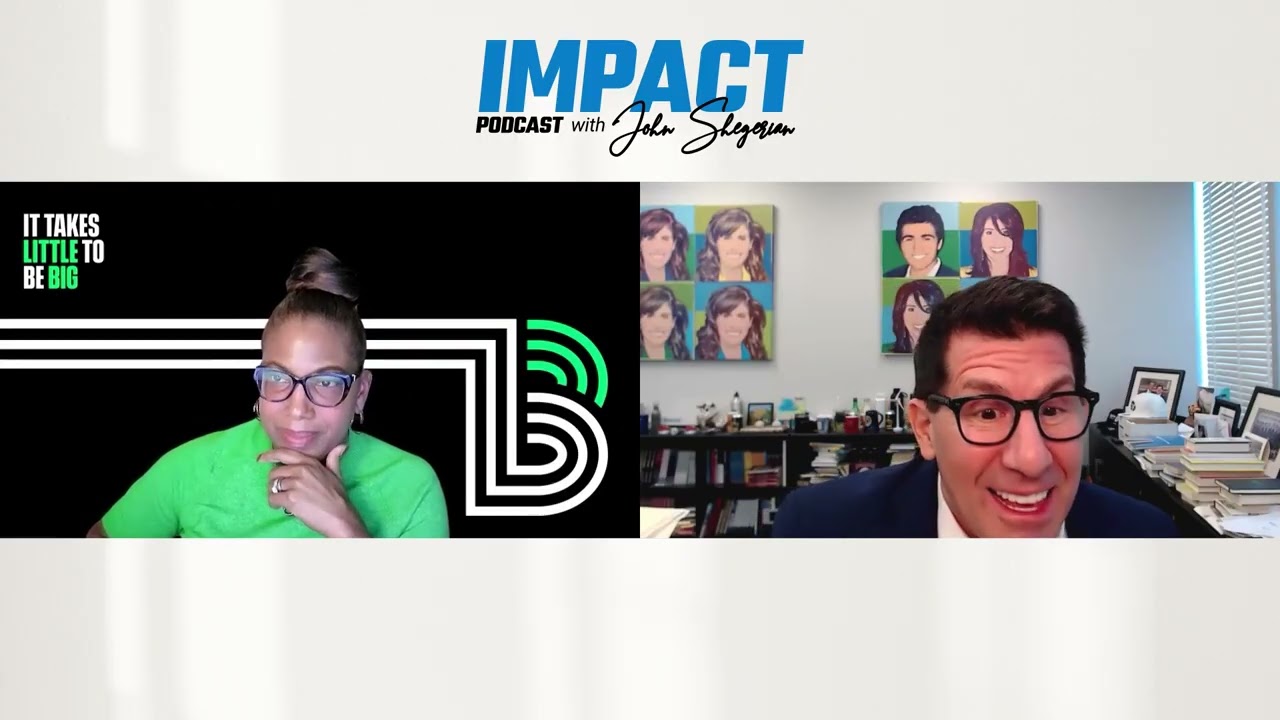
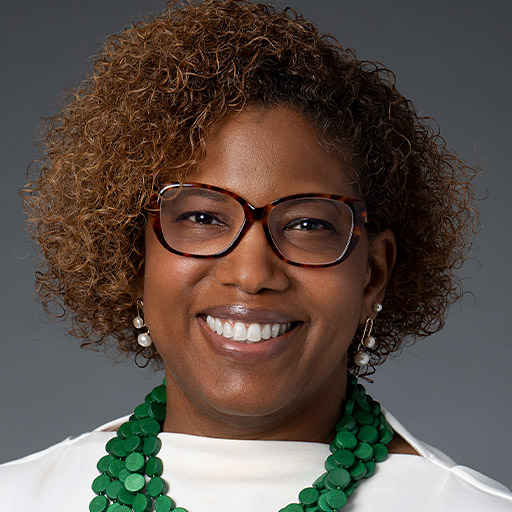
Ginneh Baugh serves as the Chief Impact Officer at Big Brothers Big Sisters of America (BBBSA), where she leads the Program & Impact team and drives national efforts to expand reach and grow access to mentoring. She provides strategic direction across the organization’s programs, research, and outcomes—ensuring that every young person, no matter their ZIP code or background, has the opportunity to experience the power of mentorship.
John Shegerian: Hit the latest Impact Podcast right into your inbox each week. Subscribe by entering your email address at impactpodcast.com to make sure you never miss an interview. This edition of the Impact Podcast is brought to you by ERI. ERI has a mission to protect people, the planet, and your privacy, and is the largest fully integrated IT and electronics asset disposition provider and cybersecurity-focused hardware destruction company in the United States and maybe even the world. For more information on how ERI can help your business properly dispose of outdated electronic hardware devices, please visit eridirect.com. This episode of the Impact Podcast is brought to you by Closed Loop Partners. Closed Loop Partners is a leading circular economy investor in the United States with an extensive network of Fortune 500 corporate investors, family offices, institutional investors, industry experts, and impact partners. Closed Loop’s platform spans the arc of capital from venture capital to private equity, bridging gaps and fostering synergies to scale the circular economy. To find Closed Loop Partners, please go to www.closedlooppartners.com.
John: Welcome to another edition of the Impact Podcast. I’m John Shegerian, and I’m so honored to have with us today Ginneh Baugh. She’s the Chief Impact Officer of Big Brothers, Big Sisters of America. Welcome, Ginneh, to the Impact Podcast.
Ginneh Baugh: Hi, John. It’s so wonderful to be here. Thank you for having me.
John: Well, this is just a pure honor for me to have you on because this is a topic we’ve never covered on the show before, and it’s become nearer and dearer to my heart as the years have gone on, and I’ve gotten older and learned about these issues that you help to fix and tackle with your great organization. And we’re going to get there. We’re going to talk about all the important and impactful work you and your colleagues do at Big Brothers and Big Sisters of America. But before we get there, I’d love you to share a little bit about yourself. Where’d you grow up, Ginneh, and how’d you get on this fascinating and very important journey that you’re on?
Ginneh: Sure. It’s great to share, and I’m excited about a moment where we can talk as people, right? Because we are part of the work. I was just talking about this as part of my New Year’s stuff that I love and have learned so much from outside of work that I bring into making me a good leader. So I grew up in the South, really outside of Atlanta, and moved a lot when I was little and lived in a neighborhood where we were studied. Like, you know, you think about research projects. What if we did this? What if we did that? And had some really awesome opportunities. But both the anchoring of my own family and some of the experiences with data and being part of research projects really led me to want to know more. I got a chance to be on the other side of that when I was in grad school. I thought I wanted to go into public service and I got to do some work on Capitol Hill and in some county government. But when I went to grad school, I became the researcher and really brought a lot of that lived experience to understanding what makes societies tick and how do we make things better. And so I’ve always wanted to bring more of the lived experience of people who are closest to the issues into how do we solve those issues. And I’ve had some really strong relationships throughout the time. My parents and my grandparents were just huge champions of community service in so many different ways. And then I had the benefit of some amazing mentors. One in particular, when I was 19, I was trying to figure out what to do. I had flunked out of college and things were not looking good, and was introduced to Margaret. And she took this interest in me and really treated me as an adult and, you know, talked to me as a grown up and I wasn’t just a kid who was lost, but she really also showed me what it could be like to have community voice as part of policy change. And she became a great mentor to me and helped me in pursuing and finishing my degree at University of Georgia. Go Dawgs. So it’s always important. But that kind of important mentoring relationship has stuck with me. And that was a moment that really kind of opened my eyes to the potential of what I could do. And that kind of led to all of this.
John: Well, first of all, not only are you a Bulldog, but you’re also very humble. Your master’s degree came from Johns Hopkins University, the great Johns Hopkins University. You know, go back to the mentorship part. Now, your family you grew up in was intact, I take it, when you were growing up?
Ginneh: Yeah. I have my mom and my dad from second marriages. My sister and I and brother benefited from that beautiful relationship. And I knew one set of grandparents, my mother’s parents. And they were just also a through line for us.
John: But you know, so interesting, as I’m now 63, and I’m a parent and a grandparent now, you know, when Hillary Clinton first wrote the book It Takes a Village, I never got it. But I totally get it now, of course, in retrospect, in terms of, it just takes more than the parents, because at some point, parents become a little bit like spam to their kids, what they say. And so having other trusted mentors and leaders in children’s lives, in young adults’ lives, is invaluable. Is that not true? Did you not find that with Margaret? Is that how it worked?
Ginneh: Yeah, absolutely. And one of the things that was so beautiful, and in some ways, again, I’m also a parent and mother of four. And so I can say something. And as soon as they walk out the door, that other adult who doesn’t have to say it or believe in them says it. And it rings true. And Margaret also had this amazing intellect. And she was really intense in that way, which was part of my family ethos. But she was also very much a career woman. And she was very much a leader in organizing all these things. And so I could see myself in the model that she was offering up. And she also really helped to open up those pathways, like, here is a way that you can do this crazy idea you have. And that’s what I think also mentoring does universally, right? So whether you have been mentored through Big Brothers, Big Sisters or not, almost all of us have benefited from somebody who saw us and our potential bigger than what we are. They’ve modeled a path that maybe nobody else did, or that we thought we wanted to pursue, and they gave us that guidance and support along the way.
John: I came from a divorced family, and I was without the internet being around or anything. And I was still a lost boy when I was a kid. And if I didn’t have the mentors in my life that were non-family members, both those guys, Saul Jacobson, Mike Agliardi, both have passed now, but I would not be here with you today. There’s no way I’d be here today. And they kept me on the straight and narrow when I was going off and being pulled in 92 other directions, which boys can be pulled in those directions, girls could be pulled in those directions. And if they didn’t keep me on track, I just don’t think it would have ended well. I just knew it wouldn’t have ended well. Talk a little bit about, you get out of Johns Hopkins, and you mastered in public policy there, what were your initial goals and where did you go first in terms of employment after Johns Hopkins?
Ginneh: So I want to tell you what happened while I was in grad school. I took this class on logic models and I was giddy. I was like through the roof. And everybody, of course, thought I was crazy. The professor was like, oh, wow, this seems to be something you gravitated towards. And it just made sense. Like, I don’t know if you ever had something that you didn’t know you were good at, but it clicked. And so that became the other entry into not only did it make sense to me, but I could use this other kind of superpower of translating it to others. I wanted it to be as simple as it could be for other folks. And that’s what I did when I first started. My first real big job out of grad school was at United Way. And I had the opportunity to help United Way in Baltimore for a number of years, starting with setting up their program on outcome measurement. It was still a very new thing in the United Way system, but there had been some examples from Atlanta and others. And so in Baltimore, they were trying to get that established. And so I became the trainer. I got to be kind of mentored again in the workplace from another person, John, who had been leading that work for a number of years. And he’s like, yep, you’re ready. Take it on. And then over that first decade of my career, both in Baltimore and then moving to Atlanta, I probably trained 1,000, 2,000 nonprofit leaders, because it wasn’t that I had done it from experience, but I loved this topic and I listened so deeply. And I didn’t just want to teach it. I wanted folks to get it. I wanted to see that light bulb. So you wait and wait and you want to help other leaders be strong. And I think that’s what I also started to hone in on as the place for me, which was being supportive of other leaders, which kind of is the through line to where I am today in that I spent 20 years of my career early on in the United Way system. And now I’m at Big Brothers Big Sisters, still really trying to empower other committed leaders.
John: Got it. When you left United Way, how many years ago did you join Big Brothers Big Sisters?
Ginneh: I’ve been on board here just over three years. It is amazing. It’s just the kind of both welcoming and fast-paced environment and amazing set of folks that it feels longer sometimes. So I’ve been here three years.
John: Got it. And when you were hired originally, was it for the Chief Impact Officer role or was it a different role?
Ginneh: This role. I came on board to lead this work. This is a new role for the national office, really helping us establish the way that we think about impact. And so I tell folks my role is to help our network know, show, and grow the impact. How do you know it? When you think about, do I know if something works? Well, you’ve got to have the data. We’re very curious. We use that as one of our principles in my team. We’re always asking the question, how did you do that? Is it a data point? Is it a story? What’s the evidence that lets us know this works and we’re having an impact? Then we show it. If we can see that it works and it’s innovative in one city, how do we scale that by showing it in two or three places? How do we use corporate partners and leverage another experience and really bring it to life? And then the grow is about scaling through tools and playbooks.
John: Okay. So let me just, for our listeners and viewers, first of all, to find Big Brothers, Big Sisters of America, you go to www.bbbs.org. It’s going to be in the show notes so you don’t have to stop driving your car or walking your dog or working out with weights or whatever you’re doing right now to write it down. It’s going to be all in the show notes so you’re able to find Ginneh and our colleagues. But let’s just talk a little bit about, let’s set it up. Big Brothers, Big Sisters of America, you serve over 5,000 communities across the United States in every state. You have about 100 employees back at the home office and the national office, and there’s over 200 Big Brothers, Big Sisters agencies spread out over the 50 states. So when you came in and there was a new role, you had that proverbial blank page in front of you, and that could be exciting combined with terrifying. So talk a little bit about the excitement and the terrifying, and how did you decide what you do on the first day, what you do on the first month, what you do in the first quarter, what you do in the first year? Was that given to you or did they give you that white page and say, you make it up, you create this, you’re here, so you pioneer this?
Ginneh: Yeah, it was really wonderful. Our CEO, Artist Stevens, and I were having a conversation over breakfast, and he laid out where this role fit in their strategic plan. And so the strategic plan was just kind of getting approved, and one of the big things was to grow the reach. And in order to do that, you’ve got to align around outcomes, you’ve got to expand our one-to-one plus model, we’re going to do some transformational growth. And I was intrigued. So I’m already intrigued by the idea and the big plan. And I said, okay, how much leeway do I have? What are the resources? What’s in place already? There was a small team, but he and the board had made a commitment to grow. So that was, you know, you can grow, you’re going to have some support. But I needed to lay out that plan. Where do we need to grow? How do we need to build a team? And one of the things that I did initially was I got to learn. This is the way that I’ve always done it. I got to be close to people. I got to listen to those leaders that I care about. I’ve got to read everything. And so I did an amazing kind of listening tour of my own. And in the research world, we call it snowballing. I call up John, John, will you meet with me? Then I say, John, who are three other people I should meet with? And then I go meet with those three people, and then I ask them who else. And so in my first 90 days, I had probably met with about 60 leaders. And that helped in such an amazing way to anchor me in what this mission means, what was important to people. And they were full of aspirations. This is a network that loves their data. They’re already committed to data-driven decisions. So I could see that when I was getting ready to put that stuff on my white piece of paper, I wasn’t going to have resistance. I had a huge set of supporters right away who wanted to do even bigger work. So, you know, as a seasoned leader coming into this, there’s a little bit of hesitancy. There’s always that, you know, new kid feeling and you want to show up well. And I remember somebody saying to me, hey, look, first round pick at the NFL. You are amazing, but you’re still a rookie. And this idea that your first Super Bowl or your first big NFL game, it goes fast. The game is going crazy. Like you thought you knew stuff. You thought you had skills. You were the best at where you were. And then that game is going fast. And I would say I had a little bit of that, that things were moving at this kind of wild pace, and somebody just being transparent who’s been working for a minute, that was unsettling. You know, so it’s not that everybody just coasts upward, but what folks around here did was, look, in your second year, after your 90 days, the game is going to slow down, but not in reality. You’re just going to see the moves. You’re going to see the plays. And that’s what I would say is the reality of once I got past my 90 days and then past my first year, it was that I could read the landscape a lot better. And so I feel like I’m fitting in and sitting in a good place from a staff perspective.
John: You’re talking my language because I love the sports metaphors. And when you study the greatest athletes, they’ll tell you one thing, that if you study Brady or Mahomes or LeBron or Jordan, and even Tiger, that their greatness comes down to pattern recognition. And as you said, they come out of college and what they say about them going into the pros is that what changes, the one thing that you just said, is speed. The game is so accelerated, but once they’ve done it enough, it slows down. The game is still moving at that speed, as you said, right. But for them, their brain is now used to it and the pattern recognition is there and they’re able to keep up and actually thrive in that environment. So that’s what you went through in that initiation.
Ginneh: Yeah, I did. And I say that all the time to others so that folks can feel comfortable making a transition in their career, whether that transition is I’m 22 getting into a first career or I’m 40 and I’m going to switch and do something really different and new, take the big leap and be okay with the fact that you’re going to have this period of time. It doesn’t mean it’s a bad choice or that you’re failing or anything else. It is just part of the newness. And if you can appreciate it, then you can really even still feel the tingle and you can feel the excitement, and then you get to a different state of steadiness.
John: And I assume, years ago you didn’t know it yet, but what it meant when he said this to me, Peter Ueberroth, who was a legendary business guy, who went on to run the LA Olympics back in the day at a profit, then became the Commissioner of Major League Baseball. And then when I met him, it was in 1993 after what was then called the Rodney King Riots, which is now called the LA Riots. And he was the head of Rebuild LA. And I was part of that because I was the co-founder of Homeboy Industries. And I was with Father Greg Boyle. And so one day I was with Peter at a lunch, a small group of people. And I said, Peter, you’ve changed jobs so often with success at everything you’ve done, but is that a little bit disconcerting or unsettling? He goes, John, the way I look at it, and I never got it when he said it, but boy, do I get it now. And it just goes to exactly what you’re just saying. He goes, I think people are like plants and it does them well to be repotted every seven years. And he was just that clear about it. And I’m like, I thought you’re supposed to start at 21 or 22 and keep going until you’re 63 and you get a watch and it’s sort of one and done. And that was that whole generation of thinking, you know, back when I was a kid, that’s the way it was. I mean, that’s what you knew your grandpa did or your dad did.
Ginneh: Right.
John: But look at Warren Buffett, 95, arguably, not arguably, scientifically the number one investor in our lifetimes on the planet. He’s 95 and look at all the other legendary business people, men and women that are still going in their sixties and seventies. Larry Ellison over there and Gates is still at it and Clinton’s still at it. And I mean, both Hillary and Bill are still at it. You know, so it’s so interesting what you said, to be open to new opportunities and to enjoy it, lean into it, because the neuroplasticity of our brains anyway allows us to learn more and do things differently than we were doing it in different decades of our life. So now you’re there, you’re catching up with the speed. What preconceived notions did you have going in that turned out not to be what you thought, and what opportunities did you learn about that you really got more excited about once you were in and once you were up to speed, so to speak, that you knew you could say, oh, we can do this and we can do this bigger and better, and I’m so glad I’m here to help do it bigger and better?
Ginneh: Yeah. So one of the things that was an aha that I had no idea about, but it just echoed so much of my own personal journey, was the fact that the increasing age of mentorship, Big Brothers, Big Sisters serves young people from age five to 25. And I think that’s one of the biggest unknown truths or misconceptions, that we are only for young kids. And so one of the things that was an aha was that 18 to 25 year olds is our fastest growing group of littles. And this was exacerbated during the pandemic. It had started before the pandemic, but it was really exacerbated. That was a really sharp inflection point where young people who were 17 or 18 were saying, I still need guidance, please. I want to stay connected. And it makes a lot of sense to me because even as we were just talking about jobs and being new in a job, what does it mean to try to get your first job today? So you just heard about me starting here, but I also looked for jobs before, and I wasn’t trying to start a resume and figure it out and apply. But for an 18 year old who is trying to figure out what kind of degree should I get, or I need to work because that’s what my family needs, and I want to go to school, and they’re trying to weigh these trade-offs, they need somebody else in their corner. And really 60% of the young people that we support are living in low income families. And so a lot of them are first-generation college goers. And so that’s one of those ahas that I discovered that we do really well. We’re doing it in just a fantastic way, whether it is a connection that helps young people navigate what’s next, whatever that might be, or if it’s really focused on a career and helping them navigate, you know what, get into this job, apply for this one. I know it doesn’t sound ideal, but do this, and then you’re going to go into this thing. Or it’s working with a community college. We’ve got some amazing partnerships with community colleges. Think about that young person who is considering accounting, but they don’t know what it’s like to actually be an accountant day to day. We’ve got a partnership with the National Association of Black Accountants where they’re mentoring these young folks. It helps them stay in school and be motivated. It helps to know somebody who does the job day to day, right? So that’s one of those things that from a programmatic perspective, I’ve been excited to help our network put that kind of programming in place for young adults. I think the other big moment or something that inspires me, and I’ve mentioned kind of being a mom, I have three boys and a girl, and it is our work for BIPOC men and engaging them and getting them back involved in this network. The stuff that you say in a super easy way, I’ve been hanging out with football since my oldest was four. We get dirty all the time. You play sports. You’re hanging out. Of course, I know where men are. They’re on the sideline. They’re over here, and they also are wanting to do things together. What we learned and did a lot of research on is what’s the thing that will make folks feel seen and feel like they have community? Men were volunteering, but it was kind of quiet and behind the scenes. We’ve had tons of amazing male bigs and folks that are alumni now. What we did was capitalize on that strength and say, let’s do a campaign. Our big marketing campaign, It Takes Little to Be Big, really helps showcase how simple it is and how many ways you can get involved. There’s so many ways to mentor, and we’re really excited about the success of those things, especially over the last couple of years because we’ve seen a 7% increase in BIPOC men getting involved as mentors. While other folks are talking about the crisis, this is really something that inspires me, that we’re trying to scale, because it’s really a best practice to get more men involved in mentoring.
John: How old is Big Brothers Big Sisters of America?
Ginneh: It is 120 years old. Started back, yes, in the 1900s. This idea in our founding came from a court clerk who saw boys getting arrested and sent into the juvenile justice system, and he said there’s got to be another way. He rallied his friends to start mentoring young boys and went to the judge and said, hey, as an alternative to sending them into the justice system, can we mentor them? That was our beginnings.
John: I want to get into trends in a second, but I’m on your website now. Again, for our listeners and viewers, to find Ginneh and all her colleagues and all the important and critical and impactful work they’re doing, please go to www.bbbs.org. It will be in the show notes. We’re going to make it easy for everybody, because we want you to be able to find Ginneh and Big Brothers Big Sisters of America. But these statistics that are on the landing page of your website are just so compelling. So 20% for Big Brothers, Big Sisters littles, the kids that you mentor, 20% are more likely to enroll in college if they have a big brother or sister. They earn 15% more money over their lifetime if they have a big brother or big sister. And Big Brothers, Big Sisters helped close two-thirds of the economic gaps that right now exist in our society. And some can argue those gaps are even getting wider. Let’s talk a little bit about trends. You know, I’m so thrilled that you’re here today and that we’re highlighting you and this great organization that you represent, Ginneh. Because myself, just in my own journey, just this past summer, I did a deep dive into Richard Reeves’s work and Scott Galloway’s work and Scaramucci’s work and the Lost Boys, and Adolescence came out and further highlighted this crisis. And then as I’ve done more, and I’ve been involved with the internet since the founding of the internet, since sort of Google was founded and I started at .com. So the online, the curse and the blessings of the online technological revolution, I’ve tried to stay up on, and two of the, I think, curses when it comes to our young people is online gambling and gambling in your pocket and pornography in your pocket. Talk a little bit about some of the mentoring trends that you’re seeing and what you’re trying to address now with all the zeitgeist speaking to these issues and highlighting these issues both in film and media and in the podcast world and even in the leadership world when Richard Reeves and Anthony Scaramucci and Scott Galloway are focused on this issue. Those are three heavy, heavy heavyweights that are giving this topic a lot of airtime. Talk about the trends that you’re seeing and how we can help Big Brothers, Big Sisters of America work against those trends and help solve these bigger problems that are now coming up.
Ginneh: Yeah, absolutely, John. I love that you are digging into the data, and like all of us, really appreciate the conversations that have been happening because when we look at things from a new perspective, then we can put attention to it. And when we think about it, like I mentioned, going all the way back to our origins and what was going on then, 120 years ago is a very similar moment because it wasn’t just happening to a few people or a small segment. And all of what you talk about is a larger amount of young people who need us and boys who need support. What we know is that on our waiting list, we still have about 13,000 boys of color who are waiting across the country, looking for a mentor and in need and desiring men to step up and say, yes, I’ll be there for you. And this effort to bring in more men I think is meeting everybody where they are. And we really pride ourselves on being that kind of organization. You say there’s men who hear this data. Maybe you’ve read the book or been part of somebody else’s podcast. And you’re sitting back here wondering, well, what can I do? I always think, you know, I work from home. I look out my window. Can I go just outside and pick somebody at random to start mentoring? Well, that probably isn’t the right method. And we want to be there as that conduit. So when you’re not exactly sure how to get started, that’s why you go to the Big Brothers, Big Sisters website. Or you’re thinking, I’ve got a group. I’m part of a group of men who meet every Saturday. And we’re watching college football all the time. Why don’t we watch this college football game with some other young boys? Just simple things like that to build a relationship, we help foster and put in place. So we’ve had some really great initiatives like a partnership with the Alpha Phi Alpha Fraternity. And that model has helped us really amplify group mentoring. Small groups of men who already are in a brotherhood who see the value of mentoring are getting together with young boys. And Big Brothers, Big Sisters is helping to make that happen all over the country, in Atlanta, in Tampa, in New Orleans. And so we say a partnership with a fraternity is one way that we’re doing this. Another way is flag football events. John, you and I share this love of sports. Let’s go get together, the easy entry point, and really just have fun together first. And so Big Brothers, Big Sisters is creating those pathways and easy entry points for men. And then the other thing that we’re really leaning in on is our corporate partners and leadership. Because if you’re not sure what kind of conversation to have, why not just start like you did with me? Hey, tell me about your pathway. And sharing your own career path is one way to do it. We’ve got an awesome board, folks like Mike Carroll, who’s the chair of our board. He’s been a big and his company really hosts young people through a program we call Beyond School Walls. Young people come from their high school over to the company office, and you sit around for an hour, twice a month, and you’re able to mentor. So we make that super easy. And that’s another way that men are able to showcase and share their own lessons learned, their personal journey, and really get engaged in a tangible way. So the young kids say IRL. You can do it through work. We’ve got a youth council that is doing that also. So I’ve mentioned a whole lot of things, but we’re really excited about leaning in.
John: Ginneh, I jumped ahead a little bit, and I don’t want to talk in shorthand because I’m enjoying the conversation so much. I want to go back to some things that I sort of jumped over and spoke in shorthand with you about the Lost Boys and Reeves’s work and Galloway’s work and Adolescence. Let’s go back to square one. Why boys more than girls? Why are disproportionately boys in need of mentors more than little girls?
Ginneh: So we’re thinking about it as boys need different. And so the really unique moment is about how what boys are needing at this moment right now is this stuff that’s the combination of them not fitting in as well at school. They’re looking for different pathways than are traditional for men. And that’s what’s creating a bit of a crisis. The other part of the crisis is volume. When you see young people who are not working and not in school and they’re 18, 20, 22, that as a society creates a lot of issues around income, around instability, around mental health and loneliness. So those things are pointing to gender as something that we’ve got to pay attention to. And we were really fortunate to be an organization that serves all segments. And so we can say, yes, we’ve got special programming that can meet those needs. And we need to pay attention. And it’s a both-and moment.
John: So even though there are 13,000 young boys waiting for mentors across America, is there still a shortage of women mentoring young girls as well?
Ginneh: There is.
John: Okay.
Ginneh: Yeah. We have a wait list of around 21,000. Now, again, boys and boys of color are the majority of that wait list. But yeah, there’s still lots of girls also who are seeking a mentor and looking for somebody to lean in and say yes.
John: Let’s talk, I mean, we talked about at the beginning of the show, you’re in every state and over 200 Big Brothers, Big Sisters agencies. How many young people are you serving currently? I know now the need, 21,000, we need 21,000 adults across America to step up and to help out here with just a waiting list today. It’s not a big number out of 330 million people if you really think about it. It’s doable. How many are you serving on a day-to-day basis so we get a little bit of scale and scope here?
Ginneh: Sure. So our work, we think about it as the young people we serve and the mentors that we support as well as a little bit of that immediate ripple effect. It’s around half a million folks.
John: Wow.
Ginneh: And young people, whether it’s the one who’s in school and their three friends benefit, that’s part of what the research says all the time, that when you think about even in a household like mine, one young person being mentored, it relieves a lot of pressure off parents. It might create inspiration for a younger sibling. All of those kind of benefits are there.
John: Talk a little bit about the new challenges. You know, I mentioned earlier, of course, the very obvious pornography and gambling in your pocket. But the technological revolution is also, as you mentioned earlier, creating this crisis of loneliness and isolation. And in 1998, Google was founded. Isolation grew as technology grew. And then COVID hit. And then we got even more isolated and more lonely. And the leaning into technology has become a severe epidemic among the young digital natives across the United States. I’m an analog native. I’m 63 years old. I’m not a digital native. How has that negatively impacted the youth across America? And then how does Big Brothers, Big Sisters of America work to contradict that loneliness and those problems that have come from the technology that have created this separated society?
Ginneh: Yeah. We’ve been following the trend. We have an amazing team of specialists who specialize in youth safety and well-being. Again, what at the core is most valuable for young people and adults, the thing that we do best is connection. And so a couple of years ago, when the U.S. Surgeon General came out with the new research, that’s the kind of thing that really just stung me. It said two things. 40% of high school students were persistently lonely. They had this huge amount where you could really in any one classroom have that many young people that just feel like every single day I’m alone, that nobody understands me, I don’t feel connected, I’m really in a place of despair. And the other thing about loneliness is that it wasn’t just personal or emotional, but this has public health ramifications because being lonely and persistent loneliness is like smoking 15 cigarettes a day. Now, if you saw your 14-year-old smoking 15 cigarettes, you’d do something about it. Right. And we all know those kind of big health impacts. And so we shouldn’t sit back and say loneliness, John, if you want me, call me. We need to reach out and we need to treat loneliness like it’s an epidemic, the kind of social issue that says we can check on you, we can provide a space and connection. And we have the research that says what is the best way. Mentoring is the best way. Because mentoring is customized. And what mentoring does is it lets that young person pursue and communicate their own dreams. What we see in the results, part of the research that you mentioned earlier on our website, that comes from when people are mentored when they’re young. You can be as young as 10, 11, 12, and what you end up seeing is they are more connected in school. They end up going to school. Their school attendance goes up. Their sense of connection goes up. They feel like they have an adult in their corner. 95% of the kids we mentor feel like they have somebody who will support them. So those relationships form really well. And they’re sticky. The impact of it is sticky. Even if you’re mentored for a few years in middle school or high school, you see that there’s a long-term benefit. So that’s why we’re also paying attention to the relationship as the core thing. We want to make sure that young people are matched really well with a caring adult and that the adult has the support around them also. So if you decide to mentor with us, you’re going to be supported. We’re going to provide you with those tips and tools. Is this normal for 14-year-olds? We’re also going to make sure you’re connected to each other because the connection is the thing that we do super well.
John: You know, I’m embarrassed to say a couple things. First of all, I want to understand better. How does this 21,000 people needing mentors show up? I mean, do the kids walk into your offices? Does someone bring them in? How do you designate and find these young people that are in such need of good and legitimate mentors?
Ginneh: So it’s their families most of the time. You know, we have an amazing network of caring, concerned family members. So when you think about who’s in their corner, there’s a parent. And just like you and I have talked about, there’s a moment when your mom thought you need somebody else in your life. There’s a moment when I go, you know what, you’re not listening to me. Or you’ve got an interest in something that I want you to see from another perspective. And I don’t know much about car mechanics. So let’s go find somebody. So the families come in to us. And the thing that we’re really trying to do next is reach beyond this. Reach beyond that list of 21,000. Because we know that there’s around 10 million young people right now who face multiple barriers to finding their own mentor. So some folks have connections. And just by a simple ask of their own networks, they can find that mentor. But there are 10 million young people who face multiple barriers. They’re living isolated in a very rural area. Or they’re in a low-income community where everybody’s doing kind of the same job and the same income bracket. And they’ve got big aspirations for something. And so we want to make sure there’s mentoring in every school. And that every company that’s purpose-driven has a mentoring program. So those are our two big aspirations for really getting mentoring to be everywhere, scaling this.
John: How many hours a week or a month does a mentor have to commit to to be a good mentor, to be one that is going to have success with these young people that really are desperately needing their help and guidance?
Ginneh: Okay. Let’s play a game. You take a guess at a number of hours per week.
John: Okay.
Ginneh: What do you think it would take?
John: You know, I’m going to say this. As I’ve gotten older, of course I’ve enjoyed my public speaking. But more importantly, I’ve really enjoyed when I go public speaking, I give out my name, my full email address, and my cell phone number. And I tell people, reach out. You need my help? I don’t care on what issue. Reach me. And a lot of them do. More than I ever thought do. And I’m shocked to tell you that it’s a lot less than I ever thought. The number is a lot less than I ever thought because just with some words of encouragement and of hope and of some good, older person, responsible direction, these kids are so grateful and it’s literally become, probably besides my own children and grandchildren, the greatest joy of my life to help mentor young people. So I would guess, I’m going to go back because I want to answer your question directly, not indirectly, two hours a week. Two hours.
Ginneh: Two hours a week. And I bet you spend two hours a week surfing. I try not to admit it, but I do surf a lot. Mine is Instagram. I’ve got a recipe for you. Maybe there’s some fashion on there. I won’t tell you all the other songs and random things that I watch. But I’m easily over two hours a week. To mentor with us, it’s a lot less than that. It’s about an hour to a half hour a week. So you’re talking about four hours in a month.
John: Wow.
Ginneh: Between time in person, maybe a message or two. That’s it. Four hours in a month. I lose four hours on the device, you know.
John: Come on.
Ginneh: And it is that, right? And that’s what we say. You don’t have to be perfect. Just present.
John: Wow.
Ginneh: You don’t have to commit your life, just an hour a week.
John: That’s beautiful.
Ginneh: Yeah.
John: That’s beautiful. Talk a little bit about, you know, one of the things, a common theme that I hear when I go to colleges and campuses, especially to publicly speak on topics like impact and sustainability, is the young kids are being terrified by both traditional media sources and social media sources that AI is coming for their career and why even get classically educated. I mean, because it’s all for naught. And some of them don’t raise their hand when I’m in class, but they’ll text me after and say, what do I do? I’m scared. I’m scared that I have no opportunities. And so let’s talk about this. When I was 21 years old, the world was all done in analog. There was no technology besides landlines. And everything was done face to face. So face to face and nose to nose was ubiquitous. And as you and I know, especially post-COVID, the world has leaned on to this, and maybe not even this, maybe not even Zoom. A lot of the young kids that come to work for me are afraid of even picking up a phone and they’re trying to close deals or do sales or do marketing over text message or Instagram, which is very impersonal and very isolated. How do we turn this around, Ginneh? How do we focus on mentoring and telling this next generation that potentially to make themselves AI-proof, one of their secret superpowers can be people skills, soft skills. How do you do that and how does Big Brothers, Big Sisters of America work on soft skills for the next generation that they mentor?
Ginneh: Yeah, John, it’s absolutely one of the top things that we are talking about on both sides, an employer leadership perspective as well as from young people. So what we find is that so many of the young people we interact with are really hungry for something in person. Their AI perspective is I can’t trust what I’m seeing. And so it’s a little bit of fear because they’re hearing that message, but there’s so much distrust, so they don’t want to get near it either. And what we found is, again, partnership, a real life person who says I’m using it like this. And when you model how to use it in a respectful way, in a way that enhances your employment, in a way that’s not a shortcut copy and paste or a cheat code, then they start to see it because they’re seeing it from a respected person. That’s so much of what we do. And then the other piece around the soft skills, or even what folks are saying, the durable skills, it’s the skill that’s going to last you a lifetime. I will tell you, I know firsthand, relationship building, when Margaret worked with me, I kind of knew my stuff, or I knew parts of myself. I knew I was really good at public speaking, so I could get up on the stage. But then you put me in the room for the networking part, whoa, you know, like I stumbled over my words, I wasn’t sure who to talk to or how to get a conversation started. And somebody like Margaret would take me around, and I could just watch her do it. And then you can say, oh, okay, I get it. And then I could develop my own way. And I think that’s part of what we do. And one of the things that is not complicated, again, but young people build so much public speaking, communication skills, confidence through mentoring, because they’re talking all the time to somebody who they don’t know. Essentially, you’re a stranger, but you’re getting to know them. So you can’t use the shortcut. They kind of explain themselves, they explain how they feel, they’re explaining their aspiration. And what was half an hour playing basketball, and then right after that, the last 20 minutes, after you’ve sweated or after you’ve watched a game, that’s when those little special nuggets come out. So it’s very informal, through the mentoring relationship, where a lot of skills are built. And then the other thing that we do is we layer on some of the technical skills and the career exploration. So we’ve got a new partnership with Operation Hope, where we’re going to do AI literacy. It’s essential for this segment to be really fluent, not just consumers, but designers, not just aware, but fully versed in how to use AI in so many different aspects. It’s like using a calculator. It’s like the fact that computers showed up and McDonald’s ordering has changed, right? So we know that AI is going to change the world of work, but there’s so much work that’s still needed. That’s what we’ve got to tell folks.
John: That’s right. So is that part of the coaching that you do for your big brothers, big sisters, in terms of their mentorship? Like you said, do you give them tips on what to focus on with the young people? Of course, listening to them and seeing what their needs are is critical, but do you also coach the mentors on how to best be the best mentors to the young people that they mentor?
Ginneh: We do. We absolutely do. So that’s why I say you’re not alone when you sign up with us. You’ve got all the support there. And one of the things that we do is we have a person. So all those local affiliates, each one of them has somebody who’s called a match support specialist. If you sign up to be a big, there is somebody who is your match support specialist who you know personally, and they call you, they text you, you can get tips and reminders to them. You can also call up and say, hey, there’s a situation I’m not sure what to do with. Can you help talk me through it, whether that is a crisis that your young person’s going through, or even they want to go to college in New Jersey, and I’m here in Atlanta, I need help figuring this out, right? And so that person is really, really important to our model of support for mentoring.
John: Let me understand this correctly. You’re assigning a master mentor to the big brothers, big sisters mentors that are the rookies that are signing on to mentor the 21,000 young people in America that are in great need today.
Ginneh: That’s right.
John: Never realized that. That’s brilliant. That’s brilliant. So you’re setting everybody up for the biggest chance of success.
Ginneh: Yes, we are. We’re really hoping so, right? And we’ve learned that that works over and over and over. And so when anyone wants to be part of our network, you don’t just do it for a little bit. Some folks are bigs when they’re in college. You’re always part of the family. And so we’ve got an amazing alumni network. Know that you can come back. You can be a big in Atlanta, and then you move for your job, go be a big in Chicago, or you get busy with your career, come back and be a big, right? John, you’re never too old. The youngest bigs are 16 years old. So we use them in high school all the way up. Please get folks to join and get your company involved. Get your sewing club. Get your fraternity brothers involved.
John: What’s the commitment on the Big? You already said you gave the science and the numbers behind the commitment in terms of how many hours it takes to make a difference. And I love that. And that’s so critical. What’s the commitment in terms of time? Do bigs commit to a year at a time, two years at a time? What’s the typical commitment that you’re looking for?
Ginneh: Typically, we ask for a year. It fits in with people’s schedules. But guess what we’ve also done? We’ve created a couple of platforms and ways for people to get involved when you’re not sure about that. That’s one of the other big learnings that we found around young adults. I know when I was 22, I didn’t know exactly where I was going to be in the next year. So would I sign up for something like this? Probably not. So instead, we’re saying, come be a volunteer in maybe our six-week program where you’re going to talk about helping to navigate college. You just got out. You’re really sharp on that. And that’s a great place. Or we’ve talked to lots of folks who say, I’m really busy, but I’d love to do this thing on flag football, for instance. So they come four times a year. We’re making lots of different ways and pathways for folks to get involved because it’s more important that you mentor, that you really get involved and commit what you can do.
John: Share with our listeners and viewers, we always want to give them other, like you said, the creative ways to be involved. Obviously, the classic way for many people who believe they don’t have time is donation. But then they also work for corporations or own corporations that can get involved. Then, like you said, they can become a mentor. They can also become a part-time mentor or a subject matter expert. What am I missing? What other entry points do you want to make sure that you share with our audience so we can get as many people excited and involved as possible?
Ginneh: Be a champion. Tell the story of mentoring and really spread the word about how impactful it is. That is incredibly important. You might see us at Super Bowl, and maybe you saw the Super Bowl commercial last year. Get on LinkedIn and tell your story of what a mentor did. This is National Mentoring Month in January. Every month is an opportunity to tell the story of how impactful mentoring is. That’s something that we say everybody can do. Tag us. Celebrate it. Celebrate somebody else’s story. We’ve got a lot of great research. When it’s time to also advocate, whether that’s at your city or your state level, if somebody’s looking for a way to invest, let them know. Those voices matter. Let them know that mentoring matters. It makes a big impact.
John: You know, Ginneh, you’ve been now at Big Brothers, Big Sisters of America for three years. Now, the world has slowed down. The world that you’re in has slowed down because you’re now a pro. You’re now Brady status. Now, what’s next? What are you excited about in 2026 and beyond where you can take it? Because now that you’ve mastered it, or at least you really are no longer a rookie, now you can set your sights on some bigger opportunities and goals. What are you excited about this year now that we just turned the page on 2026?
Ginneh: I am super excited probably about two things. One, amplifying our research. I do think that in this day and age, people are very choosy. Cities have a lot of options. Companies have a lot of places where they could put their money. Individuals are really discerning. And so, I want folks to see the research because I want you to invest in something that has real data behind it that makes a difference. So, amplifying the research. The other is probably expanding our corporate partnerships so that we can have more college and career readiness options. Career exploration. Like I said, it’s so different than it used to be. And from my own experience with my children and other folks, young people that we listen to, they need more hands-on experiences. If you can even give them a couple of hours a week, whatever else, these experiences in the workplace, I think that investment today is going to change the next five years. So, I want to do those kind of big things in 2026 that I think are going to be catalysts for some bigger stuff.
John: Well, as you and I know, Ginneh, impact never has a finish line. There’s always more work to be done, especially impactful work to be done. So, I just want you to know, you’re always welcome back on the Impact Podcast to share your continued journey and the importance of Big Brothers, Big Sisters of America. I want to thank you, first of all, for spending some time with us today. I want our listeners and viewers to find you at www.bbbs.org and get involved. There’s so many windows of opportunity that Ginneh’s laid out for everyone to be involved. And you’ve been so kind to spend over an hour with us today. And I’m grateful for the time you spent with us, Ginneh But honestly, I’m more grateful for the fact that you and all your colleagues at Big Brothers, Big Sisters of America are making the world a better place.
Ginneh: Oh, thank you so much, John. I appreciate you. I appreciate the listeners. This has been fun. So, I hope everybody has a great time. And tell your story of mentoring and the impact. And keep listening. This is a great forum for all of us to get sharper and have a bigger impact.
John: This edition of the Impact Podcast is brought to you by Engage. Engage is a digital booking platform revolutionizing the talent booking industry. With thousands of athletes, celebrities, entrepreneurs, and business leaders, Engage is the go-to spot for booking talent for speeches, custom experiences, live streams, and much more. For more information on Engage, or to book talent today, visit letsengage.com. This edition of the Impact Podcast is brought to you by ERI. ERI has a mission to protect people, the planet, and your privacy, and is the largest fully integrated IT and electronics asset disposition provider and cybersecurity-focused hardware destruction company in the United States, and maybe even the world. For more information on how ERI can help your business properly dispose of outdated electronic hardware devices, please visit eridirect.com.
 Spotify
 Apple Podcasts
 Amazon Music
 iHeartRadio
 YouTube
 YouTube Music
 Audible
 Pandora