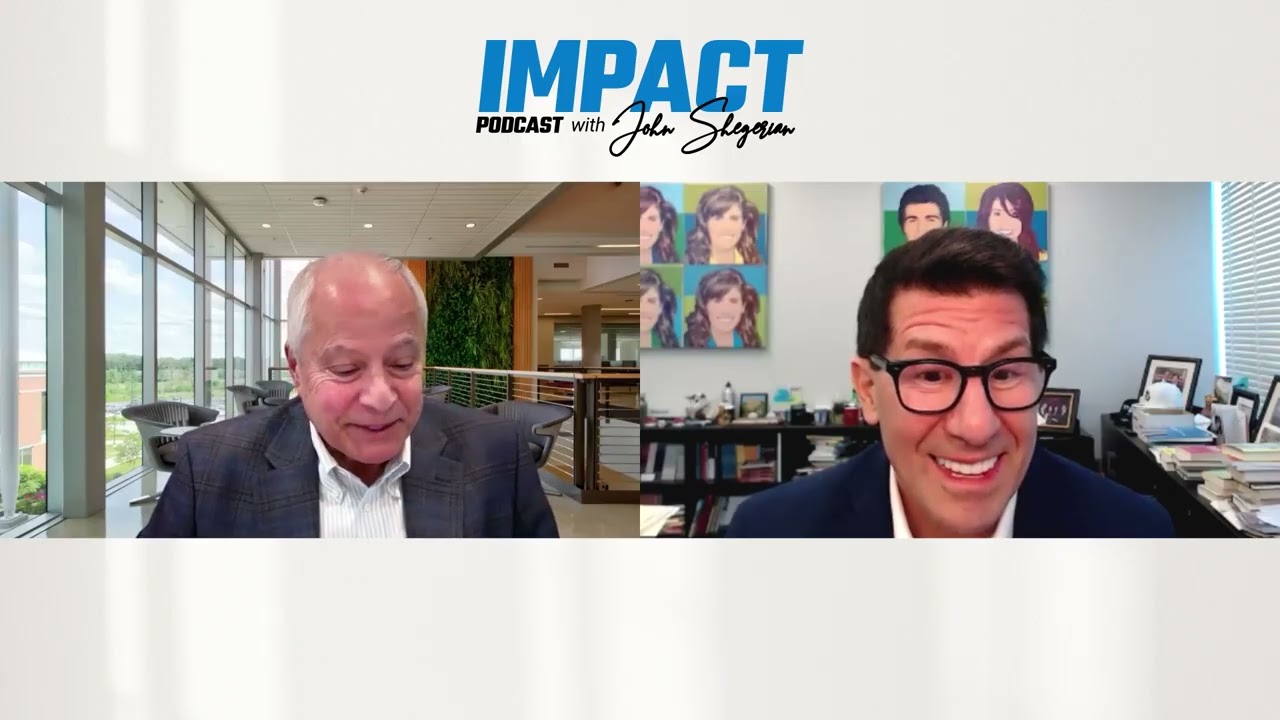
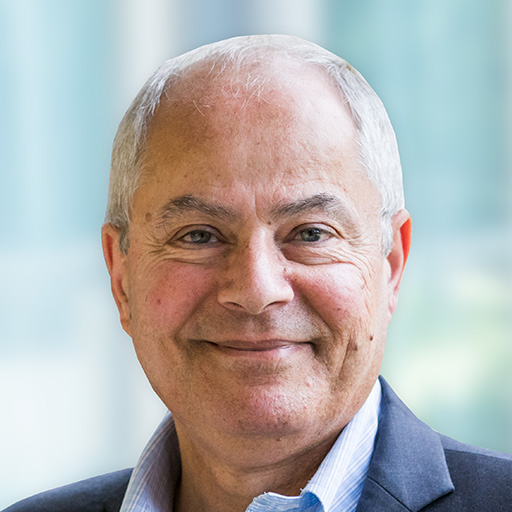
Dr. Nabil Nasr is the founding Chief Executive Officer of the REMADE Institute, where he oversees everything from node-level research roadmap development to corporate engagement of the Institute’s largest industrial partners. Dr. Nasr also serves as the Director of the Golisano Institute for Sustainability and an Associate Provost for Academic Affairs at the Rochester Institute of Technology. Throughout his career, Dr. Nasr has worked in the fields of sustainable manufacturing, remanufacturing, clean production, and sustainable product development, and is considered an international leader in research and development efforts in those disciplines. Dr. Nasr has served as an expert delegate for the U.S. government in several international forums, including the Asia Pacific Economic Cooperation (APEC), the United Nations, the World Trade Organization (WTO), and the Organisation for Economic Cooperation and Development (OECD). Dr. Nasr is also a member of the International Resource Panel (IRP) of the United Nations Environment Programme (UNEP).
John Shegerian: Do you have a suggestion for a Rockstar Impact Podcast guest? Go to ImpactPodcast.com and just click, be a guest, to recommend someone today. This edition of The Impact Podcast is brought to you by ERI. ERI has a mission to protect people, the planet, and your privacy, and is the largest fully integrated IT and electronics asset disposition provider and cybersecurity-focused hardware destruction company in the United States and maybe even the world. For more information on how ERI can help your business properly dispose of outdated electronic hardware devices, please visit ERIdirect.com. This episode of the Impact Podcast is brought to you by Close Loop Partners. Close Loop Partners is a leading Circular Economy investor in the United States with an extensive network of Fortune 500 corporate investors, family offices, institutional investors, industry experts, and impact partners. Closed Loop’s platform spans the arc of capital from venture capital to private equity, bridging gaps and fostering synergies to scale the Circular Economy. To find Closed Loop partners, please go to www.closedlooppartners.com.
John: Welcome to another edition of the Impact Podcast. I’m John Shegerian and I’m so honored to have with us today, Nabil Nasr. He’s the CEO of the REMADE Institute. Welcome Nabil to the Impact Podcast.
Nabil Nasr: Thank you. And it’s wonderful to be with you, John. Thank you very much.
John: I was telling you off the air before we started recording, I only have one regret about this Podcast that I should have had you on earlier. You’ve been doing this work for so long and been doing great work for so long and have inspired me for so long that I’m so finally glad that we invited you and that you agreed to come on because your work is not only some of the most important work and has inspired so many people like me, but is now going to help us carry us into the next generation of economies which is really the Circular Economy.
Nabil: Right. Well, we can only talk about how things should be done and we can offer scientific solutions and all of this stuff. But if it wasn’t for great industry leaders like you actually doing the actual work, carrying out a lot of this vision, we wouldn’t make any progress. So, we all need each other.
John: It works both ways, but I just want the audience to know you’ve inspired me and many other entrepreneurs along the way and continue to inspire me with your great work. Nabil, before we get going about everything you’re doing at the REMADE Institute, can you share a little bit about yourself, where you were born and how did you get on this really impactful journey that you’re on?
Nabil: Yeah. I was actually born in Egypt. I went to engineering school. I was trained to be an engineer and I immigrated to the US at a young age. I finished college actually in Egypt, so not that young.
John: Okay.
Nabil: And I remember I started doing a lot of consulting work early on while I was still in graduate school. And I remember working with one company and walking[?] in their facility looking at what they do and all of a sudden they explained to me that there’s something called remanufacturing of their… It’s all medical equipment, very large, extensive hardware and everything else, medical equipment. So I walked in there and they educated me on what remanufacturing is. And I think that changed my perception of everything. I was never taught about how you take equipment back, how you salvage material, how you bring material back and bring it back to like new conditions for remanufacturing. And I got so interested in this area and once I got my PhD and all of that, it became my passion to actually see what we can do in this area. Because realizing how large this piece of equipment is and all the material that we consume to make it. And then after a few years, because the technology advanced so fast in this area, and you don’t want to work on application with, it’s critical for human health, with equipment that are 3, 4 years old. You need to always upgrade. So to take those equipment, take all this hardware and upgrade it to the latest technology was what really remanufacturing does. And that really was how I started into this area. I didn’t learn it in school. I think in many cases we don’t teach it in schools. And I spent my career actually doing a lot of development. I always said in remanufacturing, it’s an art. And my job was to work with others to help translate that art into science. So all of my career actually, for example, if you have a module in a machine and you are thinking that this module still has a lot of life left in it, if you can confirm that this is a case, you just cannot use it again. So we developed something called signature analysis, where we can actually take this module and determine its remaining life through science and technology. So it’s just a fascinating field that intrigued me years ago. And it continues to drive my passion for this area.
John: When you were classically trained as an engineer, what was your original goal? Were you going to be an engineer in what industry?
Nabil: I studied mechanical engineering and then in grad school I shifted to manufacturing engineering and my passion was really in how you take a design and translate it into a product, manufacture it into a product. So I was very much in the interface between design and manufacturing.
John: Understand, that’s so interesting. Now, you get inspired, you understand that reuse can be a thing. When did you then evolve your career into creating and founding the REMADE Institute? And how did that evolve? Like, from the beginning of your inspiration to the beginning of the REMADE Institute? What was the evolution?
Nabil: Well, the time between becoming really interested and passionate about the work in this area, till[?] REMADE Institute was quite a few years. Initially I created… I’m at Rochester Institute of Technology in the engineering school at the time and I founded the center focused primarily on remanufacturing and resource recovery. That was the name of the center and still exists today. Center for Remanufacturing and Resource Recovery. I actually added a lot of brilliant engineers, a lot of science and technology in this area. We did work with a lot of companies in many countries. And that took a few years. And then I helped in the founding of the Remanufacturing Industries Council, which is very strong council that exists today and does a lot of great work. So a lot of my work was in the resource recovery and remanufacturing at the time and continues till today. And then from there, there was a national competition to establish national institutes in the US that are critical for the US economy and competitiveness of manufacturing industry in the US. By doing that also, it’s very important for US national security, economic security and so on. The government actually established at the time, 15 Institutes, REMADE was one of them, each in a separate area, each is different focus, different activities. So I applied with a pretty sizeable team to actually establish one and focus primarily on recycling, focus on material recovery, focus on remanufacturing, focus on a lot of areas that typically have not gotten a lot of attention in the past. And for the young people, for the engineers who have this mindset that I want to do things, I want to make an impact, this area is awesome because we have for years, we haven’t done much to advance the technology in this area. And now it’s our time to actually make that huge difference. So we applied with a team and we won the phase 1 and we won the phase 2 and we went for oral interviews and we got selected. And we’ve been for 8 years now at the National Center, National Institute that’s focused primarily on what I call, the neglected technologies for years. There are a lot of great entrepreneurs, a lot of great industrialists like yourself who have done a lot of work in this area, but we haven’t done it, we haven’t invested heavily at the national level and the education system and workforce training in years. So we’ve been doing that for 8 years and the results are amazing when you put some effort into this area. I can tell you stories about how we changed the mindset in many areas because we focused on it and we put what I call the brightest minds in the US, from universities to industry to national labs, in networking together in advancing technology in this area.
John: It’s so interesting. You were trained in design and mechanical engineering.
Nabil: Right.
John: And you were so far ahead of your time in terms of your classic education. Because when I think back to it now, and of course, retrospective thinking is so perfect compared to prospective thinking. I think back to all the OEMs that have been our clients over the years, wonderful big brands and companies. And now they all have new divisions, relatively new, called Design for Sustainability.
Nabil: Yes.
John: All about circular, basically how to design their products in a more circular, recyclable, sustainable way. So they put design together with sustainability and that’s basically getting them the circular, they’re just taking them down the circular path they want to be on. So it’s so interesting.
Nabil: Yeah. And absolutely, it’s fascinating, John, because when you actually do that, when you design the product with that in mind upfront, you can do magical things that would change a lot of the challenges that we face when we actually bring this product back for recycling, for remanufacturing. But doing that upfront can result in significant advantage to actually do that. Now we’re talking about, today, the government rightfully so, and something that I have been talking about for 20 years, now I think we’re serious about it because the challenges are much greater than it was before. Critical minerals, for example, rare earth elements.
John: Yes.
Nabil: So, through recycling, through recovery of this material, and I know your company is a pioneer in this area. If you talk about rare earth, theoretically and practically we can recover through these processes to meet our needs of these materials, 30 to 40%. The percentage of rare earth, for example, that is coming from recycling technology in the EU is like 1%. So we and the EU got a way to go to ensure that we get there, to meet significant portion of your demand, through mining for a lot of material that we actually had used before. Copper, for example, 40 to 75%. We’re talking about cobalt 20 to 40%. You can use that for recycling material. Lithium 20 to 30% and nickel 20 to 30%. So a lot of these numbers can also change with advanced technology, with better sorting technology and technology for recycling and making the material as pure as possible.
John: Let’s go back, let’s stick on that topic of critical minerals. Last week Forbes magazine had an article, the title of the article is this, exactly what you just said here, Nabil, it was the critical minerals race and America’s recycling opportunity. And in the article, Nabil, it said this, “The founder of cyclic materials, which has a recycling facility in Arizona told the Wall Street Journal that old gadgets people throw out every year could comprise the world’s largest…” And then in quotes, “above-ground deposits of rare earth materials.” What you just said.
Nabil: Yeah, absolutely. I mean, every person globally, we’re talking about like 17.2 pounds of E-waste generated by an average person worldwide. In my vocabulary, by the way, John, we don’t call anything waste. We don’t call it E-waste. We call it E-scrap because waste implies that this is kind of waste.
John: It’s finished.
Nabil: It has no value. And we think about anything, old products, we call them cores, they are materials in a different form that still has value if you figure out how to recycle it.
John: One hundred percent. Let’s talk about that. Before we go into E-waste, which we could always go into later, I want to talk about, generally speaking, so I’ve been in this business 23 years, Nabil, and what I’ve seen is sustainability wasn’t really a big thing in North America when I got in this business. It was in many parts of Europe and of course, South Korea and Japan. When I look back, I really think about why was Germany, England, Spain, France, South Korea, Japan, why were they onto sustainability a generation or 2 ago? Well, they were small countries. They were geographically challenged where they couldn’t have the go and throw society like we’ve enjoyed and obviously abused here in North America. Now we’ve caught up in many ways, sustainability is a thing, but sustainability and a lot of the alphabet soup of acronyms then started getting a little politicized. And what I’ve seen, and you tell me if this is correct, that the world has landed on Circular Economy as really the trend that everyone wants to get behind.
Nabil: Right.
John: And that’s exciting. What does the Circular Economy mean for the future of the United States to you and for the future of the planet? Because everywhere I go, whether it’s the Emirates, whether it’s Japan, whether it’s India, I’ve been there all last year. All the leaders in all these countries, all they want to talk about is how to make their country, how to make their community more circular.
Nabil: Yeah, well, Circular Economy, and thanks to the Ellen MacArthur Foundation, actually that really coined that term. I was lucky enough to actually participate in their first book on Circular Economy way back then. And for full disclosure, I’m a trustee in North America was[?] a foundation. And I love what the foundation has done. Circular Economy has the… Talking about sustainability and manufacturing is a very lofty area of focus. And it’s hard sometimes for people to figure out what is it that I can do to help in these area. Circularity actually simplified. Circularity makes it much easier for people to understand and be able to have tangible things that they can achieve. So Circular Economy actually ensures that the nature is circular. And we want to make sure that we reduce waste by design and that’s one of the goals for the Circular Economy. We want to design out waste. We want to ensure that we use the resources that we have to its maximum potential. We want to make sure we extend product life. So this way we don’t continue to actually throw away a product after a short period of time. It is really focusing on that energy efficiency that we want to make sure that we don’t continue to mine. One of the things that a lot of people don’t understand is mining for material, material extraction and processing has the most footprint of any product, is the most contributor to the footprint of any product globally. We’re talking about 80% or so, from emission to waste generation and so on. So mining for material is a very complicated thing and it probably results in significant impact from any product in terms of its footprints, contribution from these processes to the footprint of the product itself. So circularly trying to reduce that, trying to ensure that we create recycling method that allow us to bring the materials back. Aluminum, for example, when you have virgin aluminum you use significant electricity, a significant energy to generate, to make that virgin aluminum into rolls that we can use at making product and so on. If you use recycled aluminum, you’re probably reducing your energy consumption in making that aluminum by maybe 70% or even more. So it has significantly less, not to mention that this, if we have an effective take-back system, a lot of those materials are readily available. That if we recycle it effectively and properly, we probably can save significant energy from extracting new materials for the new product. So circularity as all the elements, one of the things also I want to mention about circularity, it’s about resiliency in the supply chains. If I reach 40% of recycling rate as we do today, for example, with steel and aluminum and many other metals, then it’s 40% less to import typically from countries not in the US, from countries outside the US, for example, that we would have to count on to bring these materials.
John: When you start looking at other countries, let’s just take Europe, for example, Asia, and then now look at North America, more specifically in the United States. Where are we in the Circular Economy race and evolution? Are we behind? Are we about even? Are we ahead? Where are we and what can we do to bring ourselves more velocity towards this very important transition?
Nabil: Well, this is a terrific question and a question that is very difficult to answer, but I’ll try. In terms of realization, what Circular Economy is, how important it is to the manufacturing sector in the US, in terms of how important it is to resiliency of our system here that we have in the US, in understanding also the impact on cost and many factors that actually contribute to manufacturing competitiveness. The realization of that and the endorsement of that from all levels in the US here is way behind. We’re still struggling for years. EPA, for example, was shying away from the term Circular Economy. They talked about different terms and stuff like that. So I think a lot of the realization and acceptance and awareness is definitely we’re way behind. We’re way behind Europe, we’re way behind China, we’re way behind many countries in this area. In terms of the technology, and this speaks to the wonderful entrepreneur spirit that we have in the US, it speaks to some amazing industry that is resilient, that is innovative in the US. Companies like ERI, your company, John, is one of the pioneers in the electronic recycling side, for example. So, I argue that from technology perspective, we’re doing very good. And because industry is doing a lot but we can do far more if we have much larger Investment, larger objective programs that come from the government or other forms. But the individual companies in the technology that we develop in recycling today are pretty good. So we’re very competitive in many of those areas. However, there are areas, for example, where China has a huge state investment in. It’s hard to compete sometimes with those.
John: Isn’t it good though, instead of making China our enemy, isn’t it better to look at them for the successful work that they’re doing and us to replicate it and to get inspired by it and to use it as aspirational and inspirational type of work that we could, like you said, we can be better and we should be better.
Nabil: Absolutely. I think we definitely can benefit from sharing, from comparing the notes, from benchmarking with each other, from transferring technology in this area because what happened is that we all go to Chile to get some materials there, lithium, or we go to the Republic of Congo to get certain there.[?] So we’re all after a lot of this natural resources and those are typically difficult to mine, difficult to extract and all of those. So it benefits everybody if we all collaborate and actually work together. And in science and technology, we don’t know how not to cooperate because there’s just a lot of development that comes from all corners of the world.
John: How do we get the word recycling to be cool? Whenever I tell people I’m in the recycling business, they go, “Oh, you’re one of those woo-woo guys.” Recycling’s not woo-woo. It’s important for the future of the planet, as you’ve pointed out numerous times. How can we get the recycling rates to rise in the United States much higher than they’ve traditionally been?
Nabil: Yeah, it really is a tough thing to actually change the mindset and perception. Same issue we have with remanufacturing. We bring the product back to like new condition. If you fly in an aircraft today, any aircraft, the chances that parts of this aircraft have been remanufactured is pretty high. But remanufacturing has that quantification that people think of it as lesser thing. Scientifically, we can prove that, if it’s done correctly, many of those modules are as good as new or even better. But again a lot of it has to go to the mindset of people and how we train people and I think the key here is that when you talk to young people about careers, for example, we talked about working in recycling industry they think of that as, “Gosh, this is smelting metals and all of that. That’s a dirty industry and I wouldn’t want to be working there.” Until they see the value that’s going there and they see the high tech there.
John: Right.
Nabil: But I think a lot of it, our society have to change its mind. I think a lot of work like what you’re doing with your Podcast and others. We have to do to educate a lot of people on the value of the work and the fact that is very high-tech. It’s not really low tech and dirty industry.
John: You mentioned earlier Copper, Silver, Nickel and critical minerals and rare earths. Why is circularity so important when it comes to electronics and the extraction of those materials for, as you say, US supply chain resilience, government defense, and also for powering the green economy now and in the future? Talk a little bit about the interrelationship between those minerals and rare earths and metals and the future of the defense industry, the resiliency of our supply chain, the United States, and then also just the future of the Circular Economy as a whole.
Nabil: I think that the key is that electronic devices have changed our lives. Electronic devices have been growing at a very fast rate. We’re talking about a market size of over a trillion dollar a year. We’re talking about a person with, average globally, average number of devices a person would have in 2018 was like 2.4. Today, it’s 3.6 or something like that. It’s growing rapidly. And the fact is that we use a lot of precious metals, we use a lot of critical minerals, we use a lot of rare earth into these products and they don’t last forever. They have a life. So the key here is that this is the fastest growing sector. It’s a very large sector. The average person would generate 17.2 pounds of… I hate to use the word E-waste.
John: Right. But E-scrap.
Nabil: E-scrap, yeah. So there is a lot that happens unlike other products.
John: That’s so interesting. Thanks. I’m beyond humbled and honored and privileged to be speaking at your great… You invited me to speak at your great 2026 REMADE Circular Economy Tech Summiting Conference in Washington DC on March 11th and 12th. Talk a little bit about the purpose of the conference, why you put it on, and what you want the outcomes to be from this great conference.
Nabil: The conference actually started with the start of the REMADE Institute. The institute is developed, and we have about 70-some companies and 41 universities and 8 national labs and 32 trade associations. So we have a sizeable crowd. And I always say that those are the brightest minds that we have in the US working on a common goal to advance science and technology in this area. So we had a technology exhibit for our members. We wanted to showcase technology development. And as I said before, John, when you see what we’re able to accomplish in a few years, it is just mind-boggling. How, when we put our mind into something and put the investment into it, how much progress we have made in such a short period of time. So we had the technology showcase for all of our members and then we felt, as you said earlier, it’s so important to share this knowledge. It’s so important also to think about, who else is working in this area in Japan, in Europe, that we want to also see what they’re doing. So we established this conference as an annual event every year. We have it at the National Academy of Sciences every year around March, April timeframe. And it’s the largest exhibits of basically the latest technology and presentation. Everything is peer reviewed. It has to be new contribution to science in the area. The first conference we were blown away by the number of papers that were presented that went through that peer review process. The proceeding for this conference was published in a book was 800 pages of new development, new science that’s developed in this area, new methods. So we continue to do that every year, and it’s an annual conference that brings a lot of scientists from everywhere. So you are one of our keynote speaker John, because we tremendously value what you do, what your company does. I don’t think you guys realize how important what you do and globally, not just in the US, is you guys are paving the way to a lot of people in this area. We have a speaker from Australia, also one of our keynote speaker, one of brilliant environmental economist from the UK, from UCL and we have a brilliant woman talking about some of the modelling and some of the business models and decision-making tools. She’s from the Netherlands and we have panels in many areas from textile recycling to electronic recycling to critical minerals, recovery of critical minerals.
John: This is so wonderful. So really you’re creating, this conference really becomes your facilitation of, as you pointed out earlier, the necessary collaboration to accelerate the Circular Economy behavior around the world and trade best practices among one another.
Nabil: Absolutely. I think in my mind, my career was marked by my passion for work in this area and nothing excites an engineer more than finding an opportunity to do something better.
John: Right.
Nabil: And in this area, there was not much attention given to a lot of work that we do in this area. So I think in my mind, my philosophy is, it’s immoral for us to hold back some of the technology advancement and things that can help others, can help them have a cleaner environment, help them to have better recovery of materials, help them to do better environmentally. It’s not right if we knew the answer and we’re not sharing it. And we learned a lot from others. We bring a lot of people from everywhere and we learn a lot from them as well. So it’s never just one-way street.
John: When you started the REMADE Institute, were there a lot of naysayers and people from the cheap seats booing. And as you have evolved it, now of course, you’re a genius and everyone understands that and everyone understands how much vision you had back then, because literally this is the hottest, there’s no hotter topic in every meeting, whether it’s with a government entity, whether it’s with a publicly traded corporation, a privately held organization. When I have meetings with our clients and potential clients, they want to talk about circularity. That’s what they want to talk about. How to make them, how to make their company, how to make their goals more material to their mission and how to also make their organization, as you pointed out earlier, keyword, resilient. What were the boos like from the cheap seats when you started and how good does it feel now that literally the world is rallying around your great work because they realize, this is really where the future is.
Nabil: The reality is, I think there are very enlightened people, there are very enlightened companies that actually endorse this, understand the value, understand it’s critical for their competitiveness.
John: Sure.
Nabil: It’s critical for their resiliency, it’s critical for their customers. If you take a look into many of the companies that actually do very well in circularity, a company like Xerox many years ago when they developed that leasing model to ensure that the equipment can stay in the market for a long time upgraded and so on. So there are companies who are enlightened. There are people in the C suite who are enlightened. Unfortunately, there’s still a lot that are not.
John: Right.
Nabil: And we don’t really get mad when you see somebody who doesn’t get it. We work very hard to make sure that we convey to them the message. Unfortunately, our society and our monetary system does not really, for example, if you generate a lot of waste, it’s heading to landfill, very low cost to you, it’s almost negligible, but if you have to pay for it, you might have thought otherwise. So there’s abundance of materials. And that’s one of the challenges that we face. We still have a lot of people who actually don’t necessarily endorse a lot of work in this area. Many times sustainability is something that they really like to talk about, but sometimes it’s difficult to actually implement it. But there are a lot of smart people like you who actually value this. A lot of people like you actually practice what you preach as well. So we still got a way to go. I wish it was all positive, but still I’ve got a lot of way to go to convince people, to convince the organization that that is the right way to move forward.
John: Agreed. But like you said, instead of getting mad, it’s good just to continue the journey and continue to educate others and bring them along through education instead of through other means. Let’s talk about some positive things. Talk about some of your most proud accomplishments and initiatives at the REMADE Institute over the years.
Nabil: The most things that I’m really proud of is the fact that we created an ecosystem. We created an environment where companies from all sectors come to collaborate. And it was fascinating in the early days when Nike and Michelin, they all use rubber. They didn’t think they have anything in common, but they did and put them together to work in a project together and have some really great results. The things that I’m really proud of when I go to a company, I was just visiting one of the largest and the most advanced company in the world in remanufacturing, Caterpillar and looking to see that they are implementing some of the work that REMADE actually developed, and to see how highly they talk about the work that REMADE has done benefiting them. So, we have technology in the East crab side, for example, to recover high value materials very effectively get commercialized. We have another project that commercialized, that’s actually looking to bring recycled aluminum to the aerospace specs which was very difficult to achieve in the past. We have a lot of technology that deal, for example, in plastic recycling, where many products in plastics, for example, flexible packaging materials are very difficult to recycle. They’re not recycled. They get gummy, and they break the machines when you actually try to recycle them.
John: Right.
Nabil: Today we have solutions for that. So it’s fascinating because you bring some of the brightest experts from industry, academia, national labs, trade association, participate in a lot of this work. It’s mind-boggling when you put people who actually come from different areas with their knowledge and expertise, work on the same problem, focus on getting some actual results because our institute is industry led. So we want to make sure that we’re creating things that are not academic publication only, it’s something that… [crosstalk]
John: Functional solutions.
Nabil: Exactly.
John: How does it work? If I’m the leader of a company and I really believe in what you’re doing and I believe in everything I’m reading about the Circular Economy, do I come to you and to the REMADE institute and say, “Listen, I believe in it. I just don’t know how to apply it to my business. I don’t really know. We’re going to be one of the pioneers in this. Can you help us figure that out?” Is that what you do? Do you interrelate with companies that are looking to put one foot into the Circular Economy and others already have a foot in and want to accelerate their foot into the Circular Economy? How does it really work?
Nabil: What we do actually is that we bring all sorts of companies at different stages. And I always talk about this. It’s not perfect analogy. But I talk about sustainability and talk about circularity, all of these like us human. We were young once and then you become a teenager. We get excited very quickly about something and go run with it to become adults and so on. So there are a lot of maturity for a lot of work that’s done in this area. Depending on where the company is in its journey, they might have more excitement at some point of time about a certain part of it. So, we actually provide a lot of support for companies. We get them to benchmark against other, we connect. We do a lot of this matchmaking, connect companies that actually have made it in the same area at a good level. We offer a lot of training also through our workforce development online training programs. We do a lot of onsite training as well. We have a very large company that is a very visionary leadership. They just joined us, but they didn’t know exactly what it is that we can help them with. So we facilitated basically a strategic planning session for them to actually go through all of their challenges and rank order them and all of this stuff and identify it’s something that everyone agreed to. If we have a solution for this problem, that would be very helpful. So, we helped them develop their own list, how to move forward.
John: Nabil, is not a day that you and I wake up and read the New York Times or Wall Street Journal or look at Bloomberg or CNBC and don’t hear the acronym AI. How is AI going to help power the great work of the REMADE Institute and also the future of the Circular Economy. Is the time now or is it going to be in the future? And do we really know what’s going to make the impact that we want it to make?
Nabil: What a great question. I get asked this all the time. The AI is a magnificent tool if it’s used properly and guided and ensuring that it is actually helping us in areas that can provide significant value. AI can have significant impact and we have 19 projects I believe or 20 projects that we made that’s AI based.
John: Wow.
Nabil: We’ve been doing that for a number of years. Sorting technology, when you go to a MRF operation, MRF is Material Recovery Facility. This is where we take all of our recycling and communities and dump it in a facility. Sorting is very difficult to do and we end up basically recovering only a small fraction of what’s given because there’s a lot of contamination, a lot of other issues. However, using vision system and using AI can make a huge difference. I’ll give you another example we’re doing today. We’re working with a very large company in the US that make a lot of clothing among other products. And we’re trying to make it textile to textile, basically completely take recovered materials and use it to make new product. But you got to clear it from any contamination. Contamination here means I got buttons, completely different materials. I got zipper, completely different materials. Sometimes the collar is a different material. So we’re using AI and machine learning to actually in a fast conveyor line, to identify the contaminant, what type of contaminant, and through laser system, we can actually remove this contaminant. Then you have a pure material moving to the end of the line that allow you to recover basically what you need to have high purity that you can use it for making new product. So the AI has a room and I think it will continue to grow over the years and manufacturing, unfortunately our libraries are lacking behind significantly. You can ask about music or ask about something in life where AI can be fantastic in answering. Our libraries are lacking and needs a lot of work.
John: What’s your best advice to the next generation coming up? The 15 to 30 year olds that are thinking about their career and want to be like you. They want to make a living, they want to pay their bills, but they want to make an impact, like the kind of impact that you’re making. What good advice could you give them for their journey ahead?
Nabil: I think my advice is to figure out where your passion is because when you have the passion for doing something and you enjoy doing it every day and you feel that you’re fulfilling something in your life by doing it, that is definitely huge. That would make you far more effective in actually achieving your goals. There are a lot of areas that there is not enough done in those areas. There are a lot of areas where we are, so we’re likely to see a lot of progress and a lot of changes. And those areas could be in the AI integration, for example. This area could be in building a much more robust design system that allow us to design product for the lifecycle, for recyclability, for remanufacturing. There are a lot of areas where there’s a lot of innovation. I always tell my team that Edison in his days, he was making some invention every other day. And I tell them in the field that we’re in, when we deal with a lot of product at the end of life, when we deal with a lot of things like this, and actually I prefer to use, end of use. I don’t use the end of life because end of life and it’s simpler to waste.
John: Right.
Nabil: End of use, meaning the product still can go through a remanufacturing or reuse or the modules itself can be captured. In this side of product development, definitely a lot of progress has to be made in the near future. I tell my team this is like the Edison days for us. We can do a lot. We can develop amazing system for material recovery, from material sorting for determining the remaining life and module for remanufacturing system, for recovering materials. But the key here again is that this person has to be passionate about the work and making sure that this is in line with what they do to enjoy it. There’s a lot if business people can work in this environment, develop models, develop tools. There are a lot of circular models developed everywhere. There’s a lot of people working in design for circularity.
John: Got it. Well, Nabil, I’m looking forward to seeing you in March at your great conference. And thank you again for inviting me. And it’s going to be a wonderful event for everybody out there that wants to learn more about the REMADE Institute and to find Nabil and his colleagues and all the important and great work they’re doing to make the world a more circular place, please go to www.remadeinstitute.org. You don’t have to write it down. It’s going to be in the show notes.
Nabil Nasr, thank you not only for the hour you spent with us today, but thank you more importantly, I’m really grateful to you for making the world a more circular and better place.
Nabil: Yeah, thank you very much, John. And I look forward to your keynote at the conference and continue to collaborate with you. Thank you.
John: This edition of the Impact Podcast is brought to you by Engage. Engage is a digital booking platform revolutionizing the talent booking industry with thousands of athletes, celebrities, entrepreneurs, and business leaders. Engage is the go-to spot for booking talent, for speeches, custom experiences, live streams, and much more. For more information on Engage or to book talent today, visit, letsengage.com. This edition of the Impact Podcast is brought to you by ERI. ERI has a mission to protect people, the planet and your privacy, and is the largest fully integrated IT and electronics asset disposition provider and cybersecurity focused hardware destruction company in the United States and maybe even the world. For more information on how ERI can help your business properly dispose of outdated electronic hardware devices, please visit ERIdirect.com.
 Spotify
 Apple Podcasts
 Amazon Music
 iHeartRadio
 YouTube
 YouTube Music
 Audible
 Pandora