ITAD Europe 2026 will take place April 15-16 at the Oceanice Convention Center in Nice, France.
ABOUT ITAD Europe 2026
From the creators of ITAD Summit, this will be a very special global event. Join 1,500+ ITAD, Mobile, and Reverse Logistics professionals in Nice, France for two days of keynotes, 1-to-1 networking, and industry connections at the beautiful Oceanice Convention Centre.
ABOUT Vyta
Established in 2001, Vyta is an industry-leading IT Asset Disposition (ITAD) provider, delivering an end-to-end service that covers the entire IT lifecycle, globally.
From our secure locations in Northern Ireland, Republic of Ireland, Great Britain, Germany and through a carefully selected network of service providers, we can help you meet stringent compliance requirements, ESG goals and cost-effectively manage your ITAD programme across multiple sites. We offer you a comprehensive suite of services and solutions including Data Wiping, Refurbishment and Resale of devices, and Onsite Shredding of data-bearing media.
ABOUT Converge
Our journey began in 1991, and since then, we have assisted thousands of organisations in adapting and thriving in the continually changing technology landscape with the world’s most sustainable and innovative technology, services and support. Converge Technology Solutions UK, formerly Stone, is the only manufacturer and reseller in the UK with our own on-site IT asset disposal facility, and our recycling is accelerated by the award-winning Stone 360 IT recycling app. From schools to universities, hospitals to government, small start-ups to large-scale corporate offices – Converge Technology Solutions UK develops IT sustainable solutions to fit your needs with the outright confidence that we can help you achieve your IT goals.
John Shegerian: Get the latest Impact Podcast right into your inbox each week. Subscribe by entering your email address at impactpodcast.com to make sure you never miss an interview. This edition of the Impact Podcast is brought to you by ERI. ERI has a mission to protect people, the planet, and your privacy, and is the largest fully integrated IT and electronics asset disposition provider and cybersecurity-focused hardware destruction company in the United States, and maybe even the world. For more information on how ERI can help your business properly dispose of outdated electronic hardware devices, please visit eridirect.com. This episode of the Impact Podcast is brought to you by Closed Loop Partners. Closed Loop Partners is a leading circular economy investor in the United States, with an extensive network of Fortune 500 corporate investors, family offices, institutional investors, industry experts, and impact partners. Closed Loop’s platform spans the arc of capital from venture capital to private equity, bridging gaps and fostering synergies to scale the circular economy. To find Closed Loop Partners, please go to www.closedlooppartners.com.
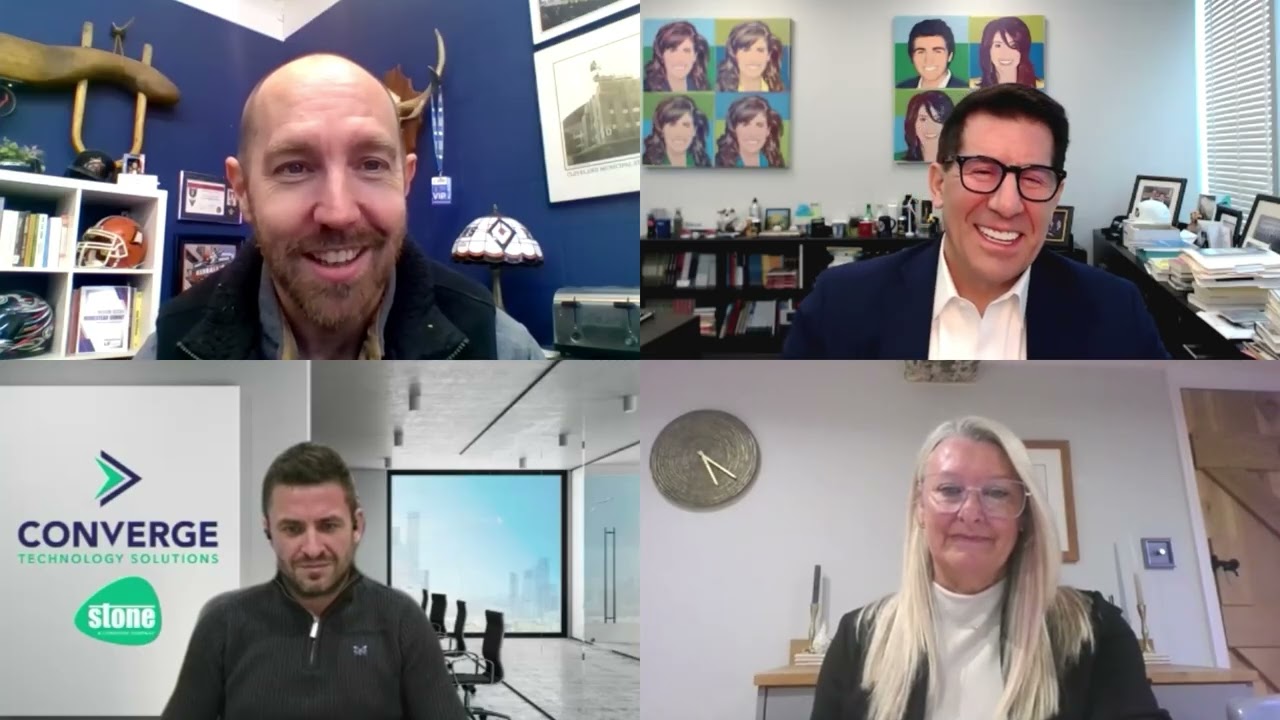
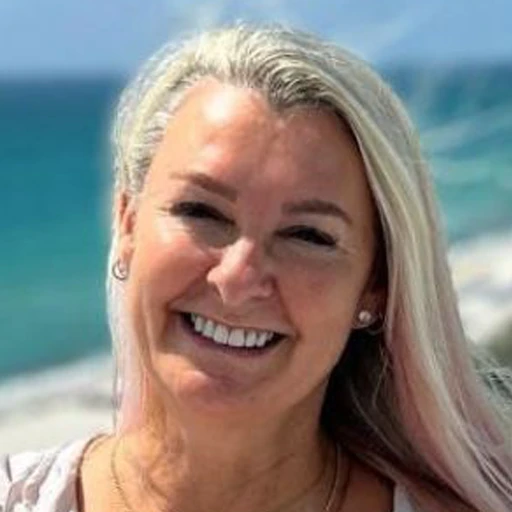
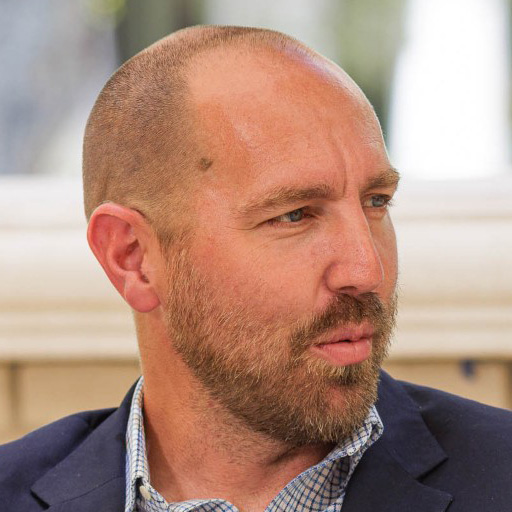
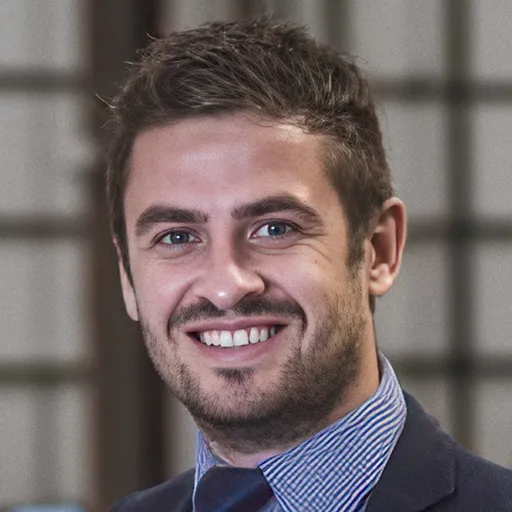
John: Welcome to another edition of the Impact Podcast. I’m John Shegerian, and I’m so honored and excited to have with us a whole roundtable group of superstars. Leading off that group is Darrell Fleming-Kendall for his probably fourth or fifth time back on the show. As everyone knows, Darrell’s the event manager for ITAD Europe 2026. He’s also the executive director of the Global ITAD Alliance. Then we also have on the show with us today, Sue Bywater-Read. She’s the strategic relationship manager at Vyta, and Craig Campion, he’s the vice president of IT Recycling Stone, which is a Converge company. Welcome all to the Impact Podcast.
Darrell Fleming-Kendall: Thanks, John.
Sue Bywater-Read: Thank you, John.
John: Hey, thank you all for being here. This is a special edition of the Impact Podcast because we’re going to be talking about a great, important, and wonderful event in the ITAD industry, which all of us are going to be attending. I wanted to have you on as leaders to talk a little bit why you’re going and what you’re doing there. Before we do that, let’s just go around the horn a little bit and ask everybody for a little background on themselves and the brands that they represent. Why don’t we start, Sue, with you? How long have you been at Vyta? Tell us who Vyta is in the ITAD ecosystem in Europe.
Sue: Sure. Thanks for the introduction, John. My role is strategic relationship director. I’ve been at Vyta coming up for 3 years. However, I’ve known them for a number of years in the industry, and I’d onboarded them in other areas of my career. Vyta has been in the ITAD industries since 2010, actually. We’re moving into 25 years, 26 years at Vyta as a business. We’re celebrating that. Personally, 25 years, coming up again for 26 years in the ITAD industry. We’re placed in Europe. We have facilities in Ireland the UK. We have a facility recently opened in Frankfurt, Germany. We’re very proud and growing, and becoming very strategic and dynamic to support other ITADs as well as direct clients within Europe.
John: Wonderful. Craig, tell us a little bit about what you do as vice president of IT Recycling Stone, how long you’ve been there, and who is IT Recycling Stone. What areas and regions do you cover?
Craig Campion: Yeah, great. Thanks, John. I’m Craig Campion, and I’ve been with Converge for 16 years now. We’ve got two parts of our business. We’ve got a business that supplies new equipment into education and private sector. Then we’ve got the recycling part of the business that also takes the old equipment away from those companies as well. We recycle over 500 devices every single year. We’ve got a facility in Staffordshire, and then we’ve got a facility in Bathgate, Scotland, where predominantly a lot of our work gets done as well. We’ve got a full refurbishment centre in our Staffordshire facility as well. Our number one aim to do, as well as service on our brokers, is refurbish as much of our equipment as we can and sell that back through our sales team into schools, colleges, councils, and charities alike.
John: That’s wonderful. Explain what Converge is. When it says a Converge company, explain to our listeners and viewers what Converge is, Craig, please.
Craig: Yeah. 5 years ago, Stone Group, which was the UK business, was acquired by Converge. Converge was originally a Canadian company with US IT resellers all across the USA. They acquired us, as well as some companies in Germany, to expand their European offering 5 years ago. We’re well on that journey now, as being under their umbrella as we continue to grow.
John: Wonderful. Darrell, you’re a man of many hats. You’re not only the event manager for ITAD Europe 2026; you’re also the executive director of the Global ITAD Alliance, and you also run the other great events in the United States, the ITAD Summit and Mobile Disrupt. Tell us a little bit about a day in the life of Darrell Fleming-Kendall and what’s coming up in Europe in April of 2026.
Darrell: John, as you pointed out, I think the first time I came on, really, my focus was the ITAD Summit, a little bit of Mobile Disrupt. In that time since, we’ve just kept growing, and we’ve been promising. You and I have talked basically since the day I started with the ITAD Summit about expanding into Europe. There were moments in there where I’m pretty sure you wrote the idea off as a pipe dream that was never going to happen, but we’re really excited to be moving all of our stuff across the ocean and putting on this show in Nice in April. Of course, this December we launched, with the help of you and Kevin and nine other folks, including Craig, who’s on the board, the Global ITAD Alliance, which was a long time coming. We’ve seen over the last several years the amount of energy and excitement in the ITAD industry at the ITAD Summit. As we looked at it, we lamented the fact that the energy had to die with the close of the event. The first time I’d actually been booed off stage was when I announced that the ITAD Summit was officially over. I think that was a good indication that people were enjoying themselves and are really excited about what the industry is doing. The Global ITAD Alliance, launched in December, will be the umbrella organisation over all of the shows. Perhaps my event manager title will go away. I don’t know. It keeps my email occupied when people see that I’m the event manager. They come to me with all their questions. There are a lot of exciting things going on. You asked about a day in the life. Right now, we’ve got three shows that are all very much in the planning phase. Keeping speakers straight on who’s in what show and which topic they’re speaking on has been a little bit of a quest. It’s always exciting. We’re just really excited. There’s as much enthusiasm as there is around all of our shows. When you go into a new event, you have no idea how it’s going to be received. Man, I’ll tell you what, on both the North American side and the European side of the industry, the excitement has just been everywhere we go. People are talking about how excited they are about it. Thrilled, obviously.
John: Are you happy with the response in terms of when you forecasted the success of the upcoming April event in Nice, France, and now where we are, just less than two months away? Are you happy with the response that’s happened? Is it more than you forecasted?
Darrell: We’ve been blown away, actually, John, with the response. I think every event manager goes into an event and comes up with high-level goals. Those are the ones we kind of hang out with. We said 1,500 of your colleagues in the industry. Kind of expecting 1,200 to 1,500. It looks like where we are now, Craig and I were talking before you got on, I think 1,500 is, I don’t want to say assured, but it’s certainly well past what I would consider to be attainable. The numbers are already there. Our exhibit hall is almost full, so if anybody is still interested in exhibiting, hurry up and get in there because the fire safety team in Nice is wagging their finger at us already. All good things. Obviously, the speaking agenda and stuff like that, there’s not enough room for all the people who want to speak. All positive indications.
John: Sue, you get to do business in three important countries: UK, obviously Ireland, and now Germany. Talk a little bit about what you’re seeing and what Vyta is seeing as some of the top challenges and also trends in the ITAD industry all across Europe, because you’re really well-planted in strategic parts of Europe.
Sue: Yeah, exactly. Thank you. I think we do have challenges in Europe about moving assets. There’s country restrictions; there’s rules and regulations, and it’s not all the same. I think what we’re able to do by having different facilities is be able to be, as I mentioned earlier, strategic in aligning regulations in-country. We’re supporting other businesses where we can utilize our facility and our personnel, so we’re not having across-the-border issues. We’re growing more, we’re understanding more, and we have specific teams within Vyta that are very much au fait with the rules and regulations, and that we’re adhering to them. We’re R2v3. We’re looking at what responsible recycling is, how we manage an asset and data in-country. It’s given us a lot more thought. It’s given us a lot more opportunity to network and grow and partner as well, and support other businesses, especially across the water, utilizing our expert teams.
John: I love it. Craig, what are you seeing? What’s important now to your clients compared to 3 to 5 years ago? What are some of the trends you’re seeing emerge in the ITAD business that you’re involved with?
Craig: I’d say one of the biggest things that I see now, John, compared to going back a few years ago, I go back 3 to 5 years ago, the thing I always used to get asked was, how are you going to securely handle my data, and how much money am I going to get back for my old equipment, was the hot topic. Now it’s how are you going to securely handle my data, and more customers want to know what exactly is happening to my equipment once it’s been recycled. Where is it ending up? What country is it going to? How is it being disposed of further down the line? As Sue said, the accreditations are all around that. The zero-to-landfills that companies have now are so important to give those customers that trust. That’s why things like the ITAD Summit are so important for networking. We had no network in America and Canada before we went to these ITAD Summits over the pond. Building that out over the last few years has been so vital to us. It’s been absolutely brilliant. To have those numbers that Darrell was talking about coming over here, hopefully we can return the favour to some of the Americans and Canadians that come over and give them some more networks to touch on, because we’ve got so many partners that have been asking us, is it worthwhile going to? They’re using this as dipping their toe in the water. There’s going to be so many new contacts for everybody at this event. It’s going to be brilliant.
John: I agree with you. I fully agree with you. That’s why we’re bringing a whole team over across the pond, and we’re beyond excited about showing up and really being with people in person. Of course, technology is wonderful because it allows us to do things like this and spread the word and be together, but nothing beats in person. Nothing beats in-person for building long, deep relationships that endure the test of time. That’s how we built ERI, and that’s why we’re so excited to see all of you in person in Nice. Talk a little bit about this, Craig, Sue, and Darrell, weigh in. In terms of clients, and we’re seeing the same thing: our clients want more transparency than ever before. How are you answering the bell when your clients say, ” Hey, Sue, I’m not interested anymore?” Like Craig said, 5 years ago they would say, “Well, how much am I getting back for this?” It’s more about how transparent is your network and how do I relay that back to the client so they can report on that? So they can report on their carbon emissions, report on where all the materials are going, and be very transparent themselves, because all of our clients are putting together their own sustainability reports. Sue, Craig, Darrell, weigh in here. What is happening now with transparency, and how are you best exhibiting that to your client base?
Sue: Yeah, I think for Vyta, and personally, we’ve always led with transparency: traceability, transparency, chain of custody, compliance. They’re the foremost and forefront, along with data security. What we do is we have business performance reviews. I just came off one earlier on, and we ask. We’re saying to our clients, ” What is it that you need to see from us?” We take on board, and I think it is active listening. We listen. The client wants to be heard. Then what we do is we have roundtables internally, and we say, “Okay, this is what the clients need now.” You’re right. Craig is right. Everything has changed from 5 years ago. We’re having to be more transparent. We’re having to, as a business, look at carbon footprint, look at carbon neutrality, ESG. That’s not just words. This is actions. We follow those actions by having the right accreditations and delivering the voice that the client wants to hear, so they can be the professionals at what they’re doing as well and have that traceability, those reports from assets moving from one area to the next, chain of custody, data security, and also sustainability. It’s very, very big. There’s a huge change and shift, but we have to listen.
John: Craig, what says you? What are you doing with your clients, and how are you best answering their needs and requests?
Craig: Yeah, very similar, really. The big thing that we see a lot from clients at the moment, because our clients have worked with us for a long time, so they get their sustainability reports. They understand the downstream processes in terms of how we work, and we’ve gone through that. We get a lot of now, well, it’s all well and good, you telling us how we need to recycle and we need to use yourselves. What are you doing as a company to help that sustainability message? When you’re shipping our devices to schools and colleges, how are you shipping them? When you’re ordering upgrade materials, what materials are they coming in with? We’re getting challenged a lot as an organisation to make sure that we are doing the right thing and demonstrating that as well. It’s not just now down to how you recycle the customer’s equipment, which is very important, and you can demonstrate that. It’s also what you’re doing as an organisation as well. Are you following the right policies to make sure you’re doing all the correct stuff?
John: That’s really important. Darrell, I’m going to come to you in a second, but I just want to allow a little station break here to promote the great event coming up in Europe in Nice, France, in April. Just so everybody understands, ITAD Europe 2026 will take place April 15th and 16th at the Ocean Nice Convention Centre in Nice, France. To find more, to sign up, and to go there, please go to www.itadeurope.com. Darrell, how do you create such? You have 1,500-plus people coming, but they’re coming because they know. In the United States, with Mobile Disrupt and the ITAD Summit that you have every year, you create tracks and programmes that matter. Here, Sue and Craig have well laid out traceability, transparency, sustainability. We haven’t even gotten into the topics yet of AI, data centres, rare earth, critical mineral recovery. Talk a little bit how you put together, how you carefully curate great events that you’ve already proven out in the United States, and you’re bringing that same curation and that same great event to ITAD Europe, April 15th and 16th, in Nice, France. How do you create the topics that you know people care about and then seed those topics with great speakers like Sue and Craig to make sure the points get across, and people really get why they came to the great event that you’re putting on?
Darrell: Well, I think Sue hit the nail on the head. It’s active listening. Whether we’re at the ITAD Summit or Mobile Disrupt, or I’m just having conversations with folks throughout the year, we’re asking the question, ” What are you seeing? What are you hearing? What do you need to learn about? What do you want to hear in regards to expert education?” From there, we just start building out topics. We are extremely grateful that we have, over time, proven ourselves with the shows. We’re not in a position where we’re going out and having to recruit a collection of speakers. In fact, it’s quite the opposite sometimes [inaudible] so important. It’s so vital that we find the right people for those topics. Because really, if you’re not careful, you get a sales pitch, and that’s not what we want. But more importantly, we put three or four people on the stage. We want three or four different views. We want three or four different conversations. We want three or four different approaches to find a solution to the same problem so that, no matter what situation you find yourself in as an attendee, as a business owner, as a business manager, as an operator, you are hearing enough information that you can make an educated decision and follow a path. You might not come up with all the answers out of the show. But one of our goals with the alliance is to continue where we’ve got a programme we’re calling the GIA Institute. One of the goals is to continue that education throughout the other 10 months of the year when we don’t have shows, so that those onstage conversations that happen at the events are the precursor to a whole series of other things that are happening. And just to your point about transparency and what customers are expecting, one of the things that was very clear from our conversation with the group that launched the GIA [inaudible] at the ITAD summit. We’re in inning two of the ITAD, of the game that is ITAD. Our goal through the GIA is that innings three, four, five, and so on are rooted in a good, strong ethical foundation where, as the saying goes, the rising tide is raising all ships. We are coming to a point where the customers are no longer questioning where their stuff is going. They know that it’s being handled appropriately.
John: Darrell, talk a little bit about a couple of the tracks that you’re most excited about that you’re putting together. We want our listeners and viewers, if they haven’t already signed up, to sign up for the ITAD Europe Summit.
Darrell: Well, at the risk of sounding like a shameless plug, I’ll throw one out there that I think is going to be really interesting. Sue and I had the opportunity at my first ITAD summit as part of the team to sit down and talk about her path and what her priorities as part of her time in the ITAD industry are. One of them is coaching and mentoring young folks who are coming into the industry. I couldn’t be more excited. She’s putting on a panel with a couple of the young women on her team to talk about, from a workforce development standpoint, how do we grow this industry so that people aren’t accidentally tripping and falling into the industry but instead are seeking out opportunities in ITAD, because it really is an innovative, forward-thinking, advanced industry. I think we have a lot of opportunity for growth with both the GIA and with the summits to really encourage folks to create an active recruiting pool on workforce development. So Sue, credit to her and her team for proposing that. Really excited about that panel. We have a really interesting panel that’s going to have representation from all over the world on critical minerals. You talked about that. Obviously, geopolitically and just from a scarcity standpoint, that conversation has really ramped up even since the last ITAD summit. So I’m really excited about that panel. Of course, I think data security and sanitization, and the advancements are happening literally day over day on that. Those panels are always well attended. Of course, we’ll have a couple of keynotes where, John, you’re on one of those. We’ve got some folks from 3STEP that are doing [inaudible] as they usually are.
John: Craig, how many people are you bringing to the ITAD Summit Europe? How many members of your team are going to come over there?
Craig: So we’ve got a team of six people coming over, John. All very excited as well. They love these events. They love the ITAD summits as well. Getting that into Europe, I think this has got to be the biggest event we’ve ever seen in Europe from an ITAD perspective as well. So they are licking their lips to get over there and make some new connections.
John: How do you coach them? Because I’m in the same position, of course. I’m going to get into the diversity of attendees in a little bit, but this is a fraternity of operators here. We’ve got Sue, and we’ve got Craig, we have me here. How do you lead your team, Craig, to make the most of it in terms of you tell them, “Set up meetings face-to-face, set up lunches, coffees or teas and dinners, work the booth,” sit in every lecture that they can? How do you make the most of this kind of very great and important event and have all these people combined together at once, instead of having to travel around the world to see them? You have them all there. How do you get the most out of it?
Craig: We’ve got to cover everything, John. You said something earlier about you can’t beat a face-to-face meeting, and I’m a big fan of that. It seems a bit old school now, but I think you build a relationship. You get to know a person. I said to the team, “You’re learning while you’re at these sort of events. You’re picking up industry knowledge.” There’s a huge crisis in the industry coming at the moment with the memory shortage that’s going on. We’re seeing it on the new side of the fence as part of our business. It’s going to massively affect ITAD. What are companies doing? What are companies doing in different countries like the GIA? This has got to be a topic of conversation in the near future as well. And these are the things that the ITAD Summit reacts quickly to. You’ve got all the right people in the room to have those conversations. That’s what makes it exciting. You can implement new processes into your business that other companies have done and shared that knowledge.
John: I love it. Sue, how many members of your team are coming over? And how do you, again, divide and conquer and make the most of this very important ITAD Europe Summit that’s coming up?
Sue: Yeah, so just like Craig, we have six attendees. So we’re very excited. We reach out to a lot of our contacts and really try, and we’re already making the appointments and opportunities and looking to find new opportunities. So the network inside is absolutely huge. Again, it’s Craig, Darrell, and yourself. Like you’re saying, this is experts from all regions, and Europe is so excited. We’re rubbing our hands together. We’re anticipating, can’t wait to see. And you know what was really exciting? This is something I received an email about today from somebody that I hadn’t spoken to for a couple of years. She saw a post go out from the ITAD Summit about me attending, Vyta attending, and others attending, and why. And she messaged. She said, “Oh, I want to be a freelancer in ITAD.” She’s from a high-tech industry. She said, “What do I do? Can I go? Can you help me?” And I’m like, “Yes, this is Darrell, this is what we’re talking about”. Bringing new people, recognizing ITAD, and bringing them in. And I’m like, “Yes, let me have a conversation with you. I’ll introduce you to Darrell.” But somebody that really wants to come and join the ITAD Alliance, if you like. The GIA ITAD Summit is a fantastic, dynamic, social, immersive.
John: Again, for our listeners and viewers to sign up and attend the ITAD Europe Summit, please go to www.itadeurope.com. You don’t have to stop lifting weights, driving your car, walking your dog, or doing whatever you’re doing. It will be in the show notes, as will the linked information to Sue and Vyta, and also to Craig and IT Recycling Stone. So everything will be in the show notes. Darrell, talk a little bit about ITAD Europe Summit diversity. Who are the attendees? Of course, today it looks a little overweight in operators here on this little meeting that we’re having. But truly, it’s a very diverse crowd, and that’s what really makes it so rich. Talk a little bit about what types of industries and what types of people are going to be coming besides just operators.
Darrell: Yeah, so first of all, the ITAD Europe show is going to be combined with the mobile mobility industry. So we’ve taken the Mobile Disrupt and ITAD Summit concepts and brought them together in, we’ll call it, a two-in-one concept. So the two industries are very complementary in a lot of ways. It’s an opportunity to expand everybody’s horizons and expose both sides to some opportunities that they may not have thought of. So some diversity there, but in addition to operators like the three of you, we’ve got a solid collection of representation from OEMs. Logitech, HP, for example, are both going to be there, and of course, HP has been huge supporters of the ITAD Summit for years now. So we’re excited they’re continuing that across the pond. But the exhibit hall is going to be a full complement of service and equipment providers. All of the big data security folks are going to be there. If you are playing in the space in ITAD, whether it’s directly as an ITAD operator or if you’re in one of the adjacent industries that supports ITAD, there will be no shortage of opportunities to come, network, meet people, have fun, and most importantly, close a whole lot of business. [crosstalk]
John: Darrell, I’m an ITAD operator.
Darrell: [inaudible].
John: If I was an ITAD operator in Singapore, should I be coming to this? Does it really matter to me? If I’m an ITAD operator in South Korea, is it really that important to go to ITAD Europe, because I’m already on the other side of the planet? Why should I go?
Darrell: Well, I would say whether you’re doing business specifically in Europe or not, whether or not you’re even doing international business, the first thing I would say is that when you put a room together of 1,500 people that represent some of the biggest, most efficient, most responsible, I think is also a very important descriptor, operators and service providers in the world, if you make the time to come to Nice and show up in the exhibit hall, in the lecture halls, and you walk away not having gotten every dime’s worth of ROI from that, again, regardless of where you’re doing business, where your business is seated, then the fault is largely on you. I think we’d be happy to coach you through how to make the most of a show like that. But between one-to-one networking, our networking programme through the app, the after-hours events, where the attendance is huge, but most importantly, nobody stops talking business. The opportunities that exist, again, within the exhibit hall, and just as you’re walking through hallways and stuff like that, if you can’t walk away with a handful of connections that are going to make you a better businessman, man, we’ll hook you up with John, and John can coach you a little bit.
John: I don’t know about that.
Darrell: It’s our quality assurance promise.
John: Thank you. I appreciate that, Darrell. Craig, some new trends that we’re starting to see emerge here in the United States: AI, data centres, rare earth materials, critical minerals, how do they affect what you’re doing right now? And how do you see that playing out in Europe in the future?
Craig: Yeah, we’re right in the eye of the storm of it right now, John, over here. I touched on the memory market before. The shortages on that new supply at the moment are absolutely terrifying, what’s coming from the OEMs. I was seeing lead times on new devices of four to five months, and that’s having a massive knock-on effect in terms of how quickly customers are going to recycle. It’s driving prices up on you. So our customer is going to sit on assets longer as well. So big decisions are being made around what you talked about there in terms of what are you doing with the equipment? How are you handling it? I’m seeing ITAD starting to sit on stock longer, trying to ride the wave to see a better price point further down the line. There’s so many big decisions being made at the moment, and people are trying to decide what’s the best thing to do for a business at the moment. That’s just one example of it, John, but we’re in such a critical time for it.
John: I understand. How about Sue? Those topics of AI, critical minerals, rare earths, and also data centres going up faster than the speed of light, how are you seeing what you do at Vyta in three different countries affected by those new rising trends?
Sue: Yeah, I think that’s a really important conversation, actually, and touching on what Craig said. I can only again paraphrase what Craig has been saying. But what is interesting is I held a meeting yesterday, an education meeting with some of my peers, because it’s about, do you know what’s happening?I think everybody in the business needs to understand it, because it’s a topic of conversation that we need to understand from our clients and what’s happening, because it’s going to be this ripple effect. As Craig said, are they holding stock? We’re seeing it all over. It’s not just in the UK and Ireland. I think this is global. It’s very much an impact on the ITAD. We’re going to have to watch and speak to the experts at somewhere like the ITAD Summit to understand more. So it’s education all around. We’re going to have to all maybe come together and say, “What is it that we need to do? How do we deliver a message? And what is going to be the impact for us long term?”
John: Darrell, is it too late for our listeners and viewers to sign up, attend, and also have a booth there if they want to have a booth for ITAD Europe Summit 2026?
Darrell: It’s never too late. Until the final gavel drops, it’s never too late. I will say, for exhibitors, it’s important for a variety of reasons, some of them logistical in nature, but we are getting close to max capacity on exhibits. So I would encourage anybody that wants to have a booth within the hall to hurry up and make those arrangements so that we can, one, make sure we’ve got a space for you, but two, make sure we get your stuff through customs and delivered and things like that. All of those things take a little bit of planning. Good news, we’ve got a great logistics team on site there in France that will handle all that. So if that’s a concern, it does not need to be. We’ve got that under control, but as far as attending, obviously, the sooner you register, the cheaper it is. It kind of goes up in price as we get closer to the event. So I encourage you, just go ahead and make that plan now and commit, and we’ll see you in Nice. But this[?] last minute, the registration table will always be available to you.
John: Darrell, I want to go back to Nice. Obviously, you could have picked anywhere in Europe. You picked well, because for this kind of response, my team is all excited about coming, I’m sure, as well as Craig’s and Sue’s. You’ve picked a really super nice place. How did you pick Nice, and why did you pick Nice?
Darrell: Yeah, I think it’s no secret that our model is one where, when you’re sitting around a holiday table with your friends and family, we want you to tell somebody that you’re going on work travel and make them jealous. So Miami, I guess, right? These are the type of places we like to choose. Baltimore is nice. It’s got its charm, but it’s not for us. [inaudible] We looked at Portugal. We actually looked at Monaco as well, but we landed on Nice for year one. I certainly think our European friends will give us some advice for year two as well. So we’ll keep the good times rolling.
John: Craig and Sue, according to the latest United Nations reports, only 22% of all electronics being used in the world today are being responsibly recycled. According to the US EPA in the United States, the number’s probably lower, 17% to 12%, anywhere right by there. So let’s just call the middle ground 15% in the United States. Worldwide, it’s 22%. Is that kind of numbers shock you? Does it get you excited when you get out of bed every morning, realising that even if the number was 22 for all of us around the world, that still leaves us a 78% delta to chase every day for the ITAD industry? Craig, what do you feel about those numbers? Do you feel that they’re true and that there’s just massive opportunity out there for those who want to responsibly be involved in the ITAD industry?
Craig: Yeah, it’s scary numbers, John. It is. But again, like you said, it presents huge opportunity. One of the biggest challenges that we have, that we always say to any salesperson that starts at our business, the hardest part of the role is educating a customer to look after their equipment. They get all the shiny, nice new stuff, and then they just chuck all the old stuff in a pile, and it comes back, and it’s damaged. You can’t reuse that in its original capacity at that point, and then it has to go further down the chain. So that huge education piece is something that we work a lot on as well. It’s quite reassuring seeing countries like Ireland and France introducing measures, so much of a state now has to be refurbished as well. So it’s putting pressure on organisations and educating them in the right way as well. So we are seeing improvements. Conversations starting to be had at the top table. But this is where the GIA will help as well with that education piece going out to market around globally as well, because that percentage you’ve just said there, it’s not acceptable, is it, as well? There’s so much room for improvement.
John: Sue, I’ve been to a couple of dinners recently, and I don’t have the facts down, but I’d love to hear if you’ve heard any of this yourself. Allegedly, Europe is going to be putting on some bans of end-of-life electronics from shipping off their shores or something of that nature. Is there some sort of legislation coming that’s going to help keep these old electronics more onshore and be responsibly recycled close to where they were used?
Sue: Yeah, I think that’s very true. I’m not sure of the dates, but I know there’s a lot of changes in ’26 and ’27, and obviously up to 2030, where everyone has to manage and think about the environment, governance, and social, and really reuse versus recycle. There’s some countries that we support clients in that we cannot move goods across. And of course, there’s reasons for that, because you want any asset that’s being recycled, you don’t want to move it across the wall. We have to be responsible in managing assets. But of course, it’s a really big push to reuse where we can. The asset has a standard, but let’s get more life out of these assets. And I think we’re going to see more and more. As Craig mentioned, there’s going to be a big impact on all the CPUs and RAMs, etc. So companies are going to hold on to assets. But education, yes, I’m going to go back to that part. It’s, again, educating the client and helping them understand what is important about an asset, whether it’s legacy, whether it’s too old to be sitting in the corner, whether we can reuse it. There’s a huge amount of education and one of the biggest hurdles I’ve known in my whole career, educating the client. But be persistent, be honest, and show the integrity to what we do. I think that slowly and surely they’ll be receptive.
John: Darrell, ITAD Europe’s coming up for our listeners and viewers April 15 to 16 at the Ocean Nice Convention Centre in Nice, France. To find the ITAD Europe Summit online and to sign up and attend and bring your colleagues with you, please go to www.itadeurope.com. Darrell, what’s next? Obviously, you’re going to crush it this year at this amazing event coming up in April. I know ITAD Summit United States is always big, and Mobile Disrupt as well. What are you dreaming of next year as the industry continues to grow and evolve?
Darrell: So I think, for us, we’re really settling in on these four programs. The three shows and then the GIA. We really think there’s a massive opportunity with the GIA to elevate ITAD. Obviously, [inaudible] the industry isn’t that large. We all are working with each other and seeking ways to improve the industry as a whole. But I think we have a massive opportunity, as Craig and Sue would talk about education, to elevate the industry outside of the walls of what we’re doing. I tell people all the time, any human being that’s ever made an electronic transaction in their lifetime is protected by an ITAD, yet most have no idea what ITAD even stands for. That’s something we need to change. I also think the OEMs have really done a great job of talking about the importance of a circular economy. They’ve also thrown their own shoulders out, patting themselves on the back for creating the circular economy, ignoring the fact that the circle exists because of ITADs. Again, working with the OEMs, working independently to really raise our profile, that’s, I think, our biggest mission beyond the shows and really honing the shows and making them even better over time. It’s just taking the entire industry, through the GIA and through the shows, to the next level. I would love to see a world in which the ITAD Summit has sort of two tracks. One of them is dedicated to the folks in ITAD and ITAD-adjacent industries, and the other one is dedicated to folks who rely on ITADs for their own, in order to be able to sleep at night. There’s an education component going on there where we welcome them into our space and say, ” Hey, let’s talk about ITAD through the lens,” ITAD by ITADs, if you will. So I would love to see that develop and become part of ITAD US, ITAD Europe. And then obviously just take GIA as large as we can, as big as we can, and really make ITAD a household name when people are thinking about their electronic devices, whether enterprise level or at home.
John: I love it. Well, Darrell, Sue, and Craig, first of all, I want to say thank you to Craig and Sue. This is supper hour in the UK right now, so they were so kind to stay back a little bit and delay their supper hour by joining us to tape this interview so we can get the word out about the ITAD Europe Summit. Of course, Darrel and I are here in the United States, more local business hours. But I want to say thank you to all of you for participating today. For our listeners and viewers, again, to buy tickets, attend, to exhibit, and bring your colleagues, please go to www.itadeurope.com. Darrel Fleming-Kendall, Sue Bywater-Read, Craig Campion, thank you all for not only spending about 50 minutes today to promote all the great work that’s going on in the ITAD industry and this very important ITAD Europe summit, but more importantly, thank you to the three of you and the brands that you represent for being responsible recyclers, making the world more sustainable and a better place.
Sue: Thank you so much, John.
Craig: Thanks, John.
Darrell: Thanks, John.
John: This edition of the Impact Podcast is brought to you by Engage. Engage is a digital booking platform revolutionising the talent booking industry. With thousands of athletes, celebrities, entrepreneurs, and business leaders, Engage is the go-to spot for booking talent, for speeches, custom experiences, live streams, and much more. For more information on Engage or to book talent today, visit letsengage.com. This edition of the Impact Podcast is brought to you by ERI. ERI has a mission to protect people, the planet, and your privacy and is the largest fully integrated IT and electronics asset disposition provider and cybersecurity-focused hardware destruction company in the United States and maybe even the world. For more information on how ERI can help your business properly dispose of outdated electronic hardware devices, please visit eridirect.com.
 Spotify
 Apple Podcasts
 Amazon Music
 iHeartRadio
 YouTube
 YouTube Music
 Audible
 Pandora