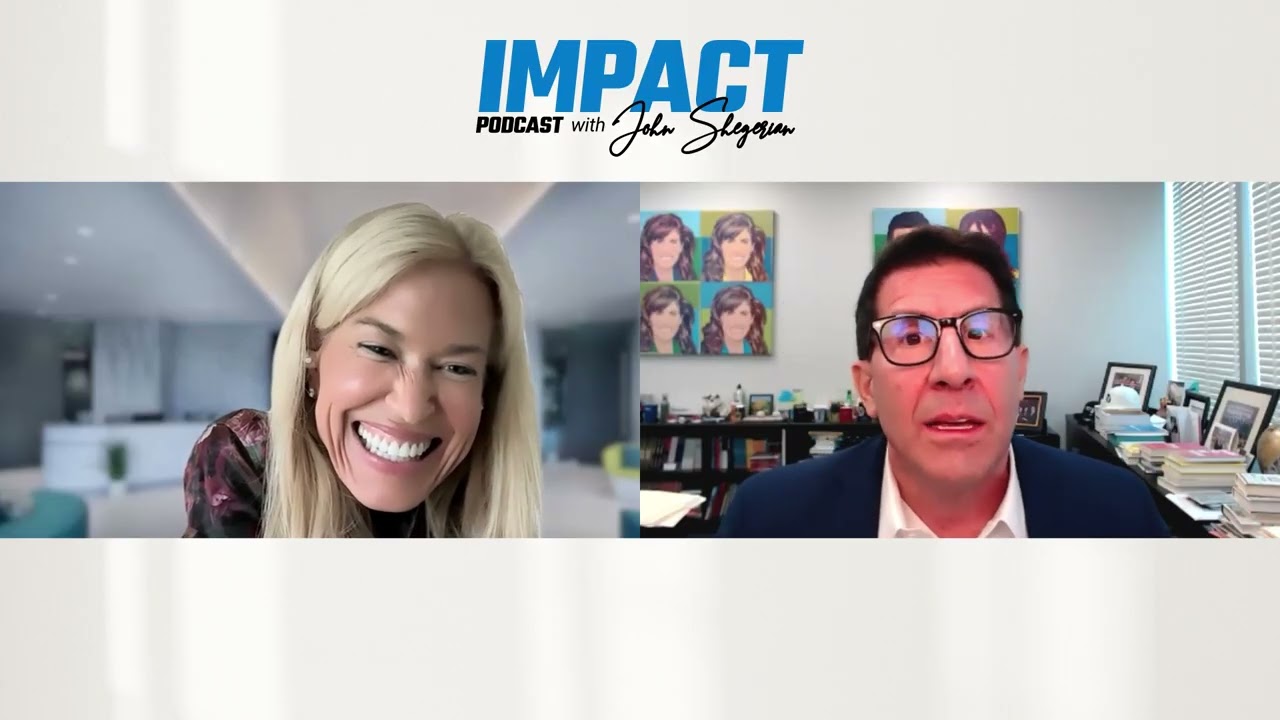
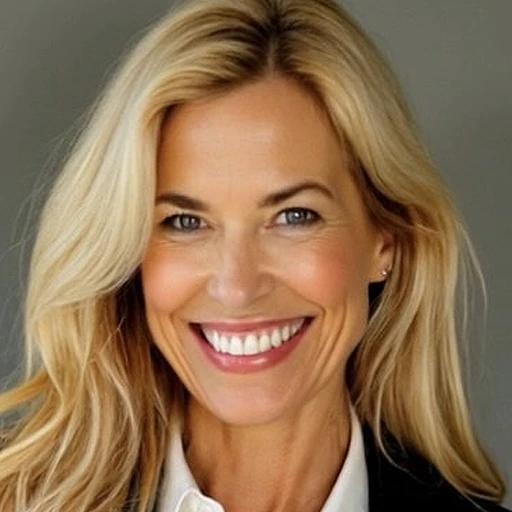
Dr. Dawn Mussallem, DO, DipABLM, was appointed Chief Medical Officer of Fountain Life, a premier longevity company, in December 2025. Previously a renowned Mayo Clinic consultant in hematology/oncology and a double board-certified lifestyle medicine specialist, she leads Fountain Life’s efforts to advance AI-driven, proactive, and preventive health strategies. Her professional mission is deeply shaped by her own extraordinary health journey. She had a stage IV cancer diagnosis three months into medical school, followed by a life-restoring heart transplant in 2021. In a landmark achievement, she became the first person in the world to run a full marathon one year after a heart transplant, embodying the principles of recovery, regeneration, and peak performance that she teaches.
John: Get the latest Impact Podcast right into your inbox each week. Subscribe by entering your email address at impactpodcast.com to make sure you never miss an interview. This edition of the Impact Podcast is brought to you by ERI. ERI has a mission to protect people, the planet, and your privacy, and is the largest fully integrated IT and electronics asset disposition provider and cybersecurity-focused hardware destruction company in the United States and maybe even the world. For more information on how ERI can help your business properly dispose of outdated electronic hardware devices, please visit eridirect.com. This episode of the Impact Podcast is brought to you by Close Loop Partners. Close Loop Partners is a leading circular economy investor in the United States with an extensive network of Fortune 500 corporate investors, family offices, institutional investors, industry experts, and impact partners. Closed Loop’s platform spans the arc of capital from venture capital to private equity, bridging gaps and fostering synergies to scale the circular economy. To find Closed Loop partners, please go to www.closelooppartners.com.
Dr. Dawn M. Mussallem: We have to democratize wellness and we’re not going to be able to do it in a traditional health care setting because they have to take insurance reimbursement. Insurance at this time doesn’t pay for that multimodal diagnostic testing that we can find things early. We know 7 out of the 10 leading causes of death can be totally prevented and that’s my mission. That is where I’m at now, because guess what? There are multiple things that have happened in my life that if found life was available to me and to my husband who passed away, that neither of us would have experienced what we experienced. So I am just filled with such deep rooted passion and desire to unlock the key to some of these answers that humanity deserves when it comes to wellness, early diagnosis, early detection. But going back to the gut microbiome, Dr. Chumsri and I worked really closely with ways to optimize the gut microbiome. This isn’t just picking a probiotic; this is really optimizing your nutrition. We know from the American Gut Project, and I think it’s okay if we talk about some stuff like this, because this is the fun stuff, I think. We’re done with the story. Let’s talk about what matters.
John Shegerian: What matters? Your story matters. Now, let’s talk about what’s actionable for our listeners and viewers out there, I want to give to. By the way, just for our listeners here, let me just say this. Dr. Dawn M. Mussallem is with us today. She’s now the chief medical officer at Fountain Life. Fountain Life is actually where I get my health taken care of, so I’m a huge believer. I’m so happy to have you on our team, Dr. This is so exciting. But for our listeners, this is not meant for medical advice in any way, shape or form. Anything you learn today, please take it to your own health practitioner and then find out what’s really actionable for you to do under the care of your own doctor. Now, I want you to start talking about the importance of the gut micro biome. I want you to share that with our listeners. Then we’re going to get into other stuff as well.
Dawn: I love it. If you were to ask me, what do I feel is the most important focus point in medicine and research? It’s the gut microbiome. This is something you don’t even have to ask your doctor about. We all can help to optimize our gut microbiome in such an easy way. The American Gut Project showed people who have 10 or less different sorts of plant products a week versus those that have 30 or more. Now, people are like, “What the heck? That’s a lot”. But it’s not. It’s just different sorts of vegetables and fruits and whole grains and beans and nuts and seeds and spices. Spices have so much medicinal value; four spices equals one. So, you don’t get each spice. So 30 different types. So when you go to the grocery store, I tell people, “You’re going to need to spend more time. You’ve got to show up for yourself”. “I’m in a hurry, I’ve got to do…” No. You know what, you will make time for your sick care. Let’s not do that. Let’s be proactive. You’ve got to show up and take time for your well being. That starts with really getting a wide variety of really healthy plant foods coming into your diet. It doesn’t mean you have to be plant exclusive or you need to become vegan. Just get a wide variety of those plant foods. They saw that people that got this more diverse plant food intake had the more optimized gut microbiome, 30 different plant foods a week. So it’s a fun challenge people could do in their workplace or in their family. It’s fun sometimes if you make a really beautiful grain bowl to count how many different ingredients. I had one friend once who actually was able to get 46 different ingredients into one grain bowl. It was crazy. So you can have a lot of fun. Forty six things, I’m like, “Oh, that’s a lot”.
John: Let’s talk about food too. [crosstalk]
Dawn: But guess what they found out?
John: Food is a healing tool. Talk a little bit about some of your favorite foods. Let’s talk about berries for instance.
Dawn: Yeah, all vegetables and fruits are healthy. There’s really not one that is necessarily better than the other, I would say. What I would say is do what you enjoy the most, get in that variety, fresh or frozen are both fine. If you buy them frozen, make sure you cut open that bag and thaw them out. Don’t heat them up in that bag. Even if it says it’s a microwave bag. Put them in a glass container and then heat them up. That’s what you need to do. Berries; they are just so incredibly healthy for you. There’s a lot of research from everything when it comes to cancer, to where it comes to brain health, but we shouldn’t segregate the body into all these little parts. We just know as a whole, it’s good for you. So whatever berry you enjoy, try to get that variety. Raspberries are one of the highest foods in terms of fiber content. When it comes to fiber, 91% of women are fiber deficient, 95% of men. Fiber is magic. John, there was an amazing story. So this is important. There are three things. When you hear these outrageous claims on social media and someone’s claiming that this product or that product or this food, whatever, results in this. It’s just like, I don’t know, that sounds too good to be true. First of all, ask, “Was it a human study?” Next, ask, “How many people were in that study?” Then the last thing to ask is what are they comparing it to? Those are really important things to be critical when we hear these claims for certain products. So there was this amazing study, 17 million people were in this study last year. It showed that with fiber, it had class 1 evidence. Class 1 evidence is the biggest strength of evidence we can give to any intervention. For example, pharmaceutical medications, but this was fiber, which is easy to get in your diet.
John: Sure.
Dawn: It showed class 1 evidence with a 28% reduced cardiovascular mortality, reduced pancreas cancer risk and reduced diverticular disease risk. It had other benefits too, but this is class 1 evidence. The number one reason men and women die, we shouldn’t live in this fear adverse lifestyle, but the number reason we die is heart, right? So here we used to find fiber. You only get fiber from plant foods. So we know the average American gets about 17 grams of fiber a day. Women, we want to get at least 25 to 30 grams and men 30 to 35 grams. But maybe even shoot closer to 40 if you can. Don’t do this overnight. Take your time because otherwise your belly may be like, “Oh, I feel a little bit full and bloated”. But that fiber is calorie neutral. You don’t even count those calories because it takes so many calories to digest it. The fiber is like magic for that gut microbiome. The fiber even helps to detoxify things. They’re suggesting it helps to detoxify things even like microplastics. So cool. So, our body is so resilient. We just got to give it what it needs. We’ve got to give it the fuel it needs to be able to achieve that state of what we call homeostasis or that balance. So food really is medicine. I’m a cancer specialist. There was another study last year that showed that people that get more fiber versus those that get less. Those with more fiber had a 22% reduced risk of cancer. Then we hear about these carnivore, Keto, carb-free diets. Well, Listen, fiber is a carb, but it’s a carb that’s very metabolically healthy. There was a study that was done in people who were overweight and obese. It shows, yes, fiber helps with weight loss. It helps with metabolic health. Eighty eight percent of Americans, their metabolic health is out the door. It helps with their blood sugar control. It helps with their cholesterol panels. So definitely, one take we have here today is eat more vegetables and fruits. Get more of those fiber rich foods that are coming from plants, including whole grains and throw some beans in. Every day, I want people to get one serving of beans. So important.
John: Beans or legumes, right? It’s lentils or black beans or all that is great for you.
Dawn: Yeah, and I’ve had people say, “Oh, I don’t like kidney beans”. Don’t eat them. I hate them too. I don’t like kidney beans, but I love garbanzo beans and there are so many cool recipes. ChatGPT is free. Beans are the cheapest protein you could possibly buy. You don’t need to get them in a can. You can, I do. People who get gassy from beans, there’s a carbohydrate in beans called raffinose. So you want to basically soak beans. So if you’re doing dry beans, soak them overnight, rinse them really well. You’re pulling that carbohydrate that makes us feel gassy off the bean. If you do canned beans, just rinse them really well. Then cook them like in a pressure cooker, and you’re going to tolerate them much better. If you’re new to beans, you just want to start small though. Maybe just a few tablespoons on a salad, or if you’re cooking some quinoa or wild rice, put some lentils in there or some split peas or garbanzo beans. But weave some beans into that. So, you asked why they called me the magic bullet. We’re talking about these vegetables and fruits and fiber and that’s why, because we would do food as medicine with the cancer patients. We’d move them. I would use some off-label medications to optimize metabolic control and reduce inflammation and things like that. We found that our patients during chemo were feeling great. They were like me tip-totting out of my hospital room and having my vitality. They’re like, “Oh my gosh, this sounds crazy, but I think I feel better now than before I had cancer”. Because they were taking care of themselves. They were showing up for themselves in the first way. They had new meaning and purpose over their life and a new reason why they wanted to show up. So it’s really exciting to witness what I’ve witnessed among so many people.
John: Dr. Dawn, I was lucky, I wanted to lose weight when I was a young kid because I was a horse race driver. So I needed to get thinner. When I was 17, I gained too much weight. So I started losing weight and I started hearing about a vegetarian diet. At about 15-16 years plant-based. So going to the restroom has never been, luckily for me, a problem. But I have tons of friends who want to know these questions, and I wanted to ask you the question, but I want them all to hear it from you what’s the answer. They want to know what’s normal. Is once a day normal? Is twice a day normal? Some friends of mine, mostly women friends, tell me sometimes they go to the restroom twice a week, once a week. I’m like, “How’s that?” I couldn’t even imagine going like that. What’s normal when it comes to our gut health and what’s optimal? What should we be aiming for and sort of becoming our own gauge, are we getting enough fiber or not?
Dawn: Ooh, that’s such a good question and congratulations, John, on plant-based. I’m going to need to make you a grain bowl. One of these days you come to Fountain Life, “There you go, grain bowl for John. Here it is, 46 ingredients”.
John: I’m all in.
Dawn: I love it. That’s really exciting. That really is what we believe to be the healthiest dietary pattern we can try to abide by. Then individualizing it with some of your gut microbiome results is what’s really fun to do. So you asked a good question. Every person is unique and individual to them. Maybe some people have only one bowel moment a day or every other day, sort of a thing. But what we believe is meant to be normal is you eat and when you eat, you’re evacuating out the meal that you had from the meal before. So typically you’re evacuating after each meal is what was thought to be normal. Certainly what’s not normal is once or twice a week. We know that the amount of stool that you have is pretty much analogous to the gut microbiome diversity because it’s a product of that. So having more bowel movements is certainly, what we would expect to see if someone is getting more fiber. In fact, that’s a cute thing. I get calls from, from patients. They’ll call the nurse and say, “I don’t know, you probably need to let Dr. Mussallem know that I’m having a bowel movement after each meal”. They’re like, “Oh no, she loves that”. So you’re right, John. This is really problematic though. A lot of people struggle with that. So slowly increase your fiber. The things that I always recommend, do a tablespoon of flaxseed or trying some chia seeds. There’s this other really cool seed; it’s a basil seed. I love basil seeds. They’re really high in calcium. They have really cool fiber nutrients in it and kiwi fruit. Two kiwi a day have been shown to actually help with stool regularity. Now, you of course, need to make sure you’re staying hydrated and things like this. If you’re not having regular bowel movements, I want you to talk to your doctor and you may need to talk to a GI doctor. You may need to have a colonoscopy. We should never ignore things and keep on trying to self-diagnose or self-help. Always have conversations with your doctors. It’s not comfortable to talk about poop. People for some reason get very shy about it, but this needs to be normalized and these discussions need to be opened up. It’s really important that you do have these dialogues with your doctors, particularly if the caliber of your stool changes. All of a sudden it becomes less full and more narrow or you’re just not having bowel movements because we wouldn’t want to miss a colon cancer. Colon cancer like breast cancer, one of these cancers that we’re seeing more in young people for the very reason you just highlighted. Several reasons. Number 1, people aren’t getting enough fiber. People are getting too much ultra processed foods. We know ultra processed foods are actually linked to a 32% more likely chance that you’re not going to age healthy. So just fixing our diet has so much to do with healthy aging. I love all the restorative therapies we do, but it starts with the basics. Eating healthy, moving our body, getting adequate rest, loving more, trying to manage our stress to the best of our abilities and getting rid of some of those toxic substances. It sounds like a lot, but it’s just like how our grandmothers lived. Just a little bit more harmonious with life.
John: I know you have a top five list of cancer fighting foods. Do you want to list that? We’ll put this in the show notes as well. What’s your top 5, Dr. Dawn?
Dawn: That’s such a good question. It’s cute because the different podcasts or interviews we get sometimes, they may have certain foods there that they want you to talk through and it ends up being equated. What I would say is the top 5 that you enjoy and keep rotating it. That’s what I would say, but my personal 5 favorite, so starting with number 1, anyone who’s ever listened to me talk, John, you can guess my number 1, I bet. Do you know what it is?
John: I do know what it is, and by the way, it’s one of mine too. It’s purple sweet potatoes.
Dawn: I love it. It is so good. These things are so great. So we started talking about berries, right? So berries are very rich in this phytonutrient called anthocyanins. Well, anthocyanins have really powerful properties when it comes to heart health, brain health, and cancer. These colorful pigments in all the vegetables and fruits you have are like superfoods. So the purple sweet potatoes have 150% more anthocyanins than the berries. It’s so good for you. They’re so yummy. They’re so delicious. So purple sweet potatoes, number 1. There are some foods that on a cancer level actually go into the DNA and they can turn off the tumor promoter genes and turn on tumor suppressor genes. They can manipulate how tumor physiology works. We believe that cruciferous vegetables are big for that. So I love cruciferous vegetables. This is like broccoli, cauliflower, brussels sprouts, arugula, and radishes. Man, we can go on and on, bok choy. We can go on and you could look it up in ChatGPT. You know how I love them the most? I love them as sprouts. So you could sprout. Some people are like, “Oh, produce is expensive or it’s out of season”. Just grow it on your countertop. You can buy these little sprouting kits. You just rinse it each day and you’re having this constant availability of these sprouts. When they’re sprouting, you have the little seed and it’s sprouting, that’s its point of most nutrient density. It’s very amazing, the phytonutrients that you get in that. So when you think of broccoli sprouts, there is a phytonutrient in that called sulforaphane. The glucosinolates are what they’re called. They’re these sulfur-derived phytonutrients that have powerful anti-cancer properties, like major. We believe that the cruciferous are also very powerful for detoxifying pathways. So I have a lot of people call me and say, “Hey, what sort of detox should I do?” I’m like, “Keep it basic, eat more vegetables and fruits, that kind of thing”. So that would be number 2. When we think about the other really powerful anti-cancer foods at the level of that DNA and tumor suppression, soy. People are like, “What? I thought I should avoid that.” This is the biggest myth that’s ever occurred in medical literature ever. Remember rule 1, I said, “Ask where that study was done, humans or rodents?” Well the original research many decades ago was done in rodents. We learned that rodents do not metabolize soy the way humans do so the study was rejected and thrown out. But people like drama. They like that drama of, “Oh soy is going to give you cancer”. No it’s the opposite for both men and women. So for women, it is suggested that if you consume soy in your lifetime, particularly when you’re an adolescent girl, a young girl, and your breast tissue is developing, it’s going to reduce your risk of cancer. There’s also studies suggesting that God forbid you ever get breast cancer, it’s going to reduce your risk of dying from breast cancer. There’s very few things that do that, so it’s very cool. Then there was beautiful research or review even by the American Cancer Society in 2022 showing that soy reduced the risk of breast cancer coming back in a breast cancer survivor by 25%. Now, this doesn’t mean go have soy 10 times a day. It means you know get it once, twice, three times a day. It’s a great source of plant protein. We have lots of data out there showing that plant protein may be superior when it comes to healthy aging. Doesn’t mean you need to be plant only and be vegan unless that’s what you want to do. But the point is, is where you can fit plant protein in and maybe reduce the size of some of the animal protein, that’s a great way to look about how to be maybe a little bit more healthy. So we got the purple sweet potatoes, Dawn’s favorite, the cruciferous vegetables, and the soy. Next, I would say green leafy vegetables. You want to get lots of those different varieties of green leafy vegetables. Then the last one I would say, let’s go with… I’m trying to think which one I would say is really powerful. John, I’m going to let you fill it in. Which one would you say you like the most in terms of vegetables and fruits? I like so many, but I know I kind of lumped a lot into it. I’ll put berries is probably what I would actually put there.
John: Yeah, definitely.
Dawn: I put the berries. I know we talked about them, but the berries have a lot of nutritional value. But it’s not to minimize any of the other ones we didn’t talk about. So I just got a big variety. Beets are so healthy for you. When we think of beets and green leafy vegetables, they’re loaded with something called nitric oxide. So it helps to dilate your vessels that go to your heart and in other very important organs too. So nitric oxide is very important. These vegetables and fruits just have a wide variety. There’s not necessarily one that’s better than the others, just we all have our personal preference. If you dislike one, don’t force yourself to do it. Find something else that you enjoy. Garlic and onions is another one too. I sometimes ignore this, but I always think of them more as condiments. But wow, there are some powerful healthy properties when it comes from everything from heart to cancer in there too.
John: So before we leave food and go into some other topics, at the top of the show you mentioned also spices. Throw spices in there too a little bit in terms of the importance of.
Dawn: Yeah, that’s huge and so I stopped with the vegetables and fruits. When we were talking about the turning on and off of the tumor genes there, turmeric is a huge one.
John: Wow.
Dawn: So a lot of people are like, “Oh, I need to take turmeric as a pill.” There can actually be a lot of drug interactions with turmeric. If someone’s on blood thinners and you go too high, any of those supplements that are anti-inflammatory, if you’re on blood thinners, a lot of times the doctors, the medical teams will say you can’t take those. Well, you could still do them as seasonings and spices. So load up the turmeric in the food that you’re using or the curry. There are so many beautiful dishes. The spicy curry is one of my favorite spices that I use. One of my favorite recipes is an easy one. If I’m in a super big hurry and I don’t have a lot of time for dinner, I’ll take frozen squash that’s cubed and I’ll thaw it out. I’ll put it in the blender. I take a can of chickpeas, garbanzo beans that I drain. I throw it in the blender. I put in one to two cups of soy milk. Then I use seasonings and spices. I use a spicy curry. I use garlic and I use some onion powder and I blend. I know it sounds disgusting, but you just got to try it. It’s so delicious. That’s the fast version. Blend it up and then heat it up, you have the most delicious squash soup. It ends up being extremely high protein and I add some nutritional yeast to it and it gets even higher protein. You can get upwards near 40 grams of protein in that soup.
John: Wow. I want to talk about protein. You bring up protein. We haven’t covered that yet. There is a whole lot of literature now and science and doctors, a lot of the thought leaders are saying, “You’ve got to go all in on protein, especially as we age, so we don’t get [inaudible] and things of that such.” How important is protein? Is it really one for one per our weight or is there some other ratio that you like to share with your patients?
Dawn: Oh, this is a good one. Fiber is important, but protein’s important too. I see people signing up. If someone’s carnivore, someone’s vegan and they’re promoting their own personal preference, it’s probably in the middle. It’s just like say Mediterranean- pescatarian. The point here is this whole food is what you need, but you need fiber, but you need protein. You cannot deny the fact that protein is very important, particularly as you’re aging, if you’re having a surgery, if you’re doing a lot of endurance sports. So my recommendation for protein is the same that is in the update for the newest food pyramid, the dietary guidelines for Americans. What I recommend that was just updated, the 2025 to 2030 guidelines, is the 1.2 grams up to 1.6 grams of protein per kilogram of ideal body weight. So that would break down to be in pounds. If I’m doing the math right, 0.53 grams of protein per pound up to 0.7 grams per pound of body weight. That’s kind of your ideal body weight, okay? That’s about where you need to be. I would say that it tends to range between 70 to about 110 is about the range for most men and women. It’s going to be about where most people are going to fall, but you can do your own calculation yourself. There was a cool study published in 2023. I love this study. It emphasized that yeah, protein matters. You need to get enough for healthy aging. They asked a really cool question. This was primarily the Nurses Health Study, 48,000 individuals. Important. They followed them for 30 years and the question they asked is, “What is the path to healthy aging for physical health, cognitive health, and emotional health?” What they showed is that plant protein won. So plant protein gave this 38% improved healthy aging. Dairy was about 14% and animal protein otherwise was 7%. So you see where each protein got benefit, but the plant protein won. So it doesn’t mean you have to do only plant protein, but I want to emphasize that. So if you’re able to kind of flip out some of that red meat for maybe doing your burritos, your soft tacos, skip the red meat, and just do your beans and add in a bunch of seasonings. Add in maybe a variety of beans and enjoy that. It’s very easy to do that.
John: Doc, what’s your thoughts on this whole trend, craze, whatever we want to call it, of intermittent fasting and fasting for health and wellness and clarity and just even to fight cancer? What’s your thoughts on that?
Dawn: You’re asking great questions, John. These are the top questions that I feel that people need to hear. So I’m really grateful for you letting people hear my wisdom. So, we are in a time of plenty. People, everyone, and it’s almost gluttony, like food, food, food. Our body never has a chance just to rest and restore. When we sleep, our body is resting and restoring. We send the soldiers in to repair. But there’s this beautiful body process called autophagy. It’s when basically our cells are rejuvenating. It’s like spring cleaning our cells basically and we do that when we fast. So fasting is very important and I would love it if everyone can try to do just a simple 12-hour nightly fast. Stop eating at 8 P.M. Start eating at 8 A.M. Whatever timing works out for you, try to do that. If fasting is hard for someone, I’m going to be honest, it’s really hard for me. I wake up at 4 in the morning. I love 4 in the morning. I like to have my coffee with soy milk. By the way, coffee is very good for you as long as you can tolerate it, but it’s good for you. You can always do a decaf, you still get benefits. But I like to have my coffee with soy milk, so I’m just not a good faster. It just doesn’t seem to work because I like to eat at 4 A.M. So what I do is I do a 5-day fasting then making diet every three to four months. I use that ProLon kit. This is not an endorsement. I do not make money with them. So I feel very comfortable sharing their names.
John: He’s been on the show. Dr. Longo has been on the show. ProLon is great.
Dawn: It’s wonderful. We use them for research with our patients. It’s what I use for my patients during chemotherapy. I would fast my patients actually during chemo. I would have them do a 48 to 72 hour fast using his kits. So I do the 5-day ProLon every three to four months and I love doing that. I think that’s really important. So either a 12-day fast or the ProLon fast, I think is a wonderful thing for people to do.
John: You mentioned sleep. I grew up in the generation where Gordon Gekko was our hero. Greed is good, more money was good. More of everything was good except for sleep. Sleep less. So I trained myself to live on four or five hours sleep as a kid growing up. Now, science is absolutely the opposite. Talk a little bit about the importance of sleep and what we can all do to sleep better.
Dawn: Yeah, sleep is important, especially if everyone is on this path of healthy aging, or they use that word, longevity, and they’re investing all this money into all this other stuff. Just going back to the basics matters first and foremost, but we know sleep is a big important contributor to restoration. We want people to get seven to nine hours of sleep. We know that that’s when your brain gets its bath. I mean, literally. So there’s the lymphatic system and basically it’s the cerebral spinal fluid washing the brain of all the toxins and it purifies the brain. This is so important, particularly for thinking about dementia risk. I cannot emphasize enough about the importance of sleep and it can no longer be this badge of honor like, “Oh, I only slept four hours, five hours”, or “We’re going to send this email at 2 A.M.”, and everyone else feels guilty because they’re caught. No, really look, and the other thing that we know now this is newer is sleep regularity. So really, I think 10 o’clock I want you in bed.” Ten o’clock to 2 A.M. is a really important window, we believe, of sleep. So just keep that in mind. Really aim for those seven hours or some research has pointed to seven and a half hours. I’m like, “Oh no”.
John: Let me stop you there. Dr. Dawn, talk a little bit about that 10 to 2 because you bring up something that’s not talked a lot about. It’s if you slept from 12 to 8 versus 10 to 6, allegedly the 10 to 6 is more valuable because that sleep between 10 and 2 is higher valued than all the other sleep the rest of the night. Why is that?
Dawn: This is more evolving research at this time. Again, that’s when the body, from a circadian rhythm standpoint, expects you to be in that position, to be in bed. So it’s very important to emphasize the importance of this. John, I know this is like a separate subject, but when we think about the hallmarks of aging, and one of the hallmarks of aging is something called nutrient sensing or metabolic health is one of the things I really look at. I find that so many patients are doing every single thing right, but Type A personalities, they are not sleeping. It’s really hard for most Type A people to get to bed by 10 o’clock. If people are doing their continuous glucose monitors, they’re like, “I can’t get this right. I think I’m doing it right with my food.” Pay attention to that sleep regularity during that window. If you’re getting to bed by 10 to 2, you’re going to notice that the continuous glucose monitor is doing a lot better for you versus if you’re doing 1 A.M. to 8 A.M. It’s just what the body is designed for more optimal processes, especially that metabolic health is the one that I really see is aligned with that sleep regularity. But that’s where the newest research is pointing to.
John: I want you to share a couple of greatest hits on how to get better sleep in terms of, what could people do to naturally sleep better?
Dawn: I think that’s really important. So number one, when you wake up first thing in the morning, I want you getting that big morning sunlight. Our circadian rhythm starts to reset then. So blinds up, light on, get the morning sunlight. Caffeine, I talked about coffee, right? So you really want to start cutting out coffee a good 10 to 12 hours before you’re going to wind down at night. We don’t know everyone’s caffeine metabolisms. Some people are rapid, some people are slow. So without knowing that, you need to be careful. So dial back on the caffeine. Then next is blue light, the blue light exposure, the screen we’re looking at all day long, pop those blue light glasses on or get screen protectors. Because that blue light is plummeting your melatonin all day long. This is particularly important at sundown. So after work, if you’re on your phone or devices, be mindful of that blue light or just get those dollar store glasses that will protect you. Then the last is just having a nice wind down routine, not wine down but wind down. Just a moment where you can pause and reflect, maybe do a gratitude journal. What was beautiful this day? What do you want to do better?” I like that too. Like, we’re into this self-growth and being kind, but what kind of [inaudible]? Like, how can I rise the occasion and maybe even be a better person than I was yesterday? I think that’s important. Have that nice wind down routine and get yourself into bed by that 9:30 hours so you can start to get to bed by 10. It’s really important.
John: What do you think will help them? Is chamomile tea good? Is magnesium good, theanine?”. What are some of the supplements that are natural and can help ensure that you’re going to get a decent night’s sleep?
Dawn: These are the two that I actually recommend. So magnesium glycinate; the magnesium does help with some relaxation, but it’s really the glycinate, the glycine. In most doses of magnesium glycinate, you’re going to get about 3 grams of glycine. That glycine is beautiful for relaxation at night. But I like the magnesium glycinate. So I typically have people do 400 to 500 mg of magnesium glycinate at night. I personally do powder. I just think it’s easier. The pills, you’ve got to look at the label because usually to get 400 to 500 milligrams of magnesium glycinate, you need four pills and that’s just too hard to swallow at night time. So I do the powder. I just concentrate on it because I don’t want to drink too much fluid at night. That’s another kind of sleep hygiene thing, if you drink too much after sundown and you’re waking up to void all night long, cut back. Try to cut back how much fluid you’re drinking for hydration purposes at dinnertime, at sundown. Hydrate yourself all through the day and then just drink for thirst after 5 or 6 P.M. So you’re not getting up to void all night long. The next would be beyond the magnesium glycinate. Just what you said John, the L-theanine. I really love L-theanine. Check with your doctor first, of course. Magnesium is safe for almost everyone unless they have kidney issues. You’d want to check with your doctor if you have kidney issues. The L-theanine, always check with your doctor on that one. Very safe, though and I typically recommend 200 mg of the L-theanine. That has nice relaxation properties. The mind feels nice and calm with that. So I feel that that’s a really nice option. I really don’t use much melatonin in my practice. If someone wants to use it, you just need baby doses. I think people over utilize it. It is an antioxidant. I don’t think it would necessarily hurt someone in the cancer arena for integrative purposes. We tend to go really high doses. So there’s a lot of different ways to use it. Then I use mind-body therapies like meditation and prayer, and then I love acupuncture. So if someone is really struggling with sleep issues, check out acupuncture. It’s very effective for those purposes. So that’s my cocktail.
John: What’s the guidance now? When you’re supposed to have the last morsel in your mouth before you go to sleep? Is it two hours or three hours? Because I find the further away that I eat the last meal from my sleep, the better I sleep. So if I’m six hours before, I sleep better than two. If I’m four hours before, it’s much better than two. So to me, I’ve tried it, five or six hours before and have my last meal. What’s your guidance to your patients?
Dawn: Yeah, at least three hours is what we recommend. That is going to be better for you in terms of getting a better night’s sleep. Some people may even need wider than that. It just depends on how your schedule is. But again, if we’re trying to shut off that food at an earlier hour, you can get those 12 hours of fasting. Most people are going to stop eating about 7 P.M., going to bed at 10, that’s giving your three-hour window right there so it works out perfectly. That’s great that you picked up on that, John.
John: Well, we had a little giggle a couple minutes back about the wind down, but since you brought it up, we talked about one of the greatest shams in the zeitgeist that soy was bad for us. You turn that on its head. Talk a little bit about what we were taught in the 1980s that a little bit of wine is good for our heart. It really turns out that alcohol is bad for us full stop, on any level whatsoever. Is that not true?
Dawn: That’s exactly right. We should not drink to be healthy. So people get frustrated like, “Well, how do they get that wrong?”. What they learned is that the non-drinkers actually turned out to be recovering alcoholics in that cohort, and they didn’t realize it. So some of the non-drinkers looked less healthy than people drinking, because once upon a time in their lifetime, they were big drinkers. They were alcoholics. So it was a really big flaw in the research, but they’re like, “Oh, shoot.” So that was the big problem there. So yeah, alcohol is linked to cancer. We know it is a class 1 carcinogen. So for cancer control, we want people to really work at limiting such avoiding alcohol. When we look at the patterns of longevity, alcohol is one of these contributing factors to increased mortality. It is just linked. The recent report is about 3% associated with all causes. So, we want to be really mindful about alcohol. So what does that mean? In America, what our guidelines say is that it’s two drinks a day for men and women, it’s one drink a day. That’s way more than people should get. So in Canada, to shed some light for comparison and contrast. It’s two drinks a week for men and women in Canada. Big difference, right? So do I think that people have to avoid alcohol altogether? That’s up to you. I think people can certainly have a good time without it. It definitely is not good for our brain. It interferes with our sleep. If you’re having a special occasion, a celebration, if it’s special to you and you enjoy it, go enjoy it. I personally love to have a good glass of wine. Sometimes people are like, “I’m shocked that you would do that; you’ve had cancer.” I’m like, “Well, but I also live, right?” It’s what I enjoy and I don’t judge others and we just have to do what’s normal for us. But I would say this is if I do, I just don’t feel as good the next day. So I find out, especially as we get older, it’s not even worth it. I would rather have a nice tea or get some ice tea or something like that, that I can enjoy the next day I’m on. Because a lot of times what happens is if you drink the next day, you’re kind of like, “Ahh, I don’t know if I want to exercise.” You’re just a little under motivated. You don’t sleep as good. It’s just not worth it and it’s calories. It has more calories than a traditional carbohydrate would. So it’s seven calories per gram of carbohydrates, or four calories per gram. So if we’re watching that girlish figure, get rid of the alcohol. I have women all day long.
John: Speaking of taboos, smoking a taboo, even cigars, vaping a taboo, even if it’s just, there’s no such thing as, “I vape instead of smoke”, right?
Dawn: No, and maybe it’s not worse, but it’s just as bad, right? It’s all the stuff that are in the vapes, with the vitamin E acetate, we know that it’s causing major lung issues with lung damage that we’re very worried about.
John: Doc, let’s talk about exercise now. Exercise I know is big in your protocol, not only to beat back cancer, but also just to be the best you. Talk about the importance of exercise for all of us to exercise more.
Dawn: So with exercise, 80% of Americans aren’t getting enough. That’s a big problem. It’s a huge problem and when I look at cancer, if someone was to say, “What is the most powerful thing we can do to improve cancer outcomes?” It’s exercise, exercise, exercise. At Framingham Heart Study, heart just did an amazing study that was just published, literally, like hot off the press, I guess it’s been almost six weeks ago now. It showed us that exercise, moving our body, what is the number one thing we’re all most worried about when it comes to aging? Our brain. We’re all worried about that, right? Dementia, and it showed that, ooh, exercise is powerful. Over 40% benefit for all ages, and as we get older, even a bigger benefit. So when it comes to exercise, the power it has for brain health, and this is both cardiovascular work as well as resistance training, keeping our muscles strong. So that we’re strong enough, we can be mobile enough, we have the reduced risk of falling. There are some studies that show that the stronger our quadriceps are, the leg muscles, the more likely it is that you will not develop Alzheimer’s dementia. So there’s lots of research evolving on the importance of maintaining our strength, maintaining our muscle mass, but we’ve got to still do cardiovascular work. As you know, it feels like the VO2 max is a very important equivalent of that. That’s a very important test that I, of course, am very passionate about because that’s where all my research started from day 1, when I first became involved in research studies. So it’s very important to make sure you’re moving your body. The more the better. There’s no such thing as not enough. The one thing I do want to draw attention to is people are really committed to, “I’m going to go to the gym. I’m going to do my 30 minutes, 60 minutes”, and they sit the rest of the day. Like, I’m standing right now. You’re constantly moving or I’ll be talking, I’ll do some like leg curl. You know, just constantly, “Hey John, pardon me, John. I think I have [inaudible]. You know what, we got to move.
John: Oh, but give me 10, Dr. Dawn, come on now. So wait a second, I have friends– I try to walk anywhere between 12 and 18,000 steps, besides going to the gym and also lifting weights three or four times a week. Talk a little about that. I have friends that say, “It’s not even worth it John. I work too much. I only get 5,000 steps in a day, 10 is too ridiculous”. Then they just don’t even want to try it all. Talk a little bit about, a little is better than nothing.
Dawn: Yeah, every step you take is better than the step you didn’t, right?
John: Right.
Dawn: So just move, but we really want to work up to 7,000 steps. That’s where we really start to get the health benefits. So you’ve got to push yourself; no more comfort. You’ve got to work hard because I’ve seen too many people start to show up when they’re sick and I just don’t want that. You know what? If you’re tired, I just say just make yourself move because what’s going to happen is you’re going to reignite your vitality. You’re going to feel energy for moving. A lot of times you’re so busy, you’re like, “I just don’t want to exercise”, and you have this thing hanging on your head, you’ve got to do 60 minutes. No, just go do five minutes. Then maybe after five minutes, you want to do five minutes more and then just stop at 10. Anything is better than nothing and if anything, you could break it up. We know that helping your blood sugar control, I love taking a 5 or 10 minute walk after each meal. If you’re not able to do that, sit at the table, do some calf raises. No one will even know you’re doing it, but that’ll even help your blood sugar control. It’s just really good fun little things you can do. Be active as a family though, take your loved one with you.
John: Weight lifting as a form to stave off the effects of aging, the importance of having muscle mass as we age. Talk a little bit about that.
Dawn: Number one muscle is your metabolic tissue. So when we consume blood sugar, the blood sugar is shuttled into the muscle hopefully. So number one, that’s very important. But number two, the other reason that muscle is so important beyond that metabolic aspect, which I do believe that’s why we see that brain research because having metabolic health keeps our brain healthy, keeps our heart healthy, keeps us alive on earth longer. But then we got to think of function, right? We got it. We know that getting from chair to standing and moving is going to be the preventive tool that we need to have for preventing falls. So muscle strength and mobility is very important. Even things like air squats have been equivalent to improving and reducing the risk of Alzheimer’s, dementia. So muscle mass is something that I feel like a lot of women for many years have shied away from because they’re scared it’s going to make them bulky. It’s impossible for a woman to, if they want to add muscle, it’s almost impossible, but we’ve really got to lift weights. What I recommend is two to three days a week in the room for weights. How I have my patients do it is once you hit 8 reps, as you move to 10 reps, so if you’re doing a chest press, or let’s just say shoulder press, one is a rep, two is a rep, I want people to say about eight. As you get to the 8, it should be like, “Oh yeah, I can’t do one more with good form.”
John: Right.
Dawn: That’s the way you should be at. If you’re doing 15, it’s like that’s way too light; go heavier. I like for people to go heavy because it’s going to keep them stronger. Not only for their muscles, but guess what else? Their bones. So we need to keep both muscles and bones strong. Very important.
John: Dr. Dawn, I’m on the Fountain Life website now. It says, the ultimate longevity and health span membership. For our listeners and viewers to find Dr. Dawn and Fountain Life, you could go to fountainlife.com. It will be in the show notes, among other things. So what is actually going on at Fountain Life? What sets it apart from all other medical clinics? Why did you go there and what’s going to be your ultimate mission and goal there?
Dawn: Thanks, John. I’m very passionate. I’m so excited to be a part of the Fountain Life family. It’s an amazing team, incredible doctors and care coordinators, health coaches, nutritionists. An entire multidisciplinary team that is centered around optimizing each unique individual’s health plan. It starts with multimodal testing. Everything from full body MRIs for early detection of disease. We know that we’re finding cancer in 3% of our patients, aneurysms in over 3% of our patients, 14.4% of the individuals coming through our testing or finding things that could have potentially threatened their life. That is a chilling statistic, actually. It really truly is.
John: Dr. Dawn, I have my 47-year-old colleague here at my company, who’s my partner, business partner, take a full-body MRI, stage 1. A perfectly healthy guy, 6 foot 3, looks like he walked off of central casting., could be Brad Pitt’s brother stage 1 kidney cancer at 47 years old. He’s going to live like you, a long and healthy life. They got it. They really took it out, resected it, with no metastasis and everything else. But this diagnostic testing that we have now available to us is real and should be really used, right?
Dawn: I do agree. Our genetics are only a small equation of what actually occurs. It’s a part of it. We know this. We know that 5 to 10% are because of genetics, 5 to 10% are because of family history. A recent study said maybe up to 50%. But our environmental exposures are things that we cannot even calculate for or account for, ionizing radiation and pollution. Then our lifestyle of being sedentary and then not eating as healthy because the food system has been a little bit derailed. So there are so many insults coming our way that what’s happening is we’re getting cancer at younger ages. That is just what we are seeing now. Unfortunately, in traditional medical models, we don’t screen for the majority of cancers that kill you. We screen for the ones that if found early require less treatment and they do get more likely cures like, colonoscopies and mammograms. Colonoscopies starting at 45 or earlier, if you have a family history that would recommend you to do it earlier. Mammograms starting at 40 or earlier, if you have a family history that indicates you need to do it earlier. But they’re not perfect tools either. So doing this full body MRI, in addition to that, we do full genomic sequencing, we do early cancer detection with the grail test. We also do CAT scans. The CAT scan is something that looks at the soft plaque as well as the calcium. The calcium score is one thing, but for me, the soft plaque and the flow going through the coronary vessels is something that’s far more important to me. We check extensive laboratory studies, look for micronutrient deficiencies, and inflammatory conditions. We know inflammatory conditions are a big driver of some of the uncertainties we have about which cardiac biomarker to rely upon and maybe more driven by inflammation. We look at the metabolic health parameters. Again, going back to the micronutrients, that was something I saw in my clinical practice to such a high degree. When you close some of those nutrient gaps, people’s immune systems work better. They feel better. Closing nutrient gaps is critical. Optimizing hormones, gut microbiome, doing that gut microbiome, getting the age score, the biologic age score. This is where it gets fun. I am 51 years old biologically, but what am I in terms of my– I’m sorry, chronologically I’m 51, but what am I biologically? These are fun because we say, “Hey, I’m exercising, I’m sleeping better, I’m doing this. Boom, I’m 7 years younger this year. Alright, well, I want to try to get 10 years younger. I’m going to increase X, Y, and Z”, and you work with your doctor to do more restorative therapies. What sort of restorative therapies can we do for you as a unique individual within our Fountain Life offerings? We do everything from various peptides to exosomes, to stem cell therapies, plasma exchange. That’s very exciting. When we start to think about restorative treatments, people get really excited about reversing that chronological age and having those improved biological age markers. Well, I’m not even talking about disease reversal. We know we’re there to reverse disease and do all those things. But when we go to more human optimization, that’s the space that we get really excited about because we know we’re going to reverse that disease for you. We have remarkable statistics showing us how we’re reversing that soft plaque, reversing brain age, reversing the age scores, reversing fatty liver, reversing diabetes and pre-diabetes, extremely exciting.
John: Out of your amazing story of overcoming adversity, as now the chief medical officer of Fountain Life, what’s your goal? What’s your mission that when we have this conversation, when I have you back on the Impact Podcast two years from now, can you talk about what you set out to do at Fountain Life and why they brought you in? Talk a little bit about what your goals are now for the next couple of years at Fountain Life.
Dawn: Yeah, I’m really excited. What really drew me because I would not have ever left Mayo Clinic if I didn’t have a big vision. So the goal here is really to democratize wellness and really doing deep research, working. I’m so excited in every meeting that I’m sitting in to really align with the industry partners we’re working at in these early detection testing companies say, “Hey, I want your IT team, your research team to work with ours. We’re going to collect this data as a whole. We’re all in this together. Our mission is one, is to elevate humanity and to help to detect disease earlier, prevent it altogether. Then to optimize human potential in a way that everyone feels great and has vitality. So what’s really fascinating and what really drew me to Fountain Life is we have this massive AI cloud that overlooks all of the diagnostics that we’re collecting to pick up patterns, understand, “Wait a minute, when we are seeing reversal of the soft plaque, what metric is moving? What intervention do we do? What is actually moving the needle?” But we need more people. We need to grow the numbers so we can get more robust data. But this is what excites me most. Then at the interface of this to work with our Zory, so that we can really have Zory be interactive with our members. So I was in a fun meeting today with our awesome nutritionist saying, “Hey, let’s do this.” They have so many creative ideas and to really interact back with the person on [crosstalk]
John: Explain what Zory is.
Dawn: Yes, so Zory is our app. It’s our individually unique AI guided app that looks at your, John, it would look at all of your data. You can ask it any question anytime of day. It’s going to look at your data as an individual and say, let’s say you ask it, “Hey, Zory, in order to improve my cardiovascular health, what would be a good breakfast for me this morning? How should my exercise regimen be?” It’ll do that for you, but what my goal is to even have Zory start to ping you. It starts saying, “Hey, John, take a picture of your meal.” So Zory is going to start driving you crazy because I want to know what you’re doing at home. I’m going to be like, “Hey, how’s your mood? Hey, your sleep’s poor. Looks like you weren’t sleeping. Maybe you should try this. Here’s some deep breathing exercise.” So I’m really excited and I was involved in some of this technology and development of different tools at Mayo for our patients. So it’s been fun. I get to take all that fun stuff working on there and we’re going to make Zory like a machine. It’s going to be exciting.
John: Dr. Dawn, you’ve been more than absolutely generous with us. You’ve spent about two hours with us today. I want to say first of all, to our listeners and viewers, to find Dr. Dawn and all the great work she’s doing at Fountain Life, please go to www.fountainlife.com, become a member or at least learn more about it and potentially sign up. I’m a member, other members of my family are becoming members. I just can’t say enough great things about everyone at Fountain Life and now, having Dr. Dawn there is just amazing. I just want to also say this. I just want to say, I wish you continued great health and wellness because truly the world needs more of you. It’s just a blessing to have you on this show so people can learn how to continually be the best they can be. Thank you so much, Dr. Dawn.
Dawn: Thank you, John, for having me and good luck to all of your listeners. We’re all in this journey of life together to elevate each other. So let’s continue on that path of wellness.
John: This edition of the Impact Podcast is brought to you by Engage. Engage is a digital booking platform revolutionizing the talent booking industry. With thousands of athletes, celebrities, entrepreneurs, and business leaders, Engage is the go-to spot for booking talent, for speeches, custom experiences, live streams, and much more. For more information on Engage or to book talent today, visit letsengage.com. This edition of the Impact Podcast is brought to you by ERI. ERI has a mission to protect people, the planet, and your privacy. It is the largest fully integrated IT and electronics asset disposition provider and cybersecurity-focused hardware destruction company in the United States and maybe even the world. For more information on how ERI can help your business properly dispose of outdated electronic hardware devices, please visit eridirect.com.
 Spotify
 Apple Podcasts
 Amazon Music
 iHeartRadio
 YouTube
 YouTube Music
 Audible
 Pandora