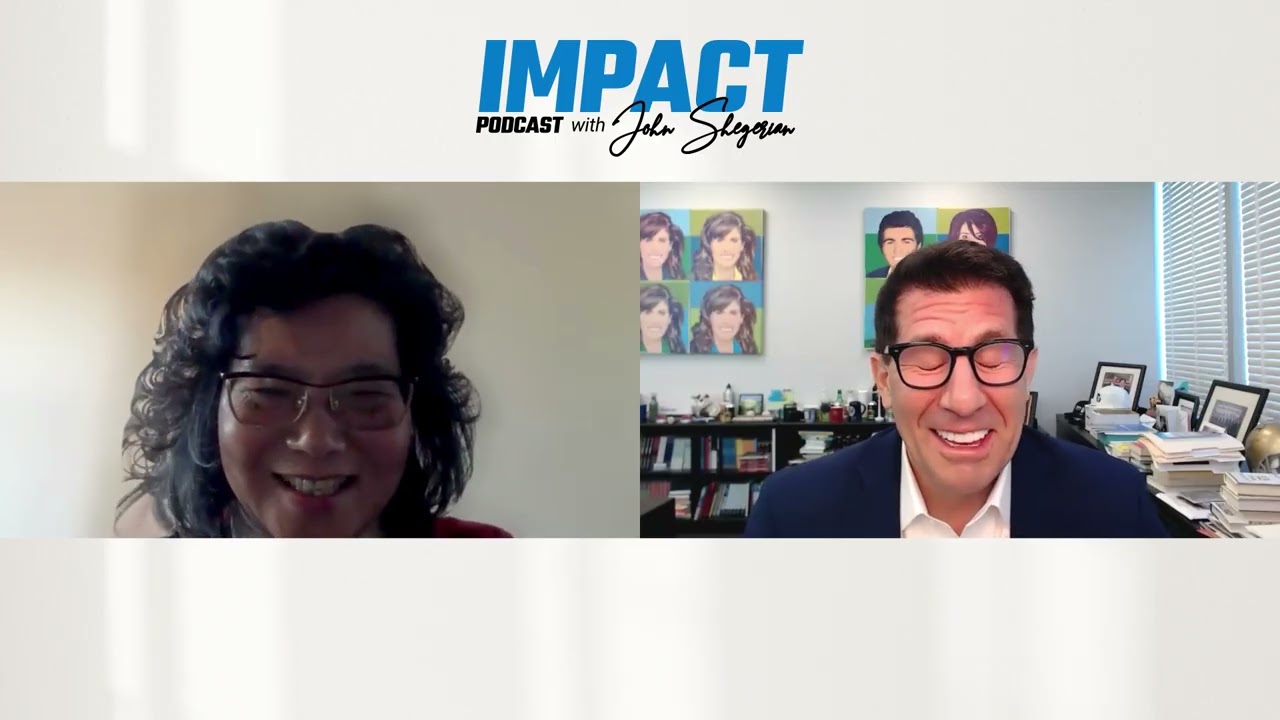
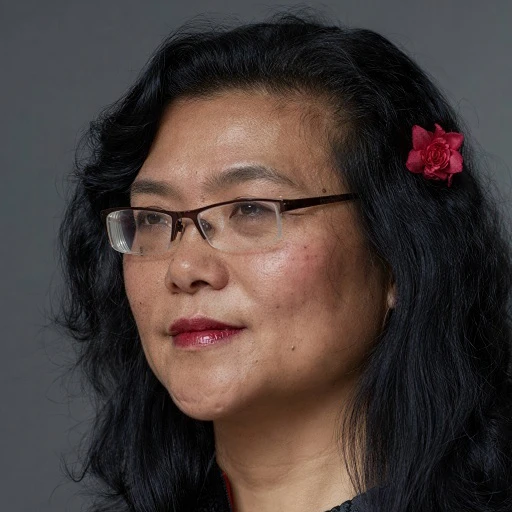
Lijia Zhang is a rocket-factory-girl-turned writer, columnist and public speaker, and one of the few Chinese social commentators who writes in English for international publications. Her commentary on China’s social, cultural and political transformation has appeared in The South China Morning Post, The Far Eastern Economic Review, The Japan Times, The Guardian, Newsweek and The New York Times.
John Shegerian Get the latest impact podcast right into your inbox each week. Subscribe by entering your email address at impactpodcast.com to make sure you never miss an interview. This edition of the Impact Podcast is brought to you by ERI. ERI has a mission to protect people, the planet and your privacy, and is the largest fully integrated IT and electronics asset disposition provider and cybersecurity focused hardware destruction company in the United States and maybe even the world. For more information on how ERI can help your business properly dispose of outdated electronic hardware devices please visit eridirect.com. This episode of the Impact Podcast is brought to you by Closed Loop Partners. Closed Loop Partners is a leading circular economy investor in the United States with an extensive network of Fortune 500 corporate investors, family offices, institutional investors, industry experts and impact partners. Closed loops platform spans the arc of capital from venture capital to private equity bridging gaps and fostering synergies to scale the circular economy. To find closed loop partners please go to www.closedlooppartners.com.
John: Welcome to another edition of the Impact Podcast. I’m John Shegerian, and I’m so, so honored to have with us today Lijia Zhang. She’s the writer and social commentator and a very prolific writer. We’re going to get into her books. Lijia, welcome to the Impact Podcast.
Lijia Zhang: Thank you so much John for having me. Yes. Can I continue the introduction? The Chinese character has a meaning. Maja is the most common surname in the world. And my given name Lijia, Li as in beautiful, jia refined. Beautiful and refined obvious this is my parents impossible dream.
John: Well, I think they put a lot of pressure on you right from the get go. But I think you’ve lived up to it as well. That’s a hotcake[?]. When I’ve listened to you speak before many times and I’ve read all about you, one of my funnest readings about you is there was something written where it said you are a rocket factory girl turn writer columnist and public speaker, and one of the few Chinese social commentators who writes in both English and Chinese for international publications. Lijia, talk a little bit about what does this mean? Where did you grow up in China and how did you get on this ever fascinating journey that you’re on where you really were a rocket factory girl, which I want you to explain who then turned, of course, prolific writer.
Lijia: I was born into a poor working class family in Nanjing, in Eastern part of China on the banks of Yangtze River. I grew up in the residential compound which belonged to the factory my mother worked for. All my neighbors worked for the same factory, and all my friends were the children of the factory workers. But I had a grand plan. I wanted to go to university, I wanted to become a writer and journalist.
John: But what informed you at such a young and tender age to actually have a big dream? Because usually when children are shown a lot of options, they don’t know how to dream big. Where did you get the opportunity to have a big dream like that?
Lijia: I guess I was a good student. In China to be a good student you needed to have a good memory. So I just remembered I had a good memory. That’s all you need to be a good student. Totally before that China resumed the system before that during the cultural revolution and university was stopped. I was a good student. My teacher encouraged me to pursue dream. Particularly also I had a dream to become a writer and journalist. Actually I didn’t quite understand the difference between writing and journalist. But anyway, I want to go to university become a writer. The teacher often at school, my teachers often read my writing as a good example to show other students. I won competition in writing which was why I wanted to be a writer and journalist. But when I was 16, I was taken outta school. I was 16, that was 1980. So you clever people can quickly work out how old I’m precisely. That’s all [inaudible].
John: You’re younger than me, so that’s all that matters at this point.
Lijia: Only slightly, John.
John: You were 16 and pulled out by the government to go to work?
Lijia: No. My parents and basically my mother. Because at that time there was a temporary policy which allowed children to take over their parents’ job if parents retired early. That was way to solve the soaring unemployment at that time. So my mother being educated and she never saw the benefit of education. She thought that the most important thing for mother was to secure a job, especially a prestigious job. Like my mother had she worked for the state-owned enterprise. Among other products the factory produced intercontinental missiles that were capable of reaching North America. I have to say though, sorry, I have to stress. I was a no nuclear scientist. I did the most basic job, the framework go back. So I didn’t know any top nuclear secrets. Sorry.
John: How long were you a rocket factory girl? You were there started when you were 16. How long did that go for?
Lijia: I worked there for 10 years.
John: Did you still nurture your dream of becoming a writer and potentially also a reporter or columnist as well?
Lijia: Well, I think at that time I had these grand dreams and then I found myself being tractor at the bottom of the factory well become a factory worker. The factory was interesting in some way. It is like it was a mini communist state. So it provided lots of things for workers, like the flat we had were allocated by the factory. There was the factory provided the medical care, the factory provided dining hall. So we all provided lots of things but there were lots of control. The first day we entered the factory we were given a long list of things not to do. No lipsticks, no skinny jeans, no trousers with flares either, no dating with three years of entering the factory. So there were just lots of rules and I just wanted to as escape route, so I decided to teach myself English. So of course, looking back and learning English has effectively changed my life.
John: Wait a second. This is when you were 16.
Lijia: I began to teach my self English halfway through the factory.
John: You were 21.
Lijia: Yes. 42 years I think.
John: [crosstalk] It’s about 1985 there was no internet, there was none of these easy courses that now have become [inaudible] in our life. How did you go about what sounds like a very difficult task of teaching yourself English? What was available to you? What tools were available to you?
Lijia: Of course, as you pointed out today there are so many courses on offer. There’s so many devices. You could watch Pirate the latest Hollywood movies, but none of those things when I was young. I had to borrow a radio from my cousin. Even even radio was a luxury. We didn’t have a television. I forgot to mention how poor we were. And why my parents took me out of the school because we were so poor.
Like then every month we were only allowed a tiny amount meat. Back then everything like cooking oil, meat, milk. All these things were Russian rice. To satisfy our craving for meat my brother and I used to go out to catch Cicadas and then roast them over small bonfire and munch them up. Have you tried it?
John: I don’t think I have, but I do know people that have and some people use it as an alternate form of protein.
Lijia: Yes, it was a protein. Yes. And also it wins the roast are quite crunchy.
John: My gosh. You didn’t have a lot of tools available to you except the radio.
Lijia: The radio. So I borrowed the radio and then I followed English teaching program called New Concept English. The new concept, indeed, I just become fascinated by this language system so different from our Chinese characters. And then every weekend I would cycle for half an hour to go to the city center to go to the English corner. That’s a place where people who are keen to learn English, we got together and we always talk so loudly as if the sheer volume to compensate the lack of fluency. Yes. Occasionally we’ll see foreigners passed by, we will actually bounced on them. Kind of bombard them with questions where you from, what you do, how much money you earn.
John: When you met at that corner or that city center area, were there Americans that would come through and that were English speaking or other English speaking people that you would then try to co-opt and talk to before they could walk through your group?
Lijia: The vast majority of the people who went to the English corners were people like me from all walks of life. They were all keen to learn English.
John: Got it.
Lijia: But there were some foreigners, Americans, Canadians, or from other parts of the world they taught English or worked in Nanjing when sometimes they passed by just by chance or sometimes they will go there with the hope, kindness of sharing and just meeting. Some people just thought it was interesting because if you go there, not just the basic questions the people begin to ask you all sorts of questions. Some foreigners sort of was quite an interesting way to get to know China they will go there. Looking back now, we asked really not very appropriate questions and how much money you earn. How are you married? How many children do you have? Don’t worry if now you’ve met me, John, I will not like ask two personal questions. Anyway, so I give myself credit. I’m not a language gifted, but I was willing to learn. I was willing to speak, try give example what did I sound like? Let me give you an example. [foreihn language]
John: What was that? I didn’t understand that. Help me.
Lijia: Merry [foreign language], Merry Christmas.
John: My gosh.
Lijia: [foreign language] Happy New Year.
John: Happy New Year. Thank you. My gosh. So you were getting the whole cadence, the flow. How to do the whole thing. You were putting it all together brick by brick. That’s fascinating.
Lijia: Yes. Exactly. And also I was so obsessed in learning English. I often found myself talking loudly English to myself. Or I would sing carpenter songs. Sing Sing a song. Sing out loud.
John: You would just take modern songs and sing them. You teach yourself to sing them.
Lijia: Yes.
John: That was great.
Lijia: John, you probably think carpenters was a bit enough, but for us, the carpenters represented the high culture from the west. Because the Carpenters was one of the first Western albums that went on sale in China.
John: Really? So interesting. Well, Barbara Streisand always said that Karen Carpenter had the voice of an angel and was probably even a better singer than she was. She always credited her with one of the greatest singing voices ever. So that’s not a bad first album to bring to China, actually.
Lijia: I talk in English to myself and I sing carpenter songs and I dressed up in outlandish fashion. People began to laugh at me. They called me a toad who dreams to eat swamps meat. Told was something crawling on the ground and swung something flying in the sky. Basically, they were laughing at me for dreaming to have something impossible. So I was told to dream to eat swans meat did.
John: Did you know in your heart that English was the key to your freedom or did you have to articulate that not only to yourself, but also to others around you or to them? Were they learning English for other purposes, but you knew it was the key to your freedom at that point?
Lijia: I decide to learn English. I will just hope to begin with. I was hoping to get a job as an interpreter, with one of those many in Western companies that was slowly setting up shops.
John: Did that happen? Did you ever get that job? Did you get a job?
Lijia: I applied. It was extremely difficult and I believe I did make a big progress. Actually, after my English improved I start to translate travel documentaries for local TV stations. So I improved my English but to get a job with, one was foreign companies, it was really difficult. You applied at first to the import export company, but without connection was extremely difficult to find that shops[?].
John: Of course. So you were 21, you started this English journey. When did you finally say to yourself. It’s time to make my move. Lijia, let’s go. Let’s do something. I got enough of the English under my belt. I want to go do something with it. How did that happen? And when?
Lijia: I wanted to leave. That was towards the end of my stay after nearly 10 years. In 1989, you know what happened in 1989? Something extraordinary happened in 1989. Presented a pro-democracy movement broke up in China. We talking about Tianmen talking about 1989 people thought about students in Tianmen. The movement was led by students, started in Tianmen to be a nationwide movement. I was still a factory worker in Nanjing in 1989. That movement began a national movement. I organized the biggest protest among factory workers in support the student movement in Tianmen. Then I thought about maybe then there was a crackdown then I thought maybe I should try to leave the country.
John: Understood. Where did you go?
Lijia: At first I was hoping to go to America one of my best friends. The book was dedicated to my friend Joe Fang. The book I was talking about my memoir socialism is great. So the book was dedicated to my friend Joe Fang, who my mentor at the factory. She was two years older than me but was more worldly, much wiser lady, and she encouraged me to study English. [inaudible] help.
John: Is she still with us? She still alive?
Lijia: She is. She’s indeed. She come to visit me just [crosstalk]
John: Wonderful.
Lijia: over a year ago to celebrate my 60th birthday.
John: No.
Lijia: She was best friends.
John: Where does she live now? Where does she live?
Lijia: She’s the senior manager with 3M. Anyway, so she was hoping to help me and then I met somebody Oxford students. Which was why I ended up here in England.
John: And you ended up in England. And now you go to England. Then was China Remembers your first book that you wrote? Was China Remembers?
Lijia: Well, China Remembers was the first published book. Well, I left China in 1990 and one year later I was approached by a publishing company in China. They want me to write a book about western image of Chairman Mao and to be published on the hundredth anniversary of Chairman Mao’s birthday. I was living at Oxford at that time. I interviewed many people from all walks of life and I spent many hours at the body and library and I read many books written by Western Scholars about Chairman Mao. In China there’s a strict censorship system. My book did not pass the censorship. The editor underlined in the red pen, said, this is too negatives. Anyways, I said that this is far too negative. So which is why I decided that I’m going to be a writer and journalist, and I’m going to write in English because in this way I do not have to endure the censorship.
John: Understood. And when did your career take off as a writer in English? Because obviously you’ve lectured around the world. How many books have you written? I’ve seen five or six of them. How many books have you written in total?
Lijia: I’ve written a few more. They have been published. For example this Western image of Chairman Mao fell didn’t pass the censorship. In fact, I couldn’t even find the manuscript. Then a few years ago I wrote a book about left behind children. Referred to the children of migrant workers. You must have heard of the massive rural urban migration. But after the COVID many migrant workers returned to their hometown. By then the speed of the rural urban migration had slowed down, so now it is no longer a major problem. So anyway, so I’ll just give example that I’ve written more than have this thing published.
John: Understood.
Lijia: Anyway, so quite lot of writers have to suffer that fate.
John: But now you were a young woman still living in England. How long after you got there? Did you realize, my career is going to work, my dream is going to happen. I’m going to be a columnist and a writer. When did that all materializing your [inaudible]
Lijia: I left China in 1990. Once arrived here a child dream stirred. All these years I wanted to become a writer and journalist. That dream had never died. I took a career abundance course and I start writing articles for my local newspaper in Nanjig. My purpose of not leaving China I just want to see the world. After a few years, I returned to China with my ex-husband. As I mentioned, I want to be a writer journalist, so I didn’t quite understand the difference between the writer and journalist. I just had this vague idea just to write. I first become a fixer. Fixer are the people who help. Probably when you travel abroad, John, you use fixers.
John: Yes.
Lijia: And the unsung heroes in the journalist world.
John: That’s right. To perfect the course.
Lijia: I worked as a fixer. At first I met quite a few journalists and I used to tell them, look, for example, there was some a rural urban migration just started, I think why don’t you do a piece about migration? During the Chinese New Year time just millions of people were just get on the train. Anyway, so one of my friend took my suggestion, took with me, I interpreted for her. And so her company was ABC, Australian Broadcasting Company. Didn’t agree to pay. She had assigned official interpreter. His written English was excellent, but he couldn’t speak English properly. My friend Ali Moore this Australian journalist friend, she would take me and using me as an interpreter.
John: I love it.
Lijia: I started the career as a fixer interpreter, local fixer.
John: Take me through this, because I’m always fascinated. We’re going to talk about this later on about the whole phenomenon of Tiger Mom’s book. What did your mom and dad think? You grew in Nanjing, and now you’re in London and you’re in the uk. Were they extraordinarily proud? Were they scared? And was this all new to them? Their daughter leaving not only their city, but their country and living somewhere in a promised but strange but promised land?
Lijia: Both my parents have passed away. My mother passed away six months before COVID. And my father passed away 13 years ago. Of course as children I always wanted my parents to be proud of me.
John: Sure.
Lijia: You a joke. It was not joke, it’s real. Once I was invited to give a lecture at the American Embassy and it went really well and I was very proud of myself. I called my mother to tell her this. And she said, “if only you got a husband.”
John: My gosh. Well that deflated that balloon pretty quickly. It brought you right back down to size just like a mother can do.
Lijia: In a way. I think for somebody high educated like my mother, it’s very, very difficult. Like, for example, one of my proudest moments, I gave a lecture at Harvard. I was introduced as the rocket factory turned writer and I gave a lecture to Harvard and in fact I’ve lectured all the top universities Stanford and NYU Columbia. I published New York Times. After become a journalist I told myself I wanted to get published in New York Times, and I managed. But it’s very difficult to tell my mother. I was interviewed by BBC, I was in Sky, I will do panel in France, Fukushima, [inaudible] to my parents.
John: Your mom was still very traditional. She was worried about you finding a good husband.
Lijia: Yes. Before that she often said, why couldn’t you find a job as the interpreter, your English is so good? I’m a freelancer. To her freelancer was only slightly better than a beggar.
John: How old was your mom, if you don’t mind me asking? When she passed right before COVID, how old was she?
Lijia: She was she was 84. In her book was 85.
John: After you became this massive success with so many published books and all the writings around the world and lecturing was she extraordinarily proud of what you’ve accomplished before she passed?
Lijia: I hope she did in some way, but I also knew that she worried about me and she was very conservative and she was very old fashioned. So until she passed away, she never told my neighbors that I got divorced. I tried to go back to China two, three times a year. Once we were walking the street and somebody said, “where is your husband?” And I was just about to say, my mother kind of said put my sleeve, said talk about something else. And but for her though she’s great. The divorce was still a [inaudible]
John: That’s a difficult topic. For our listeners and our viewers who’ve just joined us, we’ve got the delightful Lijia Zhang with us today. She’s a writer of social commentator, a public speaker and much more you can find her at her website zhanglijia.com. You don’t have to write that down. It’s going to be in the show notes. You don’t have to stop driving your car or lifting weights or walking your dog. It will be in the show notes today as well many links to her wonderful books. Lijia let’s talk a little bit about what’s going on right now. After you became a writer and a columnist and you were an interpreter, who then evolved into writing and became a columnist. What message did you start giving then as terms of becoming a bridge between the east and the west, China and Western cultures and things of that such. What was the beginning of that message that you wanted to leave your listeners or your readers with?
Lijia: I think China has become one of the most consequential countries in the world.
John: Sure.
Lijia: But yet there are just incredible amount of ignorance about China. And also I’ve noticed especially in the past few years there has been growing fear about China. There has been a lot more talks about China being portrayed as a threat. I understand why there’s such a fear. I understand that after China’s failure in condemning Putins invasion of Ukraine and all these factors after China and United States engaged this rivalry fight is still going on. I just say, yeah. So China suffered some PR setback. Let’s put it that way. I just think that there’s a growing fear about China. As I said, I can understand why there’s such a fear, and of course there’s China apart from full PR China also has a poor human rights record. That’s the issue about Hong Kong Chimile[?] being given such a long sentence, which I think was totally wrong. The issue with Taiwan, China, Xi Jinping keeps threatening to take back Taiwan, which we’ll talk about, if you’re willing.
John: I will.
Lijia: China has a poor human rights record. So China there is low media freedom even though people do find a way to get around the government wifi, the firewall. But I personally believe that some of the fear about China is generated by ignorance. What I’m trying to do is to help people to understand where China’s coming from, what’s happening now. I think if you have a bit more better understanding of China, there’ll be more fear. Perhaps there’ll be more empathy.
John: I so agree with you, but I want to ask you this. You shocked me a little bit with what you said. It’s not that what you said shocked me, and I totally understand it, but I want to go back historically. I grew up in Queens, New York City and very diverse area. Little Net Queens was a very diverse area where I grew up and our schools were diverse. I went the high school of Manhattan and College of Manhattan. But the feeling I always got among my young peers was that China by the media in the United States, even as a child growing up, was always made out to be this boogeyman. A boogeyman of the United States. When you look at the numbers today, and my number might be off a point or two, but tell me what this means to you. Only about 42% of Americans, only about 42% have passports. About 42%, 35% have been to either Canada, Mexico, or Europe, or some combination thereof. There’s only about 7% or so of American citizens that have ever been to the East China, Japan, anywhere in the east. Because they took the China boogeyman trope incorrect trope, and they literally painted a brush with the whole east.
Lijia: Yes.
John: How can we expect the West to love and understand and fall in love with the country. I was inspired by an NYU professor, a very well-known Chinese NYU professor back when I was a young man, and I was so excited to go, and I first started going to Hong Kong Shenzhen when I was 29. But none of the people that were my age were going there ever. It wasn’t part of American society. Now things are changing. My children are in their thirties they are all excited to go explore Shanghai Hong Kong, Tokyo. That whole part of the world is now become table stakes for their generation. But for our generation, you and I are the same generation it was a very different feeling. Keijin was on our show about six months ago, and I asked her one question. I said, if you were sitting with Donald Trump and his top advisor, Scott Bessett, and let’s say Marco Rubio and a couple others today, what would you tell them? And her response to me would be china doesn’t want to take over your country President Trump and his advisors. China is not interested in taking over your country. If you Lijia were advising today Donald Trump, what advice would you give him prior to his very, very momentous trip that’s coming up in April, is to meet with President Xi. What would you advise him? And then I want to hear, what would you tell President Xi in anticipation of this meeting?
Lijia: I just hope that this American children will learn more about China.
John: Me too. I’m so excited that my children are so excited about China. But this is a first, I didn’t ever feel that excitement from my generation ever.
Lijia: For example average, let’s say a teenager [crosstalk]
John: Yes.
Lijia: in China knows a great deal more about America. They know so much the film, the music, the history, the politics. But the American kids knows very, very little.
John: That’s a beautiful fault of our education system and our media I believe. I feel that way. I don’t feel it’s still. We don’t give enough good information to them.
Lijia: Yes. Good info. In some ways I can understand that just nature of news and if you tell something was cannot remember the saying there was a blood, there’s great. Negative news often sell. But in China you cheat so much. How many people know that in the past since reform and opening up some 800 million people have been lifted after the poverty and China is now the second largest economy in the world and if you judging by purchase parity China is the number one power in the world. But those many Americans still don’t know that.
John: A hundred percent. Just to give our listeners and viewers a little bit of context, you and I are recording this show right after the very momentous Weekend of American and Israel taking out the leadership of Iran. To me it seems like the stakes are even higher now going into the April meeting and summit in China between President Xi and President Trump. What are you excited about this meeting and how would you advise both sides if you were privately asked to advise both sides? So the most productive meeting could happen, meetings could happen, and we could have good results and a great path forward after this meeting.
Lijia: I think where there’s still China sometimes say if threatened, if America continue to sell weapons to Taiwan, China may not allow Trump to visit. I think China is in a good place. Lots of Chinese people feel that between the rivalry between China and United States, China has the upper hand. Many people truly believe so. And do you know Trump what’s his Chinese name in China?
John: No. Tell me.
Lijia: Many people call him Chuān Jiànguó. That’s his surname. This is vaguely sound like a Trump. Chuān Jiànguó, Jiànguó means building China. People are saying Trump is making China great.
John: Well, there you have it. That’s very interesting. But there has to be some commonalities in common ground.
Lijia: But that’s the thing. I don’t think we should label China as a purely threat.
John: Makes no sense.
Lijia: Yes. And maybe a competitive coexistence. There are so many major.
John: Isn’t there a lot to learn from one another? Isn’t there some great ways they can be collaborative?
Lijia: Absolutely. For example without China’s involvement climate change, AR governance, management of the nuclear weapons, all these things will be pointless without China’s involvement. China has become a leader in green technology, in battery technology. China’s streams is really, really impressive. You talking you asked me about how I feel and I think the more interaction, more meeting between China and US is a good thing because we cannot. I think the China’s threat it’s not just a purely that it’s real. Personally, I don’t think that’s a good best lens to look at China. I just think the both sides need to understand each other better, and we have to learn we compete but we have to cooperate the two countries.
John: Isn’t it better to look at the world from a lens of abundance than a zero sum game, a land world of scarcity? Both countries are doing so well in so many ways and there’s so much to learn from each country. I get inspired every time I’m in China. I’m inspired. I love Elon Musk, I love Tesla. But when I went to China recently and I got into a BYD car I thought there was one of the greatest cars for 18, $19,000 USD I’ve ever been in my life.
Lijia: China has also become a leader in ev, electric vehicles.
John: Also, my understanding from everyone I meet with over there is they’re also even leading us in ai.
Lijia: Yes. If China is not the leader in ai, China will be in the near future. [inaudible] huge amount in NR&D.
John: When I was there recently I visited with some designers and manufacturers of human robots. They’re coming for us. It’s incredible what they’re doing.
Lijia: This year’s part of the New Year’s ceremony in China these days is watching CCTVs, the New Year Gala. So the most popular, most striking one was a bunch of robots dancing with humans. They’re doing kungfu martial arts.
John: I watched that. You brought up the new year. I have my my fire horse right here. This is real authentic.
Lijia: I’m wearing my Chinese Julia Red top.
John: Well, beautiful. So let’s talk about that. This is 2026, we’re now in the beginning of it still is the year of the fire horse, which only happens what, every 60 years?
Lijia: Every 60 years.
John: You and I were young kids, but 1966 was long ago. But it’s a very, just like you mentioned, 1989, 1966 was also a very momentous time in Chinese history.
Lijia: The Chinese use Zodiac is very interesting. There’s a 12 year cycle. What makes Chinese Zodiac more interesting is that it combines with five essential element like fire, water, earth, metal and so on. That makes 60 year cycle. So according to the Chinese belief, traditional belief that a fire horse is often associated with turbulence or with a dramatic changes. So fire can bring energy, but it can also be destructive. So the 60 last round, it was 1966. That was a monumental year in Chinese history when Chairman Mao launched a mad political movement called the Great Cultural Revolution which called a huge disaster pushed so many people injured, so many died, and the economy was pushed the brink of for collapse. So that was the idea. Then the sixth year before that was a 1906 that was just before the collapse of The Qing dynasty, China’s last Imperial Dynasty. The 1906 was again, a turbulent year China suffered terrible natural disaster, like floods. Up to 25 million people died. So this year when this fire horse came around, some people were feeling a bit anxious especially now China’s facing quite a lot of a challenge. The economy has been snowing and it hasn’t picked up after COVID. The use unemployment is really high. The property market probably going to burst and China’s use unemployment is really high and the burst rate is really low.
John: I want to go into all those things in a second. Let’s go back for a second to 2026. I learned at a young age when I started going to China one of the first things I started learning about is feng shui, just to understand culture. Feng shui from everything from design and art but also even numbers numerical feng shui and the beauty of eight and the importance of eight and many of the other. Talk a little bit about as someone who bridges both east and west the way you have seemed to seamlessly do, do you take that past performance of 1906 and 1966 and factor it into any decision making. If you’re a woman thinking about getting married, if you’re a business person thinking about making a big investment, how is tradition and modernity intersecting now when it comes to feng shui and the Zodiac the importance of potentially an auspicious or a non auspicious Zodiac?
Lijia: I believe one thing which is a bit funny is called [foreign language]. Quite a lot of people take this attitude, don’t believe in it totally. And don’t trust it completely. Not disbelieve it completely, or something like that. He cannot believe it, but he cannot believe it totally.
John: But do some people plan to have children on special Zodiac years? Like I believe if my homework was correct, you are a dragon lady.
Lijia: Yes, of course. No less I’m a dragon. Yes.
John: That’s a very good Zodiac. That’s what auspicious Zodiac for you.
Lijia: Yes. A dragon can be very powerful, but it can be also destructive. I hope I’m [inaudible].
John: I think you’ve got the powerful, I don’t think you’re destructive. I think you’re the powerful subtype.
Lijia: I just breathe fire while I’m angry.
John: Every time I go to China, and I’ve been from Dalian to Guangzhou and Shenzhen. Just make repeated visits on business and to understand my partners and to understand my clients over there. I love just seeing what’s happening socially, and there’s a whole new generation of young people that are thriving and they are not only thriving, it goes way beyond what you described earlier of having to eat the toasted circadian.
Lijia: Kind of.
John: They have this more disposable income than ever before and they’re enjoying all the wonderful trappings of education and success and things of that. But as you pointed out a little while ago, there’s also what comes with that kind of fast and massive growth comes. Some also thought provoking trends or things that are also concerning when you want to build a balanced economy, such as you said. The rat generation or the laying down generation isn’t that part of part it?
Lijia: Yes. Tang ping, this is a character called Ge You famous actor. He played a role. He just give up trying anything, just lying down called Tang ping lying flat. That’s because the young people they’re having quite a hard time now. When the reform opening up started that there was quite a big of a leap in social mobility. But now the social mobility has been stagnated. As I mentioned briefly, that the use unemployment is very high, as high as 25%. So sometimes university graduate have to be forced to take up lowly paid jobs, like delivery man and things like that. So there was no point to trying. So there’s some people just give up and lying flat. The associate with a new phenomenon called rat people. So the people if some of them even show off their lifestyle on social media, they rent very cheaply basement or something like that. They slept during the day at night they play computer games and give up trying. Because their life is so hard and some of them have gone back home kind of living off their parents called kěn lǎo.
John: Isn’t it fair to say given that you’ve spent a good portion of your life now in the West, and I live here in the United States as well, that 1998 was the founding of Google, so let’s just call that a starting point for the technological revolution. It accelerated then 22 years, then 2020 came and during those 22 years of acceleration of the technological revolution loneliness and isolation became more and more normalized, not only in China but around the world. We talk about [inaudible] and then COVID gave us the opportunity to connect vis-a-vis these wonderful technologies like we’re doing today with Zoom. More isolation even happened. So we come out of COVID and isolation and loneliness seems to be an epidemic, not only relegated to youth in China, but really now we see it even here in the West. It’s real and there’s a whole generation of very lonely people that don’t have the people skills that you were forced to hone and develop as a young lady that I was forced as a young man because we didn’t have technology. Everything was done in person nose to nose and it was ubiquitous to do everything face to face. So isn’t that really, even though it’s called rat there, they gave it a name or laying down or lying down. Can’t we say that’s actually something that’s even part of the Western problems that are rising as well?
Lijia: Yes. I think a social media is a really a tricky issue. We rely on it so much, but also if you spend far too much time on the social media become lonely. You don’t have the warmth of human interaction. I’ve asked to write a short story recently. A friend read it and said, the lifestyle of the modern today’s young people very similar. It’s actually. Another thing I mentioned briefly is that the total fertility birth rate is very low. Many young people don’t want to get married anymore. I believe the trend is set by urban educated women. I think it was quite interesting for me and I done quite a lot of interviews when I went to China last time. I interviewed women about at changing age towards marriage and sex and motherhood. I think the pattern fits into the pattern developed world. When a country develops women get go to education, they are not so keen to have family anymore and they want to live their times that they want to take control of their lives. They want to live their lives fully on their own terms. Their parents of course often pressure them to getting married, but they do want to live their life. The many educated urban women do not see marriage or motherhood as necessary ingredients of a happy life.
John: Isn’t it fair to say, like you just said? That’s part of a rising economy. That’s a trend that then becomes part of a rising and thriving economy with more education becoming democratized to more.
Lijia: Yes.
John: Aren’t we seeing that same trend actually even more profoundly in South Korea and even in Japan as well?
Lijia: Yes. All these countries with low birth rate, there’s something unite them. Do you know what? The low position women. There’s no gender equality. In China the married women with children are not treated so well. Which is why some women very career-minded women do not want to have children because they don’t want to lose out the race.
John: So marriage rates are down, birth rates are down, divorce rates are rising.
Lijia: Yes. No, the fertility rate in China is only slightly more than one. Between one and 1.02, which is way below the replacement level of 2.2, actually 2.1.
John: The government has relaxed the one child, one family policy now, and you’re allowed to have more than one child now I take it in China.
Lijia: They relaxed the control quite a few years ago, 2015, 2016 that sort of time. People are allowed to have two children. But many young people have not take up the offer. But in some places, even I encourage people to have three.
John: I love this line. I’m quoting you. But I thought this summed it up really best. You said the economy is the best contraception.
Lijia: Yes. I said that in a wine interview I cannot remember when.
John: I love that. But no. Now wait a second. I talk to my friends over in China all the time. We email, we text, we talk all the time besides visiting them, and I have business colleagues there. They told me one of the big trends, and I want you to tell me if this is real or not, is that professional older woman are now dating younger men in China.
Lijia: That trend it exists everywhere. But yes, there are plenty of women dating young women. They call them [foreign language] little fresh meat.
John: My gosh. Wait a second. I’ll leave it at that.
Lijia: You learned a new phrase [foreign language].
John: Absolutely. I’m learning a lot of new things today. That’s what I’m going to tell you right now Lijia. I’m little learning a lot of new things. But, well, I want to toggle between two things that I think are very important to discuss. One you’ve had really a very impactful and big career for someone who started, well, really, really under tough circumstances. Relatively speaking Warren Buffet’s 95 and still the executive chairman of Berkshire Hathaway. the good news for people like you and me is that we still have a long runway in front of us. What’s your passion today when you’re picking topics to lecture about, write about, either write a book or write fresh columns about. What’s in your heart and soul that you want to be covering today?
Lijia: I want to have people have a better understanding of China. I always encourage people to go to China as if they go to China, they’re doing me a personal favor. But I just think China it’s such a amazing country is with a long history. That’s one thing I want people go to China. I also want to talk with them about the misconception.
John: No.
Lijia: For example, a lot of people for example in London they say they don’t want to go to China because China is a nasty country. Well, the China Xi Jinping may not be the most enlightened leader in the world, but I don’t think one should mess up confuse individual Chinese people with the government.
John: That’s exactly right. You’re right. By the way I have huge empathy for him. I think he has an incredibly tough job. That’s a very geographically diverse, economically diverse country.
Lijia: It is, yes. Exactly. The China is 1.4 million people and there are five, six, including hand Chinese there are 55 minority and minorities. Yes. I think people often kind of this is one of the common misconception about China. Think of the Chinese government, China just one unified mind which is not true. Also it’s also not true that everybody hates the government or everybody’s patriotic.
John: Wait a second. So how many children did you have in your life Lijia?
Lijia: I have two daughters.
John: Two daughters. They’re in their twenties now, or thirties.
Lijia: They are in their twenties. So my younger daughter just got engaged.
John: Congratulations.
Lijia: [crosstalk] 27th birthday wife flowing hot air balloon in Mexico City.
John: Congratulations.
Lijia: Proposed to her partner.
John: Is that the first of your two to get engaged?
Lijia: First, yes.
John: Congratulations.
Lijia: [inaudible]
John: Since this is your passion. So you have two children, I have two children as well born and a girl in their thirties. When you’re speaking to the next generation, whereas really that’s where we’re putting our hope and our trust in. When you’re telling them, go and learn about China, what do you advise them? Where do you tell them to go first? What do you tell them to go see to really get the best impact and the beauty and the wonders of the people, the food, the history, and the modernity that China gets to have all in one wonderful country?
Lijia: Just be open-minded and try everything, try to eat everything.
John: Absolutely. No kidding. I try to eat everything and boy my stomach hurts because I have the most fun when I’m in China because the food is so good over there.
Lijia: The food is getting better and also the fusion food I really like.
John: Let’s talk about your two daughters. Not specifically, but just as a mom. When I read the deep version of your history, your grandmother was a courtesan turned concubine, if I have that right. Was that on your mother’s side?
Lijia: Yes.
John: Your mom’s mom?
Lijia: Yes. That was my mother’s side. Yes.
John: Then your mom was, of course, as you said, a state factory worker in the rocket factory? So you became a rocket factory girl who then turned writer and calmness and public speaker. So where are we now today with the woman’s rise economically, educationally, and I first want to know one thing, was the tiger mom thing real or is that more of a legend? Was your mom a tiger mom, where you were tiger mom, where’s this whole tiger mom thing? Is this reality or is this more of a fictional urban legend?
Lijia: I’m going to start from the beginning, tell you a little bit about the women in my family, my maternal five side. My grandmother was a very special person. She was one who brought me up. Shortly before she passed away, I learned a shocking secret in our family. Shortly before she passed away, my mother told me that my grandmother was a courtesan in her youth, and she explained that when my grandmother was young, about seven, eight years old, she lost her parents in her family. So she was then adopted by her aunt’s family who treated her like a slave. The aunt husband sold her to to a brussel. In those days before the Chinese Communist party took power, women were treated like a common commodity. So anyway, so she worked there and for 10 years and during that time, she met my grandfather who was a John, you don’t associate to your grandmother with a prostitute or your grandpa with John. So, but anyway, that was what happened. But my grandmother then become his concubine, and then in 1949, the Chinese Communist Party took power. Men were ordered to keep one wife. My grandpa decide to stay with his concubine instead that tough wife. So probably for no reason alone my grandmother loved the chairman.
John: When you think back on your grandmother who raised you, what was some of the advice that she gave you that you’ve taken into your life and you still think about her and think about the advice she gave you that has served you really well?
Lijia: My grandmother was a Buddhist and she always told us to be kind to other people and be extra kind to people worse off than you are. I always remembered her teaching. She was an amazing woman. And my mother she was 12 years old when the Chinese Communist Party took over power, and she really appreciate that because the China at that time presented the hope and she then got a job working for a state of enterprise and she was really happy. Just comparing the China before the 1949, China suffered terribly and it was in know very turbon years in the Chinese history. My mother worked all her life, basically did the same kind of job and her job was to pickling metal parts. You sunk the metal machine parts in a tank full of chemicals and to [crosstalk] treat that metal.
John: Sure.
Lijia: There was a very much a men’s job, but during Chairman Mao’s time Chairman Mao had the same in a woman can hold up half the sky. And his way to treat gender equality was to deny the physical difference between men and women. At that time, the Dazhai was a agricultural model. So the women from Dazhai they dress like men, they behave like men. They could carry as much as a night saw as men. So those are the image of the Chinese model woman.
John: How many siblings did your mom have?
Lijia: My mother just she was only child.
John: How many siblings did you have? You said you were number two. How many were in your family?
Lijia: I had elder sister who was much more beautiful than me. I had a younger brother, so you see my sister got everybody’s affection because she was first child and then I had a brother was extremely favored by everybody, so I didn’t get much attention.
John: Talk a little bit about that. Are your siblings still alive? Are they still here with us?
Lijia: Yes. My sister she just retired. She worked for government. Her job was she worked for her government.
John: And your brother [crosstalk]
Lijia: being very poptopic and told me do not say anything slightly negative about China. I said, of course.
John: And your brother. Where’s your brother? What did he do?
Lijia: My brother he works as a debt collector at the bank. This was a job my sister fund for him.
John: In China?
Lijia: In Nanjing. My sister and brother, then their family all live in Nanjing. My brother he’s a Buddhist. He’s not interested in anything else but Buddhism. Anyway, so he didn’t want to demanding job. So my family women are much stronger than men.
John: Are the three of you still close? Do you stay in close touch at least?
Lijia: My brother lives the world of his own. He does not even talk with his wife properly, let alone us.
John: He’s more introspective, more of an introvert. You and your sister are more close.
Lijia: Yes. My sister, and then we chat regularly.
John: That’s so nice.
Lijia: Even though we are completely different.
John: Well that’s okay. That makes it more interesting actually sometimes.
Lijia: Yes, actually.
John: Now your daughters are young woman in their twenties with the whole world in front of them, are they more westernized or easternized or do they have a happy balance of their Chinese and Western roots as well?
Lijia: I think that they have a happy balance of both. Yes. The Chinese speakers and my older daughter she’s an actress, so my guiding principle in life is to pursue do the job, to pursue what really interests you, what you feel passionate about.
John: Got it. She lives in London, or she lives in [crosstalk]
Lijia: We all live in London.
John: Got it. Your other daughter what’s her dream?
Lijia: Sorry.
John: What’s your other daughter’s dream?
Lijia: My other daughter she studied a human geography. She’s been working as a social researcher. She found that very interesting. She loves that.
John: Now to the important question, when you look back was your mom a tiger mom?
Lijia: No, my mother was not a tiger mom. We were looked after by my grandmother and I think she felt a little bit jealous. But then she was not a tiger mother and sometimes I wish I were more tiger mother.
John: You’re not. You’re [inaudible]
Lijia: I’m not. For example, my older daughter she loved singing, dancing. She could sing before she could walk properly.
John: You were in the tiger. My friends in China tell me for the mothers that aren’t tiger moms, they’re now called panda moms. Are you a panda mom?
Lijia: I’m not Panama. My children call me lo ma, which is the term of endearment, means old mother.
John: That’s sweet.
Lijia: I don’t want it I’m not old yet.
John: No. Well my kids call me old twos. Don’t worry about it. We’re both in the same [inaudible]. They love doing that. That’s their way of showing love to us by needling us by. I think that’s a little bit of show. Talk a little bit about, what’s in the future for you now? What are you most excited about? You’ve done so much, but there’s so much yet to do, and it’s such an exciting time we have more information than ever before at our fingertips. Are you working on a book? Are you working on a column? Are you working on something? What are you working on right now that gets you outta bed in the morning?
Lijia: Every day I looking forward to sitting in front of my computer and start writing really. So I just finished a bigger project a historical novel inspired by China’s first feminist. Her name’s Qiu Jin. I think she’s one of the most colorful character in contemporary China. We were talking about the end of the Ching Dynasty. She was beheaded in 1907. I knew what happened in 1906 because I was while writing this book.
John: Sure.
Lijia: She was beheaded in 1907. Beheaded for organizing a military uprising. At that time, women was supposed to stay at home, but she had a public role. She ran a school to train insurgent. So she was China’s first feminist and China’s famous revolutionary. But she was also somebody who got a big ego and she believed she was sent by some divine force to save China. She sometimes children was referred to as China’s Joan of Arc.
John: Is your historical perspective going to be in a paper or a book? Is that going to be published as a book or a paper?
Lijia: Anyway, so I just found agent one in December when I passed through New York before on my way to south America. So anyway, that’s my agent is reading the book right now. And meanwhile while I was traveling in Argentina, I was introduced a friend a friend, and among other things he’s an independent publisher, specialized in publishing books in Argentina, some about China. He thinks like me, China is most consequential country, but people don’t know enough about China, so that’s what he does. He read some of my travel blogs and loved them. He said, could you please, please turn your travel blogs into a book?
John: Well.
Lijia: I agreed, but I cannot just simply transport my travel blog, so I have to write properly. So that’s what I’m doing now. It is of self-indulgent, but I loving it.
John: Talk about the duality of life. It sounds like you love writing. It’s like that’s your piece and that’s your happiness. Some writers I know are very introverted. You’re very social, you’re very people oriented. So you love the writing, but you also love traveling and meeting new people and building a social network around the world.
Lijia: Yes. Can I tell you a small story?
John: Of course.
Lijia: When my children were young I always tell them, talking to strangers.
John: You told them to talk to strangers.
Lijia: When my memoir come out a young journalist from a local newspaper, new local magazine called Beijing Kids come to interview me. So many people written about the profile. So just profile story about me, but that remains one of the best. So she interviewed me and then my children come back home. She began to interview my children. She said, “so your mother is Chinese, your father is British. Do they treat you, educate you differently?” May, my older daughter said, “my mother always told us to talk to strangers. My father said, never ever talk to strangers. We don’t know what to choose. Should we talk to strangers or not?”
John: My gosh. That is the funniest story.
Lijia: They talk to strangers different from getting into car for strange men. I just think that we always use your common sense, but talk to people your words will become big.
John: That’s so sweet. That’s so funny though. But because you’re right, parents usually say don’t talk to strangers. You are giving your children the opposite advice, but you are giving them great push to become sociable and personable. So I love that. That’s wonderful.
Lijia: Each person reach your life in one way or another.
John: True. We talked about some of the other trends in China. Let’s talk about one of the funnest trends I’m seeing, and tell me what your thoughts about it are. You and I saw the rise of K-pop obviously and the K dramas and all that other stuff that’s come around the world. I spend a lot of time in New York, Los Angeles, and other cities in the United States, Chinamaxxing. This Chinamaxxing thing has become big.
Lijia: I’ve heard about Chinamaxxing, but I honestly don’t know. [inaudible] know about don’t make any comments.
John: Is it coming to London? Is the generation of young people Chinamaxxing? There seems to be this whole new thing of taking in Chinese culture and promoting it on social media and really they’re calling it Chinamaxxing. Talk a little bit about it. You’ve heard about it, but have you seen it in person?
Lijia: There was a podcast, I subscribed to a podcast, which is a topic of the Chinamaxxing, and I didn’t understand it. I haven’t listened to it. Now you inspired me to listen to it.
John: Here’s the deal. What’s going to happen is, when your book gets published, because I hope this agent gets it published. I want you to come back on the show and I want to promote the book.
Lijia: Thank you. I really want lip in hope. I hope I will find a decent publisher and I hope to sell the film rights.
John: I like it. Then if you sell the film rights you’re going to get your daughter apart in the film, I assume.
Lijia: Yes.
John: Listen, we’ve talked a lot about a lot of topics today. What haven’t we talked about that you want our listeners and viewers to come away with from this show? From a life of bridging the information gap between the east and the west? What didn’t we talk about that you’d love our listeners and viewers to leave them with a few thoughts of yours?
Lijia: China is not a threat and go to visit China. You’ll be grateful and I’m happy to give you some advice. The one thing that put people off is for example, for American to go to China, once you are in China you won’t be able to access New York Times or the BBC or Facebook. But there’s the easy way to get around it. Get international sim card special design for China. So when you arrive, you have to activate it before you leave. Once you arrive, you just start using it. That will allow you to access to all the usual stuff New York Times or Facebook or whatever. And you just download Alipay, which allow you can pay, that Alipay will connect your your bank accounts. So there are a few little things you have to pay. Otherwise, traveling China it’s not that easy. Traveling China is not that challenging. Sorry. [inaudible] to myself.
John: I so agree. I’ll tell you what, I think it’s one of the greatest countries on this planet and the people. I’ve always had the warmest greetings and hosting by everyone I’ve ever met in China. The food, the culture, the history, but also the modernity. Every time I go to Shanghai, I’m just blown away by the Shenzhen. I went to Shenzhen starting in 1993. When I go there now, I’m like, I can’t even believe it’s the same city anymore.
Lijia: It is. When I first arrived in this country in 1990, and I feel England is so advanced. But I just went to China a few months ago, and in big cities like Nanjing, Shanghai when you buy the train tickets months beforehand, which platform you are going. And it’s just so old and the train which is so fast, so reliable. But anyway, so in London for example, you just a few minutes to go. You still don’t know which platform you are going.
John: Tell me about it. I grew up in New York City on the public transportation. We were praying this train would show up. We don’t know.
Lijia: Also the New York got a character, but it used to look so old. The China train runs like a dream.
John: True. And somehow, like the cities have figured out the leadership how to blend the modern architecture and leave the historical monuments and architecture. So it’s a beautiful blend of new and old.
Lijia: I think China benefit a great deal from infrastructure that is probably partially thanks to the influence of Soviet Union. China always paid lots of attention to infrastructure that really greatly improved the productivity of China.
John: Lijia, I know you’ve had such a fascinating and successful career that you’ve created from literally nothing. But I think your skills and your perspective is actually more needed now more than ever before. I think what you are doing as serving as a bridge between the east and the west is so needed and necessary. So I was so excited to have you on the show today. So I promise you, I’m going to have you back again because I want you to be able to continue to share your wonderful and fresh perspective, but also hopefully you’ll have a book to share with us that gets made into a movie Hollywood, [inaudible].
Lijia: Thank you so much for having me.
John: Of course. For our listeners and viewers, we’re going to give Lijia’s website. It will be in the show notes. We’re going to give also links to some of her greatest hits here. She has so many wonderful books that we can all learn from and Lijia just thank you for your time today. Thank you for serving as the important bridge and voice of the East and the West and bringing us more together to make hopefully a better future. And thank you overall for just making the world a better place.
Lijia: You are so kind. Thank you so much. Thank you for making my day John.
John: This edition of the Impact Podcast is brought to you by Engage. Engage is a digital booking platform revolutionizing the talent booking industry. With thousands of athletes, celebrities, entrepreneurs, and business leaders Engage is the go-to spot for booking talent, for speeches, custom experiences, live streams, and much more. For more information on Engage or to book talent today, visit letsengage.com. This edition of the Impact Podcast is brought to you by ERI. ERI has a mission to protect people, the planet and your privacy, and is the largest fully integrated IT and electronics asset disposition provider and cybersecurity focused hardware destruction company in the United States and maybe even the world. For more information on how ERI can help your business properly dispose of outdated electronic hardware devices please visit eridirect.com.
 Spotify
 Apple Podcasts
 Amazon Music
 iHeartRadio
 YouTube
 YouTube Music
 Audible
 Pandora