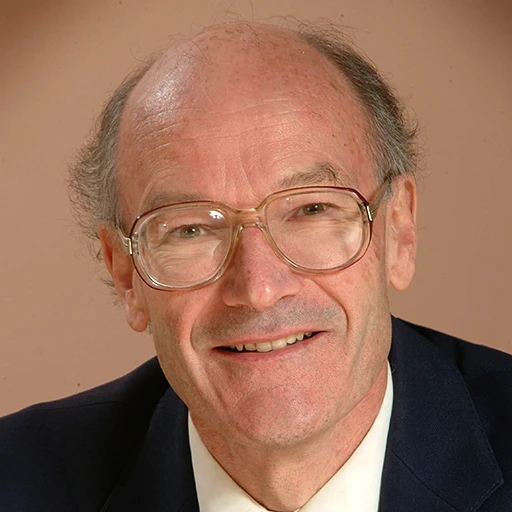
Paul Ekins has a Ph.D. in economics from the University of London and is Professor of Resources and Environmental Policy at the UCL Institute for Sustainable Resources at University College London. He also has extensive experience consulting for business, government and international organizations. Paul Ekins’ academic work, published in numerous books, articles and scientific papers, focuses on the conditions and policies for achieving an environmentally sustainable economy.
John Shegerian: Do you have a suggestion for a Rockstar Impact Podcast guest? Go to impactpodcast.com and just click, be a guest, to recommend someone today. This edition of the Impact Podcast is brought to you by ERI. ERI has a mission to protect people, the planet, and your privacy, and is the largest fully integrated IT and electronics asset disposition provider and cybersecurity-focused hardware destruction company in the United States and maybe even the world. For more information on how ERI can help your business properly dispose of outdated electronic hardware devices, please visit eridirect.com. This episode of the Impact Podcast is brought to you by Closed Loop Partners. Closed Loop Partners is a leading circular economy investor in the United States with an extensive network of Fortune 500 corporate investors, family offices, institutional investors, industry experts, and impact partners. Closed Loop’s platform spans the arc of capital from venture capital to private equity, bridging gaps, and fostering synergies to scale the circular economy. To find Closed Loop Partners, please go to www.closedlooppartners.com.
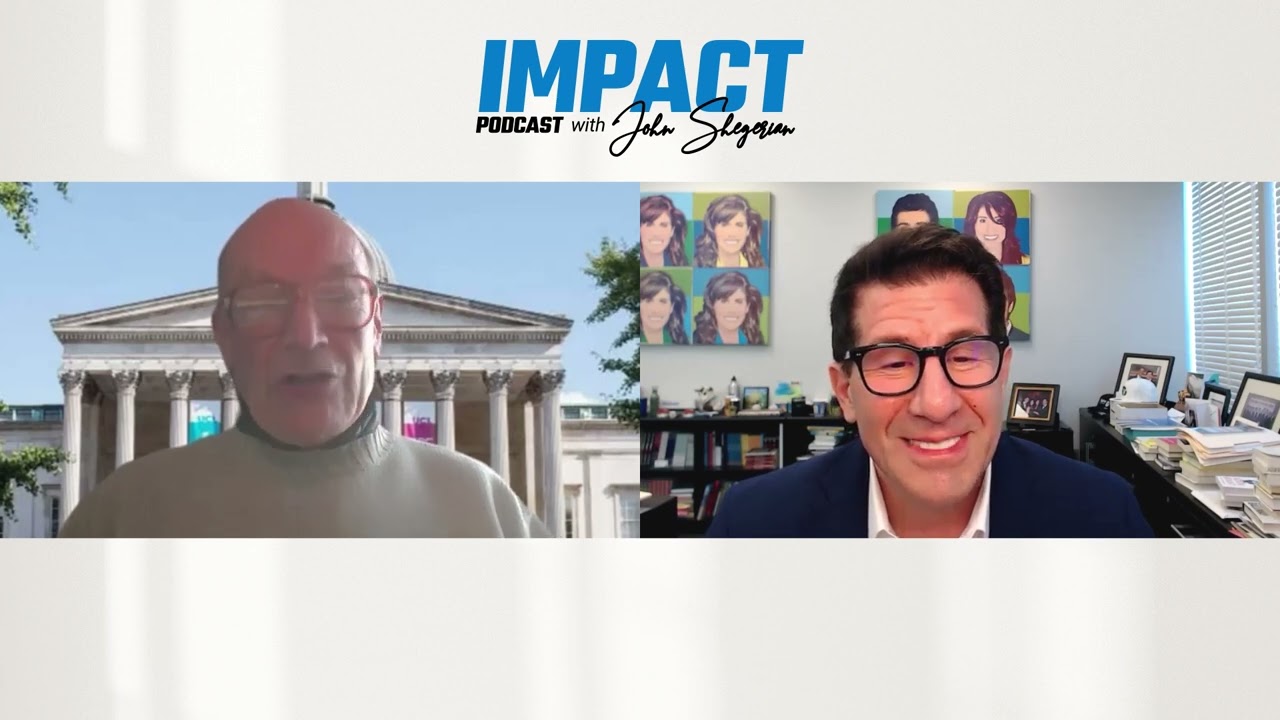
John: Welcome to another edition of the Impact Podcast. I’m John Shegerian, and I’m so honored to have with us today Dr. Paul Ekins. He’s across the pond in London. He’s the Professor of Resources and Environmental Policy at the University of College London, UCL. Welcome, Paul, to the Impact Podcast.
Dr. Paul Ekins: Thank you, John, and thanks so much for inviting me.
John: Before we get talking about all the unbelievably impactful and important work you’ve done over the course of your long and storied career, I’d love you first to share a little bit about yourself, Paul. Where did you grow up, and how did you get on this very fascinating and important journey that you’re on?
Dr. Ekins: Well, thanks. It’s been a long and tortuous journey, as you might imagine. So I was born in Indonesia, where my father was growing tea and rubber. But things got a bit hot politically there in the early 1950s. Indonesia had just become independent, so I was packed off to boarding school in the UK, which is kind of what British expats often did, and then went through the boarding school through from the age of 7 through 17, and then did well enough in my exams to go to college. And I went to Imperial College, which is another one of London’s decent universities, and studied electrical engineering. And I came out with a reasonable degree, but without a clue of what I wanted to do. And I find in my own interactions with students at my university, now UCL, which is the building you can see behind me, I find many of them don’t really know what to do. So I had a second string in the sense that I was very keen on classical music, and I became a classical singer and made a living at that. Not a very good living, I have to say, but a living for the next 10 years. And during that time, it occurred to me that the way we were treating the environment meant that we were going to be a relatively short-lived species. And I got very embroiled in that. I was deeply influenced by a British economist called Fritz Schumacher, who wrote what for me was a seminal book called Small is Beautiful. And ironically, his job was as chief economist of the UK’s National Coal Board, which given the status of coal now is, as I say, quite ironic. But I was really working out during the 1970s what the environment and resources and stuff were all about. And then I guess a light bulb went off in my head in the early 80s, and I realized it’s the economy, stupid. And I realized someone else said that in a rather different context. It was the economy that was screwing it up. It was the economy that was destroying the environment and natural resources. And so I went back to college, different London college this time, Birkbeck College, did an MSc, went on, did a PhD. And in the mid-90s, by which time I was in my mid-40s, so that’s a lot later than most people get their PhDs, I was a PhD, became an academic, was promoted to professor pretty quickly. And the rest is history, as they say. I’ve jumped about between 1 or 2 different universities. I’ve written a lot of books, I think 14 at the last count, published a lot of papers, which is what professors are supposed to do. And I think I do now understand why it is that the economy destroys the environment. And the next stage, obviously, after understanding it, was to say, well, what do we do about it? And that led me to being fascinated by government policy, because markets are great, markets do lots, but markets are not able to treat the environment and resources with their proper worth, because the prices of the environment don’t appear in markets. So markets are completely blind to that.
John: Paul, when did you move over to the UCL?
Dr. Ekins: Well, I came to UCL in 2009. So I’ve been here quite a time. It’s a lovely university. It’s celebrating its 200th anniversary this year. It regularly appears in the top 10 universities globally. And the thing I really like about it is that it has a reputation, which we try to maintain, of being a very radical university. It was the first university in England where you didn’t have to go on to be a priest. So if you went to Oxford and Cambridge, which were the 2 original universities, you had to do theology, and you came out with some kind of theological degree. And that was compulsory. Well, it wasn’t at UCL. And UCL then went on to be the first university to admit women as equal students. And so we’re very proud of that track record, and we try to maintain it.
John: If my homework was correct, Paul, it’s also the number one ranked university in the UK for sustainability.
Dr. Ekins: Well, you may well be correct. To be honest, I mentioned it myself. I’m not sure that I put too much weight on these rankings, because you can rank in a way that you pretty well come up with any number you want. But certainly, we do put a lot of store by university. We’re right up there at the top about students, the student surveys about sustainability in universities. And that’s a big change, because when I first came to UCL, we were really not very well rated for sustainability. And I hope that my time there has helped change that a bit. But certainly, right across the university now, there is an expectation that students will study, learn about, and become sustainability literate.
John: When we talk about sustainability, you were doing this, as you said, you got inspired back in the 70s. You started, you became a professor in the 90s, and have written now 14 books. We’re going to talk about your most recent book in a second, Stopping Climate Change: Policies for Real Zero. But let’s step back now. Sustainability; where are we now in the journey of sustainability? It seems as though there’s been a massive evolution in the last 5 or 6 years, moving away from the alphabet soup of all the acronyms that were out there that were wrapped into sustainability, with regards to ESG, and DEI, and all that other stuff. And things have more moved into sustainability and resiliency, sustainability and circularity. You come at it, and you have so many hats that you get to wear. And you get to be informed by so many fascinating people, not only your students, but also the other policy makers and lawmakers that you get to interact with regularly. Where do you think we are today in this journey of sustainability? And have we made enough progress since the first light bulb went off in your head, and you started learning about the interactivity between the economy, and sustainability, and the environment as a whole?
Dr. Ekins: Well, I have to give you 2 answers to that question. In the sense that we are certainly in a much better place than we were in terms of our understanding of the problems, in terms of understanding what to do about the problems. It’s been terribly exciting being a policy academic for the last 40 years, because we really have put in place policies that work, and we know why they work. And that leads me to think that if we really wanted to sort out these problems, we could. Unfortunately, we don’t yet really want to sort out the problems. In fact, there’s still a very worrying tendency on behalf of all sorts of people, all sorts of governments and countries to pretend that the problems don’t exist. And the one thing I’ve learned in my life is that by pretending that problems don’t exist doesn’t make them go away. It actually just allows them to fester and become more serious. So the first thing we have to do is recognize that we’re not in a good place, as far as the environment and resources are concerned. Because just as we’ve been learning what to do about these issues, they have been developing at an even faster rate, and in a more and more worrying direction. So if we talk about what’s happening to our climate, I don’t need to tell you, sitting in California, some of the issues that we see on our television screens every night. And that, of course, is just a tiny bit of it. It’s going on all around the world, including in the UK. And then we’ve got issues of the destruction of biodiversity. I always think it’s so ironic that we spend so much time getting inspired by and thinking about, and that’s fine, sort of interspace travel. And you’ve got Artemis at the moment flying around the moon, and that’s awfully exciting, and we’ve all been looking at that on the TV. But the only planet we know about that has life, the only one anywhere in the universe, is ours. And we put an enormous amount of effort into finding the tiniest little specks of surviving bacteria on Mars. But on Earth, where we have at least 30 million species, we seem to be doing our best to exterminate most of them. And that is just crazy. And it causes me to think; what kind of species are we that we can think like that and do those kinds of things?
John: I so agree with you. You and I had the joy of being together about 4 or 5 weeks ago in Washington, D.C. with our great friend and common friend Nabil Nasr, where he runs the amazing REMADE Institute, and we were speaking there on the circular economy. Can you share with our listeners the evolution that we’re underway, this sort of massive trend of our economies moving from the linear to circular economy? And what are some of the key and better characteristics of a good circular economy?
Dr. Ekins: Yeah, well, I’m sure your listeners will recognize the characteristics of our current consumer economy, which is that we take stuff out of the Earth, we use it once and we throw it away. And most of the material that we take out of the Earth doesn’t stay in the economy more than a few months. Now, the circular economy is the opposite of that. It takes material out of the Earth, but less because it’s going to be used circularly. It then keeps it in the economy in a useful state for as long as possible. And then when products reach the end of their life, which they do, it then recycles and recovers the materials in the products in order to use them again, rather than putting them in a hole in the ground or burning them, which is just about the most stupid thing you can imagine to do to materials.
John: Right. What is the state of play right now, given that you’re not only considered one of the top thought leaders on these issues, you also are very action-oriented and you’re a policymaker yourself and also an advisor to governments? Are governments moving fast enough to create conditions where entrepreneurs want to create more circular solutions in their continents or in their countries, or is there a disconnect with the ability and know-how that we have now and good government to help grease the wheels of commerce and grease the wheels of the circular economy?
Dr. Ekins: Well, yeah, there’s a long way to go in terms of policy for a circular economy to become a reality. The good news is that there are oodles of people like yourself, John, who are entrepreneurs and want to do this stuff; and I come across them the whole time. And some of them make it work, like you, but in order to make it work, I’ve found you’ve got to be an absolutely extraordinary person who’s prepared to work hugely long hours for very little money and just make it happen. And there are committed people like that, and all power to their elbow, but that’s not going to turn the linear economy into the mainstream circular economy. That has to be done so that ordinary entrepreneurs can see opportunities to make money out of using materials better, they will then take those opportunities, and that, of course, is the great advantage of a market-oriented system. If people see an opportunity to turn a profit, they will buckle down and they’ll do it, and it will then become the mainstream. And gradually, that is happening. We were so late to this party, John, in the sense that we only started to think in these terms about 15 years ago. So the organizations that are pushing this hardest, they’re young organizations still. They’re still learning about how to do this stuff. And I know ERI, your company, is one of the absolute leaders in this field. And that was one of my main learnings from the REMADE conference when we met. But we need dozens more like you, hundreds more like you.
John: I agree. How can we do that? What are we missing?
Dr. Ekins: In order for that to happen, governments are going to have to get off their butts and put in place the enabling and facilitating conditions to enable that to happen.
John: How do we inspire governments to be more open and flexible and creative to their legislating so they can do exactly what you just said and make it happen?
Dr. Ekins: Well, again, we can see the seeds of it happening in so [inaudible] many ways. There’s at least economy strategies. That’s a very big change to where we were even 5 years ago. So there are policymakers really wanting to move in this direction. But of course, there are heavy vested interests that don’t want to move in this direction. There are many established businesses that don’t know how to move in this direction. Businesses like stability; a person who’s making a profit in a certain way, it’s a risk to move to another way. Policymakers don’t have a great record in saying they want to do things and then following through on them so that the businesses that move first find that they can reap the rewards of that. So there’s all sorts of barriers and constraints to making this stuff happen. But as with environmental policy more generally, we know what to do. And many countries have started to do it. Your conference, the REMADE conference, was a huge inspiration to me, because there were lots and lots of people there who not only thought it was the right thing to do, which undoubtedly it is, but were actually making a fist of it and were actually making money at it. And if they can’t make money at it, it’s not going to happen.
John: You’re absolutely right. I want to get to the issue of climate change. For years, as you and I know, it’s become a politicized issue unnecessarily, but obviously, it’s a real issue. And you’ve recently written a book, Stopping Climate Change: Policies for Real Zero. Paul, can you hold that book up, please? I would love you to show it to our audience.
Dr. Ekins: There we go. That’s a hard copy.
John: There it is.
Dr. Ekins: And obviously, there’s a slightly more colorful paperback copy, which also has the advantage of being significantly cheaper.
John: Perfect. Well, we have some signed copies from you. You were gracious enough to sign some copies. We’re going to be giving away some of these copies to our listeners and our viewers. And of course, you can find it on Amazon and other great booksellers around the world. Let’s talk about this, though. I’ve never been familiar. Obviously, we’ve all been socialized to the term of net zero when it comes to climate change. Talk a little bit about your terminology, real zero, and how does real zero differentiate from net zero?
Dr. Ekins: Well, thanks. That’s a very good question. Net zero expresses the scientific reality that the only way we’re going to get a grip on climate change is to stop the buildup of greenhouse gas emissions in the atmosphere. And there are 2 ways to stop that buildup. We can either stop putting them in there in the first place by moving away from fossil fuels, by having a different kind of agriculture, which are the 2 main causes of greenhouse gas emissions, CO2 on the one hand and methane on the other. Or we can start taking emissions back out of the atmosphere, having put many billions of tons there since the start of the Industrial Revolution. We could start taking them out either through growing things like trees, because trees are wonderful removers of CO2 from the atmosphere, or using mechanical means, engineered means, through something called direct air capture. And provided your emissions are balanced by your removals, that is net zero. And the atmospheric concentration of these gases will stay the same. Now, why have I instead gone for real zero? Because what real zero means is zero emissions. And the reason for that is that as I was writing the book, it was clear that a lot of emitters of CO2, especially businesses, instead of reducing their emissions, which they could do, instead of doing that, they were buying what they called CO2 permits or CO2 offsets from other businesses which claimed that they were growing trees or distributing cook stoves or building wind farms or doing all sorts of other things that would reduce emissions. And yet, when I and other researchers looked at this, a large proportion of them were simply scams. They were simply lies, and they were much cheaper than it was to reduce emissions, which is why the businesses that bought them were buying them, because they’d all adopted targets, and they wanted to meet those targets, but they were meeting them in this completely quasi-fraudulent way.
And so we weren’t reducing emissions at all. So I thought the direction we need to go in is that everyone who’s currently producing emissions needs to stop doing that to the maximum extent possible. And that’s the real zero. We also need to do the removal side of things, because if we can get so many removals and so few emissions that we go net negative in terms of emissions, in other words, we’re removing more than we emit, then we have a chance of actually reducing concentrations in the atmosphere, and that will lead us into less climate change than we’re currently experiencing, less extreme weather events, less very hot days, less wildfires, less floods, and all that kind of stuff. So I felt the focus had to be on stopping emissions and then also getting into removals that would enable us to go in the other direction.
John: Paul, you’re an expert on these topics much more than I am. Where are we in this journey? Are there the technologies that exist today that can support your analysis of let’s stop emissions and let’s remove emissions? Does that technology exist today? And what are some of the barriers today, if it does, to socialize it and get it out there more on a scalable, commercializable level?
Dr. Ekins: Again, this is something where there’s been really big progress. I would say the technologies are there at the moment to reduce emissions by 80%.
John: That’s great.
Dr. Ekins: Now, that is a long, long way towards our goal. If you’d asked me 15 years ago, I’d have said the technologies are probably there to reduce them by 50%. So we’ve made an enormous amount of progress. And not only have we got the technologies, but the technologies are now much, much cheaper than they were. So with me having talked about real zero, your next question to me could be, well, what are we going to do about the other 20%?
John: That’s one question. So I’d like to talk about that, and then we’ll go to some other questions I have.
Dr. Ekins: That 20% is not going to be easy with current technologies. But the one thing I’ve learned about humans is that we are so good at innovation.
John: It’s true.
Dr. Ekins: If we have the incentives to innovate, we do it. And there’s never been so much innovation. There have never been so many scientists and engineers on the Earth trying to crack this problem. So I’m very confident that if governments give them the support that they need, and governments are giving them the support that they need, by and large, around the world, we will innovate. Investors will come in and will invest. And we will find the way, over the next 10 or 20 years, to reduce that final 20% to zero, so that by 2050, we could be at real zero. And that was really the inspiration for my book. And I tried to describe in my book exactly how we can do that.
John: Wonderful. In the book, you call energy efficiency, instead of energy efficiency, you re-termed it as first fuel. Can you explain the interrelationship between the terminology of energy efficiency and first fuel?
Dr. Ekins: Well, it comes back to the fact that the cheapest energy is the energy that you don’t use.
John: Prevention. Got it.
Dr. Ekins: And if you can do what you want to do with less energy, then you both save money and use less fuel. And for the moment, most of the fuel we use is fossil fuel, so that will also reduce emissions. So it’s a very simple statement, really, that says, before I burn anything, I’m going to ask myself, can I do this more efficiently? So that if I decide I have to burn something, at least I can burn less.
John: Understood. Makes sense. Talk a little bit about the issues around what you’ve talked about, real zero versus net zero. You uncovered in your work, and a lot of work, and of course, all the relationships you now have built over the years, that there’s a lot of fraudulent behavior in the carbon offset marketplace. Is that now table stakes? Is that agreed upon by other peers of yours and colleagues of yours in academia, not only in the UK, but around the world? Is that now known and agreed upon, and people are moving away from that? Or is there still a marketplace for that, and that kind of fraud and shenanigans are still going on?
Dr. Ekins: Well, it is still going on. As I was writing the book, there were 2 international initiatives that were trying to put in place conditions and standards and criteria for offsets that would very much reduce the problem. And they have since published these standards and criteria. And I would say that that’s made a small difference. But unfortunately, I think it is only a small difference. And I keep coming across cases of where people are marketing offsets that clearly are not doing what are being claimed for them. They are not either reducing emissions themselves or stopping other emissions being emitted. So I haven’t really changed my mind on this. I think it’s important for as long as that offset market exists, and no one’s going to ban it anytime soon, it’s important that you have as strong monitoring, reporting, and verification of these offsets as it is possible to set up. But I still think that the emphasis has to be on emission reduction, where the emissions are actually taking place.
John: For our listeners and viewers who’ve just joined us, we’re so honored to have with us today, he’s over in London right now, Dr. Paul Ekins. He’s a professor of resources and environmental policy at the University College London, UCL, as they’re known, one of the top sustainability schools in the world. And he’s also just written a new book, Stopping Climate Change: Policies for Real Zero. I really encourage everyone to buy it at your favorite bookseller, read it. It has a lot of great information in there that can help move us towards the right solutions right now in this world, which we desperately need as the world continues to heat up. Paul, let’s change topics a little bit. Let’s go to another hot topic right now when it comes to the environment. You got first inspired understanding, and needing to understand, and wanting to understand the interrelationship between the environment and the economy. As you said, someone else quite famous used to say, it’s the economy, stupid. And with regards to the environment, it is the economy, stupid. So the issue now has become among good governments across the world in good countries of being independent when it comes to critical minerals and rare earth elements. Can you talk a little bit about your work with regards to environmental practices, resiliency, and the need for governments to become more independent when it comes to rare earth materials and critical minerals?
Dr. Ekins: Well, thanks, John. That’s a really, really important question because if we are going to rely more and more on a set of technologies that have been called renewable technologies, as well, of course, as on digital technologies and increasingly defense technologies, we’re going to need more and more of a certain set of minerals which hitherto we haven’t used very much, but which we are going to have to use more and more of. And I’m sure your listeners are going to be familiar with the periodic table, the chemistry periodic table of all the Earth’s minerals. Well, there’s hardly any now that we are not using. And a technology as familiar to everyone as a mobile phone, the last time I talked to someone who knew about this, they told me that that simple and small piece of technology, actually it’s not simple, it’s very complex, but it contains 60 different elements from the 120 or so in the periodic table. So, you can see that we really rely on these minerals. Now, these minerals are not scarce, there’s plenty of them dotted around the world in different places. Many places we haven’t even looked for them. But because we have, to be honest, John, gone to sleep on this subject, whereas a major country in the world has not gone to sleep on this subject, I’m talking about China, China is now in an absolutely dominant position with regard to these minerals. Not just with regard to their extraction, because actually it hasn’t got in its territory all these minerals, but its dominant position comes from its dominance in refining and processing these minerals. And obviously, you’ve got to do a lot to the raw ore as it comes out of the earth to turn it into lithium, cobalt, manganese, copper, all the other things that get these minerals that I’m talking about. And China is in a dominant position. And that wouldn’t be good if it was any country. As Economics 101 students know, monopoly is not a good thing for any kind of market. It encourages people to put up prices. It encourages people to exert pressure where it should not be exerted. And even if it wasn’t China, which isn’t always friendly to your or my country, we ought to be moving to diversify away from a situation where one country dominates an absolutely crucial set of resources. So that’s why there’s so much interest in this. I’m working with the United Nations Environment Program on this, and we published a big report last year that tried to identify where the investment might come from in order to enable these minerals to be produced more widely. But it is an absolutely critical agenda point.
John: Like you said, you and I are not picking on China. It’s no good if it’s any country. We’re ubiquitous to the name, who’s in control. But basically, as we’ve just recently learned during this tragic Iran war that’s ongoing right now, that the Strait of Hormuz is a choke point for the world now when it comes to all the economies of the world with the control over energy. And as you just pointed out, that China basically has another choke point on the world given the rare earth monopoly that they have.
Dr. Ekins: That is absolutely true. And it’s not just rare earths; rare earths is a small subset of some of these. But the metals that I’ve mentioned, lithium, cobalt, copper, manganese, gallium, germanium, none of those are rare earths, but they’re all absolutely critical for the technologies that we will increasingly come to rely on. So this whole marketplace has to be globalized away from the situation where we currently find ourselves.
John: So let’s talk about solutions on that. As you pointed out earlier in your comments, we were asleep at the wheel. And that’s collective we. The West was asleep at the wheel, North America was, Europe was, even great parts of Asia were. And now, everyone is trying to desperately catch up and get more independent with regards to these critical minerals. As you just pointed out, inside of a cell phone, there’s 60 of these critical minerals probably from the periodic table, if not more. As you get to work with very important and great organizations like the UN, and you get to be part of the policymaking and advising curriculum there, is part of the solution to create more urban mining across the world so we can mine these materials out of our existing waste force and make the waste really become a resource?
Dr. Ekins: That is certainly part of the solution. I was terribly excited. I’ve got a new PhD student who’s an American from Seattle, and his PhD is about exactly that; looking at all the hard rock waste that was produced from pre-industrial mining and seeing what minerals are there that would probably be much easier to get at than the minerals that are still under the ground. Then, of course, there are the huge tailings piles from industrial mining, which can be very dangerous. And we’ve seen a couple of very bad accidents in South America from tailings dams over the last 15 or 20 years. They, too, are full of these minerals, because at the time that mining was taking place, we didn’t want them. They were just regarded as surplus requirements. The companies were getting out copper. The companies were getting out iron and steel, aluminum, zinc, and lead. And a lot of these other minerals were there, but they just weren’t being mined. And so they’re at relatively high concentrations in the tailings dams. And then, as you say, we’ve got huge stock of these minerals in our cities, where they’re already being used. I learned the other day that the UK currently throws away about 200,000 tons of copper. It finds its way into [inaudible] sites. Comes out of buildings in wire, and it’s just thrown away because we don’t have the desire, the regulations, and the technology to extract it cost-effectively so that that can go back into the copper circulation. And copper is relatively expensive. So it’s extraordinary to me that we should still be treating materials like that in such a wanton and wasteful way. So there’s an enormous amount that can be done through the urban mining. We’re not going to satisfy our full demand like that. We’re going to have to have new mines, and we’re going to have to build those mines in a much safer way, a much more environmentally considerate way than we did in the past. But they’re going to be absolutely necessary if we want to address these challenges.
John: Building traditional mines to go look for new rare earths is a long process. I was talking the other day with Dr. Julie Klinger, and she said even under the best of circumstances, a new mine would take 10 years to get anything out of that where it would be valuable. So the opportunity to think long but also to think short on these issues, as you said, with the opportunity of urban mining right in front of us, even if we’re going to still make long-term investments in new mines that hopefully are, like you said, run in environmentally better forms with better human rights conditions. I guess there has to be some sort of happy balance between long-term thinking and short-term thinking as we think of solutions to these very important issues of critical minerals.
Dr. Ekins: Absolutely. And that connects with our earlier conversation, John, because the circular economy is also part of the solution there. Designing the products that we make so that they last longer and making sure that they’re designed in such a way that they can be dismantled so that they can be remanufactured using the components that haven’t gone out of date will mean that we require less new material to come from mines. And that is going to be one of the shortest-term ways in which we can actually reduce our demands in the short terms for new mined materials by making better use of what we already have in our economy.
John: Paul, you get to have this fascinating and unique career because you are a global lecturer, and I’ve seen you lecture, and you can’t hear a pin drop when you’re speaking to an audience. You also are a writer, which seems like a wonderful, creative way of expressing yourself, but also sort of a lonely part. And then you also are a renowned professor. When you get up every day, which of the hats are you juggling? What do you enjoy the most? And how do you balance your career and your life going between all these different hats, plus advising governments, and the UN, and all the other advisory roles that you have?
Dr. Ekins: Well, I enjoy all of it, obviously. And I’ve been incredibly privileged to find myself in the position where I have so many activities that I love. But I was thinking about this the other day. I’m not a young man, as your viewers can certainly see. And as you get to a certain age, you start thinking, well, what have I done with myself over these last few years? And I came to the conclusion that easily the most important thing I’ve done is teach. I set up a new MSc, which is called the Economics and Policy of Energy and the Environment, back in 2011, which has been very successful in UCL. And I calculated that we’ve had well over 1,000 people coming through that. And I kind of picture it that there’s a little bit of my brain that is worming around inside their brains. And I come across these guys now in all sorts of places. So you can imagine in 14 years, a very smart person doesn’t stand still. They go off and they’re running companies and they’re senior civil servants. Some of them are ministers in governments in other parts of the world, they [inaudible] business people, they’re running think tanks, whatever it may be. And I think to myself, yes, I’ve contributed a bit to enabling them to find their way and to help and seek to address some of these really, really trenchant problems for the human species. I mean, it’s for all of us. And it can be global because UCL likes to think of itself as the London’s global university. So that’s certainly the most important thing I’ve done. And I love it. I just love teaching these young people.
John: That’s so wonderful. And there’s a lot to what you just said in terms of, they’re all really your children, in a way. You had an influence on them. And of course, your voice is in their head as they go forward. And for them to be changing the world now, after you had the opportunity to help educate them, that must be so fulfilling when you see the things that they’re doing and the changes that they’re making. Talk a little bit about the current student body, as opposed to the student body of 15 years ago. What are they interested in today in terms of topics? You mentioned the one Seattle student that’s working on the critical minerals topic. Has there been a shift in the interest level of certain topics? And what do you see, the new stuff, that’s happening right now?
Dr. Ekins: Well, one of the things I was really pleased about when I first came to UCL, I knew I wanted to establish the masters that I did establish fairly soon after I arrived. But it occurred to me that there was still not a lot of offerings in university about business and sustainability. So I had a gleam in my eye that we needed to set up also an MSc on business and sustainability.
John: That’s great.
Dr. Ekins: We did that a couple of years ago. So that’s now coming into its third year. It’s been, I have to say, even more successful than the first MSc that I set up. And again, we get a very wide range of people who want to marry business and sustainability. Some of them have been already successful business people. And I got very close to one middle-aged man who’d spent his career in Microsoft. And he wanted really to get to the bottom of the sustainability conundrum. So he gave that up, came to do our MSc, and then went off to do some important job in some other business with a very different outlook on what he was trying to achieve. And it’s really inspiring to see that when I talk to those students, that they don’t regard the environment and business as in opposition to each other, which you very often used to find in the environmental movement.
John: Absolutely.
Dr. Ekins: They regard the right kind of business as an absolutely essential solution to this problem. And I’ve certainly come to think of it as that. And I’m really glad that a lot of the brightest people in the world are setting their own minds to do that from a business perspective, because I’ve never been in business. It’s a bit of a mystery to me how people manage these incredibly complicated organizations and turn a profit at the end of the day, which obviously you’ve got to do. But it’s really exciting for me to see that the new generation of young people coming through are really keen to do that.
John: Talk a little bit about like, here’s not a day that goes by that you and I don’t wake up in the morning and turn on either Bloomberg or BBC or any other great media channel, and they’re not talking about AI. How does AI now help inform you to the level of work that you want to continue to accomplish every day as an advisor, policymaker, professor, author? And how does it also interrelate with what you teach in terms of; is AI going to help accelerate these good ideas that you have and other great people like you have? Is it going to help accelerate the real zero economy that we could try to achieve?
Dr. Ekins: John, AI is a tool. It’s a technology. And like all technologies, we can use it well, or we can use it not so well. And if people think that they can use AI to stop them thinking for themselves, then they’re wrong, because AI will not give the answers that need to be given. The one thing I’ve really learned in my use of AI is that it is essential to understand the topic that you are [inaudible] seeking AI help with before you ask AI. It’s not just that AI makes mistakes, and we’re all aware of the kind of hallucinations that have been thrown up in some circumstances. It is that in anything you read, you have to be able to interpret it yourself. You have to be able to understand, not only is it right, but has it got the right balance in a complex subject between all the various elements that go into a judgment? Because humans excel, and we always have to make judgments about complex topics. And to do that, AI can make sure that we are aware of the thoughts and the opinions and the judgments of others in similar circumstances, because AI has only ever learned what it has been taught. But that doesn’t relieve us of the obligation of making our own judgments on the basis of what we know. And so, I know when my students attempted to use AI in what I regard as an inappropriate way to turn in answers to their coursework and all that kind of stuff, I know that they’re just being lazy. They’re stopping themselves from thinking. And if you use it like that, it won’t help you at all, and you will be found out because you won’t actually know anything yourself. And that’s therefore important. If you use AI to learn things, and you only learn it by challenging it, and by saying, “Hey, so it tells me that, but is that right? Because I thought I’ve got a piece of information from somewhere else.” It might be right, but you have to be able to make that call.
John: So it’s just another wonderful tool that when used the right way, can be beneficial, but if used the wrong way, can become a crutch and can become also a net negative. Got it.
Dr. Ekins: I’m afraid that so many things are like that in the world.
John: That’s true; very true.
Dr. Ekins: It’s not a magic bullet.
John: What’s your best advice for our next generation of sustainability leaders? Just for our listeners and viewers, what’s your favorite piece of advice that you find resonates the most with your students and with this next generation of people who want to be like you, that want to make a nice living, but also want to make an impact? And Paul, you’ve figured out that magic potion of not only making a living and not only making an impact, you’ve made an exponential impact because as you said, all of your students take a little bit of you with them in their journeys. So that’s the blessing that you’ve created. What’s the real crux of your favorite piece of advice for our next generation of sustainability leaders?
Dr. Ekins: Well, thanks, John. It’s a difficult one. And of course, we’re living in a world where it’s all too easy to get a bit down, a bit despairing about some of the scale of some of these problems. The one thing you know is that if you get despairing about it, you won’t achieve anything. So the one thing we know about pessimism is that it stops you doing stuff. It stops you getting up in the morning. And if you don’t get up in the morning, you’re not going to do anything. So the first thing to do, therefore, is to find ways of staving off those temptations to despair. And we all experience them. And we all have experienced them, myself included. And one way of doing that, firstly, is to find out what you are good at. It took me a long time for that. I was pretty good at music, but not good enough. And it turns out that I’m actually pretty good at being an academic. And so, I found that not everyone is good at being an academic. Not everyone wants to be an academic, thank God. But what we really need are sustainability people who are good at business and who are good at policy. So if your talents go in that direction, then go for them. And be prepared to take opportunities when you’re not expecting them. So I’ve never made more than a 3-year plan in my life. Because opportunities crop up all the time. And if you think you’re on a track for the next 10 years, well, there are going to be opportunities that you ought to take that will take you off that track. So be open to opportunities. But always have a near-term goal. Always say, “I’m good at this. I can see that I can do that because I’m good at this. And that’s what I’m going to do.” And then, depending on the field you’re in, it could be anything. It could be lots of different things for lots of different people. And it doesn’t have to be earth-changing. Not everyone is going to want to change the world, and not everyone needs to, but we can make the world a better place in our own circle, in our own environment. And above all, I would say, from a personal point of view, [inaudible] is be kind. Kindness is the thing that differentiates humans from other species. And if we were all a little bit kinder, the world would be a much, much nicer place to live in.
John: Well, what I’ve learned today, in the generosity and graciousness of you giving us an hour of your time, is that the world needs more Paul Ekins. That’s what I’ve really learned. And let’s just be clear about that. For our listeners and viewers, we’re going to put in the show notes a link to where Paul is at UCL, so you can find him at UCL, and also a link to his great new book; Stopping Climate Change: Policies for Real Zero. And you can buy that book on Amazon and other great booksellers. Paul Ekins, he’s the Professor of Resources and Environmental Policy at UCL. Paul, thank you for the hour that you spent with us today, but much more important, thank you for all the work you’ve done over the course of your career and lifetime. You have exponentially made the world a better place.
Dr. Ekins: It’s been a pleasure.
John: This edition of the Impact Podcast is brought to you by Engage. Engage is a digital booking platform revolutionizing the talent booking industry. With thousands of athletes, celebrities, entrepreneurs, and business leaders, Engage is the go-to spot for booking talent for speeches, custom experiences, live streams, and much more. For more information on Engage, or to book talent today, visit letsengage.com. This edition of the Impact Podcast is brought to you by ERI. ERI has a mission to protect people, the planet, and your privacy, and is the largest fully integrated IT and electronics asset disposition provider and cybersecurity-focused hardware destruction company in the United States, and maybe even the world. For more information on how ERI can help your business properly dispose of outdated electronic hardware devices, please visit eridirect.com.
 Spotify
 Apple Podcasts
 Amazon Music
 iHeartRadio
 YouTube
 YouTube Music
 Audible
 Pandora