-
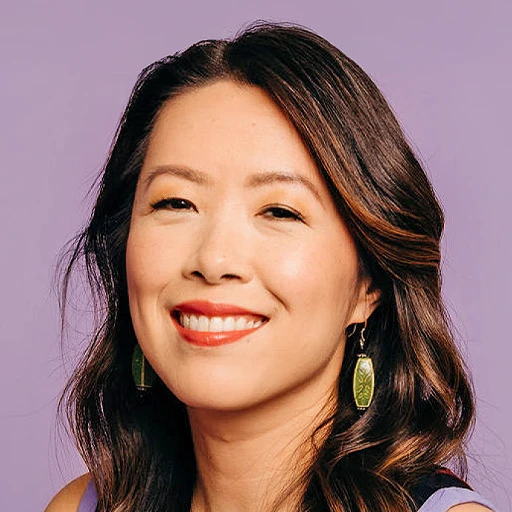
Luyi Kathy Zhang, MD
Hospice & palliative care doctor, Certified life coach & hypnotist, Writer & Entrepreneur, TEDx Speaker, Director, Serenity End of Life Hospice Unit, NYU Langone Health Host, Purpose Filter Podcast
Luyi Kathy Zhang, MD (known as “Dr. Kathy”) is a trusted expert and sought-after speaker on living (and dying) well. Combining medical expertise, heartfelt stories and science-based actionable strategies, Dr. Kathy empowers audiences to rethink their priorities, overcome fear, and live a life aligned with their true values. Known for her warmth, authenticity, and ability to connect deeply, Dr. Zhang equips attendees with the tools and motivation to make meaningful change for themselves and others.
“We all have two lives—the second begins when we realize we only have one”
-attributed to Confucius
Dr. Kathy’s TED Talk:
John Shegerian: Do you have a suggestion for a rockstar Impact Podcast guest? Go to impactpodcast.com and just click Be a Guest to recommend someone today. This edition of the Impact Podcast is brought to you by ERI. ERI has a mission to protect people, the planet, and your privacy, and is the largest fully integrated IT and electronics asset disposition provider and cybersecurity-focused hardware destruction company in the United States, and maybe even the world. For more information on how ERI can help your business properly dispose of outdated electronic hardware devices, please visit eridirect.com. This episode of the Impact Podcast is brought to you by Closed Loop Partners. Closed Loop Partners is a leading circular economy investor in the United States with an extensive network of Fortune 500 corporate investors, family offices, institutional investors, industry experts, and impact partners. Closed Loop’s platform spans the arc of capital from venture capital to private equity, bridging gaps and fostering synergies to scale the circular economy. To find Closed Loop Partners, please go to www.closedlooppartners.com.
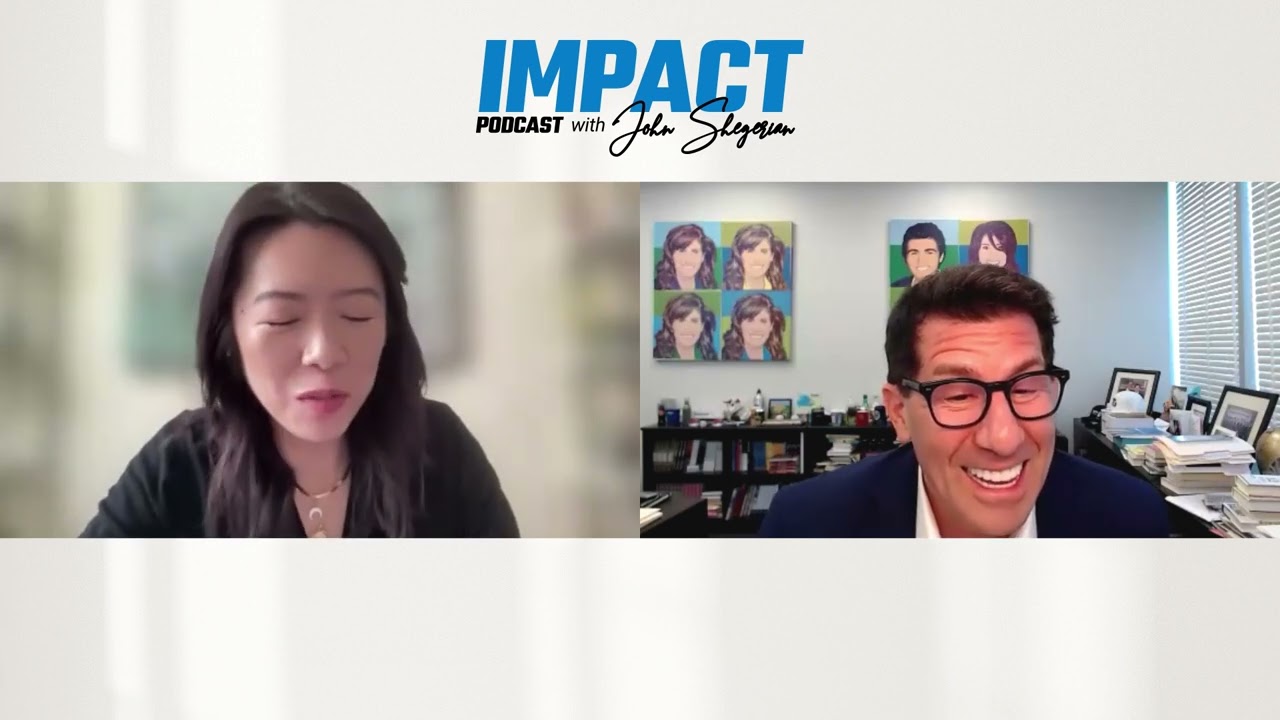
John: Welcome to another edition of the Impact Podcast. I’m John Shegerian, and this is a very super special edition. I’m so honored to have with us today Luyi Kathy Zhang. She’s an MD, and she’s a hospice and a palliative care doctor, a certified life coach and hypnotist, a writer and entrepreneur. She did an amazing TEDx speaker, speaking gig that we’re going to put that link up on in the show notes. Welcome to the Impact Podcast, Kathy.
Dr. Luyi Kathy Zhang: Thank you so much. I’m so glad to be here with you.
John: I’m 60, going on 64 this year, and even though I’m barreling towards the end it’s a topic that’s been on my mind actually for a long time in my life. It’s really truly an honor to have you. When I started reading about and listening to your work, I realized how many people want to know about what you’re going to share today with our listeners and viewers. But are afraid to ask or clearly don’t know a darn thing about it, either vis-a-vis their culture or their history or family or whatever reason. It’s just not spoken about enough, so I wanted you to have a chance to share the amazing work you’re doing. Before we go there, Kathy, I’d love you to share a little bit about where you were born and how you got on this fascinating but unbelievably important journey that you’re on.
Kathy: Thank you for saying that. I was born in Shanghai, China. I’m the only child to Chinese immigrant parents. We came to the States when I was three. My dad left China after the Tiananmen Square kind of revolution and he came to the States. I grew up in New York, in Brooklyn working class family, public school my entire life. Always wanted to be in service of people. I wanted to be a psychologist when I was growing up, but then my parents were like, “You should be a doctor.” And I was like, “Okay, sure.” So I became a doctor, did my training. I started out after my training as what we call a hospitalist. So someone who takes care of people who are sick enough to be admitted to the hospital. I was seeing all sorts of things stroke, pneumonia, cellulitis, heart failure, all these things. At some point I realized that I wasn’t spending enough time with my patients, and I wanted to get to know them deeper. If I spent five, 10 minutes with a patient it was like a lot of time, and I thought, “This isn’t really what I went into med school for.” I felt like I was doing a revolving door of just patch up jobs and send them home when I really wanted to have deeper conversations. So I went back into training for hospice and palliative care, taking care of sick and dying people. When I finished my training and I started my current job, it was August of 2019. I work in New York City. March of 2020, you remember the pandemic we were the first hit, and just it blew my world open. I describe it as, you know like there’s a level in Tetris when you’re playing and then the pieces come too fast and you’re like, “I don’t know what to do with these.” You just kind of like scramble, and you put them all over, and just it feels like that. That’s what it felt like.
John: All your pattern recognition is then gone.
Kathy: Your sense of normalcy, everything. That was very tough and traumatic for me at the time because I was like, I wanted to do this. I want to be with these people at the end of life. But no one can predict a global pandemic and the amount of suffering and kind of moral injury that happens when you’re taking care of these people was just a lot. This whole time I’ve been hearing deathbed regrets from people, and I was like, well, how can I help people earlier on? How can I shift these lessons, take these lessons, and transmit them to people 20, 30, 40 years earlier so that hopefully by the time they have to see someone like me close to death or maybe on their deathbed, that they’re not feeling these things? I started my podcast. I started doing more content and social media. I did my TEDx talk. Then I was like, well, let me see if I can learn some coaching tools or hypnosis things that can help people take practical action in their lives now. That’s kind of where I am now.
John: You migrated from a hospitalist to a palliative care doctor.
Kathy: Yes.
John: I get that transition. Explain where the skill of hypnosis better informs you personally and makes you better at what you do now.
Kathy: It’s an excellent question. So the background is, is I’m an inpatient New Yorker. Like, if I want something done, I want it done yesterday. I was like, what are all the different modalities out there that can help people change, that can help people shift their mindset or transform their lives? Because we know that when people are faced with death or the death of a loved one, or maybe they had a near death experience, like it changes something within them. The things that they used to be afraid of doing, they’re like, “Okay, I’m going to do it now,” or it clarifies things. So I was like, well, why is it that something like death can do that for people? Could we save people some pain and suffering for them to be able to manufacture that for themselves so that they don’t have to experience death? I found that through personal development all of these things, that actually hypnosis was the fastest thing and the most effective at creating change because it rewires people’s brains at a kind of cellular programming level in ways that some other modalities can do, but just not as quickly or effectively.
John: Does it open up a person’s neuroplasticity more than typically open to change and to experience?
Kathy: The way that I like to explain is that we all have a conscious and an unconscious mind. It’s like an iceberg. The conscious mind is about maybe three to 5%, 7% of our awareness. That’s above the surface of the water. Everything beneath it is our unconscious brain, our autonomic nervous system, our inner gut knowing things like that. And so what hypnosis does, everyone thinks it’s like, you just go on stage and the hypnotist tells you, “Quack like a duck,” and you quack like a duck. That’s stage hypnosis. But really what it is is it blurs the boundary between conscious and unconscious brain, and it helps people get clarity on things, it helps people figure out their own inner wisdom. You know how sometimes for some people, like, you get into a flow state, like you’re at the gym or running or you’re journaling, and the ideas just come and all this stuff, that’s the blurring of the usual divide. When we can get into kind of the programming of our brains and nervous systems, that’s when we can create change at a much faster level.
John: It sounds like an overt natural version of what now psilocybin’s being said to be able to help people with as well. The opening up of their brains. Is it something that you overtly say you’re about to do, or you’re doing it in just the course of your therapy with your patients and they don’t actually know what’s going on, but it’s part of the care that you bring to your patients?
Kathy: Sometimes in patient care at the hospital I will do it as a way to help them manage their symptoms. So it can be really helpful for things like pain, anxiety, insomnia. But what I will say is, “Hey, we’re just going to do some deep breathing.” You can think of it as like a guided meditation, just a deep relaxation. They’re always aware, and they’re always in control. It’s just I’m kind of guiding them through the body relaxation and maybe some imagery or things like that that might help their symptoms. When I do it with clients it’s whatever they bring me. So it could be wanting to feel more confident about a public speaking thing that they have coming up at work. It could be the fear of being visible and creating content on social media, all sorts of things. But the root is being able to help people change.
John: That’s right. I want to go back to your parents for a second. You know obviously you’re a very young woman, but you were probably born, my guess would be, you were born during the one-child, one-family policy of China. Are your parents still alive, by the way?
Kathy: Yes. They are.
John: Was Mom a tiger mom? The classic tiger mom growing up or?
Kathy: She was a little bit. Absolutely. I think both my parents were. My mom definitely much more so. Always very strict in terms of my education, making me do all these other things. But again, it was like education is the path forward, is the way for you to open up doors for yourself. It was tough, especially as an only child because you get the best of everything, but also not the best of everything.
John: That’s interesting. You grew up in Brooklyn, you practice in New York at Langone. You practice over at NYU still?
Kathy: I’m part of NYU, but I practice specifically at Bellevue, which is our nation’s oldest public hospital.
John: Being a native New Yorker, I’m very attuned to all these great institutions, and an NYU graduate, by the way, myself. When I was growing up well a couple things that stuck with me, why I started thinking about death early. One, I was nine years old and a very famous movie was produced about the life of Brian Piccolo. It was called Brian’s Song. James Caan played Brian Piccolo, who died at 26 years old. He was a very well-known running back for the Chicago Bears. But he was sort of overshadowed by a better-known running back there named Gale Sayers, and Billy Dee Williams, a famous actor, played them. The movie was a massive success. So I’m a nine-year-old watching this movie, and of course it’s incredibly sad to see someone die in a movie. When you’re nine, you’re thinking about the infinite possibilities of life. At the end of the movie when they were eulogizing him, what they said was at his eulogy that Brian Piccolo while alive he lived. That sort of in many ways to me sums up a lot of what you do in your private practice now. Including then 33 years or so later. Remember, I grew up in Queens, so I’m a New York Mets boy. And the amazing Mets of ’69, before your time, they had a slogan called, “You gotta believe.” They were called the Amazing Mets. One of the stars of that team was this unbelievably handsome relief pitcher named Tug McGraw. Went on to be the father of Tim McGraw who immortalized his dad when he got cancer at a very young age of 60, and he wrote a song, I think in 2004, Live Like You Were Dying. I think I’ve thought of those messages throughout my life, and and when I started hearing your work and seeing the uniqueness of it, and the scarcity of others that are messaging what you’re messaging, I’m like, “I’ve gotta get Kathy on the show because her message resonates.” As I shared with you before we recorded this episode, I was blessed to have Colton Burpo on our show do a Christmas special. The book Heaven Is For Real was written about Colton, about his NDE at four years old, near-death experience 11 million copies were sold. My friend wrote the book, Lynn Vincent. She was historically known as a Christian book writer but she was asked by her agent to write this book. 11 million copies, 17th ever best-selling book on Amazon ever, and $100 million in a movie that was made about it. I did this episode just as a Christmas special. It’s been the most downloaded episode in our 17-year history. On my desk here, Ryan Holiday came on my show twice, the guy who is the wonderful the leader of the stoicism craze now.
Kathy: Yes.
John: He sent me as a little gift this memento mori. It’s always good to keep death sort of nearby to remind us that, as my dad would always say, “This ain’t no dress rehearsal, son.” He said, “This ain’t no dress rehearsal.”
Kathy: I say that a lot. I’m curious, how do you think seeing that movie when you were younger has influenced how you live your own life?
John: In retrospect, which of course is always easier to dissect things than prospectively, I’m a serial entrepreneur. I was a professional athlete as a young person, which was in a very dangerous sport. It was racing horses. I don’t know how it happened or why it happened, genetics or just social programming like that movie and others that touch me. I’m missing the fear gene. I’m not afraid. I’ll show you a little picture from last summer. This was when I was still recovering from a trimalleolar ankle fracture and knee surgery to boot. We were on a business trip, and my partner said, “You want to do it?” And I said, “We’re going.” And then we just did it. That’s over the skies of Dubai.
Kathy: I see that.
John: Entrepreneurship is all about just pushing through not worrying about it. I started this podcast, it was a radio show. It was a radio show in a little small town called Fresno, California. Then I got an email, which I swore was spam because it looked like spam and I never heard of this. Apple sends me an email and says, “We’d like to put you on our new podcast platform.” I’m like, “I don’t even know what podcast is. This is a radio show.” Before you knew it, that went and before you knew it, Sirius called and said, “Come on, let’s do something bigger.” To me, it’s much more fun to say yes than to say no. Then if the yes doesn’t work out, you work through that stuff. But really, to me, almost 64 now, I was talking about this with my brother yesterday. We were talking about some missed opportunities as kids when we were constantly invited by our business partners to come to Australia, and we always thought as kids, when you’re 18 or 17, “You’re going to have that invitation every year of your life,” and then we never did it. We’ve never been to Australia.We regret more what we didn’t do than what we did. Anyway, this is a very, very important topic. So you are literally living proof and you’re the master teacher now on how to live like you were dying. Explain besides your full career as a palliative care and hospice doctor, which is unbelievably an amazing calling and a full life for anybody, and the fact that you’re also a wife and you have a partner, full life. But you also started this practice with just regular folks to help them live their best life before they’re given some sort of death sentence or get some really bad news which is going to happen to all of us at some point. How did you decide to do that?
Kathy: Well, I think it was just the desire to make change. When see, I don’t know if I want to call it an injustice, but if you see something that you feel like you can help with, I think that’s the helper in me. I can’t help myself but to actually do something. I talk about this kind of in my TEDx talk, kind of three things or questions we can all ask ourselves that can help us see life a little bit differently to help inspire that change. Because I always say that we all have it in us to be able to change. We all have the ability to do so. But sometimes we need the mindset shift. Sometimes we need to see things differently. I always say, because I do it all the time, that having an awareness of death, memento mori, all these things, having it on our mind can actually bring us that clarity, can help us prioritize our values. So three things: prioritizing our values to stay present in the moment right now, and to minimize regret. So one of the questions to help people prioritize their values is, like, all right, this thing that I’m worrying about right now, is it going to matter on my deathbed. Like, what am I going to care about most when I’m dying? Because a lot of the little things that we’re stressed out about on the day-to-day basis, when we really extrapolate down the road, it’s not that big of a deal. But some things are. The second thing is being present. Asking ourselves, what if this is the last moment that I get to be on a podcast with John. What if this is the last moment that I get to hug my family, or the last time I get to eat a slice of pizza? Those moments, asking ourselves that question can really be like, “Oh, my God, let me really enjoy this moment. Let me savor this moment.” Then the last question that you actually mentioned a little bit earlier is that people tend to regret what they had not done rather than what they did do. So asking ourselves a question of like, okay, what changes can I make today to minimize any potential regrets tomorrow? Like, can you go to Australia at some point? Maybe.
John: Why, of course. What’s preventing me? Just buy a ticket and go if I really want to go. Talk a little bit about what you do on the hospice and the palliative care side, and I want to then take that into actionable steps for our listeners and how you built your coaching practice. By the way, for our listeners and viewers, I just want to be promotional here a little bit because you deserve it. To find Luyi Kathy Zhang, please go to luyikathyzhang.com. It’s going to be in the show notes, so we’re going to have a link to it. You don’t have to write it down. Stop walking your dog, lifting your weights, whatever you’re doing right now, driving your car. How to contact Kathy will be in the show notes, including a link to her TED Talk and other valuable links to find. It’s a full-contact sport what you’re doing. This is not for the faint of heart, what you do on your day-to-day basis. If you’re going to spoil it down to three to five great lessons that you can take away that you’re bringing to your coaching practice, mentorship practice, what are some of the greatest lessons you’ve learned from people on their death beds while they’re in their last days before them?
Kathy: That’s a great question. So when I’ve talked to patients at the end of life, or patients who have a near-death experience or something related to mortality a lot of regrets come up. I’ve started to categorize them into what I call the ABCs. So the first one is authenticity, the second one is bravery and the third one is connection. So a lot of times people will say, “I wish I’d been more true to myself. I wish I hadn’t let other people’s judgment of me prevent me from being myself or living the life that I wanted.” That’s authenticity. That is knowing who we are, what’s most important to us. The bravery part is a lot of people say, “I wish I had taken more risks.” Like the risks that actually meant something to me, not just willy-nilly risks. But the things that were important to me. Because they were afraid, again, of judgment or they had fear of whatever it is.
John: Failure
Kathy: Consequences.
John: Failure.
Kathy: Of course. The third one is connection, and I break that down into connection to ourselves and connection to others. A lot of times at the end of life, people are like, “Oh man, I wish I could repair that relationship with my parents or with some friends that we haven’t seen each other in a long time.” So that connection with others and the relationships we have with people is so important. But it’s also important to remember that the connection to ourself, that, hey, who am I? Who do I want to be in this lifetime? And how do I nurture that connection to myself so that I can live a life that is true to who I am, to who I want to be, to what I say is important to me? That’s all the things that we talk about in hospice and palliative care is helping people make decisions based on what they say is important to them. Because everyone is different. I think if people can ask themselves, all right, if I can take those ABCs and reflect upon my own life, can I choose one to work on for the next, I don’t know, six months or a year? Do I want to be more authentic? Do I want to try being a little bit braver? Do I want to feel more connected to myself or other people? I think that’s a great place to start and be able to plan for the next X amount of time in your life.
John: You had to have an aha moment at some point. Two aha moments.
One, COVID hits, you’re overwhelmed with great reason to be overwhelmed and you decide to shift from a hospitalist to a specialist. What did that fear feel like for you, and how did you overcome that fear?
Kathy: I think maybe from the outset to people who are listening, it may not seem like such a big shift. I was a physician, I’m still a physician, but, for me at the time, it was like, I’m independent. I’m making my own money, I’m my own boss essentially and now I’m going to go, one, back into training after having worked by myself for four years and two, into a different field of medicine. That was incredibly scary for me. Probably it took me about two years to really muster up the courage to do it because I had these little feelings inside that I thought maybe I could be good at this. I’m sure maybe a lot of your listeners feel that same way, where there’s a little voice inside going, “What if?” But the fear is tremendous. So I remember the day that I decided to send in my application to all these programs. I didn’t sleep for a good month. I remember it was June. I didn’t sleep more than four hours that entire month, and it wasn’t until the day that I got my first interview email that like, “We’d like to invite you to come and interview for our program,” that I was like, “Okay, I can sleep a little bit.” That it was a stressful time. During COVID, I don’t know if I mentioned this earlier when we were talking, like, it got so bad that I was suicidal. I was just like “I don’t want to wake up tomorrow.” I was so numb because there was just so much pain everywhere.
John: You’re on full tilt overload. You’re overloading.
Kathy: I say that I would never wish that experience or any pain that I’ve gone through on my worst enemy, and had I not gone through that, I would not be this person that I am now. There’s no way. It was a tough time, a very dark time, and on the other side now, many years later, I’m able to say that that was integral crucial in my growth, in the evolution of my soul, to be able to get to where I am now, where I can talk about it, where I can try to help people.
John: We’ll put a link in the show notes to the National Suicide Hotline for anyone that ever has suicide ideations or anything like that. It’s very important to give full access to our listeners and viewers to get help because help is there 7/24. We have a great national program for suicide. And so you mentioned that, and I think that’s really important. I think pain I tell my physical therapist, my physical therapist says I have a unique ability to disassociate with the pain that I go through, physical pain when I’m having to recover. It wasn’t my quote, I read somewhere and I brought it to him one day and he loved it. I think he tells me he still uses it, that pain is God’s chisel. I really feel that that whether it’s emotional or physical, I really do feel that it either takes us over or when we get to the other side, there’s a lot to be had from that. There’s a lot to be had. How long [crosstalk] were you into your new career?
Kathy: I love that.
John: Because you really did shift. Like you said, this was the American dream. Came here as an immigrant, became a doctor. You’re in New York. You’re unbelievably as the world goes, very successful financially, et cetera. What point as a hospice and palliative care doctor did you wake up and say this was a great decision and I got this. I’m not only going to be good, I’m going to be great at this. When did that thought pass through your head?
Kathy: I don’t know if I’ve been asked that question. We have family meetings where we talk to patients and families. We break bad news. Your cancer’s back. You might not make it to the next whatever through the next time period, all these sorts of things. Those are very emotional moments. I don’t know, I think it was probably a combination of things where I was just like, “Wow, my presence really helped this family.” I think it was those moments where I was like, I really helped to clarify something or that they were like, thank you so much for your honesty or your compassion or just telling us the truth when everyone else was dancing around it. That I think really hits me in the feels. Then also in moments where with my content creation where people send me messages and they’re like, “Thank you so much for putting this out there.” Actually, I’ll give you an example. The other, maybe a couple months ago, I had someone who messaged me. She’s like in her 50s, decided to go back to medical school after having a whole career raising children all these things and she said “Because of your content to tell us to live life and all these things,” she’s like, “I decided to go back to medical school.” Because of the stuff that I put out there. It’s going to make me cry, but I burst out sobbing because it was so beautiful and I was like, “Wow.” When I say that this is a calling for me, I really mean it. Sorry.
John: You know what? Don’t be sorry. I promised myself I wouldn’t cry, so I’d rather you cry first and then hopefully I can make it through. Go ahead, take a break. We didn’t get to yet talking about connection. But I imagine when you’re working with a patient or patients and the end is near. And one of their biggest problems that you helped them fix was connectivity. And at the end everybody’s in the room that should be there, and many of those people the dying patient had lost connection with, and you encouraged them to reconnect and now everybody’s showed up. That must be a really special moment when the family reunites because of your encouragement and counseling as opposed to leaving so many loose ends and broken feelings and connections at the [inaudible]
Kathy: It is beautiful, and the truth of life is that it doesn’t always happen that way. Some people don’t want to reconnect even though the patient wants to. It’s a two-way street. Sometimes it does work out and sometimes it doesn’t. I think that’s why I try to talk about it when I have the chance, because maybe we don’t have to wait until the end. I once was messaging or with someone and they were like, “Well, I’m trying to decide if I should try to get in touch with my estranged father,” or something like that. I asked her a question and I said, “Well, what would you do if you knew he had six months to live?” “He’s healthy now apparently.” And she goes, “Well, then, yes, I’d absolutely reach out to him now.” I was like, “Okay, well then maybe you don’t have to wait until he’s actually dying.” For some people, that answer is, “I don’t want to talk with them.” But if the question changes our minds, then the question is worth asking.
John: When you made this shift and you knew you were really making a difference and impact in people’s lives, was there a moment during that transition from hospitalist to specialist that you had to eulogize your previous career as a hospitalist?
Kathy: Again, I don’t think anyone’s asked me that question. Thank you for that. I think it was a transition for me at the very beginning to go from being the primary person in charge of someone’s care in the hospital to being a consultant, and not having to trying not to dictate what someone else’s decisions were for a patient, but trying to be more collaborative. That was a transition for me and I had to learn how to work collaboratively with someone, and how to advocate for a patient even when I disagreed with their primary physician in the hospital. That was tough. I always say that the patient comes first, and I’m going to do it as professionally as I can, but if I truly believe that a decision or a treatment, a plan of care is not in the patient’s best interest, I still feel an obligation that I’m going to say something. That was something that I had to learn and it was a transition for me. But I’ve been doing this as a consultant for six, seven years now, so I think I’m getting a lot better at it.
John: Where did the entrepreneurial spirit of you pop up when you realized, “I could do this professionally with my MD hat on, but I could also start a business model here for myself concurrent with my regular practice, and bring a lot of these important lessons which many people don’t ever get in life to the general public so I could help them live a more fulfilling life before they reach a crisis or some tragic news”?
Kathy: You know how we always say it’s about your connections and the people around you and you’re the average of the five people you spend the most time around. I joined a coaching program and I was like, “I don’t know why everyone wants to be a coach. I don’t know. I don’t get it.” But seeing the transformation that I had in my own life, I was like “I get it now.” In this program were a lot of people who were starting businesses, and they were all physicians. And so I thought, “Okay, if they can do it, if they can have a podcast and a coaching practice and write things and do videos and write books, why can’t I?” So that’s kind of where it was born from. It was really seeing real-life examples of what was possible for people who looked like me, who did similar things as me.
John: How fulfilling has this part of your career and life been for you working with the general public at large, who are still healthy and well, generally speaking, and helping enlighten them to the lessons you’ve learned in your hospice and palliative care work?
Kathy: It’s been incredibly fulfilling. If you had asked me years ago or when I first started palliative care if I would be at this point now, I would’ve been like, “No, absolutely not. There’s no way.” But life is funny, isn’t it? Like I said, I had never thought of medicine as a calling until I started hospice and palliative care. But when you feel that within yourself, it’s almost like how could I not? How could I not share this with people? How could I not try? How could I not work on my own fears of visibility, of saying the wrong thing, of possibly being judged for like creating content and all this stuff if it meant being able to help someone, if it meant being able to change someone’s mind, if it meant changing the trajectory of their life because of something that I say or some perspective that I can offer? That is incredibly humbling, and it’s something I’m grateful for every day.
John: Lessons learned personally that you’ve learned as an entrepreneur in your coaching life. Sure.
Kathy: We are always the rate-limiting step. That’s why personal development and all these things are so important for entrepreneurs because I always say this, like we can be handed the playbook, the steps, the business strategies, whatever. You can just hand it to us on a silver platter but if we are not in the mental state, if we are not aligned, if we are not psychologically prepared it doesn’t matter. And so it really is all about us. Which is maddening and annoying and so frustrating, but also it provides an incredible sense of control in a sense of like, “Okay, well then if I can get this sorted out, look at what can happen.”
John: Just for our listeners and viewers out there who are interested in your impactful practice, they can contact you with the website that we’re going to put on in our show notes, and they can hire you through the programs that you offer to be their coach, to teach them how to live before they’re dying.
Kathy: Absolutely. Or if there’s some sort of specific business problem that you’re stuck in. Hypnosis works really well with that too because we all have the answers within us. Sometimes we just need a little bit of clarity.
John: How about for speaking events? People can also go to that website and hire you to speak.
Kathy: Absolutely.
John: How often do you go and publicly speak, and how many clients at any one time are you coaching? Is there a happy balance that you try to strike, or does it go in ebb and flow and goes in waves?
Kathy: It ebbs and flows. I try not to have too many one-on-one clients, because I want to be able to give them as much attention as they need. I still work part-time in the hospital, so I have to manage my time with that. So it depends.
John: The fun part, I assume, is that people can contact you from around the world. It’s great.
Kathy: Absolutely.
John: It’s wide open. It’s open source. Talk a little bit about yourself. I had a friend who died tragically unfortunately. Again, another reminder how this whole thing is. He was 33 years old or so. He was a massively successful harness racing driver and trainer, and he used to talk to me about racing horses. He was about 15 years older than me and he used to say, “You don’t gotta win by a lot. Just win as much as you need to win by, because you don’t want to take too much out of a horse.” He’s then used the analogy of bar of soap. Don’t wear them out. Save them for the next go, and save them for the next month or quarter or year. How do you avoid, in all that you’re given, in your heart, your soul everything that you do on both sides of your professional career with your private paying clients and of course your patients at Bellevue? How do you recharge and re-energize and keep yourself in one piece so you can bring your best self to your own life to your marriage life, to your daughter life, and the life that you are living yourself?
Kathy: It’s a great question, and it’s something that I hope that people will really hear me when I say that there’s always like, you can’t pour from an empty cup, and all that stuff. But it really is so true that in palliative care I find more so than any other aspect of medicine is we fully recognize because of how heavy our work is that the best way for us to care for other people is to care for ourselves. It’s so backwards in other areas of medicine. Like, I used to go into work with a fever. I know physicians who would go into work just sick because that was what it was expected. The humanity of being like, “No, we are human first, and we have needs.” I meditate a lot. I really try to stay regulated. I had a lot of therapy back then during COVID to help me learn how to recognize my emotions and how to regulate my emotions and how to process it in real time with specific techniques that I also teach to my clients. That has been probably the biggest thing that I’ve learned in my entire life, is if we can manage our emotions, if we know how to recognize it and regulate it, like, we can do almost anything. Because unregulated emotions can cause so much stress and havoc in our lives. So I really work on that. I try to eat healthy, stay physically active, all those things. Sleep.
John: Honestly sleep. Entrepreneurs by design are innovators, and we try a lot of things. What doesn’t work, we cut, and what works, we try to scale. I was a big fan and still am a big fan actually frankly speaking, of your podcast. Last night while I was in the gym getting ready for today, I listened to, again, for the third time and fourth time actually, I listened to it twice last night, your 10-minute eulogy of your last podcast. Talk a little bit about starting the podcast, ending it, and now as you have a little space in between ending it and where you are today, talk a little bit about retrospectively was that the right decision? Are you happy you made that decision? And how did that allow you to grow and scale other things that you were working on?
Kathy: You’re full of excellent questions, John. I started the podcast because I wanted a space to share with people these lessons of the dying and how people could apply it to their daily lives. But at some point I realized that it wasn’t really working well with how I am wired as a person. I’m not particularly good at batching. I was doing it all on my own. I didn’t have really like a production team or any of that stuff. When it came time to record for the week, at one point I was just dreading it. I was dreading it. I was like, “Well, that’s not productive for me. That’s not fair to my listeners to be able to do that.” And so after, I don’t know, 100 something episodes I think, two and a half years, I put it on pause and I don’t regret it. I don’t regret at all. It was the right decision and it’s still there. It’s archived for people who do want to listen to it.
John: Beautifully so well done. I gotta just tell you, it’s a beautiful series of information that you put out there and it’s so well done.
Kathy: Thank you. I appreciate that so much. Thank you. You know as a podcast host it’s hard to feel like you’re speaking into the void sometimes.
John: That’s number one. And number two is I had the luck to have in the beginning a little team around me, and that team has grown and without them it just wouldn’t be possible. Because like you, I have another profession. I’m running a sizable recycling company with 1,000 employees, et cetera. If you don’t have a team and someone like you or me wants to do it right, then you have to make decisions. Like you said, you put a lot of time into that decision. You were very, very unvarnished in that last podcast about how much time and thought you put into that decision and good for you. It was the right decision. That’s what entrepreneurs do. Life is full of just trade-offs. It’s just, that’s all it comes down to. Let’s talk a little bit about your palliative care work and what you’re also doing. I want to also give some actionable steps to our listeners and viewers. I want you to talk a little bit about, people think about hospice care as the end for sure and giving up. Why is that a false narrative?
Kathy: As a hypnotist, the words that we use matters. Because our bodies are always listening. But there’s so much in terms of, like, the pitting us against the disease. I’m fighting cancer. They’ve lost the battle, all these things. I think in some ways it can be really helpful for people. I think and also in some ways it makes it seem as though it’s like a personal loss or a personal failure if they can’t win “against a disease.” I don’t want people to feel as though it’s some sort of something wrong with us when biology, when we’re faced with disease or accidents or death. Death is inevitable. It happens to all of us. I think the cognitive dissonance sometimes that we need to engage in so that we don’t spiral into being like, “Oh my God, death is coming,” can be healthy, but it also can be it detracts from life. I don’t want people to think that it’s like, I failed because or someone lost the battle because they couldn’t survive longer. It’s sometimes just that people get sick. People have accidents. It’s not a failure or anything like that. Unfortunately, it’s life. Every single one of us is going to go through that. I think the more that we can recognize that, that death is just as much a part of life as anything else if not aside from being born, we’re all going to die. Everything else in between is living, and that experience is different.
John: The only truth that I really know is father time is undefeated, and he’s not going to be defeated any time soon probably. When most people contact you for help, is it for just generally getting their life on track, or is it big decision time, or is it some fun mixture thereof?
Kathy: It depends on what they’re struggling with. It depends on what kind of support they feel like they need. For a lot of people it’s they’re at a crossroads or they feel stuck in some way. Through the work together we’re able to help them find clarity on what the next step is. Because, again, I always say my clients always have the answers. It’s just being able to quiet the noise and the external stuff to be able to tap into what they already know and what they actually want to do. But sometimes there’s just too much noise outside to be able to really tune into that.
John: Are some people overwhelmed with the false notion that living your dreams or living an authentic life is too hard and they won’t be able to do it?
Kathy: I think some people don’t even know what living authentic to themselves is, first of all. Then if they do know what that is, there’s also the fear that it will be too difficult, or they’re not worthy of, I don’t know, whatever it is, love, success, abundance, all these things. A lot of times society, the way that we grew up, influences how we’re able to think about being authentic to ourselves, being true to the lives that we want to lead. There’s a lot that goes into that.
John: You grew up a first generation Chinese immigrant. I’m a third generation Armenian immigrant. Explain how ethnicities and cultures differ. Of course, we have tons of similarities, which are wonderful to celebrate and enjoy each other’s culture and ethnicities with. Explain how death can help diverge us sometimes depending on our ethnicity and our culture and our backgrounds and our families.
Kathy: You know I say this a lot, like, in Western culture, I think there’s so much avoidance of death because we’re just like, “let us produce more and let us do all these things and biohack our way so that we can live forever and not die,” and all these things, which is fine. That’s one set of ways of thinking of it. I think in many other cultures it is death is seen as not a finality, but just a transition. In Buddhism, you’re not dead it’s a transmutation of energy or things like that. I think that in a lot of different cultures, if death is seen as just another part of living then the approach to life and our relationship with death can be much softer and I think we can approach it in a way that’s like, “Okay, this is not something that I have to be fearful of, it’s something that I can be aware of and live my life in knowledge that that is going to be a part of the life process.”
John: Were you raised a Buddhist?
Kathy: Not particularly. I would say that my great-grandmother was a very devout Buddhist, my grandmother a little bit less, but I think there’s always been that kind of thought and those traditions in my family.
John: I was raised a Christian as Armenian, but in my business life and my world travels, and I’m a plant-based eater for the most part, like 95%. I was taught a trick by a good friend of mine about 15 years ago, 13 years ago. She said to me, “Hey, wherever you go in the world, just ask the concierge or the local guide or your local friend or business colleague for the best temple food.” I would start going to these temples and to have plant-based food, and then I’d go into the temples and I fell in love with the spirituality and the traditions of Buddhism. Talk a little bit about American sort of, what we get wrong as Americans about death and where you’ve seen who’s doing it right? Like, tell me like where you’ve seen the experiences of it. Which cultures or ethnic groups around the world sort of are on a better track than our sort of taboo nature of death in America?
Kathy: It’s a great question. Obviously, I think what comes to mind probably for a lot of people is in Latin American cultures where they have Day of the Dead and they celebrate that. They believe that honoring their lost loved ones is remembering them. So if you remember them, that keeps their soul and their spirit alive. And so they do that through song and dance and these altars at what they call ofrendas. I went to a Day of the Dead celebration in New York and I interviewed some people and that’s kind of some of the content that I’m working on now is to figure out, like, how to share culture and death and how different cultures appreciate it, how they celebrate it. I heard recently that in some indigenous cultures when someone dies that everyone kind of rearranges their furniture somehow. So that when the family member who lost someone comes back, they see that everything is different. Something is different because everything has changed. Because that person is now gone and everything has changed in that person’s life. I thought that was beautiful to hear that there was like a physical manifestation that like let me rearrange the furniture to reflect the emotional change in someone’s life when they lose a loved one. There’s tons. I think it’s in Ghana too that they make these like kind of I want to say like caskets for people and they decorate them in these beautiful different ways with a lot of symbolism. I have to look more into that, but there’s so much.
John: Kathy, if you were to say top two or three questions that people who are dying when you first meet them, that first day with the patient, what are the top one or two or three questions they ask of you?
Kathy: A lot of times if they’re aware enough to ask they’ll ask how much time do I have left? Which is always a difficult question to answer. We can only really estimate. We never really know. Some ask, what does it look like or, what is the dying process going to be? And some, I would say, ask what’s going to happen to my family? Like, how are they going to cope with my passing? Sometimes it’s not as direct as like what’s going to happen. But they talk about it in and they allude to it.
John: What about NDEs? Do people ask you specifically, am I going somewhere? Is this the end, or is there a place after this that you’ve heard about from the other people you work with?
Kathy: Well, sometimes I do see them. A lot of times I do see them in the acute dying phase. When I see them, they’re not always aware- because they’re in the last days and that sort of thing of life or weeks of life. I’ve read through some of the NDE forums and all those experiences, and it is wild. Working with the dying has totally changed my spirituality and how I feel about death and all these other things. I wasn’t prepared.
John: Say more.
Kathy: I was very agnostic before I first started. I didn’t really believe much in a beyond or any of that stuff. But when you’re surrounded by it every day, and you see it, and you see things that you cannot explain it really kind of makes you question your own beliefs. Then when you read the NDEs and all these experiences and you see the patterns and the parallels that everyone is talking about, I personally cannot say that I don’t believe that there’s a beyond. Like, I personally do feel like there is a beyond and a greater consciousness in all these things. I’ll leave everyone to make their own assumptions and opinions. But I think if you ask a lot of people who work in hospice and palliative care, they’ll probably say similar things because we’re surrounded by it.
John: As far as a recorded episode, we haven’t played it yet. It’s going to come out soon with another person who has, just like you, an amazing story, another doctor, a woman doctor, Dr. Dawn Mussallem. I don’t know if you know who Dr. Dawn Mussallem is. She was called at the Mayo Clinic, the Magic Bullet. At 25 or 6, while she was in medical school she was diagnosed with fourth stage cancer, and the doctors just said, “It’s over. You have three months without treatment, 20 months with treatment, but I would drop out of medical school and just go enjoy your life, whatever’s left of it.” And she, of course, said, “That’s not happening.” She beat the cancer and was told many other things can’t happen. She was told she can’t have children because the chemotherapy was so extreme that it had ruined her inside parts and things of that such. Of course, she got pregnant from her husband. Lost her husband in the middle of the night and became a single mom at 32 or 33, and her heart kept getting weaker from all the chemotherapy, and now she’s a double board certified Mayo Clinic doctor and counseling doctors from around the world and giving a speech at the auditorium next to the Mayo Clinic when she’s 46, and her heart was weakening from the time she was 27 to 46, 2 to 3% a year. While she’s on stage, she drops and flat lines for four minutes and 22 seconds. And has a full NDE, goes to the other side, and remembers it. Now she’s only 51. She refers to that journey a lot. It gives her great comfort that we’re all going to a different place because she saw it. She felt it. Of course, she needed a full heart transplant and within about a year later, got one. Then that wasn’t enough for her either. She became the first person in the world to run a marathon with a full heart transplant within a year. But incredible story. The human condition and the ability to come back, and I was talking to my acupuncturist whose mother was one of the most famous opera stars in China. I don’t want to tell stories out of school, but at one point she lost her voice. And she never gave up, and she had to go back into vocal training just to be able to talk again. You fast-forward 50 years during COVID, and she was at Cedars, and they basically said, “It’s over.” She’s in her 90s now. She couldn’t talk to her mom’s hearing aids were out. She’s fading fast at Cedars. You’re not allowed in during COVID, of course. She knew how to trigger her mom to trigger her innate spirit to live, and she had to give her goals. “You have to see your granddaughter graduate high school, and your grandson is going to graduate college,” and she was giving her these markers. She’s now, I believe, 96. Got through it. What have you learned in your journey with people that give them the will to do extraordinary things? What is the X factor that you’ve seen as a form of pattern recognition after you’ve practiced already long enough? What are we all searching for, and what muscles, emotional or others, should we be working on more to live a better and more fulfilling life?
Kathy: Actually, I think it’s desire, honestly. It’s the desire to continue on. It’s whether you want to call it hope or love or something like that. I hate to say this. But you can tell when someone has kinda said, like, “Okay, I’m ready,” I don’t want to say this. But in some ways people almost choose that they’re like, “Okay, I’m ready for what’s next beyond this life.” I think what gets people through challenges is just belief. Sometimes it’s believing in something greater than ourselves, sometimes it’s believing in our own abilities, sometimes it’s believing in a future that is uncertain, but we’re hoping that can change, that can be better. I really think it’s belief. It’s trying to hold onto that and say that “I think I can overcome anything.” It’s humanity. We’re all capable of it.
John: In your beautiful TEDx speech, which we’re going to link to in our show notes obviously. It was really so wonderfully done. I’ve listened to it four or five times. You referenced Steve Jobs. Where he said something to the effect, and I might have this wrong or I might be paraphrasing, “Death is very likely the single best invention of life.” And he said to all of us, “Your time is limited. Don’t waste it living someone else’s life.” You’re a very young woman. I’m 64. You’re very young. Warren Buffett’s still the executive chairman of Berkshire Hathaway at 95. His partner, Charlie Munger, died about 30 days before his 100th birthday, and he was still working up until days before his death, and working very well. With everything that’s happening now in regenerative medicine, stem cells, and other great breakthroughs that are happening fast and furiously, and the AI coming at us which is probably, if you listen to Lisa Su, going to affect medicine and healthcare more than any other profession. Talk a little bit about you.
You already have had a big and impactful life, and currently what you’re doing both on the private side and the public side of your servant leadership and servant profession has been so impactful. What are some of your future goals and dreams that you could do with what you’ve already done before, and do more with it? What’s the next chapter in Kathy’s life?
Kathy: I think that’s something that I’m trying to parse out for myself right now. What kind of projects I want to pursue whether that’s a book or documentary series and things like that. I’m debating whether to have a family. I’m kind of at that age and at that point in my relationship. At this point, I’m in a transitional phase. It is kind of messy phase to be in, and I’m trying not to rationalize and claw my way out of it and just kind of sit in the uncertainty. So I’m hoping that there will be more opportunities to be able to share this my work with more and more people, and what that looks like, I don’t quite know yet.
John: Who coaches the coach? Who inspires the coach? Who inspired you, and who coaches the coach when you come to these transition these crossroads?
Kathy: It’s a good question. My family, my therapist, my husband, all these people.
John: Sure.
Kathy: We all have people. Every coach has a coach.
John: True. I call that founder’s mode. As a serial entrepreneur I find that founders get to make better decisions because they sort of have this mode that they go into that then when they get to a transition period or a crossroad or a big decision or some bad news that they have got to overcome, they put together a team. Because they’re very used to putting together a team. If you’re starting a business, you need a financial whiz to be your CFO, you need a sales whiz to lead sales, you need an operational whiz, and then you’re the visionary and you’re the founder. But now you have a team to rely on. So I think a collaborative approach to help you make those decisions usually get to the better decision. Not always, but many times you get to the better decision faster that turns out to be the right decision at the end.
Kathy: I totally agree. I’m leaning on people right now and I’m believing in myself.
John: Kathy, well it’s going to be in our show notes how people can find you. Of course, your TEDx will be there too, and any other links you want to share besides your website and your TEDx, we’re going to put there so people can get engaged with you, hire you to either come speak in front of their organizations or to become a coach or a hypnotist for them something that we can all stand to use. We all need a coach. I just want to say thank you for the generosity of your time today and the wisdom that you shared with our listeners and viewers. More important than that, thank you for being who you are and the work that you do because obviously you’ve made a tremendous impact on thousands of people’s lives at some of the most important junctures they’ve had. For that, I want to say thank you for making the world a better place.
Kathy: Thank you. I appreciate that, and I receive it wholeheartedly. Thank you for having this podcast and show for 17 ongoing years and sharing your message and impacting people that way.
John: This edition of the Impact Podcast is brought to you by Engage. Engage is a digital booking platform revolutionizing the talent booking industry. With thousands of athletes, celebrities, entrepreneurs, and business leaders, Engage is the go-to spot for booking talent for speeches, custom experiences, live streams, and much more. For more information on Engage or to book talent today, visit letsengage.com. This edition of the Impact Podcast is brought to you by ERI. ERI has a mission to protect people, the planet, and your privacy, and is the largest fully integrated IT and electronics asset disposition provider and cybersecurity-focused hardware destruction company in the United States, and maybe even the world. For more information on how ERI can help your business properly dispose of outdated electronic hardware devices, please visit eridirect.com.
 Spotify
 Apple Podcasts
 Amazon Music
 iHeartRadio
 YouTube
 YouTube Music
 Audible
 Pandora