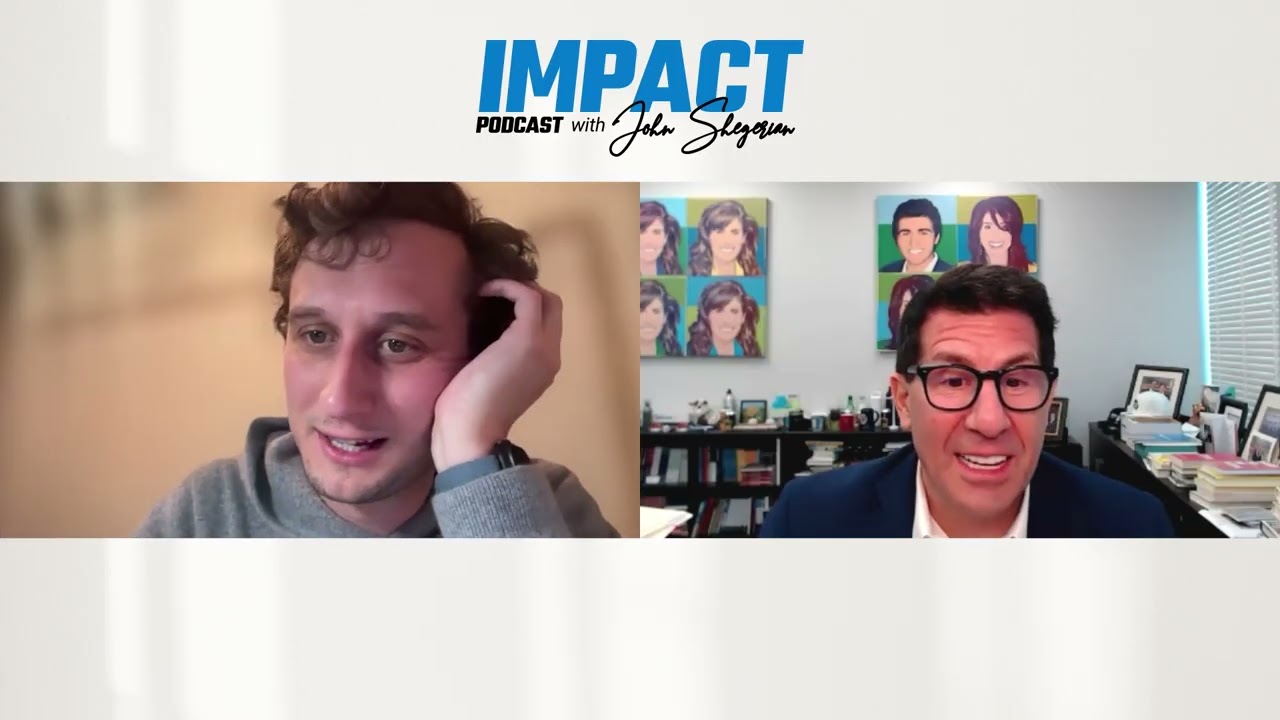
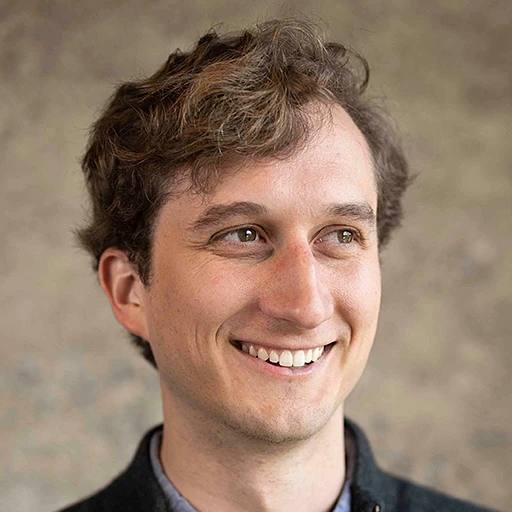
Taylor Francis is co-founder of Watershed, the enterprise climate platform used by companies like Airbnb, Carlyle Group, FedEx, and Visa to measure, report and act on their emissions. Taylor was an early organizer for Al Gore’s Climate Reality Project and has a background in public policy. He later joined Stripe where he worked on Atlas. Taylor co-founded Watershed to build the tools that companies need to meaningfully reduce their carbon emissions.
John Shegerian: Get the latest Impact Podcast right into your inbox each week. Subscribe by entering your email address at impactpodcast.com to make sure you never miss an interview. This edition of the Impact Podcast is brought to you by ERI. ERI has a mission to protect people, the planet, and your privacy, and is the largest fully integrated IT and electronics asset disposition provider and cybersecurity-focused hardware destruction company in the United States and maybe even the world. For more information on how ERI can help your business properly dispose of outdated electronic hardware devices, please visit eridirect.com. This episode of the Impact Podcast is brought to you by Closed Loop Partners. Closed Loop Partners is a leading circular economy investor in the United States with an extensive network of Fortune 500 corporate investors, family offices, institutional investors, industry experts, and impact partners. Closed Loop’s platform spans the arc of capital from venture capital to private equity, bridging gaps, and fostering synergies to scale the circular economy. To find Closed Loop Partners, please go to www.closedlooppartners.com.
John: Welcome to another edition of the Impact Podcast. I’m John Shegerian, and I’m so excited to have with us today Taylor Francis. He’s the co-founder of Watershed. Welcome, Taylor, to the Impact Podcast.
Taylor Francis: John, thanks for having me. I’m delighted to be here.
John: It’s great to have you. And before we get talking about all of the important and impactful work that you and your colleagues are doing at Watershed and the whole entrepreneurial journey over there, talk a little bit about Taylor Francis. Where did you grow up, and how did you get on this journey of entrepreneurialism but making the world a better place at the same time?
Taylor: I grew up in Northern California. Parents who were really focused on the outdoors and had come from the East Coast to California because they wanted to get closer to the woods and the mountains and the ocean. And I grew up doing backpacking trips as our family vacation every year. That’s what we would do in August is drive down to Mammoth and do some 6-day hike in the woods with tents and making food and filtering water and fishing. And I think that, somehow in the substrate of my childhood, was an important part of getting tuned in to the environment and the natural world and wanting to protect this world that is so important. So that’s how I grew up. I think the probably pre-origin story of Watershed starts with some childhood awakening, some light switching on climate and the environment for me and my two co-founders. So for my co-founder Christian, that was creating a website to raise money for rainforest protection when he was in elementary school. For my co-founder Avi, it was a similar kind of outdoorsy childhood. And for me, it was seeing the Inconvenient Truth movie when I was 13, at a movie theater in the summer after school was out and walking out of that movie pretty riled up candidly and angry and scared and feeling like the generation before was handing my generation this irrevocably changed world. And I was naive and I thought I could do something about it and ended up emailing [email protected] to try to see if I could help. And they were training people to give the slideshow as the kind of volunteer cavalry. And I was a part of that training and that really set me off on a whole climate journey that has really consumed me for the last 20 years.
John: But my memory is that that came out in 2006 or so.
Taylor: 2006, yeah, exactly.
John: Twenty years ago, so you’re about 33 now. I love that you watched that movie, I love that you got trained, I did too. Where did you end up going to university?
Taylor: I was a California kid and I figured I wanted to live in California forever. And so I should go to the East Coast for university just to see for a little bit how the other half of the country lives. And I went to Princeton in New Jersey.
John: Wow, Princeton. You had to come right in and you got right to the best. You didn’t waste any time. You went to the Ivy League. I love it. And by the way, Princeton, New Jersey is a very pretty place on this planet as well. So you got to still keep the beautiful environment around you as well.
Taylor: And I studied public policy. So my original theory was the way to have impact on climate was through the political system and through government and policy. And when I went to college was right as the optimism of the Obama election ran into the reality wall of actually even with a Democratic Congress and a great Democratic president, we couldn’t get climate policy passed in the U.S. And so I think that somewhat informed some thinking that happened much later around, okay, maybe there are tools other than policy for solving the climate problem. And that was ultimately a part of what led us to think about companies, private sector organizations taking climate action regardless of which way elections go.
John: And sometimes business does transcend politics, which is really true. Who in your family or friends or who inspired you to become an entrepreneur? Where did you feel that not only business could effectuate change better than politics, which is in many ways true. Not that we don’t need good government to help. No, we’re not saying that. But where did you get the guts and have an aha moment to start Watershed, but to say you’re going to put your foot forward and you could be an entrepreneur?
Taylor: Well, the pre-origin story is around childhood. The origin story is that after college, feeling a little bit at sea on climate given the state of climate policy at the time, I went to work for an amazing company called Stripe, and it was pretty early on. And I really lucked out into this extraordinary organization and got to see what great technology building, product building, and company building looks like. And Christian, Avi, and I all worked together there. We were part of the backpacking club at Stripe and would do these big hikes on the weekend. And the decision to start Watershed for the 3 of us was not a decision of, “I want to start a company. I want to be an entrepreneur.” It was a decision of 2 things. One was we wanted to work together. We wanted to work together on something. And honestly, I would have been fine working together on just about anything because these were 2 people I just like so admired.
John: Well, that’s itself a lesson though, because when young entrepreneurs or potential entrepreneurs come to me, they go, “How do I pick the right concept?” And I tell them, “Whoa, whoa, whoa, picking the right partners is even more important than the concept.”
Taylor: Totally.
John: Because you can take the wrong partners, take a great concept, and totally blow the whole deal. But you can take a good enough concept with the right partners and go all the way.
Taylor: I think it matters a lot. I think you’re going to spend more time with these people that you start a team with, a company with, than just about anybody in your life. So that was thought number 1, which was we wanted to work together. And thought number 2 is we wanted to work on climate. And so we set a goal of trying to work on some project, and it could take any form that could add up to reducing global carbon emissions by 1% per year by 2030. That was the bar we set, 500 million tons of CO2 per year at a time when the world needs to reduce by about 10% per year. We wanted to be able to contribute 1 of those 10 percentage points. And that was what we were solving for. And we thought about starting a science foundation. We thought about starting a political advocacy group. We thought about a consumer app that tells you if your purchases are low carbon. And ultimately, we circled around to, hey, companies have the leverage. They have bad tools. They have bad data. Let’s arm them with the data they need to make decisions. And okay, the best way to do that is to start a company. But the let’s start a company was the last idea in a chain that was much more focused on working together on the climate problem.
John: When did the 3 of you launch Watershed?
Taylor: We started working together at the very end of 2019. We spent 2020 building the product, serving early customers, and we publicly announced the product in 2021.
John: So, COVID was good to you because you were all undercover anyway in terms of there was nowhere to go, and it gave you a great chance to focus together.
Taylor: Yeah, that was a wild ride. I remember interviewing the first person to join our team in person in Christian’s house, which is where we were working. And then by the time he joined, we were locked out. I will say a big part of Watershed’s early team building revolved around picnics and San Francisco parks because we really wanted to have that in person collaboration. We think it’s really important to building a culture of people doing an irrationally ambitious thing is to know who you are in person. And if we couldn’t all be in an office together, we were going to be in Alamo Square in Dubose Park on Friday afternoon having lunch outside together.
John: So you all had moved back to the West Coast and started this business on the West Coast.
Taylor: Watershed started in San Francisco. We now have a dual headquarters in London. We feel like the European market has very different dynamics to the U.S. market, and there’s a ton of opportunity on climate in Europe. And so we’ve got a London office which serves satellites in Paris and Berlin and customers all across Europe. And then other offices now in New York, in Mexico City, in Paris, Berlin and Sydney. So the climate problem is global, and we’ve tried to build a global team.
John: Awesome. So talk a little bit about how to go. The first year you built it, 21 you launched it. How’s it been going the last 5 years? You launched it, what were your expectations? And what has gone to plan and what is not? And how have you handled that?
Taylor: I’ll tell you what’s gotten better than we expected; is we are really fortunate to work with an exceptional group of customers. And so the path for us to deliver 500 million tons of CO2 reduced or removed by 2030 per year is to work with organizations that are big, that have scale, that have leverage, and that have great teams looking for impact but need better tools.
John: Say more, give a couple of examples of big organizations that [inaudible].
Taylor: Today we work with about 800 companies, that includes 90 of the Fortune 500. And that’s everything from 5 of the 6 biggest banks in the U.S. to the world’s biggest retailer, to the world’s biggest food supplier, to airlines, and General Motors, and Honeywell, and every company you can conceive of.
John: FedEx, Airbnb.
Taylor: FedEx, Airbnb, exactly. We’re super lucky to work with.
John: Royle, Yeti, Aon. These are big names.
Taylor: Many of the companies we work with have carbon emissions across their supply chain that are bigger than most countries. And our job is to help the 1, or 2, or 3, or 5, or 10, or 15 people who are charged with managing country-scale carbon supply chains do that in a way that supports their path to zero carbon and help them make and save money along the way.
John: For our listeners and viewers who have just tuned in, we’ve got Taylor Francis with us today. He’s the co-founder of Watershed. You can find Taylor, his co-founders, and all his colleagues at Watershed at www.watershed.com. So, now, what were the initial tools that you rolled out in 2021 that got some of these bigger brands excited about what you were doing?
Taylor: The core of Watershed is we are an enterprise software platform for sustainability data, and that has been true since day 1. That is true today. We help companies take their disparate operational data, think utility bills, think invoices, and bills of materials, and how much you’re spending on different parts of your supply chain, business travel, and employee data, and all this stuff, and we help them take that and turn it into a view of; where’s the carbon coming from? Where are the other sustainability impacts coming from? How are we doing relative to our plan? What can we be doing better? And report on that to the outside world, whether that’s investors, or customers, or regulators, and inform better decisions on how to achieve our goals and improve the business at the same time. That was true on day 1, that is true today. I will say the thing that has changed in a really exciting way in the last 2 years is that, fundamentally, this is a data problem. And we now have superpowers for solving data problems, and those are AI capabilities that are changing all sorts of different industries. We feel like AI is changing the work of sustainability and climate, too. And we’ve been launching a whole series of products that help companies basically tap into the superpower of AI so that they can more immediately figure out, “Okay, what’s the way to reduce the carbon of this product, or this supply chain, or this material, or this ingredient?”
John: Give us a couple examples.
Taylor: Most carbon is in what’s called Scope 3. That’s a fancy way of saying the materials you buy, the ingredients you buy, what it takes to transport those materials and ingredients, your supply chain, basically. So imagine you’re walking down a Walmart and you’re buying beef for a burger. The emissions in that product are coming from a whole long supply chain that’s stretching back to the field, to the farm. This has traditionally been a black box problem for companies, right? It’s really hard to actually collect granular data on every step of the supply chain. We launched a product in September called Product Footprints, which is an AI agent that maps out the supply chain of any product, material, or ingredient. And it does it in minutes. And it tells you exactly how is that product produced? How is it moved? Who are the likely suppliers? What are their likely practices? What are the hotspots for how to reduce emissions? You can give it as much data as you have on the practices of the supply chain you’re actually working with. And in minutes, you get this insight on, here’s where the carbon is coming from, here’s what the opportunity is, here’s what the likely ROI of that opportunity is. We’re really excited about it. And we think it can transform what used to be a 9- or 12-month journey on one product into something you can do basically in real time on hundreds or thousands of products.
John: So what you’re saying, this is a real-time predictive analytic tool that allows you to make decisions right while you’re making them in real time.
Taylor: Absolutely.
John: Wow. That’s sweet. And that’s because you’ve taken what you’ve already built and you’ve applied AI to it. That’s where the hockey puck is no longer. It’s now going there.
Taylor: Yes. And here’s the thing I would say on the general topic of building AI for any topic or any domain that we’ve really seen is that ChatGPT, Gemini, these are incredible models, incredible tools. But to get to the insight in a particular domain that is actually reflective of the real world requires a lot of depth in that domain. And so, we’ve been able to build some of these AI for sustainability products because we’ve spent 6 years, and we have a team that in many cases has spent 20 years, thinking about the drivers of emissions and the levers for reduction. And we’ve trained the models on a whole bunch of that scientific literature. And so it takes a lot of work to get these AI products to really sing for a particular domain.
John: So, like you said, Gemini is great, ChatGPT is great, Anthropic Claude is great, Grok is great, so you take that LLM and then, for your clients specifically, you’re really creating an SLM for their specific industry?
Taylor: That’s right.
John: There you go. Got it. And then you’re able to replicate that SLM for that entire subset of industry. So if tomorrow you’re talking to David Solomon over at Goldman, with that, the SLM you’ve created for that industry, per se private equity, major investment bank, you’re able to have that similar conversation because you already have the right tools, with Larry Fink. Got it.
Taylor: And one of the things that’s really interesting about this space is the extent to which companies will only be able to solve the climate problem if they work together.
John: Say more.
Taylor: Well, you think about different supply chains. There’s a whole set of companies that are in each other’s supply chains. They’re selling products to others, they’re buying products from others. And so we think a lot about how can we enable the productive version of collaboration between a buyer and seller in a supply chain. And there’s plenty of unproductive versions of collaboration, right? Think of what’s traditionally been done in this space is people send surveys back and forth to each other, fill out questionnaires over and over and over again, makes you feel like you’re doing something, but the world is not going to decarbonize with more surveys being traded back and forth across the ocean. And so we’re really trying to figure out how can we enable companies to kind of collaborate in a productive, action-oriented way. And anyway, I think AI is a tool. It’s not more than a tool, but it can be a tool on getting to that insight a little bit faster.
John: I’m in an elevator with you today in San Francisco. You hand me your business card, I hand you mine. We’re going 60 floors up, and I get your business card and it says Watershed, and you tell me what you do. But I give you one of those typical shoulder shrugs, like, “Why should I care about what you do?” Being that I run a private equity firm out of San Francisco, massively successful, like most of the smart ones are, and I’ve got 60 portfolio companies. Why should I really care about sustainability? Why should I care about decarbonizing? Why can’t I kick the can down the road and leave that for the next guy to do or such? Why is what you do so important right now?
Taylor: Because sustainability is not just about carbon. It’s not about press releases, or compliance, or marketing. It’s about ROI for businesses. So, the conversations we have with customers every day are about the fact that, increasingly, if you’re selling to the world’s biggest companies, the thing you got to do just in order to be in the RFP is to have a climate program, and to measure your emissions, and to disclose your Scope 3, and to have targets for reducing those emissions. And that’s true if you’re selling into tech. It’s true if you’re selling into pharma, where all the major pharma companies had their chief procurement officers, not their sustainability officers, their chief procurement officers, send a letter to their vendors and say, “This is our expectation of you.” It’s true if you’re selling into auto. It’s true if you’re selling to basically any major category. So, that is not a feel-good endeavor. You got to be tall enough to ride the ride if you’re selling into the biggest companies in the world. If you’re raising money from the biggest investors in the world, this is a thing that is expected of pension funds, and sovereign wealth funds, and asset management funds, and asset owners. And the amount of times that gets mentioned in news articles may vary. We’ve seen over the last couple of years a huge increase in the number of customer requests and investor requests around sustainability data. So, that’s the way we help customers. That’s what we talk to them about. The kind of climate and planet impact is bonus. It’s the bonus that motivates us, but it’s a bonus relative to solving real business problems for customers.
John: Taylor, so I started this podcast in ’07. It started as a radio show. And then, of course, I got an email, which I thought was absolute spam, from Apple saying, “We like your podcast. We want it on our platform. It’s a new podcast platform.” And I thought, “This is absolute spam. Apple doesn’t email me. And I’ve never heard of a podcast platform.” Long story short, I’ve been doing this a long time, almost back to the days when you saw Inconvenient Truth for the first time. And back then, C-suite people, when they heard the word sustainability, they basically took their hand, put it to their head, and said, “How much is this going to cost?” You just turned that whole thing on its head. How did that whole paradigm shift to sustainability equals ROI versus how much is this going to cost me?
Taylor: There was an enormous amount of investment in low-carbon technologies, which are now in the money for companies in a way that wasn’t true 20 years ago. So, in that slideshow that you and I learned to present by Al Gore, part of the Climate Project back in 2006, there was a slide that showed projections for the price of solar versus the price of coal versus the price of natural gas for producing a kilowatt-hour of electricity. At the time, solar was way more expensive. Those predictions, I remember, as we were trained on how to present that slide, there was a lot of skepticism about; are these predictions going to come true? And in fact, if you look at what has happened in reality for the cost of solar versus what was predicted every single year, the costs have come down faster than expected. Deployment has accelerated faster than expected. People think of the last year as a negative year for climate policy in the US. They’re right. It was not a negative year for climate technology deployment in the US. Clean energy stocks: up 30% last year. Oil stocks, flat. That is about technology. That’s not about policy. That is about the payoff of this massive investment in clean technologies. And so, that’s the thing that’s changed; is that quietly, sometimes under the radar, sometimes counter to what you may read in the news, the climate economy has become really big, and companies want to be a part of that. They want to make sure that their company is going to be well-positioned to win from that shift, not lose from that shift, not miss out on the upside.
John: I love having great people like you who have created unbelievably important companies on the show. Let this be as self-promotional as you want, because there’s no other way of putting it. I want our listeners and viewers to fully understand what you’re doing. Describe other great tools. You talked about some of them earlier using AI, but what are some of the great tools? What’s your stump speech? I am a CEO. I’m really confused on how to get on the right side of this. You’re absolutely right, every RFP I go into, and I serve some of the greatest brands on the planet, I built this company with my partners over 23 years, but in every RFP, they want to know our climate disclosures, our impact report. We have a whole sustainability team. Pitch me on why your great tools provide me more leverage in putting together a climate plan that I’ll be proud of, hold my head up high when I fill out every RFP that I’m entering into.
Taylor: I think, fundamentally, we help companies who are in that position do 2 things. One is automate the busy work and overhead of sustainability so that your small sustainability team can focus on what really matters. Maybe 3 things, I’ll cheat. So, automate the busy work, save time and money on doing the numbers, doing the math. No one got into this so that they could spend the whole year collecting data, and reporting, and measuring. And yet, that’s the merry-go-round a lot of companies are on.
John: Right.
Taylor: Second is do that at a high degree of rigor for a world in which sustainability has become a mandatory disclosure rather than a feel-good PR exercise, something that the CFO is signing off on after an expensive audit by a Big Four firm. And there’s a whole bunch we’ve invested in data lineage and audit controls. Basically, how can you get the numbers to be bulletproof for companies that really care about that? And then the third thing is that we point you towards the high-ROI, high-impact action faster. Our platform is all about, where in your supply chain, where in your operations, does the opportunity exist? And so, that’s the core of our platform. It’s about automating busy work, it’s about a high degree of rigor, and it’s about getting action. On the last, I’ll give you an example. We work with a ton of customers who realize they’ve got all these emissions from their suppliers, but that feels pretty vague. It feels hard to action. What is it you’re supposed to do? These aren’t companies you control. We worked with Canva, which is a design business in Australia. They had a lot of emissions in their print suppliers. Suppliers that are printing out greeting cards, and books, and leaflets, and those printers are using a lot of energy in those facilities. And we facilitated for Canva a joint power purchase agreement across all those different suppliers. There’s an actual project in Michigan right now that is the result of a whole bunch of Canva print suppliers getting together to buy clean power. And that’s really powerful. And that is something they can tell every customer of theirs about. That is something that is reducing Canva’s Scope 3 emissions. And that was our attempt to say, “Hey, how can we lower the friction? How can we lower the barrier? How can we lower the bar?” Just doing the thing that actually matters in the world, which is building more solar.
John: So you not only have these great tools, you also have a vertical of your business, which is consulting services as well.
Taylor: We think of that more in terms of decarbonization solutions.
John: Okay.
Taylor: Yeah, it’s a marketplace, it’s enabling companies to aggregate together and participate in the climate economy, put dollars into the climate economy in a way that’s more effective if they do it together than if they do it on their own.
John: Talk a little bit about some other success stories. You have a lot of great brands, obviously 800 companies, 90 Fortune 500 companies. I don’t want to breach any confidentialities, but talk a little, or we can also agnostically cover the brand’s name and talk about the sector they’re in, but some of the other success stories that you’ve had over the years that are compelling.
Taylor: There have been so many. We just published a piece on our website about Albany International, and that is a business that’s both in the paper business and they’re in the aerospace business. And they are a key part of a whole bunch of supply chains. And they’ve really invested, long before we started working with them, to an exceptional degree in thinking about; what is the low-carbon piece of every part of our supply chain, of our manufacturing process, of our materials? And we’ve helped them get clean power in a way that is both good in a world of rising energy bills and a kind of hedge on an important input cost.
John: Wow, that’s so exciting. So talk a little bit about the entrepreneurial journey, you, Christian, and Avi. I remember years ago, it was probably a 15-year-old story. I was sitting with Doug Leone, one of the original guys who created the success, massive success, of Sequoia Capital. And he was telling me about the first check that ever went to the Google guys. He wrote the first check, $10 million. He said, “John, it went into the bank and they never needed to touch it.” Talk a little bit about your journey. How’d you raise money? And how’s the journey gone in terms of, was it just one of those Google stories where you did it together and you never looked back? Or have there been fits and starts on the massive success that you guys have put together?
Taylor: Look, I have a ton of humility. We are super early in this journey. And I think everyone who starts a company lives every day with a real sense of how much more there is to go. I certainly feel that every day. I think the one thing we have in common with Google is, actually, our first 2 investors, Mike Moritz at Sequoia and John Doerr at Kleiner, were 2 of the first investors at Google.
John: There you go.
Taylor: And so we were lucky to have investors who, more than the capital, have brought this, I would say, steady counsel. Our best quarters have been the quarters where we have a board meeting in which the board brings us down a few pegs and says, “Hey, you may have beat all your numbers, but how are we generating pipeline? Are we investing in the right products? Are we investing in the team in the right way?” And our most challenging quarters have been quarters where the board has said, “Hey, we got these things right. That’s going to show up in the future.” And I think that is hard-earned. That is hard-earned insight from investors who are not just allocators of capital, but are company builders.
John: Not just investors, let’s be really clear. Mike Moritz who’s, of course, Doug’s partner, long partner, and John Doerr are some of the most legendary characters in Silicon Valley.
Taylor: On the financing perspective, I would say that’s the thing that we’ve been most fortunate on, is just to have some really steady, really long-term-minded investors. I think that really matters. I think people think a lot more about what they raise, at what price they raise, how much they raise, how it’s going to feel to be in TechCrunch. I think a lot less about what’s it going to feel like to be in 23 board meetings? We just had our 23rd board meeting. What’s it going to feel like to be in 23 board meetings with this group of people? And what type of counsel are you going to be getting from them as the company grows?
John: That’s a lot of wisdom for a 33-year-old, to be that humble. Because like you said, the dream of TechCrunch and getting rich and price per share, and not doing a down round, always going an up round, is all ego-based stuff. When you’re coming from the right place, and you become successful, but also manage to stay part of planet Earth, that’s where the magic starts to happen. At 63, I’ve seen both sides of that coin with different startups I’ve been involved with, friends and relative startups they’ve been involved with, and just the general zeitgeist of the technological revolution and being original dot-comer. I got to see it up front and personal. And it’s pretty wild, but to stay that humble, I think is wonderful. What’s next? You’ve built a monster in 7 short, but I’m sure it feels like long years, 23 board meetings of 7 years almost. What’s next for Watershed?
Taylor: On the point that you just said, add one thing. Advice I have for people starting on this journey that I think has been hard earned by Avi, Christian and I, is that it is pretty darn important to get energy out of the mission of what you’re working on. Because it’s easy to be starting a company when things are up. It’s easy to be starting a company when everyone wants to invest in you and buy your product. And most days are not that. Most days, planet Earth is having no trouble bringing you back down and just really giving a damn about what happens if it succeeds has sustained me through plenty of those days. What’s next? What’s next for us is, look, it’s easy in 2019 to write on a whiteboard and say you want to hit a goal of reducing carbon emissions by 500 million tons per year by 2030. Then it’s February 2026 and 2030 is not so far away. We are really, really focused on how do we take this potential energy, which is we’re so fortunate to work with so many companies with real leverage across a bunch of global supply chains, and turn that into the kinetic energy of more solar deployed, more wind deployed, more batteries deployed, less deforestation and agricultural supply chains, lower carbon land management practices, lower carbon materials into manufacturing and industry. And so we’re in a be laser focused on driving real decarb, supporting companies and driving real decarb chapter.
John: Well, we got to talk a little bit about you. You’ve had a lot of wisdom and a lot of knowledge that 13-year-olds never got back starting back in 2006 about where this planet’s going in terms of hot versus cold. And decarbonization is just basically fancy terminology just for cooling down the planet Earth, which is on fire. And climate change is real. Hopeful today, hopeless, compared to where you were in 2006 and compared to where you were when you started your company, are we going to be able to cool down this planet in time? Or are we on the precipice of something not so great happening here?
Taylor: I’m definitely, congenitally, an optimist. And so, I think that’s part of what is in the water on doing something like this. Here’s what I’ll say, I think relative to 2006, I am super optimistic about the progress we’ve made. I think if you had said in 2006, “Hey, we’re not going to pass a climate bill in the US. We’re going to have a series of administrations that take climate policy to and fro. And yet, solar is going to be the cheapest source of energy, and we’re going to spend $2.3 trillion a year in 2026 deploying clean energy technologies, and China will have peaked emissions, and Western countries will have decoupled emissions from economic growth,” I think people would have said you’re crazy. And so I think something that gives me a lot of optimism is the way that investment in low-carbon technologies has defied policy and created a real secular force for a shift to zero carbon. I think a thing that is optimistic relative to anything I expected then is the role of China, which has really become the arsenal of the world’s decarbonization on solar panels, on batteries, on electric vehicles, and by the way, creating a lot of national competitiveness. That is not a feel-good investment for China, that is an investment in the industries of the future. That is really surprising on the upside relative to what one would have expected 20 years ago. And yet, we are not on track. I feel like we’re on track right now to decarbonize something like 10 to 20 years too late. And that’ll actually probably be okay for averting the worst impacts for much of the rich world, and it’s not going to be okay for averting the worst impacts, which are already happening in at-risk countries, at-risk communities, exacerbating conflict, exacerbating migration, exacerbating food insecurity. So, that’s the thing that motivates me: is the difference between decarbonizing on time and decarbonizing 10 to 20 years too late is a lot of impact in the lives of real people, especially in the Global South. And so I’m optimistic, and I feel like the task is a task of acceleration. It’s not a task of a cold start. It’s not a task of turning back the tide. It’s a task of, “Hey, this thing is happening; it’s just not happening fast enough.”
John: That’s right. I agree. You have offices around the world. First of all, because of the show, I get to interview what I call one of the greatest fraternities on this planet; chief sustainability officers, chief impact officers from some of the biggest brands on this planet. And one of the commonalities, they have many commonalities, but one of them is the relentless patchwork quilt that continues to fracture the sustainability world, in that the rules and regs in Europe are different than South America, are different than North America, are different than Asia, and there’s no harmonization of them. Is that where one of the great voids and opportunities for you to step in? And, with using the data sets that you’re able to provide, are able to rationalize this to chief sustainability officers and give them the right tools so they’re not spent just trying to harmonize all these crazy rules and regulations, and they can actually do the great work of making their company more sustainable, i.e., more resilient?
Taylor: Yes, and I think that’s going to get worse, by the way. Yeah, I talked a couple weeks ago with a European company that has a regulator in Brussels that wants one thing and is actually expecting more and more and more of them over time, that has investors in the U.S. that actually want a pretty similar thing that’s pro-climate because they realize that’s where the puck is going but want them to be quiet about it, and then have customers in the U.K. that have a whole different set of requirements and obligations. That’s a tough thing for a company to navigate, and I think it’s going to get worse. I think that the world is becoming less interconnected. The world is decoupling. You see that in trade policy. I think that is a megatrend in the coming years. That’s going to make the task of companies navigating different poles, different regulations, different requirements, a lot more challenging. And it’s absolutely a core part of what we solve for companies every day, is, “Hey, you get your data in once, let us worry about the fact that Australia and New Zealand require you to measure emissions in a different way than the U.K. and Europe, that the California rules and the European rules are different, that obligations for suppliers in Asia are different than obligations for suppliers in Latin America.” Let us take care of that. And that’s the power of our software. That’s the power of our tools. And I think a lot about Mark Carney’s speech in Davos a couple of weeks ago. I think that doctrine of a world where there’s variable geometry and different countries work together on different topics in different ways, that’s a tough world for companies to navigate.
John: “If you’re not at the table, you’re on the menu.” That speech was pretty powerful. Many Canadian friends of mine say it was the best speech that any Canadian leader ever gave in their lifetime. And at Davos, I think that was considered the best public presentation that was given during the whole period there. Taylor, as you and I know, sustainability has no finish line. So what I want to do is this. I want to invite you back a year from now. I want you to continue to share with our listeners and viewers the great story that you and Avi and Christian have created at Watershed. For our listeners and viewers to find and use the great tools that Watershed has created, please go to www.watershed.com. It will be in the show notes, you don’t have to stop lifting weights, or walking your dog, or driving your car to take any notes here. It will all be in the show notes. Taylor, thank you not only for spending almost an hour with us today. More importantly, thank you and your co-founders and all your colleagues at Watershed for making the world a much better and sustainable place.
Taylor: John, thanks for having me. It’s been a delight. I’m looking forward to coming back.
John: This edition of the Impact Podcast is brought to you by Engage. Engage is a digital booking platform revolutionizing the talent booking industry. With thousands of athletes, celebrities, entrepreneurs, and business leaders, Engage is the go-to spot for booking talent, for speeches, custom experiences, live streams, and much more. For more information on Engage, or to book talent today, visit letsengage.com. This edition of the Impact Podcast is brought to you by ERI. ERI has a mission to protect people, the planet, and your privacy, and is the largest fully integrated IT and electronics asset disposition provider and cybersecurity-focused hardware destruction company in the United States and maybe even the world. For more information on how ERI can help your business properly dispose of outdated electronic hardware devices, please visit eridirect.com.
 Spotify
 Apple Podcasts
 Amazon Music
 iHeartRadio
 YouTube
 YouTube Music
 Audible
 Pandora