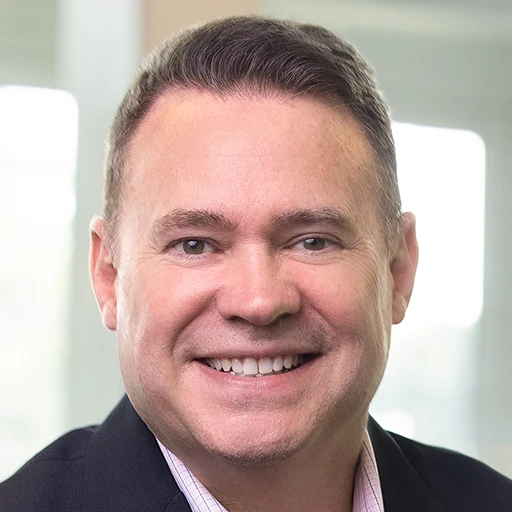
Scott Tew is the global head of sustainability strategy and co-founder of the Center for Energy Efficiency & Sustainability (CEES) at Trane Technologies. In addition, he leads the Center for Healthy & Efficient Spaces. Tew is responsible for forward-looking sustainability initiatives aimed at transitioning to more efficient and climate friendly solutions without compromising health or resource impacts. He is also responsible for climate and energy related public policy matters.
John Shegerian: Do you have a suggestion for a Rockstar Impact Podcast guest? Go to impactpodcast.com and just click, be a guest, to recommend someone today. This edition of the Impact Podcast is brought to you by ERI. ERI has a mission to protect people, the planet, and your privacy, and is the largest fully integrated IT and electronics asset disposition provider and cybersecurity-focused hardware destruction company in the United States and maybe even the world. For more information on how ERI can help your business properly dispose of outdated electronic hardware devices, please visit eridirect.com. This episode of the Impact Podcast is brought to you by Closed Loop Partners. Closed Loop Partners is a leading circular economy investor in the United States with an extensive network of Fortune 500 corporate investors, family offices, institutional investors, industry experts, and impact partners. Closed Loop’s platform spans the arc of capital from venture capital to private equity, bridging gaps, and fostering synergies to scale the circular economy. To find Closed Loop Partners, please go to www.closedlooppartners.com.
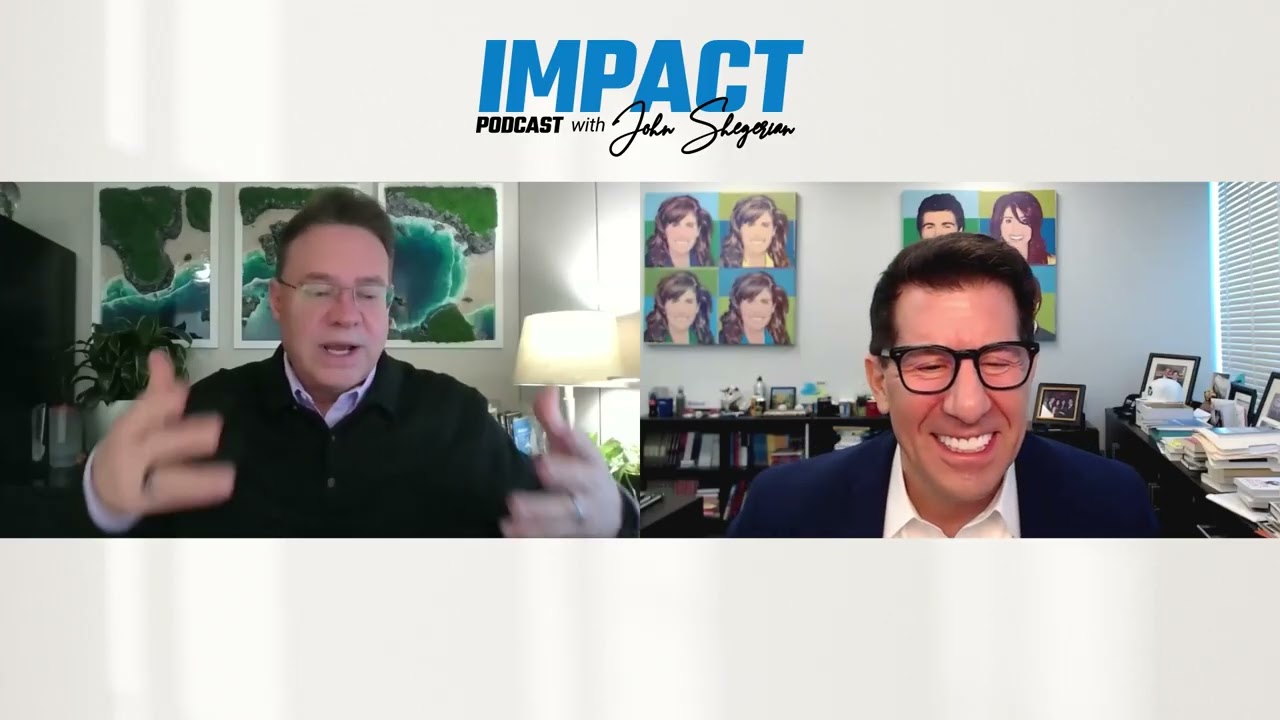
John: Welcome to another edition of the Impact Podcast. I’m John Shegerian. I’m so honored to have with us today Scott Tew. He’s the Global Head and VP of Sustainability Strategy at Trane Technologies. Welcome, Scott, to the Impact Podcast.
Scott Tew: Thank you, John. Great to be here.
John: It’s great to have you. And Scott, before we get talking about all the wonderful and important work you and your colleagues are doing at Trane and sustainability, I want to ask you a little bit about yourself. Where did you grow up and how did you get on this very important journey that you’re on?
Scott: I know this is one of my favorite parts of your show is when you ask your guests some background. And so mine started pretty humbly. I grew up in South Alabama on a small family farm. And if your listeners know anything about farming, then they know that recycling and reusing is sort of foundational to all farms, no matter their size. You look at waste because it doesn’t need to exist on a farm because there’s a use for whatever is coming out that may not be used for what you are focused on today, but it will be used for something tomorrow somewhere else.
John: That’s right.
Scott: And so the concepts on farms are not called sustainability. That’s the nice word that we call them today in maybe a corporate environment, maybe across economies. That’s not what you call it on a farm. You just call it smart living. And so, I grew up with that concept. The 7 generations before me were all farmers. I was the one that did not stay on the farm, but I’d like to think that some thread of what we were doing then and how we were thinking has been part of my story and my career from the very beginning.
John: I love that. What was your family for 7 generations farming?
Scott: Various things over the generations. My family farmed commercial produce, things like purple hull peas, okra, a very unique crop. It’s really important along the Gulf Coast with gumbo. We also farm things like watermelons. Back when watermelons were having their day and they did not all come from South America, they came here from the US. But yeah, that was a really important commercial crops at the time.
John: Do any of your siblings or cousins still carry on the farming tradition?
Scott: Yeah, certainly have some family members that carry on their tradition.
John: That’s so wonderful. Where’d you end up going to school?
Scott: I went to a small college called Livingston, Livingston University and studied environmental science. I went there for business. I found out in my early courses on business that that one really wasn’t connecting with me as well as the biology and environmental science courses. And so I switched over to environmental science and later got a master’s in environmental science as well. This was in the days before there were integrated degrees that are common today, like business and sustainability. We weren’t even using the word sustainability then, but looking back, I didn’t know what I didn’t know at the time. I was going with things that really connected with me. And I think that’s still important. If you do something that connects with you, then it becomes part of who you are, part of your purpose.
John: I so agree with you. What was the first job you got when you got out of school?
Scott: I got a job with a large chemical company. Actually, it’s a company that people now know as Novartis, the pharmaceutical company. And I was asked to work on some nature risk assessments on compounds in the environment. It was fascinating. I was going at and capturing, as part of that work, things like cottonmouth snakes or water moccasins during the night when they’re active, things like largemouth bass during the day. And we were taking tissues from those animals to understand how those natural species were reacting to compounds in the environment. So, fascinating first job that sort of let me know that maybe the things that connect to me are something that I could do forever. So that was sort of the launching pad.
John: How did you end up at Trane? What was the impetus that got you over to Trane Technologies? How long ago did you come over there?
Scott: So almost 20 years ago, I went to what was then Trane, the air conditioning company. And I was asked to join the firm because they needed some help thinking through refrigerant strategy globally. Refrigerants, of course, are those greenhouse gases that are used in air conditioning to help actually cool a space. And so I was asked to come to the company at a time when the company itself was thinking about, “How should we better manage and think more strategically about refrigerants globally?” At the time, refrigerants were just being managed internationally by treaties, and the world is trying to reduce the impact of those on the environment. So I thought that was fascinating. I didn’t know much about refrigerants or the air conditioning industry at the time. But what I have found over my career, impacts on the environment, for those of those listeners of yours who have an interest in, “How do I reduce negative impact?” It could be in your home, it may be a future career, that issue is across all industries and products. So this idea of, “how can we do better?” as a concept was the same one that Trane had 20 years ago when I joined. And it was a question around, how do we do this better? How do we manage them better? How do we think about the future? How do we think more strategically? So it was a fascinating moment to join the company and I’ve been at it ever since.
John: When were you named the global head and VP of sustainability strategy?
Scott: So, I moved into a new sustainability role. The company created a special group of experts, a very small team that I was asked to lead in 2010. And that group was to answer questions around what I just mentioned like, how do we operate our facilities better? Reduce waste? How do we think differently about products in the future? And the bigger question was, how do we see around the corner, or see around the curve, around what’s ahead for companies like ours? What should we be thinking about today that might have implications in the future? So, I felt that was fascinating. I took the job of putting that group together back in 2010. And we’ve had now 15-plus years of hitting a lot of milestones, learning a lot along the way, and, I think, making the company perform better over time.
John: So, for our listeners and viewers to understand more about Trane, if you haven’t heard about Trane before or seen the great brand, I grew up with the brand. I remember growing up in Queens, New York, and we had a Trane air conditioner right outside of my bedroom window. So I would hear it go on and off all day, and it was a Trane technology. So, Trane’s been one of these iconic brands. But for our listeners and viewers, Trane operates in 62 countries, over 45,000 employees, over $21 billion in revenue a year, and you can find them at tranetechnologies.com. That will be in our show notes, you don’t have to write it down, but tranetechnologies.com is the URL that you can find Scott and all these great colleagues and the work that they’re doing in sustainability. So, Scott, as you and I know, sustainability can be read very narrowly, very broadly. How do you approach this whole theme of, like you said, sustainability? But before, when you were doing it, actually doing the work of sustainability, it wasn’t a thing. It now is one of the biggest and most massive trends that C-suite and business owners, big and large around the world, are working on, and pretty much at a feverish pace. Sustainability, circularity, net zero, these are all really where, not only where the puck is today, but where the puck’s going. How do you read sustainability and envision it out, and execute against it at Trane Technologies?
Scott: Yeah, John, I think we think about sustainability as a value creator, meaning there are outcomes that can be measured, and there are expectations that can be placed on sustainability-related initiatives or projects that we all can agree add value. And that’s one of the early learnings that we had. And I believe that goes for every company. I get asked that question often, which is, “How do we view it?” And my answer always is, without apology, we’re looking for the new value or the edge that sustainability can provide. It’s always, in my view, about making a company better. And who doesn’t want that? What company of any size doesn’t want that? And I believe that’s the lens that we best use sustainability to provide.
John: I so agree with you. When I started the show about 17 or so years ago, when sustainability was put into a C-suite discussion, I was always told that the C-suite would hit their heads and say, “How much is that going to cost me?” But that whole trope or paradigm has been turned on its head now, as you said, and sustainability really becomes, like you said, so material to the core goals of the company, that it could absolutely make the company more resilient and profitable all at the same time.
Scott: Totally agree, John. You could put me in front of any group in the company. We can take a finance function, which I think some sustainability teams try to stay away from, the CFO’s office and his team. But for me, no team better understands outcomes and business value and how to measure it than a finance team. They understand that cutting energy use saves money. They understand that cutting emissions in ways that we can do that can save the company money. So they get that piece. You could put me in front of the HR team. We’ll talk about how it helps to attract the right people. We can talk about how it helps retain the right people. We can talk about how it helps engage people and help them be more innovative. You can put us in front of any group inside of a company, and I think that the sustainability lens holds on its own because there’s value that can be measured across all these facets.
John: So, like you said, the third rail of sustainability historically, years and years ago, was the finance team. And now you go in, and you start talking about ROI, and they’re listening. [Inaudible].
Scott: Oh yeah, I’ve learned that you don’t bring them in at the end, you bring them in as co-creators. You bring them in at the beginning.
John: That’s right.
Scott: They’re really great at data, and I think the sustainability teams across the world are better at leveraging data today than ever before. But finance teams have sort of perfected the idea of data. We call it bean counting, we could also call it sustainability counting. They’re really good at that. And so, co-creating these projects with a finance team makes a lot of sense.
John: I got it. I love what you just talked about ROI for the finance team, and with the HR team, it comes to attraction and retention. After you attract using sustainability and then retain, then how does your team then take the 45,000 or so wonderful colleagues that you have at Trane Technologies and turn them into not only ambassadors, but sustainability evangelists?
Scott: I love that phrasing. I think here’s how you do it; here’s how we’ve done it. The question is, does every person in the company have a role to play, a personal action that can be taken? You either believe that or you don’t. We chose to believe that. It’s easier said than done, but I do believe that every person in the company can take a personal action that can be meaningful. The aggregate of 46,000 actions is huge. It can be measured, and the outcomes can be big. You and I walking from Charlotte to Fresno is a lot of steps.
John: A lot of steps.
Scott: I could take one step, you take one step, that’s only 2 steps. But 46,000 of us taking steps, we’re on the way now. And that’s the way I view personal actions related to sustainability. In fact, the company, several years ago, when we roll out annually, we ask employees to have objectives globally. So every employee has to have their annual objectives. Most people have 2 or 3 annual objectives. Objectives are placed into the system, our managers use them to gauge progress over the year of an employee. There’s only one default, required objective of all Trane Technologies employees, and that’s the one that’s related to sustainability. And there’s a dropdown menu on our system. Employees can choose from a list of ideas, or they can create their own, as long as their manager agrees. And this is getting to the heart of what I just mentioned about a personal action. Every employee is expected to take a personal action towards advancing the company’s progress. That’s a big deal. That’s putting your mouth where your actions are and saying that this is how much we believe that it’s important that every employee takes a personal action.
John: I love it.
Scott: And so, nothing says it more than, not only requiring it, but if you can imagine that, that also then feeds into discussions with the manager about how you’re doing, what kind of action you’re taking, how’s it going in what you’ve said. And it sort of is directly then tied to future promotions and merit discussions. It keeps an ongoing dialogue, which we found to be very helpful for engagement.
John: So at Trane Technologies, it’s not only about talking the talk when it comes to sustainability. It’s about engaging all the employees walk the walk.
Scott: Absolutely.
John: Love it.
Scott: We have to connect it to the people in ways that’s really meaningful. It’s back to what I mentioned. It’s not just about those objectives. A lot of this is about storytelling, making heroes of people that are doing something creative and unusual, engaging in different ways, finding a new avenue of reducing waste or making some kind of very positive impact. We’ve spent a lot of time highlighting those stories inside the company. And the idea there is to do 2 things. One is to underscore that this is important to us, so we’re highlighting good behavior. It’s also meant to inspire others. So you see this behavior, we’d love for you to be inspired by it and do something similar. And that’s just worked really great for the company over time.
John: Scott, we’re living in this fascinating new world where you and I can’t wake up any morning and read the New York Times or Wall Street Journal, or turn on Bloomberg or CNBC, and not hear the term or read the term AI. And so, the AI generation is upon us and it’s booming more than ever, which has led them to, of course, big data centers. And one of the big problems of data centers, with any new technologies, is energy demand. What role does Trane Technologies play in keeping these data centers cool and also help manage the energy demands of the local communities that they’re residing in?
Scott: You’re right, John. We can’t have a conversation these days without AI or data centers coming up, it doesn’t matter what we’re talking about, no matter what you read.
John: That is right.
Scott: It’s a big deal. But to your point, one of the great needs of data centers, especially as they get faster, as they become more compressed in smaller footprints, is they do need a lot of significant cooling. And what they really need is high-performance cooling for those environments to operate. They need the ones that have the most efficient ways of doing that and moving around the heat that’s associated with all that processing power. And, of course, Trane Technologies plays a really important role in providing efficient cooling and what we call thermal management to data centers. And that’s not going away. We’re there now, we’re a significant partner with the data center companies. And what we’re really focused on, though, is doing that in a way that’s most climate-friendly. We need ultra-efficient heat pumps, that’s what needs to be put in those data centers. We need next-generation refrigerants. Like I mentioned earlier, refrigerants are important in terms of helping cool a space, we need the best of the best going into data centers. It needs to be the least impactful. These data centers do consume a lot of energy, but everything we can do to reduce the energy demand is a positive for the grid, for local communities, for the nation, and for this continued increased use of AI. So it all comes together. Trane plays a really important role right now in this intersection of sort of cooling the future of where we are with data centers.
John: Outside of just data centers servicing all your other clients, big and small around the world, what role does AI play in now, not creating the problem that you’re solving, but helping you solve the problem of the customers that you’re serving?
Scott: That’s an exciting area for us. And I think we’re just touching the edges of what the opportunities are. But we’re already using AI. We are quickly moving away from reacting to a building’s needs and making it much more about predicting what’s needed inside buildings. Better than that, we’re letting buildings predict what they need. I think of it a lot of times now, think of your dashboard in your car, your vehicle, the dashboard will tell you many times now if you have a low tire pressure, it’ll tell you if you need fuel, it will tell you if it’s time for an oil change. We’ve talked about smart buildings for years, but we’ve now made it there. We now have the ability to have truly smart buildings. I would like to say they can heal themselves. They can certainly tell you what’s needed, like your car. And oftentimes, we now have buildings that are ordering parts for themselves using AI for the service techs to bring to improve the building’s performance. That’s available today. And so that’s really exciting. We’re using predictive analytics. We’re using digital brains in buildings for buildings to diagnose how they could operate more efficiently, how they could operate at a higher performance level. These things are not just meant for new buildings either, don’t think of new buildings as having that only, because the big opportunities are in buildings that already exist, what we call retrofit. The moment is here, certainly, for new construction, but the big opportunities are with buildings that already exist, whether it’s your home, whether it’s the office you work in, the store that you visit, the school that you send your kids, all of these buildings can be smarter with the use of integrated analytics and AI.
John: We’ve moved beyond the generation of the alphabet soup of sustainability acronyms that got over-politicized. Again, that has nothing to do with you and me, per se, but they just became ridiculously politicized. DEI, ESG, and all that other stuff. And it seems like we’ve settled on the future is sustainability, circularity, materiality. Talk a little bit about recently, when I studied about Trane Technologies, you’ve launched a new circularity impact metric. Can you talk about circularity and the impact metrics that you’ve launched? And then we’ll go into some of the other topics of materiality and such.
Scott: Yeah. Here’s how I think about circularity. The circularity for me is a question. And the question is this; how do we get the maximum value from the products we design and install around the world? Now, many of your listeners understand an air conditioner that sits outside of the building that they’re in, home, office, wherever. It cools the space, it’s something we forget about because it runs day in, day out.
John: It’s just there. We take it for granted.
Scott: It’s just there. And many of these systems last a long time already. This is not like buying toothpaste that lasts a couple of weeks. You invest in a system, they’re expensive. They last also a long time, 10 years, 15 years, 20 years. Here’s what Trane Technologies is doing right now that I think is sort of cutting edge. We’re stepping back from how we’ve always done it, and we’re thinking, how do we further maximize the value? And what I mean by that is let’s rethink the materials that we source. Is there an alternative to things like copper? We specify and we put a lot of copper in the equipment, but now we’re asking a team of people to step back and objectively say, is there an alternative today? Is there a better material? Is there an alternative that’s less impactful on the environment? We have to dig up the earth to get copper, is there an alternative to that? Is there a better steel than just regular steel? Is there a lower-emission steel, a green steel, if you will? Maybe there’s a way for us to take back units. And if we took them back and took them apart ourselves, what would we learn? Could we refurbish those parts? Could they have another life in another system somewhere? Could we put them in systems in another industry? So, we’re asking all those questions about; do the components have a life beyond the system that we designed them for? So what we’re doing is we’re challenging our design engineers to think very differently about future products and to think about maximizing value. Can materials truly be circular? Can you buy a pound of copper, place it in a system, get back a pound of copper 20 years later, and already have a plan for what happens next? This is what’s in front of us now. I think it’s exciting because what it does, it makes us rethink everything from the materials that we source. It also makes us rethink waste streams. Why do we have waste streams? We used to have something called waste heat. A lot of buildings, if you’re in a large city somewhere, you’ll walk over grates sometimes on city sidewalks and the heat comes up from along the street.
John: I grew up in New York, that’s [inaudible].
Scott: Okay, well, then you know it well. You saw things like steam coming up in the wintertime and you felt the warm heat as you walk across grates. That’s called waste heat, and we need to rethink waste heat. Trane Technologies has invented a new way of taking waste heat from a building. We used to expel it under the street, and it would come up in the street. We now take that waste heat, we put it back into the system as energy, and we move it throughout the building, now, obviously filtered and cleaned up, but we can move it back into the system and it can heat a portion of the building that’s too cool. And so it becomes a circle. This whole concept of thinking more circular and not thinking about expelling things and calling them waste, this is a new reality. And I’m really proud that we’re one of the companies in the industrial, manufacturing space to say that we’re going to stop thinking the old way and we’re going to rethink how we design and think about products in the future. I’m really excited about it. We do have some metrics that are online that your listeners can go look at, but we’re looking at both ends of it. We’re looking at what we do at the design stage of specifying things, and we’re looking at what the output is as well.
John: That’s so fascinating. Scott, that tracks with my career as well. The last 23 years I’ve been running ERI, which is one of the larger electronic waste recycling companies in the United States and North America, and right now around the world. And when I started this business 23 years ago, all these wonderful OEMs were coming up with these tremendous gadgets that have made our lives more interconnected, business and personal. They have all these wonderful qualities, and they’ve really made us more interconnected and democratized a lot of information and education as well, but that wasn’t part of their mission. Sustainability wasn’t the core part of their mission and it was creating and innovating these new products. They now all have, like you said, the last 5 to 6 to 7 years, divisions now called Design for Sustainability. Is that what your division at your company is called or something [inaudible]?
Scott: We’re calling it Design for Sustainability and Circularity, so DFSC. So we got both there, but yes, that’s exactly what we’re doing.
John: I love it because it just shows the holistic approach to sustainability that you’re taking now is just, again, going to take you to another level and keep you separated from all your competition around the world.
Scott: But I also think, John, it’s just a smarter way to run a business.
John: It is, 100%. Because, like you said, there’s going to be an ROI to that, that your designers and engineers discover that when they look [inaudible].
Scott: I agree.
John: So talk a little bit about the other 2 words that I feel people are leaning into a lot when it comes to sustainability is resilience, making Trane Technologies more resilient by the very robust sustainability program you’ve put together, and also materiality, the materiality of your sustainability program as to the vision and the goals of Trane Technologies as a whole. Talk a little bit about those 2 words and why they’re so important to the greater good of sustainability of Trane Technologies.
Scott: I love the concept of resilience. I like it a lot better than some words that people use, like adaptive. I don’t really like adaptation that much, that’s just like giving up, in my view.
John: I agree.
Scott: That’s just saying, “Oh, I’ll just give up. I guess we just adapt to terribleness,” and I don’t really like that one. I do like resilience, though, because resilience is about thinking ahead of time about how do we just make sure that we withstand whatever comes our way? And one way to do that, for instance, is to make yourself more efficient. Making yourself more efficient is a hedge against rising energy prices, for instance. It’s also a way to learn about how systems work together. And these things make you just smarter; operating a factory, operating an office, operating even a single building. And we work with a lot of customers who really are attracted to this concept of resilience because they know that it also can increase the value of the buildings that they’re in. Making buildings smarter and more efficient is a resilience play. And I think that it’s just a smart way to do business, and I don’t think there’s any debate about that.
John: Right, right. Do you put out every year a sustainability report or an impact report at Trane Technologies?
Scott: We do. Yeah, we call it a sustainability report, and we have for many years. We put out the next one in early May this year, and it comes out every year in the spring, and it’s a full look back and a look ahead. We always have new sections of that report where we cover what I would call emerging topics. One of the interesting things in my career, and as I mentioned earlier, I’ve been in this formal role of sustainability over 15 years now. And I thought in the early days that, okay, once we finally arrive on the right outline for this report to the world, public disclosure about how we do things, that that’ll be the framework forever. That’ll just be the things we cover forever. I was so naive then. I recognized how wrong that was early on, but it’s fascinating how every year we include a new topic or 2 that are now very relevant. Do you think we should cover something about data centers and AI in this year’s report? Absolutely, and we will. Do you think we should probably cover more about circularity in this year’s report than in the past? Of course, we will. And every year, I could have said the same thing. It may be different topics, and we don’t do away with the previous topics, we just expand more in some new ones every year.
John: And those reports reside in perpetuity on trainedtechnologies.com.
Scott: They do. Correct.
John: Got it. Wonderful. Scott, you’re in 62 or more countries around the world. Talk a little bit about the challenges of regulations and laws. You have the patchwork quilt of all these regulations, North America versus EU versus what’s happening in emerging economies in Asia and South America. And even now, the Gulf and the Emirates area is very into sustainability and circularity. How do you manage this patchwork quilt and not let that minutiae get in the way of you doing the real work that we’ve been just talking about the last 40 minutes or so?
Scott: Yeah, there’s a couple of ways. One is, is that we as a company, Trane Technologies, and we really think it’s important to have something standardized either regionally or globally. If we can standardize some things, here’s an example; for things like cooling equipment, HVAC, and transport refrigeration, we think that minimum efficiency standards are very smart. That’s the level playing field for the entire industry. We think that makes everyone better. We need to continue to have a higher and higher minimum efficiency standards. And we, as a company, we promote that and we support it from country to country and globally. On top of that, though, to your point, there’s also always some type of local flavor, local accent, as I think of it. And in the U.S., there are 50 states, and guess what? Every state’s building codes look a little different than another state’s what’s required. It looks different than in Europe, and Europe looks a bit different than the Middle East. And the good news of a company that has a global footprint in all these countries is that we have people on the ground who are monitoring these things. And we’re able to adjust our recipe slightly to make sure that we are exceeding whatever the local requirements are. Our goal is always to stay one step ahead of what we would call the base for any country or region, and in the U.S., and including a state. So California always does a high bar, and New York also a high bar many times. But we have to also be willing to flex at a state level if there’s some uniqueness at a state level that’s required. Washington State requires more outdoor air brought into buildings more often than some states, we can do that. We have people on the ground that make sure we can do that. We want to comply. We have our technologists to work on how we best do that so that it’s efficient. So we sort of stick with our principles, but we’re willing and able to adjust and flex as needed on the ground.
John: Are you’re hopeful that in the future there’ll be some rationalization and alignment of these rules and regulations so if they don’t become so overwhelming to great people and great organizations like yours so you can focus more on the business of doing your own business at Trane?
Scott: Well, there’s nothing wrong with differentiating, though. There’s always a base for everything, I like to think of it as a good, better, best. There’s always the good. We all can meet the goods, but a lot of times we all are at the good level, we can meet the good level, but what does best look like today and tomorrow? That’s where companies, I think, like Trane Technologies spend a lot of our time, which is, can we be the best at delivering certain things in the market today that could set the tempo for what good is tomorrow so that today’s best becomes tomorrow’s good and we just keep moving up a ladder?
John: Well, just to echo Jim Collins, you’re not going to let good get in the way of your great at Trane.
Scott: No, let’s don’t. I agree.
John: That’s great. Talk to the next generation. We have a huge following here of young people, what they tell me, either through connection over this show or when I go speak at college campuses across America, there’s a huge population of undergraduate students and even graduate students that are in our best universities across this country. They’re waking up every morning hearing the same thing that you and I are about AI, but they’re hearing a different message both on traditional media and social media that AI is coming for their jobs. AI is coming for their careers and why should they even be focusing on their education? What advice as a go-forward plan can you give our next generation of leaders that AI is not the end-all be-all and going to take their careers? What good advice can you give them now looking back?
Scott: Yeah, a few things I would say. One is that AI is a tool, and it’s a tool we have to learn how to use to make us more productive and more effective and maybe react faster to what’s coming at us. So, that’s just a given. I think that’s the way we need to look at it, it can make us better. It can make us better as people, as individual performers, as companies. That’s number 1. Number 2 is, when I talk to a young in career or those who may be looking even for where their career is headed or where they want to land, my view, no matter what your background, it doesn’t have to be sustainability is, can you be interested in where you can add some value? Everyone has great ideas. How do you take the ideas you have and truly add value somewhere? If you can add value, value is always recognized. It’s recognized as a contributor to making a company better, you as a person can feel like you’ve truly contributed. These are the things that keep us engaged and keep us happy in my view. That’s where it connects to you as an individual. And so think about what you can do to add value and be very vocal about it. Share it one way and share it another way the next day. Because I think the more you share it, the clearer it gets to people. Sometimes people have to hear things 3 times. And so, use that communications rule of share it, share it again and then share it again, because you’ll be heard. And that’s what breaks through. Those who are persistent, that persevere, they’re the ones that keep saying, “I’ve got an idea that I think could add some value.” We want to hear that idea. So don’t be shy. Now is your moment to shine.
John: I love it. It’s obvious that you’re passionate about sustainability. You love what you do. You love what you’re doing at Trane with all your colleagues. What gets you out of bed in the morning now, Scott? You’ve accomplished a lot. You’ve been there 20 or so years. You’re obviously one of the brand leaders in the world in what you do. What gets you excited for the rest of ’26 that you’re working on at Trane Technologies that we can get excited about as well?
Scott: I already mentioned one. I think this rethinking how we think about products on the circular side, this is really exciting. I know you’ve had a long history there, but you have an entrepreneurial mind. And what we’re doing at Trane Technologies right now in circularity is we’re trying to help others be more entrepreneurial with their thinking. We’re not saying that the previous or existing designs are bad. We’re just asking people to be a bit more entrepreneurial with how we think about the future and design, and maybe changing a business model that would allow us to take products back and do something else with them. This takes some entrepreneurial spirit. So, how do you instill an entrepreneurial spirit? That keeps me up in the morning. It gets me up. I’m thinking, how do we do that in a way that adds true value?
John: I love it. Scott, this has been just a delightful conversation. You have inspired me with what you’re doing at Trane Technologies. For our listeners and viewers to find Scott and his colleagues and all the great work they’re doing at Trane Technologies and sustainability, please go to tranetechnologies.com. Scott, it’s been a wonderful day today with you. I welcome you back on the show to continue to share the journey of sustainability at Trane Technologies because, like you and I know, there’s no finish line in sustainability.
Scott: There’s no finish line. I would love to, John.
John: [Inaudible].
Scott: Thank you.
John: So, thank you for today. And more importantly, Scott, thank you and all your colleagues, the 50,000 or so colleagues at Trane Technologies that not only focus on sustainability, but every day make the world a better place.
Scott: Thank you, John.
John: This edition of the Impact Podcast is brought to you by Engage. Engage is a digital booking platform revolutionizing the talent booking industry. With thousands of athletes, celebrities, entrepreneurs, and business leaders, Engage is the go-to spot for booking talent for speeches, custom experiences, live streams, and much more. For more information on Engage or to book talent today, visit letsengage.com. This edition of the Impact Podcast is brought to you by ERI. ERI has a mission to protect people, the planet, and your privacy, and is the largest fully integrated IT and electronics asset disposition provider and cybersecurity-focused hardware destruction company in the United States and maybe even the world. For more information on how ERI can help your business properly dispose of outdated electronic hardware devices, please visit eridirect.com.
 Spotify
 Apple Podcasts
 Amazon Music
 iHeartRadio
 YouTube
 YouTube Music
 Audible
 Pandora