Steve’s Book, Start In Your Own Backyard https://www.simonandschuster.com/books/Start-in-Your-Own-Backyard/Steve-Nygren/9781637747438
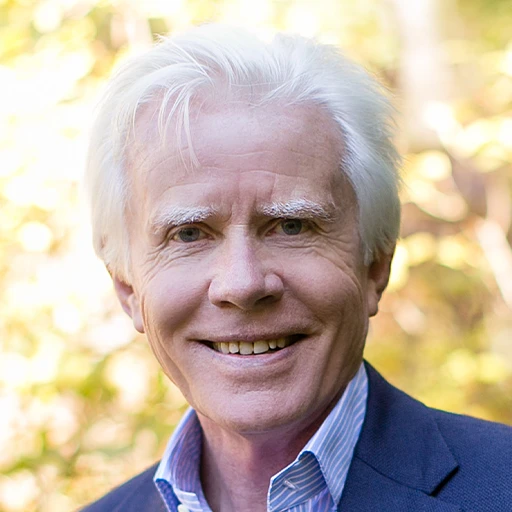
Steve Nygren is the Founder and Managing Partner of Serenbe, a wellness community created as a model to demonstrate that preserving green space interlaced with agriculture, housing and retail is not only economically viable, but the future of community wellbeing.
Steve’s Book, Start In Your Own Backyard https://www.simonandschuster.com/books/Start-in-Your-Own-Backyard/Steve-Nygren/9781637747438
John Shegerian: Do you have a suggestion for a rockstar Impact Podcast guest? Go to impactpodcast.com and just click Be a Guest to recommend someone today. This edition of the Impact Podcast is brought to you by ERI. ERI has a mission to protect people, the planet, and your privacy, and is the largest fully integrated IT and electronics asset disposition provider and cybersecurity-focused hardware destruction company in the United States, and maybe even the world. For more information on how ERI can help your business properly dispose of outdated electronic hardware devices, please visit eridirect.com. This episode of the Impact Podcast is brought to you by Closed Loop Partners. Closed Loop Partners is a leading circular economy investor in the United States with an extensive network of Fortune 500 corporate investors, family offices, institutional investors, industry experts, and impact partners. Closed Loop’s platform spans the arc of capital from venture capital to private equity, bridging gaps and fostering synergies to scale the circular economy. To find Closed Loop Partners, please go to www.closedlooppartners.com.
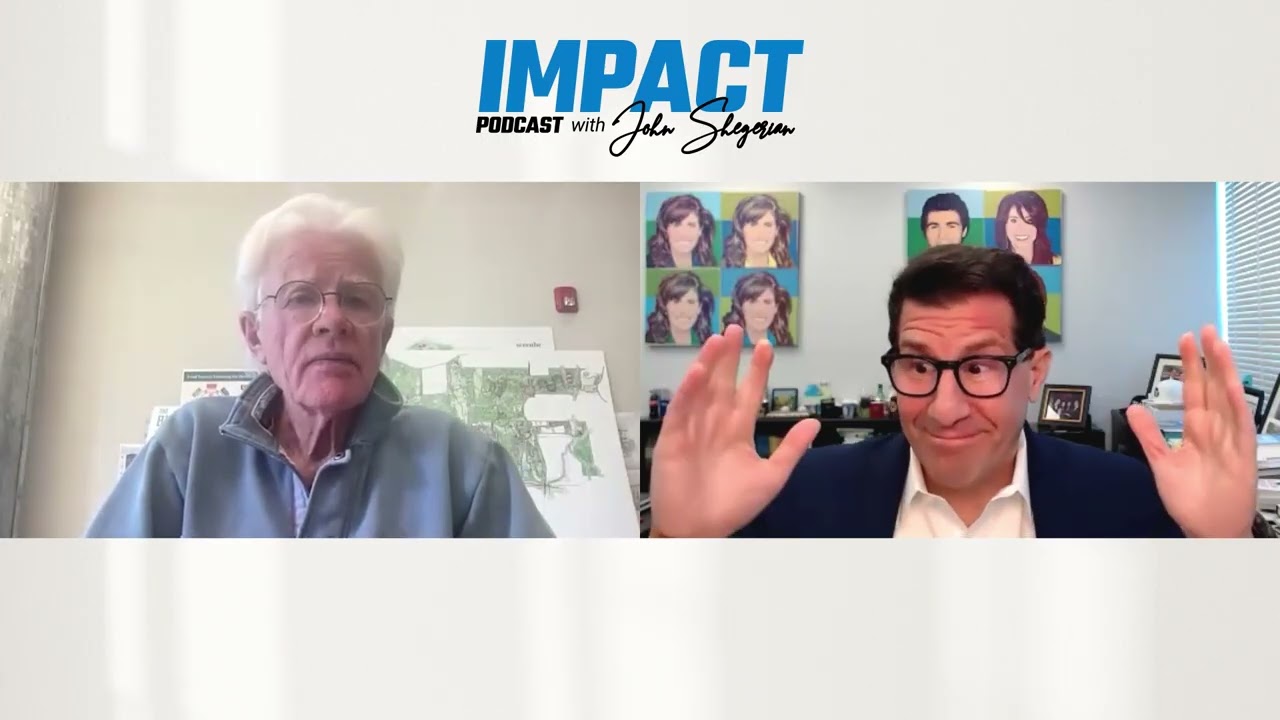
John: Welcome to another edition of the Impact Podcast. I’m John Shegerian, and I’m so honored to have with us today Steve Nygren. He’s the founder and CEO of Serenbe. Welcome, Steve, to the Impact Podcast.
Steve Nygren: Thank you. Looking forward to the conversation.
John: Steve, before we get going and having a longer conversation about Serenbe and about your brand-new book here, which is called Start in Your Own Backyard. I’ve reviewed this book. I love it, and we’re going to talk about the book. I want you to share a little bit about yourself. Where did you grow up, and how did you get on this fascinating and impactful journey that you’re on?
Steve: You never know where the path takes you.
John: It’s true.
Steve: I grew up on a generational farm in Boulder County, Colorado. My ancestors helped settle the Front Range in the 1860s. Two branches from are Swedish. My granddads are 100% Swedish. I grew up connected to the land on the edge of Denver and Boulder. But they’re a very rural area. When I was in first and second grade, I walked to the schoolhouse that my great-grandad had helped build which was a mile from our house facing the Rockies. That is just the life I knew, but I could hardly wait to get away from it. I went to the University of Colorado to become an architect. On that journey a part-time job seduced me into the hospitality industry, and I decided, gosh, that was a lot more fun. I didn’t have to work so hard these poor architectural students that were burning the light all night. I started working part-time for Stouffer’s Food Corporation, and ended up into their management team. Everyone in the Northeast will remember Stouffer’s when it had restaurants and hotels before it was just known as frozen foods.
John: That’s right.
Steve: I was then part of their hotel opening team. Opened the hotel in St. Louis and then Atlanta, and I’d fallen in love with Atlanta. I moved here in ’69, and we opened that hotel in 1972. I knew that I was going to be moved on to the next hotel location, and I wanted to stay in Atlanta. So I stepped off that corporate treadmill and opened my first restaurant called The Pleasant Peasant. That was in February of 1973. It was in Midtown Atlanta, which was an area that had been totally abandoned because the hippies had moved in in the ’60s. When they left in about 19 ’70 it was just empty storefronts. You know that 1900s edge community, on the edge of downtown, a mile from downtown Atlanta. There was a lot of empty buildings, and so I could certainly afford the rent. I was in a building that had built in 1900 and served as a Vick’s Delicatessen for 50 years. But in the previous five years before I leased it, it had been five restaurants in five years. So you can imagine. The area it was just awful. But it had the bones of this wonderful 1900s restaurant that we restored. We opened a restaurant with fresh food, if you can imagine, in a casual atmosphere without reservations. Now, while this we see today, this was very, very new in the early ’70s when you had what we called the fern bars. TGI Fridays and all the fern bars were the hot things. But local food in a casual atmosphere with white linen and waiters and all the trappings but much more casual. We were an instant success. Proceeded later to buy that building. Other restaurants led an effort to relook at the zoning in midtown Atlanta, and that’s now another thing place that’s just one of the most vital square miles in America. But we grew that company to 36 restaurants in eight states. We were known in those early years as I was too naive to need a feasibility study, because I’d go into these transitional areas that it was obvious to me that things were going to take off but no one else’s banks certainly wouldn’t fund them. But developers or I started buying property in these depressed areas. That built this incredible company. Stanley Marcus of Neiman Marcus negotiated my first lease in Washington, D.C. to be next to a Neiman’s and when the development authority wanted to clean up Pennsylvania Avenue between the White House and the Capitol they attracted five restaurant companies, basically paid all of our way and we were one of those five to help transition that section of Pennsylvania Avenue. In those days, you didn’t dare walk after dark in that area.
John: That’s right.
Steve: We had really had a fun time. I was having a fun time until I wasn’t.
John: That’s it. Makes sense.
Steve: Along that journey when our children were small, we bought a historic farm on the edge of Atlanta in 1991. Our kids were three, five, and seven. It was one of those heart decisions. We simply were taking a drive to look at a historic farm that was for sale and I called to see if they had farm animals, and if they’d mind if I pulled in to show my kids farm animals. Of course, anyone with something for sale says, “Come on.” We arrived, they had the Shetland pony saddled and I bought the farm.
John: They were good marketers. They knew what they were doing.
Steve: Man, it’s amazing. I didn’t know why we were doing it, but gee, all this open land this close to Atlanta it seemed like a good real estate play. Besides that was making my three daughters delighted, and so a dad will do anything for that.
John: You’re the hero of the family. You’re the hero.
Steve: We rented the historic house out, and my wife fixed the shack in the back in case we ever wanted to spend the night. I imagined we’d come down a couple Saturday afternoons a month. But lo and behold, it’s where the family wanted to come all the time. We had a great house in Ansley Park, which if anyone who knows Atlanta knows this is a real in-town neighborhood. You could walk to Symphony Hall and the High Museum and all the restaurants on Peachtree or go the other way to the botanical gardens at Piedmont Park. We were never leaving. We had the pool, all these things. The kids wanted to leave all those things money could buy to connect with nature, and doing that for three years was a value shift. And so in ’94, I sold my company, we sold that big house, and we started restoring the old farmhouse. And moved in there in ’94, and that’s where we raised the kids.
John: Was that the beginning of Serenbe?
Steve: Well, my wife named the farm Serenbe. But it was six years later, so 10 years really after we bought the property, that we became concerned about urban sprawl. Now, this was the last affordable and open land in Metro Atlanta. We’re 32 miles from downtown Atlanta and 25 from the airport. But it was, you would say the wrong side of the tracks. All of Atlanta development was going north and this is in the southwestern corridor with no real roads to it. So it was kind of a forgotten quadrant. If you were look at Metro Atlanta and the interstate highways, this would be between the seven and eight on a clock. It’s a quadrant of 40,000 acres that had just remained rural and rural zoning. But developers were starting to come and put contracts in. Of course, I started buying more land, and I realized I couldn’t keep doing that. And so sat back and said, “Okay, what are the issues?” And of course, contacted all the preservation groups. Well, they were busy deploying their money in front of the bulldozers up north that none of them saw the immediate threat because the immediate threat wasn’t here yet, but, man, it was on our way. I sat back and tried to understand why we couldn’t link development entitlement with land preservation. My model was the countryside of England. We had a dear friend who lived over there in this little village between southwest of London called Selborne. We took the kids about every year during my retirement. So I learned a lot about their land laws, their common paths. Each little hamlet had a pub, a grocery, a community life. Why can’t we do this in America? Of course, all the professionals thought I was nuts. I was a naive restaurant guy. But the universities understood what I was talking about. Well, Rocky Mountain Institute came in along with Ray Anderson, one of the great environmentalists. Ray had been a friend of mine for years. And so they assembled 23 thought leaders in September of ’23, and started looking at all these issues. Of course, I was disappointed because there was no one that was my model, my mentor, someone I could hire. They were all experts in all these silos. We had some real serious issues. And so that frustration then Ray sent me around the country and six months later, I said, “There’s gotta be somebody doing this.” He said, “No, that’s why you have to.” All those people were wonderful resources, never sent me a bill and connected me with Phil Tabb, who did his doctorate on the English village system and had just accepted the position of head of architecture at Texas A&M. The architecture department at Tex A&M, the legal and land use at the University of Georgia, and the architect and engineering and land planning at Georgia Tech were my three academic teams that really helped move this forward. We organized conversations with the 500 landowners that owned this 40,000 acres. Through a two-year process that was neighborhood coffees leading to public meetings we changed one of the largest zoning overlays in metro Atlanta’s history in 2002, which linked development with preservation. It moves all development to 30% of the land, and the 70% has to remain in agricultural zoning for farms, pastures, equestrian, recreation, whatever it would be titled. But it moves all the density then to these clustered walkable villages. Which today we understand. 25 years ago this was nuts, but this is what you see all over England.
John: That’s right.
Steve: Why couldn’t we do that here? Then once we got all of the zoning overlays in place we brought transfer development rights in for the state of Georgia. The South didn’t have that. Once the tools were in place, then we broke ground on Serenbe in 2004, and first people started moving in in 2005. Now, we were so different. The real estate community, I tried to get investors, I tried borrowing money. Everybody thought I was nuts, but thank goodness I had bought property in midtown Atlanta in the ’70s, and then when that was rezoned as a walkable community in the ’80s, all that land had appreciated which allowed me to leverage or sell it to really [crosstalk] develop Serenbe.
John: It’s your dream. Your new dream.
Steve: Developed it as a model because we didn’t do it. People had to walk it to see it. In fact, I just ran into someone and their son who was born here and now is headed off to college several [inaudible]. We had people who moved here, they’re aging into their 90s. We are a real model that, that a lot of these issues, this health crisis we have in America, it comes back to our built environment and the lifestyles that we have developed for people to live in or to exist in is better. We’ve zoned the vitality out of where we live. It seems so common sense, but there are no good models. This is why literally you walk on the streets and it feels familiar and unusual at the same time.
John: When did you go from being seen as a wonderful, successful restaurateur businessman with a crazy big idea to, “Wait a second, he’s onto something really big. This is going to be a success.” When did that cross over?
Steve: Well, I’m trying to figure out when that is going to happen. I think we’re still on that journey.
John: Well, I’ve read, and it would be too many to recite, but including the MLK Jr. Beloved Community Environmental Justice Award, and the Global Wellness Institute’s Leader Innovation Award, and South Face’s Argon Award. You’ve won more awards than I have fingers on my hand, and so has Serenbe won its own awards. So I think that recognition has come. But when did it really accelerate to sort of escape velocity, where you knew you were onto something that was really going to be able to scale up and take on a life of its own?
Steve: Well, it continues. We have certainly gotten awards, and awards for people that are really understanding, whether it’s environmental issues, health issues, inclusion. Just those groups you named. We got the awards because we’re so unique. Now, what I have not gotten is a major investor or loan that help propel this in meaningful ways. This is why I say the traditional systems that propel and advance these things still has not recognized me. They still see me as a little bit of an environmental hospitality guy. Now, in the housing area, people can now get a loan, we can build any price home here that’s imaginable. Because we’re our own comp if you will.
John: Got it.
Steve: But we have several things on the drawing boards, hotels, more office buildings. Right now the mixed-use buildings that are here, and we have some great ones, and offices, and medical. We’ve got everything here. We basically have built that ourselves. The school on campus, a huge set up as a nonprofit. That money was all raised within the community. There’s a lot of really things exciting that are happening, but it’s still small enough that we’re not seen as a major developer yet. We’re still a niche developer.
John: How did your wife come up with the name Serenbe?
Steve: We were on a drive and thinking about naming it, and we were in the rural country roads of Georgia. Then suddenly came to her that when we slowed down to simply be, we found the serenity we were looking for.
John: There you go, serenity in being. I love it. I’m on an elevator with you. You’re going to the 50th floor, I’m going to the 40th, and we introduce ourselves to each other, and you tell me about Serenbe. In that 60-second period, how would you describe Serenbe to the uninitiated?
Steve: It is a community that preserves a major part of nature, but we’re on the edge of a major city. The way we have developed it, by connecting people to one another and to nature, you can literally feel the joy. You see the free-range kids and uncaged elders everywhere, and you realize how that has disappeared from where we live today.
And so we’re a demonstration of what joy can feel like by just being on the street.
John: I love it. Give or take, how many people are currently residing at Serenbe?
Steve: We have about 1,400. With people moving in every week. We’re building and expanding houses, so this is expanding.
John: So exciting.
Steve: It’s what I call global citizens, because we have the airport just down the road. So while we feel remote, we’re really a very urban feel when you’re here on the streets. We have incredible line of restaurants. People drive in from all over for the restaurants. The school, kids are walking to school. 300 full-time kids living here and not one reported sign of asthma is just one statistic on our health. That’s statistically impossible in the United States today. Several reasons that we’ve been able to do that. Our art galleries health we have from the traditional family practice and pediatricians and dentists all the way to alternative Chinese medicine. We have the nation’s first non-chemical pharmacy, Alchemy. So we are now attracting leaders that want to make a difference and have dreams for businesses they could. We are now that platform that they can come to. And so we have over 30, what you would call mom and pop niche businesses that have all located here, that make the lifestyle here, this wonderful village.
John: That’s so wonderful. You’re really attracting a whole new generation of pioneers.
Steve: That’s correct.
John: That’s wonderful. There’s a word. It’s right now over your what would be my left shoulder, but it’s your right shoulder. When I was reading up on Serenbe, it’s a word I wasn’t familiar with. Biophilic.
Steve: That’s right.
John: Talk to me about what does a biophilic wellness community mean?
Steve: Well, as we started as I mentioned everyone thought we were completely nuts. We just put my head down. I stopped going to conferences or meetings because everyone saw me as this kook. Then in the midst of the recession, a lot of the analysts started studying the first people to walk out and it was walkable and environmental communities were the first to walk out of the recession back in 2009 and ’10 and we were one of those. And so suddenly some of the professionals started coming to see what we were about.
It was the first time we’d had interest. Well, many people arrived thinking we’re an environmental community because Urban Land had published a hard book of the 10 top environmental communities in the country. Well, we were the only one with density. They were all Braves Island, all these coastal, these great preserved developments. Then we were one of the first what you would call agrihoods. Kevin Sacks of The New York Times came and did a story on we put farms right next to housings, and that was unheard of back in 2004 and ’05. He termed it an agrihood, and that’s kind of stuck. This was an agrihood movement and we’re kind of the leader of that. And so people were expecting the farm. Well, we have the farm, but we have all of this. Then because of our density, people identified as new urbanism. Well, new urbanism we’re not necessarily preservationists or environmentalists. People came arriving, looking for one of those three things with the expectations, and while it was a piece of it, it certainly wasn’t that. I was searching, “Okay, clearly people want a tagline. What’s our tagline?”
John: Yes.
Steve: “Who are we?” In the original 2000 charrette, the two-day charrette with Rocky Mountain Institute, Bill Browning had mentioned biophilic design. That this really made sense. That was kind of this weird word I didn’t understand and I had to go look it up. I didn’t quite know how to spell it, and it kinda stuck there in my mind. Then I was on a panel, I don’t know, this is now 12, 13 years ago. With Tim Beatley, who is at the university UVA, and teaches a whole course on biophilic design and biophilic cities. As I was sitting through that presentation, I used to follow him, and I thought, my God [crosstalk]
John: That’s it.
Steve: that describes who we are, which is really a connection to nature. We’re all part of that ecosystem that depends on one another. That’s exactly what Serenbe. Even though it’s sort of a word that a lot of people don’t know and moving forward, it really describes what we are. And so then later we formed the Biophilic Institute. We really have now a board of really great thought leaders. A lot from academia and some policymakers and from corporate America too. So this is really to advance and familiarize people with what the principles of biophilic design as it applies to the built environment.
John: That’s so wonderful. You mentioned 1,400 people right now are living on the property. How big is the property today in terms of acreage or square miles?
Steve: Well, you have to think, and I always put it in context because if you read about developers like in California forward, I think, or Elon Musk Texas.
John: Yes.
Steve: You have one person buying land and then trying to entitle it. What we did is we brought 500 landowners together to rezone 40,000 acres, and now we’ve used Serenbe to demonstrate what that is. Now, we are the first and the only in the last 20 years who have actually broken ground, so this is why it’s important we do that. But we stopped traditional development from happening.
John: Interesting.
Steve: Now, literally we’re getting developers from around the world who are entitled to property here, so you’re going to see in the next five years a lot change because all of a sudden people understand what we’re doing and this is now tomorrow’s market. You look at the baby boomers they’re now gravitating to walkable communities. Post-pandemic we understand the importance of the connection to nature. You look at all of our young people born in this century, they could care less about having a car, and so they’re gravitating to walkable communities.
John: That’s right.
Steve: Suddenly now all of your real estate analysts realize that this is the model of the future. Now your big developers are starting to recognize our zoning and coming in, and that will all lead to more recognition for big developers as this happens. It’s all about to change in the next five years.
John: Interesting.
Steve: That’s right. So Serenbe today, we own 2,000 of those 40,000 acres. Now we’ll save 70% of it, so just think about that. We have only disturbed less than 300 acres for this walkable pods of communities and each pod has a different retail focus. So one focused on the arts, and you’ll see throughout then and it also each of these set the tone for everywhere else. So all of our streetlights are commissioned by an artist. Interesting, I don’t know if you have a lot of young people listening, but a lot of young people one of your influencers is Rob Rauch. Well, it’s his dad who designed all our streetlights.
John: No kidding.
Steve: We’ve always had these interesting people. Then we have an institute and every house sold or resold pays a 1% transfer fee into that institute, so we have all art programming. So we put over a million dollars into art programming from that transfer fee, and then that allows them to leverage that for a lot of other funding. So we have this incredible art coming in from all over the world. We have a resident art program, so we have artists living here 52 weeks a year. That’s really happened. Then the next community is focused on agriculture, and so that’s where the farms are, that’s where the farmers market is the general store, all those things. Each of these communities have their own coffee shop and their own retail and their own restaurants and what have you. These are all walkable, very [crosstalk]
John: The diversity makes it interesting.
Steve: The architecture kind of changes with it. The art community, the architecture, and the commercial area. Houses can be a little bit, is like the 1920s and ’30s when the art movement was coming through. Then in Grange, the rural, it’s kind of that mostly one story from 1900s, kind of that rural look. But then the five-story condo building would resemble one of the old cotton storage buildings. It’s like a restored cotton building. Then the health and wellness, the architecture foundation there is from Scandinavia, both contemporary and historic. There we have the health restaurants and all the docs and the gyms and the Pilates and cold press juices and two more coffee shops.
John: All the longevity stuff you’d want to find is right there.
Steve: That’s right. Now the community we’re developing now is called Spello, and it’s around a four-acre Victorian park with a focus on play. So a real connection with health is play, that we forget it is important at every age.
John: This is amazing. Do you have one master fire department and police department for the whole community?
Steve: For the entire city.
John: The whole city.
Steve: The 40,000 acres after the zoning, we had so empowered a community to take control of their own destiny. That then we filed the state legislature and now we are our own city of Chatt Hills. So all the zoning, the police, fire, public works, parks. We’re working with Trust for Public Land now on the Chattahoochee River runs through the edge of our city, and we’re working with them on their Riverlands Project. So we’ll be able to take a bike along the river right into the middle of Atlanta with the plans that are being set up now. This is, we are so connected to metro Atlanta, yet we have this wonderful uh European. It would be like a lot of the hamlets and villages you see on the edge of London.
John: Very much.
Steve: You get out of London, you’re definitely in country. That’s what this is. You realize how unique it is because most metro areas the buildings follow the roads out of town and there’s no break. This is the largest land mass being saved in an urban area, especially near an airport, in the United States we know, and maybe in the world.
John: It’s incredible. So people come in from around the world to study it now.
Steve: You’re going to learn a lot about, it’s now Preserve Life out of India. They’ll be opening Preserve Life, which is the first wellness retreat for corporate citizens. It’s looking at corporations around the world because they’re 20 minutes from the airport. You have Dunaway Gardens, which they’re restoring. They’re out of Los Angeles. The move to these people all now living in this area moved here and decided to stay about, and so now they’re restoring this 1920s art center that had been overgrowing for 40 years. They have pictures of Walt Disney and his brother there back in the ’20s and ’30s, and Esther Merman and all these great people of that time. You see the agriculture, health and wellness arts are sort of in the DNA of the dirt here, and we’re just bringing it to life because we’re preserving it from traditional graded development. This entire landscape, not only as you physically see in the nature but there’s actually this DNA of stewardship, creativity that’s actually been here for maybe centuries.
When we did the archeological dig they found a little tool and they carbon tested at 9,000 years old, and they believe it was agrarian. The native people that were here were not roaming. They were really an agrarian established area. It’s an area here in about a 10 square miles that’s never had a conflict, whether it was the Trail of Tears or the Civil War. There’s something about this area that’s said and so I see myself as that steward who has come for this period of time when it was under threat for development. To actually come up with a way that we could allow development with major preservation.
John: It’s a whole community.
Steve: We’re not putting a fence around it, and we’re doing just the reverse. We’re creating a place inviting people in to observe, participate, or make it part of their life.
John: It’s so funny you brought up Walt Disney as I’m talking with you, and as I’m listening with you, to you, I’m thinking, “This, Steve, is the modern-day Walt Disney.” This is real. Really, I feel you have such a grand vision and joy that it’s brought you and to the people who live there. It’s incredible. You mentioned the 300 children that have remarkably, and have beaten the odds of the statistics, who don’t have asthma. Talk about what other tangible benefits you could point to that living in Serenbe has created for not only the community and the land, as you said as great stewards of that property, but also personally for people in terms of all the other nonsense that, as you said, we’ve over-zoned and overstressed ourselves with all this over-zoning in other parts of America. What are some of the benefits that you’ve seen your residents enjoy?
Steve: So for instance, while we have the statistics on the kids there may be elders who have moved here because they can breathe here and they can’t breathe in Metro Atlanta. So this is true. We don’t allow lawns because we don’t allow chemicals, and so you can’t have a nice lawn without a chemical. Nobody notices there are no lawns. All of a sudden it’s, “What do you mean?” It’s fresh air coming in. So there’s several things that contribute to it. The food we eat, you do not see obesity. People are walking and they’re exposed to fresh food. One woman stopped me and she says, “I was on diets for 20 years, and I finally gave it up because it was controlling my life. Every time I went out I was counting calories, figuring out if that diet allowed me to eat whatever was being served. And finally 10 years ago I decided I’m just going to be a little heavy.” She said, “We moved here about a year ago,” and she says, “Last month I borrowed somebody’s scales because my clothes were all getting loose.” She says, “I’ve lost 16 pounds without thinking about it.” She says, “I’m now walking to dinner. I’m walking to everything. I’m walking to friend’s house.” She says, “I’m only exposed to fresh food. If I want fast foods, I have to get in a car and go find it. Which is the reverse of where we lived,” she says, “Fast food was totally available and easy, and I had to really search for the fresh food.” We have our farmers and we’re creating an entire ag community. So it’s not just the farms of Serenbe, but now within this greater area, so at our farmers markets. So we know the person growing our beef, growing our pork, our chickens making our cheeses, our butter growing our vegetables. This wasn’t unusual back when, but unheard of today.
John: You’re right.
Steve: We know that we’re all eating fresh food that does not have preservatives in it.
John: This radical transparency and interconnectedness that we’ve totally lost in the general population of this country, and now I know the guy, I know the butcher. I know the dairy farmer. These are friends of mine. They’re not just commercially available in my community, I actually know these people.
Steve: This is available in most communities today if you can search it out. It’s natural. They’re just here. They come to us or they’re either here or they come to us.
John: It’s incredible.
Steve: Our farm is not just our farm. Like, in all of our crosswalks are blueberry bushes and there are banks of figs, so we have edible landscaping throughout the community. So all of our kids understand seasonality of food. These are just simple things that anybody could do.
John: But, again, you’re a humble man, Steve, and anyone could do it, maybe, but the truth of the matter is you have the vision and you put this together. Now, you’re an architect by education and trade, and you’re also now an urban planner really. How did you come up with the right balance and mix of figuring out. I know how you figured out all the little towns that was from the English countryside, makes total sense, but when it comes down to community design and the impact that that has, that it could have and it does have on all of us in terms of mental health, social cohesion, which has become more important than ever before, and also climate resilience, which we know climate change is in the news every day. How did you come up with how to make this work and find the right balance to make it work from a community design perspective?
Steve: Now first of all, know that I was a architectural dreamer and I never became an architect. I was never that way proficient. I jumped over to be a busboy instead.
John: I got it.
Steve: [crosstalk] that.
John: That’s fair.
Steve: Number one, you’ve heard the land plan and the English influence.
John: Yes.
Steve: When I was in Atlanta, I was on many art boards, and I saw the artists struggle. We always had to raise X money or this organization was not going to survive, and that’s no way for creative people. You look at great places through civilizations, every place we visited in Europe, there was either an art patron or a church, some religious. There was some patron. Well, how could we make that happen today? And so that’s when I started searching for a tool, and came up with the transfer fee. I’d found a little community that was doing that for preservation, about a quarter percent. And I said, “Well, we’ll do 1% to make it as really meaningful.” Of course everybody said, “Yeah, no one will buy at that.” We’ve never had a pushback. If it’s a raw piece of land where you’re going to build a house, it’s 3%. Then this continues every time it resells. And no matter how many pieces of property you buy here, you’re going to pay that 1%. I understood from a basic just experience that art is how you can communicate to people through their heart. We have lost that. In some of the tough conversations we’ve had here we’ve ended up really turning it into art conversations to really be able to talk to people from a different level. Growing up on a farm and knowing the importance of fresh food, putting a farm. This just even though nobody was putting it next to housing because the feeling that it was smelly. Nobody wanted to live next to a stinky farm. Well, organic farms aren’t smelly. That was natural. As we look at how dysfunctional in the health crisis, we had to really address the issue of health especially for our youth and our elders. These are the two bookends that have really not been addressed in a meaningful, respectful way. Because of my own kids, and because I knew five of my great-grandparents, and of course all my grandparents, I really understood what aging naturally meant. In the 1950s we didn’t have these fenced compounds that resemble more like prisons than they do places to prosper. I realized health and wellness it wasn’t a lot of things being studied by your health institutions, it was basically how we lived and how we connected to each other and to the basic ingredients that fed our bodies with the food, that fed our souls with the art. These were just sitting down about thinking about where we had loved as we traveled, what were the components of those. Once I realized I was going to be a developer for those two years, we went back to some of my favorite places to take pictures. I really discovered a lot of the places in America that I’d kind of found interesting that were developments, I came out with very few pictures. There wasn’t a range. There’s such big design review boards but it’s sort of a narrow. But places created over centuries had a lot more mixed architecture, but placement and massing was important. As I went back and studied the places that I had just intuitively liked, I tried to figure out what it was about them that made them places I wanted to go back to and that had really prospered through time. That was just a really intuitive study of this. Then luckily I was able to bring, like, Phil Tabb, who did his doctorate on the English village system. He totally understood everything I was talking about. We were able to attract architects, people that were trying to deal with the agricultural movement. Now, now we’re kind of a think tank with national organizations all headquartered here in some way. We knew all those people, and we pulled them all close to us. One of the great things about being a hospitality guy you know who to invite to your table and if you have the right mix that come, it’s a successful evening. I’ve done the same with development.
John: That’s right.
Steve: I just know who to invite to the table.
John: Well, I love it. For our listeners and viewers who’ve just joined us, we’ve got Steve Nygren with us today. He’s the founder and CEO of Serenbe.You can find Steve and his wonderful community at serenbe.com. You don’t have to write that down or stop driving your car. We’re going to have it in the show notes. He’s also the author of this wonderful book that we’re going to get to talk about in a little while, Start In Your Own Backyard. It’s a wonderful book. I’ve reviewed it already. Steve, you bring up one of the key, it sounds like trademarks of what your brilliance is and your vision’s all about is diversity. Diversity of the pods of the little communities that you’ve created that all interrelate with one another, and you can walk from one to the other. But the other thing is, you just mentioned multi-generational living. I have friends that have massive careers that they give up in a different country to move back to China to take care of their loving parents. It seems like that’s a art form that we’ve absolutely walked away from here in this country, where we’ve created old age homes and other places to put the elderly out of sight and out of mind. Talk a little bit about the diversity and the benefits and the critical values of multi-generational living that you’ve created at Serenbe.
Steve: A lot deals with the physical plant. So we have one street in our health and wellness community where we are hoping to break ground here in the next few months on a seven-acre campus focused on aging in place. It will be unique in the fact that it does not have age restrictions. It’s purely a place you would move if you had a health issue. It has all the trappings that you might find in some of your more institutional compounds that have all these rules and regulations. But instead, we have created a place where independent operators come in, and so it’s a village approach located on the street with 20-some other mom-and-pop practitioners. It will have a concierge and transportation and food credits. But instead of having the dining rooms within the compounds, you’ll have a shuttle that takes you to any of the restaurants in the community. It just makes it as normal into age in place as it would. It’s across the street from the school and the pool. There are shortcuts through the campus for the kids. So the sound of children’s laughter brings a smile that you don’t normally see.
John: Everybody’s face.
Steve: We see now what’s happening with people that maybe do not have grandchildren or they’re not living close, suddenly you’ll see them stepping in to be that support system, whether it’s reading to kids, whether it’s stepping in to help in some ways. And the friendships that jump generations that we’d lose if we don’t have our seniors. And so man, people that are moving into elderhood have time to listen and talk to these kids and even mentor them. Meanwhile now, my nine-year-old grandson does all my electronics and programming for me.
He’s into that. He intuitively knows things that would take me maybe 20 minutes to figure out, and he just intuitively flips his fingers and knows where to find everything. There are such benefits for these bookends of our society to know each other and to interact whether you’re related or not related. You just see it, you feel it here in just the way we have physically set the place up.
John: I have to ask the question, does your grandson live at Serenbe?
Steve: Seven grandchildren all live here. I see them. I have three daughters. They have all returned with their northern husbands, and they’re all right here on the property. They walk to school. Their friends are here. Their pediatrician’s here. It’s rare that they are in a car seat. So for parents listening who have wrestled with car seats and the hassle, they either walk, bike, take a scooter or a golf cart to whatever’s going on. They’re not in cars.
John: Steve, you’ve done a lot of things right in life, obviously. But boy, I’ll tell you what, you really hit the jackpot on your vision because for you to have your three daughters and your seven grandchildren in your same community that’s you really did hit the jackpot in life.
Steve: Here’s what’s exciting. People that see it. I have a cousin who’s in early dementia. She’s a little bit older than I am, and her daughter’s now moving her here because this is a place she can feel natural. She had a townhouse part-time here back when we first started. I have another cousin whose son is moving here with his wife and their children for the education and the connection for kids. So not only have my daughters returned, the connections to my broader family are coming, and here’s a perfect example. One, because of how we treat elders and the other because the atmosphere for kids.
John: The bookends of life. You put the bookends of life together again and everything makes sense. You’ve really created a circular community. The whole focus now is moving us from the linear consumer economies to the circular economy. You’ve created a circular community. That’s beautiful.
Steve: The thing I do not understand is we’re in a health crisis. We’re using all of our Earth’s resources.
John: 100%.
Steve: Why aren’t more people asking why? Why are we willing to put up with this, put our heads down, and just keep moving forward? My generation, the baby boom generation, we have lived in a period that it’s always worked out. I can understand this tendency to shrug, push back, have a drink, and figure it’s going to be okay. People born in this century have been born into a fragile atmosphere. They are going to be much more active, and they are asking the questions. My challenge to the baby boom generation, one of the reasons I wrote the book, is how can we join these young people in addressing some of this. The baby boomers we were going to address everything with sex drugs, and rock and rolls in the ’60s, and that didn’t work out too well. The same generation, sometimes the same people, became the greed generation of the ’90s. This is the generation that has lived the extremes, the only one I know of, the extremes of that pendulum and I hope in elderhood we can swing back to common stabilization and work with these young people to figure out these things for both our human health and our global health.
John: You’re right. The days of, as you point out, sex, drugs, and rock and roll didn’t work out too good and neither did greed is good from the movie Wall Street, and how the world was set up back then. Hopefully, this is the beginning, what you’ve created is a beginning of a new revolution in terms of how to live well. You wrote this fantastic book, Start In Your Own Backyard. Here it is, and in our show notes there’ll be links to this book. You can buy it on amazon.com, of course, and any other great bookstore or great book online opportunity. In it you propose radical common sense is the right approach to take in terms of rebuilding our communities from the ground up, starting locally. Talk a little bit about what you want readers to come away from when they read this wonderful book.
Steve: Well so many times people feel so overwhelmed with whatever the issues are that they don’t know where to begin. Many times we expect big government, big corporations, big somebody to fix it for us. I don’t know any important movement that’s ever happened on that level. It’s usually been the consumers and the people who care. I often point to the fact I never expected to live in a smoke-free environment. That was not the corporations and government. That was a group of airline stewardesses decided they did not want to be locked into this tube, and convinced the airlines to take the back five rows and make them non-smoking. They were the ones that would be last. I was in the restaurant business when the national restaurant suggested we take the back five tables just to see what happened because there was some interest in this. Well, guess what? It’s where everyone wanted to go, even though they were the worst seats or the worst tables. Everyone expanded until now, it’s everything.
John: It’s all free.
Steve: That was a grassroots movement. This is why if we just start in our own backyard, don’t wait for somebody else. What are the issues that you see that’s really affecting you, your family, your loved ones, your community? And begin, whether it’s just to deal with your own what your literal backyard is. I define a backyard as any place you can have influence. Is that your neighborhood? Do you organize your HOA? Do you run for city council? School district. For a few it’s a state or a global issue. But we need everyone to realize that one person can make a difference.
John: It’s true.
Steve: This is why I really wrote the book. I did not have the background, the interest maybe, but the background to do anything that I did, but I had the curiosity and interest to change where we lived. I didn’t set out to have an example. I just wanted to save our farm from rural sprawl. Then once I realized the only way to do that is show a demonstration on how development could link to preservation, then once I realized I was going to be developer, then I started becoming curious about, well, what might that mean to where I could have a different results than what we’ve been seeing over the last several decades? We set the book up to be sort of a workbook to where you don’t have to read it cover to cover. As you know you can see what’s interest you. We have QR codes that helps take you to programs or other places. So it can really be a workbook, whether it’s for book clubs, whether it’s for an HOA, whether it’s maybe for an academic classroom studying planning or human health, what have you. We see it having a life more than just a, it’s not a novel about what we’ve done. It’s a workbook on how we did it, and some ideas of how you could do it in your own backyard.
John: Steve, if I wanted to come visit you in Serenbe, is there a hotel on your property?
Steve: Thank you for asking. The old farmhouse has converted and expanded, and so now that is a Country Inn. We have many Airbnbs within the community or within the bigger rural landscape. Some you can go on that you might be on a little sheep farm. There’s lots of opportunities [crosstalk] to stay with us.
John: I love it.
Steve: Great restaurants, great arts performances, whether music, art shows. There’s vitality happening all the time. It’s great fun.
John: Steve, you and I get to be part of a generation now that when we were kids, retirement was 62. It was mandatory. You get a watch, and they put you out to pasture. Where now there’s a new generation of leaders, brilliant people, visionaries like you. Warren Buffett’s 95 now. His partner passed away a month before his 100th birthday, and he was working two days before his 100th birthday. Charlie Munger. Then you have other legends like Larry Ellison and all these other great leaders. You sound like you’re having more fun than ever before, and that the best is yet to come. Talk to us and share with our listeners and viewers a little bit about, what’s yet to come in the next three to five years? I know you’ve mentioned it during the show, but talk about some of one or two or three big things that are about to come to fruition that you’ve been hoping for years, and as you’ve curated this wonderful community, what’s about to come in the next three to five years?
Steve: Well, I think there’s greater and greater focus on what we’re doing that will hopefully inspire other people from all over. We have created a consulting team under Nygren Placemaking. We’re helping people literally from around the world. I just got back two weeks ago from Istanbul. Three years ago they brought their team here, and they totally changed their big design. We’re the biggest developers in Turkey. This fall I’m headed to Australia for a 10-day tour with the Urban Land Institute, and they have brought various teams here looking. We’re consulting probably in about 20 states. There’s a new interest in doing these. The important thing we go in, and it’s not that there’s a Serenbe model or formula that we try to impose, is to understand what both the community and the natural landscape of the community would be like. We believe in working with nature rather than imposing a plan on nature, which is a very unique way to go.
John: That’s brilliant[?].
Steve: We’re trying to share our story and then educate other people, and we’re going to see more and more models of this coming out. Plus, we have a lot of things we’re hoping to do to both have the hotels and aging in place, and more office building. We’re 25 minutes from the world’s busiest, most connected airport. We’re a perfect place for a corporate headquarters of any company that truly wants to not only have a certified building, but be in a certified community. And to where everyone is walking and the talk, if you will. I think all of that is on the verge of happening. We already see these global people are coming. As these are announced, these various global things in our greater Chattahoochee Hills this is going to become more of a global known place in the decades ahead. You have peeked behind the curtain. Now, you just have to come see what we’re talking about.
John: I’m coming to see it. I gotta just tell you this. It’s not only a delight to have share this time with you today, and you’re the graciousness and generosity of you to share it with us. But one of the guys who came on my show early to sort of validate the show 17 years ago and get us a little name so we could attract better and more guests like you, was Ray Anderson. So to have you on and know that you were great friends with Ray and he was such a delight and so good to me and so inspirational, it just totally makes sense. There’s so much goodness going down in Georgia that no one knows about, that we gotta all hear about more and more and this is just another great example. You are a great representation, another great example of how much great work is coming out of Georgia. And Ray’s work has been, of course copied by so many companies and so many corporations, so he was a visionary, inspirational person. You’re the same.
Steve: Well, he wa- he was a great mentor of mine, and his stepson godfathered my 38-year-old daughter, so you can tell how long I’ve known Ray. It was before he ever had his spear in the chest, as he says, and so many wonderful times. If you look a lot of the early documentaries, that’s all on the grounds of Serenbe from Ray. Of course, his 50th and 60th birthdays were all held right here at Serenbe, and Ray Day Celebrate his life. He’s always here. That’s very interesting. That’s a full circle.
John: It’s a full circle. That was like 17 or 16 years ago. I’m going to share this. My wife is traveling on business now, but when she’s back I’m going to share what we’ve done today, and all this, and we’re going to look forward to coming down and staying in that wonderful property of yours in the country inn that you’ve set up there. We’re very excited. We’re going to come on down and visit hopefully this year. Steve, first of all, thank you for, like I said earlier, the generosity and graciousness of spending this hour or so with us today. For our listeners and viewers, to find Serenbe you can go to www.serenbe.com. It will be in the show notes. Also, I encourage all of you to buy this wonderful new book, Starting Your Own Backyard: Transforming Where We Live with Radical Common Sense. Steve Nygren, you’re not only a wonderful human being and really fun to interview, but thank you for making the world a better place.
Steve: Well, thank you for sharing the story with your backyard, which is all your listeners.
Outro: This edition of the Impact Podcast is brought to you by Engage. Engage is a digital booking platform revolutionizing the talent booking industry. With thousands of athletes, celebrities, entrepreneurs, and business leaders, Engage is the go-to spot for booking talent for speeches, custom experiences, live streams, and much more. For more information on Engage or to book talent today, visit letsengage.com. This edition of the Impact Podcast is brought to you by ERI. ERI has a mission to protect people, the planet, and your privacy, and is the largest fully integrated IT and electronics asset disposition provider and cybersecurity-focused hardware destruction company in the United States, and maybe even the world. For more information on how ERI can help your business properly dispose of outdated electronic hardware devices, please visit eridirect.com.
 Spotify
 Apple Podcasts
 Amazon Music
 iHeartRadio
 YouTube
 YouTube Music
 Audible
 Pandora