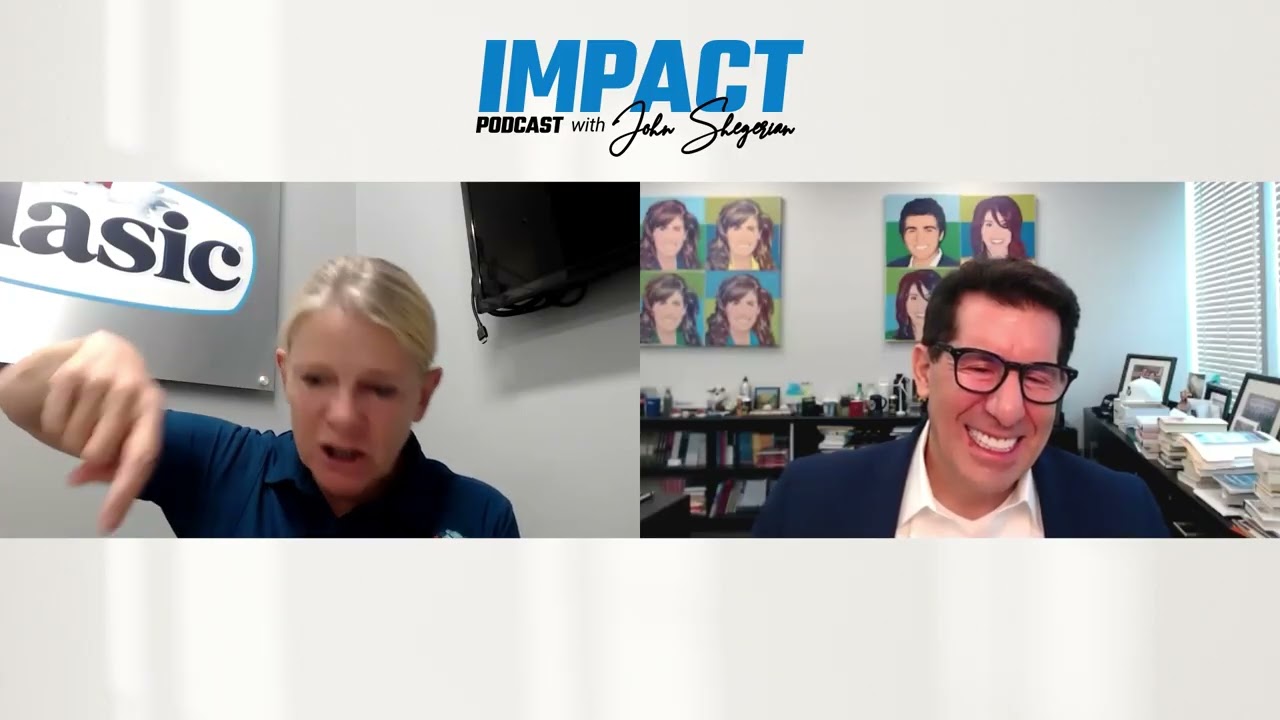
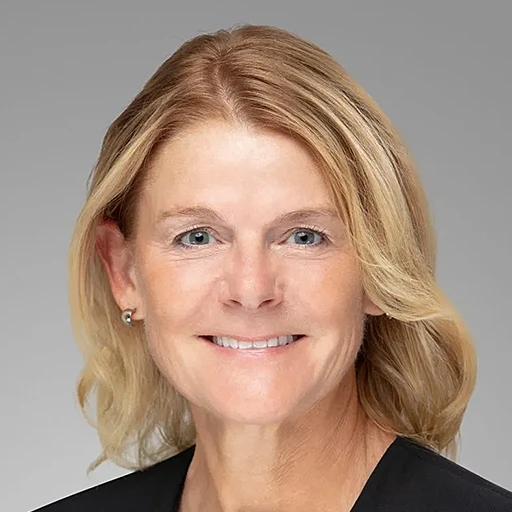
Christine Daugherty is a distinguished Global Sustainability Leader, renowned for her expertise in developing and executing strategic plans, managing complex topics, and delivering efficient and profitable results. As Vice President and Chief Sustainability Officer at Conagra Brands, Christine leads the company’s sustainability strategy, aligning environmental stewardship with business performance to drive long-term value creation.
Fiscal 2025 sustainability report: Conagra Brands Releases Fiscal 2025 Citizenship Report, Detailing Progress Across Key Sustainability Priorities | Conagra Brands
John Shegerian: Get the latest Impact Podcast right into your inbox each week. Subscribe by entering your email address at impactpodcast.com to make sure you never miss an interview. This edition of the Impact Podcast is brought to you by ERI. ERI has a mission to protect people, the planet, and your privacy and is the largest fully integrated IT and electronics asset disposition provider and cybersecurity-focused hardware destruction company in the United States and maybe even the world. For more information on how ERI can help your business properly dispose of outdated electronic hardware devices, please visit eridirect.com. This episode of the Impact Podcast is brought to you by Closed Loop Partners. Closed Loop Partners is a leading circular economy investor in the United States with an extensive network of Fortune 500 corporate investors, family offices, institutional investors, industry experts, and impact partners. Closed Loop’s platform spans the arc of capital from venture capital to private equity, bridging gaps and fostering synergies to scale the circular economy. To find Closed Loop Partners, please go to www.closedlooppartners.com.
John: Welcome to another edition of the Impact Podcast. I’m John Shegerian, and I’m so excited and honored to have with us today, Christine Daugherty. She’s a PhD and a JD, but a lot more than that. She’s a vice president and chief sustainability officer at Conagra Brands. Welcome, Christine, to the Impact Podcast.
Christine Daugherty: Oh, thank you, John. I’m super excited to be here.
John: I’m excited to have you. But first, you and I just had such a good giggle. Tell me where you are today. I know you travel around a lot because you have a lot of offices across the country. Today, tell me where you are because in the back, I see this classic brand plastic. Tell me where you are today.
Christine: Yeah, so I am in Imlay City. Imlay City is one of our operations that makes the Vlasic Pickles. And so I am here today with our team looking at our water use in our facility, looking at the agricultural side. This is Pickle Palace, and so it’s a wonderful place here in Michigan, and it’s a beautiful day. So I’m excited to be here at Pickle Palace and speaking with you.
John: I’m in Fresno, California. And I love Fresno, California, but it sounds like a fun… I wish I was with you at Pickle Palace, though. I got to tell you, I wish we were doing this in person. You have such a fascinating and important back history. Talk a little bit about where you grew up and how you got on this really important journey that you’re on right now.
Christine: Yeah. So I grew up in the Midwest, born and raised in Iowa. You know, was not on a farm per se, but lived in a farming community, so agriculture has always been kind of my sweet spot. And so as I was going through undergraduate school, I thought, “Wow, I’m going to be a veterinarian.” That’s what you do in the Midwest. You either go into farming or you become a veterinarian. Well, I went to undergraduate in a small liberal arts school, Pella, Iowa Central College. You know, and others know Pella for Pella windows and doors.
John: Right.
Christine: They are made there. Well, so as I’m a young undergraduate thinking I’m going to go to vet school, there was an opportunity that a professor at the University of Hawaii did an exchange program at our university. And so he came over, a professor from Central went over to Hawaii. And during the course of the biology season, he said, “Hey, we have some opportunities for students to come for the summer to Hawaii and learn some things at our university.” “Sign me up.” I wasn’t necessarily thinking I was going to go into agriculture, but when you can have an opportunity to go to Hawaii over the winter from Iowa, go.
John: Go. Right.
Christine: And so did that, and that was where I would say was my first kind of right turn, left turn, pivot point, whatever you want to call it. Went there, just was fascinated with agriculture, got to do some work with papayas. Hawaii is a wonderful place for plants and stuff. Came back and decided probably didn’t want to be a veterinarian, so continued on, but went on to Iowa State and got a master’s degree in plant sciences, plant pathology. So that was kind of the first pivot of mine is to go, “I’m kind of interested in this. Didn’t know what I was going to do with it, but I was interested.”
John: Yeah. Was mom and dad always saying, “Hey, education is the way here no matter what you want to be.” Were they the ones that were inspiring on education, or was it other people in your life as well that were focusing you on, “Doesn’t really what you’re choosing to be. We just want you to be super educated for that position”?
Christine: No, I would say where I got some guidance was certainly parents, yes. But one of the things that kind of drove me to additional degrees was—secret—I didn’t have a job. And so then if you don’t have a job, my parents are like, “Okay, you either get a job, or you go stay in school or whatever you need to do, but we’re not going to just have you sit around the house and do nothing.”
John: Right.
Christine: So that was part of the whole thing of, okay, I didn’t have a job, but I was able to go to graduate school. Graduate students get paid a small amount of money to do research and stuff like that. So it kept me interested, kept mom, dad from getting too grouchy that I didn’t have a job because I was paying for my own rent.
John: Right.
Christine: But from there, finished the Iowa State and did not have a job, but met another individual who knew another individual at Louisiana State University, LSU and Baton Rouge. And she was working on a funded project from NASA.
John: Huh.
Christine: NASA space station. Cool. That sounds exciting. So I applied to the program there in Baton Rouge, got accepted and drove down to Baton Rouge. That again, I think folks need to understand, jump off the high board a little bit. I mean, that was a complete new social change, environmental change, growing up in the Midwest and then driving through the South, getting into Baton Rouge, seeing that, experiencing the culture. Great. I mean, that is really important for folks to get out of their comfort zone and try something new.
John: That’s a great fight.
Christine: So ended up there, did my PhD there, had the opportunity to send two experiments up on the shuttle…
John: What?
Christine: …because at that time…
John: Wow.
Christine: …we were big, collectively US, working on long-term space exploration. The space station was being built. Well, if you’re going to live there, you got to grow food. So we were looking at how do you grow food in a space environment? And no, not exactly like on the Martian, that’s the little Hollywood eyes.
John: Right.
Christine: But really had the opportunity to do work at the Kennedy Space Center, had a great experience there. And then I’ll pause, but I have another pivot point after that.
John: Wow. I didn’t realize… I mean, all the homework I did on you, I didn’t realize you were involved with NASA. I know you made a stop along the way at the Gates Foundation, Pepsi, Tyson. You have a resume like nobody else. How many years have you been at Conagra Brands now?
Christine: Yeah. So I’ve been at Conagra for a little over two years now.
John: Okay. I want to just give a little overview to our listeners and our viewers who will be familiar with Conagra, but they’re not familiar with the name Conagra, but they’ll be familiar with the great brands that Conagra produces. Birdseye, Healthy Choice, Marie Callender’s, Chang’s Home Menu, Gardein, one of my favorite, Slim Jim, Orville Redenbacher’s, talk about an iconic American comfort food. Angie’s BOOMCHICKAPOP[?] Snack Pack, Hunt’s, Vlasic, the Pickle Palace, PAM, Duncan Hines. Oh my God. Who didn’t grow up with Duncan Hines? I’m a New Yorker, Hebrew National, Mrs. Butterworth’s, Swiss Miss. These are some of the most iconic American brands, comfort food brands in American history.
Christine: Oh, yeah. Oh, yeah. And John, I don’t know if you said, but one of my favorite ones is Reddi-wip.
John: Oh, I didn’t say that. That’s right. I didn’t say that.
Christine: And those of us that travel, I travel, you travel, others travel. Well, when I’m at home, I like to have my comfort of, I get myself a fancy vanilla latte and I like my Reddi-wip on it. And the funny thing is, and you can just picture this as I’m telling this story, so I’ll make my coffee and I get the Reddi-wip out and it’s not just a… And my two dogs come running because it’s coffee time and each one of them want a little finger of… So they get a little finger of Reddi-wip. I get my big Reddi-wip top on my coffee. It’s a great start of the day.
John: It is. You’re right. That sound itself is just so iconic to all of our ears. Even now, my grandchildren, I can make the most jacked-up sundae. We have a ritual in our house on sundaes on Sundays. We make ice cream sundaes for all the grandkids. Everyone gets ice cream sundae. The favorite part of it is that Reddi-wip, that little spray on the top, just like you made it sound better than I could. The kids live for that. They live for that.
Christine: It is. It’s great. It’s great.
John: Awesome. So you’re the Vice President, Chief Sustainability Officer. You and I know sustainability could be read very narrowly, very widely. At Conagra, what does that role mean for you? What’s your mandate there as Chief Sustainability Officer?
Christine: So at Conagra, we really want to make sure that the projects that we’re doing are good for the business and good for the planet. And it has to go hand in hand. So I’m up here in Imlay City with our engineering team, our procurement, our supply team, and we’re looking at how do we become more efficient with our energy use, our water use? Because just like in your own home, you’re paying for electricity, you’re paying for water, you don’t want to waste it. I mean, think about it. How many years have we been told turn off the water when you brush your teeth?
John: Right.
Christine: And so for us as a food company, those same principles apply in our production. And so we’re always looking at innovative ways to do things, new technology, and just basic sometimes training of individuals of, “Hey, well, there’s a hose over there. Let’s make sure that it’s turned off when you go home at night. Don’t just stick it down in the drain,” things like that. So for Conagra and sustainability, it’s really about those operational efficiencies, business case. How do we continue to do better every day?
John: I mentioned at the top of the show, you’re not only a PhD, we’re going to get into that later, but you’re also a JD. I mean, we knew how you made the pivot to the PhD. So you have critical thinking from your JD education. I want to understand who told you to do this, because that’s fascinating that you layer that on top of not only a master’s in business, not only a PhD, but then you got the JD. So, A, talk a little bit about what inspired you to get the JD, and then how do you mix science and then your critical thinking with science to make the better decisions and decide what triggers to pull at Conagra when you’re making decisions, important decisions with regards to KPIs and just doing things better?
Christine: Yeah. So the JD was after PhD and some time at the Kennedy Space Center. And again, it was a pivot movement of, well, I was getting funding from NASA, but NASA’s kind of gone, defunct. It’s private, which is great. And so I really liked the science. But I also realized, wow, there’s a lot of legal aspects, regulation, intellectual property, patents, and whatnot, that I think I can bring that science and that technical background to a legal profession. So that pivot was, I’m going to go to law school to get the legal training so that I can marry those two, science and legal. And that’s been a very, very good combination for me, because the example, I may not know all of the ins and outs from the engineering or the technical team, but I can hang with them. I can ask good questions. I can understand some of the challenges from the science aspect. I put on the legal aspect, I’m going, “Okay, how do we make sure that if we’re going to do something, we’re meeting either regulations, the spirit of the law, corporate reputation risks,” making sure that all of those things are layered on, because it’s just not a decision with one thing. It’s not a decision in a vacuum.
John: That’s so interesting. So there’s probably not a day now that you don’t really get to use all of your education, your science education, your legal education. It all comes into play in this kind of role at a food brand like Conagra.
Christine: It absolutely does. The fun part is, as we are looking at technology and utilizing new things like AI and other types of ChatGPT or Claude or whoever you want. And we got a lot of regulations that are changing, both at federal level, state level. So it is certainly an area that we go fast because things change rapidly. And what worked yesterday may not work tomorrow.
John: Talk a little bit about when you stepped into this role to two years ago, had someone been in that role before?
Christine: They had an individual in the role, but where the shift was, is that really looking at putting that role in supply chain. And so my peers are head of engineering, they’re head of operations, procurement. We can all sit at the table collectively and say, “Here’s the challenges, here’s the opportunities.” And so Conagra has done an amazing job of integrating sustainability truly into that business case, not as an afterthought, not as in a legal, not as in a comms, but really the business case, operational efficiency, sustainability are all intertwined.
John: I want to go back 15 or so years, I was sitting in Verizon’s offices with my good friend, Jim Gowan, and Jim was chief supply chain officer then. And he had just been made around then chief sustainability officer as well. And he explained to me exactly what you just said, the interrelationship between supply chain and sustainability. And he educated that to me way early. So to me, what you’re doing makes perfect sense. So you walked in and you had that then shift, as you said, the company had that shift in mandate and perspective. So you really had the proverbial white page. So how did you then decide with your team what to attack first? Because as you know, it could be this wide, it could be this narrow, and you’re representing all these fantastic brands and this iconic parent company. How do you make that work? So there’s a materiality to the mission, the core mission.
Christine: Yeah. I would say the first thing that I’ve done in all of my places that I’ve been is take a moment, 30 days, whatever it is, and listen, listen, and ask questions. I think folks that kind of go into a new situation and come in and have the—I’m here to save the day, we’re going to change this, that, and the other—they may not necessarily build that trust, build the relationships. And so I’ve always taken that time to listen, ask good questions, try to understand the process. Once you have a decent foundation, then you go, “All right, we’re not going to boil the ocean. Where are the hot points that we can lean into?” And for Conagra, what we needed to do is really set a holistic strategy looking at our science-based targets, looking at our region ag, and then holistically, where are the focus areas, and then put execution plans against those. Again, going back, what matters to Conagra, what matters to the environment, and making sure that they’re hooked together.
John: Got it. That makes sense. So we’re coming out of this, when I get the total honor and pleasure to interview wonderful people like you that have big platforms like Conagra’s, there’s a tread going on. Christine, I want you to tell me if this is what you’re seeing as well. Years ago, four or five years ago, we sort of got mired in this muck in the United States and around the world, frankly speaking, of this alphabet soup of acronyms that got highly over-politicized. And so there’s been a walking away from those, for good reason, and now a real focus on materiality, resilience, circularity, that tie back to sustainability, that tie back to an ROI. Is that what you’re seeing as well? And is that sort of the general trend at Conagra? But besides Conagra, in the sustainability world that you’re seeing as well?
Christine: Yeah, I would say most corporations are still moving forward on the initiatives they set, whether it’s water, energy. They may not be publicly talking about it as much. And my circle of friends, we’re calling it quiet progress.
John: That’s right.
Christine: Because at the end of the day, if I can work with engineering and supply chain, and we can put together a process that we’re saving money, we’re spending less on energy, the product is coming out better, it’s a win-win.
John: There’s a real ROI to it. There’s a real ROI.
Christine: Correct. It is a real ROI. And so there’s where, at least Conagra and others are really just saying, “How do we make sure that it’s not just a piece of paper that gets put in a drawer, that what we’re doing makes meaningful impact at each one of our facilities, and that holistically, it’s better for the environment, better for people, better for better?”
John: Talk a little bit about sustainability in the food industry specifically. There’s some real misunderstandings. Can you explain what are some of the misunderstandings when it comes to sustainability and food, and why is it important for us to make sure that your constituents and clients and consumers understand why it’s so important to Conagra?
Christine: Yeah. So in food in general, and agriculture, whether it’s cucumber or apple or whatever, those farmers, ranchers, producers, they’re all business people. And so they’re doing their trade in the most efficient way. If they’re not utilizing things that are saving them energy and money and time, well, they’re going to go out of business. I mean, it’s a straight business model.
John: Right.
Christine: And so what we’re doing is how do we make sure that looking at our, for example, our agricultural supply chain, working with those farmers that are leaning into regenerative ag or looking at innovative varieties that may produce a better cucumber or things like that. So it’s a collaborative relationship with our suppliers. And we need them; they need us. So we have to work together at the end of the day.
John: Is regenerative agriculture one of the trends that’s scalable and you see as part of the future of good food sustainability? And how do we continue to encourage it, not only as huge brands like you, because when you guys make a move, it really does move the needle, but as also consumers and constituents of yours and of your great brands? How do we all promote that more and encourage that more, that good behavior?
Christine: Yeah, I would say in general, I think as consumers have some tolerance. I don’t like to demonize food, meaning if you want to have a beef or if you want to have a protein burger, great. Enjoy it. Enjoy it with your family. Enjoy it with your friends. Don’t demonize if somebody wants to eat something.
John: Right.
Christine: Where we do need to all work together is let’s make sure that those are being produced in the most responsible way that they can be produced. How do we look at the downstream packaging? Is it recyclable? Can we make sure that we’re doing our part of putting it into the recycle bin? So there’s small things that as consumers that you can lean in. But my main message is let’s not throw certain foods under the bus because there’s room in the bus for all of us.
John: I like it. For our listeners and viewers that just joined us, we’ve got Christine Daugherty with us today. She’s the vice president and chief sustainability officer at Conagra. You can find Christine and all of her colleagues at Conagra at www.conagrabrands.com. You mentioned the amount of regulations that you have to navigate and they’re not similar. In fact, they’re probably sometimes a crosshairs and sometimes just a patchwork quilt of different regulations. Is there any type of federal harmonization you see coming down to help make that part of your job less onerous and less burdensome so you can focus on the real job of sustainability or how does that work? How do you navigate the work that you’re doing today and water over at the Pickle Palace, which is so important to our great pickles that we all get to enjoy, Vlasic Pickles. Instead of having to do paperwork and regulatory work, how does that delicate balance fit in and will more harmonization of these rules and regs and more federalization of them make it any easier for great people like you and important roles that you have?
Christine: Yeah, that’s a great question. I would say one size is not going to fit all, unfortunately, because if you look at where crops are grown even within… So I’ll go back to growing up in Iowa. You can have a farmer’s field and right across the road, it was very different. The crop may not have done as well. There’s soil types, there’s wind, a rain cloud rains on this side of the road but not the other. So we really have to lean into what’s going to work in that geographic area for that particular crop. Sometimes there’s crosshairs if you have a federal reg and a state reg. But we’ve got great teams here. We try to navigate. We try to stay ahead of it as we can, but I don’t think we’re going to get to the one size fits all, unfortunately.
John: As you shared earlier, supply chain, you are intimately working hand in hand now with your supply chain leaders. Talk a little bit about the choke points in supply chain. And we’ve all gotten recent master’s degree in choke points. When I say choke points, A, the most obvious one has been now brewing for years, maybe 30 years, maybe 20 years since Inconvenient Truth. Then you have the COVID choke point. Now, more recently, we have the Strait of Hormuz choke point with regards to fertilizer. How do you game out with your supply chain leaders at Conagra overcoming these overt choke points that are thrust upon you, but you’ve still got to work with?
Christine: Yeah. I would say we have some amazing folks, shout out to our chief procurement officer, who she and her team have been able to navigate a lot of tariffs and other things just because, one, building that relationship with your supplier. If you think about it personally, if you go and you have conversations with your neighbor and if you built that trust and whatnot. And then at the end of the day, if you have to go to them and say, “You know what, the fence has fallen down, we got to work together to put it,” they’re likely to lean in more versus the first conversation that you have with your neighbor of, “Hey, we need to fix this fence.” He or she’s going to say, “What’s wrong with it?”
John: Right.
Christine: So that relationship is really important when you have these choke points or these volatile things that just hit, that we have to pivot. You may not necessarily have all of your favorite brands if you don’t have certain things coming in, but we’re not alone. The rest of the companies and food industry experience and all of that.
John: Right, right, right. Are we making progress, you think, generally speaking, on climate change? And you of course have an intimate relationship with your farmers. How is weather affecting their ability to do their job so that will supply your chain to make the great brands that you make? Is climate change an ever-changing thing, and how are you working around that as well?
Christine: Yeah. You think about it, it’s either too hot, too cold, not enough water, too much water.
John: All of the above.
Christine: All of the above. And so what many of our farmer partners and within our own operations, utilizing modeling, looking at what do we think is going to happen in the next two to three years. If you’re seeing trends… So we have operations in California, in Oakdale, that’s where a lot of our Hunt’s products are produced. Well, California can be very dry, so how do we work… And we’ve worked with our tomato growers. They use drip irrigation, a little tape that drips out a little bit of water directly onto the roots. That’s a great water efficiency. It’s not spraying water all over. Those are the types of things that our farmer partners and ourselves are using technology such as: can you look at using aerial imagery or drones to assess your crop? If you’ve got a big crop, you can look at perimeters if you drive your truck around it, but what’s happening in the center? You need some type of visual. So more and more of that visual modeling in agriculture efficiency, that’s the wave of the future.
John: Christine, there’s not a day that you or I or anybody in the world wakes up anymore and turns on Bloomberg, CNBC, or reads the New York Times or Wall Street Journal and doesn’t read more and more and more stories of AI. And AI is absolutely transforming the world. How is it helping you and your supply chain leadership team in sustainability and supply chain transform Conagra Brands?
Christine: Yeah, so we have an initiative that is called Catalyst, and that’s really how do we look at utilizing AI in our operations? And at the end of the day, it’s a great tool, but you still need the human oversight. It’s not going to wake up and make me my coffee with my whipped cream on it. But it may be able to tell me, “Hey, you know what, you only have a third of the can of whipped cream left because I can tell how much is coming out.” So that’s where we’re looking at, is how do we use it for monitoring data analysis, things that it is better at than maybe a human just because it’s programmed. But at the end of the day, we all have to look at it and say, “Is the output correct?”
John: That’s a good point. That’s a great point. You know, sustainability, as you and I know, there’s no finish line, and it’s a journey. And there’s many listeners that are corporate people that are listening to this and hearing how much you’re doing with regards to sustainability with your colleagues at Conagra Brands. But for them, they want to speed things up within their own organization. What accelerants can you tell them to do to gain some traction, so they can start championing sustainability more at the brands or organizations that they work within?
Christine: I would say education, education, education. At the end of the day, if you’re going in front of your CEO or your chief financial officer, he or she is not thinking about sustainability every day. And so take the time to work through their organization, maybe start at your manager level, director level, explain to them, what is it that we’re doing here? What is greenhouse gas emissions? That’s not something in their lexicon every day.
John: Right.
Christine: And so when you go into those executive meetings, take a few minutes and just ground them again on what it is that we’re going to talk about. “Here’s what you heard before,” because they’re coming out of all these meetings, and you don’t want to give them the time to shift. They’re much more engaged when you take those two to three minutes just to remind them. It’s not disrespectful. It’s just letting them get up to speed from the last meeting that they were in to what you want them to focus in on.
John: So you just published your 2025 citizenship report. What are you most proud of, year over year, of the accomplishments of your team in this new report versus the year before?
Christine: Yeah, this one, first of all, we’re really leaning into a lot more of the highlights of our operations, our team members. If you look at it, we’ve got amazing photos of folks that have done great work within Conagra. We’re starting to highlight our supply chain partners. We’ve got an interview with one of our tomato growers. And so we do have all of the mandatory number and all of this stuff. That’s in the back of the report. If folks want to look at it, they certainly can. But we think it’s really important to showcase the good things that we’re doing and showcase the people that are doing it and what the outcomes are. And so that we’re super proud of. Just a shout-out quickly. We have something in Conagra called the Sustainable Development Award. That’s internal and our operations can submit projects. And then if they’re picked as a winner, the Conagra Foundation gives that operation team $5,000 to do something in their local community. And one near and dear to my heart was we have—one of our other brands is David Seeds sunflower seeds and whatnot.
John: Yeah. David Seeds.
Christine: We have broken seeds that come in and others that maybe as a consumer, you don’t want those. And so they were able to work with their local, essentially bird sanctuary there in the area. And all of the broken excess seeds, they were able to donate and set up a thing to provide wild bird seeds for the birds. That’s a great story. That’s a win-win for everybody. So those are things we’d like to highlight.
John: I love that. I want to go back to something, though. Conagra is a huge brand, and that’s wonderful because when you make decisions with your colleagues, it really moves the needle, makes a huge impact. You know, over $12 billion in 18,300 employees, and that’s not even including all your farmers and other stakeholders. One thing, though, I’ve learned and other leaders in your position have always told me is that bigness is the enemy of good communication. Tell me how you’re able to communicate with your employees and stakeholders and share the news of the work you’re doing so you can not only make them great ambassadors of sustainability, but also evangelists.
John: Correct. I would say one of the things that in my tenure at Conagra when I came in, I did notice that there wasn’t a lot of education, not a lot of communication of what sustainability was doing.
John: Right.
Christine: And so we have implemented a quarterly newsletter where we do a little bit of a highlight of, “Okay, what is hot topics in sustainability.” And then we’ll spotlight maybe one of our partners like our engineering team. And that comes out. It’s on our intranet. People can read it. We also have kind of wormed into our new employee orientation. And so when new employees come in, they learn about Conagra and whatnot, we have somebody from sustainability team come and give a 15-minute presentation, things like that. And then externally speaking with yourself and others, it’s really about education. People want to get involved. Sometimes they don’t know what it is or what to do and just say, “It’s okay, call us. We’ll help you out. You want to get rid of your paper cups in the office, get people to bring in their own mugs for coffee.” Pretty straightforward.
John: After having met so many wonderful people like you, Christine, who I call one of the greatest fraternities on the planet, the chief impact officers and sustainability officers that really do make massive impacts with the brands that they represent. I do know that visionary leaders like you are not only happy to make the 2025 citizens report shine… And for our listeners and viewers, it’s going to be up in perpetuity on conagrabrands.com, and we’ll put in our show notes as well. But you’re thinking ahead to next year. And you’re thinking about what two or three priorities you want to get done this year that will then shine in next year’s report? So what are you working on this year that you’re so excited, but you want to make sure you get done this year that will shine in next year’s report?
Christine: Yeah, that’s a great question. That’s really kind of why I’m here in the pickle world.
John: In the Pickle Palace.
Christine: Yeah, Pickle Palace. We at Conagra have been dabbling in water, but water is going to be a big issue for many companies. It’s becoming more and more scarce. So we’re looking across and how do we become much more efficient with water in our operations with our farmer partners? And so I’m excited about setting some strategies for water stewardship. How do we engage? How do we lean in? How do we partner? Because water is one of these things that is needing some attention.
John: It’s so interesting you said that. I’m sitting in Fresno, California, where my family, my in-laws are from and my wife is from and they were in the farming and ag business for a 100 years or so. And years ago, not recently, back in 2012, ’13, I had on the show numerous times, leadership in water technologies. And back then, they would share the latest technologies that came out. And I would always talk to them. And this show was an apolitical show. It’s only about highlighting all the good. We don’t get involved with politics. But they would say to me, “John, there’s actually not a water problem where you sit in California. It’s a political problem.” I don’t want to get into politics, but I want to get into technology with you. They were sharing with me then how their technologies, back then it was GE Technologies, had gone into Israel, into the Middle East, into Singapore, and help those countries that were having massive water deficits at the time, turn around their water problems by turning black water into drinkable water. And the countries backed it, the governments backed it, and they made it happen. And it was great success. Similarly, there’s the water technologies. Now, that was 14, 15 years ago, Christine. Have the water technologies evolved? So is a mass technologies actually helping you do what you need to do with regards to water reclamation and water conservation and water management with your stakeholders better than ever before?
Christine: I would say technology is improving, but it’s really what’s out there that’s going to work for a particular issue. If you need to have a drip irrigation, which works great for tomatoes, then that’s there. It’s working great. But you’re in the Midwest, and you’re producing corn or soybeans, they’re not going to have drip irrigation. Maybe pivot. And so I think in certain areas, the technology is probably pretty good. In others, we’re kind of waiting still.
John: Got it. Got it. So it’s still an ongoing challenge. Water is still an ongoing challenge?
Christine: Ongoing, yeah. And I would say where many production facilities, do they have water coming from city municipalities, or is it well water? And as cities grow, those municipalities, they’ve got to deal with all of the folks in the city. If there’s farming nearby or production nearby, there’s additional technology or infrastructure that might be needed. So to your earlier statement, it probably has some political aspects of it, but it is what it is.
John: I just glanced over, and I don’t want to glance over it. I want to go back to it. You not only worked at NASA, which to me is so amazing, because as a child of the 60s, NASA was one of the most iconic, special brands in American history that literally put us on the map with regards to the moonshots and everything we were doing. But you also worked at the Gates Foundation, which is, of course, a storied foundation, but that has done so much great work. PepsiCo, one of the greatest iconic brands in the world. And also Tyson Foods, another wonderful, great food producer. As you look back and as you share your wisdom with the next generation that wants to be like you, Christine, that want to make a paycheck, but want to make a difference as well, what’s some of your best advice to the next generation that are seeking, that are thinking, that are worried about how they can become you, how they can become a changemaker, but also keep the lights on in their house and keep the groceries on the table?
Christine: I would say twofold. One, be willing to get out of your comfort zone. Get comfortable being uncomfortable. And that is raise your hand, ask for maybe some special projects. Get into areas where you go, “Gosh, I don’t know what I’m doing, but that’s okay,” you know? Make sure that you’re willing to take a jump off the high board and you pivot. When you pivot, all of my pivots though, I’ve had a support team. I don’t know, it could be your spouse. It could be your family. It could be friends. It could be your dog. But somehow when you come back from your first couple of days and you go, “Oh my gosh, what did I just do?”, you’ll need that support team that will say, “It’s okay. You did good. Give it a couple of days.” And that allows you to overcome that anxiety, go back to work the next day and lean in. So be willing to pivot and raise your hand. It’s okay. You can jump off the high board. Somebody will throw you a life raft. You might go under the water for a second, but your head will pop up.
John: I love it. That’s great advice. And by the way, I didn’t tell you this when you were sharing your story earlier. I also wanted to be a veterinarian, and I got accepted to Texas A&M when I was a kid. So that was my dream too. But we’re here together today. We’re both on this journey together. And just so you know, Christine, your journey is so important to the future of America, the future of the world. We know that sustainability doesn’t have a finish line. So you’re always welcome to come back on the show and share continued stories and wins and sustainability that you’re achieving with your colleagues at Conagra Brands. For our listeners and viewers, to find Christine and her colleagues at Conagra Brands, please go to www.conagrabrands.com. Christine, thank you not only for spending with us almost an hour today, the generosity of your time and your wisdom, but thank you for making the world a more sustainable and better place.
Christine: Thank you, John. It’s been my pleasure.
John: This edition of the Impact Podcast is brought to you by Engage. Engage is a digital booking platform revolutionizing the talent booking industry. With thousands of athletes, celebrities, entrepreneurs, and business leaders, Engage is the go-to spot for booking talent, for speeches, custom experiences, live streams, and much more. For more information on Engage or to book talent today, visit letsengage.com. This edition of the Impact Podcast is brought to you by ERI. ERI has a mission to protect people, the planet, and your privacy and is the largest fully integrated IT and electronics asset disposition provider and cybersecurity-focused hardware destruction company in the United States and maybe even the world. For more information on how ERI can help your business properly dispose of outdated electronic hardware devices, please visit eridirect.com.
 Spotify
 Apple Podcasts
 Amazon Music
 iHeartRadio
 YouTube
 YouTube Music
 Audible
 Pandora