


Director of Outbound Sales
Dynamic Lifecycle Innovations
Kaela Kucera is the director of outbound sales at Dynamic Lifecycle Innovations. With an Organizational and Professional Communication Studies Bachelor’s Degree, she brings a unique blend of technology management, project management, customer service and marketing experience to her role.
Eric Levine
Solutions Sales Executive, ALM
Iron Mountain
Eric Levine oversees e-commerce business development and is a solutions sales executive at Iron Mountain. He also serves on the board of the Global ITAD Alliance.
Alexandra McKinlay
Marketing Executive
Vyta
Alex McKinlay is a marketing executive Vyta. She is based in Belfast in Northern Ireland. After university she launched directly onto her career in ITAD at Vyta and is already making great strides.
John Shegerian: Do you have a suggestion for a rockstar Impact Podcast guest? Go to impactpodcast.com and just click be a guest to recommend someone today. This edition of the Impact Podcast is brought to you by ERI. ERI has a mission to protect people, the planet, and your privacy, and is the largest fully integrated IT and electronics asset disposition provider and cybersecurity-focused hardware destruction company in the United States and maybe even the world. For more information on how ERI can help your business properly dispose of outdated electronic hardware devices, please visit eridirect.com. This episode of the Impact Podcast is brought to you by Closed Loop Partners. Closed Loop Partners is a leading circular economy investor in the United States with an extensive network of Fortune 500 corporate investors, family offices, institutional investors, industry experts, and impact partners. Closed Loop’s platform spans the arc of capital from venture capital to private equity, bridging gaps and fostering synergies to scale the circular economy. To find Closed Loop Partners, please go to www.closedlooppartners.com.
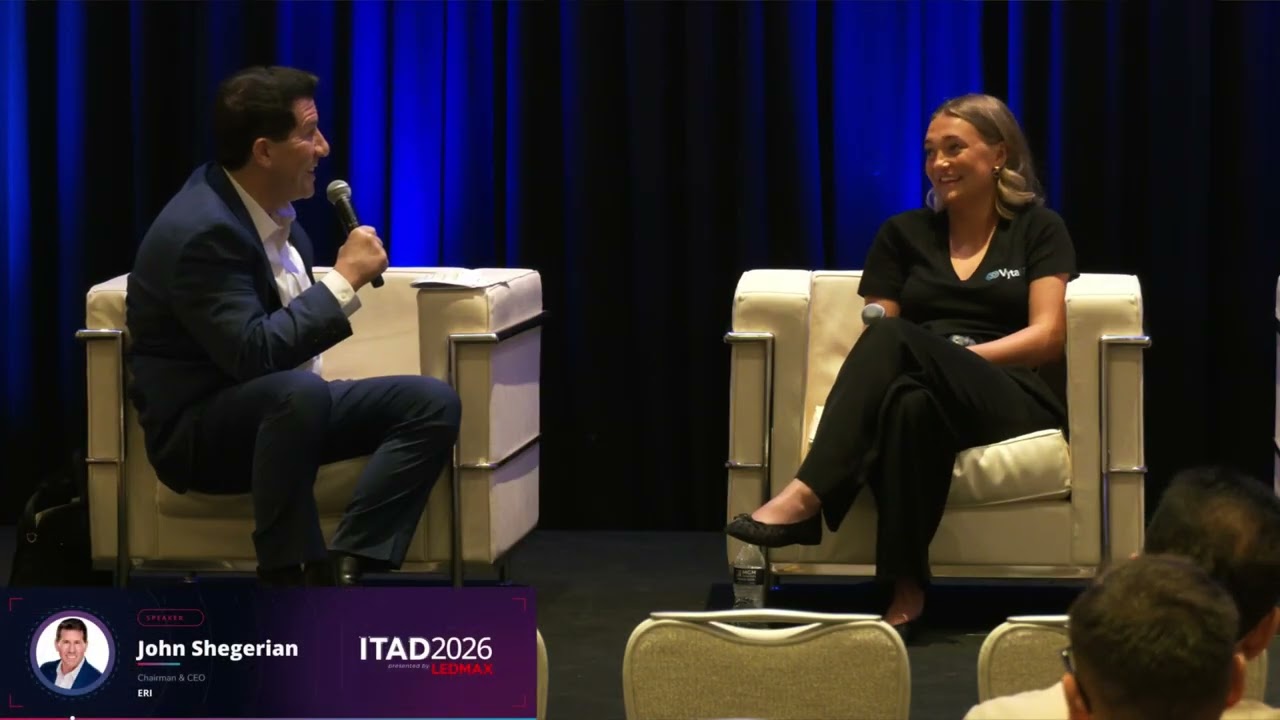
Darrell: This session is one of my favorites. I said that in the morning session, the first session of the day too, because I think these two back to back are just a really cool evolution of the show. This one in particular though, we came up with, John, I called you what, right after France, in April. And I said, John, I think I’m tired of you being our keynote speaker. We’ve got to make a change. And he was like, that’s fair. Let’s do it. And I was like, can I get you to moderate a session? We’ll go from keynote speaker to moderator. And he’s, whatever you think. And I said, here’s my vision. I want to take three amazing stars who are starting their career and already doing great things in the industry and put them on stage and have you facilitate a conversation. from your position on the other end of your career about what this industry is and how it can be attractive to the next generation and how we can make ITAD a destination that people come to because they sought it out and not because they fell into it. And so, we are here. And then we added, and that was part of the reason for the delay, we added a fun nuance, which is that many of you know John, is the host of the Impact Podcast and interviews some absolutely phenomenal individuals who have done amazing things in their career. And so, I suggested to John that maybe, just maybe, if we could figure the tech out, we would do the first ever live episode of the Impact Podcast from ITAD Summit 2026. So, everyone smile, turn and wave at the camera. Because you’re about to be part of the first ever live Impact Podcast. And so, I’m going to turn it over to John, and he can introduce our panelists, and we’ll go ahead and get started.
John: Thank you so much, Darrell. And Darrell, again, you’ve done an amazing job with Rob. This conference has exceeded everyone’s expectations, I think, and it’s, of course, the biggest one you’ve ever had. And I think big is really better in terms of it gives people more chance to get together in one place and meet and see everybody. So, Rob and Darrell, thanks again. Darrell, thanks for the introduction. We’re going to get going here, and this is really a fun time for me to be up here really interviewing three of the great, great young ones in our industry right now. I know them all personally. I work with their companies. I know, Eric longest actually, because I know his dad over 20 years, and his dad’s here today. But these other two young ladies are also superstars. We get to work with their companies, and they’re just killing it. All three of them are killing it. So, I think you’re really going to enjoy both this episode and both this session. We’re going to go ladies first here, and we’re going to make it real simple. I’m going to ask them all, all of you first, to just do a little speed round. Where’d you grow up? How’d you get into this industry and things of that such? But first, I’m going to first tell you who they are. Kayla Kucera with Dynamic Recycling, Alex McKinley with Vyta, and Eric, of course, Eric Levine with Iron Mountain. And Kayla, we’re going to start with you. Where’d you grow up and how’d you get into this industry?
Kayla: Yeah, thanks, John. So, I grew up in Fond du Lac, Wisconsin, kind of a small town back then, but in about the middle of Wisconsin. Getting into the industry, previous to ITAD, about two years ago, going on two years, I was in the fire truck manufacturing industry. And I kept in touch with someone who I had actually worked with many, many years ago, back in 2012 in the grocery industry. She’s actually sitting in the front row today, but it’s our EVP of Sales. Sorry, Ashley. But she’s the one who actually reached out and she was the one who actually educated me about ITAD. I did not know it existed and offered me a great opportunity at Dynamic.
John: Wonderful. Alex, where were you born and how did you find your way into this industry?
Alex McKinley: Thanks. I am from the middle of nowhere, quite simply, like an hour outside of Belfast, quite remote, small little town. I also had no idea of the industry, like at all. I just kind of fell into it. Like I think most people just kind of fall into it. So, yeah.
John: How many years ago did you join Vyta?
Alex: Less than a year, only like 10 months now.
John: Eric, you’re the only second gen on this. Where were you born? And talk a little bit about how you got into this industry, even though we know your dad’s a legend in this industry. What was the turning point for you to join? Because you have other skills. You’re sort of a legend yourself on your own without the ITAD industry. You’re a very well-known trumpeter. I followed your career through your father. Your dad and I, when we got together over the years, we didn’t talk about the industry as much as we talked about our kids. And you are a known legend with a permanent fixture in downtown Cleveland. How did this all happen?
Eric Levine: Yeah, thank you for the kind words. To start, I was born in Cleveland, Ohio, and I am second generation in the industry. I grew up around Regency Technologies, which was founded in 1998. And I understand most people don’t have the opportunity to just jump right into it like that. I actually studied jazz music in college. I went to school in Boulder, Colorado. I was very into music and arts. I love the performing arts. I’m very passionate about it. And as my career in the arts was progressing, and I wanted to get more serious with my life and my family, and build a future for myself, this industry is contagious. I’ve been around a number of different companies in the space. Things from part-time internships, working for a short period of time, even doing projects when I was in school, and was always involved in the recycling industry around electronics. And when I was in my late 20s, I was about 26 years old, I made the decision to take a leap of faith and just come back to the industry full-time, immerse myself in it, and I’ve been here ever since, and I love it.
John: I love it. That’s a great word, contagious. Kayla, if I had to ask you one word to sum up this industry, I love Eric’s summation, contagious. What would you sum up this industry to be?
Kayla: Ooh, one word. I was going to say like ever-changing, but also exciting.
John: Fair, fair enough. Alex?
Alex: Evolving. I think we’ve seen such a change in even like 10 months since I’ve been at Vyta. It’s just constantly growing and changing.
John: One of the responsibilities of each generation is to inspire the next generation, whatever that means. And every generation changes and inspiration changes. It could be by words, it could be by deeds. How much do this next generation know even about the ITAD industry? Are we a known industry? And how do we inspire others to follow you into the industry? Kayla, start.
Kayla: Yeah, that’s a great question. Just having conversations with some of the Gen P people that I know, I think they care about recycling, but I don’t think after they put that bottle into the recycling can, they don’t care what happens after it. So, I think it’s known that recycling is responsible and it’s the right thing to do, but how do we get them involved in what happens after that with electronics? I think it’s talking about all the things that are really exciting to us. One thing at the ITAD women, or women in ITAD session this morning, we talked about things we’re passionate about, and a couple things that came up were traveling and how much this industry allows us to travel and meet the people and build the relationships we do. I think we start talking more about that type of stuff and less about the recycling aspect as much, we start building a story that they can relate to and get excited for to join this industry.
John: Alex, how about what’s your thoughts? Now, you live in a different part of the world than where we live. Yeah, so is it the same, or is the next gen even interested in this kind of industry?
Alex: Yeah, I can tell you for a fact none of my friends or people kind of my age know what it is. When I tell them what it is and everything I’m doing, everyone’s immediately jealous. They want in. So, I think they don’t know, they don’t know the opportunities that they could have. But they definitely would be interested in it when they know it.
John: Eric, we we grew up in this country, Eric, and, my generation was the go-and-throw society. Sustainability wasn’t part of our vernacular. Circularity was not part of our vernacular. Talk a little bit about your generation now not only wanting to make a nice living but also wanting to make an impact. Is that going to be a lure and a great way to inspire people to come into our industry where they get to do both at the same time?
Eric: Absolutely. And, something I’ve been thinking about a lot just this past year is how coupled our industry is with the overall tech world. I think if you read a newspaper today, listen to a podcast, whatever you consume when it comes to financial news, you’re going to hear about AI, robotics, chip manufacturers giant stock bubbles, major roller coasters in the market. And anybody who has even an ounce of interest in that, this space is so connected to it and gives you an opportunity to participate. And I think for a lot of young people that are interested in the tech world and specifically the finance world and tech and follow all the news and the headlines and these things that are happening, the ITAD industry is just such a unique way that you can get involved. I think some of these large companies out there Anthropic, Palantir, OpenAI, Apple, Microsoft, whatever it is, they’re great. And a lot of people go to have fantastic careers with those companies. But it’s not the only way to get involved in the tech industry.
John: Given that, there’s not a day that you could turn on Bloomberg or CNBC or read The Wall Street Journal, New York Times, AI is always part of the headlines, but also Nvidia and SpaceX. We sort of live in a SpaceX and Nvidia economy right now. Is that good for the technology section? You speak about that, Eric. Are we going to be able to ride that wave as an industry and be part of that industry as well as they boom and as those companies rise? Can we rise with that? And will that continue to lift all the boats in our industry?
Eric: So, I’m going to quote my counterpart, Kayla, over here. She mentioned the word ever-changing. We’re talking about SpaceX. They just had an earnings call this morning. Big company. Three years ago, nobody was really talking about them. The stuff that’s being manufactured that’s going to be relevant in our day-to-day lives 10 years from now, it’s going to be wildly different than what we see today. I can’t predict and tell you what that’s going to look like, but what I will say is, is this industry does continue to adapt through the ever-changing times. I think there’s always an opportunity to find a lane that works for a big business or a small business, and find some sort of niche that you can get involved in make a good living for yourself, find a good business, join a good company. There’s many opportunities, and it’ll always be changing, but the opportunity is ripe.
John: You keyed on a great word, ever-changing. Kayla, we’ll go back to you. Ever-changing. Ever-changing since technology’s evolving so fast, faster than ever, probably. They say Moore’s Law is obsolete now. Does that mean more turnover of more electronics, which is net good for everybody in this room and beyond?
Kayla: I think so. If you especially look at the next generation who can’t get off their tablets and iPads and everything else, electronics are becoming cheaper, more efficient. They’re more than just a laptop or a phone. It’s a smartwatch, it’s AirPods, it’s the Oura Rings, everything you can imagine. Our lives are evolving in technology. My fiancé has made our house a smart house, like that movie back in the day on Disney where it goes crazy. And, it’s that type of future where it’s so easily accessible and it’s so quickly manufactured that even though things are getting smaller, there’s more of them. So, I think it’s just going to continue to be that way, especially with the big AI boom.
John: Alex, skills. What skills do people need if you were to recruit, you’ve helped make Vyta one of the top brands in Europe, probably around the world. You have a skill set. Your colleagues, who I well know, also have great skill sets. What do you think, if you’re trying to inspire or recruit others into working for you, working with you at Vyta, what skills do they need to have to be successful in this industry?
Alex: I think just having a lot of transferable skills. It’s not just one department you kind of work in. I work in marketing, and you also just hear things about operations. So, just being like, having transferable skills and being confident and just like backing yourself, especially coming into an industry where it’s kind of overwhelming information overload. Just being confident and knowing that you can do it and just being yourself.
John: Kayla, what do you think about skills?
Kayla: Yeah, the two big skills that I look for, especially when adding to our team, is curiosity and drive. I think that’s applicable to most industries, but especially this one with it being ever-changing and things are so vast. And like Eric said, there’s so many niche things about this industry. If you’ve got curiosity and drive, you can be successful.
John: Eric, what say you?
Eric: Passion. I think if you’re really passionate about something, whether you’re on the back end coding for ERP systems, if you’re selling equipment and you’re passionate about running a good sales team, whatever it is, if you are genuinely interested in it at that level, you’ll find a way to succeed.
John: Kayla you mentioned, you talked a little bit about your background. You did a bunch of things before you got in this industry. When you think about where you are right now, Is this it? Is this where you want to be? Do you think there’s so much to do and so much upside and opportunity in your mind that you could stay here?
Kayla: I’ll say first, I absolutely love the industry, so I’d like to stay here a really long time. But what really makes the career is the company I work for. So, I think Dynamic could sell shoes and I’d still work for them. But I think as long as you find a company in this industry that you really relate with and you have a very good relationship with this, I could retire here. Yes.
John: Alex, you’ve obviously done a great job marketing Vyta. My team tells me all the time, we got to be more like Vyta[?]. You’re killing me. You could work for anybody, really, in any industry with those kind of skills in terms of social media. And social media is wanted and needed by all sorts of industries now, many if not most. Why stick in ITAD?
Alex: As well, same as Kayla, I love who I work for. Working for a Northern Irish company that works on a global scale, I think it’s quite rare being able to go to work and I can speak to most of the execs every single day and get the best experience I can from the best people in the industry. It’s very rare. So, I’m getting hands-on experience every single day, building my career from the best. So, I’d be silly to go anywhere else.
John: Eric, what advantage do you have being second gen?
Eric: Definitely just the background of information in the industry. I learned how to sort board from plastic probably earlier than I should have been. And you learn about what it takes to go through the full lifecycle of computer equipment, everything from the recycling end to the deployment of new equipment. And I do understand, as we’ve been talking, It’s a lot of information. I think people who get into it today, it’s like drinking through a fire hose, and it’s hard to soak it all in. And it just takes time. It takes time to really understand some of the different nuances. And having learned some of that from a young age, I didn’t realize until I got older how valuable some of that information was. And then it became apparent there was some stuff going on up there that I actually understood.
John: Let’s go back to that word ever-changing. How is it diff— how is it different now for Gen 2.0 for you than when your dad was fully in the business and running his company and growing his company?
Eric: Sure. I’ll start there. It’s different. I grew up around a private family business. Now I work for Iron Mountain. It’s a big public company. We have employees all around the world. So, the dynamic of working with a large organization is naturally different. And that’s parallel with the idea that this industry is much bigger. I think in the early 2000s, this was not as prevalent as it is today. The idea of electronics recycling and the environmental side of it was just not as major of a piece. So, as it continues to grow and the presence is undeniable, it’s just navigating being on a little bit more of an elevated platform that the world sees, that other industries see, and how to really create some brand recognition of our industry across the rest of the corporate world, big companies, people operating and doing all sorts of stuff, maybe companies you wouldn’t necessarily think of, but have a need for the services we offer. There’s limitless ways to get involved, create partnerships and meaningful business together.
John: Kayla, if today you were beginning the onboarding process of a new employee at Dynamic, how does the onboarding process from your perspective work, and what’s the best advice that you could give to the person you’re bringing on board to be successful at Dynamic and in the industry?
Kayla: Yeah, that’s a great question, John. So, at Dynamic, we put a lot on a good culture fit for us. Obviously, we want the person to also be capable, but initially when we look to onboard someone, we want to spend some quality time with them. We talk to them and then oftentimes bring them on for a tour and have lunch with them, really get to know them before we bring them onboard. For somebody who does get accepted to join our company, it goes back to that curiosity and drive. As long as you’re a great culture fit and you’ve got that curiosity and drive, we all lean in to make sure that you’re successful and can adopt the skills that you need to, to be successful.
John: Alex, if you were doing the same thing today, you started onboarding someone at Vyta, what advice, what pearl of wisdom could you share with them to help mentor them to be a success, inspire them to be a success, not only with the culture at Vyta, which I know is a great one, but also in the industry as a whole?
Alex: Yeah, I think if it’s someone coming into the industry completely new, first time, it is so much to learn and just kind of settle. At Vyta, we get a tour and you do a day out doing an eye tag collection, and it’s actually really interesting and you can visualize everything you’re learning about, which is so helpful. So, just having that and then speaking to them and just having a support network. I know for us that all the leaders at Vyta are amazing and they’re so approachable. So, I would just say to them, if you’re worried, I ask about a million questions a day, so you’re able to do that. Don’t worry, no question’s a silly question.
John: Eric, I’m going to put a twist on the same question, but a twist on the question to you. When you listen to Pat Mahomes talk about being comfortable under center, he said he wasn’t really comfortable and understood the speed of the game till after he won his second Super Bowl. How long does it take for someone, when you’re bringing someone new into the industry and onboarding them at Iron Mountain and mentoring them, what’s the horizon in terms of feeling comfortable to know enough about the industry to feel comfortable about not only representing a great brand like Iron Mountain, but also really knowing about what they’re talking about when they go and speak with others as they represent your company and to get knowledge of what is really going on in this industry?
Eric: I think training resources is a huge deal, especially the bigger companies get and the more individuals you have joining that maybe don’t have a background here. What resources are available to them for self-learning? At Iron Mountain, we’ve spent a lot of time. We have an entire department called Sales Enablement. And what their primary job focus is to create these materials for new sellers, new people in the operation, to learn what we do, why we do it, and not just from the philosophical level, but down to the very specific nuances of our systems. How to put a support ticket in, what department to go to for certain legal questions. If you’re working on a contract, There might be seven different types of support tickets you can open in a CRM. How do you know which one to go to and actually get a job done in a timely manner? And at the end of the day, we’re doing it for our customers, and we have important expectations to live up to. And the faster new employees can get up to speed and learn how to self-navigate that web, the better we can serve our customers.
John: How important was it for you to get dirt under your fingernails when you were much younger and learning the business from the inside and out in the warehouse?
Eric: Critical. I’ve done just about every job out there. I used to drive forklifts, load pallets and trucks. I’ve tested computers. I think that gives you the foundational knowledge to really be able to talk the talk and walk the walk.
John: Is that still part of an onboarding process in 2026 at Iron Mountain and all your different brands. I’m going to ask all of you, does that still go on?
Eric: It depends on the department you’re in. I think if you’re somebody who’s working at a facility, if you’re going to have any involvement in operations, it 100% is. With such a global company and a big remote presence, there’s also just not the opportunity to do that with everybody anymore. That was something at Regency Technologies we did. And we prided ourselves on that. We had a program where a new employee would come in and spend two weeks going through every job in the warehouse. With 30,000+ employees, it’s just not feasible to do it at that scale. So, you have to be a little more creative in terms of how you can educate new employees and get them trained up to speed.
John: Kayla, how about you? Did you work in the warehouse when you got involved with Dynamic, and do others work in the warehouse? when they’re onboarding?
Kayla: Yeah, great question. So, we do have a training and development department that helps with this. So, yes, when I started, I spent probably my first month working in the warehouse, learning the different aspects of the warehouse. I also spent a lot of time shadowing other teams like sales, recycling, other places outside of outbound sales. And we did the same thing. So, everyone on my team has gone through that same training process. And then depending on where you’re coming in in the company, similar to what Eric said, Our training and development team is very good at making sure you get the appropriate training, especially when it comes to the ERP systems and all the intricate works within the company. We’re very hands-on in making sure that, again, you’re successful right off the bat.
John: Was that warehouse experience that you had invaluable to your success?
Kayla: Oh yeah. I should probably refresh it soon. It was extremely valuable. And I know that things have changed since I’ve been down there, but I do work partly remote. So, anytime I can spend time with those guys on the floor, I learn so much.
John: Alex, how about at Vitad? Is that part of the curriculum when you’re onboarding? Did you have to work in the warehouse and learn what’s actually going on in the factory itself?
Alex: And so I wasn’t in the warehouse directly, but I went out on the ITAD collection, so out in the lorry, out going to a site, collecting all the pieces, scanning. So, I got to see that. And also Same as Eric, like it’s becoming bigger and bigger, so we use that as an opportunity again, and we took a bit of content of it and it means that with that we can refer back to it. If, for example, you weren’t able in your first few weeks to go out in that collection, you can refer to the video. It’s all there and it shows the whole process, just kind of visual.
John: Kayla, let’s switch to the issue of challenges. What are some of the biggest challenges you’ve had to face or that you face on a regular basis in this industry?
Kayla: Let’s see. I want to call them opportunities instead of challenges.
Alex: That’s fine.
Kayla: Good call. But I think just a couple things that were opportunities that I enjoyed working through was one big thing when joining Dynamic is the global partnerships that we had in outbound sales and expanding that area. I got the opportunity last year to go to Dubai and visit a lot of our buyers. the opportunity to go to France and Denmark this year, and you get to immerse yourselves in different cultures. We have partnerships all over the world, and everyone’s just a little bit different. And so, there was a lot of navigating how to communicate, ways to communicate, frequency of communication, and just the different schedules and way people live their lives. So, that was a bit of an opportunity, but it’s been extremely exciting getting to work through that.
John: Alex, what say you?
Alex: I think working in marketing, I found it really quite hard to market ITAD because it’s like, where, what do you do? How do you wrap your head around all of this? Never mind market it. It’s quite a specific thing. So, we’ve tried to flip the narrative and show our people and everyone behind our company rather than just the process itself.
John: Great point. But this is, we live in now a world that I’m not familiar with. I’m not a digital native. I’m a digital immigrant. That’s my generation. We live in a TikTok world. Is this the world that most companies should be involved with to best represent our industry? Should we be leveraging TikTok and Instagram and Snap something and everything else?
Alex: 100%, I think so. If you’ve applied to a job, the first thing you probably do is you go through their website, their LinkedIn, their TikTok, anything to kind of get a feel for it, know more about them. So, if it’s all publicly there and you can see if you would be a fit for it, I think definitely.
John: Eric, the challenges and opportunities, as Kayla said, she turned that question right on its head and rightfully so. How do you see that? Challenges, creating them and making them into opportunities?
Eric: Yeah, so it’s an interesting question and at this time with Iron Mountain, I work with a lot of Fortune 1,000 companies. Big corporate entities banking, finance, insurance.
John: Probably Fortune 100 companies.
Eric: There’s some major ones out there, and I think one of the biggest challenges is the educational element. As hard as it is to— we were talking about teaching new employees what we do, you know, how do we educate other industries what we do, and not just understand why and how they could participate, but also really lay the suite of options out there for them and have them genuinely wrap their head around what’s going on and what type of value we can add to their organizations.
John: Is that better done in person, or can we leverage technology as successfully as Vyta has done? Because obviously, Alex, you’ve done a great job.
Alex: Thank you.
John: And my team tells me that on a regular basis. How do you see it, Eric? In person, obviously. I know that’s the world you come from. That’s my world, and I know that’s your father’s world. So, we that’s the world we come from as well. But it is a TikTok world, and your generation is on TikTok and on Instagram, and that’s great. Is— can we use that to educate our clients about the industry?
Eric: I think so. And when you talk about social media platforms, it’s an interesting topic because different platforms have different audiences.
John: Yeah.
Eric: And different purposes they’re serving.
John: Yeah.
Eric: LinkedIn looks kind of similar to Facebook. The logo’s the same color, but they’re very different places. And I think there’s the right audience in different areas, so catering certain content to that audience is important. But yeah, you said it, I’m old school. I like in person. I studied jazz. I still don’t think there’s a true replacement for that. I think some of the social media stuff and just overall online presence is great to get a foot in the door and have a conversation. But at some point along the way, it’s important to shake some hands, meet with some people, have a meal, and have some real human connection and discussions about what we’re doing, trying to learn what their goals are, what’s motivating some of these other organizations to do what they’re doing and making their decisions. And I think the better you understand that, it can help you navigate.
John: Kayla, let’s go back. I asked all of you earlier about inspiring others and coaching others into the industry. Who was your best mentor, and who continues to inspire and mentor you at Dynamic?
Kayla: I love calling out people that are here, but my boss, our EVP of ITAD, Casey, is sitting in the front row, and he has been my cheerleader since day one. So, he has helped with every opportunity and everything else that I’ve come across and really helped me build my business acumen across Dynamic.
John: Alex, how about you?
Alex: And mine’s definitely Rachel. Like you said, biggest cheerleader ever. If you ever think you are unsure of anything, she’s the first person that’ll pick you up and tell you you’re the best ever. That’s her key phrase, you’re the best ever. So, she’s just really good at making you feel good about yourself, which is such an important factor.
John: Eric?
Eric: So, I know you mentioned my dad’s in the room, and it would be a softball, and he’s absolutely been a great mentor to me, but I would like to put another name out there. Troy Fuhrman, who runs our remarketing department at Iron Mountain. He was also doing it at Regency Technologies. When I joined his team, he really took me under the wing. Not only showed me how he’s doing what he’s doing when he’s operating a sales team, but he made it fun. And I think there’s something special about making business fun, making genuine friendships, making memories along the way, and enjoying the journey. It’s a hugely important part to not only being successful in this space but sticking around for the long haul.
John: Alex, favorite things. We all love to do certain things. SSme things we don’t like to do, just part of the human journey. What are some of your favorite things about this industry that, you know, you’re excited about when you wake up in the morning to go do?
Alex: I love filming like content of other people, but me behind the camera, I’m like, oh no. get me back behind. But, I think like for at FIDA, giving different people the opportunity to kind of speak and feel good about themselves, and people who might always be like doing all the hard work but they never get the chance to be kind of shown off and make them feel good about themselves, I think it’s really nice.
John: So, you like the creative side?
Alex: Yes, definitely.
John: Kayla?
Kayla: like I mentioned before, the traveling is definitely a plus, but I love the people at Dynamic. I love my team. And I love making money. We make good money.
John: Hey, that’s okay. That’s okay to say that. Eric, favorite things. Running a business isn’t easy. Being a leader in a business isn’t easy. But what are some of your favorite things about showing up to work every day?
Eric: I really enjoy hitting the goals we set for ourselves. And, I’m not a destination-oriented person. I fully subscribe to the journey. Every day you got to enjoy. But it is special when you can achieve those goals you set for yourself, especially lofty ones. And it kind of proves that, hey, anything is possible. If you set your mind to it, you can get it done. It’s very rewarding.
John: I like that. We’re talking about the next generation here. This conference is the biggest one ever to happen for Rob and Darrell, 2,300 people, I believe, or more. How do we continue to inspire people who look like the three of you and not me to come here and to join the industry, really? Because really, that’s really the name of the game now. That’s a challenge for me at ERI and something I’ve been working on very hard the last year and a half or so. Is that something that all of your companies are overtly working on right now? Eric?
Eric: Yeah, so back at the beginning, I was talking about the tech world.
John: Yeah.
Eric: Kind of become a little bit of a finance nerd reading market news every morning.
John: Yeah.
Eric: And, I realize there’s a lot of young people that are interested in tech, sustainability too. And sustainability is a huge part about what we do. But I do think With everything that’s happening in the tech world, this whole AI boom, new hardware that’s coming out, it’s a big paradigm shift. And I think there’s a lot of young people where that’s naturally intriguing to them. And being a part of that world, at least for me, is something that helps me show up every day. And I know a lot of other young people that are very interested in the tech space. And I think really communicating that message and how much of a part of that we can be and we are helps people want to participate.
John: And am I taking this the right way? Because I think you’re onto something, and I agree with you, by the way. Does that give a cool factor to our industry?
Eric: It’s a very cool factor. And there’s a lot of money in it too, as Kayla said, but it’s true. You look at different industries and, what types of companies are performing well out there.
John: That’s right.
Eric: If you’re a young person and you’re in college, you’re just getting out of college, and you’re thinking about what kind of career you want to do and lead a good life for yourself, a lot of people are going to want to go to good industries that are successful. It feels like there’s more opportunity. If they’re flush with different companies, different jobs and positions, is there’s people that do something, you know, like Alex, you do marketing, and as John said earlier, you could do that anywhere. You don’t have to be in the ITAD space.
John: Right.
Eric: You can go sell granola bars, you could promote music festivals. I’m confident you’d be good at it, whatever it is. But the tech industry is growing like a weed. It’s not going away anytime soon, and I think it’s a great time to get on board.
John: Alex?
Alex: Yeah, I completely agree. I think when I’ve come out of uni, the kind of jobs I was looking for were kind of the trendy jobs. Tech is definitely up there. So, if you kind of put that into ITAD and that was marketed more that way, definitely I think it’s a really attractive industry for people coming out.
John: Kayla?
Kayla: Yeah, one thing that is really unique about Dynamic is that I don’t know the percentage, but a lot of the people who have joined us are referrals of people who have already worked there that has just added on to the culture, and myself included. So, I think that speaks volumes not only for our marketing team, but also for people wanting to work for good people. And I think that’s so strong that yes, you can put your business out there, what you stand for, what you’re doing, but you have to have the people who want to keep you there. So, we do a really good job at that.
John: I want to ask you one last question. Sum up the future of this industry, one word. Eric, I’m going to let you go first.
Kayla: And you can’t say ever-changing.
Eric: Innovative.
John: Like it. Kayla?
Kayla: I was thinking explosive.
John: Explosive, I like that.
Alex: Mine was exciting. I think it’s like becoming bigger. It’s exciting.
John: I think all of you are exciting, explosive, and for me, it’s inspiring to see such a bright and successful group of young next-gen people succeeding in this industry. It gives me great hope that this industry is going to grow. It’s going to continue to grow, and with the right people leading it, which is the three of you. I think all of you will agree. Let’s give these superstars a really big hand for being up here and taking on these questions. Until Darryl kicks us off here, I’m going to just open it up. Does anyone have any questions for this great group of people? Yes. Who are you and what would you like to ask?
Charlotte: Hello everyone.
John: They’re going to bring you a mic here.
Darrell: We got to get you on the podcast too.
John: Yeah.
Charlotte: Hello everyone. My name is Charlotte from TopHits and I’m based in Hong Kong. And thank you all for sharing all this exciting information to me. And my question is, I’m already working in pre-owned consumer electronic recycling, and I’m very eager to step into the ITAD space in long term. For the next generation talent like me, beyond technical hard skills, what personal traits do you consider most critical for me to join edtech companies like yours or to succeed in this industry? Thank you.
John: Who wants to take that? Go ahead Eric.
Eric: I think people skills are huge. You’re genuinely connecting with those around you, those here in this room. It’s a small world here. It’s 2,000 people. It’s big, but it’s small enough where I think if you go around the room and talk to people, you’re about one to two degrees of separation away from your a familiar face. If you just connect with everyone and are genuinely interested in getting to know people, the rest will follow.
John: I think Eric’s exactly right, but by the way, you had the courage to jump up first faster than anybody so that courage is going to take you a long way, by the way.
Charlotte: Yeah, because Alex said you need to be confident, and Eric said you need to be passionate.
John: There you go. Good job. Thank you. Who else has a question? Question? Yes. Who are you and where do you work?
Ethan: My name is Ethan and I work for ERI.
John: A plant in the audience. Okay, go ahead.
Ethan: So, when you were asked attributes that you would share to others looking to get into the industry, you mentioned passion, storytelling, people. If I’m curious, when you’re telling a peer who’s totally ignorant and you’re like, they’re like, what do you do? What vertical do you lean in? Do you say like cybersecurity sustainability? How do you communicate what you do?
John: Great question. Who wants to take that? Kayla?
Kayla: So, I’ll just say really quickly, I learned early on how to not describe us. I was at a conference and somebody who had not heard of us asked me about what we did. And after I got done describing it, they kind of looked at me and said, so you’re like a Goodwill for electronics? And I was like, ooh. Not that Goodwill’s bad, but I don’t think anyone’s getting a degree and wants to go work at Goodwill. So, I definitely lean into the relationship side of things where I’m like, we do a lot in the electronics space and the sustainability space, but we really build relationships. And I always put the plug in that my friends and family see me traveling all the time, that there’s a lot of fun in this space too. I really try to include all the extras that come with the responsible stuff we do.
John: More questions?
Darrell: I have one.
John: Oh, go ahead.
Darrell: From our role, right, as putting on these shows, with the alliances, what can we do to help support the up-and-coming leaders of the industry to make sure that you have opportunities to get involved, to make sure that your companies are investing in your ability to participate in these things? And then also with the in the GIA and the Global ITAD Alliance, what can we do to foster your growth and development as a professional so that when it’s your time to shine in a much larger capacity, in a much larger role, you’re ready to do that?
Alex: Darrel, I think you’re doing it absolutely right. For example, I’ve been in the industry for 10 months, and Darrel probably encouraged me more than anyone else. He was like, you’re going on the stage and you’re going to do a good job. And I was like, I hope so. But he was the first person to back me, and I think just keep doing what you’re doing, and you’re giving younger people the opportunities that they deserve.
Kayla: And Darrel, I just want to mention this morning at Women in ITAD, we had an absolute blowout. We ran out of tables, and this was the first time we ever had so many women in attendance. So, you’re obviously doing something right in promoting equal opportunities.
John: Eric?
Eric: Yeah, I think just to piggyback on all this. With the GIA, if you asked me a year ago, I would have said we got to create something, something more formal. Now we have that. And I know there’s a lot of companies that are members or learning about it for the first time. And an interest group has a very special place where you can come together as an industry and communicate with government organizations, student bodies, et cetera. And specifically for the incentivizing the next generation, I think it would behoove us to really dig into the education side, get involved in college campuses, student bodies. What are the discussions in our schools, and how do we get ITAD on the map amongst that crowd?
John: One more question. Yes. Here comes the microphone here.
Ali: Sure. Good morning, everybody. My name is Ali Ebadian from Firestone Technology, and we’re actually supplying all of the hardware to every one of the companies that sitting over here. So, it’s a pleasure. And a former educator for four different universities. And Eric, I’m with you. In order to get the ITAD into the mainstream, it got to start in the undergraduates. It got to be part of the curriculums. Unfortunately, university is struggling right now with the AI and cut it down on 20, 30 curriculums or whatever. But that’s where we start. When we hire people at our warehouse or at engineering, they have no idea. They really have no idea. As an educator, I knew when I’m teaching the undergraduate entrepreneur classes with 300 students, I knew that by the time that it gets to be the software, a third, basically everything that we taught them, it was obsolete. And we’re really teaching them for the jobs that does not exist. So, the education’s got to start if you want to be part of the ITAD, because 18-year-old, 19-year-old, I’ve had a pleasure of 20 years working with them and seeing them in actions, there is really no way that you put the ITAD on their radars unless you see something on the social media. It is not sexy. It is not enticing. It is not challenging and exciting. So, you got to go with the roots to make that happen. Just want to make that comment.
John: Any thoughts on that? Alex, Kayla, you want to take it?
Eric: I think you said that very well. Absolutely it’s important to get involved young, and if you join when you’re 18 and you have plenty of time to learn, that’s how people can make a great career for themselves. I thought it was a very thoughtful comment.
John: Thank you, Ali.
Eric: And if I could actually say one more thing before we end, because I see the clock ticking down. This whole panel’s been about the next gen and how do we incentivize younger people. But John, I want to make sure to give you your flowers here. You’ve been an icon in this industry for a long time and have been one of the leaders that’s helped blaze the trail for all of us. So, thank you for everything you’ve done.
John: Thank you.
Eric: And, it’s up to us now to continue carrying the torch.
John: Let’s give this great group of people a hand. Thank you very much. The next generation of amazing superstars. Thank you, Eric. Thank you, Kayla. Thank you, Alex.
Alex: Thank you.
Eric: Thank you all.
John: This edition of the Impact Podcast is brought to you by Engage. Engage is a digital booking platform revolutionizing the talent booking industry. With thousands of athletes, celebrities, entrepreneurs, and business leaders, Engage is the go-to spot for booking talent for speeches, custom experiences, live streams, and much more. For more information on Engage or to book talent today, visit letsengage.com. This edition of the Impact Podcast is brought to you by ERI. ERI has a mission to protect people, the planet, and your privacy. and is the largest fully integrated IT and electronics asset disposition provider and cybersecurity-focused hardware destruction company in the United States and maybe even the world. For more information on how ERI can help your business properly dispose of outdated electronic hardware devices, please visit eridirect.com.
 Spotify
 Apple Podcasts
 Amazon Music
 iHeartRadio
 YouTube
 YouTube Music
 Audible
 Pandora