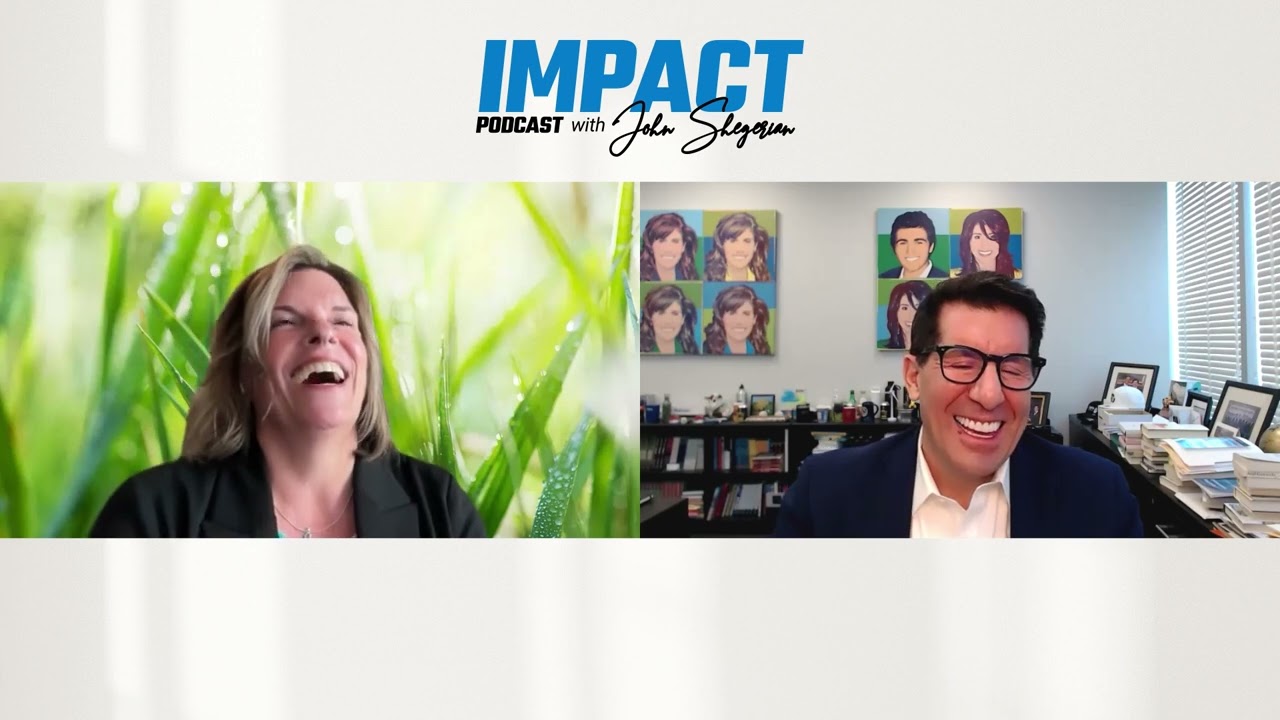

Serving as Senior Acceleration Manager of Sustainability Services at Logitech, Jennifer Foxworthy is a strategic and results-driven sustainability services leader with more than 20 years of experience in reverse logistics, refurbishment, and circular economy solutions. Recognized for her innovation and leadership in sustainability, Jennifer has received multiple industry awards and is an active voice in the ITAD and circular economy community, regularly contributing to panels, conferences, and thought leadership initiatives. She is passionate about driving sustainable impact through collaboration, innovation, and advancing circular technology solutions.
John Shegerian: Get the latest Impact Podcast right into your inbox each week. Subscribe by entering your email address at impactpodcast.com to make sure you never miss an interview. This edition of the Impact Podcast is brought to you by ERI. ERI has a mission to protect people, the planet, and your privacy, and is the largest fully integrated IT and electronics asset disposition provider and cybersecurity-focused hardware destruction company in the United States and maybe even the world. For more information on how ERI can help your business properly dispose of outdated electronic hardware devices, please visit eridirect.com. This episode of the Impact Podcast is brought to you by Closed Loop Partners. Closed Loop Partners is a leading circular economy investor in the United States with an extensive network of Fortune 500 corporate investors, family offices, institutional investors, industry experts, and impact partners. Closed Loop’s platform spans the arc of capital from venture capital to private equity, bridging gaps and fostering synergies to scale the circular economy. To find Closed Loop Partners, please go to www.closedlooppartners.com.
John: Welcome to another edition of the Impact Podcast. This is a very special edition because I get to have my good friend on with us today, Jennifer Foxworthy. She’s a Senior Acceleration Manager of Sustainability Services at Logitech. Welcome, Jennifer, to the Impact Podcast.
Jennifer Foxworthy: John, thanks so much for having me. I’m excited to be here.
John: It’s an honor. We’re friends a long time. We’ve spoken on panels across the world so many times, and this is going to be just another delightful conversation that we get to have. But again, we have people listening today to our conversation, a much bigger audience than one of our typical audiences at any number of the conferences that we get to speak at. Talk a little bit about, Jen, before we get going, the great brand of Logitech. I’m going to be honest in terms of advertising. Logitech’s a very great client of ERI’s. It’s been a long time, and we’re very proud to have Logitech on the show today with Jennifer. Jennifer, talk a little bit about you yourself. Where did you grow up and get on this very important and impactful journey in sustainability that you’ve been on?
Jennifer: I will tell you that it happened on accident. It really did. I was born and raised in Reno, Nevada. My dad was a sales guy, so of course, you move around a little bit. We ended up moving to Northern California, lived in the East Bay. My first big girl job, if you will, I ended up joining a software company doing software sales. Someone I was working with was like, “Hey, you’d be really good at this.” I thought, “Okay, we’ll give it a shot.” All of a sudden, I’m working in software. All of a sudden, I realized I loved technology. It resonated. I loved the technical aspects of the software sale and how it helped an enterprise. At that point, I moved my young family back to Reno, at which point I joined a company called PC Doctor. If you might be familiar, they are a longstanding hardware diagnostic company. I was actually with them for 15 years. That is truly where I started in, I’ll just call it reverse logistics, which, of course, morphs into sustainability. Diagnostics, it’s the core of everything related to technology from a repair perspective, repair operations, refurbishment operations, parts harvesting, so on and so forth.
Diagnostics are really at the core. I cut to solution a lot. It was just a really good fit. I started getting into compliance. Of course, I’m sure ERI does this all the time as we talk about driver-raised solution, data sanitization, and the importance of compliance, but I actually drove a solution with PC Doctor for a compliant data sanitization solution for Dell, which ultimately is how I ended up in the great state of Texas. Instead of traveling to Texas all the time to support my customer, I moved there. I ended up in Austin, actually in Round Rock, technically, and continued working at PC Doctor for a number of years. Then, in and around, we’ll say 2019, 2020, I felt like I hit a ceiling and needed a change. Interestingly, I joined the Reverse Logistics Association. I actually ran their business development alongside my good friend, Tony Shirota. It was so fun. I got to really engage with the same people I was working with from a 3PL perspective, supporting Dell, but then I’m working with all these other companies that were also members of the association. Then COVID hit. That was hard, especially in the association world. Taught us how to be super creative. Again, we’re going to go back to solutioning. It seems to be my passion. From there, I ended up taking a moment where I said, “I’m going to leave technology for a minute. I’m going to step away.” COVID was that moment where it was like reconnect with the family, stay at home, obviously not traveling. I joined a golf club company. I don’t know if you even know this about me. I joined a golf club company. It was a potter company that built a super cool technology. The funny part is the first thing I started to build for them was a reverse logistics operation. All I did was go and leverage that, but I did get to leverage a lot of the forward logistics I had learned as well. Super fun, but ultimately, I would like to retire someday and there’s not a ton of money in golf unless you’re playing at the Masters on Sunday. I ended up getting recruited by another software company and found myself back in technology. Again, solutioning. I worked for a company called Triage Partners. They do shop floor control. It’s called on steroids. They moved it to the cloud. Super cool. Helped them build a SaaS model, at which time I was then recruited by HP. The sustainability journey continues at that point.
John: [inaudible]
Jennifer: When I joined, full circle, right?
John: Full circle.
Jennifer: Yeah, 100%. So, joined HP to run the HP certified build, the HP certified refurbished licensing program or partner program. It didn’t exist. This was something that was just somebody’s idea. A couple of customers had recommended, “Hey, this would be really cool.” I was part of the original Renew. There were new solutions that started two and a half years ago and started building out a program. As I left HP, we were at nine, 10 partners. Maybe it could be 10. I think they were on the cusp of 11. Over two years, we accomplished a lot. We created a brand for true, second-life product. HP certified refurbished developed that definition. What did it mean? What is a customer going to expect when they get a refurbished device from one of these partners? Built up an outstanding network to support HP’s sustainability goals. Super, super fun. Bittersweet to leave. But there, again, came a point where it made more sense from a number of different reasons that I take a leap of faith and step away, at which point I joined Logitech. Here we are today.
John: Wonderful. You went from one great brand to another.
Jennifer: I think so.
John: One thing: you’re not only a logistics expert, but you’re a logistics international expert. You travel the world. You don’t just understand logistics in the North American area; you understand technology and logistics on an international basis, which is really unique, I think, makes you have a unique skill set, as opposed to many others who are either regionalized or localized and things of that such. I think your international experience has broadened your career and given you even greater opportunities. Is that not so, Jennifer?
Jennifer: Absolutely. That really is true, John. I realized when I was traveling to Austin all the time, I like to travel. I like to get on a plane. I like to go see new things. I can be a tourist in my own hometown. I am totally good with it. But what I found is no sooner did I move to Texas that my business started taking me internationally. I realized how much I enjoyed that and learning about the different cultures. At the end of the day, we’re all the same people. We all ultimately have the same common goal, but understanding some of the regulatory differences between different countries, how you have to work in one country differently than another, cross borders, like all of these different things. That’s where, of course, you and I go into these same events, but that’s where we start to learn some of that. But really digging in, if I didn’t travel internationally, I never would see that. I would never have that exposure. Just reading it on a piece of paper doesn’t do it justice.
John: [inaudible] online. Having your unique perspective, like going and immersing yourself in different cultures, I think just creates a knowledge base and perspective that I think makes your career more successful and even richer.
Jennifer: Yeah, I completely agree. Absolutely.
John: Talk a little bit about your huge success in HP and with a great team that you had there. And I got to know them all because again, truth in advertising, HP is also another client of your eyes. So we got to be not only friends, but also business friends. How’s that transferable to the mandate that you have at Logitech now and your new role there?
Jennifer: Well, I think you see, and it’s not just HP; we see it with Lenovo. We see it with Apple. They all have their version of some certified refurbished or certified renew or some version of that, and it’s really around just solidifying the brand in the secondary market. I don’t think it matters what OEM you are. You’re trying to define what does that look like to give the customer confidence to buy your refurbished product. At the end of the day, I know I can go back five years, and someone told me to buy refurbished. The first thought is, “Oh, I don’t want that. It’s broken.” So I think all of the OEMs and HP’s done an outstanding job with this, but you have to push forward; well, reuse is super important from a sustainability standpoint. It doesn’t mean it’s bad.
John: Explain the education process. Explain though the hurdle of that consumer education process though.
Jennifer: Oh, it’s a tough one. I think you run into this one too, right?
John: Oh yeah, of course.
Jennifer: Yeah, here’s the thing is that it’s unfortunate. We have bad apples out there that are selling stuff that’s not so great. Those are the ones that we have to overcome. So it’s things like standing behind your brand. That if you buy from the right partner, if you buy with these right words wrapped around said refurbished device, the brand is standing behind it, and that’s where I think the education really comes in. We are lacking, I think we talk about this, I think at every event, John, we are lacking a global standard. Let’s talk about PCs or any consumer electronic. We are lacking a global standard for what is grade A or what is grade B, or there’s no standard. Even the nomenclature changes depending on who you talk to. So all we’ve done is create this confusion for our customers. So it’s up to the OEMs to really define that and put it forward in front of the customer. So the customer has that confidence to buy, but we have to keep talking about it. The OEMs have got to keep talking about it. It’s one thing to have somebody on eBay go, “Hey, I promise it’s really good.”
John: A stranger.
Jennifer: Exactly, but it’s different when you have an OEM standing behind it with the fancy check mark that says, “This is real, and we’re going to stand behind it.” And I think learning, as I watched what we did at HP, and then now going in, of course, it’s a little bit different. We have a different commodity set at Logitech, of course, but the underlying concept is the same. It’s still defining what is grade A, what is acceptable by the customer, and also, frankly, acceptable by the brand that the brand will stand behind, and then selecting the right partners across the globe to deliver that for you.
John: Right. You talked about your career and how it grew over all these years in technology and sales and reverse logistics, and then international as well. Is there a pivotal moment that you could look back on now in retrospect and say, “This was a great learning opportunity that taught me how to be a better leader in innovation and sustainability?”
Jennifer: Yeah, when we were rolling out diagnostics on site at Dell’s repair operations, we’re walking into a third party. We’re not Dell, we’re their vendor. We’re their supplier. But we had to walk in like, “No, no, no, no, we are Dell. We’re Dell’s trusted partner here.”
John: You’re their ambassadors.
Jennifer: Correct. And it really taught me that you can stand there and you can be the leader. You’re representing the company, and you’ll have to work for that company to lead for that company.
That was a big one for me. And then the other one was taking ownership of our mistakes along the way.
John: Explain, give an example.
Jennifer: It’s software. It’s going to break. There’s going to be a problem. So when a problem would come up, it’s like, “Okay, this is a challenge. This didn’t work the way we expected.”
John: Owning it.
Jennifer: All it is is own it, 100%.
John: For all listeners and viewers who’ve just joined us, we’ve got Jennifer Foxworthy with us today. She’s a Senior Acceleration Manager of Sustainability Services at Logitech. To find Jennifer and her wonderful colleagues at Logitech, please go to www.logitech.com. Jennifer, talk a little bit about how you work within or represented. You represented Dell. You work within HP. Now you’re working within Logitech. How does it work in terms of shifting their mindsets towards, in terms of sustainability, and now more recently, even circular economy behavior?
Jennifer: Well, I think the big one for me is to reiterate with all of them, is that it can’t be an initiative anymore. It’s not an initiative. It has to be the norm. We have to operate every single day with the mindset of these things matter, and we have to invest in them because if we don’t, you’re going to lose the traction. Your customers aren’t going to follow suit. So I think that that’s a big piece for me [inaudible].
John: No longer a grant. It’s now a need.
Jennifer: It’s now a need. You have to. And I think, too, if you look at commodity shortages, challenges, and we’re starting to see those challenges in the forward side in manufacturing. Well, it’s a little reminiscent of COVID, as much as I don’t want to bring that up again, but it really did create this dynamic where you have to learn to trust your OEMs to deliver what you need as a customer, even if it’s not brand new. That they are taking the time and the effort to test and qualify and validate before they put it in front of you. Some of that’s trust, but that’s that customer relationship. But I think that all of us brands, I think we’ve done a really good job of building that, building that trust with our customers.
John: Sustainability and circularity now, so as you say, is no longer a want but a need. So in other words, it’s material now to the core mission of any great technology brand.
Jennifer: Absolutely. 100%.
John: Now that you’re at Logitech, what do you foresee as the next years ahead? You’ve been in technology for many years, much of your career. What’s the future hold, and what are you looking to achieve in the first 24 or 30 months at Logitech as you build now from the ground up once again?
Jennifer: Yeah, so scale, of course. But I think what we will see is, and I’m actually interested in your thoughts on this as well, John, is that ITAD, like the IT asset disposition motion. We used to have to explain it to a customer, and now it’s common. It’s common vernacular that they say, “Oh no, no, I don’t just need to get rid of my stuff. I’m going to go call an ITAD company because I need to do this, because I need to.” So I think over the next couple of years, we will only continue to see that grow, that understanding of what ITAD can mean. But it’s not just what it can mean, but the value that a customer can get out of selling their hardware back to an ITAD and what they can do with that. So turning that into new Logitech hardware. And a lot of times they didn’t realize there were value. There’s so many times there was programs built around, “Well, if you’re done with this, we’re just going to go recycle it.” That’s changing.
John: So basically, what you’ve become an expert at, though, is taking what were symmetrical brands before, these wonderful technology brands, no matter who it is; it could have been like Dell, these are classic iconic brands, Dell and HP, now Logitech, which is a relatively newer brand compared to Dell and HP. They had a symmetric relationship. They made cool technology, they sold it to their clients. Now it’s a new asymmetric relationship, which now it’s circular; it’s reused as well as just direct selling. There’s also a component that arguably makes this client even stickier: the constituents and the buyers stick to the brand, because now you have different ways to service them, brand new or new, but backed up by the company, which is as good as new.
Jennifer: 100%. And if you look, all of us, all companies like this, we were all really good at making new stuff. We’re really good at selling new stuff. So it’s the learning curve, and that takes time. So 24 months, you’re going to have some scale, but you’re going to have a learning curve around what is it that your customers need to hear from you to understand the value? How do you quantify the value? It doesn’t just happen overnight. You have to build that; you have to build that into your offer. I think you’re spot on, John.
John: That’s great. There’s a lot of young people in the next generation, Jen, that want to be you. I say that only with kindness and affection, in that they see a woman like you with this fantastic career that you’ve built over time and grown over time, in size and scope and reach. And you not only get to make a nice living to pay the bills, which we all need to do with no shame whatsoever; we all need to do that, but you also get to make an impact. You get to make the world a better place. What advice, looking back now, can you give to our young listeners who are in high school or just going into college or just going into grad school or just getting out of grad school and want to follow in your footsteps? They want to make a living, but also at the same time, make a difference.
Jennifer: My first piece of advice: take no prisoners.
John: I like it.
Jennifer: Don’t accept no. The number of times that I heard no and then turned around and said, “Really? Watch this.” Treat no as a motivator to go achieve it, whatever that looks like for you. That’s a big one for me. Especially as you’re building brand new programs inside giant companies, giant companies don’t move quickly. And yet we’re trying to move fast to accomplish something new. You have to push back. You have to challenge the status quo. So it’s take no prisoners for me. Someone just recently said that to me, and it stuck.
John: I love it.
Jennifer: Yeah, it’s stuck.
John: That’s great. That’s something that all our listeners can take heat on and learn from, and it’s great advice coming from you, someone who’s done it over and over with great success. And you’re going to have continued success now as you move from HP over to Logitech in this new great role. Jennifer Foxworthy, I look forward to still working with you because I get to have you at both brands. I had you at HP; I get to have you at Logitech. I get to also work with you, speaking on panels continually around the world, and we get to maintain our friendship and relationship.
Jennifer: Absolutely.
John: Which is always just a joy to me. It’s always a learning experience because we get to share best practices and information all the time. I want you to know this is your first time on the Impact Podcast, and it happens to be with Logitech. You’re always welcome back on.
Jennifer: [inaudible] amazing.
John: Jennifer Foxworthy, for our listeners and viewers to find Jennifer and her old colleagues and all the important work they’re doing in sustainability, please go to logitech.com, logitech.com. Jennifer, thanks for not only spending time with us today on the Impact Podcast, but thank you for making the world a more sustainable and better place.
Jennifer: John, thank you so much as always. It’s a pleasure speaking with you.
John: This edition of the Impact Podcast is brought to you by Engage. Engage is a digital booking platform revolutionizing the talent booking industry. With thousands of athletes, celebrities, entrepreneurs, and business leaders, Engage is the go-to spot for booking talent for speeches, custom experiences, live streams, and much more. For more information on Engage or to book talent today, visit letsengage.com. This edition of the Impact Podcast is brought to you by ERI. ERI has a mission to protect people, the planet, and your privacy, and is the largest fully integrated IT and electronics asset disposition provider and cybersecurity-focused hardware destruction company in the United States and maybe even the world. For more information on how ERI can help your business properly dispose of outdated electronic hardware devices, please visit eridirect.com.
 Spotify
 Apple Podcasts
 Amazon Music
 iHeartRadio
 YouTube
 YouTube Music
 Audible
 Pandora