-
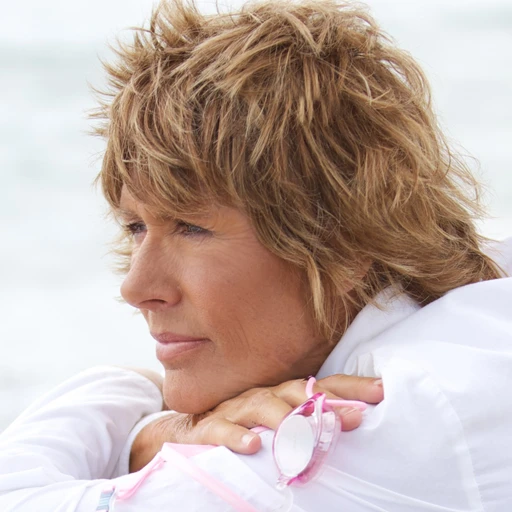
Diana Nyad
Legendary Swimmer and Endurance Athlete, Public Speaker, Author, “Find a Way”, Journalist, Co-Founder of EverWalk
On September 2, 2013, at the age of sixty-four, Diana Nyad became the first person to swim from Cuba to Florida without the aid of a shark cage, swimming 110.86 miles in fifty-three hours from Havana to Key West. In the 1970s, she had become known as the world’s greatest long distance swimmer with her open-water achievements, including a record-breaking swim around Manhattan. For the next thirty years, Nyad was a prominent sports broadcaster and journalist, filing compelling stories for National Public Radio, ABC’S Wide World of Sports, and others. She is the author of the bestselling memoir, Find a Way, and three other books; is a national fitness icon, a talented linguist, the co-founder of EverWalk — and one of today’s most powerful and engaging public speakers. She performed her off-Broadway show, The Swimmer, at the Minetta Lane Theatre in New York City in 2019.
John Shegerian: Do you have a suggestion for a Rockstar Impact Podcast guest? Go to impactpodcast.com and just click, be a guest, to recommend someone today. This edition of the Impact Podcast is brought to you by ERI. ERI has a mission to protect people, the planet, and your privacy, and is the largest fully integrated IT and electronics asset disposition provider and cybersecurity focused hardware destruction company in the United States, and maybe even the world. For more information on how ERI can help your business properly dispose of outdated electronic hardware devices, please visit eridirect.com. This episode of the Impact Podcast is brought to you by Closed Loop Partners. Closed Loop Partners is a leading circular economy investor in the United States with an extensive network of Fortune 500 corporate investors, family offices, institutional investors, industry experts, and impact partners. Closed Loop’s platform spans the arc of capital from venture capital to private equity, bridging gaps, and fostering synergies to scale the circular economy. To find Closed Loop Partners, please go to www.closedlooppartners.com.
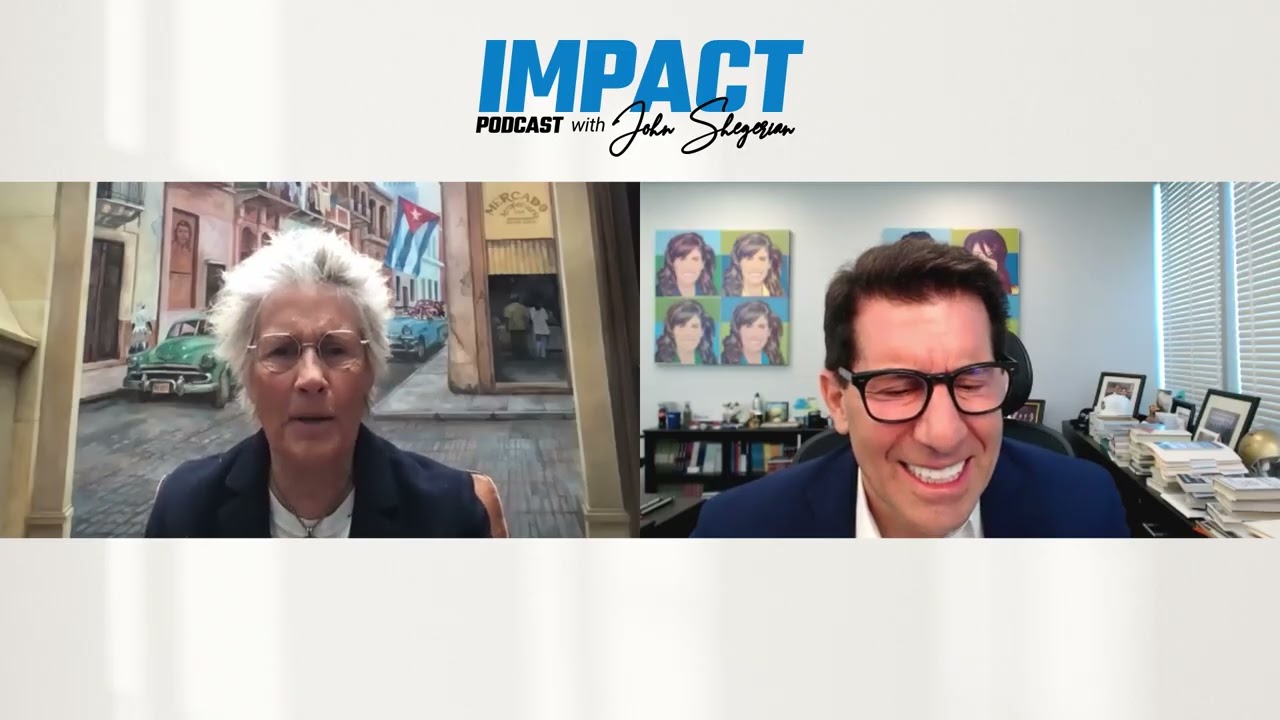
John: Welcome to another edition of the Impact Podcast. This is a super, super special edition. I rarely get a chance to interview my heroes. She’s one of my heroes, Diana Nyad, here with us today. Welcome to the Impact Podcast, Diana.
Diana Nyad: John, it’s my pleasure. You know, the truth is, I have so many tech questions for you that I wish we could just scrap my interview and let me ask you an hour’s worth of questions.
John: Diana, I promise you, whenever you want, I will answer. I will be your tech, I will be your personal geek squad whenever you need it. So I’ll give you my cell phone number, and after this interview, I’ll answer any questions you ever have.
Diana: You shouldn’t have said that. You’re going to regret that statement, John.
John: Well, like I said, you’ve been one of my heroes. And ironically, I’m 63 years old. I’m going to be 64 in five months.
Diana: It’s about time. It’s about time.
John: It’s about time. It’s about time I level up and actually accomplish something when I’m 64, because what you’ve accomplished in your entire lifetime, not only when you were 64, has been nothing but incredible. And for those who don’t know your journey, we’re going to share it with the next generation of future fans of yours. You know, talk a little bit about where you grew up and how you got on this journey to start with. Where are you from?
Diana: You know, it’s a mishmash of things. I was born in New York City. I had two foreign parents. My mother was French. And so I had a kind of cosmopolitan little young life of museums and knowing Paris and all that. And when my mother divorced my father for the second time, that’s a whole other story, we moved to Fort Lauderdale, Florida. So I went through high school in Fort Lauderdale and the ocean was the backdrop. The ocean was my playground. And when I was nine, John, the Cuban Revolution broke. And all of a sudden, those of us living in South Florida, Miami, Fort Lauderdale, we overnight, because that’s what Fidel gave his people, 24 hours, you can get out. Don’t want to live with socialism. Go ahead. But you can’t sell your homes. You have 24 hours. Go to the bank, get all your cash. And they did. They went to Miami, Fort Lauderdale, and these became my new friends. I was dancing salsa. I was eating Cuban food. And I was developing a tremendous mystique about that suddenly forbidden island right off our shores. My parents had gone and danced salsa in the Hotel Nacional. We knew Cuba. We knew Havana. But now it’s forbidden. And I was a little swimmer. Already at age nine, I was a little championship age group swimmer. And I was standing on the beach with my mother. And I said, “Mom, everybody says Cuba’s right out there. It’s so close. I can’t see it.” She said, “It’s just over the horizon. Havana, if you just went straight, you would dip over the horizon and you’d arrive there. As a matter of fact, it’s so close that you, you little swimmer you, you could actually swim there.” And I said, what? Swim there. And I’ll tell you the truth. That phrase lodged in the back of my imagination until I became an open water swimmer in my 20s. It’s a blue planet. I don’t need to tell you how blue it is. And let’s hope we keep it that way. But you could swim in any thousands and thousands people do. Places all from the Sea of Japan to the Gulf of Thailand to the English Channel. And I did many of those, but Cuba was the one of my soul because it started so early. It had such depth and meaning to me. And when I finished, President Obama, who I’ll just interject quickly, to me was a great human being and a great president. He invited me into the Oval Office. And the first thing he said was, “You just set the standard. You left one shore. And shortly thereafter,” it didn’t seem shortly thereafter to me during the 53 hours, “but you touched the other shore. You showed us that we can come together again.” And that was his goal, which unfortunately, as we see now, has not come to pass. So Cuba was a big part of the raison d’etre of my wanting to get from one shore to the other.
John: That’s fascinating. So it was your mom that really left that indelible mark on you that you can do this, you little swimmer, you can actually make this happen.
Diana: Yeah.
John: That’s incredible. So the first time you tried to go from Cuba to Miami was when you were 28?
Diana: Not Miami.
John: Oh, I’m sorry.
Diana: That’s several hundred miles. It was in the west, Key West.
John: Key West? You were 28 years old at that point?
Diana: Yep, 28.
John: And then that didn’t work out. Now fast forward, what was your career like between 28 and 60 years old?
Diana: Yeah. I tried Cuba at age 28. At age 29 and 30, we went back down to Havana to give it another go. Weather and visa denials and all kinds of things kept me from it. And I thought, you know what? I’m starting to get offers from the wide world of sports and national public radio. And it’s time for me to grow up and really make a career for myself. And so I left that powerful Cuba dream behind for 30 years. Am I going to complain? Many people would die for that career. You’re going from Olympic games to the Tour de France to the Ironman triathlon and watching the best in the world pursue their excellence. And I was inspired. And on the other hand, John, when I was turning 60, so that’s 30 years in that career and 30 years since I had first tried Cuba, a little more than 30, I started to feel the malaise of a spectator. I’m following other people who chase their big dreams, which is what I believe in. And I’m not chasing dreams. I’m just telling stories of other people chasing their dreams. Not that there’s anything wrong with that. Great storytellers have great careers too. And I like to think I’m among them. But I wanted to get back to digging down to my every fiber of my potential. And I thought the Cuba swim is the one. Do you know that since 1950, the greatest open water swimmers in the world, many of them have tried the Cuba swim? It’s called the most difficult swim on the planet for many reasons, starting with the mighty Gulf stream going East at 6.6 miles an hour, while you’re trying to go North at 2.2 miles an hour. And then we could mention the sharks and the jellyfish and all kinds of other nasty things out there. But it just was a deep seated, holy grail for me, you know?
John: Well, you really were chasing what Bannister chased and Sir Roger Hillary, John Glenn, Neil Armstrong and all these people that have become icons in our lexicon, in our world. You were chasing the Mount Everest of swims.
Diana: Well, first of all, I would never put myself-, you sound like an idiot when you call yourself, yeah, I’m the new Sir Edmund Hillary. So I don’t refer to him. I don’t put myself in the same sentence with those people, John Glenn, et cetera. But my story wasn’t even so much about how big the goal would be, such as getting to the moon. My story was about not giving up on whatever big goal you’ve got. I always thought, how could all these millions of people around the world and Netflix want to make a movie that nobody can relate to? I mean, how absolutely eccentric it is to swim that many hours, to train for it, to research it. But the point was, is that people are living their own lives. People are battling cancer. People are raising disabled children. People are out of work and up against the wall economically. And even less dire straits, people want to write that great American novel that they had in their plans and they never could get to it. And I’m so honored to this day, people turn to me, we get notes, letters and video messages every day saying, I want to be this, I want to do this. And when I watch your story, it makes me believe I can stick with it, I can do it. So that’s really the heart of my story with the words I spoke when I finally reached that beach at age 64, your tender young age. I came out of the water and I said, we, not me, we, those people on the beach who were screaming and crying, the 25 million people watching, what I said was, we should never, ever give up. So that’s the heart of the story, not necessarily how magnificent the actual goal was.
John: When you were between 30 and 60, when you were doing this beautiful-, and I was a big fan of yours while you were storytelling between 30 and 60, who inspired you the most? Who were some of your heroes in your career and in your life that led you to that moment at 60 to say, aha, I’m going to go become one of them again? I’m going to become my own hero.
Diana: Well, I must’ve seen the Jim Thorpe story. I think it was called Jim Thorpe All American. So when I was maybe 10 and then again at 11 and 12, I didn’t count, but I might’ve seen that movie 25 times. So here’s this poor kid on a Native American reservation and he has no money and he has no coach but he’s just brimming with talent. And he somehow finds a way to run, jump and become the greatest athlete of his time. He should be listed as one of the greatest athletes of all time. So that story stuck with me. I’m going to be Jim Thorpe. I’m going to overcome all the odds that are in front of me. You know, I’m going to be Jim Thorpe All American. So he was a huge inspiration to me.
John: When you made the decision at 60 to do this, was mom still alive or passed by that time?
Diana: She was passed, unfortunately. And I’ll tell you the truth. As a French woman, my mother, honestly, if she had been alive, she would have been much more thrilled to see that I made it onto Dancing with the Stars than I swam from Cuba to Florida. That’s the truth.
John: So I’ve heard you recount getting back in the pool at 60 and just start putting in the time, the hours and how you’d have to ice your shoulders, your back and your neck. Talk a little bit about physical versus mental. When you went into the training and then eventually accomplishes unbelievable 110 mile swim, what’s tougher? If you’re going to weigh out the physical and mental, explain where they come out on the scale of doing heroic feats like you did.
Diana: Yeah. And I think most athletes, like you talked to Alex Honnold who went up El Capitan. And then I can think about many, many different athletes. And I bet you even Sir Edmund Hillary would today agree with this, is that first comes the physical. There’s no way that mind over matter is going to get you swimming in the open ocean for 53 continuous hours just because you want to, just because your mind is a steel trap and you’re going to stand on that shore with no training or barely any training, but you’re going to make it now. It could be, if you’re surviving, if you were thrown out of an airplane crash and you landed in the ocean, you would survive for 53 hours, but that’s different than propelling yourself and athletically getting somewhere. So it starts with the physical. And I’m talking about people say to me now, do you swim? Do you still swim a little? And it’s preposterous to compare. If I go and swim for one hour, which is a decent swim for a human being to do, to stay in shape with other things…
John: It’s a great swim.
Diana: … but it’s really not bad. But I was swimming literally in the Caribbean and then off Cuba and off Key West and in Mexico, 14 hours one day. And I have a lot of respect for anybody who’s out there doing marathon swims, but I would do swims that nobody, a lot of marathon swimmers in their entire careers don’t do. So I was swimming 14 hours this day. I’m on the bathroom floor in the fetal position that night because I’m so whipped. I can’t get up for dinner, but the next day I do get up and I do 15 hours. So we were doing years and years of these swims, which frankly was much more taxing than the actual swim itself, those 53 hours. And so when the body gets ready, when the shoulders are now prepped and the lats and the triceps and the core are prepped to do all that pressing, handle all that duress out in the open sea, now it becomes entirely mental. And the way I used to look at it is this, I used to feel like before the start, I would take an imaginary titanium cap and pull it down over my head and say, this is my will. And it doesn’t matter what happens, what unexpected, unforeseen calamity happens. I’m going to bring the right arm up again and the left arm up again. Nothing is going to stop me. And the four times we didn’t make it, my team and I, and I need to mention the team because never would I have walked up on that shore without that team. Experts in every way, committed in every way. We did it together. I didn’t do it alone. But I would say to them at the start on the Cuban shore, I said it five times, you guys have dedicated yourselves. You don’t deserve a person who would quit. I will never, ever when I’m out there, no matter what pain I feel, no matter what fear I encounter, I will never put up my hand and say, I’ve bitten off more than I can chew. I didn’t train hard enough. I’m not gutsy enough. If Mother Nature rises up with steroids, which it did four times, that’s different. None of us can complain or go against that, but I will not quit on you. And so I think the mental is what-, once you’re physically prepared and maybe the astronauts would say the same thing. They do all that training. Once they get in there, the body’s ready. The physiology is prepared to withstand the anti-gravity and all that. And now it’s up to them to be focused, to be intelligent, to be prepared for a danger and it’s all mental. So they sort of ride on top of each other.
John: Well, I’ve listened to you. By the way, for our listeners and viewers, you want to read a great book, here it is right here. Find a Way, Diana Nyad, Find a Way.
Diana: There you go. There’s a good little weekend reading, John.
John: It’s a great little weekend read. This is a great, great book. And our listeners and viewers, you should buy this book. Find a Way. Team building, lost art and science of team building. But you always give credit, which is just again, a testimony to your humbleness, to your team. How did you build such a great team? How do you keep a team working towards the same goal? People don’t know, really understand that art and science anymore. And it’s a lost art.
Diana: You know, it seems to me it comes from mutual respect. So yeah, I might be the so-called star of the operation, the expedition. But if that team of shark divers putting my life ahead of theirs, they’re going under picture, a pitch black night, no moonlight. And we don’t use lights, lights attract sharks, lights attract jellyfish. So it might be a pitch black night and they’re willing two by two to swim under me 15 to 20 feet under looking for the luminescence of shark’s eyes. And if that animal comes too close and is thrashing, arching the back, we use no fatal gear, no spearguns, they’re willing to take a PVC piping contraption with a ball on the end of it to nudge it and get it curious and move it out a half mile, maybe a mile. So without that team, I’m out there a sitting duck. Sharks, as a general rule, homo sapiens are not their food. But if they’re hungry and they haven’t eaten for a week or more, which can be frequent out in the open sea where there are no reefs, no bait fish to feed on. And now an innocent swimmer comes by, John, making a little low frequency vibration on the surface, that shark with its sonar, its ampullae, from two miles away, senses wounded, dying fish. And they’re under us in a hurry. That doesn’t mean they want to eat you. I love when the marine biologists say the chances are a shark is not going to come up in the middle of a flotilla of boats. They see the holes, they’re intelligent and eat you whole. And I say, well, what does that mean? Why do you have to throw the hole in there? They say, well, now they may come up and take a leg for instance. This is a very serious event. I started with them, but I could go with Bonnie, my head trainer, the navigator, a mathematical genius to get me across this current that’s going strong and tugging me east every second of the way. There’s the medical team, ER doctors from University of Miami. This is a true expedition. And that’s why we mentioned Sir Edmund Hillary a couple of times. He was very careful from day one of descending from Everest to say that his sherpa, Tenzing Norgay, reached the top at the equal time that he did. And so that team, they reached that shore while I did.
John: That’s really cool. You know, for our listeners and viewers who’ve just joined us, we’ve got Diana Nyad with us. To find Diana, to hire her to speak at your great event, go to www.diananyad.com. We’re going to put all her social media assets in the show notes. You can find her on her socials, some fun things I’m going to bring up about her social later and also read her book or watch her movie on Netflix. Diana Nyad, Find a Way. Diana, talk about that.
Diana: John, I know you’re very busy, but if you have time to be my public relations agent, I would benefit from you. You’re very good. Thank you.
John: You’re more than welcome. Diana, let’s talk about that four letter word that a lot of people don’t even like talking about. Fear. F-E-A-R. Talk a little bit about your relationship with fear. You announced that you were going to do this at 60 years old and take on this, again, Mount Everest of swims, how much fear was running through you? And by the time you got in the water the day of, how much fear was still running through you ahead at that point? And what’s your relationship with fear?
Diana: Well, in this particular case, and I wouldn’t say that I’m absolutely absent of fear in my entire life, you know? Believe me, if you drove with me, you would know what fear is. The truth is, if I’m going to be intelligent and I’m going to put together a crew that’s intelligent and is at the top of their game in every different aspect of this expedition, hopefully they remove the fear. I can’t be out there thinking of sharks every stroke. After a while, you’re in a deep state of sensory deprivation. You’re in, of course, a state of sleep deprivation. So if I can’t just say forget it, you’ve done all the right preparations for the sharks with this team, these six guys, then I’m going to be paranoid, right? Every cloud that passes over and casts a shadow on the surface as I’m breathing and look over there, I think I see a shark fin. So I just can’t be afraid. It’s like asking an Indy 500 car driver, aren’t you terrified when you go at 220 miles an hour within a centimeter of that wall coming around? They’re not because they’re professionals and they’re prepared. So there’s not that fear, but there’s definitely the psychological fear. What if I don’t make it again? You know, I’ve already tried four times, this dedicated team of mine, none of them ever get paid a cent. Their expenses, yes, but never a salary. And they kept sticking with it because they believed in our friendship. They believed in the grand adventure we were having, and they believed in wanting to be part of making history. So we were in it, but I said to myself the night before we went for the fifth attempt, I was strolling the streets of Key West. I couldn’t sleep. You know, I was excited, but I was nervous. And I thought, if I don’t make it again, a fifth time, are these good people really going to come back another year and train for another year and leave their dreams, leave their families and their dogs and whatnot? And so that was more the fear for me was, what if you don’t make it again, are you going to do this the rest of your life? Sanjay Gupta, when we were going the fifth time, he and CNN had been covering us for three years. He said, “Diana, let’s face it. You’re going to be 95 and still trying this swim. It can’t be done. We’ve witnessed it. If you can’t do it, nobody can do it. It can’t be done. But I tell you what, if you ever reached the other shore, we’ll be there waiting for you.” So I got to thinking, will I really be 95 and not do anything else with my life and ask these people to continue? So that was the fear much more than fearing what was out there. ‘Cause that you got to let go of, you can’t be swimming in fear.
John: I so agree with you, and that’s a beautiful metaphor. You can’t be swimming in fear. That’s, I think, for anybody at any age. I love that. Speaking of age, I shared with you a little bit before we went on air that I’m 63 and I’m about to be 64. And truly are, you have been for the last 40 years of my life, one of my real heroes and someone I’ve really followed. And really, I’m just honored to have you here today. Talk a little bit about age and the human potential. I think there’s some misconceptions. I mean, you’re now in your 70s, I’m going to be 64. I feel younger and better than ever in so many ways. I still want to do big things. How do you keep going at your age and are sharp as a tack mentally, obviously physically, you look wonderful. What’s the relationship with age in your dreams and never really giving up at any age on your dreams and don’t use age as an excuse?
Diana: Yeah. Well, I’m 76 now, I’ll be 77 this summer. So what the fuck, John. I just get up every day and grab the tiger by the tail and say, I don’t know when this is going to end. I think I have another 25 years. I bet I’ll go to 100. But at 100, will I be as vigorous, as vital mentally and physically as I am today? All I know is that I rail against categorical limitations. So I understand why, but we’re very big in America, especially maybe in the Western world, of making categories from statistics. So I don’t blame UnitedHealthcare or any of the healthcare agencies for saying, “Well, if you’re 64, John, if you’re about to be 64, you’re probably feeling this and you’re not capable of this anymore. And you, Nyad, at almost 77, you’re slowing down because we have the stats here. We have hundreds of thousands of people who say that’s how they feel.” Well, I say, really? Why? I get up. Am I aging? Of course. That’s going to be the organism. It ages. And the skin, there’s very little we can do about that, but you can take charge of your physical wellbeing. And then we have to mix genetics in, where does that play a part? People unfairly get cancer all the time. You never did anything to deserve that cancer, smoking, nothing like that. So I like to just take charge of my own life. A woman came up to me maybe five years ago, I was giving a speech somewhere. And she said, afterwards, “You know what? You and I were born on the exact same day, August 22nd, 1949. And you know how it is. We get up these days, we feel sore and we hobble around for a while”. I said, “Don’t put that on me. You tell me that you get up and you can barely walk. That’s not how I do because I take care of myself.” I’m in exemplary physical shape. I do extreme workouts. I make sure to take care of myself, food wise, emotionally. So when I wake up, I bound out of bed and I get going for that next day and live it the best I can. So I just don’t believe in these age limitations. As you know, a 90 year old man has climbed Mount Everest. And then we could meet people your age who are already feeble and given up and half energy’s gone. So it’s up to you. And then you get the luck of genetics. It’s up to you to make yourself healthy and strong throughout the years and not take on, what does that age mean? You know?
John: You’re absolutely right. With that, there’s been this whole trend in our lifetimes, yours and my lifetimes of now health optimization, let’s just call it. If you were to give some greatest tips from Diana and I on health optimization with regards to sleep supplements and exercise… And by the way, I heard you interviewed, and I hope I got this right, because I tried this the other day and boy, did I fall flat on my face. I heard you in an interview, you do a thousand burpees twice a week or something like that?
Diana: It’s been my routine for several years. I’ve recently broken my wrist. So I’m on a reprieve from the burpees for a while, but it doesn’t matter whether it’s burpees. I don’t care if anybody knows, I go in my garage by myself, but I want to do something challenging at all times. Something extreme. Like a thousand burpees take two hours and 50 minutes non-stop, you know? So it’s a tough workout. I think anybody would call that a tough workout, but it’s not for a public pat on the back. It’s not swimming from Cuba to Florida.
John: Alone. It’s alone in your garage or wherever.
Diana: That’s it. It’s for me. But I think you may know that I’m rather well-known for claiming that sleep is highly overrated. We just talked a minute ago about not categorizing people.
John: That’s right.
Diana: And that’s with sleep. What sleep experts have said that every organism with different metabolic rates, different psychological profiles need to sleep eight hours and 20 minutes every night. That’s a third of your life. And I just don’t need it. I never have, except while training heavily. That’s different. But in everyday life, I couldn’t make myself sleep eight hours, and I don’t have any superiority complex about it. At dinner parties, I don’t say, hey, you lazy slugs. I only slept five hours and a half last night. I don’t care what anybody sleeps. People sleep what they need.
John: I agree.
Diana: And I have friends who need that eight hours, but I know lots of people who don’t need it. And I say, you look to yourself and you decide what you really need. And I do think they always say you are what you eat.
John: Talk a little bit about food and supplements. What do you do for food and supplements?
Diana: Well, that’s what I’m about to say. You know, the phrase is you are what you eat. It’s clear. I don’t care. I mean, nutrition is one of these areas that every day there’s a whole new theory. You know, you got to be taking vitamin D at 5,000 units a day for this and this and this. I say, just listen to common sense. If I have an apple and a glazed donut in front of me I know what’s going to happen, what’s going to burden my system, and what’s going to ease my system. So I try to put that fewer number of calories and the right kind of non-sugars. If you and I were walking down the street and we came across a gelato store, I’m the first one in there getting a honey vanilla gelato. But I think that that moderation. So when I die at 100, John, and they do the autopsy on my body, nobody’s going to say, I told you, she shouldn’t have had that Diet Coke. You know, I told you that was going to kill her. So I just go by what I like and try to be kind to what I know what’s going to happen once I put in my body. Many people have said this, the fundamental basis to good health is movement. And we are because of our screens, because of our modern lifestyles, because of working in an office or even at home all day the way we do. You know, imagine animals, we watch animals, they get up, they move. They don’t want to just lie down for hours and hours at a time. And we need to move. I think since I’ve been five years old, I’ve been in what you might call training. I’m always in a fairly intense gauge of moving. But even if it’s not that, even if I go to the beach at sunrise with my dog and take a stroll up and down. I apologize, I got a slight cough today.
John: Got it. No worries.
Diana: Movement is the key to health. That’s a bottom line of it.
John: Movement is medicine. So you just brought up a great point. This is our first conversation ever. And I didn’t know you had broken your wrist. So talk about a classic Diana Nyad workaround. You break your wrist, but movement is medicine. Movement is what represents you the most. What do you do as a workaround to keep your body going and keep everything fresh in your whole body, even though your wrist is broken? What do you do then for movement?
Diana: Well, I swim. I’ve heard that’s very good exercise. There’s a little swimming. I’ve taken up tennis. I’ve always been in love with tennis my whole life. And now I’m living in LA where the weather is good every day of the year. So I’m a tennis huge enthusiast. And I have a gym. I also lead a walking movement with Bonnie, my best friend and head of the expedition. Jody Foster played Bonnie in the movie.
John: He played you. [inaudible].
Diana: I couldn’t be more honored. Those two just…
John: Talk about two of the greatest actresses in our lifetime. My gosh.
Diana: They are. So we got lucky with that. And beyond that, truly beyond that, two gracious, humble people, they take fame and diffuse it immediately. If they met you, John, immediately, if you started to gush, they’d get rid of that. No gushing over them. They don’t want people to be in awe of their movie star fame. They’re just grounded human beings. And that’s what Bonnie and I have come to know with them. But where was I going with that? I forgot.
John: We’re talking about your work around. Just took up tennis. You live in L.A and the weather is great every day.
Diana: Bonnie and I, 10 years ago, started a walking initiative called Everwalk. [inaudible] long walks. We walked with a big group from Boston up to Maine. We’ve walked from White Rock, Canada to Seattle. And we have a website and an app and people walk with us. So walking is a big part. Also walking, like Steve Jobs said, like Henry David Thoreau said, is a wonderful conduit to thinking.
John: It is.
Diana: So we take all our meetings while we’re walking. And if I’m trying to solve a problem, I go out for a 10 mile walk. When I come home, problem solved. And then I have a gym. If we had time, I’d take my computer out there and show you. But I have a little neon sign. It’s only this big, but it says persist. It’s in bright orange neon. And when I get up before dawn, I like to beat the sun up every day. I get in my gym. Even if I can’t do my burpees, I’m going to do a bad ass workout in there. And I turn on my persist sign because isn’t that what it’s all about? You fail. You’re on the floor. You get up. You persist. So I could tell you what that workout is, but it changes almost daily. But I do a good two hours in the gym, along with the swimming, the walking, the tennis. So I’m moving all the time. In a hotel room. People say to me, oh, I got to buy $3,000 treadmill before I get started. I said, if you were in a jail cell, you could do burpees, abs, pushups and planks, you know. So you don’t tell me you need a $3,000 treadmill.
John: I’m with you. My favorite hack in a hotel is I go to the bottom floor, get on the stairs, go to the top, get on the elevator, come back down, just do it again.
Diana: There you go.
John: It is so awesome. It keeps me straight. You know, one thing I love about you, besides everything, is your love of music. I see you on Instagram and your love of music. If today I was introducing you to a large crowd at the L.A. Forum, and I asked you what do you want me to play as your walkout theme today? What would be your walkout theme today in L.A.? If you’re going to speak to a huge crowd today in Los Angeles.
Diana: Let’s go with, which is a song I sang out in the ocean for literally hours at a time to get myself through, Neil Young, Heart of Gold. I’ve been to Hollywood. I’ve been to Redwood. I’ve crossed the ocean for a heart of gold. So I tell people when I’m on stage, come with me. Be out in this state of sensory deprivation where you can’t see much. You can’t hear much. You’re not allowed headphones in this sport. No headphones. The discipline of the mind is tested along with the discipline of the body. And if I take Neil Young’s Heart of Gold and I sing the entire song and I know it, I know every beat of that song. So it’s with the tempo of my stroke. I’ve been to Hollywood. I’ve been to Redwood.And I say to people, what if you were to sit in those chairs in this convention hall for 53 hours? And not talk to each other. We’re going to give you food. We’re going to give you some water. You can go to the restroom. But there will be no videos up here on the screen. No music. Guarantee after a while, if you took a song or you took counting numbers, you would get through that time a lot more rhythmically and in a lot more less despair than just trying to have your mind wander off all over the place. So that’s why I use the music. And Neil Young will always hit the mark. [inaudible] Neil Young falsetto.
John: I love it. I love your love of music. It’s just so wonderful. And it’s heartwarming. Every time I watch you sing on your Instagram page, it’s awesome. You brought up car racing earlier. I don’t know if you’re a car racing fan. I like car racing, but I’m not particularly a fan. But I do love great movies. And I saw Brad Pitt in F1. Have you seen that?
Diana: Fantastic.
John: So did you fully relate? Was he speaking to you when he gave his little soliloquy on what it’s like when he locks in and the car’s going and he’s just in his own space and he said, I’m flying. When you get into a long swim, is that where your mind goes? Is that where, Diana Nyad, you’re flying at that point?
Diana: You know what? I think that’s not a bad analogy. And it comes with my saying that my sport, the really extreme level of distance swimming, it’s just so replete with suffering that it’s easy to talk about the toughness of it. But the truth is, when you do lock in, when your stroke is gliding and all those 14-hour swims have made your shoulders powerful and easy, you could go for days and days and days because you’re prepped for it and because that team is feeding you and guiding you… I’m not a religious person. I’m an atheist, frankly, but there is some otherworldly feeling out there that you are not only part of this blue planet, you’re literally immersed in this blue planet. And you’re part of the wonder, the awe of, as Carl Sagan said, this little pale blue dot. Not all the time, sometimes you’re suffering, sometimes you’re just grinding it out. But there are moments when you’re locked in and you’re gliding across the curvature of the Earth.
John: If at that same conference today, you walked on the stage to Neil Young, now you’re going to walk off. What’s the final thoughts you want your audience always to remember about you? What’s your legacy, Diana Nyad?
Diana: You know, I tell people a story, John, when I was going to the final sprint race I had as a kid, as a teenager, with the hopes of making an Olympic team. And athletes get real. After eight years of working toward that, I knew that night that my chances were slim to nil of making that team. But a friend came and she shook me and she said, “You’ve dedicated yourself like nobody else on our team for eight years. I agree your chances are right at nothing tonight. But why don’t you swim this race the way you’ve done the whole eight years with such a full-on commitment that you can’t walk away with regrets. You can’t give it anymore.” She said, “When you finish this race, no matter where you finish, when you touch the wall, I want you to close your eyes and close your fist and say, I couldn’t have done it a fingernail better.” Well, what I say to people when I’m leaving a talk, I say we can’t do everything we want in this life. Life is too short. And I know that the day I die, at maybe age 100, so I got a couple of decades left, I’m going to take that last breath and I’m going to say, oh, no, it can’t be over yet. I’m not going gentle into that good night. But I’m going to say, I couldn’t do everything. I wanted to meet more people, help more people, have more experiences. But at least I can take that last breath saying I did everything I did. So I couldn’t do it a fingernail better. No regrets. And that’s what I, without dictating to people, just tell my own experiences. But people write me all the time and said, hey, I went to bed tonight saying I couldn’t do that day a fingernail better. And that means the world to me, whatever their day is.
John: No regrets. She’s Diana Nyad. She’s a humble legend. She is the legend. www.diananyad.com. Hire her to speak at your next big event. Buy a book, read this book, watch her 2023 Netflix movie. It’s amazing. Diana Nyad, this has been just a simple joy, and you are just a wonderful human being. I hope I get to shake your hand one day in person, give you a hug. It’s just wonderful to meet you this way. And I just wish you all the best, continued great health, success, and keep spreading the great word that you spread, making the world a better place.
Diana: Right back at you. And to talk about you, that’s what you’ve devoted your career to, making the world a better place. So I’m honored to speak to you today, John.
John: This edition of the Impact Podcast is brought to you by Engage. Engage is a digital booking platform, revolutionizing the talent booking industry. With thousands of athletes, celebrities, entrepreneurs, and business leaders, Engage is the go-to spot for booking talent for speeches, custom experiences, live streams, and much more. For more information on Engage or to book talent today, visit letsengage.com. This edition of the Impact Podcast is brought to you by ERI. ERI has a mission to protect people, the planet, and your privacy, and is the largest fully integrated IT and electronics asset disposition provider and cybersecurity focused hardware destruction company in the United States, and maybe even the world. For more information on how ERI can help your business properly dispose of outdated electronic hardware devices, please visit eridirect.com.
 Spotify
 Apple Podcasts
 Amazon Music
 iHeartRadio
 YouTube
 YouTube Music
 Audible
 Pandora