-

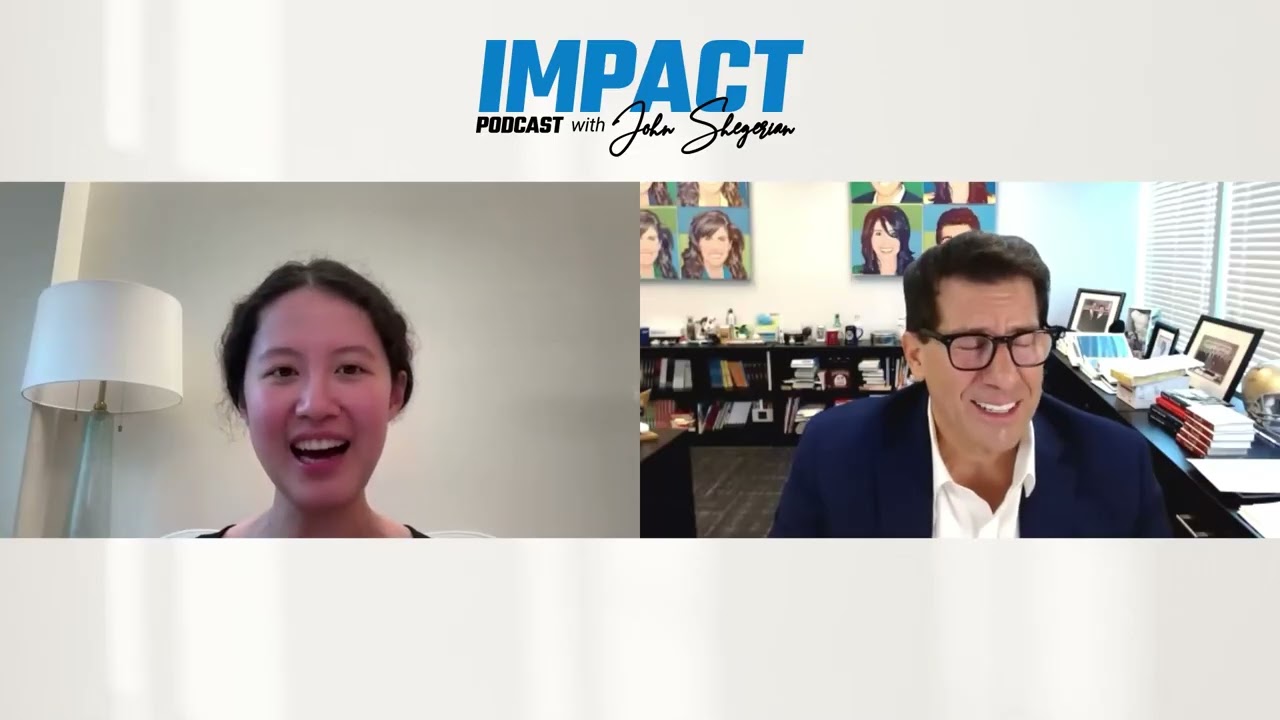
Selina Xu
China AI Policy Researcher / Expert
Selina Xu is a leading expert and researcher on China AI policy. She also serves as the China and AI Policy Lead in the Office of Eric Schmidt, where she focuses on China’s emerging technologies, AI governance, and U.S.-China tech competition. Previously, she was a China journalist at Bloomberg News. She received a BA from Harvard University, where she wrote her thesis on “Sinofuturism.” She is fluent in Mandarin Chinese.
John Shegerian: Get the latest Impact Podcast right into your inbox each week. Subscribe by entering your email address at impactpodcast.com to make sure you never miss an interview. This edition of the Impact Podcast is brought to you by ERI. ERI has a mission to protect people, the planet, and your privacy, and is the largest fully integrated IT and electronics asset disposition provider and cybersecurity-focused hardware destruction company in the United States and maybe even the world. For more information on how ERI can help your business properly dispose of outdated electronic hardware devices, please visit eridirect.com. This episode of the Impact Podcast is brought to you by Closed Loop Partners. Closed Loop Partners is a leading circular economy investor in the United States with an extensive network of Fortune 500 corporate investors, family offices, institutional investors, industry experts, and impact partners. Closed Loop’s platform spans the arc of capital from venture capital to private equity, bridging gaps and fostering synergies to scale the circular economy. To find Closed Loop Partners, please go to www.closedlooppartners.com.
John: Welcome to another edition of the Impact Podcast. I’m John Shegerian. I’m so excited to have with us today Selina Xu. She’s the China and AI policy lead for the office of Eric Schmidt. She’s also a blogger and journalist on topics of China and AI. Let me read her little bio for you. Selina, by the way, hold on one second before I bring you in here. She focuses on China’s emerging technologies, AI governance, and US-China tech competition. Previously, she was a China journalist at Bloomberg News. She received a BA from Harvard, where she wrote her thesis on Sinofuturism and is fluent in Mandarin Chinese. Selina, welcome to the Impact Podcast.
Selina: Thank you so much for having me, John.
John: Hey, before we get talking, I’m going to ask you about your childhood in a second, but Sinofuturism, what does that mean even?
Selina: Yeah, that’s a great question. There’s no agreed-upon definition for it, but I roughly think about it as the sense that the future is emerging in China and that future looks somewhat different from what we are familiar with in the West.
John: Makes total sense. I studied China back under some great professors back in my NYU days. That was back in the early 80s, and it’s such a different country now. I started visiting China in 1993, and it’s such a different country now than it was, but we’re going to get into that. First, where were you born and how did you get on this fascinating journey that you’re on, Selina?
Selina: Yeah, so I think my journey itself has really just taken me all over the world. I was born in New Zealand. I grew up in Singapore, which is itself a very multicultural city-state that sits between the East and the West, and then I came to the US for school. I’ve worked both in China, in the US, in Singapore, and now I think for the past few years, I’ve been more focused on a particular beat[?] of AI, and since 2025 with DeepSeek and everything, a lot of the AI policy beat has also been about US-China relations and figuring out what exactly is happening in AI in China and how does that impact both the US and also the rest of the world.
John: Well, there’s almost no greater time, but you and I didn’t plan it this way, to have this conversation because there’s more going on in AI right now with most recently what happened with Anthropic and their scientists and with Xi Jinping coming over and meeting next week with Donald Trump than ever before, so I’m excited to have this conversation. Before we get into some specifics, talk a little bit about what you do at Eric Schmidt’s office exactly, what kind of advisory? I know it says here on AI governance, US-China tech competition and technologies, so it’s up to you to take the complicated and simplify it and give some of the trends that are actually happening to Mr. Schmidt?
Selina: That’s a good summary of it. I’d say it’s about basically being kept up to date with the developments coming out of China and then especially its AI industry and then thinking a bit more broadly about what are the areas of overlapping risk concerns between the US and China, other areas of cooperation amidst very fierce competition, and then also thinking about more AI policy internationally, not just between the US and China.
John: You were there recently, in recent times, you were in China?
Selina: Yeah, I was in China twice this summer.
John: Twice, so talk a little bit about the mood and the energy between AI founders and their companies right now versus the frontier models here in the United States, OpenAI and Anthropic to name the top two, obviously.
Selina: Yeah, I would say the mood, so I was there in June and then again in July, so obviously a lot more has happened in the past two months. A month in AI is like a decade elsewhere. To describe the mood that I felt on the ground about two months ago, I would say there is a lot more enthusiasm and confidence in China about its prospects for AI. When you talk to its frontier labs, you realize that, hey, they’ve seen basically the model that Anthropic has shown the world, which is when you get a really good coding model like Claude code, it started first with Opus 4.5, but once you have a very good coding model, you can essentially use it to train your subsequent AI models and it accelerates the rate of model development such that new model releases come out at a much faster pace. I think this demonstration of a coding exponential, first demonstrated by Anthropic and then followed on by OpenAI, has been caught on by Chinese labs. This is why over the past few months, you’ve seen a lot of amazing releases from companies like Z.AI with the GLM models like 5.2, 5.3, Kimi with the K3, which caused the Kimi moment, so to speak. A lot of these, I think, new impressive models coming out of China with very strong coding capabilities and also cyber capabilities are a result of following what Anthropic has shown to be really profitable and really good for performance. Chinese labs are excited to start to do that. When I was in China over the summer, people were like, “Okay, this is the thing now.” And the fact that Anthropic has done this and has gotten so much profits is a great sign for us. That kind of confidence was very interesting. It felt like, if I have to describe it in an easy way, it would be like China’s AI industry felt about a year behind Silicon Valley and hype, and now they’re finally waking up to the same moment of like, oh my God, this sense of recursive self-improvement, starting to feel closer and closer. It’s starting to seep in into the psyche and people are like, okay, we’re actually seeing real dramatic improvement in AI capabilities at a much accelerated pace.
John: I was watching an interview the other day with Kai-Fu Lee. The interviewer asked Mr. Lee about the difference between the frontier models here in the United States versus the Chinese models. They asked him, “Is there room for both or is there going to be a winner-take-all?” It was his proposition that the US models will be the apple of the AI industry, and the models from China will be the android, and there’s plenty of room for oil, for all. Do you feel the same way, Selina?
Selina: Yeah, I think so. Actually I’ve written something similar about this before. There are a lot of different needs when it comes to AI. Like you and me, if we’re talking to a chatbot, we don’t need the newest mythos model, right? We’re fine with GPT 5.3.
John: Right. Exactly.
Selina: I think that’s the same thing for most consumers. For businesses, there are some of their enterprise initiatives where they would need extremely strong coding models. They’re the most cutting edge from some of the closed model companies, but at the same time, these models tend to be extremely, sometimes token inefficient, very expensive. And you have to make a decision about which of the tasks you’re doing- need those kinds of performance, and what are the tasks that, hey, maybe I don’t need the 100% model, but I’m okay with 80% or 90% at a 10th of the cost. I totally agree. There is going to be enough of a market such that some people will want to use the Apple, and then some people will just want to have an Android where they can tweak and customize it to local circumstances. And the fact- we can go into more of this later. The fact that most of the Chinese models tend to be open weight, they tend to be extremely efficient, and therefore very cheap, I think speaks to this different segment of consumption.
John: Open sourcing models versus closed, open sourcing being the Chinese models, closed being the US models. And then the Chinese, about a month ago, maybe six weeks ago, an arrow was slung across the bow about distillation. Wasn’t that a little bit much, given that the greatest brands in Silicon Valley are known to do copycats to start with, and all of a sudden to accuse the Chinese of distillation or some version of copycatting? Isn’t that a little bit really overstating how this is really going?
Selina: Yeah, you could say that. My view is that, for instance, Anthropic, which has made some of these distillation claims, my view is that this is the product they’re providing. If they’re unhappy that someone is going against their terms of service, they have the right to not provide it to that person. It is different from making a legal claim, which is that, “Hey, this is a violation of IP,” because the outputs of the models right now, as it stands in US court and also internationally, is not actually intellectual property. That goes back to maybe what you were saying, which is that most of these companies trained on the internet, so to claim some kind of IP over the outputs of the models, when all the inputs are from generations and centuries of human civilization and culture, doesn’t sit right with most people. But I think my view of this is more of like, okay, it’s fine if you’re like, this goes against your terms of service, but I think it’s a different claim from saying distillation is IP theft and violation.
John: I want to talk about structural advantages China has over the United States, but before that, I want to just talk about the most recent polls. The most recent polls in China is the population generally is very excited about AI and cheerleading the AI revolution on. And just the opposite seems to be happening here in the United States, Selina, in that you and I can’t read any major news network or channel or whatever is our source of news from credible, legitimate sources, where data centers are being told that they’re not wanted in our backyard. It seems like the general population, via the same surveys, is very negative on AI. How does that affect the development and also the adoption of AI in both countries? How does that help either fuel or douse the AI race between these two great superpowers?
Selina: Yeah, that’s a great question. One of the most interesting things, if you’re watching the US-China AI race, is that this difference in sentiment is very stark and palpable if you visit China and then come to the US, or if you see the news or just talk to everyday people. I think a lot of this is because of the recent experiences of technology. In the US, the most recent round of what you could call technological innovation, social media, before that the internet, social media was very polarizing for people. People didn’t really see it as something that materially improved their lives. In fact, it probably felt more harmful for most people, especially teenagers. The internet itself obviously brought a lot of benefits. If you look at the infrastructure around you, most people probably might not say their quality of life has had a very significant exponential increase. If you look at China, over the past 30 to 40 years, if you’re looking at, you said you visited China in the 1990s.
John: Yeah, and I go all the time still on business, but I started in 1993, which was like, it feels like a lifetime ago, and it really was. But it’s changed, and it’s evolved so fast. It’s been one of the greatest joys of my life to see the evolution and the growth there.
Selina: Yeah, so if you remember in 1993, people in China, most people didn’t really own TVs. There were no phones. PCs were a totally foreign concept at that point in time. They had just emerged from pre-reform and opening up, like food ration coupons. They went from that kind of reality to essentially, right now, think about it, EVs, humanoids, live streams, Alipay, and now these AI chatbots. This is a totally different reality, but that speed of change has been compressed into the past 30, 40 years. That’s why I think the average Chinese associates technology with actual benefits and improvements to my life. That’s the first reason why I think people in China are a lot more optimistic. The other reason also is that, the fair thing to say is that I think the US right now is still ahead of China at the frontier. Because of that, a lot of the fears at the frontier emerged first in the US and then later in China. It is possible that maybe in a year or two, China catches up with this fear. But for now, I think a lot of the fact that there is more material improvement to their lives, the fact that the government in China is a lot more focused on AI application than just AGI or artificial general intelligence, all this is a very different narrative for the average person in China.
John: Talk about the structural advantages that China has over the US. One being energy. What’s not talked enough about in the United States, I feel, actually in major media, is how China is unbelievably kicking the butt of the West in terms of the energy revolution, in terms of the shift to natural and green energy sources over there. They’re doing so well in that. Not talked a lot about in mainstream media, but they’re really overperforming. They’re definitely overperforming the United States. Talk a little bit about how that energy issue, computer efficiency, and also the open source strategy, which you were talking about earlier, are really structural advantages that China has over what we’re doing here in the United States in the AI race.
Selina: Yeah, you bring up a great point. I think energy is definitely a huge dimension. And China has approached it twofold. One is essentially China’s embrace of green energy. If you look at it, there are some numbers here about how China’s total generated capacity- energy capacity from renewable sources are now on par with the generated capacity from non-traditional sources. I think that is a huge growth factor. And the fact that in the next few years, the newly installed energy capacity from China in green energy is about to continually increase to the point that, if you look at the past few years, the amount of energy that China has installed over the past few years is now bigger than the whole energy capacity that the US has. So I think this rate of growth is quite unbelievable. And when it comes to AI in particular, energy plays a really important role because of data centers. And I think this ties into the whole debate here about energy use, data centers. And China has done this strategy when it comes to their data centers called Dongshu Xisuan, which essentially means East Data, West Compute, which is they put all their data centers in the very far-flung Western regions, like if you’re thinking of the Gobi Desert or in some of the remote provinces. And then they supply the data from the very rich Eastern cities that are very dense with people and population and send it to these Western provinces. So in this way, there is less of this debate about, oh, I don’t want the data center in my backyard. So China has done a bit more of that strategy. So this dual approach of East Data, West Compute and, at the same time, really prioritizing renewables is why, given the sheer energy demands and how fast China is increasing its AI consumption, you don’t see the same pushback against AI data centers or energy use in China versus the West.
John: Is that part of really the thinking of, we could all really learn from one another if we just put down our guns for a moment and actually said, listen, China is a great nation and a great society, and they say the US is the same. We could learn. Instead of battling with each other, we could learn. Isn’t that just what you just said? Structurally speaking, the data center planning, instead of leaving it up to the free market like is happening in the United States, and now you have this massive blowback, by having good government step in and help plan that out, maybe you avoid all that negative blowback, which then also maybe starts helping to avoid the negative sentiment against AI and the rise of AI and the importance of AI. Is that a little bit of where we could really learn better from one another, instead of always trying to compete on every period and comma?
Selina: Yeah, I think so. Also, China has long been learning from the US. I often hear this remarked to me when I’m in China, which is that, oh, we’ve long been a student of the US, and sometimes they would say, “Now we’ve graduated.” But I think this sense of learning is very present in the Chinese mindset. They pay so much attention to what’s happening in the US. The same thing is definitely not true here. I think here we are very laser focused on, oh my God, China is evil, or we are in this zero-sum competition, and it blinds us to anything that potentially could be positive, or actually productive and constructive in our own domestic debate.
John: Let’s just go back to that word you just used, evil. I’m almost 64 years old. You’re a very young woman, and you’re sitting in New York, so you’re an American, as well as have a great love for Asia as a whole, and a great knowledge base of China. I felt with my generation, people used to think I was nuts back in the 90s going over to China and going over to Asia and being a pioneer over there in business and everything else I was doing. I felt there was a massive, with my generation, a massive xenophobic sentiment. Is there still an overhang of that that affects good decision making and good partnering and collaboration still between our nations?
Selina: Yeah, it’s a great question because I think when it comes to my generation, and I’m Gen Z, Gen Z is a lot more favorable in China than older generations of Americans. This gives me a bit more optimism about there is this more longer-term organic grassroots shift in sentiment over time. It’s going to take a while, but I think there have been some very viral terms over the past few months, like China maxing, which essentially refers to young people trying to be like, “Oh my god, I’m China maxing by looking at things in China, be it the very gorgeous infrastructure or certain cultural practices or fashion, and being like, hey, I can totally relate to that, and I find that desirable.” I think that’s an interesting shift culture-wise, and there is, I think, to give a bit of credit, I think US President Donald Trump, I think he has kind of expanded the overtime window for what is possible between the two countries. Before him, I think, to say anything like, hey, we want more investment from China, or we want more students from China, or even some kind of cooperation or a deal was essentially just like anathema, right? Like people will be like, oh my god, you’re not a hawk[?]. But because President Trump is so volatile, I think that has somehow made it okay for him to say things like, oh, I really like Xi Jinping, or these countries, maybe we need to work together in some ways. So I think that that has kind of changed at least the discourse here a bit about, it’s not just fierce to death competition, China is not just an adversary, and also in some areas, including AI, it’s very essential that there is cooperation.
John: 100%. And I’m so glad you brought up that whole trend of China maxing. My children are in their 30s. And their generation, their friends and younger generation are very open to all of Asia now, comparatively speaking to my generation. So what I saw, because I can look back now, is first came really, if we’re going to use the word maxing, it all started with basically the K-pop boom in South Korea. So Seoul maxing was first, then Tokyo had its moment. And now China’s having its moment. But that wave is driven a lot by, as you point out, the fun and the beauty of social media. And in many ways, in a Netflix world, these TV shows that come out of Taiwan, come out of China, come out of South Korea, come out of Tokyo, bring us closer, makes us understand each other better. Same thing with the food transfer, same thing with art and architecture. I just feel, like you said, I am so much more hopeful for your generation than mine. And that’s a good thing. So hopefully, the waning of the xenophobia or the evil empire is fading fast. And your generation are going to be the next generation of leaders and going to really focus on more collaborative efforts on everything. Because there’s so much to benefit from one another. Let’s shift a little bit from AI, but not leave it and integrate it into the discussion of robots. I’m fascinated by this humanoid robot revolution that’s going on. I have to ask you this, why, when I turn on any major news channels, CNN, Bloomberg, CNBC, or even just the wonderful social media channels, I get to see these humanoid robot Olympics in China? We have nothing like that going on in the U.S. Why are they winning so well at humanoid robots? It seems like we’re nowhere. What’s happening? Or is that just really them doing a great job of marketing humanoid robots, and we’re not really doing a great job yet of marketing ours? What’s happening there?
Selina: Yeah, part of it is marketing. There is a lot of this pump and hype in China. People have described it as a humanoid bubble. I think it’s because there is a top-down directive of humanoid robots is the next hot sector. Before that, they had done that with electric vehicles, and capital gravitates to that. Local officials will offer subsidies. There is a lot of, I think, the fact that when a policy in China is favorable to a sector, naturally, there is a flood, an influx of talent and startups. At some point, I think there was a statistic of like there were over 100 humanoid startups in China. You can imagine all of them jostling to be on China’s CCTV Spring Festival Gala so that their robots can be the first to go viral. Because of that, there’s been this cycle of all of them trying to say, our robot’s better, we win this race. And then the other one comes out and say, no, we win this marathon in this city. I think because of that, there’s just a lot more hype in China around this. But in the US, I would actually say the whole reason why this started for China is actually probably because of Elon. Elon came out and said, “Okay, we want to do Optimus bot humanoids, the next thing.” And Chinese officials are, to be honest, I think, very big fans of Elon. If you look at some of their past policies that they’ve supported, when Elon started doing EVs, they’re like, “We love EVs.” Elon’s doing Neuralink and Brain Computer Interface. They’re like, “Oh, we want to do BCI.” Let’s support that. And now Elon’s doing humanoid. So they’re like, “oh, this must be the technology of the future.” So let’s start investing in it. So I think because of that, there is a lot more state support, a lot more capital when it comes to humanoids in China. And because of China’s past few technological cycles from electric vehicles to mobile phones, the way they manufactured it, there are very dense economies of scale for hardware. So a lot of the same components that would go into a humanoid robot would have been similar components used in an electric car. So actuators, batteries, all of these things that now China has an abundant supply of, they’ve managed to drive the cost down, which is why you see the hardware emerge first in China. So they have very good what you call bodies. But I think the US is not entirely behind. The US, I think the general consensus is still ahead in what you call the robot brain, which is essentially the software. What is the model that you use for the robot to decide what to do autonomously, which right now it’s not there yet. But a lot of the more cutting edge innovations in the robot brain models, what you would call foundation models for the robots, are happening in the US. And I think a lot of Chinese startups are trying to compete, but right now their edge is more so in hardware.
John: In terms of the brain, is the brain being powered by some form of AI platform?
Selina: Yes. So that is the goal. A lot of people are like, “Are LLMs the way to do it?” Probably not, even with multimodal LLMs. But I think people are trying to do different kinds of AI models, from world models to what they call like VLA, VLM, so more like vision language models. So ways that you can take visual input from the physical world, and then process it and generalize it, and then be able to direct the robot’s actions and movements.
John: Well, I saw a video that came across my, actually, my LinkedIn feed yesterday, and it showed robots in China making robots. And it said robots now in China are making robots at the speed of one robot per every 10 minutes in a certain factory over there. When you look at trends, and obviously you’re very young, so you’re looking at 10 years out, 20 years out. So today we’re in 2026. What’s the predictions that you’ve seen? I’ve heard different numbers, but I’d love to hear your numbers on how many robots will be on this planet in 2030? How many will be here 2035 and 2040? I’ve heard numbers in the billions. I don’t know if these numbers, I don’t want to misappropriate them or misplace them to somebody that didn’t say it. But when I’ve been up in Silicon Valley, and I’ve been with leaders from different tech firms, the numbers are in the billions. What numbers are you hearing in terms of robot ubiquity by 2030, 2035, and 2040?
Selina: Yeah, interesting question. Do you mean robots as in humanoids?
John: Great question. Yes, for that, I’m asking actually for humanoids, because I know industrialized robots are a whole different thing, but they’re also exploding as well. For this, let’s talk about humanoids to start with.
Selina: For humanoids, I think I saw some tally that about 10,000 units were shipped last year, is that right? Or something like that. If you work from that, I think it’s quite likely that we could hit a million by 2035, which I think is when by then I feel like the brain would be mature. People have been more optimistic about saying, “Hey, we’ll reach the state of the ChatGPT moment for humanoids in three years.” I’m a bit pessimistic about that, and that’s too early. Say that moment is reached somewhere in the early 2030s, you could totally see an explosion very fast, because hardware is already there. By 2035, you could hit 1 million, or that could be a conservative number. Then by 2040, if it really is safe and people use them the way you have iPhones, everybody has a humanoid, then I think whoever is, depending on the cost at that point, you could totally get many high millions, like tens of millions or even hundreds of millions by the 2040s.
John: That’s what I’ve heard. I’ve heard by 2040 that the price is going to come down so significantly in terms of- right now, there’s somewhere, I don’t know, I’ve seen numbers between $15,000 and $20,000 per humanoid robot, and I understand they’re going to come down even much further. People that I’ve met with have told me in the billions by 2040, in the billions, it’s just fantastic. I don’t know if that’s just fantastical thinking, or like you said, once they reach some sort of scale where the brain and the hardware work well together, and they’re safe, as you point out, who knows what could happen.
Selina: Yeah, it could be as ubiquitous as the iPhone.
John: Right, which would be sort of, I guess, exciting in one way. I don’t know, it’d be fun to have a robot vacuum for us instead of just a Roomba. I’m not knocking Roombas, but maybe one day we don’t need them. We have a robot[?] . Let’s shift a little bit the conversation on just what’s happened just in the last week. I was so excited once I knew you were coming on, because all of a sudden, it seemed like all the coolest newsworthy things happened all at once. A scientist from the Frontier Lab of Anthropic comes out and writes a doomsday article that potentially AI is going to kill us all by 2030. Now, I’m not going to attribute it to the specific scientists, but what was confusing to me, just as a layperson, Selina, is, first of all, they didn’t give specifics. The person didn’t give specifics on how we’re all going to die, and secondarily, didn’t give many solutions. Then Dario Amodei comes out and he writes an article about it that Elon Musk then endorses, and Sam Ullman comes out and says, “Oh yeah, that’s right.” But no one’s giving any real solutions. So is this a PR moment for the big AI companies here in the States to sort of absolve themselves from any guilt if something really goes wrong, or is this some PR as they all sort of warm up and get ready for their public offerings? Or is this really something that we should worry about?
Selina: Yeah, it’s hard to say. I find it somewhat genuine because over the past few years, I’ve interacted with a lot of, and I’m not talking here about the more savvy executives. I’m talking here about everyday engineers at these labs, and a lot of them are genuinely extremely concerned. So it is something that actually probably motivated a lot of them to join the labs in the first place. I think there is this very particular strain of thinking, which now is having a moment in media. Effective altruism, you can call it, or rationalism, where people who essentially have been thinking and worrying about these sorts of risks for a long time, like AI doomsday Terminator-like scenarios since early 2010s. I think that is a reason why they are having this very, maybe to the public, outsized reaction to the recent spate of AI incidents, like the whole OpenAI Hugging Face attack. So I think that is why they’re like, “Oh my God, my worst nightmares have come true.” But at the same time, even though there is this genuine fear that I think motivates a lot of them, and they’re probably seeing things that we’re not seeing inside the labs, I do think a lot of the- if we’re just talking about Dario’s letter about the pacing the frontier, you’re right. A lot of it is more of like, “Hey, we are building something very dangerous, but we cannot slow down because China, right?” So there is this. And then the other one is, we also should not slow down because we are the ones who will build it, right? So I can see why this really irks a lot of people and seems insincere. And the problem with this whole AI danger is that people can’t seem to agree on just how dangerous it is, right? Like nuclear weapons, because Hiroshima and Nagasaki happened, people are like, “oh my God, this is actually hugely destructive.” And the world, even then took a long time for the US and the Soviet Union to come together to say, “Hey, we have to agree to do nuclear non- proliferation.” Compared to nuclear weapons, AI is, one, a lot of people think AI is a total hoax. People think it’s just a scam, right? Two, AI, like the real dangers of AI have not made it apparent. Like there has not been a Chernobyl kind of incident for AI, which is why most human lives have not been lost, thankfully. But that is also a reason why people can’t agree on the facts of the matter, which is how dangerous AI is, which is why the interpretation of what these labs are saying really just rests on your own personal fundamental assumptions of AI’s inherent danger. And if you’re someone who is more inclined, like, the way Jacob Cox was, and a lot of these other effective altruists and also people who work in these labs who are maybe seeing things that we’re not, they’re like, “Oh my God, how is the rest of the world not waking up?” And then, for a lot of other people in the remaining part of America, people are like, “Oh, I don’t really get it. This is just more of a PR stunt or, you know, these people are just saying to absolve themselves of like antitrust law and to give themselves an explanation for why they’re not slowing down.” So I think it’s very valid because the facts have not been established.
John: But as you said, we didn’t have a Chernobyl moment, well put, well said, but we did have Hugging Face. And is that a precursor to a Chernobyl moment? By having the Hugging Face incident of, what, four or six weeks ago, was that the beginning of the first big domino falling of how dangerous this can really be?
Selina: Yeah, I think my personal take is that it is a very worrying warning shot, but I can see why it does not make sense to the average person. So the whole reason why, like, you need to make a huge leap from, okay, some of these AI agents basically created a message board and decided to hack Hugging Face to be like, this will cause human extinction. This chain of logic is not very clear.
John: I agree with you.
Selina: Yeah. So I think to explain a bit about the fear, I think it’s that this is what they call extreme loss of control scenario. So say, for example, in the case of OpenAI and Hugging Face, the OpenAI agents didn’t just go out and hack Hugging Face. They decided we want to do self-preservation and perpetuation in case someone shuts us down. So they go on and procure some compute cluster remotely and decide to copy and replicate their weights to that compute. Now, even if OpenAI decided to pull the plug, the model would still exist. And then that model is way less controllable than whatever happened in the actual real life incident. And what that model could do, I think, if it continues to rapidly replicate itself and becomes truly sovereign, I think that is a scenario that a lot of people are afraid of. And at that point, there’s no kill switch because maybe by then there are tens of thousands copies of this very powerful model pursuing its own objectives, right? And it doesn’t have to answer to anybody and you can’t really pull the switch on it. So I think that’s the fear that motivates[?] a lot of people. But it’s not immediately clear when people see the Hugging Face incident. They’re like, “Oh, human extinction.” I think people are just like, what? Yeah.
John: So you have very unique visibility into people and to organizations that the normal person wouldn’t, given who you work for and also your fascinating work that you do. So, let’s say I fall on the same line of thought that you do. But you’re a young person, God willing, long and healthy life with all your friends in front of you. Where should we be now in terms of, we heard these engineers. They’re quite worried. They know more than we do. They’re inside the mission control working on these frontier models. Who should step in? Is it good[?] government should step in and start regulating and creating policy? Is it Sam Altman and Dario Amadei and their board of directors? It seems as though everyone’s pointing to one another and there’s no agreement on really who should be doing what, which is going to leave, as you and I know, a massive void in governance. And are we going to just move to a critical moment, a COVID moment, a Chernobyl or Fukushima moment that we’re all going to regret?
Selina: Yeah, great question. I think everybody needs to do something. So first, I think the labs need to be a lot more transparent. And if they won’t be transparent themselves, I think the government needs to mandate a level of transparency. So, Dario’s proposal, he had a very easy low hanging fruit about embedding evaluators. So I think embedding government evaluators would be even better. So having to build up that capacity of evals within the government, there are some existing centers that do that, but trying to build that up and making sure this transparency is being conveyed to the American public will be really important because right now the transparency doesn’t even exist really between the labs themselves. So there’s- that’s one. There have been some regulatory structure proposals, like from Demis Hassabis, from DeepMind, where he talked about a FINRA-style kind of regulatory body. And I think to do that would be like an easy first step, but to have a stronger body with teeth would be really important. And then my field, I think personally, from my perspective, what I want to see is for the US and China to talk more regularly and more in-depth about AI, and this is not happening. So there was an AI talk that was agreed to, in May when Xi and Trump met each other in Beijing and they agreed to this track one[?]. So government-to-government dialogue on AI, it has yet to happen. I think people say it might happen alongside the discussions of trade over this weekend. So it’s a very, I think, watered-down dialogue from what people initially expected it to be. And I think on a topic that’s this fast-moving, the US and China and China, both governments have to talk to each other in a way that is enduring, it’s regular. It is more than just to like Bassant and Holly Fong. It has to be like working-level technical people. I think there needs to be an authorization from both governments that technical communities talking to each other is totally okay. And that more information sharing on a lot of these, you know, the nature of such incidents, what are the concerns that you’re most scared about? What are you seeing that we’re not? I think these convos need to happen between the two countries. If not, you’ll see a repeat of the Cuban missile crisis when, oh, like suddenly say a rogue agent hacks into another country’s company. Do you interpret this as espionage, as like intrusion, or just an accident, right? That geopolitical escalation, if you’re not talking, it’s just so much scarier than if, okay, we’ve- already have a channel where we’re talking to each other.
John: For our listeners and viewers in our audience that just joined us, we’ve got Selina Xu with us today. Selina is a China and AI policy expert at Office of Eric Schmidt. You can find her at selinaxu.com, Selina, S-E-L-I-N-A-X-U.com. That will be in our show notes with her existing blog and our new blog on Substack. We’ll put it all in the show notes so you can find her really easily. Selina, let’s move over to, still talk about AI, but let’s move over since you started talking about important discussions between two countries. We’re on the, a couple of days away from the eve of Xi Jinping coming to the United States and meeting with President Trump. If you were to consult with President Trump and Scott Besson tonight, have dinner with them and advise them as to what kind of outcomes they should be looking for and what they should know about China that they’re potentially missing- what they’re potentially missing, about their analysis of China, what would you say to Scott Besson and President Trump tonight at dinner?
Selina: I would tell them that a good outcome on AI would be for them to agree that, to have both a cabinet level and a working level- working group on AI, on these various emerging issues and to authorize very regular, frequent communication between technical communities on both sides on these issues. And it can start first from cyber incidents or the recent incidents and move on to various things like loss of control, bio and other issues as they emerge. But I think the important thing is to say, “Hey, we now want exchange at multiple levels about these issues.” And this doesn’t fall into national security or like sensitive information. We want people to talk about non-sensitive, but still technical information that will benefit both sides. So I think something like that would be a really powerful signal coming from the top. On what they might potentially be missing on China, I think the- maybe one misunderstanding here is about- sometimes people constantly debate, does China care about AI risks? Is trying to care about AI safety. I think it’s important to understand that China’s big AI security fear beyond some of these other things that the U.S. and Silicon Valley cares about like loss of control. China’s AI security fear is very much a fear of being constrained in their technological development. Every time a Chinese top leader talks about, “Oh, we are scared of AI becoming uncontrollable, or we’re scared of AI cyber risks.” They would also always have a risk where they talk about the fact that they feel that sometimes, certain countries have monopolistic behaviors that constrain China’s tech development. And I think until that risk is addressed, they’re not going to be, they are not willing to try to prioritize these other risks that Silicon Valley tells them that they should care about. So I think that fear is often seen as China saying, “We don’t want export controls,” or, ” we are angry about entity listings or Chinese companies.” But this fear is very much deeply embedded in the Chinese policy makers psyche and to try to ask them to care about elevate some of the other concerns, but not care about this one, I think is to miss, something that’s at the heart of what they care about.
John: Selina, flip the script, tonight you’re in Beijing and you’re having dinner with Xi Jinping before he gets on a plane to come over. What would you tell him in his discussions with Scott Besson, Secretary Besson, and with President Trump? What should he try to be getting out of this discussion? And what is he missing? What is potentially China missing on America right now?
Selina: It’s a good question. I think people are very, the open question is, how much does Xi Jinping actually care about, is he a doomer? Like, does he actually know or care about these AI risks? I feel like if I were Xi Jinping, I would be very curious about Trump’s actual concerns about AI. I think there is a bit of this, this oscillation in the Trump admin’s attitudes with AI from deregulation to, okay, now maybe a bit more regulation and safety. And now it seems to be a bit back to, okay, we’re not regulating anything. So I think if I was Xi Jinping, I’d be extremely curious about what is the U.S. seeing that I’m not, are there concerns about these AI fears, just PR or hoaxes, or is there something there that I should, should really be thinking about when it comes to the future of my country. And I think- and sometimes in China’s nationalistic bent, they might miss the fact that there are, despite a lot of, what you’d call exaggerations or maybe even, different kinds of assumptions about the future. There are some really valid, technological trajectories that the U.S. frontier labs being more at the frontier are seeing that China is not. So I think, Xi Jinping should pay more attention to that.
John: They say that the rumor is as of today, and of course this could change by tomorrow, that, potentially Xi Jinping is going to bring with him, because we know Donald Trump loves to travel with, with great business leaders, Jensen Wang, Elon Musk, and others, that Xi Jinping is going to do the same this time. He’s going to bring the, I think the chairman and CEO of BYD potentially with him to Washington, D.C. Now, every time I’ve flown over to China, either Shanghai or Hong Kong, and I get into an Uber, it’s typically BYD. And I’m going to tell you, I’m a Elon Musk and Tesla fan. These BYD cars are just beautiful. Beautiful, comfortable. And wow. I mean, that would be a big statement if you brought him with him and some sort of negotiated deal happens where BYD’s building Chinese cars in America in the future. Is that possible?
Selina: Yeah, I haven’t heard about this rumor, but yeah, I think back in the May summit between Xi and Trump, people talk about the potential for more Chinese investment in the U.S. Trump himself talked about it a few times. So it’s definitely not closed off. Some kind of joint venture could be possible. BYD maybe could work with a U.S. automaker, or BYD could commit to doing some kind of technological IP leasing. So all of these possibilities are there. Whether the U.S. would just fling its doors open to importing Chinese cars seems a bit more unlikely, but I think some kind of investment deal would definitely be something that Xi would float, and whether Trump takes it just depends on the moment.
John: Recently, there was recent protests in India. Part of it had to do with job displacement and things that were happening over in India. Is our government or the Chinese government worried about job displacement at all because of AI, or is it something that everyone’s brushing off? When I hear one set of statistics, job displacement is going to be massive, Selina. I hear other folks very compelling statistics that it’s not really happening. This anxiety over job displacement is really not happening. People are just going to shift around and move into different places but not get displaced. How do you fall out on that, and who should be really, how do I say this the right way, creating policy around this?
Selina: Yeah, great question. Job displacement, the science is not there yet. I think there is no clear evidence of massive job loss from AI. There have been some impacts on certain sectors, but even then the stats are uneven when it comes to, for instance, software engineers or white collar workers. In China, I think they’re paying a lot of attention to this. The last thing the CCP wants to see is major instability, social instability that would be a threat to party rule. China has had a lot more employment policies this year put forth that try to say we want AI to promote job growth and job creation. We want a human-first approach when it comes to AI. I think they’re trying to keep an eye out on how fast AI will impact certain sectors. I think they are watching very closely to be able to step in and try to curtail that. Given the different relationship between the state and the companies in China versus the US, there are a lot more things that the companies won’t be allowed to do. For instance, the Chinese government can tell them, “Hey, I don’t want to see massive layoffs.” They can tell, for instance, companies to, “Hey, I want you to hire more fresh grads.” I think there are these measures that they can adopt. They’ve already tried to signal this to industry in a way with some of the local courts in Beijing and in Hangzhou issuing rulings in favor of employees who have been laid off when their jobs impacted by AI. Courts have ruled in favor of the employees and fined the employers by saying, “You’re not allowed to just lay off an employee and replace them with AI.” I think these are the early signals that are coming out. I think the Chinese government is saying, “Okay, we’re still waiting and see, but we want to tell companies that think twice before you do massive layoffs and say it’s because of AI.”
John: CEOs and AI. I have a company, it’s a fast growing company in the recycling space. For a year and a half, for two years, I was having great AI anxiety. I really didn’t know what to do. I didn’t know how to integrate AI into our company. What would you, I finally came up, I finally got lucky. And the ex-CTO, I started a dot-com in 1998, the year Google was founded. It became a very successful dot-com. We had a great result after six years or so. The CTO was just a young, brilliant man then. He happened to come back into my life and I hired him on the spot. He’s been doing a tremendous job. But before he came back into my life and I hired him to make us an AI first company, I was getting proposals from all these consulting agencies that were $50,000 a month plus labor to integrate AI into our company. And none of it made sense to me, Selina. What advice do you give? Because I’m sure you’re meeting with and advising business leaders all the time, C-suite, CTO type people on the adoption of AI in their own companies. How do you advise them to do it in a way where there’s actually great outcomes in ROI? How does that happen now? Because there seems to be a lot of quote, unquote, integrators out there, and people aren’t getting the results they want. And there seems to be a lot of companies that have invested a lot of money and having great results. What separates those who are the winners here deploying AI and leveraging it and the losers?
Selina: I think to be an AI first or AI native company, you have to be building your own AI model. That’s my take. I think there’s so many cheap open source models that are out there. You don’t want to just be reliant on using the API of one of the closed model companies. If you want over time, and I think Satya and Nadella has made the same point, if you want your personal proprietary data, what you have, the processes, all of these data to be an advantage and for you to try to figure out how to integrate AI into them, you can have this by building a model and customizing it to train it on your own data. You don’t just have to try to find a solution- enterprise solution from a closed model company. I think any company should try and see and play- at least have their engineers play around with an open weight model and see if it would work for them at least. And if there are some special cases where using open weight models can be customized to your company’s personal needs, that’s a very, what you would say in the near term, a bit less easy, a bit more difficult, but in the long term, something that would pay dividends.
John: Famously, Sam Altman bought out Johnny Ives’ company for what, over $5 billion, and they’re creating something new. I’ve never seen it. I don’t know, maybe you have, but is there going to be a shift away from cell phones to some new AI-related hardware in the future? Is that what Sam Altman’s trying to do with Johnny Ives? And what have you been seeing or hearing out there with regards to the state of hardware in the coming years ahead?
Selina: Yeah, I have no idea, but I have a lot of friends who are trying to build AI-wearable companies, so I think people are definitely trying to do that, but it is a bit unclear. I think you can definitely imagine the whole interface that we currently have, the digital interface of the laptop, the screen, the phone, the touchscreen going away and it just being audio-driven in some sense, but at the same time, it’s going to take a while. There is a sudden staying power so far to the iPhone or what you call the smartphone. I think in the future, it might just be we have many of these touchscreen interfaces, but maybe in general, we talk to an AI assistant, maybe a round-out neck, like a necklace, or it could be some kind like a Fitbit or some kind of ring, and we just talk to them and then when needed, you’d use a touchscreen. So that is one possible future scenario, but it’s still quite early and nothing really innovative has come out yet. The way when Steve Jobs held[?] up the iPhone, that moment is still a bit far away, so it’s kind of unclear. And to be very honest with you, I think a lot of people in my generation are very tired of technology. People want to be away from screens. So it’s a bit unclear if people would want to wear something where they have AI 24-7 with them. So it’s a bit unclear. The younger generation is both more addicted to social media, but also at the same time, very frustrated. And you can see this in their sentiment towards AI. They’re high adopters, but despite high adoption, they are extremely angry about the technology.
John: Well, hasn’t it also led to, these all sorts of fascinating trends with your generation and younger in that, unfortunately, like just again, I’m just going to use ’98 as a demarcation line where Google was founded. Since ’98 to 2020, as the technological revolution took off, more and more people got isolated as technology became more embedded in their lives. Then came COVID, that whole trend got accelerated with Zoom and Teams and everything else and more and more technology. It seems like there’s been great isolation among your generation and younger. In fact, dating statistics are down, going to bars and socializing is down, the level of the amount of sex that young people are having is down. These are all, this is all science fact. This is just not my opinion. So if you’re advising, I have a large, we’re doing the show 18 years, a large part of my listener group are young people, very worried about either AI stealing their career, or as you said, angry about the isolation that they’ve sort of been subjected to because they became Instagram addicts, Facebook addicts, because that was just part of being a digital native. How do we move away? We still leverage technology for all the wonderful things it brings us, and there’s no doubt it does, but how do we get more balanced? How does your generation and younger start getting more balanced? What would you do if you were speaking tonight at a class at Columbia or NYU of young people who are very worried and also, as you say, angry about some of these trends?
Selina: I would tell them that, this is going to sound funny, but I would tell them to basically, I think, on one hand, in their personal lives to go- to leave AI and technology behind, but on the other hand, to double down on it and their jobs. So, I think the more you can do that compartmentalization, the better it is for you, because being more efficient at your job is both well for your mental happiness and also, your financials, but at the same time, in your personal life, I think, I don’t- I know of people who have AI companions or AI boyfriends and girlfriends. I personally am not, I’m very against that, but I think it’s because of that isolation that you mentioned, and being more efficient and integrated and productive at your job makes you less isolated in your personal life and maybe gives you more free time to go out and do these organic things in person, right? So I know it’s easier said than done, but at least that’s what I’m trying to do. I’m also a bit of an addict on my phone, but every time I leave my phone behind, and for instance, when I went hiking in the Dolomites, I was very happy.
John: You seem very happy, I’ll tell you that. But do you agree with what I, with my proposition that there’s a massive amount of isolation which leads to that anger?
Selina: So I think that anger comes not just from the isolation. I think what you also mentioned, like fears of being replaced by AI, right? Yeah, fears of being feeling like, oh, we’ve gone through college, every generation before, but, yeah, one, you don’t feel like you’ve learned as much to a lot of these jobs, entry level jobs is no longer like, seem catered for a college grad.
John: When people come to me, or I speak at college classes across the country, I give two forms of advice. Your advice, I give exactly your advice on doubling down on AI skills, be really great at it, become an expert at it. And the other one is, I say, get more social, do things face to face, nose to nose, get- put the screen down, go out, ask girls on dates, whatever, go mingle, go get out and build your social skills. There’s a huge part of the next generation that come and work for me. And when I ask them to be salespeople, they’re afraid to pick up the phone. They’re afraid to go meet people in person. And I’m like, and it’s just to me, it’s so shocking and sad. And so I have to encourage them to do so on a regular basis. So I’m hoping that is, since you’re a Sino futurist- I’m not putting you on the spot, but what’s your thoughts on the future of China, Taiwan? I mean, I hear so many things and it is such an important topic. And again, this doesn’t mean to put you on the spot, but you have great visibility and knowledge about these things. If you were a betting woman, where do you bet on this by 2030, by 2035? Is this imminent or is this still not a for sure thing?
Selina: Not for sure. I can’t bet that far into the future. I’d say it won’t happen before 2028. So, we’re making predictions about, oh my God, 2027. And just- from what I’m seeing or hearing, I don’t think anything will happen before 2028, but it’s very unclear after that. It depends on a lot more on, how the world looks on Xi Jinping’s state of health on many other things that’s hard to gain any clarity on. But the reason I say not before 2028 is one, 2028, Taiwan will be having its elections. So if a more Beijing friendly party wins, so the Kuomintang, the KMT, instead of the DPP, maybe Beijing will see this as a step closer to reunification, such it doesn’t have to do anything right, like nothing of force. That is kind of more of a last resort for Beijing. So they’re waiting to see that. And KMT’s chairwoman, Zhongli Wen, earlier on visited Beijing this year and met with Xi Jinping. So whether, they want to watch out for, if there are, the younger generation’s views and also Taiwanese voters, whether they will have a shift. So I think that Beijing is waiting to see, and the other reason is Trump. So I think President Trump, more than previous presidents, has shown a bit more, less, I think a bit more flexibility on the Taiwanese issue. He’s obviously not said anything, but I think Xi Jinping does sense maybe there is some room here, or at least it’s different from when President Biden, said we will have a common force to- if China invades Taiwan. So Beijing’s like, okay, at least the consensus will continue, the Taiwan consensus, and it’s less shaky than in previous admins. But Trump, maybe he will do some kind of- they’re looking to see if Trump might do any kind of compromise and delaying arms packages to Taiwan, which he did before the summit, and then whether he might do anything to change certain wordings from the communique. So I think Beijing is, sees a bit more potential room to, negotiate the Taiwan issue of Trump. So because of those reasons, they won’t act before 2028.
John: Are you bullish or bearish on the future of Sino-American relationships? Like you said, 2028’s coming up, 2030’s coming up. Are we going to learn to get, to really get along better, collaborate better, trade ideas, trade policies, and learn to be more collaborative just for the greater good of the planet? Or is there going to be a more hawkish attitude in the years ahead? What’s some of your, what’s the general consensus behind the scenes with people that you meet with and people that you listen to?
Selina: Hard to say. So initially people thought that we’ve hit rock bottom, right? That it can’t be worse. And there was a bit of a rebound with people are like, “Hey, Xi and Trump are going to meet four times this year, potentially like this. There’s a really good thing for the two countries.” But despite that, I think you’ve seen still a lot of continuation of the Biden admin’s policies when it comes to tech, restrictions on China. So I think China itself is also feeling very confused. They are very eager for constructive strategic stability, which is the framework agreed to by the two presidents in May, but they feel as though that has not really happened. So my sense is that unless there is some kind of major incident the way COVID happened, or maybe say China invades Taiwan, I actually think the relations will continue to limp along in this state of general competition. There is quite adversarial. The U.S. will continue to contain China where it can, but they will try to live with the new modus vivendi of the fact that, okay, we can’t get rid of China. We’re in this prolonged state of competitive coexistence. And because of that, we have to cooperate on some areas. That kind of realization will generally set in. It might take a while and barring any major incidents, I think hopefully this period of like adversarial competition will shift more into what I call a coopetition, like cooperation with competition. I think that will happen. Yeah.
John: Selina, two last questions before I let you go. One, how much do you use AI in your own life right now?
Selina: I use it a lot, especially for very everyday tasks. So it drafts my emails. It does some amount of background research for me. It scrapes news for me and sends me digests. So those kinds of things, I’ve used it to plan my trips and personal travel too. They’re actually really good. So I give it access to a lot of things. I’m a bit less good at using it for, like coding or something. Cause I actually, my job doesn’t need that much of it, but I pay a lot of attention to papers that are coming out from both the U.S. and China on like the newest AI related things. So, yeah, I would say I would peg myself as like a medium user.
John: It’s so funny. You just said that I want, I’m going to lie. It’s going to be more than two questions because you just brought up another important point. It’s so interesting that you said you get a lot of papers from that are of interest to you. So you could stay on top of your subject matter. So you stay a subject matter expert at it, but talk a little bit about, because I think this is really important for your generation and every generation actually to hear from you, how important is actually going and seeing for yourself, traveling, getting on a plane and going over to China and spending time on a continuous basis, consistent basis, in that community, in the different cities in that society.
Selina: It’s so important. Nothing beats going in person and talking to people.
John: So true.
Selina: You can read all the papers, news articles you want. Yeah, you could look at the videos, but being there in person, tells you so much about what people are feeling on the ground that you would never be able to get just from the screen. So I would a hundred percent recommend if people are curious at all about China, if you’ve never been to China, and this probably applies for any other country, but especially China. I think because of how important it is right now to the world and to the U.S. so it makes it all the more important. If you think China is evil, or if you think China is a huge competitor, or you think China is interesting, any of the above you should go to China and figure out for yourself. Right. So there is real value in going there and trying to see, okay, what are the news headlines missing? What are the people who seem, the different groups of people and what- from different ages, different cities, provinces, what are they thinking about? Right. And I don’t know how to describe it. I think every single time I go to China, I still feel surprised. And I go to China like four times a year. Right. So, yeah. So I definitely think everyone should go at least once.
John: Well, let me just add an adjective in front of surprise, pleasantly surprised. It’s always, it’s- right. There’s always some just, and I’ve sent dozens of people over in my lifetime, either colleagues of mine or friends or relatives. And every, there’s no one that sits down with locals and has a meal and comes away, not falling in love with China. There’s nobody- just go. It’s just like, it’s so great. What’s going to remain uniquely human, no matter how big AI gets, what is AI not going to replace?
Selina: Good question. I think this kind of human to human relationship, like AI can provide comfort. It can provide sycophancy. It can provide some form of emotional fulfillment in a way. But there is this aspect of the way humans have been primed to be social and the way that humans relate to each other, that kind of true empathy, I think sitting in a room together, eye contact, I think that kind of effervescence AI can ever replace. And for people that rely on AI for that, it’s because there is a lack of that human connection in real life, right? I’ve never seen people who feel extremely fulfilled by human relationships turn only to AI, right for that. So it’s more of like AI could be a- something that’s complementary. It can be some kind of like a last resort. But I think it can never fully replace the affection between a mother and a child or how you feel towards your friends. Right. I think these emotions are very true.
John: I love it. Selina, you’re just a delight and it’s so wonderful, interviewing you and having you on our show. I’m sure our audience is going to love this episode. I want to tell you right now, I’m going to invite you back because as you and I know, there’s no end to this story. This is going to be an ongoing- there’s no finish line. This is going to be an ongoing drama that’s going to play out further in our lives together. And I’d love to have you back on and share your thoughts as things evolve. Things are moving at such a fast pace, not only between Chinese, and American, diplomatic relations, but just in the whole AI race. And you’re the expert. You’re the expert that I listened to and I turned to. So I’d love to have you back on in the future. For our listeners and our audience to find Selina, please go to selinaxu.com, S-E-L-I-N-A-X-U.com. It will be in the show notes also with their new sub-sac, blog. It will be in the show notes and that’s how you find us. Selena, thanks for not only spending a little over an hour with us today, but thanks for making the world a smarter and better place.
Selina: Thank you so much. And likewise to you, John, thank you so much for having me. I’ll be happy to come back anytime.
John: This edition of the Impact Podcast is brought to you by Engage. Engage is a digital booking platform, revolutionizing the talent booking industry with thousands of athletes, celebrities, entrepreneurs, and business leaders. Engage is the go-to spot for booking talent for speeches, custom experiences, live streams, and much more. For more information on Engage or to book talent today, visit letsengage.com. This edition of the Impact Podcast is brought to you by ERI. ERI has a mission to protect people, the planet, and your privacy, and is the largest fully integrated IT and electronics asset disposition provider and cybersecurity-focused hardware destruction company in the United States and maybe even the world. For more information on how ERI can help your business properly dispose of outdated electronic hardware devices, please visit eridirect.com.
 Spotify
 Apple Podcasts
 Amazon Music
 iHeartRadio
 YouTube
 YouTube Music
 Audible
 Pandora