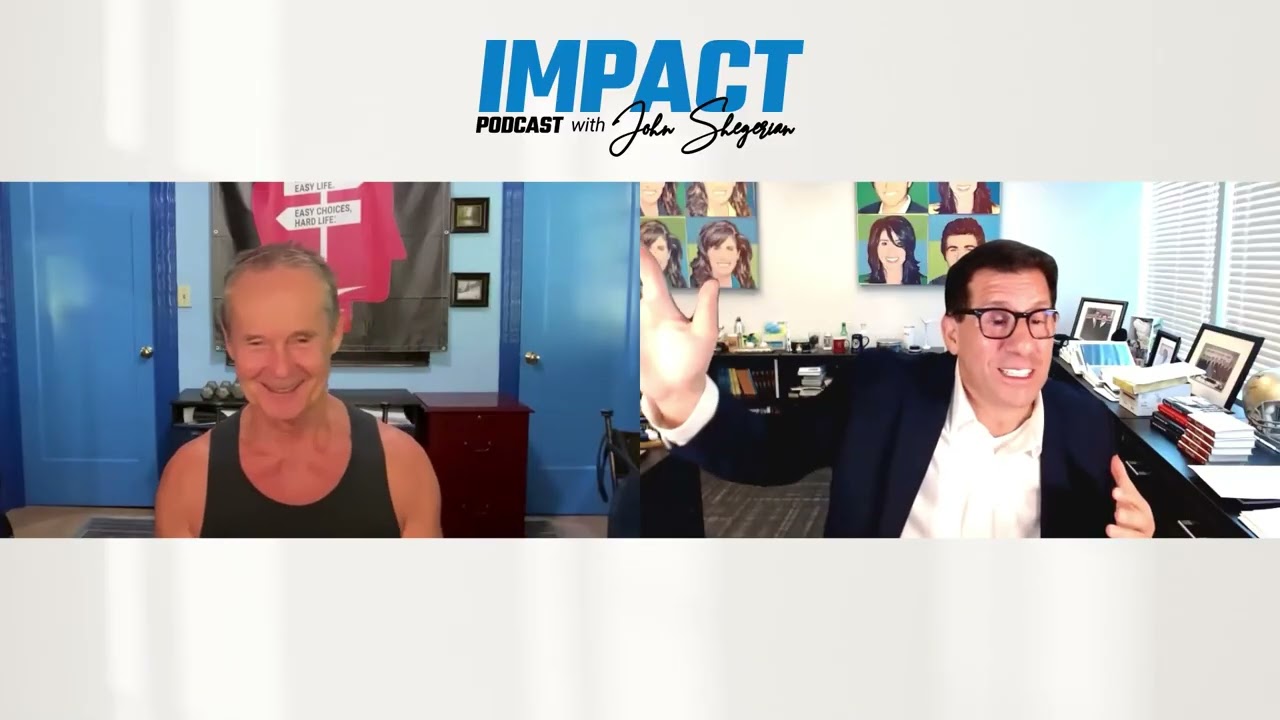
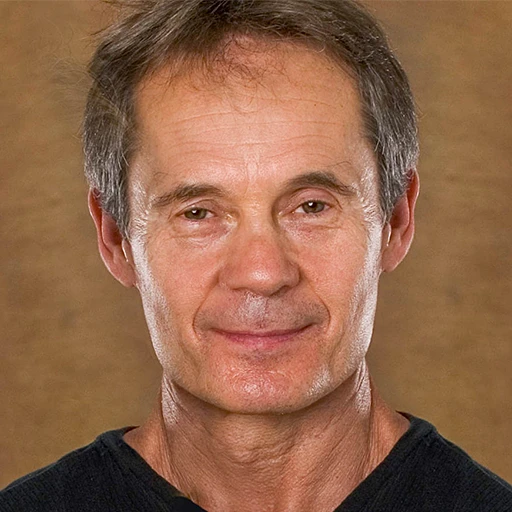
Jerzy Gregorek has lived one of the most extraordinary lives of any coach or philosopher. As a four-time world weightlifting champion, political refugee, poet, author, and co-founder of The Happy Body, he blends physical training with deeply philosophical thinking.
ABOUT THE HAPPY BODY:
The Happy Body’s mission is to end our culture of waste and to support communities and individuals of any age to create more pleasurable, youthful lives.
Aniela and Jerzy Gregorek came to the United States from Poland in 1986 as political refugees during the Solidarity Movement. As a professional athlete, Aniela has won five World Weightlifting Championships and established six world records. Jerzy has won four World Weightlifting Championships and established one world record. They have also been professional coaches and personal trainers since coming to the United States. In 2000, they founded the UCLA weightlifting team and became its head coaches.
Over the years, they have transformed hundreds of people, from housewives and physicians to athletes and celebrities, who came to them with every conceivable body shape and desire. Some wanted to improve their athletic performance; others had never trained before and wanted to lose weight and be attractive; still others just wanted to be able to get down on the floor and play with their grandchildren.
But regardless of the words they used to explain why they wanted coaching, there was a clear pattern in their motivations: Everyone wanted to be youthful. Aniela and Jerzy have devoted the last three decades of their lives to finding solutions to this universal goal. In the course of this search, they invented The Happy Body program.
John Shegerian: Do you have a suggestion for a rock star Impact Podcast guest? Go to impactpodcast.com and just click “Be a Guest” to recommend someone today. This edition of the Impact Podcast is brought to you by ERI. ERI has a mission to protect people, the planet, and your privacy, and is the largest fully integrated IT and electronics asset disposition provider and cybersecurity-focused hardware destruction company in the United States and maybe even the world. For more information on how ERI can help your business properly dispose of outdated electronic hardware devices, please visit eridirect.com. This episode of the Impact Podcast is brought to you by Closed Loop Partners. Closed Loop Partners is a leading circular economy investor in the United States with an extensive network of Fortune 500 corporate investors, family offices, institutional investors, industry experts, and impact partners. Closed Loop’s platform spans the arc of capital from venture capital to private equity, bridging gaps, and fostering synergies to scale the circular economy. To find Closed Loop Partners, please go to www.closedlooppartners.com.
John: Welcome to another edition of the Impact Podcast, I’m John Shegerian, and I’m so excited and honored to have with us today. His name is Jerzy Gregorek. He’s the co-founder and president of the Happy Body. Welcome, Jerzy, to the Impact Podcast.
Jerzy Gregorek: Thank you, John. I appreciate and I’m happy to be here.
John: Well, we’re happy to have you. This is really going to be a super important podcast and time spent with you, because what you’re doing is truly making the world a better place and making an impact on so many people’s lives. I’ve already shared your wisdom and some of your information with friends and colleagues, and it’s greatly impacted and already. We’ll get into that in a little while. Before we get into any of all of your accomplishments throughout your storied career, I want you to share, Jerzy, a little bit with where you were born, where you grew up, and how you even got on this fascinating journey.
Jerzy: Well, I was born in Poland, and it was 1954. Poland at that time was Soviet country. It means that I was born in a country where I was a slave. Russian slave, right? It was a very challenging way of living. We had to obey and we had to be kind of Machiavellis in ways that you would need to look at the boss and pass to the boss the way that you like the boss and not really create any friction because you could really pay for any attitude, any disliking, anything that the boss would sense that you don’t like the boss. It was a challenging way of living. You could lose your freedom any day. Any day that something happened, you could end up at the police station, you could be tortured, you could be killed, murdered, right? That’s how we live. We live in a horrifying place where the fear, the worry was constant and the heaviness in your chest was there. I became alcoholic at 15 and recovered at 18, became weightlifting, coaching weightlifting, training weightlifting at 19, got injured at 23, became firefighter at 19. Firefighting was very interesting. The first time I was going to the fire, the first time I sensed that somebody needs me and that was an awesome feeling in me. I was 19 years old, recovered from alcoholism and I was going somewhere where people wanted me, needed me. That feeling, I liked that feeling. That feeling I wanted to have in my life. I stayed in the fire department for five years then went to Warsaw to study fire protection engineering. In 1981, Solidarity was at the peak and the government wanted to change the law and use the firefighters against demonstrations, Solidarity demonstrations. They wanted us to color our water spray on demonstrations and then so they could be arrested, captured and arrested after. We said no. We were on strike. I was one of the leaders of the strike in Warsaw. After that, after 10 days, the tanks rolled in, the helicopters landed on the roof, they took us out. For four years I was underground, and when time came really close to me that my life could be threatened, I left Poland, went to Sweden, then to Germany, landed in ‘86 in New York. My luggage between New York and Detroit was gone. We had $600. No, $1,000. We had $1,000 and no clothes and nothing left. It was just all we got. We bought the tickets to Los Angeles for $100, landed in Los Angeles and the person who was going to help us said that he was sick and didn’t come. We were at LAX, $600, barely speaking English and no one to help.
John: Wow.
Jerzy: Beginning.
John: Wow. That’s incredible. Let’s go back to, you were 15. Was alcoholism in your family or did you revert to that because of just the oppressive society you were living in and the hopelessness that everyone felt in that generation?
Jerzy: What was the question? Sorry.
John: When you were 15, you turned to alcohol because, was that something that was in your family or more because you lived in such an oppressed society of hopelessness that people turn to alcohol as a form of just numbing yourself and medication?
Jerzy: No, it was a coincidence. My family was good. My brother was an alcoholic but my father was okay and my mother was okay.
John: Okay.
Jerzy: My father was the one, he was a locksmith and he believed that my career should be being a locksmith and never go to college. “Why are you going to high school? You shouldn’t go to high school. You should go to trade school.” All right. I passed the exam. I was really good at math. Passed the exam to the best high school in the town. Then what happened is that I entered the science program. It was mostly math, physics, chemistry. But when the program began, it was a lot of a lot of German language, a lot of Russian language, a lot of Polish language, a lot of history and not so much math and physics. Well I’m not really good in memory and so on, so I had difficulties with the homework. When I was in elementary school, my homework was like I could do my homework in five minutes. Then when I went to high school, it was a lot of homework. I had difficulties with that and nobody was going to help me with that. Then eventually I was expelled after a month. High school was gone. I went to trade school like my father was saying. Then there were alcoholics around, a lot of alcoholics. Then that drew me closer and closer to that way of life. Then when I do something, I’m really good at it. I became a very good alcoholic, like blackouts on a daily basis and leaving the house to find alcohol. That’s what really happened. It was a very, very dark time for me.
John: You recovered at 18, which is very wonderful. It was a short period of a, it was dark time, but only a three year dark period. Some people lose decades. Some people lose their life, as we know, to an addiction, whatever the addiction is. How did you find weightlifting to be sort of your exit strategy out of alcoholism?
Jerzy: I had a lot of darkness in my life. Dark people and a lot of angels. It was like darkness and light, ad darkness and light.
John: Well you went towards the light obviously, you went towards the light. That’s the good news. That’s the good news.
Jerzy: Well it was another coincidence you see there, I was at this party and there was this guy who was a weightlifter and his whole equipment was thrown by his father outside of the house, and he said, “You cannot train in the house.” I was there and I was an alcoholic. I said, “Well, you come to my place.” It’s like alcoholics do, right?
John: Yeah.
Jerzy: Next day it’s 3:00 p.m. I am already recovering from morning drinking. There is a knock on my window. I opened the window and the guy was there and all the weightlifting equipment was there. He’s telling me the story about how I invited him and I didn’t remember that at all. But I said, “Okay, come in.” And so he brought all this equipment into the room and he said, “Let’s do some training and then we’ll go for a walk.” I said, “No, no, no, you do the training and I will take a nap and then we’ll go.” And he said, “Well maybe we’ll do just the bench press.” I said, “No, I am tired.” And he said, “Maybe we’ll do the bench press and go for a beer.” I said, “Beer.” Opened the eyes.
John: He gave you the carrot. He gave you the carrot.
Jerzy: Yeah the carrot, yeah definitely. I said, “Okay.” So I went to do bench press. It was 45 pounds bar. Barely pressed that thing it was all heavy. But somehow he was very gentle and kind and funny and happy. We did the training. We went for the beer and then we mixed with athletes and alcoholics and all together. Then day by day was like that. Days were passing. Mirek was always there, always in the house, always the training. Slowly I was getting stronger a little bit. We drank every day the beer and then it was good. Then after some months, I really felt better and better and started drinking less and less, but still drinking. After about half a year, I was becoming really strong. About a year, very strong. Then almost no drinking at this time like slowly pulling out of it. Then I started really liking the Olympic weightlifting and started moving that direction. The next four or five years was all about Olympic weightlifting. I was blessed. I was blessed by a person that appeared in my life. He was my angel. Without him, probably I would not be here. My best friend died at 21. I was 18 when he died. It was really hard, you know. The alcoholics were dying very early in their 20s.
John: Did your brother have a chance to recover as well?
Jerzy: My brother didn’t recover. He is an alcoholic today. Throughout his life. It’s amazing that he is alive with a liver that is expanding, you know. He is still alive. In 2000, my mother passed away and my brother had these three children, about 8, 10, 11. I thought, what can I do for these kids, right? So I set up the fund. I asked another weightlifter, my friend, to help these kids to pay them for all the A’s and B’s and passing the semesters and so on. I was not there, so I thought education was the way. He did. He was paying and paying these kids for A’s and B’s and passing the semesters. We outlined the whole thing, how to help these three kids, three sons, right?
John: Wonderful.
Jerzy: After seven years, I came back in 2007 to see my dad. My dad was 93 years old. Then a miracle happened. These three boys were sober. These three boys found really good families. It was beautiful, I tell you. It was like shocking. I was so happy that I could help these boys and the family to [crosstalk] grow up, right?
John: That’s beautiful.
Jerzy: My friend was saying the kids got wise. My brother wanted to take the money away from them. But then they set up everything the way that it was not so easy.
John: Good.
Jerzy: They started taking the money and they started liking education and it worked.
John: Good. Your good intentions went to good use and your nephews benefited from it.
Jerzy: Yeah.
John: That’s great.
Jerzy: Yeah. The [inaudible] was there definitely.
John: That’s great. Now let’s go back to the storyline. It’s ‘86, LAX, $600. You don’t speak any language. Why did you fly to LA? What was here in LA that you saw or you wanted or you were seeking that was here? What was the draw?
Jerzy: I guess the bodybuilding and I was weightlifter.
John: Muscle Beach [inaudible]?
Jerzy: Yeah Muscle Beach, bodybuilding. I was a weightlifter and my wife was at the beginning of it. She competed in bodybuilding in Poland. Okay, so we landed in LAX. When we landed, after that, we searched for how to find yourself. We didn’t have really money. We didn’t know anybody. I was calling Germany and everybody that I knew. They found me a person that came to help us, a Polish guy. He said, “I can take you somewhere, but you cannot go where I go, where I live,” because he was taking care of the house. I said, “Okay.” There was another boy on the plane that we met and he lived in Los Feliz. I said, “Take us there.” And we went up there. Okay, we are there. The guy said, “Well I don’t know if you can live here, but there is somebody that’s renting the room outside of the house. Maybe we ask this guy.” We went to ask and he said, you can you can sleep on the floor we’re okay. Then we’ll find a way. That’s what we did. Then after two or three days, we found this Polish family that they were building another house on their property. They let us to live in this half-built house cold [inaudible] but it was beautiful. It was really something that somebody was helping. During this time, we started walking around and we are in Los Feliz and we are circling and trying to find people in gyms and so on. We found American Weightlifting Association president. Then he was talking to me about weightlifting and coaches. He said Olympic weightlifting coaches, they cannot make money and they don’t want to really train like regular people, like personal trainers. But he said [inaudible] personal trainer’s idea. If you like it, find a gym. He said Olympic weightlifting coaches from Bulgaria, from Poland, from Russia, they usually open [inaudible] stores after stores. I went, we started circling around and walking and we found in Burbank Power Source. We walked for about two hours and found Power Source. I talked to the owner and the owner said, “I give you a shot.” I said, “Okay, so what’s the shot?” He said, “I’ll give you $5 from Monday to Friday, five hours. If people like it and if you do a good job, you will have the beginning.” I said, “Okay.” I said, “What should I do?” I said, “I don’t know.” [inaudible]. The people that were coming [inaudible] one hour free somebody else. People loved what I was doing, really liked it, so they started signing [inaudible] after that. It was $25. It was going $15 to me, $10 to the gym 100 people. I was so successful that I worked 16 hours a day, Monday through Sunday.
John: Wow.
Jerzy: It was amazing.
John: Wow. Now, was this before you and your wife won the World Weightlifting Championships and the World Records? Or was this after? I’m just trying to get the timeline. When you were in L.A.
Jerzy: It was after.
John: You had already won those World Weightlifting Championships and the World Records. You and your wife had already established yourselves back in Poland.
Jerzy: No, no, no. It was in U.S.
John: Oh, U.S.
Jerzy: It was U.S.
John: You were already in U.S. Okay.
Jerzy: I was injured in Poland and I couldn’t. Yeah, yeah. We are in U.S. I’m turning 35. [inaudible] said, “Maybe we can compete in the master divisions and then work toward that.” My back injury was tough, but somehow Los Angeles and somehow before you know it was all somehow together helping. After about seven years, I healed my back pretty good and started going into the championship. First local then nationals and then world championships. Like we entered two Masters Olympics and two World Weightlifting Championships.
John: Wow. That’s incredible. How long did you live in Los Feliz?
Jerzy: And won them.
John: How long did you live in Los Feliz and work out of that gym? When did you start moving around?
Jerzy: Los Feliz, two months. Then once I started working, it was enough for us to rent one room studio with the guy that lived there. Three of us, we rented one room and lived in one room. We all work. Then after that, when I became successful, one of my clients was renting this place in Burbank. Then he said, “I will let you live there. Go away from there.” It was like a shack, a little like a room, one room with a little room for the bed only. The whole thing maybe it was 300 square feet, right? But it was fantastic. We love the place. We started really living in this place. We were very happy, very appreciated. Billionaires were coming from Beverly Hills for a dinner to our place in Burbank to that one shack that was cement concrete all around, no trees, nothing. It was bare. But people come to people and not really, yeah.
John: When you moved out here, were some of your heroes back then, people like Jacqueline and Joe Gold and Arnold Schwarzenegger? Because you were in L.A., did you get to meet any of these people from Muscle Beach and that whole generation?
Jerzy: Oh, yeah. I coach in a World Gym in Schwarzenegger’s gym in in Venice. In Santa Monica, Venice, the area. I met him many times. He was a very powerful guy. He is a powerful guy. Interactions were usually tough. He was he was a bodybuilder. We were Olympic weightlifters. But he was also Olympic weightlifter. He had this likeness of the Olympic weightlifting as well as Columbu his friend.
John: Yeah. Franco Columbu wasn’t also Joe Gold and the Weiders over there and the Zinken, Harold Zinken over there. It was a whole Jack LaLanne came out of there. It was a whole bunch of legends, right?
Jerzy: Yes. Yeah. Yes [inaudible]. Yeah, I’ve never measured Jack LaLanne. [inaudible] eventually in Gold’s gym before I took our team Olympic weightlifting team to UCLA. It was a T-89 when I had a team Olympic weightlifting team and at Gold’s gym in Venice. Then I took the whole team to UCLA, founded UCLA weightlifting team.
John: When did you do that?
Jerzy: And coached there people for five years.
John: Jerzy, what year did you start the UCLA team?
Jerzy: ’99.
John: ’99. Got it. Okay. What drew you to that? Like what decided to you go do something in education and higher education? And that was also incorporated what you were great at instead of just saying and you could have been a private trainer and done very well financially for yourself. Why did you make that that decision?
Jerzy: Well in the Gold Gym was bodybuilding gyms and we were dropping the weights 300, 400 pounds to the ground and they didn’t like it eventually, they started chasing me away. Then I had weightlifters they were dropping 400 pounds from the top. It was like a boom right? Boom and boom. Bodybuilders don’t drop weight. I had to find a way. I went to UCLA and found Dr. Price and he was the strength coach at that time for Bruins. I told him who I was and he said, “Okay, sit down here.” Then we talk. He said, “Okay, you either found a team and you have your team here and I will help you with that or you will be on payroll of the UCLA but then they can fire you.” He said, “What do you want?” I said, “I don’t want to be fired so I will find a team.”
John: That’s great.
Jerzy: That’s what we did. I coached students, coaches and my athletes and coached very close to sprinters and volleyball players and Bruins, the football team. Morris Greenhead had his sprinters at that time, about 12 of them, very powerful and they trained near us. The whole area had about 50 platforms. It was beautiful. It was fantastic.
John: Wow. How many years did you spend at UCLA?
Jerzy: I was until 2004. 2004 move to north to near San Francisco to Woodside, the Silicon Valley. Then the move created a problem. I couldn’t find a coach for Olympic weightlifting. It is not and it was not an easy task. Those who were good coaches, they were already somewhere coaches or did something else that they didn’t have time. I only coach like once a week. At the weekend I was in Los Angeles and week I was near San Francisco in Woodside driving back and forth every week for a year. My baby [inaudible] and she was [inaudible] life.
John: Got it. How many championships or awards of the UCLA team while you were there? How did that go? Did you achieve what you wanted to achieve then?
Jerzy: State championship [inaudible] and one person got into the state championship. It was just a big [inaudible] of the results with Olympic weightlifters takes time. It’s like anything in life when you want to create something substantial goodness in something you need 5-10 years.
John: Yeah. Okay. Well, for our listeners and viewers who’ve just joined us, we’re so excited to have with us a Jerzy Gregorek. He’s the co-founder of the Happy Body to find Jerzy and his wife. You could go to the happybody.com it will be in our show notes. Also his book here The Happy Body. I highly recommend it. I have it. I’ve read it. This book is a beautiful book and explains his whole program to you besides his website, which explains everything to you. Jerzy, when did you decide to take all of your knowledge, history, all your championship success, your wife’s championship success, and to create the Happy Body Program?
Jerzy: Well, when we started coaching people, people one, had different reasons for their need for the coaching. Some of them, they wanted to lose weight. Some of them, they wanted to get stronger. Some of them wanted to be more beautiful, and some of them wanted to heal injuries. Some wanted to recover from aging. There was a lot of different reasons. Some of them, they didn’t have energy at all. They wanted energy. We started coaching these people and following the program of mostly athletic way of coaching, not really personal training, but more athletic, and that people will actually get stronger and more flexible, faster, and more powerful. Then we noticed that when we follow that, people achieve whatever they wanted. There was a way to actually to get there. We’ve set in a way without really adapting too much to whatever people were saying. We knew that it works. After about 10 years of coaching, we started putting something into a book. We hired one writer and wrote a really horrible thing after half a year so we hired another one, horrible thing again.
John: Oh my God.
Jerzy: And so I said, “Daniela, nobody is going to write what is inside of us. We have to actually write it.” We both entered the Vermont College Creative Writing, MFA in Creative Writing program, graduated in 68, and started writing. Took us about five years. Then when 2004 came, we moved to North and started working with editors, our writing and editors. That took about five years. After five years in 2009, we eventually had our textbook, our philosophy of the Happy Body, which in short, you could say that’s athletic lifestyle medicine that uses exercise, food, and meditation or relaxation to achieve it, to deliver.
John: Do you and your wife still have people that hire you to train them? Is that still part of what you do professionally?
Jerzy: Yeah. We all the time coach people, regular people, athletes, everybody. We coach anybody that needs help. That could be an athlete or that could be a cerebral palsy person, right? Or autistic person and anybody between.
John: I love it. We’re going to get into that in a little while. What I love about your work, and like I said, I’ve been a big fan of yours for quite some time, is how you sum things up, how you distill life’s lessons into very easy ways to remember and to apply in life, such as the wonderful message you have above your head. Hard choices, easy life, easy choices, hard life. Explain what you mean. Explain how that distills so much of what you and your wife represent in terms of the holistic approach you take to looking like you do. Like when we came on the air before we started recording today, I said to you, “Jerzy, you look amazing. How old are you?” You said, “I’m 72.” I said, “Well, I’m going to be 64 in a couple of months.” You said, “Well, John, you have eight years to catch up.” You look like you’re 40 years old, 35 years old. Talk a little bit about that statement and how that really distills so much of what you and your wife do.
Jerzy: Hard choice [inaudible] hearing improvement and anything that we would like to happen, but anything that is better than it is. As soon as we want to know more knowledge, hard choices appear. As soon as we want to heal, hard choices happen. Hard choices are really any time when we want to deliver something. When we actually want to work on something, something that is physical and something that needs to be delivered, the hard choices appear. That could be anything that is obstacle. Obstacle is the way they like the book, right?
Jerzy: Ryan Holiday. Yeah.
John: Exactly. Then he put it in this way and it’s true. Obstacle is the way and the hard choices appear when the obstacle appear. Then the hard choices have to be made and we have to somehow work with the plans, the strategies, everything, what is needed to actually improve. When imagine that children know that two plus two is four. If we leave them and never really work on two plus three is not going to happen. Every time is a hard choice. Every time that we are challenged, every time that takes effort, the hard choices happen.
John: Right. That’s really true. Your other great line, which I love too, which should be on T-shirts as well that you sell, discipline is freedom. Sum up what that means in terms of how you and your wife approach just a holistic path to wellness, longevity, and just living your best life possible?
Jerzy: Discipline is a part of the hard choices and delivery. If we wouldn’t have discipline, you would never to be able to deliver, right? Anything. I really love the movie Stand and Deliver. It’s a discipline of that teacher that for two and a half years was able to be consistent and disciplined in creating possibility for his students that didn’t imagine to pass calculus and teachers and everybody else but he had discipline. He had the belief and that really helped him to deliver something impossible. Discipline is something that appears when the hard choices is created, right? It happens like the obstacle happens. Let’s say somebody goes to medicine and somebody wants just to be a medical doctor. Well, a lot of hard choices, a lot of discipline takes to actually make it happen. In personal freedom, in personal way of approaching life every person in America is in a way independent, and that is not a socialist system. [inaudible] to find the independence in that ocean of different trainings, different systems, and different ways and helping people actually to achieve it. Also a lot of babysitters and in a ways how people in a way can be helped, but not really help. There is a lot of entertainment in the process of today fitness that the entertainment happens and not the athletic doesn’t happen. There is no compound effect of what people do. That is extremely important because that is the only way that we can actually improve, that we accumulate and create the compound interest, compound effect. Without that, we can go to the gym, stay in the gym for 10 years and never get better or get worse. We can waste easily 10 years of our life and never achieve what we actually want and that is a sad story really.
John: That’s really sad. We’re going to get into your program of micro-progressions. Before we get into that though, I want to talk about the recent, this year, earlier this year, a movie was released, a short documentary called Prisoner No More. That was done by your good friend Tim Ferriss, the well-known podcaster and businessman and thought leader and also best-selling author, about your five-year coaching journey with Tae Jin Park, the young man who had cerebral palsy, autism, among other things. It was a very moving documentary. Can you talk a little bit about that journey and what you learned from that journey and what you wanted viewers and others who can benefit from that fascinating and impactful journey to get from that documentary as well?
Jerzy: So Tae Jin came to my, no, he didn’t come, his father brought him to my place because my other client talked about me and Tae Jin’s father, he thought that maybe I can help his son. His son was 25 years old. He brought his son so I could talk. Tae Jin, at that time, was very lethargic. He couldn’t sustain much energy. He would fall into sleep constantly and was also physically very bounded to the one side and walking on toes. The father said that his language was mostly time to go to bed, or time to go to sleep, or time to go to eat. He was completely dependent on parents. The parents had to go to dress him and take him to toilet, and didn’t have any life with him, any conversations. He was like that. He never really grew up yeah? I took him to the gym. When we went to the gym with his father, I was just thinking, okay, what can I do with him? I laid him down on a bench to do bench press and then put the aluminum bar, 15 pounds bar, and asked him to take it off the rack. He was not able to do that. He didn’t have enough strength to do that. Then I put a wooden bar that we use for kids to teach them how to do snatches. My daughter was doing snatches when she was three years old on this wooden bar. But he did the press and he did the press. I said, Okay. I added five pounds and he did again. Then I added another five, it was 13 and he did it. I put back the aluminum bar and this time he lifted. I thought, “He’s going to change.” There is a certain progression there that I saw already. I asked father to, I told him that his son is going to change very fast and we need you to observe that to be the part of it. Twice a week they were coming to my place. They were traveling for one hour and a half from Morgan Hills and spending about four or five hours. The father was committed. He said, “Can you give me my boy back?” And I said, “Well, I don’t know, but give me five years and we’ll see what happens.” So he did. After about half a year, I said, “Okay.” And it changes. The boy was getting stronger. The boy was getting more flexible. The boy was more coordinated. All of this was happening. But the energy was not still there, but eventually one day the father said, “Yeah, there is something different.” I said, “Well, what is it?” He said, “When we drove this last time home, Tae Jin spoke and he saw a car.” I said, “Car, I don’t really understand.” He said, “Well, he’s never spoke in the car he was always sleeping, but this time he woke up. He had like enough energy to wake up.” I said, “Okay. What happened?” He said that he saw a car. I said, “What kind of a car?” So Tae Jin didn’t know. I asked him when next time he goes, find out what car was that. Then, so he found out. I said, “What was the color?” So he didn’t know. Okay. Next day go home and find a color. Who was driving a female or male? So he didn’t know. One by one, the information more and more and more and more until he knew even the driving license, the color and the gender and everything else.
John: Jerzy, were you trying to then replicate what you did with physical strength and micro-progressions within mental aptitude as well?
Jerzy: I don’t know, but I was following the growth. I was following something that is more and better. You see when I asked him to do in the other place, I was asking him to do the six repetitions or seven repetitions of squats or, or presses. I got the sense that he was missing the numbers. He was doing less numbers of more. I started counting and every time was a different number. I said Tae Jin, “You are not doing the repetitions that I asked you. You don’t know doing eight, you are doing seven or nine.” He said, “No, I do eight.” I said, “Okay. Count to eight.” Right? He counted to eight and I asked him to count to like 12, and then he couldn’t count. He had the difficulties with counting. I asked him what is two plus two, four. Okay. Then what is two plus seven? He was thinking very, very long to answer, but he found out the nine. But when I asked what is two minus one, he wouldn’t know. When I ask about seven plus five, wouldn’t know, the past 10 wouldn’t know. I said, okay, we need math to grow right? I told the father, well, he needs the math tutor and English tutor. Both. Right. He said, “Okay we’ll find out somebody for that.” Then I started during our sessions, asking him about the numbers counting. When we were training, I was asking math, what is three minus two and so on. Then two plus 11. Slowly he was getting the math better and better and better like a child. He was getting better in it and better in it. He could eventually count forever. He figured out that is a 10 system that the 21 and 22 and 81 is kind of the same thing. He could count and he could count and then he could add and multiply. You know, it was like a math school for him. Then with English happened the same thing, because I found out that he was not logical. I sensed a logic, so I started using my poetry book and he had the memory. He could recite the poem. Then I asked him line by line, what was the feeling? What was the meaning of it? And of course it was very difficult for him that we were drilling poem by poem one poem for sometimes three, four weeks until he really got what the poem is about. Then about a year after also I created the celebration every time when he broke record, I said to his father, “You need to set up a dinner. We need to celebrate.” So we created this culture of celebration, culture of for him, to build the history for him, because the Tae Jin could not return anywhere. Tae Jin was born and never grown up, so he needed to grow up. He needed a chance from this 25 year old boy to become a person. The math was the part of it. The English was the part of it and the history. The history that he could actually communicate, he could talk. Then one day father said, after about a year, he said, “Today we had the first conversation.”
John: Unbelievable.
Jerzy: First in our life, we conversed.
John: Unbelievable.
Jerzy: And I said, “What we were conversing about?” He said, “Oh, about the breaking records and stepping on the box and about our celebrations and was all about.” I said, “Well, that’s good. You had the conversation.” He was very, very happy about that. In about a year, his squat was getting micro progression was working, so he was getting more flexible. He could sit from the box, 23 inches to 22. The flexibility of his hips and hamstrings was created. He was going down to about 16 inches. When he was sitting to 16 inches, I noticed that he’s actually sitting and standing up, so he could go to the toilet on his own. He was flexible enough. He was strong enough. I said to his father, “You have to stop taking him to the toilet. He is okay. He is independent enough. He has everything to do by himself that.” And that, and it happened. He started dressing himself. He started going to a toilet on his own, and then started really evolving. I said, “Okay, the tutors.” Then he went to elementary school online. Within two years, he passed the whole elementary school. Then he passed in another year, whole high school, high school from this boy that his brain didn’t know what is two minus one and didn’t know how to add from one to 20. After about four years, he passed the high school and went to community college. Now this boy, he’s almost done with community college and he’s going, he’s like 57 units and he’s going to go to San Jose state.
John: It’s a miracle.
Jerzy: Yes.
John: Jerzy, I have so many questions around it. First, I want to first start with this. Had you worked on a transformative experience with other young people that traditional medicine had clearly given up on before?
Jerzy: No, nothing to that extent.
John: Okay.
Jerzy: This was something that that’s why I asked Tim Ferriss to do the to the podcast and talk about the research that I would like to do. Because there is something. There is something that could help this people. I don’t know it is in me or it was the situational, but something happened there, something that might be repeated, replicated. I said, well maybe we need to do the research. We have some friends at Stanford and then find five cerebral palsy people and coach them for a year add another five and another five, and do the research for five years and see, is there any method? Is there help? Is there something that could be replicated and how we can actually create curriculum for something like that for the future, for this people [crosstalk] to help them.
John: I love it. After the movie came out, the documentary have other parents with children that are impacted from something as tragic as cerebral palsy or autism or some other thing contacted you and asked you for help or coaching of their children.
Jerzy: Yes. Yeah. I have already, people coming from Santa Rosa from San Francisco. Usually with boys very interesting.
John: Interesting.
Jerzy: A family brought me a boy, 25 year old too. Something happened when he was 12. He was slow. He had the cerebral palsy. He had autism. When he was 12, mother said, they don’t know what happened, but he stopped communicating and stopped being the part of the family completely stopped. For 12 years, they didn’t have any communication and the boy simply didn’t communicate. He asked only go on a horse or go for a walk. He had two personal trainers or PTs all the time. She asked me whether I could help. “We’ll bring him in.” They came and the boy was very cautious about, and when he sat he did something like this. He was like this. I said, okay, well he knows what he’s doing, right? Because he responds to us. There is communication. Okay? Then I started talking. I said, okay, we have to communicate with him and we have to ask him and he needs to respond. I said, okay. There is mother, there is father and there are two PTs and there is him. The boy knew what is two plus one, didn’t want to answer that fact. I said, “Right on the paper two plus one and ask him to write the answer.” When that happened he drew like this all around the page.” I said, “Okay, he answered. That’s his answer. That is whatever it is.” I said, “Okay, you need to go home and you need to set up the settings with him. We need to find a communication. He chooses not to communicate. He chooses it. He knows it. He knows what two plus one and chooses not to tell us. We have to begin there. She said, “The most difficult is to find where to begin with the situation.” They go home and after a week, the mother said, “You would not believe. Angelo is writing the numbers on the board, even drawing the figures.” He starts really communicating. They brought him a month after and he shaked with me. We went to the gym. I could ask him to do the jumping, to do the presses and he would do. The communication slowly began. You don’t know really where to begin. This Friday, a mother is bringing me a boy from San Francisco, first time. Cerebral palsy and autism as well. 17 years old very. A bright and kind person, but not socially well and not on the meaning at all. She is like kind of mother said, “He’s like lost in life. Doesn’t have any drive. Doesn’t have anything that he would strive for.” I said, “Okay.” And he is in high school. There are different situations, different people and different places to meet them.
John: So as part of what you do and part of the art and science of what you do, as you point out, as you’ve repeated numerous times, trying to figure out situationally where to begin with each one of your students.
Jerzy: Yeah, I see that as the first thing that I learn, that is the most difficult to do with this students. With normal people is very easy to do it. Well that’s what we do. Okay, what’s, what’s your body weight? How strong you are? And then we go. But with this people is very extremely sensitive because we don’t know really what could be the effect and how to begin that they actually accept the beginning. That’s where they need to accept, because they decide eventually whether we move forward or not. It has to be something that is likeable for them, it’s okay with them, and if that is found that is the beginning. And from that beginning we can start delivering progress and we can start challenging the brain, the mind, and finding obstacles and overcoming the obstacles and bringing the growth, the process of improvement.
John: Jerzy, where did you learn in your journey that cognitive, mental is tied to physical, and of course you’re a man of all seasons. You’re an author, you’re a poet, you love the written word, you love math. You seem to have integrated this into not only your own life well and your own success and journey, but also into your students’ journey. Was it at UCLA when you were coaching young men? Was it later in your career and with the Happy Body program? Where did you decide that this was not just, there was a holistic way to approach this, not a parochial way?
Jerzy: I see that mostly happen when I start coaching young athletes between 15 and 18. I coach a lot of athletes and not athletes, but parents started bringing me these kids to my place for mentoring. And the purpose was more, not so much to make them great athletes, but more about passing the philosophy and goodness and kindness in them and meaning. That started really working in a way that the physical was engaged and the challenge was there, and meantime the talk happened. The talk usually is the talk about philosophy, about depression, about the meaning, how you are in school, what’s happening there? And then on and on and on. It’s a constant interaction. Yesterday I had a 16-year-old boy, so I will show you the example of that interaction. The 16-year-old boy tells me about the school. And I say, “How is the school? How is the homework?” He said, “It’s good, but I had these rough passages.” I said, “What are the passages?” And then he tells me that sometimes he’s getting into this dark, and when he’s in the dark, when he reads something, he doesn’t know what he’s reading and he cannot learn and that he’s afraid now that he can really have the problem in the high school. I said, “Okay, so you know, you need to slow down the reading to the place that you actually understand that and feel what is it about. It doesn’t matter how fast it is, but you have to slow it down.” I said, “Okay.” And then we went into the more deeper into what he was and his negativity. He said, “Oh, I feel, I think about the world and I’m negative,” because I was looking for where he is negative. Then he said, “Oh, I’m negative. I feel about the world and negative about the world, that the world is in this place.” I said, “Okay.” He loves them, loves math. I said, “Okay, you love math, right?” I said, “Yeah.” I said, “To think about the world that is not a good place, it’s not only negative, but it’s illogical.” He said, “How is it illogical?” I said, “Listen, because thinking about something that is not good is illogical, but to think something about positive is logical.” I said, “Okay, so how would you change the thinking about the world that is not a good place to the thinking, how to really deal with the world and how to be attracted to actually becoming the part of the world and become the logic of the helping the world to be a better place?” Okay. We started the conversation [inaudible], right? It’s a conversation modes. She says, “I like logic.” I said, “Okay, you like it?” I said, “Yeah, I like it.” I said, “Okay. when you go to school and you don’t like the teacher, it’s negative, right? So now what is the logic is would tell you?” And then he said, “Okay, so the logic would be to think about this teacher, that something is good about that teacher and focus about, okay, to find out that.” I said, “Yeah, exactly that.” So okay. I said, “You go home and try to capture when you are negative and capture that moment. When you capture that moment, think about logic and the logic is the opposite of it. What is the logic around that?” And I said, “Text me, send me to write the stories and so on.” That’s the beginning with the boy, and then we’ll see what happens.
John: We talked about hard choices, easy life. We talked about easy choices, hard life and discipline is freedom. Talk about the, your teaching and your ability to explain to the importance of micro-progressions. That’s not a term you hear a lot when it comes to training, weightlifting or bodybuilding, but explain what I’ve never heard that before, until I started studying about you and started reading your book, The Happy Body. Again, for our listeners and viewers, you can buy The Happy Body on the happybody.com website, or of course on Amazon or other great bookstores that are around you. Micro-progressions are very important to your program. Explain to our audience what that means, both physically speaking Jerzy and also mentally speaking.
Jerzy: Let’s start from the mental.
John: Okay.
Jerzy: Mental approach here is hard to imagine micro progression mentally. It is easy to imagine micro progression physically because if you are, let’s say, you bend forward and you don’t touch the ground, but you have a gap there, 20 inches. Then you ask trainer, you ask somebody to give you the plan how you can actually touch the ground. Somebody will say, “Okay, well, let’s, try to reach 19 inches and create a program, the box that you can touch the box and you will be hard, but eventually it will be easy.” All right. Then 18 inches and 17 inches. That’s where micro progression work in the physical world that you start improving. Eventually let’s say a year or two, you will touch the floor, right? This micro progression system, why is it important? Because the body has time to adapt. The body has time to adapt to repeat enough times to adapt to this different levels. And it’s physical so it has to have enough repetitions to adapt to a different level, so micro progression has to be there. If we violate micro progression, we progress too fast and then we create problems. We either injure ourselves or we drain ourselves and that is overtraining. [inaudible] understand is overtraining. So when we get into this micro progression, micro progression is something that is safe for us. We can create the plan, the strategy to actually achieve something in a year or two. It depends what is it five years and set up this micro progress. Usually this micro progression is in the brains of the coaches. The coaches have it. I said, “Okay, you jump eight meters, but you need nine meters. We take five years to get to nine meters. We are going to do this, this, this.” And all this micro progressive system is established. Mentally, it’s not easy. It’s very hard to see it because it’s invisible. Mentally you go to a therapist, right? You go to a therapist and you talk and then therapist talk to you and something happens there. In a year, maybe you feel a little bit differently here and there. In two and five, it works. Eventually it works. The therapies work we just takes time, and it’s invisible. That’s why it’s so hard for us. I see like Socrates, right? Socrates is on his tower, and Socrates is saying, “Okay. If you want to have discipline, then you have to begin. You have to come and we talk and talk and talk and eventually something will happen in you that you become disciplined. It’s not something that I can give you and not I can tell you it has to be a journey toward the discipline, right?” So it takes certain times. I wrote this this books of dialogues about the fatalists and the master and the journey to bring the fatalists into the master. If somebody has the fatalistic negative thoughts, okay, then we have to say, practice the positive. Also be aware of negative, be aware of the percentages and how to actually bring that person eventually 51% master, because that is the positive way of thinking begins. If the fatalist 51% negativity is stronger in that the person lives a negative life. But the person can live negative life 70% extremely negative, right, or 100%. When suicide happens, people are negative 100%. And then there is a place what would you do, right? How would you work with people that they are negative 70% or 30% positive. It has to be in this therapy. It has to be in these meetings. It has to be in reading books. Thich Nhat Hanh was talking to us for 70 years about goodness, about not to be angry, and then to be patient, and then to be kind, and to have all this good words. I read all his books. Wayne Dyer was another one. We need to read, we need to embrace ourselves in this people’s positive way of living, and keep working on it and keep working on it. If we are lucky, we get a coach and that coach takes us on a journey of meaning. Think about like Viktor Frankl, right? Viktor Frankl was the positive master in his way. He imagined that the Holocaust would pass. He imagined himself in Vienna. He imagined that he’s going to be there reading from his manuscript was that tossed away. His family was murdered and still he was able to have his vision, his goal, where he was going for six years to survive the darkness. Around this darkness, he was able to really look there. Okay. He was already there, right? But how you take a person that is not there, right? How you take the person and start really pulling that person toward the light. I created this three books of dialogues, you see the mastering the right choices and so on. I imagine that people have all these percentages of thoughts and dialogues and created this scenarios for people that could practice, and could practice to drag this fatalist toward that debate. In the debate, the master could outwit the fatalist for the first time that the person could do something positive. Let’s say the person cannot stop overeating, right?
John: Right.
Jerzy: And deals with it for many, many years. Then, okay, the person goes to a therapy and this kind of a therapy, like fatalist and the master. The person is taught about this and what happens and then and on. Then eventually the person comes into debate. In this debate, the person is aware that person wants to stop and that the person, the past wants not to stop. Then when actually the person stops is the first time that the person experiences positive way of living in that area. Micro progression, oh yes, a lot of moments toward the light. Eventually those moments create the power of 51% of the positive. My students said, “It’s like President of the United States needs only 51%.” I said, “Exactly. You need 51. You don’t have to have be all, you still can have a darkness in you, right? And you are aware of the darkness, but when you decide and decide and 51% is the master, you chose the hard choice.” At that moment, first time your hard choice happens, and then builds up micro progressively toward the master, toward more light and more light in your life. Then when it happens, you become more positive. You become more enlightened, like in your life. Good things that’s happening. You are able to educate yourself. You’re able to save money. You’re able to do all these things that they are good and positive. That’s is the masterpiece of pulling from this place where we are extremely negative to the positive.
John: Let’s then flip over and talk about something we started talking about at the beginning of our recording. Look at your body, your body, obviously, unless someone knew who you were, like I do, and our audience does, they would think you’re an AI replica. You were created by AI. 72 year old people do not have your body. Let’s just have a very honest, unvarnished discussion now about this. What I feel Jerzy, you tell me if I’m wrong here, you were way ahead of your time, but very exciting the times have started exponentially catching up to what you’ve been preaching and teaching for many, many years. This whole regenerative medicine, longevity, clean eating trend push is really coming together now. People want to look like you. A lot of people can’t make the hard choices to look like you at 72, but they’re trying their best. There seems to be a huge push with Andrew Uberman, Peter Atiyah, Fountain Life and these other longevity clinics are coming up all over the place. Talk a little bit about this pushback now that you’ve turned it on its head, that physical decline is inevitable. It’s really not. Show, explain how at 72 you have achieved a body like that in terms of not only your weightlifting and your physical prowess, but you’re also how you holistically approach it. Obviously, mentally, you’ve explained your mental approach. Explain also food and nutrition, sleep, light, other things that have contributed for you to look this good at 72 years old.
Jerzy: Very complex.
John: It’s very complex, but just give a short little condensed masterclass on. You did the mental side very easy for us to understand what you just explained. How did you achieve? Like do you have a special way of eating? Do you get sunlight in your eyes? Do you sleep six hours, nine hours? What’s the best tips you could give for people to live their best life?
Jerzy: I think that we need to goal. We need a goal that is really hard to achieve. It has to be established first. We are real somehow we are measured to it. It has to be something there physically and measured physically that what we want. Otherwise, we can be completely oblivious to what happens and we can sink in wisdom, sink in all this education and information and never really achieve what we want to achieve. We can talk about that this stays there. The first thing is we need a goal. And then what kind of a goal to the person that is aging? Strength is really important. All right, so it’s how strong the person is supposed to be and where. Let’s say somebody who is 60 years old and already is the situation is creating with shrinking the body, aging and becoming.
John: Darkapenia, sarcopenia.
Jerzy: Sarcopenia and syntropy that was found by researchers in 1800. They found out that the brain shrinks, lungs shrink, everything, heart shrinks, digestive system shrink, a person shrinks with aging. What is the really the most important factor and the hardest factor that would actually help a person not to age? And the strength is the one. The strength decides about how strong we are, decides about how capable we are in life, whether we have muscle or not, whether we can move around or not, whether we are capable to ski or not, whether capable to serve or not, whether we’re capable to even carry groceries or not. Now, if the strength is the way, it would be nice to create one measurable something like the squat or deadlift or bench press to find out how strong we should be. That’s what The Happy Body created, how strong we’re supposed to be and then pursue that strength. If we pursue the strength, then we need a plan. Then also, if we pursue our plan, it might not work. If we are transparent in our journey, let’s say all these people that you said about aging and so on, if they were transparent, they would give us numbers, right? The numbers, okay, what to do, numbers, how strong we are supposed to be and numbers, the plan, how to really get it and measurable capability of checking it, right? Testing it. Now when you have it, you can have strategies, you got a plan, are you getting stronger? No, I’m not getting stronger. Then we need to look into the plan. Okay. Then it’s like in math with Tae Jin, is he getting stronger? No. Okay, so we need to change the plan. Is he getting how much is five plus seven? No, he has difficulties. Okay, we need to ask him different questions. There is a goal and there is a plan, strategy, tactics to get there. Once we have that, we can approach the idea of how strong the 72 years is supposed to be. Okay, so the sarcopenia doesn’t happen, right?
John: Right.
Jerzy: And how to train so this sarcopenia doesn’t happen. Is the resistant training is the most important or running for two hours is important, right?
John: Right.
Jerzy: How the sprinter that runs 100 meters or 40 yards football player, how are they with aging and how are they with their body? So comparing the runners or sprinters would be probably the best idea right? Let’s say 40 yard dash is 4.2 second’s record, right?
John: Yeah.
Jerzy: 100 meters we know you swim [inaudible] 9:57. Okay, you have folks that swims 50 meters right?
John: Right.
Jerzy: And all these athletes are specimens of the athletics.
John: Their sports. Yeah.
Jerzy: Beautiful, amazing. But it’s not really the more the person runs, the worse the person becomes. Eventually, that person, the weakest is the marathon runner right? The slowest, the weakest, the most inflexible. Usually marathon runners, when they come to me, they bend forward and they cannot really touch their knees. They are so inflexible. But when you ask sprinters, they are flexible, they are strong. Marathon runners, they can be 120 pounds, when Usain Bolt 200 pounds. Something should tell us here that it is overcoming resistance, becoming faster, actually, and a short distance makes the body the best. Not really the long distance, but the short distance and the quality of the distance delivers the football player, delivers the volleyball player or pole vaulter. It’s like Olympic weightlifting, a snatch that is one second and clean and jerk can be two, three seconds. That’s where the power is and that’s where the strength is. That should be the aim of the future training. I see that Peter Attia was really on it. He was already on talking about the strength training as the priority training. He still thinks that the endurance training needs to be there. I don’t think so, because all the athletes that fast switch athletes and so on, they really don’t really run more than 100 meters. So the goal is important. Now, how we do that is important, too. The joy, the pleasure.
John: Right.
Jerzy: All right? The pleasure. That we have the pleasure of doing it and breaking these records and feeling good and having fun with it is really important. Our brain that is happy is important.
John: Right.
Jerzy: I work with the wrestlers and wrestlers in different countries and different places. They all say the one thing that if the training is fun, the progress is there and it feels good and they want to return.
John: So you’re really saying it should really say The Happy Body and Mind book.
Jerzy: Yes.
John: It’s happy body and mind really. Okay. Just want [inaudible] okay.
Jerzy: Yeah. So the first thing that I teach people is to enjoy the moment.
John: Got it.
Jerzy: Have pleasure.
John: Got it.
Jerzy: So my progression and the beginning is important. How strong you are so you can do the movements with the joy, with the pleasure and progress from there with micro-progressions, so you don’t burn yourself, but you overlap and you create this compound interest right? To be fair.
John: Right.
Jerzy: That is important. Hemingway knows that when I write, I write and when it really rolls, I stop. Why I stop is because my brain is rolling and creating, imagining, and I don’t want to burn it. Next day, when the brain added a little bit next day, I write and I write. When the moment comes, when it’s on the top, I feel on the top. I stop. You see, this is the situation when Hemingway knew really not to burn out, not to burn out to the time when he would face the blank page next day and not knowing what to do so he prevented that.
John: He innately knew to pace himself. He innately understood to pace himself.
Jerzy: Yes. So we need that micro progression to do that.
John: Right.
Jerzy: We have this micro progression or we have athletic coaches who stop athletes from burning their reserves.
John: Got it.
Jerzy: When we actually have it, we can go from one to another, one from another. When we have a cerebral palsy person is extremely important because the sensitivity there and the mind that is still a virgin, and the mind can flip very fast from the happiness to not happy is very quick, right? So it’s very important to create this micro-progressive system that delivers the joy of the day. I usually tell people, when I coach female athletes, I coach them the way that they can do a lot more than they actually I ask them. At UCLA, I had a very talented female athlete, and she was not happy with how I coached her. She felt that she can do a lot more. Eventually, after some years of training, she found the coach. That coach, after three months, delivered really extreme progress, but he actually didn’t deliver the progress. He used the reserves that I created to actually manifest that. But after that, she got injured really badly, took her 17 years to recover. Eventually, she became Pilates coach and was not able to return to athletics at all. You see, then there is a way of coaching, a way of training that has the joy in the journey, has the reserves, and it has the awareness of micro-progressive system. If all of it is included, we become better, we become happier, and we become happier about who we are, that we actually are able to do those things. It spreads not only to that we can deliver that, but also that when we deliver that, other people are happy when they see us. You know, when they see us, when we have discipline, when we actually achieve things, good things in life, other people say, “Wow you look so good,” or, “You do the things, and “You are so kind.” It makes us happy too. It becomes spiritual, it spreads itself into society, and makes the society a better place.
John: If someone asks you, you’ve been 72, how many years have you been married, Jerzy?
Jerzy: 48.
John: 48.
Jerzy: This December, 48.
John: For someone to have so much success, world records weightlifting championships, world records, such a successful practice with UCLA, then in your own personal practice, then as an author, and then someone at 72 to look like you, and be as clear as you, and being able to help as many people as you help, what’s the key to a good life? You know, obviously it’s been proven, money is not the key to a good life. All the things that was promoted back in the 80s and 90s have turned out to be false hope and false dreams. Since you really seem to have a great mastery of both mental and physical, what’s the key to a good life? If people are looking to live not only long, but to live well, to really be their best self, what do you tell them to focus on? Because obviously you have a dramatic effect on people when you’re teaching them your whole program of micro-progressions, both physical and mental. You have a great influence on your students. What do you counsel them in terms of getting out of life to have really a fulfilled life?
Jerzy: The most important is how we are with ourselves, right? Because we don’t see that, nobody sees that. But that, how we are with our life inside determines whether we sleep well or not, whether we think about ourselves in a good way or not. It’s how we are interacting with people is important, right? So how is it important that other people are there and what is our attitude toward other people? If you have a badness, like feeling bad toward people or toward things, so you want to do something to outsmart people and then take advantage of people, that is you inside. That you is negative and that you can be dissatisfied with what happens outside of you. If that happens, this dissatisfaction, then you are that dissatisfaction. You have energy that creates in you heaviness. How to be in life that you can sleep peacefully, you can walk peacefully, you can be happy with yourself, you can be satisfied with yourself? You have to be inside good.
John: Does that come with what you just explained earlier? Is that when you cross over from darkness to the light? When you get over that 50%, is that when that feeling of peace starts to come?
Jerzy: Yes, that’s the beginning.
John: That’s the beginning.
Jerzy: Once you first time feel goodness, that you are good right, because of something. Like I was going to the fire by a first time and I felt that somebody needs me, I felt good. I felt good inside. And that goodness I have goose bumps now. It’s that goodness I search, I look for it constantly in my life, and I wanted it. I wanted to live a goodness life. And solidarity on the other passed me unconditional love. I’ve never really thought that these people exist until I met them. When I met them, wow, I was in the presence of people that loved people. I thought it is fake always. I thought that these people do not exist, but they exist. I spent my whole life on not complaining, not blaming and not expecting anything, but creating goals to pursue them, and for other people create that way of life. It’s really hard choices constantly, because our society complaining can become cultural. We simply complain and blame others for our failures. The blaming is lack of discipline, lack of taking ownership of our own life. We somehow, if you are able to get inside of you and welcomed the good and the positive and accept yourself where you are, wherever you are, it really doesn’t matter. But if you accept your small thing where you are, you can build from that and you can get the positive on that and build, keep building.
John: At the beginning of the show, you mentioned your life has had its share of devils and angels. Unfortunately, you and I both know the people in our lives, as you mentioned about your brother, unfortunately, and others that I know in my life. We both have friends and relatives that have fallen to the darkness and not going towards the light. Who are some of the angels? Arnold Schwarzenegger always says there’s no such thing as a self-made man. We all have people, angels that have pushed us, that have pulled us, that have coached us, that have shown up at the right time and supported us. Who are some of the favorite angels that have that have guided you to this kind of wisdom that you get to share with our audience today, which I’m so grateful for, because this is not the kind of typical wisdom that we get to get all the time. You’re giving some unique wisdom that I think so many people need to hear. Who were some of your favorite angels that guided you to this, to the point where you are today?
Jerzy: I think that we can start with those that I met, those that are physical and we’ll go into those that I’ve never met like Socrates, right?
John: Right.
Jerzy: Mirek was one of those that helped me to come out of the alcoholism. There was a priest in Poland, Jerzy Popiełuszko, and in 1984, his sermons were loved by Polish society. He was inspiration, he was motivation. He was giving this feeling that in Poland we’ll be okay. Communists hated him and eventually captured him, tortured him, and murdered him. He’s a martyr now in Poland. He was my angel that existed. I met and I was mentored by him. It was a privilege to really know a person like that, even one time. Thich Nhat Hanh was another one. I met Thich Nhat Hanh and he ordained me as a Buddhist about 35 years ago. I love Thich Nhat Hanh and love all his books. Whenever I was around him, I felt like something is good around me. It was really hard to explain that the goodness is like huge, like Jerzy when went into the church, his goodness like spreads everywhere. It’s hard to explain. But Thich Nhat Hanh was like that too. Then there was Wayne Dyer. I met Wayne Dyer a couple of times and really love Wayne Dyer. His books too. I read all of that. Loved his writing and Thich Nhat Hanh, all his books. I loved his books. I could read over and over and over. It’s like you eat something good, something amazing, right?
John: Right. It feeds your soul.
Jerzy: So you don’t have enough, but it’s good, right?
John: Right.
Jerzy: So then, I met also people that through the books, right? Socrates, Seneca, right? Patanjali, Yogi, 6,000 years ago. Wow. What a wisdom. How you can explain even how to be this human 6,000 years ago and how you can really have this way of goodness inside. It’s hard to comprehend. But it is, right? So somehow if you are attracted to that, it can inspire, can you motivate you. Martin Luther King, the, “I Have a Dream.” Wow. Come on. You read this and you cry and you don’t know what to do with it, right? It’s a lot of like, yeah, like Viktor Frankl his book, Man’s Search for Meaning and The Doctor and the Soul. And the Poets, so many poets, right? And Van Gogh. When I see potato eaters, I cry and I don’t know what to do with it. I love this. I cry and I love this and I cry. It’s like some poems are like that. It’s just like certain things get so deep inside of us and wake up that good thing that we can be and flourishes this, feeds this goodness, keep feeding. It is if we are on that journey of goodness and if we are reaching for it, others will reach for us too. There is a connection between people that they are that way and us. We’ll find the books and we’ll find the movies like Stunt and Deliver or Ruth Ginsburg. Wow. You know, how you cannot cry when you when you see her delivering this final speech about people, about society changing, about the goodness and finding the way how to pursue this, how to persuade these prejudices to actually align themselves with the society and changes. What a beautiful thing. You know, it’s everywhere. In so many ways, books, paintings, people.
John: You get your inspiration from all sources. That’s what I love. You really draw from everyone. That’s beautiful.
Jerzy: Yeah. And my wife, and my friends, and my daughter. Wow. It’s like my daughter. It’s just I can’t comprehend how she became so wise. It’s like, wow. And that age, it’s this amazing thing that we become goodness. You started with the how we are inside, and that goodness creates this peace inside. Once we have it, then that goodness comes out and everything, whatever is outside for us it’s not needed. It can be, but it’s not needed. We are already inside, satisfied, happy. Then you can pursue anything in life, whatever you want, but it’s not going to change it. It’s not going to change me that I will have a billions or not. It’s okay, I can have billions, but that’s not going to change there, whatever it is already inside. Whatever really will happen in my life is not going to make it better. It’s already there. That’s how we need to live life to achieve that place where this goodness inside is real, and we are so happy with it. So happy wherever we are, we carry it.
John: You remind me of two favorite quotes, one from Martin Luther King. You mentioned Martin Luther King. Over the front door of my factory I have one of his quotes that says, “Everyone could be great because everyone can serve.”
Jerzy: Wow. Yeah. Exactly right? When I was the fireman, I was service. Yeah, I was in service.
John: You said that. That was your first inspiration you said.
Jerzy: Yeah. I tell everyone we are all servants, it’s how we serve is important, because we are fulfilling ourselves through the service.
John: What I’ve come to understand during this interview is also you remind me of, see, I can’t remember. I love poetry like you do, but I don’t have a mind to remember it. But when I was a little boy, I memorized one quote from my hero. It’s my favorite poem that the only poem that I’ve ever been able to memorize because it’s the world’s shortest poem. Jerzy, you remind me of that poem. You embody that poem. I’m going to share it with you. I’m going to share it with our audience. It’s from Muhammad Ali. It was the world’s shortest poem. I think it best embodies everything you said today. This is the poem. “Me. We.” That’s it. That’s you. That’s you, my friend.
Jerzy: Me. We. Yeah, wow.
John: That’s you, my friend. I’m going to leave you with that.
Jerzy: Me, we. Wow.
John: That’s the world’s shortest poem. I was seven years old when I memorized it. When I meet someone like you who gets to be an angel in everybody’s life that he gets to touch, I want to share it.
Jerzy: Thank you. You can see the [inaudible].
John: That’s you.
Jerzy: Yeah, you can see the [inaudible] from me to we.
John: That’s you. You’re an angel in my life [crosstalk] and you’re an angel to everybody’s life that’s listening, that’s in our audience today or everybody else that gets to meet you, you’re an angel. I’m going to tell you that.
Jerzy: Thank you.
John: he’s Jerzy Gregorek. He’s the co-founder and president of The Happy Body. You can find him and his practice at TheHappyBody.com. That’ll be in our show notes. Also, Prisoner No More. That will be in our show notes. His great book will be in our show notes. The Happy Body, I highly recommend it for our listeners and viewers in our audience to buy this book either on TheHappyBody.com or you can go to Amazon or another great bookstore, they sell this wonderful book. Jerzy Gregorek, it’s been a joy, it’s been a pleasure to host you. You are an inspiration. You are an angel in my life. Thank you for sharing your thoughts and wisdom with our audience today. Thank you for making the world a better place because of you.
Jerzy: Thank you so much. I appreciate to be here and really had a good time. This is the example of how to live life. We had fun. We enjoy it. It means one thing. This is the most successful thing that can happen to us in life. We enjoy each other.
John: 100%. Thank you so much, Jerzy.
Jerzy: Thank you, John.
John: Thank you so much.
Jerzy: Appreciate it.
John: This edition of the Impact Podcast is brought to you by Engage. Engage is a digital booking platform revolutionizing the talent booking industry. With thousands of athletes, celebrities, entrepreneurs and business leaders, Engage is the go to spot for booking talent for speeches, custom experiences, live streams and much more. For more information on Engage or to book talent today, visit LetsEngage.com. This edition of the Impact Podcast is brought to you by ERI. ERI has a mission to protect people, the planet and your privacy, and is the largest fully integrated IT and electronics asset disposition provider and cybersecurity focused hardware destruction company in the United States and maybe even the world. For more information on how ERI can help your business properly dispose of outdated electronic hardware devices, please visit eridirect.com.
 Spotify
 Apple Podcasts
 Amazon Music
 iHeartRadio
 YouTube
 YouTube Music
 Audible
 Pandora