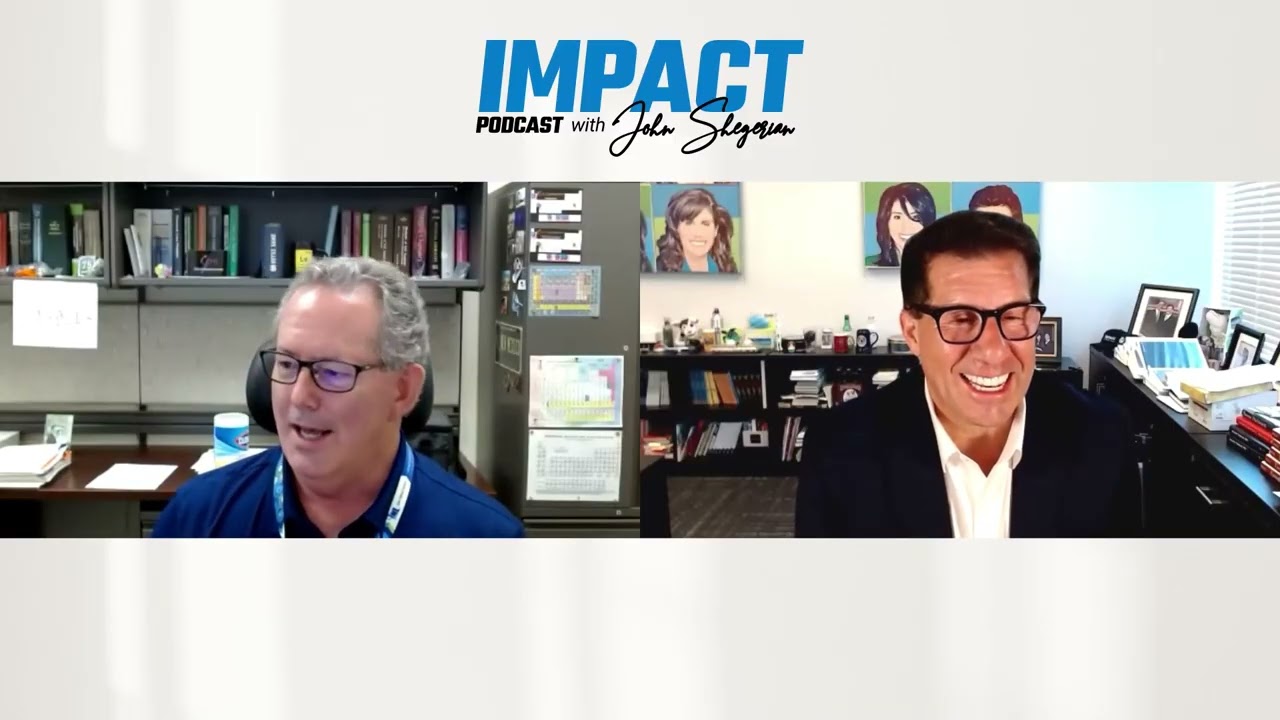
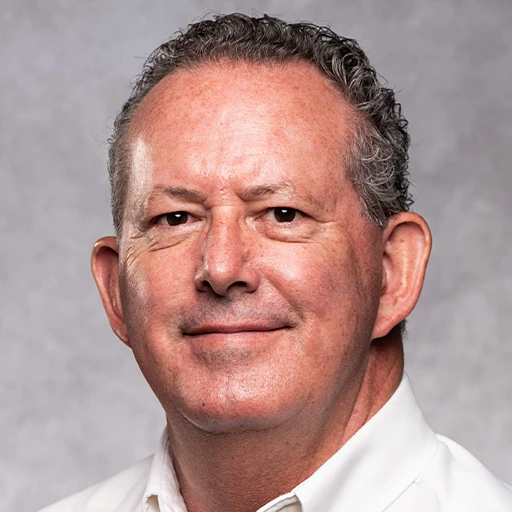
Dr. Bob Fox is a Directorate Fellow at the Idaho National Laboratory with more than 37 years of experience leading research efforts for federal agencies and private industry. His work spans advanced materials, separations, spectroscopy, renewable fuels synthesis, geological sciences, advanced manufacturing and critical materials.
Fox has led numerous research programs funded by the U.S. departments of Energy, Defense and Homeland Security, as well as other government and industry partners.
John Shegerian: Get the latest Impact podcast right into your inbox each week. Subscribe by entering your email address at impactpodcast.com to make sure you never miss an interview. This edition of the Impact podcast is brought to you by ERI. ERI has a mission to protect people, the planet, and your privacy, and is the largest fully integrated IT and electronics asset disposition provider and cybersecurity-focused hardware destruction company in the United States, and maybe even the world. For more information on how ERI can help your business properly dispose of outdated electronic hardware devices, please visit eridirect.com. This episode of the Impact podcast is brought to you by Closed Loop Partners. Closed Loop Partners is a leading circular economy investor in the United States with an extensive network of Fortune 500 corporate investors, family offices, institutional investors, industry experts, and impact partners. Closed Loop’s platform spans the arc of capital from venture capital to private equity, bridging gaps and fostering synergies to scale the circular economy. To find Closed Loop Partners, please go to www.closedlooppartners.com.
John: Welcome to another edition of the Impact podcast. I’m John Shegerian, and I’m so honored to have with us today Dr. Bob Fox. He’s a directorate fellow at the Idaho National Laboratory. Welcome, Bob, to the Impact podcast.
Dr. Bob Fox: Thank you, John. It’s nice to be with you today.
John: Hey, before we get talking about all the important work you and your colleagues are doing across all 17 national labs, share a little bit about, Bob, where you grew up and how you got on this very, what is now more important journey than almost at any time before. How’d you get to this place?
Dr. Fox: Well, I’m an Idaho kid. I grew up in a small farming town about 45 miles east, southeast of Boise, a little town called Mountain Home. Mom and dad and uncle owned a 5,500-acre farm, and I was free labor. So, I grew up doing the baling the hay and irrigating and doing all of the farm stuff, which is back-breaking labor, and about eighth grade I was like plotting my escape trajectory off of the farm life. This is hard work. I need something else to do. So, I knew in eighth grade that, yeah, I’m going to go to college and get a degree. So, went to school at University of Idaho in Moscow, Idaho. Finished the bachelor’s, of course, and stayed there for a master’s degree, and I was given an opportunity to serve as an intern at Idaho National Laboratory. So, I finished the master’s degree and started a graduate internship at Idaho National Laboratory, 1989.
John: Wow.
Dr. Fox: January 1989, and was hired on as a staff scientist in the chemistry department in December of 1989. So, my first year as an intern, and then started as a staff member. About three or four years into my work in the chemistry department, my department manager came to me and said, “You’re doing really great. You’re bringing a lot of research, but you’re going to hit a ceiling at the national laboratory with just a master’s degree. So, my advice to you is to go back to school and get a doctorate degree, preferably in chemistry, and continue on with a career at Idaho National Lab.” So, I’m thinking, “Oh, let’s see. I’ve got a day job. I have a wife, two kids, a mortgage, and my boss wants me to go back to school? What is he, crazy?” So, I did. I actually did that. There was a local branch campus at the University of Idaho, at University Place here in Idaho Falls. I was able to go back. I work all day, work a normal day shift, and then go in and take classes at night. It took five years, but I finished the doctorate.
John: Wow.
Dr. Fox: My first day at the national laboratory was focused on separations, metal reactions, reactions of metals, in various environments, and how to separate them. I was on projects that were being funded by the US Bureau of Mines, which was still active back then, and we were doing metal separations. Now, 37 years later, the US Bureau of Mines, of course, has gone away, but the Department of Energy picked up that mission of doing critical material separations. So, my very first day at work of doing critical material separations, now 37 years later, I’m still doing critical material separations. So, my whole career has been focused on metal reactions and separations of metals, and it just so happens that some of those metals kind of fall into the critical material category. So, that’s how I got started and how I’ve stuck and had legs at the national laboratory.
John: So, you don’t regret choosing to work with your brains over your back, huh? I take it.
Dr. Fox: Yeah, I tell you, you throw enough hay bales in one day, and pretty soon you’re looking for an out.
John: I don’t blame you. I grew up partially on a farm as well, so I know farm work is hard work, and so I totally respect it. I love your path to where you are today. Just as for our listeners and viewers, when I was prepping for today’s interview, I myself was blown away with the breadth and scope of our national lab system. I didn’t know the Idaho National Lab is one of 17 national labs, and you have 6,400 or so researchers and support staff at just the Idaho National Laboratory. So, this is a very big and important part of what we’re doing in this country in terms of R&D, research development, science, towards getting more independent from other countries around the world, which we’ve historically depended on for our critical materials and magnets.
Dr. Fox: Yes. Absolutely. So, Idaho National Laboratory is a multi-program national laboratory. That means that we are able to do work for others, other government agencies and other offices within the Department of Energy. Our lead office, our lead customer is Office of Nuclear Energy, and that is also why Idaho National Laboratory is the lead nuclear energy laboratory. So, a large majority of our mission here at Idaho National Lab stems from our early mission as the National Reactor Test Station. So, the nuclear mission is in our DNA. It is leading the way right now with the number of different reactors that have gone critical. First time we’ve had a reactor go critical in the United States in, I believe it was 70 years, and it happened right here at Idaho National Laboratory recently. How critical materials plays into supporting the nuclear mission is some of those critical materials are nuclear critical materials. So, they’re critical materials that have some supply chain pinch point, and they’re needed in order to get nuclear energy out into business and industry. So, uranium, by way of example, we used to source all of our own uranium here in the United States, but we stopped doing that, and we became reliant on Russia, by way of example, for all of our nuclear fuels, and we can’t do that anymore. In fact, it’s illegal to obtain uranium and nuclear fuel from Russia. So, where are we going to get it? It’s not going to fall out of the sky. We have to resource our own nuclear fuel right here domestically in the United States, and so the front end of the nuclear cycle needs to be restarted. It’s a supply chain that needs to be restarted, and our 6,400 employees, part of them are leading the way with all of the next-generation reactor technology. The Energy Environment Science and Technology Directorate is leading the way in critical materials and looking at sourcing advanced next-generation mining and beneficiation, separations, purifications that lead to uranium and thorium being fed into the nuclear fuel cycle. So, a very important mission for the nation.
John: Your title right now, besides directorate. I want to go over two titles. Directorate fellow, I want you to define that for our audience, and then senior capture manager for the Idaho National Labs Critical Minerals and Materials Initiative. Can you explain both so we all understand what they mean, scientifically?
Dr. Fox: Yeah. So, we have the science and technology directorates, Energy Environment Science and Technology Directorate, the National and Homeland Security Directorate, the Nuclear Science and Technology Directorate. Those are all science and technology directorates within the company. So, a directorate fellow is a level six scientist or engineer in their directorate. We are technical leads, in some cases nationally and internationally recognized. You have to go through a board review in order to be promoted to a fellow. It is also the pool of subject matter experts from which the INL fellows are chosen. So, I serve as a subject matter expert in the area of critical materials within EES&T, Energy, Environment, Science and Technology Directorate. So, what I also do is we use the capture manager. So, that has to do with the funding formula. The National Laboratory is a contract research enterprise, okay? In many instances, the Department of Energy will send programmatic funding through the National Laboratory with instructions for, “This is your scope, this is your schedule, this is your budget.” In other instances, we will go and compete for funding. So, there will be a notice of funding opportunity or funding opportunity announcement, and Idaho National Laboratory will go and compete against everybody else, other national laboratories, compete against academia, compete against other competitors for that funding. So, when you have a call for proposals out there, you need someone who is keyed up on INL’s mission, vision, our strategy, the strategy for the directorate, where we’re going with our critical materials initiative, which proposals represent our best science and engineering, where the opportunities are. A capture manager is adept at identifying the best science and engineering that fits the situation, and how to prompt principal investigators to couch or word their proposal so that it’s a winning team, it’s a winning proposal, it’s not an also-ran.
John: Yeah.
Dr. Fox: So, a capture manager puts together the most competitive teams and most competitive ideas and sharpens that proposal until it’s winning. It’s a winning proposal.
John: Bob, just to level set for our audience, and thank you for those definitions of your titles, what are critical minerals? Because it’s in the news a lot now, more than ever before. It’s recognized that countries that are probably adverse to the United States, or at least not aligned with us in many ways, have the next Strait of Hormuz. They’ve got the next monopoly on these critical minerals and magnets. In a lay person’s terms but given by a top scientist, you, what are they and why are they so important to the homeland security and general economy for the, let’s just say the Nvidia, Anthropic, SpaceX economies that we’re now living in?
Dr. Fox: Yeah. So, critical minerals and materials, they’re basically metals that you need, but you can’t get, okay?
John: Right. Okay.
Dr. Fox: Yeah. You can’t get them. Strait of Hormuz is a good example at the moment because there’s a geopolitical incident going on.
John: Right.
Dr. Fox: So, a critical mineral or material is not always a metal, but typically is a metal and is used for energy production technologies, artificial intelligence, microelectronics, advanced technologies that make our life better. So, obviously right now we’re on a trajectory of electrification of society, okay?
John: Right.
Dr. Fox: We’re changing over our electricity production systems away from fossil-based to renewable-based. In that transition, you have to change over much of the electronics, the infrastructure, the materials involved in generating the electricity, transporting the electricity, storing the energy, et cetera. So, those metals are critical to the advanced technology, and they come from the earth. You have to mine them, or you could pump them out of a brine well or something like that, but you have to go mining for them. You have to resource them. In many cases, they’re not in abundance, okay? We’ll take the rare earths, for example. The rare earths are all of the lanthanides, plus scandium and yttrium. Well, there’s nothing really rare about them. They’re abundant, several thousand parts per million in the Earth’s crust. It’s just that they appear only in a few locations at a grade that is economic to mine.
John: Got it.
Dr. Fox: Okay. So, when you have a country, let’s say, that there are abundant and high-grade sources. But if you have a country that takes over the supply chain and runs everybody else out of business to the point where they then are the monopoly and dominate the supply chain, then you’re only resourcing that critical material from a single point source. If that single point source then decides to play politics with that resource, then everybody feels the crunch. You cannot then field your electric vehicles. You can’t field your next-generation semiconductors. You can’t deploy these things, and markets either stagnate, or markets feel tremendous pressure and prices spike.
John: So, was one of the major roles then of the Idaho National Lab to work with the US government hand-in-hand, or also entrepreneurs and innovators to come up with new sources of critical minerals and magnets, vis-a-vis virgin mining sources and urban mining sources?
Dr. Fox: Yeah, exactly. So, what needs to happen when you have a supply chain pinch point, you then develop a strategy for how to overcome that supply chain pinch point.
John: Got it.
Dr. Fox: We’ll go back to lithium. We can go back to lithium for batteries or rare earths for magnets, or we can go antimony for bullets or munition primers. In all of these cases, the United States has resources. They’re just not actively being mined anymore. So, the supply chain from the extraction part of the industry all the way through the manufacturing part of the industry, that supply chain disappeared. It disappeared starting as early as 1968, and started to get into full swing in about the mid-1970s. By the mid-1990s, it was well in the rearview mirror for many of the manufacturing supply chains, the domestic resourcing all the way through to the manufacturing supply chains for many of these materials in the United States. So, if you’re going to overcome, say, dominance by one country and you have these resources yourself, you have to go back to basics and tie your economy to the extraction industry and rebuild that domestic supply chain, rebuild the mining, rebuild the beneficiation and separations that occur at the mill, rebuild the refining and the manufacturing, rebuild all of those capabilities and that infrastructure so that you’re not dependent on Russia or China or somebody else for that.
John: Why is the Idaho National Lab uniquely positioned to help companies and the government move from discovering new sources or developing new sources of critical minerals and magnets, technologies from the laboratory, then to real-world deployment? What’s the special source of the National Laboratory system, more specifically the Idaho National Laboratory?
Dr. Fox: Yeah, good question. We get that all the time. It’s why Idaho National Lab? Why the National Lab system? So, first of all, in many cases, the domestic mining practices, domestic miners are not there, and they’re not practicing because of regulatory issues; the mining practices, it’s too detrimental on the ecosphere. So, what the National Lab’s role is in that case is to listen to all sides and come up with solutions. That’s what we are. We’re problem solvers. We solve sophisticated problems. So, if you have people in the community that are saying the mining practice pollutes the water, or the mining practice could give rise to acid mine drainage, the mining practice does this or that or the other that’s detrimental to the community, then the National Laboratory researchers, we hear that, we listen to those concerns, we hear those, and we start to develop technological solutions that would mitigate those problems that are tied to mining practices. We talk to the mining companies, and they say, “Well, you’ve got to crush it,” and crushing rock is tremendously energy-intensive.
John: Right.
Dr. Fox: You have all of these other atoms and minerals in the mix that you need to separate, and that’s very time-consuming and energy-consuming. We need better technology, more advanced sensors, more advanced technologies. So, we’re listening to everybody, and everybody’s saying the same thing. We need better technology. We need better technology. We need better technology that’s better, faster, cheaper, that is less impactful on the resources, the water, the air, that is healthier for the workers and gives rise to benefit to the community, benefit to the ecosphere instead of having a resource extraction effort give detriment to the local community and the local environment and ecosphere. So, we develop answers, we develop solutions and technologies. That’s why the national laboratory. Companies will come to us, and many mining companies will not spend money on research and development to develop new technologies.
John: Really?
Dr. Fox: They will go with the same technology. In fact, in talking with investment bankers, one gentleman was telling me that if you are an investment banker and you have a known mining technology with a known return on investment, you know what your risk is going to be if you give this individual millions of dollars of capital. You know what your risk and return on investment are. But new technology is unknown, and we don’t know what the risk, and we don’t know what the return on investment is. So, investment bankers are going to be reluctant to invest in mining companies to develop new technology. So, you see there’s a challenge there in that mining companies and people, the public, want new, less impactful, more efficient technology, but nobody wants to pay for it.
John: Wow.
Dr. Fox: So, the government is able to come into a situation like that, partner with the prospective industry partner and bring to the table funds that can de-risk the technology and to help the technology become deployed by the industry partner. The technology can make it from the laboratory through a pilot scale and then out to commercial practice by a government-industry partnership that gets us off on the dime.
John: If the virgin mining industry, the legacy mining industry, is unwilling to spend on R&D, which I understand, it happens, and you’re the one that steps in in that unique position and helps that evolve so their technology becomes better, less impactful to the environment, better to use, faster to use, faster to deploy, is there also part of your role to look for alternative sources like urban mining, like getting out of these electronics that’s in my hand, in your hand, and in front of us that we’re talking on? Is it also to work on urban mining sources, above-ground sources of now being able to extract critical minerals and magnets out of old electronics and tailings and other what were considered historical waste streams, but now can move from trash to maybe future treasure?
Dr. Fox: Oh, yeah, absolutely. All of the above is the best answer. In fact, in order of priority, digging a new hole in the ground is of lowest priority.
John: Wow.
Dr. Fox: Digging a new hole in the ground is of the lowest priority. Job number one right now is what you see the Department of Energy, the Critical Materials and Energy Innovation Office right now is focusing on, is improving existing mining efficiency. So, all of those mining operations where we’re currently digging, we’re currently mining, improving the efficiency of their operation is job number one. So, what that means is not only improving the energy efficiency and improving technologies that clean up the water that they’re using and things like that, but it also means showing industry better technologies for co-developing, co-valorizing products that they normally would just throw in the tailings pile, okay? So, instead of digging it up and only taking, say, the copper or the zinc and throwing the gallium in the tailings pile, the Office of Critical Materials and Energy Innovation has funded efforts to show mining companies, and in some cases provide the capital, so that they can buy the equipment to harvest the gallium, harvest the germanium, and use that domestically instead of getting the zinc out and then throwing the germanium or the gallium into the tailings pile. So, job number one is improving existing mining efficiency. Job number two is going to 125-plus years of historical mining in the United States, going back through every single tailings pile that we know exists and uncovering those that we forgot about, and assessing all of those tailings piles and assessing whether or not they can be recovered, reprocessed, and materials that were thrown away back then recovered from that. There are multiple instances now where it is known that the grade in material in the tailings pile is higher than what’s currently being dug out of the mine that’s operating now.
John: Wow.
Dr. Fox: Because 100 years ago, technology was a lot different than we have now. So, things were thrown away. Also, rare earths by way of example, rare earths were known, but really didn’t get started from a commercial or industrial relevance until late into the 1950s. It really wasn’t until you started getting rare earth magnets and traction motors in the last decade and a half, two decades, that rare earth magnets really became a hot commercial product. So, technology changes; separation technologies changes. So, going back to all of the tailings piles and evaluating how accessible they are, what is the value proposition for going in and doing one: cleaning up an environmental eyesore or a legacy, and removing it from the liability column and putting it over into the value-add column, okay? So, that’s one thing. But looking at our heavy industries in the United States, we have a lot of heavy industry and a lot of heavy industry byproducts in the form of ashes and slags, and you name it. We love to put those ashes and slags in big piles, put a fence around it, and walk off. But what is in the pile that can be extracted now? And do we have technologies? If we don’t have the technology to recover value, then let’s bring forth our very smart people and develop technologies to extract value. So, recovery of metals from mining in the past, recovery of metals and critical materials from all the heavy industry byproducts, slags, and secondary materials. Then there’s what’s called the deleterious materials, deleterious sources. These would be ores or other materials that contain critical materials, but they also have something bad in it, like they’ll have a cadmium or mercury problem.
John: Ah.
Dr. Fox: They’ll have a lead problem, or they’ll have something, asbestos or organics, PCBs, or something in them that you don’t want to go and disturb those things unless you have a very clear path forward for isolating the bad actors and removing them from the equation and sequestering them so that you don’t create more issues.
John: Understood.
Dr. Fox: So, there are several by way of examples there. Then the last priority is if you absolutely, positively need to, then commission a new mine. But until we’ve exhausted one and two and cleaned up and taken out the trash and recovered, then the going in and resourcing a new, commissioning a new mine, it’s not off the table; it’s just we should be looking at these other things first.
John: Got it. Prioritizing and sequencing them makes total sense. For our audience who’ve just joined us, we’ve got Dr. Bob Fox with us today. He’s the directorate fellow at the Idaho National Laboratory. To see where Dr. Fox does his great work and all his colleagues, and to find them, please go to www.inl.gov. www.inl.gov will be in the show notes. You don’t have to write it down. You mentioned how technology changes over time, especially over 125 years. If I was to say to you, “Bob, what are you the most excited about that’s evolving really fast in terms of technology or policy that we should be watching in the next five to 10 years? What should we keep our eye on? What’s the signal? What’s the noise?”
Dr. Fox: So, the things that we need to keep track of, and not lose the bubble, as we like to say here. Don’t lose track of the bubble on this. The United States has run this grand experiment of seeing if we could outsource our resource needs, our manufacturing needs. That grand experiment has failed, okay?
John: Mmm.
Dr. Fox: We find ourselves in a very precarious position, and we put ourselves here. It’s not going to take a year to get us out. It’s going to take a lot of hard effort. So, watch as American ingenuity and the capital economy kick into gear, and American innovation and ingenuity move forward with standing up a stable domestic supply chain for critical materials. There are some 54, 64, some odd critical materials on the list now. It’s not going to happen overnight. One thing at a time, one step at a time, but watch for that as we move forward. We recognize that we live here too. This is our United States. It’s our air we’re breathing, our water we’re drinking, and our food supply. So, technology needs to step up and make sure that mining is done sustainably and ethically, and that we resource in a way that actually benefits the ecosystem instead of doing damage to the ecosystem, and that can be done in a responsible manner. We have some great technologies that we’re moving forward with. The same type of step-change advancement that you saw in the petroleum extraction industry when they developed horizontal drilling and…
John: Fracking.
Dr. Fox: Fracking and horizontal drilling.
John: Okay.
Dr. Fox: Those two technologies caused tremendous advancement in petroleum extraction. Those are the types of step-change technologies that you’re going to see in the mining industry with next-generation mining, next-generation mineral processing, and separations. So, you’re going to see a lot of technological advances over the next decade on new ways to extract: laparoscopic mining, precision mining, in situ mining. Using a lot more artificial intelligence to guide where you drill, how you drill, that will guide the extraction industry. You’re going to start to see a lot of technology move from pristine laboratory out close to the rock face as possible to do what’s called process intensification. That means combining multiple processes into only one or two steps, and you’re going to see mineral processing that happens. It’s a lot more energy efficient, and it’s a lot more concise, so that you come out of a minimal number of steps with minimal energy in a process and start to dramatically purify products instead of having endless and endless and endless trains of separation. You’re going to have separation occur in just a few steps. You’re going to see more advanced refining to get to the high-purity, 99.9999 purity metals that are used in the advanced electronics and microelectronics and the advanced energy storage devices. You’re going to see those refining technologies advance, become more energy efficient, and faster in their capability to refine and make high-purity metals. You’re going to see advanced manufacturing, additive manufacturing, advanced manufacturing step up and come back to the United States, and we’re going to start making or own- not only mining and resourcing our own materials, but manufacturing our own batteries and semiconductors. You name it, materials, advanced materials, right here back in the United States. Keep your eyes on those things.
John: Bob, talk a little bit about the Perpetual Resources Project that’s moved from an idea to a pilot-scale facility at the NIL. Why does this project really matter right now as a paradigm that shows how government, industry, and the Idaho National Laboratory can work really well together and make the impact that we need to make to get off of the chokehold of countries that are probably adverse to our best interests?
Dr. Fox: Yeah. So, the Perpetual Project is a good example of a government-private industry collaboration, a project. Several years ago, the Defense Ordnance Technology Consortium put out a domestic call for antimony production, a call for proposals. Perpetua is a gold mining company that is centered in Idaho, and they have an office in Donnelly, offices in Boise. They have a mine that is outside of Yellow Pine, Idaho. It is a former location known for producing not only gold, but stibnite, which is antimony trisulfide. Antimony trisulfide is used in munition primers as a fuel. So, World War I and World War II, U.S. munitions were supplied from that resource. So, when Perpetua received the call for domestic antimony production, they put in a white paper, as did others, and Perpetua was chosen to demonstrate their capability. So, several months, 18 months into it, I believe, the Army came back to Perpetua and said, “Yeah, we really like what you’re doing. Now put it on the fast track and go from a bench scale to pilot scale, and then go to production scale as fast as you can.” So, Perpetua looked around for people who could help them to stand up a pilot scale, which is a very important part of the transition from getting technology from a bench scale to industry scale. You just don’t do that in one step. They started looking for people to help them with the pilot, and they went all over the Northwest to other national laboratories, to academic institutions, to other industry, and nobody had expertise or the staff. Nobody had any subject matter experts, nobody had… People who did have, say, staff or experts then didn’t have the real estate or the permits or the ability to help. So, our staff ran into some folks from Perpetua who were sitting at a table at the Idaho Geologic Society meeting, annual meeting a couple of years ago, and didn’t know them; they didn’t know us. Sat down and started, “Hey, how are you doing? What’s your woe today? What’s your daily job, and how can we help?” So, they started creating notes, and the folks from Perpetua said, “Well, what we really need are experts that can help us stand up a pilot plant.” Our Idaho National Lab staff said, “Well, we can help you with that.” So, it’s a government-industry partnership that was totally serendipitous. They didn’t come looking for us necessarily, and we didn’t necessarily go looking for them. But once we hooked up, we’re in it to help Perpetua be successful to demonstrate their pilot.
John: Okay. So, Bob, obviously, you have 6,400 or so researchers, and you’re one of 17 labs, so you have a big scientific complex that’s here housed in the United States. How many projects at any one given time are we working on and making progress on to solve some of the world’s, some of our country’s most challenging and biggest problems? Do we have 10 going on right now, 1,000 going on? Tell me the order of magnitude of what’s happening right now as we speak in the third quarter of 2026.
Dr. Fox: Sure. So, 17 national laboratories; they all don’t do the same thing. The national laboratories have their various swim lanes or their mission areas, and we know ours. There are areas where we compete with other national laboratories. There are other areas where they just simply don’t compete with us. We are the leads in that area, and good luck to them. So, at Idaho National Laboratory, I do not know how many different programs we have going, but I do know that in just the Energy, Environment, Science and Technology Directorate, we have over 300 programs. So, of those 300 programs, we have about $35 million of research and development going into critical materials technologies. So, the Department of Energy, the Office of Critical Materials and Energy Innovation has the main mission for all critical material research. They will collaborate with ARPA-E, which is the Advanced Research Projects Agency-Energy, and that is a separate DOE office. But ARPA-E will be focused on early-stage research and development. CMEI, Critical Material Energy Innovation, will work on mainly pilot scale, demonstration scale, as well as applied science verification and validation. So, right now there are nine national laboratories that are focused on critical material technologies and development of critical material technologies. Those nine national laboratories are involved in several different key projects or initiatives going on. The first one is called the Critical Material Innovation Hub, CMI, Critical Material Innovation Hub. The hub is led by Ames. Idaho National Lab is one of the founding members of the Critical Materials Innovation Hub. But the Critical Materials Innovation Hub is focused on early-stage research, what we call technology readiness level two through four research in critical materials. It’s across all of the areas from resourcing all the way to recycle recovery, okay?
John: Got it.
Dr. Fox: New materials, material substitutes, new resourcing practices, separations practices, new methods for recycle, recover, et cetera. So, Critical Materials Innovation Hub. That is one large effort. The second large effort led by Department of Energy is the Critical Materials Supply Chain Research Facility. We love acronyms. The acronym for that is called METALLIC. We were going to go with Metallica, but someone had taken Metallica, so we went with METALLIC. But METALLIC is a consortium of nine national laboratories working on technology verification and validation. So, what that means is, if you have a technology that’s already been invented, it’s been reduced to practice, it’s been invented, yet you still need to de-risk it more so the industry can rapidly adopt it and deploy it, and that’s where METALLIC fits in. METALLIC typically is targeted at pilot-scale verification and validation of technologies. So, IDO National Lab is tied into both the Critical Materials Innovation Hub and the Critical Material Supply Chain Research Facility. In addition to that, we have a number of different commercial industry partners. We’re on the phone with mining organizations on a daily basis, and taking in new business and doing business with mining customers. IDO National Laboratory sits within several hours’ driving distance, any direction, to world-class resources. We’re several three, three plus four hours away from Thacker Pass, which is one of the largest lithium mines, going to turn into one of the largest lithium mines in the United States. We’re within a couple of hours of Lamhi Pass, with world-class critical material rare earth resources. We are a couple of hours from the Idaho Cobalt Belt, Cobalt mine. So, IDO National Laboratory sits in a nexus geographically, and we can supply a lot of technologies to the people who need it the most.
John: Now that you broke down how it works in the United States, since other countries are in the same, how do I say this in a kind way? Pickle that we’re in with regards to critical minerals and magnets, rare earth magnets, such as Japan, South Korea, Australia, and Germany, is there a cool fraternity of these other countries having a national lab system that you get to collaborate with and share information with and brainstorm with?
Dr. Fox: Yes, there is. We have collaborations with critical material researchers in Europe. We have collaborations with critical materials researchers and institutes in Australia. We have collaborations with critical materials researchers and institutions in Japan, and we do collaborate. We share information that is publicly vetted information. We have visiting professionals, and we meet with industry collaborators, government institution collaborators from Europe, Japan, Australia, ally countries that are basically in the same situation that we’re in. It’s very cool to hook up with people from Australia or Japan. Made a trip to Japan. The researchers there are fantastic. Japanese are wonderful people, and they are truly inspirational in some of the things that they’re doing with new advanced materials and critical materials technologies. So, yeah, it’s not just a one-nation show, that’s for sure. There are many nations that are all in to solving critical materials problems.
John: Bob, you’ve been at this 37 years or so. How is AI changing how you do what you do for the better and accelerating some of the goals you have for the betterment of our national security and just a more resilient AI, SpaceX futuristic economy?
Dr. Fox: So, some of the generative AI that is out there right now, a lot of us scientists kind of snicker behind our hand because we’ve been using these advanced algorithms for years already. So, we’ve been using…
John: Oh.
Dr. Fox: …advanced algorithms in chemometrics, in data analysis, trend analysis. Yeah, we’ve been doing this for years, okay?
John: Wow.
Dr. Fox: So, really none of this is new. What you see now, modern AI, is taking the tools that we’ve been using and slapping a new sticker on it. What you start to see are AI engines that are now out on social media for everybody to use.
John: Yeah.
Dr. Fox: You ask it a question, and it comes back with this informative answer, and it’s just getting those facts from the internet somewhere. You could’ve Googled it and gotten the same information. But now you’re just speaking to it, and it’s speaking back at you. So, some of this is maybe about 80% of it was already there. It’s just a new application. But the next-generation AI, the engines that will do hallucination, et cetera. So, if you’re a hard physical scientist like I am, prove all things, okay? Don’t accept everything that somebody tells you.
John: Right.
Dr. Fox: Certainly, you prove all things, even if it’s AI-generated. You go, and you get the facts. You get all of the information; you get the facts. You can have AI guide and help guide your organization and your thought process, but you still have to trust but verify, okay? A Reaganism, I’m going to borrow from Ronald Reagan, Trust but verify.
John: I remember that. I’m old enough to know that.
Dr. Fox: Yep. So, like all things, all things can be useful in moderation, and strategically using AI to help guide the investigation and guide the process are good. Using AI to assess your data, to model, and to help you predict where trends are going, those are great uses of AI. AI then is the next generation beyond that, exceeding human intelligence, and going and doing more than it does now. At the point where artificial intelligence starts to innovate and create new, okay? Everything right now that you see in AI, it’s just something that a large language model chewed up, and it’s regurgitating out at you. When AI starts to truly do innovative things, unique, new, novel, never ever before recorded, seen, patented, et cetera, when AI is doing that, then that is going to be a very exciting time to be in sciences because then you can start to have another innovator, another muse, another entity sparking your thought. Scientists are never going to stop using their brains, even if AI is there. We’re still going to; we’re inquisitive people. We always ask questions, maybe to our detriment. But AI will be a good tool to have on the team once it gets to the point where it’s starting to innovate.
John: Any last thoughts you have on where we are now in this journey? Obviously, you gave some real hopeful examples of where we’re going and how things could accelerate in the near future, the next couple of years. Any last thoughts by you before we sign off for today, Bob?
Dr. Fox: I would let people think about this, and that is, we talk about resourcing, standing up a new stable domestic supply chain, new separations, new manufacturing, but we forget about the end-of-life materials and recycle and recovering materials. Right now, we’re throwing 90% of our critical materials from our devices; we’re throwing those in the trash.
John: That’s right.
Dr. Fox: We’re throwing them in the landfill. The amount of value and embodied energy that the critical material, small amount of critical material in something just as simple as your cell phone, there’s just a small amount, but it’s at a very high purity and a very high functional state, and yet we don’t think twice about just shredding that and throwing it in the trash. You know what? You give Americans a recycle bin, and they will fill it. You give them a newspaper recycle bin, they’ll fill it. For tin cans, they’ll fill it. For aluminum cans, they’ll fill it. Glass, they’ll fill it. They’ll even segregate it and put it out on the street for somebody to come by and pick it up. We’re mentally already good stewards and preconditioned for good stewardship. We need to start doing this with our microelectronics and everything else so that we recycle and capture this instead of digging new holes in the ground.
John: Well, Bob, to that point, there’s 23 states right now that have landfill bans on electronics. Isn’t it to our national best interest to say, either through executive order or some other form of legislation, that this stuff that now was seen 30 years ago, 20 years ago as trash, and as you just pointed out, you’re one of our top scientists on this topic in the nation, if not the world, shouldn’t this be banned from our landfills in America, every state’s landfills?
Dr. Fox: Well, it’s hard to legislate something like that. In a capitalistic society, you need to have the ability for someone to make a buck. So, it does go hand-in-hand. There needs to be a business proposition involved. Otherwise, it’s hard to get it done. Somehow, we have a lot of brilliant folks in the nation. Somehow we need to develop an economy that includes recycle and recovery. The Japanese do it, okay? If the Japanese can do it, then we can do it here in the United States. It’s just a culture change is all. It’s a matter of do you have an industry that you make a killing at, or do you have an industry that is a service industry that you make a living at, and you provide a service for everybody? So, I think that there’s more to the answer than just slapping down a legislation or a law that says, “Thou shalt,” and looking at it and coming up with a solution that is economic and fits the community.
John: Agreed. I agree with you. Well, as you and I know, these kind of discussions don’t have a finish line. But I want to first of all thank you for the generosity of your time today. For our listeners and viewers, to find Dr. Bob Fox and all of his fellow colleagues and researchers and support staff at the Idaho National Laboratory, you can go to www.inl.gov. It’s going to be in our show notes. You don’t have to write it down. Bob, thank you not only for the generosity of your time today. That’s really, of course, something that I need to thank you for, but more important, 37 years of service to this great country, progressing our science and our technologies. Really, you don’t get the publicity of the Elon Musks and the Steve Jobs, but you deserve it, and so do your colleagues and all the important work you’re doing. I just want to say thank you for your service. Thank you for helping make the world a better and safer place, and I look forward to having you back on the show and continuing this discussion in the future months and years ahead.
Dr. Fox: Well, thank you, John. It’s been my pleasure. 37 years, it’s never been a dull moment.
John: Well, it beats working with your back on a farm, so you got out, and good for you to be using your brains. Thank gosh you’re using your brains, because it’s really making us all safer and a better country, and we’re all going to benefit from that, so thank you so much, Bob.
Dr. Fox: All right. Thank you, John.
John: This edition of the Impact Podcast is brought to you by Engage. Engage is a digital booking platform revolutionizing the talent booking industry. With thousands of athletes, celebrities, entrepreneurs, and business leaders, Engage is the go-to spot for booking talent for speeches, custom experiences, live streams, and much more. For more information on Engage or to book talent today, visit letsengage.com. This edition of the Impact Podcast is brought to you by ERI. ERI has a mission to protect people, the planet, and your privacy, and is the largest fully integrated IT and electronics asset disposition provider and cybersecurity-focused hardware destruction company in the United States, and maybe even the world. For more information on how ERI can help your business properly dispose of outdated electronic hardware devices, please visit eridirect.com.
 Spotify
 Apple Podcasts
 Amazon Music
 iHeartRadio
 YouTube
 YouTube Music
 Audible
 Pandora