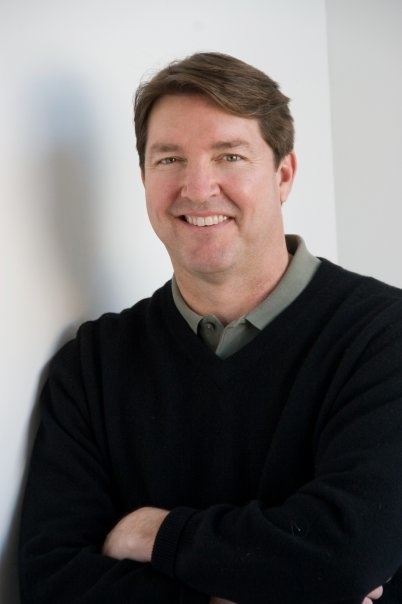
JOHN SHEGERIAN: Welcome to another edition of Green is Good, and I’m John Shegerian. I’ve got Matt Jacobson with us today. He’s the Executive Director of the Maine Lobster Marketing Collaborative. Welcome to Green is Good, Matt.
MATT JACOBSON: Thanks so much for having me, John. I appreciate it very much.
JOHN SHEGERIAN: Hey Matt, before we get talking about the Maine Lobster Marketing Collaborative and lobsters, which since I was a kid, is one of my favorite foods on the planet, I want you to share with our listeners, please, the Matt Jacobson story. Share a little bit about your history and background.
MATT JACOBSON: Goodness. I graduated from the United States Naval Academy and I flew airplanes for a while.
JOHN SHEGERIAN: Wait a second. You were a Top Gun. You’re a humble man. If I was a Top Gun, I’d say more than I flew airplanes. How cool was that?
MATT JACOBSON: It was great. It’s a great job. I was a Special Operations C-130 pilot. I got to spend a lot of time in a big airplane and dropped stuff out the back and picking people up. It was great fun.
JOHN SHEGERIAN: Awesome. You’re an American hero.
MATT JACOBSON: I don’t know about that. I got paid to do something I wanted to do since I was a little boy. It was great fun.
JOHN SHEGERIAN: Awesome. Great. Keep going. I’m sorry.
MATT JACOBSON: No, it’s OK. I flew airplanes for a while, and went to work for the railroad industry. I worked at CSX for a while, and then had an opportunity to run a small railroad here in Maine that ran from Portland up to Montreal, a freight railroad. We did a pretty good job with that, and I got a chance to run international marketing in the intermodal side, the containerized freight, for the Canadian National Railroad. I did that for five or six years. I had a great run, and my wife and I adopted a little boy and decided we wanted to move back to Maine and not stay in Chicago anymore. Not that there’s anything wrong with Chicago, but we wanted to come back to raise our family. We came home, and I got to run something called Maine and Company, which is a privately funded agency that tries to recruit businesses to Maine. We had a decent run at that, and we recruited Carbonite and Notify MD and a few other companies, Athena Health and Boston Financial Data Services. I got frustrated how hard that was, so I ran for governor, and it turns out that I’m better at other things than I am running for governor, and I got crushed. That was fun. I worked for a startup data center for a while, and we got bought by a big Internet provider, and then I landed here.
JOHN SHEGERIAN: Wonderful. That’s amazing. It’s so funny. I’m 52 years old, Matt, and I’ve never met a real-life Top Gun guy, or never even had a phone conversation with one. Just this year, in 2015, I’ve met two Top Gun guys, so I don’t know what’s going on. This is a good sign in my life. I like to have people I know that are Top Gun guys like you guys, real American heroes. It’s so interesting. The show today, the Maine Lobster Marketing Collaborative and Green is Good, people don’t understand. There’s a massive nexus between lobsters and sustainability, and that’s what I’m so excited to share today with our listeners. Please start with Maine Lobster Marketing Collaborative. What is the Maine Lobster Marketing Collaborative? And then we’ll get into the whole lobster sustainability nexus.
MATT JACOBSON: Sure. Two or three or four years ago, the lobster catch was early in the season, which meant that the lobster fishery, the Canadians catch the first six months of the year, and then the Americans catch the second six months. That’s how the industry grew up. There’s no law around that; that’s just how it works. The different supplies come online at different times, and ours, a couple of years ago, came on early. There wasn’t capacity for the value-added piece, so we had this glut of lobster on the market and no way to get it to a facility that could process it for us, so the bottom fell out of the price. The lobster collaborative really grew out of that crisis, this notion of what do we do to sustain ourselves? For me, the overriding notion is sustainability is certainly biological, but it’s also a biographical term. We were in danger of losing lobstermen and fishing villages and everything that that community represents in our state, so this became a really significant initiative for us, not only to be able to find a home for the lobsters but to make sure that our lobstermen had homes. That’s really the genesis of the organization.
JOHN SHEGERIAN: Gotcha. I’m on your site right now. For our listeners that want to follow along, they can go to www.lobsterfrommaine.com. MLMC, Maine Lobster Marketing Collaborative, was formed then. Talk a little bit about sustainability, then, being one of the key pillars of the Maine lobster industry. That’s why we have you on the show today, to talk about sustainability, Maine lobster, and how that’s really one of the founding principles.
MATT JACOBSON: Well, it is. It’s interesting, and you can imagine the Maine lobstermen. They’re sort of crusty and salty and the caricature. They’re all that and more, certainly colorful guys and women. What’s interesting to me is that this industry grew up with a conservation sustainability pillar, like you said. The first laws on the books in Maine around sustainability were in 1874, and that was a minimum size. Very early on, it was clear to the lobster industry here in Maine, 1870s, that if you take the small ones out, you’re taking your feedstock. That was codified back then. Over time, there’s now a maximum size because we recognize that the bigger the lobster, the more they breed. If it’s too small, we throw it back. Each one is hand measured at the trap. The trap is raised, and they reach out and pull out the lobsters. They have a gauge that measures how big they are, and if they’re too small, they go back in. It’s about three inches. And if they’re too big, they go back in, about five inches, pretty much the length of the body, and they throw them back. Also, if they catch a female that has eggs, not only do they throw it back, but before they do, they notch the tail. They cut a little V in the tail, and then the next time a lobsterman catches that female, if there’s a V in it, they know that it’s an egg-bearing female, and they throw it back. All these are voluntary measures that grew up around the lobster industry, with the notion that if we take everything and we vacuum the bottom, it won’t work. Over time, they’ve added different rules. One of the things that got to be a problem several years ago was this notion of ghost traps. That’s when a trap gets caught off a buoy, a boat hits it or the line breaks or whatever, and it ends up on the bottom. They have biodegradable escape hatches in the lobster pots themselves that, once they’re underwater for a while, disintegrate, so the lobsters can get in and out. Every time something comes up, the industry itself handles it. It’s interesting. One of the observations was made at the Lima Accord here a couple months ago down in Peru. They said maybe the way Maine lobstermen organize themselves – We have seven zones up and down the coast, and they’re all voluntary, and in those zones they have individual regulations and rules, and they’re mostly around sustainability and making sure that they’re doing it right, and they’re self-governing. The folks at Lima said maybe that’s a model for the rest of the world, this bottom-up approach, rather than a top-down. It certainly worked for us.
JOHN SHEGERIAN: It’s not just been since sustainability has been cool; this is 150 years of practices.
MATT JACOBSON: Exactly. You’ll see the lobstermen will actually turn their nose up a little bit at some of the local fads around it, and talk about, “We’ve been doing this since before it was cool.” Again, it gets back to that notion that sustainability is not just biological; it’s also biographic. I think that’s an overriding principle for us.
JOHN SHEGERIAN: Matt, how does that fit into your marketing? Obviously, so much of what you have to do is just by name, Maine Lobster Marketing Collaborative. If you’re marketing them, how much do you use the sustainability part of the story as part of your marketing plan?
MATT JACOBSON: It’s absolutely fundamental. It’s one of the two or three pillars. We think that the Maine new shell lobsters taste better, so that’s going to be a pillar. We think these guys that catch it have amazing stories, and that’s going to be a pillar. The third pillar is the notion that we’re doing it right and have done for a while. The reason why that’s important, not just because it makes us feel good, and it does, but we hear back in the market that that’s what people are demanding. They want to know where their food comes from. They want to know how it’s caught. They want to know who caught it. We’re hearing this from chefs, we’re hearing it from consumers, so we’re really optimistic. We think we have this great story to tell, the fact that we’re not vacuuming the bottom, we’re not factories at sea, we catch each one by hand; it’s 6,000 independent harvesters that are out there doing it right. That story has a ton of resonance to our target market, which is upscale casual restaurants around the country.
JOHN SHEGERIAN: Interesting. For our listeners who just joined us, we’re so excited to have with us today Matt Jacobson. He’s the Executive Director of the Maine Lobster Marketing Collaborative. You can learn more about all the great work Matt is doing there at www.lobsterfrommaine.com. You talked about the chefs. How do you market to chefs now across America with regards to Maine lobster? Who’s your major competition? I don’t know anything about lobster, except I love it and it tastes amazing and fresh lobster is just incredible. Talk a little bit about who your competition is and how you, then, differentiate yourself using sustainability and the great biographical story that you have to convince chefs and other food service professionals to buy Maine lobsters.
MATT JACOBSON: It’s a great question. For competition, go to a restaurant and look at the menu. What else could you have? It’s really any other protein that’s competing for center of the plate, or even appetizers or ingredients to other dishes. It’s a good thing for chefs. One of the things that we found is that the sustainability story has real value to them. If you can add this protein with provenance, if you will, onto your menu and then train your servers about how it’s caught and why those things are important, now not only are you selling dinner, but you’re selling information, you’re selling provenance, you’re selling sustainability, and all of those things matter to your customers, especially at the kind of restaurants that we’re targeting because there’s demand in this. They want to know where it’s from, and it’s beyond everybody is using locally sourced. Now the questions are deeper. Tell me about locally sourced. By whom? What did they do? How do they use it? The fact that the waters in Maine are as pristine as can be and we have these 6,000 harvesters who are very concerned about the water quality. We can tell those kinds of stories. They’re very concerned about development on the coast, and we can tell that story. All of this adds value to the chef and his restaurant, because now he has a conversation. It’s not just a scallop or a shrimp; it’s actually a Maine lobster with its provenance and these interesting stories. The customers are paying more for that, and that’s the value add.
JOHN SHEGERIAN: What other competition, besides competing against other proteins, where do other lobsters come from? I’m even unfamiliar with that kind of stuff. Who else are you competing against?
MATT JACOBSON: The Canadian lobsters are primarily hard shells, so there’s a difference. We catch hard shells too in our off-season, but in our high season, the soft shell lobster, one chef put it a couple of weeks ago, and I love this term, he said the soft shell is more lobstery. It just has a better, sweeter, more lobstery flavor to it. Only Maine catches those kinds of lobsters. There are others from around the world. I think the Australians have a product they call lobster that’s different. There’s a Caribbean lobster that has no claws. There’s lots of different substitutes that they call lobster, but nothing like Maine lobster.
JOHN SHEGERIAN: That’s so interesting. When you took on this role, was sustainability being focused on at the Maine Lobster Marketing Collaborative at all, in terms of their marketing, or did you make their biography and their sustainability foundation really the front and center? Was that a group decision, was that your decision, or was it already being done, but just never together until that crisis hit?
MATT JACOBSON: It’s certainly a group decision. It was a pillar for me. My interest is about Maine and my background before. How do we grow Maine? How do we make this a sustainable place? We had, for hundreds of years, a demographic problem where our young people leave. We are the oldest state in the country, so sustaining the economy here is a significant problem. That’s always been an issue for Maine. I have friends who are lobstermen. We enjoy the villages, and one of the reasons we moved back was because we enjoy that scene and the fact that there are lobstermen that go out, that there is a working waterfront, all those kinds of notions. That was very important to me when I took the job. I’ve been an advocate of that, tying the biology to the biography, since I got here. Of course, we’ve hired an advertising agency to help us, a company called Weber Shandwick, and they are all over it. They get it. They see the value add, and so they’ve taken that to the next step for us. It’s certainly a group decision, but one with a lot of passion from me. I’m very much an advocate of it. It’s our sustainable piece, it’s our value add, and now that it’s so hot in the market and people are willing to listen to it and care about it, it really fits for us right now.
JOHN SHEGERIAN: It’s great timing. It’s just perfect. That’s so interesting.
MATT JACOBSON: I think shows like this are indicators, not only leaders, but indicators that this notion is one that I think has some legs, and it really matters to people. It’s great. It’s a really good thing. It’s going to reward people that are doing it right in the marketplace, and that’s the best way to effect change in my book.
JOHN SHEGERIAN: You see all these exposés. I just recently watched one this week on HBO on Vice, on different industries with regards to fishing. We’ve had other guests on the show talking about how we’ve overfished different regions of the world and different types of fish. What I’ve learned here today, and our listeners are hearing from you, Matt, is really because of 150 years of making sustainability a DNA and cultural issue, the Maine lobster is one of the not overfished type of products in the world, seafoods in the world. It’s actually a sustainable product that hasn’t been destroyed or overfished because of all the practices that have been instituted for 150 years. Is that a fair statement?
MATT JACOBSON: Yeah, I think it really is. We have the same number of lobster licenses every year. We don’t grow that, so we limit who can fish. There’s an apprenticeship program, so you have to learn how. These licenses can’t be traded. You have your license, but once you retire, you don’t get to give it to somebody else. Somebody has to go through the program, so that teaches the rules. You can’t aggregate them, so you can’t buy 15 or 20 licenses. A lot of the rules that grew up around the fishery, I don’t know what the original motivations were, but certainly today, they really serve to protect our fishery from a factory mentality, where somebody might invent new technology. We purposely keep the traps the way they are, and they’re not terribly efficient, but we keep them the way they are because it adds to that sustainability of the fishery. We’re not vacuuming the bottom. We’re making sure we’re protecting the young ones, the breeders, that sort of things. It all grew up over hundreds of years. It’s not a fad here; it’s something that we’ve done for a long time, and we’ll continue to do.
JOHN SHEGERIAN: Matt, we’re down to the last two minutes or so, unfortunately. Obviously, sustainability is something that’s both cultural and part of the DNA of the lobster industry, of Maine, and of also the Matt Jacobson family. Talk a little bit about what you do in your own personal family to have a sustainable lifestyle in the Matt Jacobson household.
MATT JACOBSON: My kids are school aged, so we recycle everything right here. My wife is an ER physician, so she spends time in a couple different hospitals far away, so we decided to buy a Prius as a result of that, so she’s scooting around in her Prius. Although, my son did put a NASCAR sticker on the back, so it might be the only Prius in the country with a three sticker on the back. It’s all good. Those kinds of things matter to us personally. My taking this job was a big part of that for our family. What can we do with some of the skillsets that I’ve developed to help sustain this fishery and get these folks rewarded for the good work they do?
JOHN SHEGERIAN: That’s awesome. Matt, thank you for coming on the show today. To learn more about all the great work Matt’s doing at the Maine Lobster Marketing Collaborative, go to www.lobsterfrommaine.com and eat Maine lobsters. Thank you, Matt, for being a Maine lobster and sustainability superstar. You are truly living proof that green is good.
Top FAQs from the Episode
Here are answers to some of the most common questions from this conversation.
Matt Jacobson describes size limits and the practice of returning egg-bearing females to the water. He explains how these practices became part of the industry’s long-term approach to sustaining lobster populations.
Jacobson explains that an unusually early lobster supply created processing bottlenecks and falling prices. He describes the collaborative emerging from that crisis to support the fishery and its economic future.
Jacobson describes sustainability, product quality, and fishermen’s stories as central parts of Maine lobster marketing. He explains that consumers and chefs want to understand where seafood comes from and how it is caught.
 Spotify
 Apple Podcasts
 Amazon Music
 iHeartRadio
 YouTube
 YouTube Music
 Audible
 Pandora