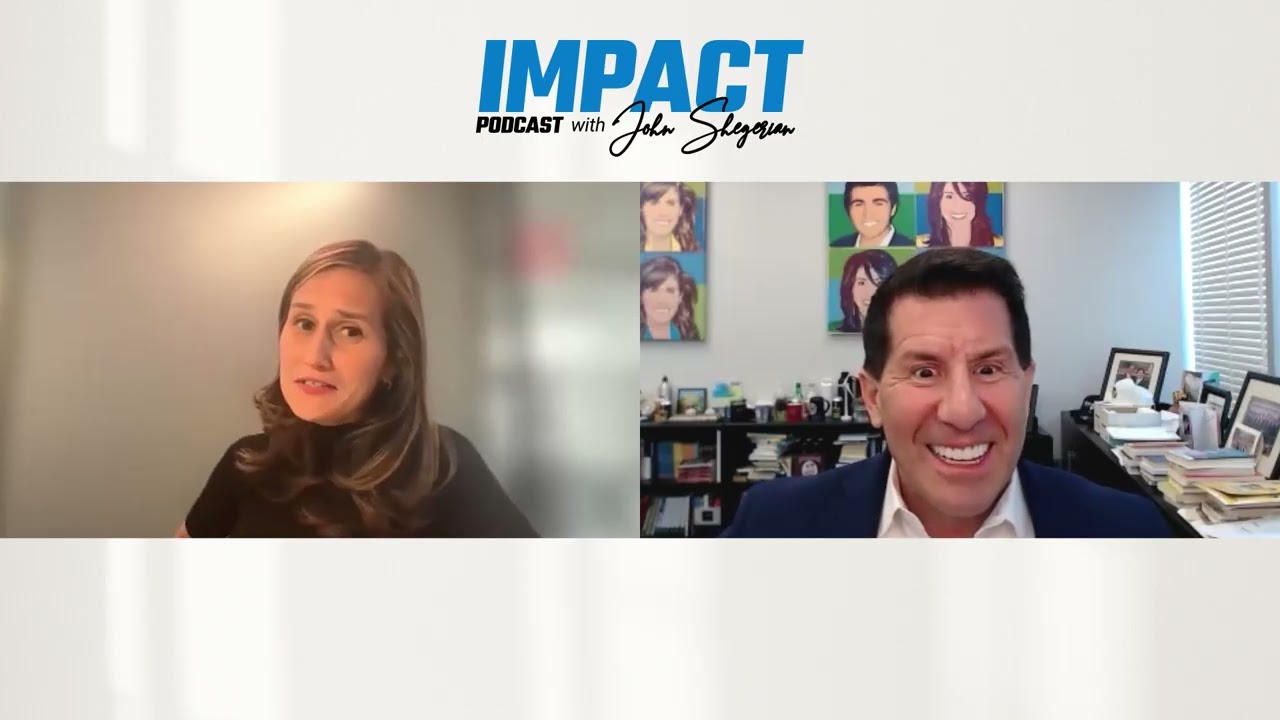
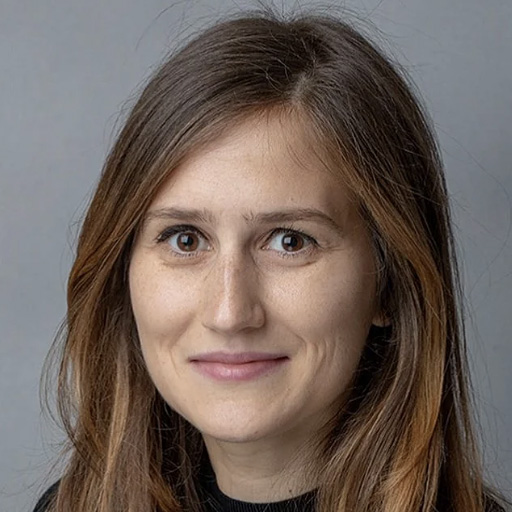
Najada Kumbuli is the Head of Investments and Partnerships at Visa Foundation, where she advances financial inclusion and ecosystem growth for small businesses and entrepreneurs worldwide. Leveraging her unique upbringing in Albania and global expertise, Najada leads a holistic investment and grantmaking strategy with a focus on supporting the growth of small businesses by enabling access to capital and financial skills and education.
John: Do you have a suggestion for a Rockstar Impact podcast guest? Go to impactpodcast.com and just click Be a Guest to recommend someone today. This edition of The Impact Podcast is brought to you by ERI. ERI has a mission to protect people, the planet and your privacy. And is the largest fully integrated IT and electronics asset disposition provider and cybersecurity focused hardware destruction company in the United States and maybe even the world. For more information on how ERI can help your business properly dispose of outdated electronic hardware devices, please visit eridirect.com. This episode of the Impact Podcast is brought to you by Closed Loop Partners. Closed Loop Partners is a leading circular economy investor in the United States with an extensive network of Fortune 500 corporate investors, family offices, institutional investors, industry experts and impact partners. Closed loops platform spans the arc of capital from venture capital to private equity. Bridging gaps and fostering synergies to scale the circular economy. To find Closed Loop Partners please go to www.closedlooppartners.com.
John: Welcome to another edition of The Impact Podcast. I’m John Shegerian and I’m so honored to have with us today Najada Kumbuli. She is the head of investments for the Visa Foundation. Welcome today to the Impact Podcast.
Najada: John, it’s a pleasure to be here with you. Thank you for taking the time.
John: The Visa Foundation of course we all love using our Visa charging credit cards in the United States and around the world. But the Visa Foundation is something I’ve never thought about. I’m sure our listeners and viewers have never thought about. So we’re going to get into that in a second. All the great and important work you’re doing with your colleagues over at the Visa Foundation. But before we do that share a little bit of your backstory. How did you get into this very impactful work that you’re doing? Where’d you grow up and how did this journey go for you?
Najada: That’s a fun question, John. I was born and raised in Albania Eastern Southern Europe during communism. Then I had the privilege and the luck to win a merit-based scholarship to finish my last three years of high school in Singapore. The reason why I mentioned that is because it completely changed my trajectory from a career perspective, from what I was interested and where the opportunities could be. There, I was introduced to the power of microfinance, quite frankly, and that is was a moment that really unlocked the opportunity of how capital, sometimes small pools of capital and sometimes large pools of capital, can really be used for social good and for social change. I moved to the US to go to college here in a very, very cold state of Minnesota. Where I continue to focus on economics and math. So very much kind of like getting into the finance ecosystem and understanding, well, how can we really use capital as a tool for change. Again, as a kid that grew up in communist Albania where everything was equal where innovation was not part of the the DNA of the community. There was a significant shift in my mindset in terms of thinking, well, how can we spur entrepreneurship? How can we spur innovation and how can we do that with the capital, but in a way that is just an equitable for everyone and that can really lift communities to create opportunities for themselves. Then I moved to Calver Impact Capital, which is one of the pioneers in impact investing, and that’s where I really built my investment knowledge anywhere from a technical perspective to an impact perspective as well. Fast forward many years later I got a call from one of the executive recruiters that was looking for the head of investment role at the Visa Foundation, a very newly minted foundation. As I say, the rest is history. Here I am after five years being the head of investment and starting the strategy essentially for the foundation from scratch in 2022, exactly nine years ago.
John: What a fascinating journey you’ve been on in terms of you truly are a global citizen. I can’t think of almost three more different communities, even though I haven’t had the honor or pleasure yet to ever go to Albania. I’ve traveled a lot around the world, spent a lot of time in Singapore, and of course Minnesota. I love dearly boy talk about three different areas of the world in terms of culture, geography, weather, you really are quite a global citizen. So has that become part of your DNA? Have you moved around the world a lot in terms of just your travel and your interests besides where you live professionally?
Najada: No, for sure. And that’s exactly it, John. We live in a very interconnected world in a global ecosystem I would say that certainly we carry with us that international understanding of how markets operate, how people engage with each other, but at the same time we’re rooted in our local and cultural backgrounds too. Yes is a short answer. Being moving a lot anywhere from as you mentioned, Eastern Europe to Southeast Asia. Also I didn’t give you the full trajectory of my career, but I spent some time in East Africa as well and then moved to the US. The reason why I mentioned that is because until you have lived and really appreciated the context of where you’re operating whether as a professional, whether as a human being, whether as an investor, you don’t understand those nuances. Those nuances are critical in how we think about shaping strategy, how we think about shaping investment portfolios and allocations. But at the same time how we show up as humans in the world. That’s what matters the most. That’s the power also of impact investing. That’s why I chose this career because you can truly align your values with what you’re trying to accomplish.
John: When you joined the Visa Foundation about five years ago. So let’s understand the onboarding process. Was this a clean slate a whiteboard?
Najada: It was. It was very exciting. The foundation had been started a couple of years back. The board of directors with the leadership of the president of the foundation they’d been doing grant making. But Graham McMillan, who is the president of the foundation had worked at Ford Foundation, which is one of the pioneers in the ecosystem of pushing or inspiring investors to think about how you can combine both your investment capital as well as your philanthropic capital to compound impact on the ground. So when he came, very much the vision was, well, how can we use the full power and the full scale of the Endowment of Visa Foundation similar to how other pioneers have done in the impact investing ecosystem so that we can compound our impact, not just only through our grant making but through our investments. Just stepping back, what makes us unique, what makes Visa Foundation unique from a corporate foundation perspective is that we do have an endowment and we can use an endowment to invest with an impact lens, whether it is on the public markets or on the private markets, and then multiply that impact with our philanthropic activity. Just specifically answer your question as it relates to did you start with a white piece of paper? That was exactly it, and that was what was exciting for the role. Started with the vision, with like building the portfolio from scratch, anywhere from the processes and procedures to the systems, to the pipeline. Fast forward from five years as a couple of days ago we have about 50 partners around the world on the investment side. We’ve allocated about $350 million in capital in a combination of grants and investments, and we’ve patched about 8 million small businesses. So the reason why I mentioned those numbers is because what is more meaningful is that there’s been progress, but also the impact is felt in those communities. So kind of like going back full circle to what you were saying, the travel, the global mentality, the local partners that part of my DNA was also built in into the strategy and what we’ve accomplished today.
John: What I find with people like you then is that the more traveled you truly are and immersed in other cultures throughout your life and your career, it just gives you a richer perspective, both in your lifetime decision making when you’re deciding about family and where you want to live, but also in your career and what you do. It’s just so nice to have all the diversity of perspectives that just make you just richer in your thinking processes and decision making processes.
Najada: That’s exactly it. John, I would say that, that has been also one of the cornerstones of the investment strategy that we have set for the foundation. That the diverse perspective was key. The reason why was both as it relates to the financial return, so at the end of the day what I’m excited about is that we have built an investment portfolio that has a dual mandate on generating attractive financial returns very well in line with benchmarks and what other peer endowments, whether foundation, endowments or university endowments are accomplishing and that social impact that is measurable over time and documented. But at the same time, the way we’ve done that is by investing in those funds and fund managers because we don’t invest one entrepreneur at a time or in one small business at a time. We just don’t have the capacity. Partly we also don’t think it’s our role. We think it is more important to put the power of capital and those resources in the hands of those fund managers that have strong boots on the ground, understand the local market context really well, understand the nuances, where the dislocations are, where the innovation is happening, and do the work themselves. So that difference in perspective has been key to our mandate and our initial financial returns show that that is a winner strategy. I can share that other institutions whether it is the IFC, International Finance Corporation, the investment arm of the World Bank and others, there’s a ton of research that shows if you’re investing in fund managers that bring diverse perspectives to the table, you are making better returns. Both financial and impact returns.
John: I got on the elevator with you today in DC and you introduced yourself and you said you were the head of investments for the Visa Foundation. What would be the elevator pitch there? I say, well, what do you do there as head of investments? What’s the vision? What’s your vision?
Najada: We allocate capital in a smart and innovative way to empower entrepreneurs around the world to create impact in their communities.
John: Man, I’d say when you got off the elevator, I’d say, I like what she does. I wish I was doing that. That’s a great mandate. So let’s talk about small businesses. The numbers are compelling. 50 countries in five years, 50 countries, 8 million businesses. Talk a little bit about what the learnings you’ve had over the last five years in terms of the biggest challenge that small businesses have today and why this is really the cornerstone of your vision in terms of supportive of small businesses around the world.
Najada: We believe strongly both at Visa and at Visa Foundation, that small businesses are the backbone of all economies. Empowering the small businesses to grow, become resilient and create that multiplier effect in their communities is key. We also know collectively not just Visa and Visa Foundation, but with our partners and peers and other asset allocators that capital is one of the largest or the biggest challenges that small businesses face, whether you’re operating in Washington DC or whether you are in operating in the Democratic Republic of Congo. Like it’s similar challenges. The way that we’ve done it at the Visa Foundation is we’ve paired, as I mentioned, we’ve paired our grant making strategy as well as our investment strategy to address this issue for small business owners. On the grant making side, we are supporting small business owners with financial education, digital education with business training, access to networks. Everything that they need in order to be ready when they receive that capital or when they have that capital to grow their businesses. Then on the investment side, what we’re doing is, as I mentioned, is we are allocating capital in the hands of those fund managers and investors on the ground that know which businesses need this capital, know how to transfer that capital and those resources in a smart, fast and innovative way so that pairing of capital plus skills create that long-term sustainability that is needed for small business owners to operate in a pretty challenging market. Again, that is the true whether you’re operating here in the US or somewhere else around the world.
John: In theory or in reality, the funds that you invest in around the world are the subject matter experts locally and culturally speaking on a geopolitical basis.
Najada: That’s exactly it. So perhaps to give you an example, we recently made an investment in AWA Capital in Latin America, based in Columbia. A phenomenal Patricia who’s the general partner of the venture capital fund that, again, venture capital fund like investing in innovation in high growth startups that are creating disruption from an AI perspective, from a FinTech perspective, from an e-commerce, supply chain, all of it. She is indeed the subject matter expert both from a venture capital perspective in Latin America, but also how venture capital in Master America looks different to a certain extent on how we think about venture capital in Silicon Valley or in Europe or in other markets. We are empowering Patricia and her team to pick those entrepreneurs across Columbia, Mexico, Peru, and other markets that know the challenges that whether it is other micro entrepreneurs or like small holder farmers, et cetera, face so they’re creating solutions that are needed on the ground in their community. Again, generating really attractive financial return while doing good. So it’s great.
John: Let me understand this now. So if you’ve invested in about 50 countries over the last five years, how many funds does that represent? Now you said 8 million businesses. Now talk about the middle. I want to understand the middle. Because the 50 countries is one number, the 8 million business is another, and there’s a large amount of funds you’ve invested in. So would that be 50 funds, one per country, or a much greater number?
Najada: No, that’s a great. That number around 50 countries and 8 million small businesses.
John: Yes.
Najada: Is a combination of both our investment activity as well as our grant making activity. So on the investment side and on the private market side only, and this is where the CIO in me kicks in. It’s about 40 of those funds. They spend anywhere from venture private debt, absolute return and real assets. So, cross asset classes again and some of them. So on the venture side what you would expect a fund like AWA Capital that we were talking about is they would probably invest in about anywhere from 20 to 40 companies. Now there’s 20 to 40 companies are also working with hundreds and thousands of small businesses because they’re providing those product and solutions that they need to grow their business to amplify their returns and things like that. That’s on the venture side. On the private gen side, we’ve invested in funds like Blue Origin Responsibility, which are like very well known fund managers in the broader impact investing ecosystem. What they do is they provide loan capital to financial institutions, think mainly microfinance institutions or local smaller banks, and then provide that capital to the small older farmers, to the mom and pop shops across like Rwanda, et cetera. There we’re getting hundreds and thousands of small businesses that are being empowered with that capital. That’s the investment piece. The grant side is, again, to give you an example, we just provided a grant to this organization called Pro Mujer in Latin America again just to keep it on the Latin America front. Even though that our work is global. What they do is they’ve created this digital platform called Emprende Pro Mujer and they provide financial, as I mentioned, financial, educational technical skills to women entrepreneurs across Latin America so they can start or grow their business at the same time they’re working with capital providers in their country. So once these businesses are ready to receive capital, they can receive that capital they need. It is a combination of both supporting nonprofits through our grant capital and then supporting market rate seeking fund managers that are also doing good in both in developed and in emerging markets through our impact investing activity that we get to those 50 countries, 8 million small businesses.
John: The real secret sauce of what you’ve set up here is that you’ve created a wonderful and virtuous compounded ripple effect with all of your investments.
Najada: You said it better than I could.
John: For our listeners and viewers who’ve just joined us today, we’ve got Najada Kumbuli the head of investments for Visa Foundation. Now, Visa Foundation is a legally separate entity from Visa, but for those who haven’t been familiar with Visa, which I love Visa and it’s in my wallet. Visa did 36 billion in revenue last year, so World’s second largest card payment organization debit and credit cards. Just so people understand how big Visa is, 36 billion in revenue. Then the foundation is a separate entity, which makes the charitable donations, grants, and helps individuals businesses, and economies around the world. What a great thing. The show’s called the Impact Podcast, so I always like to know what’s going on. And what trends do you see now in the impact space, which seems to be really an ever-growing space right now. People get behind the word impact and they get behind people and organizations that are making an impact. What are you seeing yourself right now?
Najada: John, I do think impact investing is becoming more mainstream. You see the reports and the data that come from the Jayne[?] the Global Impact Investing Network, et cetera, the industry has tripled over like the past couple of years. That’s very exciting. Where I do think we are at a tipping point where especially, and generative AI now it’s the talk of every talk show. Or every business meeting. Where I do think as it relates to impact investing and specifically investing, I’m keeping track on how we can use generative AI from a portfolio management perspective, from a pipeline development perspective, and from just broadly thinking about how do we incorporate a lot of our impact tracking in a more tiniest and systematic fashion. That is one of the trends that like both as it relates to the pure financial like monitoring and management. There is a lot of work being done there and how to integrate AI. But I think the impact piece is something that I’m really interested to continue pursuing. The second piece is, there is a ton more capital flow going into emerging markets and especially in the venture ecosystem. I do think there is a huge opportunity. We’re seeing a lot of capital flowing more in Sub-Saharan Africa, in Asia Pacific and lack. We have significant exposure to venture funds as well as private debt funds in Sub-Saharan Africa and Asia Pacific and Latin America. We have some great stories of women fund managers like Arru Capital, like Beacon et cetera that I mentioned earlier. That’s a second trend of really thinking about how are we reducing that perceived risk of investing in emerging markets and especially investing in venture and in emerging markets. Knowing that the exits, the track record in the traditional investor lens is not quite there yet, but we feel very optimistic. Then the third thing I would mention too is, innovation around impact linked return for fund managers. I’m really excited to see that more and more on some of the funds that we’re investing in. Where again impact is part of their DNA, but putting it as part of their financial goals and putting it as part of their strategy from the very beginning and how it translates at the end on the impact measuring and reporting is really exciting.
John: Najada, you were the one who brought up AI. I want to stick with that for a second. There’s a whole generation of listeners and viewers and young people around the world that listen to the show or don’t listen to the show, but are hearing on a regular basis, both through traditional media and social media, that AI is coming for them. The AI is going to take away their potential career. What is your advice to the next generation of young people that are looking to be like you that can earn a living, make a living, but make an impact. And why shouldn’t they fear AI and how can they differentiate themselves and rise above and not have that dread, that AI’s coming for their career.
Najada: John, I am a hundred percent with you. I deeply disagree that AI is coming for people and for their careers. I think about AI as an enhancer of our activities, and that’s why I was sharing from my perspective as the head of investments at Visa Foundation, I want to use AI as an enhancer of our day-to-day activities. How it can make my job a little easier, a little faster. But the key is to know when sometimes like that human analysis needs to happen. It goes back to what we were talking earlier. That you can be the best investor in North America but if you do not have good partners or if you don’t have good knowledge of how investing is done in Sub-Saharan Africa, you may not make the same returns. I think about AI the same way you’d get a ton of information, but if you do not have the initial knowledge to know that this information is good or it’s not good, then you’re not going to be able to use it effectively. So I do encourage younger generations to, and this is maybe the mom in me talking, but to be curious continue learning, continue building your critical thinking skills, not taking AI for granted. And the answers that you’re getting, whether it is from ChatGPT or other places, are the right answers. But also, not discounting it. Really using it smartly. I think all of us in the our industry by thinking about how do we improve our work make it faster, make it smarter, make it better by using it. But keeping human at the center.
John: Absolutely. I want to ask you this. I have children that are 39 and 32, so now they have children. So now I have grandchildren. How old are your children? What’s their ages?
Najada: I have two boys, one who’s seven and one who’s five. So they’re still young. Don’t know about AI.
John: Good. Let’s talk about that. So with my grandchildren and your children, same generation now. You know what I feel is happening is this, and you are the perfect example. That’s why I bring this up. When I was 21 years old, all I grew up in New York City, all the business I did for my dad was in the advertising business. All the business we did was in person lunches, dinners and meetings were all in person. So in person was ubiquitous to all of us. There was no technology even so to speak. Now your children and your grandchildren and my grandchildren are growing up and they’re digital natives. They’re all going to have the same digital tools available to them. So that’s become ubiquitous. But what’s not ubiquitous is your experience. You are the perfect example. In that, look at all the countries you’ve either lived in, got educated in and spent a fair amount of time and all the countries you’ve traveled during your career. So you have personal fluency, personal skills, social fluency, cultural fluency, geographical fluency that most people don’t. My argument for the next generation is that’s what’s going to set them apart. Their are people skills. Because look at what’s happened since 98. 98 was the year Google was founded. So just a mere 27 years, and then you take COVID. So since 98, the world has gotten more isolated because more people are online and not in person. Since COVID that’s only accelerated.
So we’re isolated than ever before. Having your type of skills and your type of journey is what’s going to set apart your children and my grandchildren from everybody else. You believe a truth?
Najada: It resonates with me. I would say, you’re talking about emotional intelligence. Emotional intelligence is built by spending time with other people, by listening, by learning, by also putting yourself on other people’s shoes. These are all skills that naturally they’re not going to be taught through Gen AI. I’m not saying that Gen AI cannot be helpful. There are ways that you can use Gen AI to support on certain skills. But I do score enough the importance of spending time with people. This is part of also like sometimes the controversial topic around return to office. Like policy and whether exactly is it a good thing or it’s not a bad thing. Do I spend my time commuting, et cetera. I do see as a leader as well, but spending time with my team in the office builds trust. Trust is the currency of the world. At the end of the day, again, I will go back and say, you can be the best investor, the best financial like analyzer. But if you are not the person that you’re putting the money to, if you do not trust that fund manager or that small business that they’re going to do right with that capital it doesn’t matter. Again, building trust with people and seeing how people are interacting in different environments is critical.
John: AI is not going to replace you getting on a plane, going to Columbia, meeting the fund manager and understanding once you meet that person in person through all the pattern recognition that you’ve developed from your compounded learning throughout your life, if that’s the right person to manage the investment that you want to grant.
Najada: That’s exactly it.
John: That’s fascinating. Let’s also stick on the young people’s discussion. So there’s a whole generation that are listening that want to continue to learn, and they’re learning from you and they’re learning from other great people like you that are doing this in porn impact work. What do you wish you knew before you started working from Visa that now has become a lesson with five years in arrears now?
Najada: I would say two things, and one is what we were just talking earlier. People matter more than spreadsheets. Like the right partners can make the difference between success and failure. At the end of the day I’ve learned throughout my career, 20 plus years career that spending as much time understanding the people behind the project as I do with the numbers. So that’s critical. The other thing, and this is harder for me to say because I was a maybe a numbers person. That’s been my career throughout all these years is the importance of storytelling. What I mean by that is, numbers without a story do not mean much. It goes back to, we need to understand what does this 8 million small business mean? What does this 40 million invested in venture capital in X region mean? How is that translated into real life change, into real innovation scaled, into great investments that can be used to influence your future investment allocations, and how to use the storytelling at the end of the day to reduce the perceived versus the real risk of some of these investments that we’re making in small businesses that are sometimes perceived as to risky in underrepresented entrepreneurs that are perceived to risky in under capitalized markets because capital is not flowing there and using the narrative is a strategic tool for influence at all levels where there is at the board level, at the investor level, at the community level. So that we can allocate more capital for change.
John: That’s such a brilliant thought that you just said. Such a brilliant lesson. Spreadsheets aren’t memorable. Stories are memorable.
Najada: That’s exactly.
John: That’s so wonderful. You have five years now behind you and with a massive success, obviously. What are you looking forward to the next five years? You’re very young, you’ve already had a lot of success, you’re running a great organization, obviously, and it’s going well. What do you want to do the next five years at the Visa Foundation?
Najada: I would say accelerate our impact. You cited some of the numbers earlier about Visa sheer scale as it relates to a leader. Certainly folks think of Visa as a leader in payments, but I would say Visa as a leader in financial inclusion. That’s what brought me, that’s what excited me to come and be the head of investment for the Visa Foundation because the mission of the foundation is core to the mission of the business as well. Being able to leverage the strengths of the company to accelerating financial inclusion and providing opportunities to those entrepreneurs that have been left behind is what excites me and what gets me up and running every day in addition to my two young children.
John: Of course they do. Do you put out an annual report of some sort that discusses all the great and important work that you and your colleagues are doing?
Najada: We have an annual impact report that we’ve put out. My colleagues on the communications team also do great work as it relates to just periodically sharing some of our insights and learning. I also go and speak sometimes in conferences and other places because at the end of the day, again, maybe tying it back to what you are sharing, success in five years would be that many other institutions are incorporating the philosophy of impact investing where you can do good from a financial perspective and really well from an impact perspective. And so having others join us on this very important journey to me is critical.
John: That’s wonderful. And for our listeners and viewers to find Najada and her colleagues and all the work they’re doing, you can go to visa.com. We’re going to put in more specific links into the show notes, so you could just click the link and pull up all the great and important work she’s doing with her colleagues and also the impact report she just referenced. Najada, thank you so much for not only the generosity of your time today and sharing your story, not only your personal story, but the story of the Visa Foundation. But thank you also to you and your colleagues for making the world a better place.
Najada: John, it’s been an absolute pleasure. Thank you so much for having such a fun conversation with me and I look forward to continuing offline.
John: This edition of The Impact Podcast is brought to you by Engage. Engage is a digital booking platform, revolutionizing the talent booking industry with thousands of athletes, celebrities, entrepreneurs, and business leaders. Engage is the go-to spot for booking talent, for speeches, custom experiences, live streams, and much more. For more information on Engage or to book talent today, visit letsengage.com. This edition of The Impact Podcast is brought to you by ERI. ERI has a mission to protect people, the planet and your privacy. And is the largest fully integrated IT and electronics asset disposition provider and cybersecurity focused hardware destruction company in the United States and maybe even the world. For more information on how ERI can help your business properly dispose of outdated electronic hardware devices please visit eridirect.com.
 Spotify
 Apple Podcasts
 Amazon Music
 iHeartRadio
 YouTube
 YouTube Music
 Audible
 Pandora