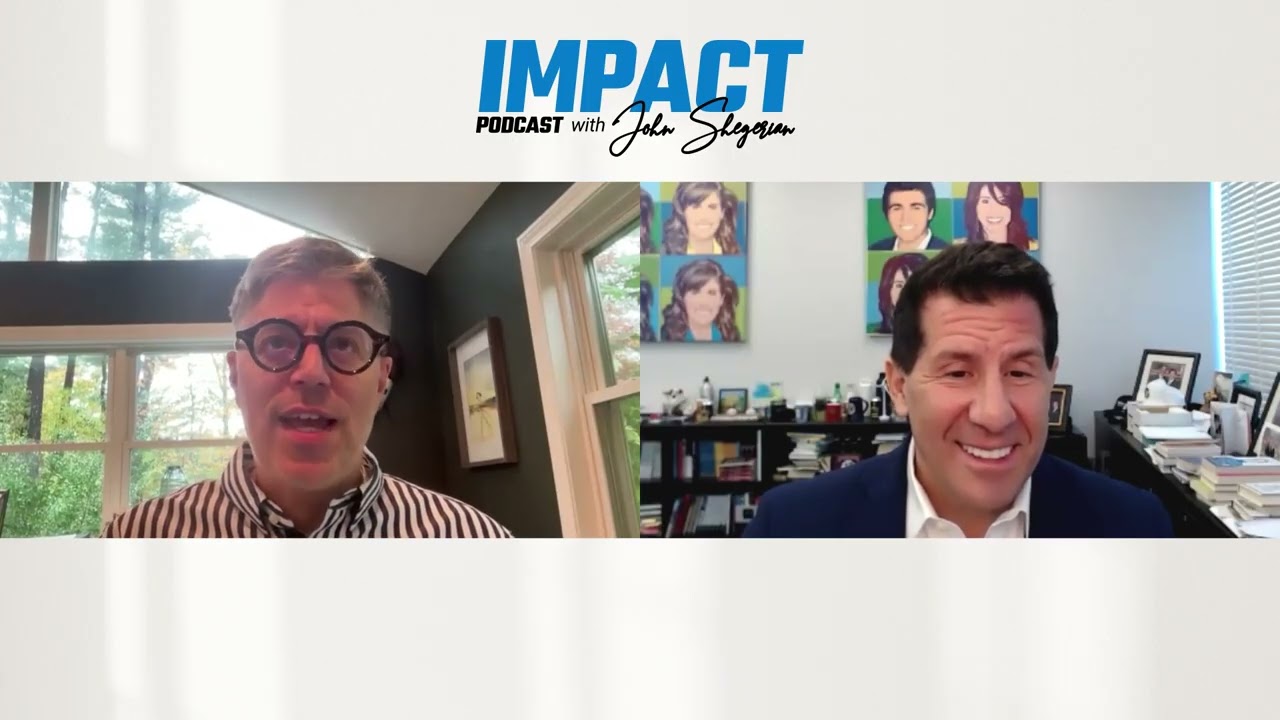
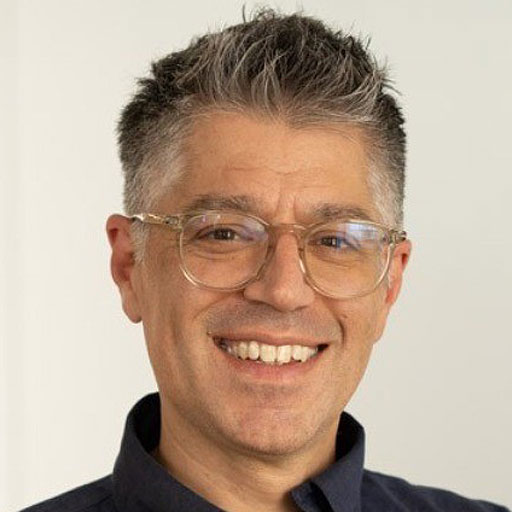
Mike Colarossi is Head of Enterprise Sustainability for Avery Dennison. In this role, he provides strategic vision and direction and reinforces the company’s commitment to advancing its corporate-wide sustainability initiatives. Mike leads the corporation’s enterprise-wide environmental, social and governance strategy and Sustainability Council. He was instrumental in developing the Avery Dennison 2025 and 2030 sustainability goals and holds the responsibility for achieving them. Mike has been engaged in sustainability for 25 years and joined Avery Dennison in 2013. Over the past eight years, he has been on the frontline for Avery Dennison in addressing emerging sustainability requirements and progressing the company towards its sustainability objectives.
John: Get the latest Impact Podcast right into your inbox each week. Subscribe by entering your email address at Impactpodcast.com to make sure you never miss an interview. This edition of the Impact Podcast is brought to you by ERI. ERI has a mission to protect people, the planet, and your privacy, and is the largest fully integrated IT and electronics asset disposition provider and cybersecurity-focused hardware destruction company in the United States and maybe even the world. For more information on how ERI can help your business properly dispose of outdated electronic hardware devices, please visit Eridirect.com. This episode of the Impact Podcast is brought to you by Closed Loop Partners. Closed Loop Partners is a leading circular economy investor in the United States with an extensive network of Fortune 500 corporate investors, family offices, institutional investors, industry experts, and impact partners. Closed Loop’s platform spans the arc of capital from venture capital to private equity, bridging gaps and fostering synergies to scale the circular economy. To find Closed Loop partners, please go to www.closedlooppartners.com.
John: Welcome to another edition of the Impact Podcast. I’m John Shegerian, and I’m so honored to have with us today, Mike Colarossi. He’s the head of sustainability for Avery Dennison. Welcome, Mike, to the Impact Podcast.
Mike: Thanks for having me, John.
John: Hey, Mike, you know, before we get talking about all the great work you’re doing in sustainability at Avery Dennison with your colleagues over there, I’d like to know a little bit about you. Where did you grow up and how did you get on this journey?
Mike: Yeah, so I grew up in the Midwest, born, raised, educated all in the state of Michigan, just outside of the Detroit area, where I lived until I was in my early 20s. And then very early in my career, I had the opportunity to move to Shanghai, China, where I spent nearly 7 years living and working. And then have been back in the United States since about 2009.
John: I still see the influence. You got the mouth glasses on here. I mean, you got the whole…
Mike: [laughter] I do. I do.
John: All right. So no wonder. I see where you got your style and your design style. After that, how long then until you joined Avery Dennison?
Mike: So I joined Avery Dennison about 13 and a half, 14 years ago. So I’ve been with the company for quite a bit of time. Before that, I worked for one other company in my career, a multinational Dutch company called Axon Nobel, a paint and chemicals company.
John: Got it. When you joined Avery Dennison, what was your role when you first joined?
Mike: It was not sustainability. I joined in our RFID organization, so radio frequency identification technology. I’m an engineer by training. I’ve spent most of my career in manufacturing, engineering, innovation roles. And so I first joined Avery Dennison in a role that was focused on that technology, how we were manufacturing it and how we’re going to be doing that efficiently at scale across the world.
John: And Avery Dennison is a material science company or what do they exactly do? What’s the main products you produce?
Mike: Yeah, so Avery Dennison is a material science company. We’re also a digital identification company, and most of the products that we produce are labels. So the labels that go on to your shampoo bottles at home, labels in your clothing, adhesive materials or labels that are holding your smartphone together, or that create sound dampening properties in your automobile. It’s a very, very large organization that has a product portfolio that touches most of our daily lives on a regular basis.
John: And for our listeners and viewers, a little bit of size and scope about Avery Dennison’s size of revenue, about $8.8 billion USD, over 35,000 employees doing business in over 50 countries. And to find Mike and all his colleagues at Avery Dennison, please go to www.averydennison.com. So now you join, you’re in a different division. When did you start migrating towards sustainability?
Mike: You know, I think sustainability has been a thread throughout my entire career. Wasn’t necessarily intentional. But even when I go back to my first internship in college, I did an internship that was focused on great lakes pollutants and how we were working with the auto industry and helping to reduce those. All the way throughout my career, whether it was on the environmental health and safety side or whether it was on the true sustainability side of things, it’s always been there. And I’ve been thinking about it as I get older. I’ve been thinking about it more. I think for me, it’s just always been a really interesting problem. And as an engineer, I like to solve problems. And so this was probably one of these existential ones that is a really, really tough one for us to solve. So I think probably in the last 6, 7 years has it really been more of a focus for me, starting on more of the ESG and reporting side of things, but now the full gamut of responsibility.
John: What year were you made head of sustainability?
Mike: That is now going back 3 years ago.
John: Okay. And was there already a chief sustainability officer, a head of sustainability?
Mike: I am the first.
John: So, okay. So this is the fun part. So I love when I interview chief sustainability officers or heads of sustainability that you have the proverbial white page in front of you. As you and I know, A, sustainability has no finish line, it’s a journey. And B, sustainability can be read very narrowly or widely, depending on the lens you read it through. When you came into that position, having already a career that you’ll get going back to college, as you pointed out, that really had some involvement with sustainability. You were touching it at all times. What was your mission then? How did you define what the head of sustainability was going to actually try to accomplish for Avery Dennison? How did that work?
Mike: Yeah, I had the opportunity to sit down with our CEO, who I report to, and to map out exactly how we would look at sustainability. And I took a fairly broad lens at it or a wide aperture. And the way that we look at it, Avery Dennison, is really in sort of three key components. The first is around what I’ll call the disclosure side of things. How do we show up in the market? How do we show up with investors? What information are we sharing externally? So that was one area that was an area of focus. The second is something that I call the sustainability practice, which is the 2025 and 2030 sustainability goals that Avery Dennison set. We set our 2025 goals nearly a decade ago. I’m happy to report that we are on track to achieve all of them, which is a pretty amazing achievement to think that we sort of stayed the course over a decade. But that was another area of focus, which is of interest because it’s just a real interesting challenge to solve. And then the third one was for me, how do we drive innovation? How do we drive value for our customers through sustainability? Because our products are ubiquitous and they touch most consumer facing goods, you come into contact with them every single day, how could our solutions help drive things like waste reduction in the supply chain? Or how could we help advance circularity or improve traceability and transparency? A big part of my time is actually working with our customers, working with our end users to really understand what are the problems that they’re looking to solve and how can our technologies help solve them. So that really was an exciting element. And me, it’s sort of leveraged with my innovation background to help drive value for not only our customers, but for Avery Dennison.
John: I got you. It’s so funny you say that then, Mike. We know that sustainability has gone through fits and starts, and also we’ve been through the alphabet soup of acronyms that got, of course, very polarizing or politicized, which now have seemed to have somewhat have quieted down. And it seems as though folks that are in your role right now, which I call one of the greatest fraternities on this planet, the chief sustainability officers, the head of sustainability’s at big iconic brands like Avery Dennison are focused on the word materiality. Is what you just described when it comes to the practice of sustainability and supporting the mission of Avery Dennison and the needs of its clients really definitionally what materiality means in terms of sustainability in Avery Dennison?
Mike: Yeah. I think absolutely. Materiality should mean what’s important to you as an organization and what is important to your customers. And it should all be focused on how do you drive value for your company and if you’re a publicly held company, for your shareholders, and for other key stakeholders in the ecosystem. So if you look at sustainability through that lens of what is truly material to our business, what is going to have a big impact on our business or our supply chains or our customers business, and equally important, what can we control, that should help you prioritize where you’re going to focus. And I think it’s an important thing to think about for sustainability professionals, because you mentioned the alphabet soup, there’s also a massive list of things that we could go work on. But for a company, you got to focus and you got to be able to prioritize.
John: Right. That’s right. So give some examples of when you walked in to the new role of head of sustainability about 3 years ago now, what were some of the more promising opportunities that you started working on that then get turned into long-term value for the main mission of Avery Dennison and also your clients?
Mike: Yeah, I’ll give you a few. One is internally facing. So we have been on a journey to reduce our greenhouse gases, like a lot of companies, for a long time. Avery Dennison has grown its business over the last decade significantly, sort of nearly doubling the size of our business over that time period. We have reduced our greenhouse gas emissions absolute by 60%. And in doing so, we have saved the organization hundreds of millions of dollars. Now a lot of times, sustainability professionals will talk about the greenhouse gas reductions that we have and the environmental impact, which is, of course, absolutely essential. But when you tell the full story, we grew our business, we reduced our GHG emissions, absolute. Oh, and, by the way, we saved the company money. That’s the big story. And I think you’re actually starting to see a lot of sustainability professionals now talk about how does sustainability create value for the organization. So that’s one example. Another example is around our solutions. So externally facing, we know that we can help address food waste. So by providing better visibility in grocery and in retail, particularly for items like protein or bakery that are high value, but also high waste for retailers, we know that through inventory and visibility and understanding how close are we to expiration and then dynamically pricing based on that, we can help reduce waste. And oh, by the way, we can actually drive sales lift as well. So in that scenario, what we’re doing is we’re actually taking a cost for a grocer, we’re helping them avoid that cost, but then we’re actually driving sales lift for them as well. So we’re actually turning a cost into a profit driver for them. That’s another simple example of just how our solutions can help address some of these big challenges that our customers are facing.
John: Taking a liability and turning it into an asset, really?
Mike: Yeah, absolutely.
John: Wow. I mean, it sounds so simple. It’s not. I know it’s not. Go back to something you just said, though, but it’s very interesting what you just said about sustainability leaders now not being so timid or afraid to talk openly talk about capital savings.
Mike: Yeah.
John: Right. Like you said, there is a shift, I totally agree with you, Mike, that sustainability leaders just love to talk about all the impactful and wonderful green benefits that they were creating within sustainability. It’s now turned into a real discussion in economics and that it’s just great business to be sustainable.
Mike: It is great business and I think the sustainability community for a while got away from talking about the very simple analogy of the 3P’s, right, people, planet, prosperity. A lot of focus on planet and for all the right reasons. But there was almost a shying away from that prosperity piece. And I think over the last 18 months or so, we’ve recognized that you can do both and we should do both. And I also think that you’re starting to see a shift in how even sustainability leaders perceive themselves. So my background clearly is now on the environmental side of sustainability. I come from a manufacturing innovation background, a science background, so yes, can I hold my own in the science? Sure. But I see myself as a business leader who happens to manage sustainability, not a sustainability leader trying to have an impact on business.
John: When you reach out and you talk to your sustainability colleagues across different industries, are they all feeling the same shift? Do they all overtly recognize that shift?
Mike: Not yet, not overtly. I think there are some individuals who rightly are still very much passionate about the environmental or the social impact side of the profession, which is laudable. And we need those people to help continue to drive us and push us forward. I think you’re starting to see more and more people recognize that they have to make a conscious choice right now of driving that internally through a business and then taking more of a business leadership lens or driving that through other innovation networks or NGOs or other ways and taking more of that environmental lens. But I am starting to see people wrestle with which one do I wanna be?
John: Profitability then creates more resilience. So resilience is also a big part of the focus of what you accomplish in not only reducing your greenhouse gas emissions, but saving hundreds of millions of dollars, the company is even just more resilient to the external factors that face all companies on any given year.
Mike: Yeah, 100%. But I’ll also be very, very, very direct here. I’m not a huge fan of the buzzwords, right? So resilience, right? I mean, that seems to be something that’s popped up over the last, let’s say, 6 to 12 months as people have tried to find another word for sustainability or SG that wasn’t going to be as contentious.
John: Right.
Mike: There’s just some basic realities here. Taking waste out of your manufacturing operations makes good business sense. It drives cost savings. It improves your profitability and it improves your environmental impact. Reducing your energy intensity reduces your greenhouse gases, but it also saves you money. Innovating sustainable alternatives that someone wants to buy drives differentiation. It generates revenue. Addressing the fact that you have a facility that’s going to be in a floodplain and your employees can’t get to work, yeah, that’s driven by environmental factor, but it’s just good business to ensure that your supply chain is going to be safe. We’ve done these things for years and years and years. And I think the more that we can take just very practical and pragmatic views against this, yeah, it all drives towards a more resilient or long-term value creation supply chain, but the reality is it’s just really good business.
John: It is good business. Talk a little bit about this. You said you report directly to the CEO.
Mike: Yep.
John: In that evolving relationship that you built with your CEO, how were you both aligned on aligning your mission and sustainability initiatives with embedding it into the core business strategy of the company? And then were you given access to all the other divisions so this way as you say you were able to then drive your sustainability initiatives into multiple the verticals of the company.
Mike: Yeah. So Avery Dennison has been on this journey for a while. So I definitely benefited from the fact that we had been on this journey for a long time. So it really started when we established sustainability as one of our company’s core values. So Avery Dennison is a values-based organization. We have a list of values that aren’t just things that you put up on the wall. We actually measure people by them. We hold people accountable for them. So it started there. Then we actually came out with five key strategies for the company that were going to drive our long-term financial ambitions. One of those was lead in an environmentally and socially responsible way. So those two sort of form the foundation. The fact that it’s a value and the fact that it’s a fundamental strategy form that foundation. From there, it just became the pragmatic reality of we can put dollars and cents against the goals that we have. And our CEO, most of his career has been very commercially oriented, has a fantastic commercial brain. He can see the opportunity that we can create to drive additional revenue and additional profitable growth for the business through sustainability. Those two things combined, demonstrating the financial value in our own operations, but also recognizing the opportunity that we can unlock through innovation and helping solve some of our customers’ biggest challenges just allowed me to really accelerate. And then, yes, I have access all the way up to the board. So in fact, this week I’m presenting to the board our sustainability strategy. They have been supportive since the get-go. And so we have an engaged board all the way down to the manufacturing floor in our factories.
John: That’s great. For our listeners and viewers who’ve just joined us, we’ve got Mike Colarossi with us today. He’s the head of sustainability at Avery Dennison. To find Mike and his colleagues and all the wonderful work they’re doing in the sustainability sector across all sectors of Avery Dennison, please go to www.averydennison.com. Mike, with regards to the size of Avery Dennison, you have 35,000 plus employees in over 50 countries. How do you drive or create ambassadors, sustainability ambassadors or evangelists among your big and diverse employee population, which spreads geographically across the whole globe?
Mike: It’s not just me. It takes our entire leadership team that are very much engaged in driving sustainability across the organization. We are regionally organized, which allows us to have regional sustainability leaders across the world who are taking both their local demands and also what we want to say as an enterprise and bringing that into their communities. And then we also have enterprise-wide initiatives that drive employee engagement, whether that are things like volunteering in the local community or specific innovation projects that we look to drive, we try to engage throughout the organization, not just at the leadership level. Because frankly, a lot of the best ideas when it comes to sustainability are coming from people who are living and experiencing every single day. And the reality is, we have operations around the world that are experiencing different impacts from things like climate change, things like social changes, all those sorts of things.
John: How do you foster communication among your sustainability leaders across the globe so everyone gets to share best practices and inspirations that they have during the whole entire journey?
Mike: We have a couple of opportunities to do that. We have an overall enterprise sustainability council, which is the primary governing body for Avery Dennison for sustainability that I chair, but that also sits on a number of representatives from our business. So one of the big opportunities that that group has is to share best practices and then disseminate information from there. But then we also have our leadership team, our sustainability leadership team that is regionally based. And one of the things that we’ve talked about, actually just within the last month, is making certain that we are doing the same thing. So ensuring that what’s happening in China is shared with what’s happening in Latin America. And maybe there’s not a one-to-one correlation, but if you can pick up some great idea that’s happening over here and apply it over there, that’s just really good practice and it avoids duplication. So we use that and then we actually have through online communities, communities of practice that we leverage where it’s opportunities for people who are interested, like-minded individuals to come together and actually just share ideas. And those sort of take a life of their own.
John: I assume it’s great to be you when you sit in the board meeting and talk about saving hundreds of millions of dollars and reducing greenhouse gases. But since you manage and are the leader of a company that’s doing business in over 50 countries with over 35,000 employees, talk a little bit about global regulation and the inequities that exists in the global regulations when it comes to sustainability. And how do you focus with your team on not letting that make you nuts when it comes to reporting, but figuring out some way to harmonize what you’re doing into the different regulations that exist across the planet?
Mike: Who is that to say I’m already not nuts? The reality is I think that’s one of the biggest challenges facing the sustainability profession today. Where we are currently from a regulatory perspective is maddening, I think, for a lot of sustainability professionals. You have Europe, which historically has led the way and still leads the way, but is taking a bit of a deep breath as they look to focus on what they’re calling competitiveness. You have the United States, which at a federal level has largely pressed the pause button, but that’s not stopping state level regulations, which are completely deharmonized. You have Asia, which frankly is very quietly but very quickly putting in some of the toughest regulations for sustainability out there. And we’re not talking about that enough. And so yeah, it is a massive challenge. How do we manage it? So 1, we really do rely on our regional teams to highlight what’s most important. 2, we actually have government affairs teams that I work with closely in each region that are trying to get ahead of some of the regulations, anticipate as much as possible. And where possible, we will engage to educate and inform, trying to be a voice of harmonization, where it makes sense. And then the third thing that we do and that we have done is that we have taken a very hard look at the regulatory environment, at the voluntary disclosure environment, and we’ve had to make some decisions around what are we going to do, and are we going to take, in some cases we take the most stringent rule and say, okay, we’re just applying that across, and that’s going to be what we use. In other places we say, no, that doesn’t make sense. We’re going to make certain that the rest of the world does this, but this specific geo or this specific state, we’re going to be able to respond to that specific regulation. But it requires a level of agility that right now I don’t know that I’ve ever seen the levels of agility that’s required to navigate it.
John: I assume you put out every year or publish an annual sustainability report?
Mike: We do. We actually have an integrated report that we publish in the March timeframe, which is incorporated with our financial report. Then we issue a separate, what we call our ESG download, which is frankly a big data dump that a lot of organizations look at that contains all of our sustainability information. That’s a good example of something that we’re having to reevaluate as we look at what’s happening in Europe with the CSRD regulation that we’re going to have to report against.
John: I’m gonna put you on the spot. I’m gonna give you a Sophie’s choice. Besides the great news that you lowered your greenhouse gas emissions and saved hundreds of millions of dollars, you’ve been doing this now in terms of your leadership role at Avery Dennison for about 3 years. Talk about two or three of your favorite initiatives or wins that your team has gotten that you’re the most proud of.
Mike: I’m really proud and frankly very excited about the opportunity Avery Dennison has to drive food waste reduction. So we are starting to see traction in this space, which is really exciting, but we’re early in our journey. And I see tremendous opportunity about leveraging our RFID technology in particular to drive inventory visibility and reduce waste and improve sales and increase. So I think that one’s I’m really, really eager and excited about. Yeah, of course, I’m incredibly proud of our global teams for the staying power they’ve demonstrated, the resilience they’ve demonstrated in delivering our 2025 goals. So that’s something that I’m hoping, once we officially cross the finish line in December that we can celebrate and that one will probably get added to the list. And then I think the other thing I’m really proud of is how sustainability is now incorporated into our innovation cycles. So, whether it’s driving differentiation because we’re innovating sustainable products, or whether it’s looking at how we’re improving margin of our products by reducing the amount of material that we put in it, which also reduces our scope through greenhouse gases, it is very much built into our process. And that’s a big win that I think is going to propel us forward for years to come. So I’m really very excited about that one as well.
John: Mike, there’s not a day that you and I could turn on Bloomberg or read the Wall Street Journal or New York Times or something of that nature and not hear or learn or be in some sort of conversation about AI. How is AI gonna impact the further embedding of sustainability inside of Avery Dennison in terms of both innovation and, of course, sustainability cost savings?
Mike: Yeah, AI is an interesting question. It’s one of the double-edged swords that we are currently wrestling with. From a usage perspective, we certainly are looking at it from the perspective of how do we simplify, automate, collect data more effectively, report it out, streamline that process. So that’s one thing that I think is probably low-hanging fruit that we’ll go after. From an innovation standpoint, we’re already seeing it. We’re deploying tools that allow us to predict outcomes much more effectively, allow us to run simulations through an AI tool versus having to run these things in the laboratory. So that drives greater inefficiency. It’s also sparking new ideas and new innovations. So we’re seeing that for sure. I think the challenge that we are facing, that any company is going to face, is simply the electrical demands that AI has. I think I’m sure all of your listeners have sort of heard the energy required for one normal search is about a 10th of that than using AI to do an internet search. So we are going to need to figure out by utilizing more AI, what impact is that going to have on our ultimate greenhouse gas footprint and how are we mitigating that? So it’s one of those things bubbling in the back of my head around, you know, oh no, here’s a new problem to address.
John: Wait a second. So you’re saying to me and our listeners, this is fascinating, that our very ubiquitous now, what has become ubiquitous in 25 or 27 years now, a Google search, if we go in and use any LLM search, same question, it’s 10X on the energy pole.
Mike: I think that’s the right number. Now, someone who’s on the AI side will probably challenge me on that but that’s the statistic that I’ve heard.
John: Yeah, wow, that’s fascinating. That is just fascinating. Going to something else about AI, though, is a whole generation, Mike, of young people who listen to the show, anywhere from high school to college and graduate school, that are looking to be like you, make a wonderful living, but also make tremendous impacts like you’re making. But all they’re hearing now, through traditional media means, CNN and NBC and all these wonderful media, all media platforms that are, you know, and also social media is that AI is coming for their job. What advice would you give to the next generation of graduate students, undergraduate students who are being feared that AI is the boogeyman and the boogeyman is gonna replace them?
Mike: Yeah, I mean, the interesting part is that I have a son who is a 16 year old junior in high school. So he’s facing a similar existential crisis. What I’ve told him and what I would tell listeners who are pre-university or in university or even early in their career, I think history is a tremendous guide. Right? Let’s go back to I’m old enough to recognize when we first had computers come into the workplace or email replacing fax machines. And at that time it was all gloom and doom as well. Oh, this is going to take away jobs. This is going to drive all these very negative impacts. And yes, there are certain professions that do get disproportionately impacted. But I think what we’ve seen throughout time is that these tools have just made humans that much more productive. So I wouldn’t be afraid of the technology. I would first be curious, understand how it can get applied to what you do. Certainly go in with your eyes wide open and understand and assess if there is a true risk. But think about it in terms of the productivity gains that you’ll be able to get. Then the bigger challenge is what are you gonna do with all that additional brain power that you can apply to other challenges? That to me is what’s exciting, is that if I don’t have to write emails every single day because AI is responding to it and knows Mike Colarossi’s tone and tenor and can manage most of that, where am I gonna be putting my mind to? How am I gonna help solve some of these really big challenges? That’s cool.
John: That’s cool. That’s cool. Well, Mike, I wanna just say thank you. What you’re doing in Avery Dennison is cool. I wanna say thanks for your time today and thanks for all what you and your colleagues are doing at Avery Dennison. For our listeners and viewers, to find Mike and all the great work him and his colleagues are doing in sustainability at Avery Dennison, please go to www.averydennison.com. Mike, thanks for not only your time today, but overall I just wanna say, I’m really grateful for people like you for making the world a better place.
Mike: Thanks, John. It’s not me. It’s 35,000 employees who every day go to work looking to solve some of these challenges. So I just am fortunate enough to be someone who gets to talk to you about it. So really, thanks for the time.
John: This edition of the Impact Podcast is brought to you by Engage. Engage is a digital booking platform revolutionizing the talent booking industry. With thousands of athletes, celebrities, entrepreneurs, and business leaders, Engage is the go-to spot for booking talent, for speeches, custom experiences, live streams, and much more. For more information on Engage or to book talent today, visit letsengage.com. This edition of the Impact Podcast is brought to you by ERI. ERI has a mission to protect people, the planet, and your privacy, and is the largest fully integrated IT and electronics asset disposition provider and cybersecurity-focused hardware destruction company in the United States and maybe even the world. For more information on how ERI can help your business properly dispose of outdated electronic hardware devices, please visit eridirect.com.
 Spotify
 Apple Podcasts
 Amazon Music
 iHeartRadio
 YouTube
 YouTube Music
 Audible
 Pandora