-
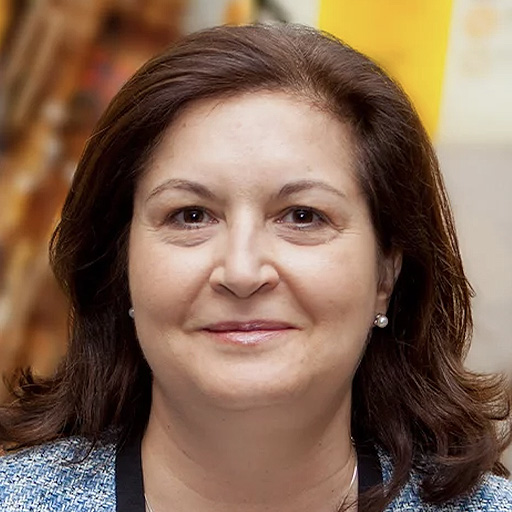
Veli Ivanova
EY
Veli Ivanova advances EY’s sustainability initiatives to increase long-term value for the firm and its clients. She leads a team of professionals dedicated to sustainability advisory, reporting and assurance services. Veli has led sustainability transformation across many sectors and her client work has led to practical results towards the transition to a low-carbon and circular economy.
John Shegerian: Do you have a suggestion for a Rockstar Impact Podcast guest? Go to impactpodcast.com and just click “Be a Guest” to recommend someone today. This edition of the Impact Podcast is brought to you by ERI. ERI has a mission to protect people, the planet, and your privacy and is the largest fully integrated IT and electronics asset disposition provider and cybersecurity-focused hardware destruction company in the United States, and maybe even the world. For more information on how ERI can help your business properly dispose of outdated electronic hardware devices, please visit eridirect.com. This episode of the Impact Podcast is brought to you by Closed Loop Partners. Closed Loop Partners is a leading circular economy investor in the United States, with an extensive network of Fortune 500 corporate investors, family offices, institutional investors, industry experts, and impact partners. Closed Loop’s platform spans the arc of capital from venture capital to private equity, bridging gaps and fostering synergies to scale the circular economy. To find Closed Loop Partners, please go to www.closedlooppartners.com.
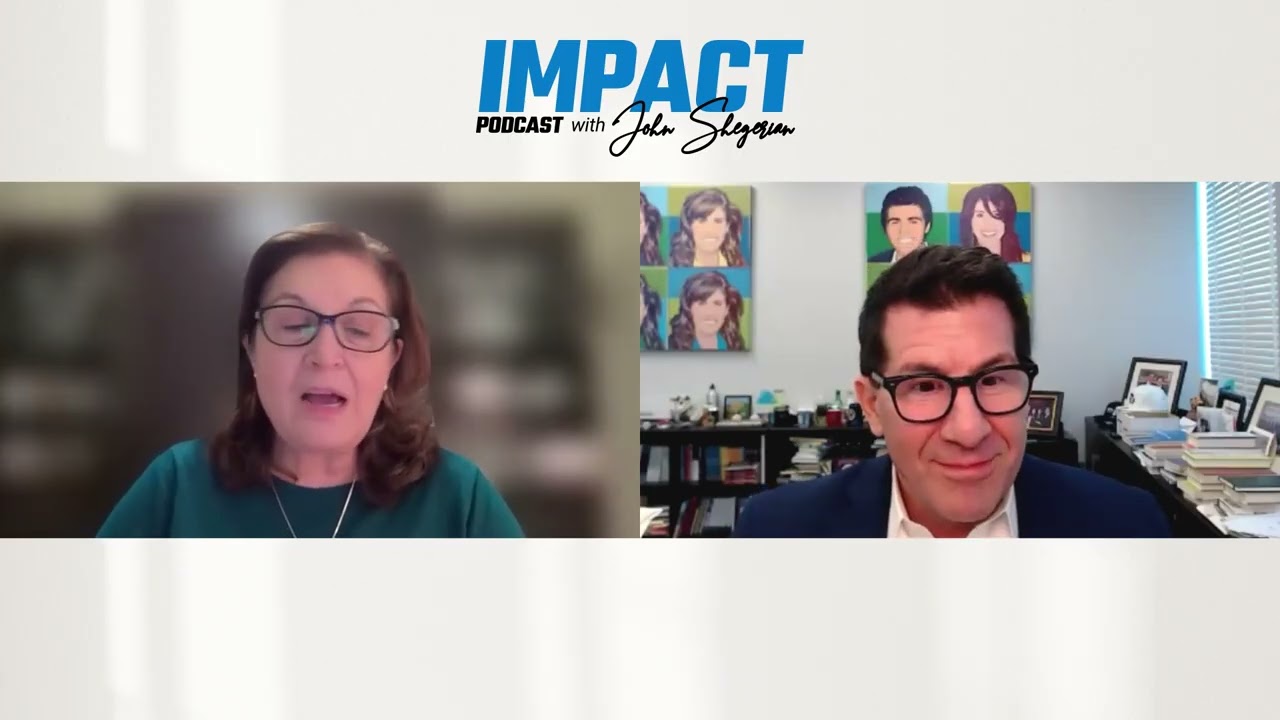
John Shegerian: Welcome to another edition of the Impact Podcast. I’m John Shegerian, and I’m so honored to have with us today Veli Ivanova. She’s the Global Chief Sustainability Strategist at EY. Welcome, Veli, to the Impact Podcast.
Veli Ivanova: John, thank you for having me today.
John: We were talking before we got going. You’re sitting in the beauty of technology. You’re sitting in Miami today. I’m sitting in Fresno, California, but we get to have a wonderful conversation as though we’re together in the same room. So it’s really nice of you to join us today, and I really appreciate it. Veli, before we get talking about all the important, impactful work you and your colleagues are doing in sustainability at EY and also counselling your clients, can we talk a little bit about you? Where did you grow up, and how did you get on this fascinating and important journey that you’re on?
Veli: John, that’s a great question. I mentioned to you that I have a very complicated Bulgarian name, so I grew up in Bulgaria. I was very fortunate to do two of my degree semesters and a PhD at the University of Manchester in the UK. Then I went back to Bulgaria after doing my degrees in the UK, started my professional career in Bulgaria, and then working for an American company there, covering the region. So doing work, not only in Bulgaria, but in Romania, Russia, Ukraine, Slovakia, Belgium, the UK. And then throughout my career, I had the opportunity to come over to the US. We originally came with my husband for only 2 years. I was able to convince him to come for 2 years, and 20 years later, we’re still here. One of my lessons in life is take opportunities when they’re presented to you and just jump and be brave, because you never know what interesting, exciting opportunity you will be able to capture in your life, both professionally and personally.
John: It’s true. So what was your career path? Obviously, you’re amazingly educated. Very few people get to have that kind of amazing education that you put yourself through as a young woman. What was your career path leading up to EY?
Veli: As I mentioned, I’m environmental scientist by education. I did a PhD in environmental science, and I started my career in environmental consulting, and very quickly after that, I transitioned into sustainability consulting. I’ve been in sustainability consulting for a quarter of a century now. So that sounds actually very frightening when I think about it. I’m one of those lucky people that started in environmental consulting. I had the opportunity to do a corporate business strategy and planning for one of the companies that I started my career with. So I was able to combine my environmental science background, my experience in environmental health and safety consulting, with the business strategy experience that I gained through that 2 years working for the chief planning officer, who in turn worked for the CEO of that company. It was a $6 billion company. And combining those two experiences, it was a natural transition for me to go into sustainability, combining environmental, social, and economic aspects of the growth of the businesses that I’m working with.
John: Understood. And what year did you join EY?
Veli: I joined EY 10 years ago. I joined EY in 2015, and it was an interesting time for me because of the place where I used to work at the time, I love the company, I love my colleagues, I love the culture, but we knew that the company would either do an IPO or be acquired by a publicly traded company. When EY called me, it was just a coincidence that I was thinking about my next career step, because I didn’t believe at the time that I would be successful as a sustainability leader in a publicly traded company. We all know at the time, short-termism, incrementalism were impacting the sustainability agenda at the time. So when EY approached me as a private partnership, I really thought that gives me the opportunity for longer-term thinking, investment from the partnership. I believe that this is something very important, both for us and our clients. I’m really thrilled that I made that decision 10 years ago. I’ve had the opportunity to be in several leadership positions around sustainability in the firm, and just the ability to build teams and support our clients has been really, really professionally rewarding for me.
John: For our listeners and viewers, I’m 63 years old. So EY really stands for what historically has been known as Ernst & Young. It’s the short for Ernst & Young. For our listeners and viewers who want to find EY, it will be in the show notes. You can go to www.ey.com. Talk a little bit about when you first joined 10 years ago, what was your title then?
Veli: I actually joined as a principal within the climate change and sustainability practice, and very quickly after that, I became the leader of that practice for the Americas. So at the time when I joined, we were in the U.S., we had about 40 people, about $14 million of revenue. When I left that position, we were actually 400 people, with almost $19 million of revenue. So that just shows you the growth that we were able to achieve in that period of time. It was really, really interesting opportunity, not only to grow from the perspective of people revenue, but developing solutions, developing innovative services for our clients, and bringing new alliances and new collaborations in place to be able to support our clients on their sustainability journey. Either with working from our traditional tech alliances, to nonprofit organizations, to membership organizations, really across the ecosystem of sustainability, to be able not only to support our clients, but our own journey as well. EY is very committed to sustainability, both environmental sustainability, as well as social investments. We have a tremendous programmed called EY Ripples, which is actually investing through our capabilities, our skills, in the communities where we live and operate on the sustainability agenda. So it’s been a very interesting journey for me, starting as a principal, meaning I’m not the CPA. Partners and principals are basically the same title, and EY partners are CPAs, principals are non-CPAs. I’m not the CPA, as we already discussed. Again, after leading the practice for about 7 to 8 years in the Americas, I stepped into a global role, having the markets and strategy role for the practice globally, which has been very interesting, particularly in the past year and a half, when we had very different geopolitical pressures, very big differences in how sustainability is perceived around the world. Since December last year, I stepped into the chief sustainability strategist role, working cross-service lines, working cross geographies, really rethinking how we can help our clients with their transformation agenda around sustainability.
John: Well, it’s because you get to work with Fortune 100, 200, and 500 companies, not only here in North America, but around the world. Share with us a little bit of your learnings in terms of the evolution of sustainability is fast evolving. As you and I know, 20 years ago or so, chief sustainability officers barely even existed. There were more anomalies than normal[?]. Now they’re ubiquitous[?]. So what does sustainability mean in 2026? And what are business executives that you go in and start with on a fresh basis, still getting wrong about their knowledge and their information about the word sustainability and business sustainability?
Veli: I think both you and I, as well as many peers and friends, have lived through the evolution of sustainability. Sometimes it’s compared to the evolution of cybersecurity, digital evolution. I think what’s really interesting is that throughout the years, sustainability as a profession has evolved as well. So we know initially we had people from environmental background, like myself. We had people from marketing backgrounds, people from operational backgrounds, entering in the sustainability space. We’ve seen an explosion of commitments, public statements, particularly around the time of the pandemic. I think now we are transitioning to this era of implementation, pragmatism, and really thinking how we can use sustainability as a driver for growth, driver for embedding the environmental, social, and economic considerations in the business plans, in the core business strategy of organizations. So just to give you a couple of examples, I think we’ve all seen how companies that have really not embedded sustainability within their corporate strategy, within their products, within their operations, within their supply chain, took a step back in the past year and a half from sustainability commitments. The companies that are really successful are the ones that have embedded sustainability in their decision-making, capital allocations, in their supply chain decisions. They’ve embedded it and they’re using it as a way to think about risks and opportunities, both around engagement with stakeholders, opportunities to create new products and services to address gaps in the market. So I think it’s been a really interesting journey supporting our clients on their sustainability journeys. But I think I would dare to say that we’re at the tipping point, or beyond the tipping point, of the clean economy. I think all the data shows that more companies are really embracing sustainability, not because regulators require them to do so, not because the investor community is pushing them for more disclosures, but because they truly understand the value that sustainability brings across their operations, whether it’s energy efficiency, whether it’s health and safety for their employees, whether it’s making, creating products that address particular consumer needs, for example. So I think we’re beyond the honeymoon phase. Obviously, in the past 18 months, we had a challenging environment when we operated, but I would dare to say that companies continue to invest in sustainability because they are seeing the business outcomes of that investment.
John: Well, I fully agree with you, and like you said, if we track it back, you and I have both been doing this for many years, a couple of decades or more. We went from that period, as you pointed out, let’s just call it the pandemic period, where the alphabet soup of acronyms got highly politicized, and now we have a rationalization period that we’re now going through, because now not only do we know it’s not a fad anymore, this is a permanent trend. Circularity is going away in your and my lifetime at all. Secondarily, as you said, I love the word you use, practical applications. Really, to me, what that means is materiality. We’ve gone from all the alphabet soup of acronyms to what’s material to the core of this business, and why is sustainability going to make that business more resilient?
Veli: Even one step further, how can sustainability drive beyond just focusing on the material impacts? How can sustainability drive opportunities and create growth for the companies? And it’s across all aspects of the business, from stakeholder engagement, the trust agenda, to actually creating product services that are innovative, different, and appeal to the younger generations. For example, you mentioned them, but I think there is expectation these days that consumers really have for companies to behave in a certain way and provide products that are different from one[?], again, it was common 5, 6,7 years ago.
John: And you’re right, Veli, I totally agree with you. And plus I have younger children in their 20s and 30s, and what I see with that generation is they’re voting with their pocketbooks now. They’re going to support companies that are acting more sustainable and actually transparently sharing what they’re doing in sustainability.
Veli: Absolutely. Again, I think it’s really interesting because they’re driven not only by the ability to have good-paying jobs, but the impact that they create. That’s really interesting. I work with a lot of young people in EY. Our workforce in general is very young. There is some sound down there that about 80% of our workforce is below 30. So you can imagine how much interest and passion there is for sustainability within our own teams.
John: Talk a little bit about, you get to meet a lot of interesting people in your travels, both nationally and internationally. I’m sure you’ve run into two different types of leaders that you get to consult with and counsel. One are folks that don’t really get it and are struggling to understand the business case for it. Others are leaders that get it, are very excited to work with you, and they become very effective sustainability leaders. Can you share what are the trademarks of effective leaders in sustainability that you’ve seen?
Veli: I think a deep technical understanding of the business of the company. The most successful people in sustainability that I had the privilege to work with, whether that’s the chief sustainability officer, the CFO, DSG controller, which is a new role that has been created in the past 2 years. I think what really differentiates them is that they have very deep understanding of the business, and they can apply that deep understanding of the business, whether it’s operations, supply chain, R&D, innovation. They’re able to collaborate across functions successfully because they are respected by their colleagues, and they know the business very well. I often joke that the chief sustainability officer is the chief collaboration officer in a company because sustainability really touches every part of the business, from all aspects of the business, from efficiencies to resources dependencies, to nature dependencies, to complex supply chains, to complex product innovation, R&D, consumer outreach, for example. So I think deep knowledge of the sector, deep knowledge of the company business and core strategy, ability to collaborate, ability to influence. I think we always underestimate the soft skills that are needed for sustainability practitioners to be particularly successful in what they do. And then I would say ability to really embed sustainability in the core strategy, communicate with the board, with the executive team. Interestingly enough, I would say people that are curious and open to opportunities to collaborate, not only within their own organization, but outside of the organization. Sustainability is so complex that we see more and more companies really not competing, but collaborating to solve the same challenges. At the sector level, now it’s not surprising that so many industry collaborations have been so successful. There are numerous examples in each industry because companies are seeing the same pre-competitive challenges, whether it’s supply chain resiliency, whether it’s the physical impacts of climate change, for example. So they really, through collaboration, are solving for the broader value chain challenges at the sector level. People that are successful in collaborating both internally and externally, I think, would be successful in this space.
John: Veli, I rarely interview or meet with a brand that’s not pursuing cooling the earth down, net zero, or getting their carbon impact, as low as possible. What are a couple of themes that you’re seeing, both in wind at our back in those goals now, but also challenges on a common basis that many brands are facing today?
Veli: I’ll actually do a shameless plug here for one of our reports.
John: That’s good.
Veli: For years, we’ve been publishing the “EY Climate Action Barometer”, which really looks at the way companies address, disclose, and report around climate change issues. This year, actually last year in 2025, The Barometer looked at a select group of leaders, which were defined based on the experience from the prior years. It was really interesting to see, John, that proactive climate action actually can prevent, and can create valuable, present very valuable business opportunities and strategic opportunities for companies based on the research that we did. That report, by the way, is available on our webpage, which you mentioned at the beginning. We’ve seen that 46% of the companies that we looked at, and again that’s a subset of companies globally that are considered leaders in this space, they’ve already developed transition plans because without an actionable, practical, strong transition plan, I don’t think companies will be able to address all the impacts and all the challenges of climate change, which ultimately that’s why companies are on the net zero journey. We looked at the facts that future inaction could potentially impact, could cost these companies about 15% of their annualized average revenue. So you can imagine what kind of revenue is at risk. Again, out of these companies, 90% plus are looking at the physical risks of climate change, but only about 40% look at adaptation measures. So when we talk about climate, about net zero, I think it’s really important to understand that companies are assessing the risks. They’re looking at both physical and transition risks, and they’re putting strategies in place towards net zero, but without actionable, practical transition plans, there would be no successful transition to net zero. So I would encourage all of our listeners who are working for corporations around the world to really start looking at what are the levers for them to be able to achieve net zero and how they can create really actionable transition plans, and focusing on adaptation because without adaptation we’ll see disruption of business models consistently around the world.
John: Speaking of shameless plugs, I have no problem asking you this question because A, I don’t take advertising dollars here. We do this as a mission to get more visibility for great brands and great people like you, and great brands like EY that are making the world a better place, some more visibility. Do most organizations that ask you to come in and those that don’t, do you think everybody needs a coach in this space? Is this really a space that is still so new and so ever-changing that getting professional coaches and consultants, which is what you offer, really a way to expedite a transition, a meaningful transition at most organizations?
Veli: I think the sustainability profession has evolved a lot, as we discussed. I’m honestly very, very lucky and very privileged in my career, to work with some of the best sustainability professionals around the world, but that being said, sustainability is so complex. None of us can be experts in every single technical aspect of sustainability. Again, we’re looking, for example, at climate. We’re looking at water. We’re looking at social issues, human rights issues. It’s really so complex and so complicated that we all specialize in certain aspects of sustainability. Hence, the need to have very deep technical expertise combined with business experience to be able to address these challenges. Again, my training, my background, is more on the water and nature side of things. So very often I would pick up the phone and call one of my colleagues about issues related to deep climate science, for example. [inaudible] we have other PhDs at EY that do that for a living. They work for NASA. They work for a number of academic institutions around the world. So when we work with our clients, it is really with the ambition to bring the best technical expertise to their needs. Very often, we combine that very deep technical expertise with business knowledge around business transformation, with knowledge around supply chain management and optimization. So bringing all of these different aspects of the transformation is what we are proud of because first you need the deep technical expertise. We need the deep understanding of the business. The sector angle is also very important. In many cases, when I work with clients, they ask me, “Hey, how is our peer doing in France? How’s our peer doing in Australia?” In many cases, we’re in a very interesting situation because we have both audit and advisory clients. And in many cases, what we learn from our advisory clients, we bring to our audit clients and the other way around. So having that very deep presence in some of our clients, particularly the audit clients, we’re on a daily basis with their executive teams. We’re on a monthly basis with their audit committees, for example. Having that access, having that deep understanding of the business challenges, we bring to our advisory clients, for example. So it’s a long, very long-winded way of saying complexity drives the need for different skillset, for different technical expertise, for different understanding of the business needs of the client, whether it’s in their operations, in their supply chain, across their value chains. So that’s why I would say we’re successful in working with our clients, because our clients are getting a lot more knowledgeable, a lot more experienced in what they’re doing, hence the need for further deep technical expertise in what they do and how we support them.
John: Talk about this. So you have both a very specific and really great education, classical education, but you’ve been doing this now for over two decades, this kind of great sustainability work for over two decades. What informs you the most? Has it been a mixture of your great education as a base and then all the experience you’ve gathered over the 20-plus years in what you do? Or how does that balance out when you get to go in? Because you’re sitting in a very, very important job and people aren’t just given those jobs, you’ve earned your way there. So if we’re talking now to your 21-year-old self, because there’s a whole generation of young people out there that really want to be the next version of you, Veli, not only someone who makes a nice living and pays her bills, but also makes a difference every day in terms of making the world a better place. What’s the best thing to lean into? Practical experience, educational experience, or some mixture thereof?
Veli: I think both of these things are the basis for what I do, but my clients expect me to be technically competent. They wouldn’t even come to me if I’m not technically competent. I think it’s the ability also to connect on a human level. Many of my clients are actually my friends. We’ve been working together for years. So the ability to connect at the very human level, which I know is very challenging for the younger generations, because now social media, AI, technology have changed so much our lives, that valuing the human connection, valuing the ability to have those friendships. I learn as much as I can from my clients as well. They bring different experiences. They represent different large businesses in most cases. They come from different sector experiences. So the curiosity, the ability to learn on a daily basis, is something that I would strongly recommend to young people. Being brave, 20 years ago, when I was offered to come to the US, I have to tell you, my husband and I took three months to make that decision. He was not convinced we should come for all kinds of reasons. He had a thriving business. Our families are still back in Eastern Europe, but we decided that we’ll take the risk, and we haven’t regretted it because it has opened up so many opportunities, both professionally and personally, that I think being brave, being curious, being courageous in the decisions that you make, and sticking to your own purpose and sticking to your own values, is something that I would strongly recommend.
John: I also give credit to what you just said. I think you’re absolutely spot on, but I also always refer back to, I’m a third-generation Armenian immigrant. You’re a first-generation Bulgarian immigrant. I always feel, from a DNA perspective, very close to any immigrant I meet, wherever they’re from or whichever generation they’re from, because they have that in their DNA. Immigrants as a whole are more resilient, more flexible, courageous, and brave. I think that’s obviously many of the skills that you get to exhibit and get to show. But you said something also very critical that I want to take pause on. I want you to lean into a little bit. There is a whole generation of digital natives. My children, for instance, are digital natives in technology and now with AI. You and I, and especially me, I’m older, grew up, and we’re analogue people. But I love what you said, and I think a whole generation needs to hear loud and clear. It’s wonderful to be digitally proficient. It’s going to be part of our lives forever. But the people skills that you have, that have connected you and built trust over the years with your client base, I think is what probably is one of your greatest secret superpowers.
Veli: And I think that’s important in any line of work, but particularly in consulting. Somebody very wise, one of my mentors many, many years ago, told me, as a consultant, you will be successful when you own your own relationships with your clients. I think that’s very true because in this age of technology and AI, the ability to connect on a very human level, the ability to learn from each other, is something that I value in particular. And you mentioned AI. I think AI will change completely the way that we do business. There will be really positive aspects of it. There will be some negative aspects of it. I think AI will change the way we do business from an efficiency perspective. I think it will have the ability to lower emissions, for example, whether it’s in buildings, whether it’s in transportation. It will really help us rethink the way we use natural resources. There are some really great examples of companies already doing that on a daily basis, but at the same time, it puts huge pressure on grids. It puts huge pressure on emissions again. I think there is a lot of work going into that space. I’m mostly concerned about the social aspects of AI, impact on skills, impact on employment, but also the impact on information. These days, we don’t even know how much of the information that’s out there is trustworthy. I catch myself in many situations when I’m asking myself, “Is that information real?” I think our job as consultants, our ability to really work on the trust and transformation agenda for our clients, very, very important. EY as a brand is really trusted with regard to transparency, and transparency is the foundation for trust. So, I think it’s really important to be in that space in a way that we can provide information that is trusted by the investors, by the banks, by the regulators. So from that perspective, I think the trust agenda is something that is very important to us.
John: You get to see, one of the curses and the blessings of where you sit is that you have your finger and your eyes and your brain on so much information that you have access to that most of us don’t have, and that’s wonderful. But that also can be a huge responsibility and a little bit daunting. As we now roll into 2026, Veli, are you more optimistic than ever before about the work that you do? Are you a little bit worried? And where do you fall out in terms of optimism versus the headwinds that we face?
Veli: If I wasn’t an optimist, I wouldn’t be in this profession, to be honest with you. For the past 25 years, there have been so many ups and downs. I feel we have to prove the business case over and over and over again. So I think I’m an internal optimist, but I’m also very pragmatic. I think many of the successful chief sustainability officers, the people that are sustainability professionals that are successful, we all bring that pragmatism to the table. It’s very difficult to come with predictions for 2026 just because none of us have crystal balls. Who expected ’25 to be such a challenging year as it turned out to be? But I think things like climate impacts on health, the impacts of plastics on health, we talked about the AI impact on information. We talked briefly about things like energy demand, supply chain disruption. These things are very real. In California, it’s almost a year since the L.A. fires, but it wasn’t just the L.A. It was Pakistan, India, and Europe. Again, the floods in Texas, catastrophe after disaster, and other disasters. So I think the drivers for investing in sustainability are there. They’re not changing. The science is not changing. The business impacts are very real. So I think in ’26 we’ll continue to see companies investing in sustainability, whether they call it sustainability or not, whether it’s called resiliency, whether it’s called energy transition, whether it’s called business transformation. Honestly, it doesn’t matter as long as we collectively collaborate on solving these challenges this year and going forward.
John: Let’s talk, though. You and I have been at this about 25 years each. One thing that I think we’ve both seen, and we could just talk about the last four days, is that the geopolitical hard deck is constantly being reshuffled now faster than ever before. Because you are in a worldwide position and your brand touches all continents, every corner of all continents, let’s just say, and you have leaders coming to you looking for direction, looking for thoughts on stuff that happens in real time, just the whole energy world got reshuffled over this [inaudible] weekend, how do you now take this as an opportunity to have real conversations with very concerned leaders that you consult with and use it as a net positive to keep them calm but give them guidance to forge ahead?
Veli: I think you mentioned something related to materiality earlier in the conversation. I think having very comprehensive assessments about the risks and opportunities that a business faces within the limits of this very quickly evolving geopolitical situation is really important. Because if companies stick to their core material topics, to the issues that their stakeholders have identified through the materiality process for them, both internal and external stakeholders, they will be addressing their biggest business risks and opportunities. Again, we both sit in the U.S., but the world is a very interesting and quickly evolving place as well. Just in May last year, this statistic really blew my mind. Just in May last year, there was more solar power installed in China than in the U.S. for the whole of ’23 and ’24. So the world is changing very quickly. At the same time, we have jurisdictions as Brazil, Japan, Oceania, Australia, New Zealand, who are very much making significant progress towards the trust agenda, to disclosure and reporting around sustainability, for example. And because the biggest companies that we work with have global presence, because they are impacted by those jurisdictions, they are also impacted by climate change and nature dependencies around the world, they have to address these issues, not necessarily from a geopolitical regulatory perspective, but because they need to manage their business and survive in a world that’s very quickly changing. We use this term, NAVI. I don’t know if you’ve heard it, but NAVI stands for nonlinear, accelerated, volatile, and interconnected. So that’s how we describe the current geopolitical situation for our clients, and they need to have adaptation plans in place. They need to have transition plans in place to be able to navigate this NAVI world. We work with a number of clients on helping them figure out what are the opportunities for them, depending on their environmental, water, nature dependencies. That’s part of helping them identify the opportunities for business growth, for relocation of their facilities, their assets, for optimizing their supply chains to be able to survive in this very quickly changing NAVI world.
John: We talked about AI a little bit. So let’s talk about sustainability and the future of sustainability. You just mentioned supply chains. We talked about AI, and then also let’s talk a little bit about consumer engagement and the stakeholders [inaudible]. From where you sit, where are some of the greatest opportunities to accelerate sustainability and drive the circular economy forward in those areas? Are they all going to be involved, or are you excited about one sector more than another? Where are the opportunities that you see today?
Veli: I think we’re in a very interesting time where all of these aspects are interconnected and in play. I’ve seen a lot of focus on nature from our clients in the past 12 to 18 months. We do another report called the “Nature Action Barometer”. And it was really eye-opening that about 90% of the companies that we looked at, the Fortune 500 companies with presence around the world, have started looking and assessing their nature dependencies. So that’s in addition to climate, that’s in addition to AI, that’s in addition to the very quickly evolving socioeconomic conditions. Because I think we more and more recognize that all of these components are so interconnected that companies need to identify their dependencies on nature, all of their aspects, whether it’s biodiversity, whether it’s water, whether it’s soil health, if you’re a food and ag company, for example, or natural resources, if you’re a mining company, for example. So I think we’re in a very interesting place where we have that confluence of all of these factors that you described, and companies are thinking of all of these in a combined way. I’ll go back to something that I mentioned before, collaboration. I think it will be more and more critical because all of these challenges are so daunting and so big that companies are really collaborating to solve them across the value chain.
John: Pretend that we have 100 Chief Sustainability Officers sitting in a room now, and you and I are on stage, and I’m interviewing you, and we’re going to give them a cheat sheet. We’re going to give them a cheat sheet, Veli, on how to succeed as a CSO and how to definitely fail as a CSO. What would be some of the greatest hits in terms of giving them one or two great pieces of advice in terms of how to succeed in their job and make the most of their important position? What would you say are some classic examples that you’ve seen over and over again that folks in their position have continued to make and have led to less effective sustainability leadership at that organization?
Veli: I’ll start with the failures first because you triggered that thinking in my mind.
John: Okay, [inaudible].
Veli: I think CSOs and sustainability professionals in general who are not collaborating with other functions across their organizations are definitely set to fail because sustainability has so many aspects of it. Again, whether it’s resources, whether it’s supply chain, whether it’s reporting and disclosure, without collaborating with all the functions across the organizations, sustainability professionals fail. Sometimes we tend to do that because we’re all technical people, we know better, we’re experts in our space. But it’s that human aspect of bringing the rest of the organization, the knowledge, the experience, igniting the conversations about how sustainability can and should be embedded in everything a company does. I think if you’re not doing that, you’ll fail, unfortunately. From a success point of view, I think there are a number of things. Embedding sustainability goals within business strategy, the core business strategy, rather than keeping them separate. The times of developing a sustainability strategy as a standalone or in addition to what else the company is doing are gone. I think sustainability professionals should be very much connected with the chief planning officer, with the chief strategy officer, and chief operation officer, and really bring sustainability goals, metrics, commitments into the overall core business strategy. Participating in and creating strong governance around sustainability is critical. We talked about curiosity, about learning. I think many of the very successful chief sustainability officers that I’ve worked with around my career have advisory councils that include people from academia, some of their peers, include people from NGOs, just to be able to run ideas, thoughts, innovation. That is really important.
Then I would say collaborating outside of their organizations is very critical as well. Again, to be able to bring new ideas, to be able to learn from your peers, is really important. Then the last piece I would say, again, we haven’t seen a lot of courageous corporate acts in the past year, unfortunately, particularly in the US. But being bold and being ambitious is something that has helped many of the peers I work with from our client organizations. And the ability to stand in front of the board, educate them, and then demand more courage from a corporate perspective has helped a lot of my clients in bringing sustainability into their organizations.
John: Veli, you get the unique opportunity to work on all continents with great organizations, big and small, that are around the world. Talk a little bit about the challenges of the patchwork quilt regulatory stakeholder laws that exist in Europe versus North America versus Asia versus South America versus the Middle East, and the Gulf. Is there ever going to be any sort of rational harmonization of these rules and regulations so people can focus on the business of really pushing their important agendas forward and not managing all this patchwork quilt of rules and regulations that sometimes are aligned and sometimes are in conflict?
Veli: Yeah, we were hoping that we’re going towards convergence. Unfortunately, last year showed that we’re far away from that. I think it’s kind of disappointing that we were very close to having somewhat of, I would say, globally applicable frameworks. I’m not going to use all the acronyms, but I think we’re at a point in time where policymakers, in particular, really need to understand that the uncertainty is the worst possible situation for business because not being able to have certainty around timelines, metrics, and standards of disclosure really hurts business. We are all investing time and effort in something that has been scrapped 3 months later. I can tell you that we’ve supported a number of clients, really large corporations with very complex operations around the world, for example, with CSRD. Now with the Omnibus, again, they’re still on [inaudible], CSRD is still very much applicable to them, but now they’re in the process of repositioning around that. The rules in California are still up in the air, still not clear how we’re moving forward. We engage with policymakers, we engage with standards setters on a regular basis, our message is that uncertainty is the worst possible situation, and that having clear, consistent expectations of business on what they’re reporting and disclosing is only beneficial for businesses. Because again, how would you be able to compare the performance of one company versus the other if you don’t have consistent reporting and disclosure mechanisms? I’ll go back to the comment about transparency enabling trust. How are we going to get the trust of the investor community or banks, for example, if we don’t have access to trustworthy, objective information around company performance? So I’m really hoping that pragmatism will prevail and that we will be heading, one way or the other, toward convergence of standards. ISSB has done a particularly good job in a number of jurisdictions around the world. ISSB has been adopted in some shape or form by 32, 35 countries, I think, probably by now. I see the benefits of these standards in places like Mexico, Brazil, or Japan. As I mentioned, companies have certainty and clarity what is expected of them, and they can put the right mechanisms for data collection, for data management, the right processes and controls in place to be able to disclose the information. That actually uncovers opportunities for efficiency, uncovers opportunities for improvement within their own performance, uncovers opportunities for bringing together financial and non-financial reporting in a way that’s meaningful to their stakeholders. So unfortunately, we are where we are, but I really hope that we’ll see some political and policy will toward more clarity around disclosures and transparency going forward.
John: I love it. Hold this thought in mind. I’m going to give you a hypothetical. You’re 24 years old, and you just graduated with all the knowledge of a great classical education, but also in that knowledge while you’re in school. It’s 2026 now. We’re making you 24 years old in 2026, and you had textbooks that talked about the last 25 years of sustainability. So you got to read the textbooks of what you just lived the last 25 years. And I said to you, “Veli, here’s your opportunity. I want you to write a business plan. I’m going to introduce you to a guy named Ron Gonen. He runs a closed-loop fund in New York City, and you’re going to write a business plan. Ron has $10 million for a woman-owned and backed, and CEO led by a woman in sustainability.” You picked a topic that you could launch and scale commercially that you think has the most application. What would be the topic that you want to take on now, that with the knowledge that you have in sustainability, where it’s a great business opportunity as an entrepreneur, but it’s also going to make the world a better place? What would be the business plan that you write? Because the money’s there for you and you’re ready to go.
Veli: There’s so many options. [crosstalk]
John: I know. [inaudible].
Veli: I’ll go back to the first one that comes to mind is circularity. I don’t think there are enough startups; there are enough initiatives in place to move circularity in a meaningful way forward. So if that’s something that hypothetically people would be interested in, I would say go for it. I think it’s a really interesting business opportunity because we’re seeing the limited resources, we’re seeing all kinds of geopolitical topics around materials. So why not? That could be a very interesting opportunity. I would say the other option, for example, is linking the impacts of climate change to the social impacts. Again, I don’t think we talk very hypothetically about climate change, but it actually impacts us as human beings at the health level. So the ability to solve some of our health issues as a result of climate impact would be another very interesting topic. Again, being a biologist and environmental scientist, I would say biodiversity. We all depend on this planet for the resources, biodiversity resources that it provides to us. So look at the specific biodiversity dependencies in a sector, whether it’s pharma, whether it’s consumer products. That could be a very interesting opportunity for growth and business innovation around biodiversity in specific sectors. So there are so many opportunities out there, just transition, not leaving behind significant parts of society, more on the social side of sustainability. Another great and interesting opportunity, how do we make this just transition to a cleaner and more environmentally friendly economy by education, by investment in all kinds of different skills that would be needed, particularly with the impacts of AI. The world has offered so many opportunities for us around sustainability. So I think those young 24-years-old people will grab one of these and come with the next breakthrough, because honestly, you and I are not probably in that age group of coming up with the next innovation and the next really generational impact that we’re hoping for.
John: Well, I hope the 24-year-olds that are listening to this show take your advice. You just gave them a nice menu of opportunities to choose from. I think if they’re smart, they’re going to choose one of them and do it. Talk a little bit about this. We’re here now in 2026. I love the work you’re doing. That’s why I wanted you to come on the show. I think it’s so important. I think the world of what you do, what EY does, and your colleagues do. As a practical matter, do I have to have a Netflix or Nvidia pocketbook to be able to afford EY’s consulting services? Or can I be a startup? And I’m struggling a little bit to find my way. And can I hire EY to consult to me as well? Are you for big and small or for more big?
Veli: That’s a really interesting question. I promise the audience that’s not rehearsed. You actually surprised me with that question. But as a purpose-driven organization, we actually have a number of programs in place. We have the entrepreneur annual program in place, which actually focuses on startups, focuses on women-owned businesses. It’s a really great program. It’s in all states of the U.S., and then we have it at national level, we have it at global level. Each year, there is a business that’s selected, and it’s a small business that wins that award for the year. Throughout the year, we provide coaching, we provide investment, we provide engagement with these smaller businesses on all aspects of business development.
Like our way of investing through programs, and I mentioned Ripples before, which is our corporate program around investment and sustainability, more on the social side, environmental as well. We deploy our skills, our knowledge, for the better success of these smaller businesses. So it’s not just giving money, but it’s actually applying our skills, our knowledge to these businesses. That drives our people tremendously around the world. Our Ripples program has the goal of impacting 1 billion people, like 1 billion lives around the world, in a positive way. And that’s how our people donate their time, give their skills, give their experiences. So again, if you’re a small business, if you’re creating something incredible, whether it’s an idea, whether it’s something that is related to innovation, we have programs in place that we support a lot of smaller businesses with their growth. You would be surprised how many of our big audit clients were actually small businesses that we’ve supported from their startup. I won’t say names at this point of time, but many of the large technology companies, we started supporting them out of their garages as part of our investment in small businesses around the world.
John: So it’s great to know that EY is for both the small and young entrepreneur.
Veli: We have a whole program, John, sorry to interrupt. We have a whole program led by one of my colleagues. Actually, she’s based here in Miami that is focusing on the mid-market because they have very unique, different challenges to the large corporations. So again, I think we’re very thoughtful about prioritizing our clients, our investment, but we work with clients around the world of all sizes and all kinds of sectors and industries, just because it’s interesting for all of us to have that diversity in our portfolio.
John: Well, I do have to say about 20 years ago, I can’t remember the perfect date anymore. I got very honored and humbled to be EY’s Entrepreneur of the Year back in 2000, I don’t know when, 2005, ’06, or ’07 on the West Coast, after the West Coast. It was such a rigorous process and consideration, but it was done with such class and consideration. So tender and really nice. It was one of the best experiences of my life, honestly.
Veli: Oh, I didn’t know about that. I’m glad you had that experience [crosstalk].
John: Yeah, it was nothing but great. Like I said, that’s why I wanted to have you on when this opportunity came up, and I wanted you to be able to evangelize all the important and great work you’re doing. For our listeners and viewers, to find Veli and her colleagues and all the great work they’re doing at EY, please go to www.ey.com. It will be in the show notes as well, as will other important parts of this show. Veli, thank you for the hour plus that you gave us today, but more important, thank you for all the work over the last 25 years you’ve done, and now that you’re doing with your colleagues at EY in making the world a better place.
Veli: Thank you. Thank you so much for having me, and always great to connect with another professional who has the same purpose and the same desire for impact that I have. So great meeting you, John. I hope we stay in touch.
John: This edition of the Impact Podcast is brought to you by Engage. Engage is a digital booking platform revolutionizing the talent booking industry. With thousands of athletes, celebrities, entrepreneurs, and business leaders, Engage is the go-to spot for booking talent for speeches, custom experiences, live streams, and much more. For more information on Engage or to book talent today, visit letsengage.com. This edition of the Impact Podcast is brought to you by ERI. ERI has a mission to protect people, the planet, and your privacy, and is the largest fully integrated IT and electronics asset disposition provider and cybersecurity-focused hardware destruction company in the United States, and maybe even the world. For more information on how ERI can help your business properly dispose of outdated electronic hardware devices, please visit eridirect.com.
 Spotify
 Apple Podcasts
 Amazon Music
 iHeartRadio
 YouTube
 YouTube Music
 Audible
 Pandora