Moving the World is available on:
Spotify: https://open.spotify.com/show/2sq8GGBOmIKTsCQJ2YZis1?si=22d377909b0c455e
Apple Podcasts: https://podcasts.apple.com/us/podcast/moving-the-world/id1818615404
YouTube: https://www.youtube.com/playlist?list=PL2ZuuTxRADR_wTXiMlES7lGenTck_xKui
Prologis’ most recent Global Impact and Sustainability Report: https://prologis.getbynder.com/m/4e832274a5346909/original/Prologis-2024-25-Global-Impact-Sustainability-Report.pdf
Relevant recent blog:
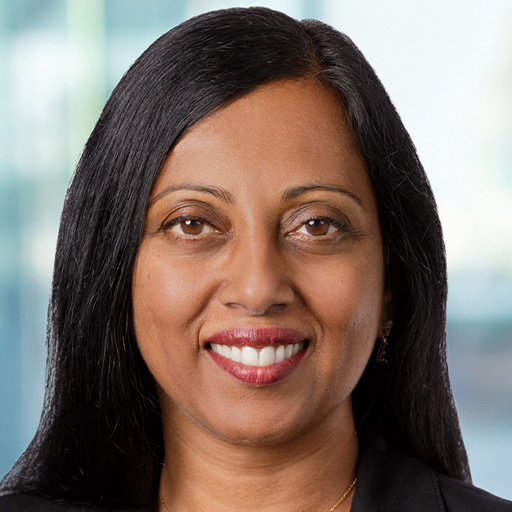
Susan Uthayakumar serves as the managing director, chief energy and sustainability officer, and an executive committee member at Prologis, where she leads the company’s Energy Solutions business. In this role, she oversees the development and deployment of solutions that help customers achieve energy independence through distributed energy resources, fleet electrification and strategic energy management. As a member of the company’s executive management team, Uthayakumar ensures alignment with Prologis’ broader business objectives and growth strategy.
John Shegerian: Get the latest impact podcast right into your inbox each week. Subscribe by entering your email address at impactpodcast.com to make sure you never miss an interview. This edition of The Impact Podcast is brought to you by ERI. ER I has a mission to protect people, the planet and your privacy, and is the largest fully integrated IT and electronics asset disposition provider and cybersecurity focused hardware destruction company in the United States and maybe even the world. For more information on how ERI can help your business properly dispose of outdated electronic hardware devices, please visit eridirect.com. This episode of the Impact Podcast is brought to you by Closed Loop Partners. Closed Loop Partners is a leading circular economy investor in the United States with an extensive network of Fortune 500 corporate investors, family offices, institutional investors, industry experts and impact partners. Closed loops platform spans the arc of capital from venture capital to private equity. Bridging gaps and fostering synergies to scale the circular economy. To find closed loop partners please go to www.closedlooppartners.com.
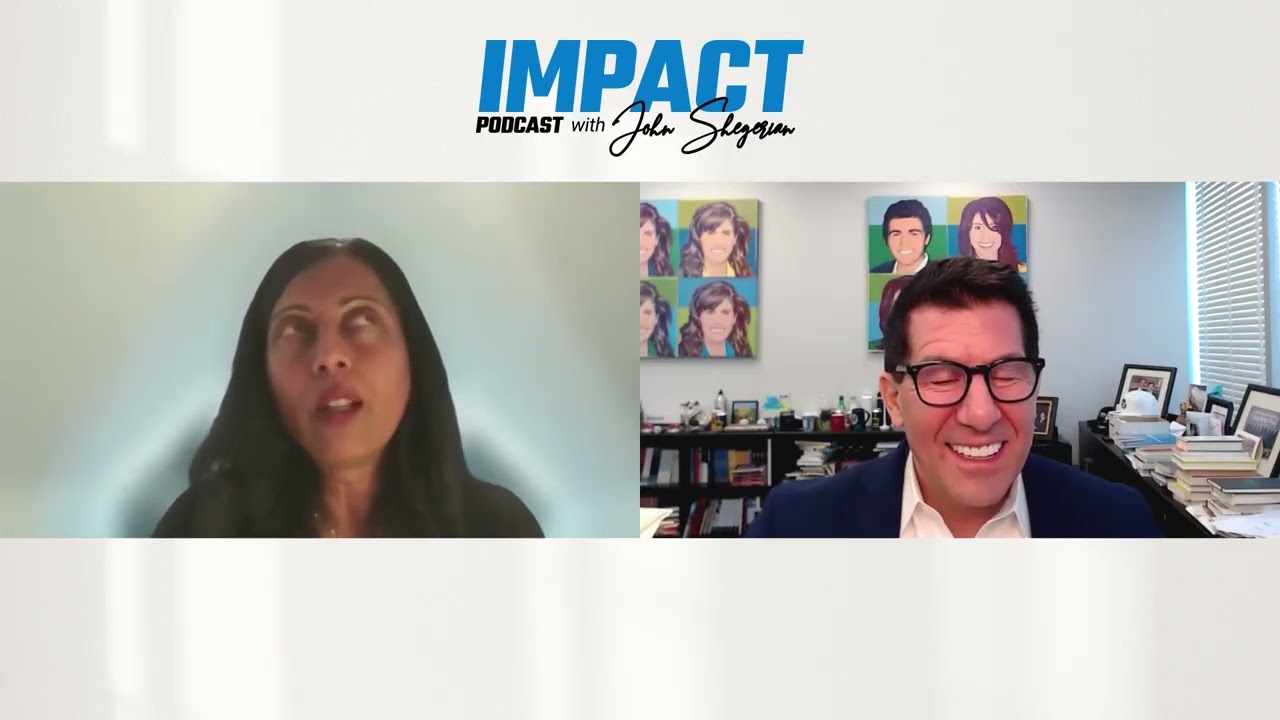
John: Welcome to another edition of the Impact Podcast. I’m John Shegerian, and I’m so honored to have with us today, Susan Uthayakumar. She’s the Chief Energy and Sustainability Officer for Prologis. Welcome Susan to the Impact Podcast.
Susan Uthayakumar: Thank you, John. It’s really great to be here.
John: It’s great to have you. We’ve never had Prologis on before. We’ve never had you on before. So before we get talking about all the great and impactful work you’re doing with your colleagues at Prologis, can we talk a little bit about you, Susan? Where did you grow up and how did you get on this fascinating and impactful journey that you’re on?
Susan: What a great question to start. So I was born in Sri Lanka, John, and I thought that that is where I would lead my life. I guess sometimes things change. There was a civil war and I and my family we left the country and we moved to North America. That was an unplanned journey, I guess I would say. But along the way I also had a chance to live and work in different places. So I’ve lived and worked in Europe, I’ve lived in India, I’ve lived in Canada and in the US. It’s kind of I’ve had the privilege of enjoying so many different places, getting to know so many different people, and I would tell you that has really shaped who I am today.
John: You’re a true global citizen. Where do you live today?
Susan: Today I live in the US and I have a global job, so I still travel quite a bit. As you know Prologis is in 20 countries and I do business in a number of them. I get to enjoy my passion of meeting different people in different countries and doing business.
John: How old were you when you moved to North America from Sri Lanka?
Susan: I was 11 years of age when I moved permanently. I moved first to Canada, and then when I was a young adult I moved to the US to Chicago.
John: Got it. Like you said, you’ve lived all over the world. What a rich experience. We don’t know it as kids, but the ability and the opportunity to live in so many interesting places makes life so much richer.
Susan: Absolutely. John as part of this journey, you also get to see how people live. Not everyone has what we have in North America. You get to really see what people are dealing with on a day-to-day basis. It gives you a reference point. As you take on challenges, there are people that have more challenges that they’re dealing with that kind of tells me, well just figure out what you need to do and move the ball forward.
John: Interesting. You just didn’t go from high school and college to Prologis. You have a fascinating backstory. Talk a little bit about your formal education and then your work experience before joining Prologis.
Susan: Absolutely. I started my university career at the University of Waterloo, where I completed my undergrad and a master’s degree. It is a fantastic university. A lot of smart people that go there. I think that’s where my love of learning started. Then when I moved to the US I decided that you should really go to a US institution as well. Because maybe teaching is different. I went to Kellogg University from my executive MBA. But I am really a lifelong learner. So you see me working very closely with Stanford today with MIT, you give me any opportunity to be in an institution and I am there and I’m really not doing another degree because my family has said they are not willing to share me anymore. But I really am a lifelong learner, so I engage very much with different institutions around the world.
John: When you were an undergraduate and even in your postgraduate work, were you studying sustainability or were you studying other topics before you got into this field that you’re in now?
Susan: You know what? Is that I was in finance. I always had a love of engineering. This is the funniest story. So I wanted to do engineering. My father is an engineer and he said, why would you want to do that? So then like very last minute I changed into finance. Then like look what I’m doing now. I’ve been in the engineering field energy systems for the last 20 years.
So it just kind of tells you that destiny is predetermined. You know what I mean? Even if you [inaudible] the course.
John: Why would your dad ask you that? You’re his daughter. He’s an engineer. It’s in your DNA of course. You want to be an engineer [crosstalk].
Susan: Absolutely. I should ask him that question. I don’t think he’s ever given me an answer. No, I studied finance. I think when I went to university, John, I didn’t really have a predetermined plan of what I was going to do. I was like, I was really good with numbers, acquisition was interesting, valuations was interesting. So that’s how I got into finance. Gave me a great base. I think everyone should learn finance at some point in their lives. From there I joined Deloitte. That was my first job. I loved my career there. I loved my learning there. Just didn’t want to make partners. So I thought, you know what? I should go and do something that I love. And remember I said to you, I love working in different places. McCain Foods, which is the global leader in French Fry manufacturing was a client and I had an opportunity to go work with them in Corporate 11. So then I was in places like India, China, Turkey, developing. If McDonald’s was there and they needed french fries, supply chain, I was there trying to figure out, do you build a greenfield? Or how do you get them what they need? Love that job. Met and married my husband, who was also at McCain. So I thought it’s time to make a change. At that point I’ve always wanted to work in the US. I always saw the US as a place of innovation and a place of where you can really drive what you wanted to do. So I wanted to have a chance to work in that country. I made the move to the US and I started working with Schneider Electric where I spent 17 years. That is where I came across the energy space. I joined to drive acquisitions for North America and I just loved the space of energy. So I then went on to do many different roles, including running countries and running different business lines, and then a division before moving to Prologis.
John: You were the CEO of Schneider Electric Canada, correct?
Susan: That’s right. I was the CEO of Schneider Electric Canada, and then I ran the global division of Sustainability. I came across sustainability and energy by accident. But it’s a field that I love because really based on common sense. When you think about sustainability, what it is, is if you can use less material, less of anything you consume less and therefore you have less emissions and you have less cost. That concept just made sense to me. What we were doing at Schneider was using data and intelligence because a lot of the equipment that the company was manufacturing would measure the consumption of the different materials or how a plant is operating that will lead to better decisions. That led to that company really stepping into the intelligent and the sustainability side. I’ve always been a proponent, John being born in a small island surrounded by water and beauty, that we should all do what we need to do to keep the world beautiful.
John: That’s right.
Susan: Of course you want to leave it in the best shape possible for the next generation. So it just all kind of came together for me. What I liked and valued as a person the ability to be mindful of resources and using data and intelligence to drive better decisions. All of that kind of got me into the energy space. The other thing that fascinated me about energy is, you know what? You don’t see it. You and I walk into a room, we flip a switch and we expect the light to come on and everything to work. But in order to maintain that, there’s a lot of work that we now need to do because energy isn’t always going to be accessible. Energy isn’t accessible everywhere in the world. That’s where my passion for what I’m doing came from.
John: That’s so interesting. So how many years ago did you leave Schneider and join Prologis?
Susan: Four years ago, I made the move.
John: You were named Chief State Energy and Sustainability Officer when you joined? That was the role?
Susan: That’s right. That was the role.
John: You were the first chief Energy and Sustainability officer at Prologis?
Susan: That’s correct. I had a conversation with Hamid Moghadam, who was the CEO and now the executive chairman of the board. I think neither one of us honestly knew what the job was going to be. What I saw in Prologis was I was really impressed with the company. It was being built it’s 40 years and by Hamid based on his dreams and his aspirations. I was really impressed at the scale of the company. This Prologis touches Global Commerce. It touches supply chain, it touches real estate, all of which are in some sense when you think about the built environment, it’s hard to decarbonize. When you look at what Prologis does, if you look at our emissions itself 99.8% comes from what our customers do on premise. So hard to obey. I just thought it was a challenge and all of the real estate, like very prime real estate in energy dense environment. I just thought what an amazing opportunity to create an energy company. Hamid kind of had the same vision and now Dan Letter who’s the CEO has that vision. So I’ve just been super lucky to be able to define the role that I’m in in some sense.
John: I agree luck plays a lot of all of our lives. But you’ve earned your way. Come on. The roles that you’ve had both at McCain and for your previous education and McCain and then Schneider and running countries. I’m sure you had a lot of opportunities in front of you that you got to choose from when you chose this position.
Susan: You know what? I was really, really wanted to do something where I could make a meaningful impact and I thought Prologis was the right fit. I’m really glad. So four years into it I’m super glad I made that decision.
John: Talk about day one. Like you said, this was all new. So you were staring at that proverbial blank page, and that’s terrifying and exciting at the same time. So how do you balance your history and knowledge and then the information that you learned from the CEO, the institutional knowledge that he had of the great company that he built, and how do you meld them together to come up with a core strategy that fit for the future of Prologis?
Susan: Day one. I want to talk to you about day one. Having been at Schneider for 17 years, like I knew like pretty much everyone at Schneider, they knew what I brought to the table. So there was no surprise either for me or for them. So if I wanted to drive a decision, wanted to drive a new investment, of course the people knew what I was going to do and what I was going to deliver. You come first day into a new company, and a company that we’re also a lot of people are long-term people. Prologis has an incredible track record of retaining people. You come in and they’re like, “who are you?” And I’m like, “who are you?” Then you go, well, what do I do? And who do I call? Because I had for the first time, I think in 17 years kind of a blank calendar and I was sitting there going, wow this is new. That was day one.
John: That’s exciting though. That’s exciting, but terrifying. But very exciting for someone like you that loves challenges.
Susan: Absolutely. But what it also gave me is the space and time to think. Because sometimes when you are doing things you don’t always have the space and time to think. Hamid gave me a couple of challenges. He said, “I want you to develop the most ambitious net zero goal, and I want you to lead the industry in terms of what Prologis can do in the space that you can make a difference.” That’s really all he said to me. What I had learned at Schneider, because we had worked with many customers, multinational customers on their decarbonization strategy and journey, and I know that if you develop a strategy that’s a parallel strategy to the business strategy, you are not going to really succeed. What you do has to make sense for the core of what the business does. So the first thing that I did was to develop the strategy on net zero. Which is how do we decarbonize our existing portfolio and how do we build differently so that we’re future proofing our assets? Because with what you do, you want to accomplish a number of things. You want to make sure that you stand apart in the market, that you stand for the quality of what Prologis is known for, and you want to build it in the most efficient way from a cost standpoint because no one is going to give you capital freely to go say, Hey I want you to save the world. Go do it. What I wanted to do was to generate green revenues that could also help decarbonize. In what we were doing I wanted the portfolio of Prologis building to be a differentiator in the marketplace. So again, now looking back at it in hindsight, I’m really glad that I married it to the core of the business. When you build buildings with less emissions and you do that in the best way possible from a cost effective standpoint, you have a lot of people working with you. So I’m very happy about that. I’m really, really happy on the net zero goal. In a nutshell, our goal is to be net zero in our operations, everything that we control by 2030. We also had a goal of getting to one gigawatt of onsite energy generation at Prologis sites supported by storage. You will find out very soon if we got to that goal, and I’m smiling, so that kind of tells you something. That was an ambitious goal. I’m very happy to have set that ambitious goal. We are tracking well to get to net zero in our operation, which is how we power the buildings that we own, lease, whatnot, and any of the vehicles that we own and operate on behalf of Prologis, and then we have made significant progress on our Scope three decarbonization. This is on the activities that our customers are doing on our premises, and this has really allowed us to work very closely with our customers and to provide value added services for that. So I’m going to pause there.
John: Well, let’s follow on that. You have over 6,700 customers around the world. What are they asking for? So you talked a little bit about the materiality. You were way ahead of the game. You created material solutions that were in line with Prologis mission and goals.
Susan: Yes.
John: Like you just said, let’s look through the other lens. How do you serve your clients better? What have you found over the last four years that they’re asking you for that you’re able to then take action on?
Susan: First I have to note that the dialogue, even though it’s been only four years, has been evolving and changing. Which really speaks to the dynamic environment that we are functioning in today. Second, those asked by customers are different based on geography. So today, the predominant conversation centers around energy security. That was not the conversation I was having with most of the customers four years ago.
John: That’s right.
Susan: People want to make sure that they can have the level of power that they want to in the US. That makes absolute sense with the energy demand outpacing supply and it’s accelerating the use of ai, the want of ai. That makes a lot of sense. So I’m really happy that we built the global capability to deploy generation of energy that we have. The second request that I get a lot is from major multinational companies or companies that are very beholden to their decarbonization of sustainability goals on give me clean energy, help me decarbonize. Can you help us build buildings that are lower in embodied carbons? And embodied carbon as you may know comes from the steel and cement that we use. So we have partnership discussions or we have partnerships with cement manufacturers, steel manufacturers like ArcelorMittal on how are they thinking about lower carbon, steel and cement and can we then deploy them in our buildings and ensure the performance of the buildings that we are used to. We partner with MIT on their climate consortium and we test a lot of our solutions, the new solutions in their labs. We do the same with Stanford in terms of what are the new technologies for energy generation. Mainspring, which is a startup off of Stanford produces linear generators that we use to generate power when grid power is not available. So really my customers are asking for energy security, decarbonization innovation when we can get to grid power.
John: You bring up a great point. I want to lean in a little bit to what you were just referring to Susan, with regards to collaboration. It seems as though gone are the days of with the winner take all mentality. Of course we have so many iconic and wonderful entrepreneurs to point to that have helped make the world a better place. Jeff Bezos, Steve Jobs, Bill Gates to Elon Musk. There’s so many wonderful people both in North America and around the world. But I think what you’re just pointing out and sharing with us, which I think is really so important as a woman who’s been a leader before CEO of countries and brands and countries, and now in a very big role at Prologis. The world is in no longer a zero sum game. That if you really want to make the fastest and the biggest and most longstanding impacts you’ve gotta learn to get along. You’ve gotta learn to collaborate and be reciprocal in your collaboration. So look at all the brands you just mentioned that you’re collaborating with to achieve your goals and your client’s goals and it sounds like a wonderful chemistry of like-minded and like-minded people and like-minded brands that come together with your leadership to create great solutions that make big impacts.
Susan: John, I couldn’t have said it better than what you just said. I think that what the world is facing today in terms of the sheer demand for energy as well as the climate challenge that we have in front of us. And it’s real. It has real cost to businesses, wildfires. We don’t have to debate that. Both they’re too big a problem for one person or one company to solve. So it is in our best interest to collaborate and I and Prologis very much we take that approach. When you look at Prologis the world’s largest developer of logistics real estate. With that scale we’ve got a responsibility to lead and you can lead by holding everything to yourself. That’s the philosophy of the leaders in our company. That’s very much my philosophy. I’m always encouraging people, whether it’s other companies that we work with closely. We collaborate a lot with Walmart. We collaborate a lot with a number of different people. I try to figure out if you can put more brains working together, we will always get to a better solution.
John: Our listeners and viewers have just joined us. We’ve got Susan Uthayakumar with us. She’s the Chief Energy and Sustainability Officer at Prologis. To find Susan and her colleagues and all the wonderful impacts they’re making in sustainability and energy, please go to www.prologis.com. We’ll be in the show notes that you don’t have to stop doing what you’re doing right now to write anything down, but all of the information on how to reach out to Prologis and to collaborate potentially with Susan and a great team will be in the show notes. Susan, talk a little bit about more specifically about these solutions. Historically concrete has been one of those big sustainability thorns in the side for lack of better terms. Talk a little bit about the evolution now of recycled concrete, green concrete, low carbon concrete, and some that even are doing things like self-healing floors and things that sounds so science fiction, but have become realities now. Talk a little bit about more of these amazing collaborations that you’re in the middle of.
Susan: Absolutely. So, concrete is the biggest thing that you need to solve for when you want to decarbonize a building. It first starts with using less. Everything it always goes back to the common sense of using less. So we spend a lot of time in terms of how can we optimize our design. That’s number one. Number two, we think about well, what are substitute material that we can use? Timber for example it doesn’t always work everywhere. There’s other concrete like material that we use to strengthen the performance or to use less of like pozzolan, for example. We use all these different techniques in terms of how can we bring down the embodied carbon. We have a goal. So every year we say, you know what? So, for example, last year we wanted to reduce the embodied carbon in our buildings that we’re going to build. We build about 40 million square feet per year, globally by 10%. We set challenging goals for ourselves. That’s the first anchor. The second thing is, as I mentioned earlier we collaborate with the likes of Hossain for example. They have their own goal to decarbonize their manufacturing of cement. So we work with them on the solutions that they have. One such concept is slack that’s so that once you build something and if you want to rebuild or if you want to reuse, it’s like blocks you can take apart and move to a different location. It has a much longer life. We tested that solution at the MIT Climate Control Lab. The other thing that we do, and you just touched on at the self-healing concrete. This is being an obsession of mine. The Roman concrete if you look at in history, it was self-healing. People couldn’t figure out what they did. But if you look at Pantheon and the dome that they have it has been built, I don’t know how many years ago. I wish I remembered it. But it is the original structure. Like imagine. One of our facilities in the Netherlands, Warwick, we have self-healing concrete.
John: That’s crazy. That’s wild to me. How does that work even? How does that happen?
Susan: My gosh. I wish I can tell you the technical solution. It has something to do with actually using bacterial spores that form to correct the cracks. I have smarter people than me working at the company.
John: Understood.
Susan: But it really does heal. I was so excited that we were able to do that.
John: Is that going to become less of anomaly and more of a norm in the future, do you believe?
Susan: I think we have a little bit of time before we can get that to be the norm. But you know what, a while ago people couldn’t figure out how to do it. What I’m excited about is all of this innovation that’s happening, now the next challenge is, okay, we’ve got the innovation now, how do you scale it in a cost effective way? That’s where the challenge is.
John: Do some of these brands that you work with because of that exact challenge of scalability and commercial viability, do they then turn around and say, you love our solution Susan, for the issue that you came to us for. Do you now invest in us to help make it scalable or more commercially viable? Does that happen?
Susan: It does happen. It doesn’t happen with the very large companies like the Hossain which is the world’s largest cement producer. But it does happen with new technology companies. That’s why we have Prologis Ventures. That does take stake in new technology companies, startups that do require the funding.
John: Are they coming to you the ventures asking any great companies you’re talking to, or do they come to you and say, Hey, we’re talking to this company. Is this something that you could use? Is there a constant dialogue between you and the ventures division?
Susan: It’s a constant dialogue between us and the ventures division. So sometimes because they’re in the market looking for these new technologies and they look at it through the lens of what will improve supply chain, what will improve the built environment and what will improve the energy space and the energy systems. Sometimes they bring those forward to us, or other times I would bring them or my team will bring that forward to them saying, Hey we’re testing this solution. So one where they brought the solution to us is solar recycle. Which is when you put a lot of panels on the roof you want to be able to recycle those. Those are the company that focuses just on that. Which really allows me to think about sustainability from end to end when I deploy onsite generation.
John: Understood. You mentioned the self-healing cement in the Netherlands. As we’ve discussed earlier, you have 20 countries that you serve, you have over 2,700 employees, you have over 6,700 clients. You’re in a very big position managing a lot of continents Susan. Talk a little bit about the challenges of the different laws, rules, regulations that are still ever evolving, but how much is that part of the challenge of what you do with your team harmonizing all the rules and regulations so it makes sense for Prologis, and when will the world get more harmonized from a governmental and regulatory perspective to make your job easier so you can focus on more material issues rather than managing this patch quilt of regulations that exist right now around the world?
Susan: Well, John, I think if I can predict when the world will harmonize, I’d be really smart and I will probably be doing additional things. We don’t know that we will get to a harmonized solution. We’re in 20 countries, in the last three and a half years because it took me six months to get my strategy straight. We are now operating in a number of states. When I deploy energy systems it also has to make economic sense. I’m not operating everywhere in the United States, but I’m operating in significant number of states. We are now deploying in 12 countries in Europe. We are present in Brazil and Mexico Singapore, Japan, and and we are assessing India and China. So that tells you the scale of what we built. We have the global capability. So I have talent in each of these regions or countries to really understand what you need to do from a regulatory standpoint. Europe is very different from US. I can’t deploy it the same way. So first and foremost, I think when you’re dealing with the global footprint you have to really be local in the approach of how you are doing business. I’ve always kind of known that from my previous work experience and I don’t know that will change. However what you are able to do though from a technology standpoint. I just spoke about linear generation earlier, that knowledge base is transferable across the globe. We share knowledge base where we can and we stay local in terms of regulation as we need to be. The market dynamics are also different. I would tell you that Europe is very much driven by policy and climate disclosures and decarbonization requirement. For customers there clean energy is table stakes. They’re not going to come into your facility if you don’t have it. You also need to understand how regulation is changing. So in Europe there is a regulation that now says if you are a commercial property and you are over 250 square meters or larger, you must have solar on your roof. It’s not a choice, it’s a requirement. I need to understand what the requirements locally are, and I’m lucky enough to have the knowledge base and the ecosystem to have that. So that I know what I need to do in each of the country. In the US it’s very much driven by the requirement of the customers in terms of energy whether it’s clean energy, it’s power augmentation, resiliency, or it is the decarbonization goal of that specific customer or the returns. It’s not really driven by policy especially now I would say. Mexico and Brazil are again different markets. There the resiliency issue the access to power and making sure you have continuity of power drives a lot of the discussion. John, I have to tell you that maybe a harmonized ecosystem would make all our lives easier and maybe more predictable. But I have to tell you I love the challenge of figuring out each of the markets and how do you best operate in it.
John: Which brings me to my next point. When the founder of Prologis hired you, can you [inaudible] you, Susan, just for your energy, a background, your sustainability, knowledge, your love for engineering? But I bet he hired you because you were a proven leader. So what has gone not the way you expected during the last four years. Because that also is why you sit in the position you sit. You were already a tried and true proven leader. How do you deal with the challenges that are new, fresh, and unexpected that come your way on a regular basis?
Susan: You I have been very lucky in that I’ve had the opportunity to do multiple jobs. At Schneider I change jobs every two to three years because you were put in training. If you’re going to go lead a division, they’re going to train you. I am so thankful for those rotations because what you literally have to do is you have to always enter something that you don’t know, a market you don’t know, partners that you don’t know and you have to figure it out and you are operating different jurisdiction. If you look at the last four years, think about what’s happened in the energy space. Think about the changes in terms of tax incentives that do make the economics work or not, the sentiment around distributed energy, then you think about the supply impact of data center power loads, et cetera. So it has been the most dynamic space in the four years. It’s crazy. I used to say 10 years ago if Alexander Graham Bell and Thomas Edison came in, one would say, my gosh, if everything is the same, and if in Alexander Graham Bell will say, what’s happened? But now energy is in the same space. It’s changing so much. You are absolutely right. You have to be able to keep a level head as the environment changes, as new challenges come across and you have to kind of figure out what steps do you need to take and what is the long-term vision you are beholden to and how do you pace to the market or the changes and make those tough decisions and calls?
John: It’s so interesting. I get to say this because I’m third generation Armenian immigrant and you are first generation. But I feel when I’ve talked to other friends of mine and acquaintances and just folks you get to meet along the way in this fascinating journey of life, I always fall back on my default position that for some reason those who have immigrant DNA, that goes through their veins are flexible, resilient, and they really make great leaders at the end of the day. I think the same for you. Because you’re a global citizen. You lived so an amazingly rich life in so many fascinating cultures, and you’ve worked in many of those same areas. Again, over and over again as new challenges have come your way, you began proved your resilience and flexibility and you’re able to lead your teams through those things. So I think that’s just so fascinating to hear your position on what you’ve been doing the last four years and why you had the skillset to do it. And all those rotations at Schneider obviously were an amazingly enriching experience as well.
Susan: Absolutely. The rotations at Schneider and then building something from scratch, I would say you’re going to encounter obstacles. To your point I referenced earlier that everything is a reference point. My reference point is always the decision that my parents had to make to leave a country that they knew where they were super comfortable and they thought they were going to live their lives is my reference point. That decision is much tougher than the decisions that I face today. I think as human beings, you can think through and you can work through anything as long as you remain calm and you can really just kind of focus on the data point that’s in front of you. Sometimes maybe the decision is a tough decision out of that data point, but ultimately you have to make a decision anyway. You cannot not make a decision.
John: Just as a practical matter, well first of all, I agree what you just said in terms of starting something from scratch. You had that proverbial white patient really what the founder was asking you to do is to create an entrepreneurial subdivision within Prologis. So you are basically an in-house entrepreneur creating an entrepreneurial venture inside of Prologis, which has now become this very, very material energy and sustainability division, which is fascinating to me. Talk about, do you produce an annual sustainability energy report that’s up on your website?
Susan: Yes, we do. We produce a global impact and sustainability report. Actually I’d be very happy to share that with you. Because I think it’s an interesting read.
John: Please.
Susan: We are very mindful of setting our goals so that it’s ambitious for us. We’re very proud when we accomplish that. So I will share with that with you for sure.
John: We’ll put that in the show notes. We’ll link to it so that all our listeners and viewers can find it really easily. Besides all your energy and sustainability po positive impacts that you’ve created, what other impacts in the communities because like you said, business at the end of the day, although it’s global and what you’re doing it is very local as well. How do you positively impact the local communities that you have your real estate in?
Susan: Our philosophy is that if we’re somewhere in a community, that community should benefit from us being there. The first one that I’m really proud of is our workforce initiative, which means that we train people to be able to work in the space of supply chain. To date, we’ve trained 36,000 people since 2018. This is something that we will continue to do and accelerate as we move forward. We provide green spaces so we know obviously our buildings are very large and we provide park life and green spaces for the communities to enjoy. We do a lot of community solars with the intent that we are able to bring clean energy at a lower cost to those communities that most need it. Along with that, we do a lot of work with the foundation. What I would say to you, John, is that our philosophy of Prologis is to do what is right and to be wanted in the community. They create value for the community so that the community benefits from us being there.
John: They’re happy to have you happy. There’s not a day that you and I can read whatever our daily news diet is, or turn on Bloomberg or any other great news platform and not hear the words AI. How is AI helping you achieve the goals that you and your colleagues have created at Prologis, especially when it comes to energy and sustainability and impact?
Susan: I think we are adopters of AI at Prologis. I do so many things in terms of analytics, in terms of writing, using AI. So it’s kind of just is embedded in our organization, that’s number one. Number two, we are starting to really think about how can we make better decisions. So site selection, for example. Can we use AI to drive site selection? So we are adapting those. Can we do AI to better manage the energy consumptions of our building? That’s in the formation space of what we’re doing. The second thing is AI obviously drive demand for real estate as well. We, given our experience with real estate, given our ability to bring both energy real estate and those things together, we are going to be a major participant in terms of building the buildings that are needed for AI.
John: Got it. Prologis also has a podcast called Moving the World, and we’re of course we’re going to link to that in our show notes if we’ve any of our listeners and viewers that want to listen to your wonderful podcast, what can they learn from this podcast if they tune in? Because we’re putting it into our show notes. We want people to listen to it, obviously.
Susan: I would tell you that Prologis I’ve been here four years. The first thing that struck me is how innovative and entrepreneurial the company is. We are a very large public company. The company moves at speeds that is amazing from where I stand. I’m a little bit biased now, but I was new four years ago. Business innovation, technology innovation, the way we build buildings the way we look around the corner. That’s what audiences can expect. How are we thinking differently? What are we doing differently? What new technologies that we’re using, and what’s the new business innovation that we’re driving?
John: I love it. Susan, I just want to say thank you for spending some time with us today. For our listeners and viewers that want to find Susan and her colleagues and all the great work they’re doing at Prologis, please go to www.prologis.com. We’ll also put a copy of their annual sustainability report. We’ll link that in our show notes, and we’re going to of course link moving the world in our show notes as well. Susan thanks not only for the hour, the enlightening and inspirational hour you spent with us today on the Impact Podcast. But more important, thank you and your colleagues for making the world a better place.
Susan: Thank you, John. It was really a pleasure to have this conversation.
John: This edition of the Impact Podcast is brought to you by Engage. Engage is a digital booking platform, revolutionizing the talent booking industry. With thousands of athletes, celebrities, entrepreneurs, and business leaders Engage is the go-to spot. For booking talent, for speeches, custom experiences, live streams, and much more. For more information on Engage or to book talent today visit letsengage.com. This edition of the Impact Podcast is brought to you by ERI. ERI has a mission to protect people, the planet and your privacy, and is the largest fully integrated IT and electronics asset disposition provider and cybersecurity focused hardware destruction company in the United States, and maybe even the world. For more information on how ERI can help your business properly dispose of outdated electronic hardware devices please visit eridirect.com.
 Spotify
 Apple Podcasts
 Amazon Music
 iHeartRadio
 YouTube
 YouTube Music
 Audible
 Pandora