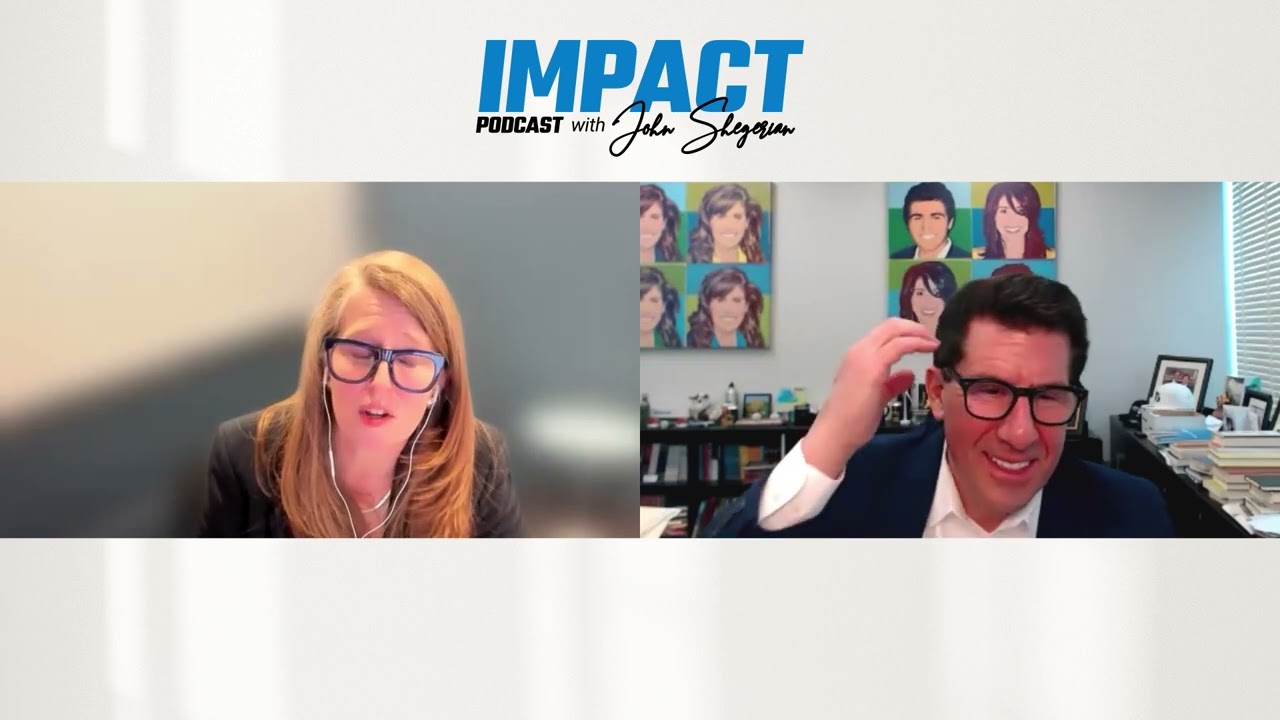
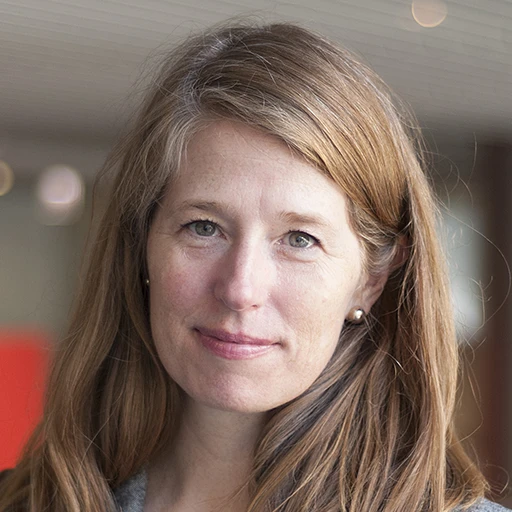
Gabriel Presler is Global Head of Enterprise Sustainability for Morningstar, where she leads the firm’s corporate sustainability efforts. She was previously Head of Product Management for Morningstar Global Indexes and Global Director of Marketing for Asset Management at the firm.
John Shegerian: Do you have a suggestion for a Rockstar Impact podcast guest? Go to impactpodcast.com and just click Be a Guest to recommend someone today. This edition of the Impact Podcast is brought to you by ERI. ERI has a mission to protect people, the planet and your privacy. And is the largest fully integrated IT and electronics asset disposition provider and cybersecurity focused hardware destruction company in the United States and maybe even the world. For more information on how ERI can help your business properly dispose of outdated electronic hardware devices, please visit eridirect.com. This episode of the Impact Podcast is brought to you by Closed Loop Partners. Closed Loop Partners is a leading circular economy investor in the United States with an extensive network of Fortune 500 corporate investors, family offices, institutional investors, industry experts and impact partners. Closed loops platform spans the arc of capital from venture capital to private equity, bridging gaps and fostering synergies to scale the circular economy. To find Closed Loop Partners please go to www.closedlooppartners.com.
John: Welcome to another edition of the Impact Podcast. I’m John Shegerian, and I’m so honored to have with us today, Gabriel Presler. She’s the global head of Enterprise Sustainability at Morningstar. Welcome Gabriel to the show.
Gabriel Presler: Thanks so much for having me.
John: We’re so happy you’re here. It’s your first turn on the Impact Podcast, and it’s Morningstar’s [crosstalk] first time on the Impact.
Gabriel: Yes.
John: We’re going to get to all the great things you’re doing and impacting sustainability at Morningstar. But before we do that, I want our listeners and viewers to learn a little bit about you. Where did you grow up and how did you get on this very important journey that you’re on, Gabriel?
Gabriel: Thanks for the question. I always love hearing how other people got where they are. So I’ll take a stab at my story. I come to sustainability as a function both of kind of background and where I was born, and then a couple of super lucky breaks during a period in which kind of the financial services sector was changing really fast. So I grew up between Michigan and Vermont. Those places in the seventies eighties couldn’t have been more different. Like Vermont was super rural and the policy environment was very protective when it came to companies. What that meant from an environmental perspective was that it was a pretty like unsolid place to be as a child. But it was also hyperlocalized when it came to its economies. And so it was very vulnerable to inconsistent industry. So for example something like tourism, which is just really, really economically sensitive. Then on the other hand I spent a lot of time in southwestern Michigan, in Kalamazoo. Michigan in the seventies and eighties really kind of demonstrated what large international companies could do to economies. On the one hand that part of the state was just roiled by the ill effects of kind of tech and big paper mills and you saw that in concerns about PCBs in kind of the fish populations. The realities of the auto industry had laid waste to kind of the fortunes of towns like Flint, which became a movie. At the same time, there were these emerging global players particularly in healthcare in southwestern Michigan. Companies like Stryker which were really investing in their communities and which continued to invest in their communities. So I lived in this town that demonstrated I think in a very effective way and continues to demonstrate the way that companies can provide jobs and prosperity and influence the environment in which they operate or they cannot. When the opposite happens, I think it’s not because companies are necessarily like rapacious actors, but because they’re very maximalist in the short term, and leaders haven’t thought it through, and they don’t have necessarily the expertise or the incentives across a very long time horizon. And as the data changes and as education develops you see really substantial companies make very big strides in these areas and stand up really sort of profoundly important efforts to unwind adverse impacts. That’s the first thing I’d say. I was really lucky to see those two forces at work. I also cut my teeth when it came to investment research at Morningstar during a really particular time. I was covering mutual funds as a research analyst and part of that experience was the privilege to talk to just legendary investors. Those were investors like on the passive side, Gus Souder at Vanguard, John Carlson at Fidelity who kind of wrote the book on emerging markets research from my perspective. And really get to know the kinds of questions they were asking. One area of development for our team at that time was really thinking about how to assess SRI, you’ll remember that. Socially responsible investing and socially responsible funds from the likes of big SRI shops like Amy Domini’s Domini Fund or the Calvert Funds. I think what the team decided very early on was that no matter the strategy, the funds really needed to be assessed on their outcomes for investors. So that meant that if a Calvert or a Domini was investing in very large US companies and screening for say, arms or weapons, those strategies still needed to stand up to the kinds of options that investors might have in a regular large value fund. We’re going to talk about what all that means and why Morningstar was the correctly positioned to have those conversations. The last thing I’ll say is that after I left Morningstar and I’m a boomerang to the firm, and I’ll talk a little bit about why I came back. I went to the University of Chicago and I did a policy degree and an MBA. Which really set me up to understand kind of fixed income markets kind of where policy and finance meet.
John: Sure.
Gabriel: I was really lucky to go to Newberg or Berman, which was a bottom up mostly equity shop. During the time the firm was under the kind of this chief investment officer Jack Rivkin, legendary investor, so curious and he was really preoccupied right after the first couple of like high profile climate discussions at the UN which then became cop. He was very interested in the potential of thematic investing in climate investing. So Neuberger was one of the early shops to launch a climate change fund and a mutual fund wrapper. I got to have a seat on that portfolio supporting the portfolio manager and the outreach efforts around that. So really early to climate investing when the data was not that good and when we were very dependent on like very fundamental bottom up looks at that. So a lot of luck and some kind of background early access to what companies can do and what they don’t do in the communities and environments in which they operate.
John: You’ve also managed to put yourself in the room with some very iconic inspirational leaders to learn from. That’s part luck but that’s also part grit and part hard work. So good for you to have the opportunity to be exposed to those kind of icons and inspirations along the way. That makes for the beginning of some kind of great career.
Gabriel: Well, and I think as you and I were talking about before we just when we jumped on, I do think that timing is everything. We tell the narrative of our lives like looking back and I will say I was primarily lucky. I think Morningstar’s commitment to transparency, we’re going to talk about that and the research organization that they stood up here really provoked a lot of trust from asset managers early on and the relationships and like the scrutiny of the research team met that some legendary investors were willing to talk to the big time analysts here.
John: I know while we were just catching up before we went on to record, we were talking about our parents. My mom was a social worker and my dad was a black belt entrepreneur. As my therapist said, it’s not so hard to think about how I ended up as a social entrepreneur. What were your parents doing and how did that inform you to your future as well?
Gabriel: It’s really interesting. I had parents who were sort of fascinating in so far as that they were on opposite sides of an emerging kind of debate at the time about what politics should look like. But they were hyper aligned on how organizations should show up in their communities and in their environments. My mom was like kind of an old school lefty climate activist very early head of the League of Women Voters. I’ll say she’s in her eighties. We don’t have a dryer at my house. We have never had a dryer because she thinks it’s wasteful to use energy to do what the air will do naturally. She’s 80, she does not have a dryer.
John: She’s still rocking it in her eighties.
Gabriel: Incredible. My dad was a political philosophy professor also trained at the University of Chicago. More conservative certainly on the political side. My sisters and I saw a lot of debates about what organizations should look like, how they should stand up, how people should engage local government, federal government. I think it was it was an active, combative, super lucky background to kind of come to sustainability and figure out what the work is for firms to do.
John: When you brought up where you grew up Michigan and Vermont, my mind immediately when it comes to Vermont since I grew up in New York City, goes immediately to Ben and Jerry’s and for the first time I learned vis-a-vis through Ben and Jerry’s experiences business as political activism. Using their platform not only to make delicious and yummy and incredible ice creams which delight all their ice cream consumers, but also using their platform for the opportunity to effectuate the greater good.
Gabriel: It’s really interesting, I think you mentioned you have a lot of listeners who are entering the workforce now. It’s really interesting to think about where you want to place yourself as you enter the workforce and whether or not you seek a role in a firm that is laser focused on that kind of product as activism. I think for many students and for many people entering the workforce, that’s lucky and it’s rare. So figuring out what work you can do in more traditional organizations I think is a more common conundrum that most of us face.
John: What year did you join Morningstar with the title of Global Head of Enterprise Sustainability?
Gabriel: Well, I came back to Morningstar as a boomerang in 2014 to run their global asset management marketing organization. Over the course of kind of the last 10 years since I’ve been back I’ve been really lucky to align closely with the development of the sustainability dataset, so the environmental social and governance dataset, and kind of the resultant development of Morningstar’s tools and reach search efforts and data offerings that allow investors and certainly employees to understand some of the non-financial metrics that they can use to understand how a firm is showing up in community, and also with respect to its use of energy, its corporate governance and how it manages its workplace. Got to onboard sustainability data from Sustainalytics, who was then our partner. Got to work on the acquisition of Sustainalytics, and since 2020 have worked to align our corporate strategy with our business offering leading a team that’s kind of centrally located across PitchBook, which is our private equity data and research platform, DBRS, which is our credit ratings business and the Morningstar legacy organization which is research data and tools for investors. And sort of bringing together those efforts and delivering a corporate sustainability strategy for the whole firm.
John: For our listeners and viewers who have just joined us, it’s an honor to have with us today, Gabriel Presler. She’s the Global Head of Enterprise Sustainability at Morningstar. To find Gabriel and all colleagues and all the important work they’re doing in sustainability and impact, please go to www.morningstar.com. For those who haven’t heard of Morningstar or just not that familiar with it, it was a company that was started in 1984 with over two and a half billion dollars in annual revenue, over 11,500 employees and over 32 countries served. That’s a big enterprise.
Gabriel: It is now. I think it’s a really interesting genesis story because it really informs so much of what we do today. So, as you say the company was founded in 1984 because our founder, Joe Mansueto, who’s also the chair of our board, really believed that retail investors. So regular people, people like my parents had destructively limited information about their investments. They lacked the kind of transparency that hyper super big capital pools enjoyed. Morningstar’s perspective is that investors deserve transparency into what’s in their portfolios. Our work starting in 1984 was to transform data into super easy to understand language and visuals so that investors who were saving for retirement or saving to send their kids to college, saving for a house had the same kind of information that asset managers and advisors and asset owners or institutional capital enjoyed. It’s hard to remember now how bold that kind of advocacy was. I think now we’re so familiar with the way that Morningstar has shaped the investment landscape. Anyone listening with a 401k for example, will be familiar with the Morningstar style box. Which has as a sort of implicit premise, the notion that if you are invested in small US equities, the performance of your asset manager should be compared with other asset managers that are also in invested in small US companies. But those kinds of visuals, that way of categorizing the landscape, the star rating which is based on backward looking assessments of performance and fees, that was new to the landscape. Now, we wouldn’t make an investment decision without that data. But at the time Morningstar was the organization delivering that data. I think that that continues today. We’re really looking to empower investor success. We do it through delivering against these three principles. Transparency, access, and choice. I think it’s very important that individual investors with like small hopes, small dreams have the ability to make choices about where their money goes. I think that links really elegantly to what we’re doing with respect to sustainability. Morningstar takes seriously this kind of duty to put data into the hands of investors and we seek to be the provider of the best and most comprehensive data set in the world. Initially, that was what we think of as traditional financial data. The kind of data that became expected in 1934 after the SEC was formed. The SEC was formed because investors were panicked after 1929. The SEC was designed to identify a set of data points that would say something reliable about a company so investors could make choices. I think one of the things that’s really exciting and that we’ve seen in the last 10 or 15 years, is that that data set has expanded. Now it includes what I like to think of as sort of potentially pre-financial data. That’s data about environmental impact and about energy efficiency and about corporate governance and about the inputs to high level decision making in terms of employees. Our work in sustainability is to give investors the tools to use that dataset, that ESG dataset that we hear so much about to make investment decisions and to layer up the traditional financial metrics that they can put their hands on so easily with information about, for example, how energy efficient a company is. Because how energy efficient a company is says something often about management skill. That’s important for investors to know. I’m sorry, I’m going on a little bit.
John: No.
Gabriel: But I think I’ll say just one more thing, which is that we take that premise in the corporate sustainability team very seriously. Morningstar believes that investors deserve to know what’s in their portfolios. Similarly, we believe that Morningstar’s stakeholders, so our investors, our shareholders, and really critically our employees, deserve to transparency into how Morningstar makes its money, how we run our workplace and how we size the performance of our, for example, energy decisions.
John: As you said it’s your DNA rests on the three pillars of transparency, access, and choice. So with regards to sustainability given that that was a very new trend post the founding of the company, you’ve taken what was historically, let me say this the right way, an under reported or opaque side of a business and brought radical transparency to the investors across the world so they can have access to that information on leadership sustainability practices, which then gives them more optionality and more choice in who they invest in and why they invest in them.
Gabriel: I think that’s true. I think one of the things that we seek to do and disclosure is always to identify through, I know this podcast has discussed materiality a lot. Is to identify through a very transparent materiality assessment, which we discuss at length in our reporting efforts and also in our own research. What’s actually relevant for this firm. Because I think one of the big shifts in corporate sustainability in some ways, is that I think officers understand that blasting investors with irrelevant data points is not the end game. What we want to do is find the smallest best most informative and decision useful data set that we can to help investors understand the firm. Investors here it is true that we have shareholders who need that information from us. But it is stakeholders for corporate sustainability. So it’s also our employees who need to make decisions about where they’re going to spend their careers. It’s our partners, it’s clients who have very substantial climate goals in front of them or workplace strategies and who want to do business with reliable sort of risk controlled partners.
John: You brought up the word materiality. I love it. And yes, we talk about a lot here only because my great guests some of the smartest and best leaders in the world have explained to me and our listeners and audience over the last especially year or so, how there’s a shift. There’ve been a shift away from, let’s call it the alphabet super of acronyms, which in the sustainability world that got over politicized and sort of the rationalization has been towards words and trends like circularity and materiality. What other trends are you seeing from the data sets that you’re bringing in from all over the world that are now shaping the future of corporate sustainability?
Gabriel: What a remarkable 12 months, 24 months, 36 months. When I think about the trends that we position to grapple with. I think about the fact that regulatory divergence is accelerating. Maybe I’ll come back to each one, but I think about [crosstalk] regulatory divergence.
John: Sure.
Gabriel: I think about the demand for evidence from stakeholders, from clients and shareholders particularly, evidence of environmental workplace and corporate governance performance. I think about the emergence of climate front and center across all sectors, which is fascinating. And hand in hand with that I think we have our eyes on AI as the place and the issue around which governance, climate, technology and employee futures converge. So I think we’re going to need to be fluent on that, and then finally one trend that’s durable and growing is the fact that employees, investors, stakeholders in general have very high expectations and they are demanding evidence that companies and organizations are positioned for a sustainable future regardless of what that future looks like. If I were to go back on that, when we think about regulatory divergence. I think global companies have to navigate very big gaps between stringent and deregulatory environments. Climate disclosure rules are just the latest in a series of ever more divergent approaches to regulation. That is true and acute in the US. When I think about this demand for evidence, we see shareholders and clients and investors expecting at the ready data pertaining to climate and supply chain oversight as a proxy in many cases for management skill. There are investors want to know, Hey, listen, what does the energy intensity of a revenue dollar look like? What does emissions over revenue look like? What does the emissions intensity of each individual employee look like? What does that look like per square foot? There’s this increasing sophistication and segmentation in terms of what investors are interested in. That goes to this alphabet soup thing. One of the things about the 2025, 2024 skepticism about ESG is that it’s been very clarifying. I think organizations and investors have had to decide what in the environmental social and governance dataset they were interested in. Were they interested primarily in environmental impact? Were they interested in climate transition? Were they interested in physical climate risk? Were they interested in who sits in the executive leadership circle? What those people look like. Were they interested in what the board looked like in terms of insiders? And so there’s been a, I think a defining that has addressed some of this concern about ESG being an alphabet soup. I think outside skepticism has forced a defining. I think that is good because those are very different categories.
John: Absolutely. You mentioned the word evidence a lot. Are we’ve now entered the future where enough of telling us enough of sharing your lofty goals show us what you’ve done. Show us what you’re doing. No more talking, start doing and proving what you’re doing. Is that really where we’re at?
Gabriel: I think what we’re finding is that, and you see it in kind of disclosure patterns. One of the things that I thought was really noticeable about this last year was that as regulatory pressure decreased disclosure did not taper off. Disclosure became in some cases I think I would say more concise firms continued to disclose information on their climate transition plans, they continue to disclose information on employee turnover. Hard data that investors can use to test their hypothesis about a firm’s employee engagement metrics about its efficiency. So I think that there is an increasing level of sophistication from investors, there’s an increasing level of sophistication from shareholders. That has been supported by I think an increasing level of sophistication in corporate strategist workflows.
John: That’s so interesting. How are the roles of chief sustainability officers changing because there’s more information available, there’s great AI out there that’s able to help sift through the information and of course these Morningstar which is creating data sets that are making chief sustainability officers, chief impact officers, and the likes more informed than ever before.
Gabriel: I think that’s so interesting. If you think of the Chief Sustainability Officer as this sort of central engine of sustainability in a firm, a lot of the work got extraordinarily technical in the last several years. For example, the ability to go toe to toe with equity analysts and speak about extending our notions of what’s material to the firm, not in the next 24 reporting months but three in five years down the road. Because the goals are three in five years down the road. It takes some level of fluency in the financial statements standing up measurement systems and really understanding how organizations work with software platforms and with what that integration process looks like pretty technical. I think the roles also rewarded the ability to work with finance. Because it was very important to treat data with some level of reverence and to mimic the care with which finance organizations treat the reporting season and their relationship with oversight and regulatory bodies. So data hygiene became very important. I think automation and by the ability to stand up to audit ready not fighting with audit rather audit ready processes. I will say one of the things that I think is really interesting now is that the work has stretched I think a lot of corporate sustainability officers on the communication and legal fronts, especially in the US. Absolutely, I think corporate sustainability officers right now talk about how critical it is to have a deep level of trust with your communications partner. Certainly I think I’ve been very lucky in that space and I am daily impressed by the leadership of our communications team and the skill with which they’re able to speak to a whole range of stakeholders external to the firm. Then I think it rewards a very deep and trustful relationship with your legal team right now. Again we’ve been incredibly lucky to kind of forge specific relationships with all different functions of the legal team in the organization. So I think that ability to move seamlessly across many different functions in an organization and really work with kind of sympathy and empathy for people in different workflows stands aspiring corporate sustainability managers in good stead. Certainly you mentioned AI, from a product perspective I think at Morningstar right now what’s really unique about environmental social and governance data, is that it’s not audited, it’s not financial and it’s not standardized. AI processes are really allowing us to sift through huge data sets to stand up assessments that are comparable, like that are interoperable within and between sectors. That’s just critical to our ability to understand aspects of company performance and company behavior that might have something to tell us about financial data in the future. Or future financial data from a issuer perspective, from the kind of internal team doing the work, the corporate sustainability team. So much of what we’ve done has been very manual and a lot of the work that we’re helped with now it’s really understanding the trends in client and shareholder requests and in investor appetite. And we’re also helped in sort of core research projects around assessing what kinds of performance is consistent with or is demonstrated by pure firms of whom we might be really jealous. Because they’re really good at some aspect of sustainability that has thus far alluded us. So much of what AI does and its ability to like help us with data helps start to identify those areas where maybe we could improve.
John: You mentioned regulations and of course we’ve seen the regulatory temperature simmer if not be reduced here in the United States, but that doesn’t mean the same holds true for the EU, for Asia, for South America, for the Gulf. Talk a little bit about the patchwork quilt of regulations around the world. You serve at least 32 countries and of course over 11,500 employees. So that means you’re doing business across continents around the world. How difficult is that patchwork quilt to navigate and do you feel any hope whatsoever that there’s going to be a movement at some point towards harmonization of some of these regulations around the world?
Gabriel: Well, it’s a great question. Not to use another acronym, but I do think there’s really good work being done by organizations like ISSB just putting into place simple guidance for disclosure with respect to material data sets for different sectors and also has made recommendations for broad disclosure. I want to salute that work because so much of that work is done in partnership across many different organizations. I think the sustainability investment community has done a lot to include parties from many different jurisdictions. I think it’s important to acknowledge that. But to your point, I think the regulatory chaos has been very hard to navigate both for sustainability data and research providers and for companies. I think one of the things that we think about here is staying ready so that we don’t have to get ready. I’m very lucky to work at an organization that is a research and data company. So there’s real reverence for data and for data processes, for data hygiene, and for treating reporting and disclosure as a core part of our work to bring transparency to investors. I think one of the aspects of the regulatory pullback that I am excited about, although I’m not very excited about it generally, is that it has given think parties, particularly in Europe, a chance to rethink prioritizing certain data sets in a way that’s reflective of company realities. I think that’s important and I think ambition is incredibly important here, but I think reality will trump unreasonable ambition. I think what we’ll come out with is a more reasonable and ultimately more helpful data set for investors and for the public.
John: Understood.
Gabriel: Definitely more to come as you know.
John: More to come. Talk a little about some of the initiatives at Morningstar that you’ve been there now 11 years in this new role or since the boomerang you’ve been there about 11 years or so. Talk about some of the initiatives at Morningstar that you’re the most proud of, and of course our listeners and viewers can find you and your colleagues at morningstar.com. But are there any links to papers or other accomplishments that we can put in the show notes that can best highlight all the amazing and initiatives that you’re so proud of that all of you as colleagues together have accomplished at Morningstar.
Gabriel: For sure. I’ll talk a little bit about corporate sustainability efforts that I’m really proud of, and then I want to [crosstalk] talk kind of more generally about Morningstar.
John: Yes. Absolutely.
Gabriel: And why I think Readers and listeners and watchers should kind of check out some of what we’re going to post. From a corporate sustainability perspective, I think that one of the things that was really exciting was to watch what it looks like when a firm doesn’t just have kind of like a tolerance for disclosure, but has a real appetite for transparency. What it looks like to stand up corporate sustainability and disclosure effort really, really fast. Which is what we did. I think that that work has drawn together colleagues from across the organization very, very swiftly because we have in Sustainalytics which is our sort of sustainability research and data group a team of deep subject matter experts who really put a shoulder against this effort and helped us understand how to size up physical climate risk in certain areas, our transition risk. They gave us guidance in terms of what human rights policies should look like. A lot of that we had in place but building that for outta one central team is a really a herculean task. We were helped by a whole range of colleagues. I also think there’s something in the DNA of the firm around transparency, access, and choice that just tee up really elegantly with sustainability. So much of sustainability is about transparency. We enjoy that deep alignment between the firm’s values and what corporate sustainability is trying to do within organizations. That’s one thing.
John: Sure.
Gabriel: I think another thing I’ll note, Morningstar has expanded remarkably since the first time I came where we have a huge private equity data and research business, we have credit ratings business, we have our enterprise data and research efforts, we have an indexes business. The animating principles continue to inform the way those businesses communicate with investors. So the firm’s really consistent about how we speak to investors, making sure that our research is accessible and understandable for the kinds of people who have been I think historically underserved in the kinds of interests that have been underserved in financial services generally. I’m very proud of that. When I look ahead, I think one of the things I’m most excited for is some work that we haven’t yet done, but that I think our youngest and in many cases junior, but certainly not unsophisticated and certainly incredibly able the work that they will do. I think one of the things that’s really exciting about this time is that data fluency technical proficiency catapult young people into roles of great responsibility very, very quickly. One of the things that I think is fascinating to watch is the work that our younger colleagues are doing to bring the best new subject matter expertise from like the academy, from their outside training into Morningstar to build tools and efforts that really help investors. I think that kind of boldness and that fluency across a whole range of subject areas is tremendous. So I’m very excited about the future, especially for my team here because they’re extraordinarily fluent across almost everything the firm does. They have to be. Because they’re running corporate sustainability from a central location.
John: We have a large group of young listeners high school, college, postgrad, pre-grad, students in college that are looking to follow your career and your footsteps, Gabriel, in terms of you get to make a living and pay your bills but you also get to make a huge impact on this planet with your colleagues. What advice now to the next generation of young professionals that are coming up do you want to share with them in terms of how to go about crafting a career like yours that is still just in the middle of it or in a very young part of it, but still gets to really, really, really become part of this new trend of it’s great and important to make a living. But it’s just as important for our own personal feelings of worth and self and accomplishment to make a difference.
Gabriel: Such a good question. I also have a really aggressive filter on this so I’m hardly young. I think one thing to know, like walking into looking at a landscape of companies is that not every firm can be equally public. This is something that Allison Taylor, who’s a professor at NYU, has reminded me and kind of the industry of many times. But not every firm can be equally public in every context right now in this environment. But every firm can choose tactics that reduce risk and strengthen the conditions for investment. I think in a very confusing policy environment, it’s important to be clear-eyed about the expectations you have of the firm to which you are linking your income and your livelihood. You want to look for firms that, and you want to look for companies that have done the work to figure out what is theirs to do. That means that no matter where you go, you need to believe that the leaders there have a really good understanding of what’s material to the business and where they can move the needle and where they can’t. I know that sounds so basic, but I also think it’s really important to do the homework on reading the financial statements, understanding what the leaders are looking for, understanding what the corporate sustainability commitments of a firm are, what the climate plan is. Those are the kinds of questions that investors and shareholders are asking publicly traded firms. So those firms have to have a plan and you as an employee should know what that plan is. So that’s one thing.
John: Well, I just want to pause there. So again, sustainability really in the terms that you’re laying out equal materiality, equal resilience. And it’s now table stakes for any company to do it right because it’s a great recruiting
tool and a great retention tool for these next young generation of professionals.
Gabriel: I think that’s true. I think it shows a commitment of leaders to the long-term results of a company.
John: Got it.
Gabriel: I think that’s incredibly important right now.
John: Got it.
Gabriel: That’s the one thing I’d say. The other thing I’d say is that there is sustainability work around transparency, measurement, metrics, data to do in places other than a corporate sustainability team. The best training I got was as an equity research analyst and a mutual fund analyst pouring over data and really understanding what made organizations go. I think that’s true for people entering the workforce generally.
John: I love it. Gabriel, for our listeners and viewers to find you and your colleagues and all the very important impactful work that you’re doing in sustainability, our listeners and viewers can go to www.morningstar.com. Gabriel, thank you for your more than an hour. The generosity that you took out of your day and your time to spend more than an hour with us today, I’m very grateful for. But more importantly, I’m really grateful for your career and all the work that you and your colleagues are now doing at Morningstar to make the world a better place.
Gabriel: Thank you so much for having me.
John: This edition of the Impact Podcast is brought to you by Engage. Engage is a digital booking platform revolutionizing the talent booking industry. With thousands of athletes, celebrities, entrepreneurs and business leaders engage is the go-to spot for booking talent, for speeches, custom experiences, live streams and much more. For more information on Engage or to book talent today, visit letsengage.com. This edition of the Impact Podcast is brought to you by ERI. ERI has a mission to protect people, the planet and your privacy. And is the largest fully integrated IT and electronics asset disposition provider and cybersecurity focused hardware destruction company in the United States, and maybe even the world. For more information on how ERI can help your business properly dispose of outdated electronic hardware devices please visit eridirect.com.
 Spotify
 Apple Podcasts
 Amazon Music
 iHeartRadio
 YouTube
 YouTube Music
 Audible
 Pandora