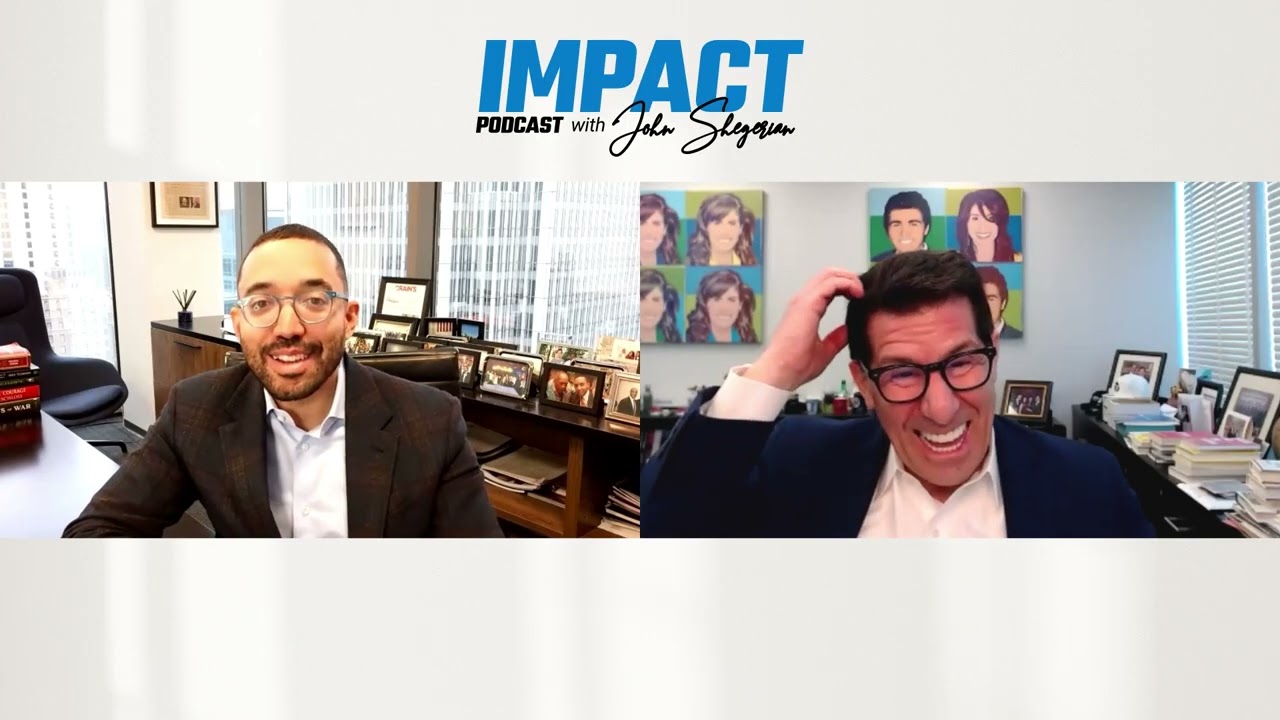
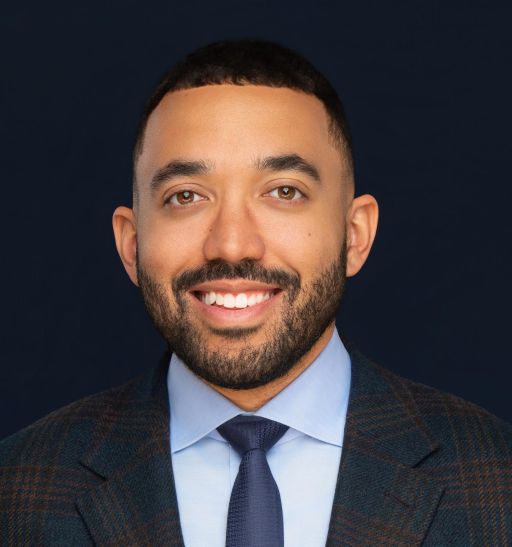
Nicholas Antoine is the Co-CEO and Managing Partner of Red Arts Capital, a private equity firm he co-founded at 26 to invest exclusively in supply chain and logistics businesses—one of the most vital yet overlooked sectors of the economy. At Red Arts, he leads investment research, thesis development, fundraising, and firm strategy, bringing a disciplined, long-term approach to partnering with and scaling founder-led companies. Over the past decade, he has overseen more than $1 billion in transactions, grown the firm’s team tenfold, and helped Red Arts’ first institutional fund rank #7 on Bloomberg’s 2025 Best Performing U.S. Buyout Funds list.
John Shegerian: Do you have a suggestion for a Rockstar Impact podcast guest? Go to impactpodcast.com and just click Be a Guest to recommend someone today. This edition of the Impact Podcast is brought to you by ERI. ERI has a mission to protect people, the planet, and your privacy, and is the largest fully integrated IT and electronics asset disposition provider and cybersecurity-focused hardware destruction company in the United States, and maybe even the world. For more information on how ERI can help your business properly dispose of outdated electronic hardware devices, please visit eridirect.com. This episode of the Impact Podcast is brought to you by Closed Loop Partners. Closed Loop Partners is a leading circular economy investor in the United States with an extensive network of Fortune 500 corporate investors, family offices, institutional investors, industry experts, and impact partners. Closed Loop’s platform spans the arc of capital from venture capital to private equity, bridging gaps and fostering synergies to scale the circular economy. To find Closed Loop Partners please go to www.closedlooppartners.com.
John: Welcome to another edition of the Impact Podcast. I’m John Shegerian and I’m so excited to have with us today Nicholas Antoine. He’s the Co-CEO and managing partner of Red Arts Capital. Welcome, Nick, to the Impact Podcast.
Nicholas Antoine: Well, thanks so much for having me, John.
John: It’s an honor to have you. We don’t cover this topic a lot, so I’m glad you’re here with us today to help us cover it in terms of capital going into making an impact. But before we get into what you and your colleagues and partners are doing at Red Arts Capital, tell us a little bit about your backstory, Nick. Where’d you grow up and how’d you get on this really impactful journey that you’re on?
Nicholas: Sure. I was born in New York and I’m living in Chicago now, but originally from the East Coast. My dad’s an immigrant. He’s from Trinidad and Tobago, and my mom’s from Queens, New York from Irish descent. Only in New York would you find that interesting mix. I grew up in New York and then New Jersey went to college at Princeton and then went into finance as my career. But a little bit of my background and how I kind of got into investing is kinda a twofold story. When I was a kid, I really loved investing. Apparently, I don’t remember the story, but my parents told me that I came home and one day from school and said I wanted to invest in stock market. I think I was in third grade.
John: Wait a second, Nicholas. First of all, I’m from Queens, I’m from Little Neck. What borough did you grow up in? Manhattan, Queens. Where did you grow up?
Nicholas: My mom’s from Middle Village my stepfather’s from St. Albans. First home was in Jamaica, Queens, and then Upper West Side, then Long Island City and then Princeton, New Jersey. I moved to Princeton.
John: When you were going to school, you were going to school in Queens when you were growing up, when you were in third grade?
Nicholas: In third grade I was in New Jersey.
John: Jersey.
Nicholas: I actually have a photo, maybe we can send it to you here. Actually, I don’t know if he [crosstalk]
John: Showed it.
Nicholas: hung up yet, but this is a picture of me when I was third grade.
John: My God. You were killed in Princeton when you were a kid. What [inaudible] there? Is that the Wall Street Journal in your hands? My God, that’s awesome.
Nicholas: I have been interested in, I had to find a place to hang it, interested in investing since I was really young. But as a kid you try lots of different things out. I also had a big passion for music. They kind of intertwined when I got to college and really kind of how I got really seriously into investing was in college. At Princeton I was trying to figure out a way to spend all my free time practicing, but I also wanted to make sure I made some money. I thought, well, maybe I can invest some of my money that I had saved from playing gigs. I played in New York and weddings and things like that. I played saxophone. I could invest in the stock market and that would give me hours to practice. What ended up happening was I had a lot of beginner’s luck and before I knew it, I found myself investing more of my time into learning how to become an investor than I was practicing music anymore. By the time I got to my senior year, I already knew that’s what I wanted to do is I wanted to become a professional investor. That was a little bit of the backdrop.
John: Where’d you get the finance bug from? It was your mom, dad, or stepfather in the finance world, or who inspired you on the finance side? That’s fascinating.
Nicholas: Actually as I was thinking back on this, I think my stepfather really influenced me a lot on that. My dad was an entrepreneur. He owned a restaurant in Brooklyn and so I got that entrepreneurial bug about business. He’s also an immigrant, and I think that that was really important to him to have. The American dream is really important to him that you have the opportunity to build something. I got that part of the business passion from him. My stepdad was a big believer in independence and independent thinking. He saw things from a systems perspective. People talk about first principles thinking that’s got kind of a cash phrase now in the venture world. But that was something that I was taught as a kid was to think about society and rules, laws of physics, but just things in terms of systems and what are the constituent pieces that go into it. So he taught me how to think that way. And then he really believed that investing allowed you to have the freedom to live the life that you wanted to live. For me, I found it’s just a really fun exercise of kind of putting a puzzle piece together. I think I’ve heard David Einhorn say that somewhere. It’s kinda like a mix between that to me and also kind of investigative journalism. I love reading. To me it was the intellectual part of it, but I was, grew up being taught, told how important it is to think independently, to not go with the group and group think to think for yourself. That was really instilled into me and I think that’s where it came from.
John: When that picture was taken there, were you already a young boy taking your allowance money or any money you earned and putting it into the stock market? Did you go with one of your parents and open up like a Dean Witter or a Charles Schwab?
Nicholas: I remember my first pick was Compaq. It was a stock it was a good pick at the time, but my parents took me to Merrill Lynch. I had some money from my grandmother and some allowance money and I put it into that and then I invested in Intel. It was like basically things that I knew around they were tied to computer games.
John: That’s so awesome. But you were investing in what you knew. It’s the Warren Buffett theory of investing what you know.
Nicholas: Exactly.
John: That’s awesome. You got the entrepreneurial bug from Dad who had the restaurant, and then you had some of the financial background from inspiration from stepdad and the intellectual challenge. And so you’re at Princeton and you’re deciding you’re going to go into finance and you’re going to walk you’re going to do a gentle fade from the saxophone dream.
Nicholas: What happened was, basically I came across a book called The Intelligent Investor. Which was written by Ben Graham and it was kind of the kinda more lay person synopsis of his famous book, Security Analysis from 1934. It had been updated since the sixties, when I think the book originally came out or something, like the most recent edition. It just made so much sense to me, and that just sent me down this rabbit hole. I started reading everything I could about Warren Buffett, but lots of other people. There was a book called me, David Einhorn already Fooling Some of the People All of the Time and then in there he talked about all these other hedge fund investors. So I just started kind of investigating more and more. Eventually what happened was that Princeton at the time didn’t have accounting courses or this more liberal arts. Buffett had gone to Columbia for business school. So I took myself up to get more insight into their mindset, I went to Columbia and I said, “Hey, I want to audit classes that Buffett audited.” So I took Security Analysis, I took Accounting and just for my own benefit and just to learn. He had a reading list, Charlie Munger had a reading list. So I just started reading everything they said that you were supposed to read. Of course you read their annual shareholder letters. Just everything I could get my hands on to understand how they thought. That was kind of the beginning of my journey. But pretty quickly I realized that this is what I wanted to do. I have kind of an intensive obsessive personality. So when I get into something, I really get into it.
John: Buffett being probably the most famous disciple of Ben Graham. He credits Ben Graham with basically influencing his approach to investing. Correct?
Nicholas: Correct. I think value investing is definitionally in public markets now is around PE ratios and things, but I think all good investing at its core is value investing. You’re trying to find something that is worth a dollar and you’re trying to pay. Just as my stepfather taught me when you go to the grocery store you’re looking for coupons, you’re looking for discounts. You’re trying to think independently and look at what the reality is and try to get value for whatever you’re buying. I think regardless of what kind of security you’re investing in, whether it’s the public securities, stock markets, debt, it’s private equity, it’s trading, whatever have you, you’re looking for kind of dislocation between price and value.
John: My wife and I got very lucky in 2004 I sold the dot com I started in 1998. As Google was started in 1998, so we were part of that first big wave of dot commerce, and we got lucky, sold our company, and the best thing I ever did is we bought Berkshire Hathaway stock. We actually have gone to his conferences and I’ll tell you what, it’s the best stock I’ve ever owned in my life. The best stock I’ll ever own in my life. And just going to one of his conferences is literally probably the most single most inspirational experience in my business career.
Nicholas: It’s really incredible. I went during that period when I’m trying to figure something out and I remember standing in the line in the snow, like at five in the morning to try and get a good seat outside the convention center right at Moscone.
John: That’s awesome.
Nicholas: It’s a one of a kind experience.
John: For our listeners and viewers who just turned in, we got Nick Antoine with us. He’s the co-CEO and managing partner of Red Arts Capital. You can find Nick and his partners and his colleagues at www.redartscapital.com. It will be in the show notes, so you don’t gotta stop driving your car, walking your dog, or lifting your weights to write it down. It’ll be in our show notes. So Nick, you’re in your twenties, you’re out of Princeton. What gave you the courage to then start in your twenties Red Arts Capital?
Nicholas: I knew I had interned a hedge fund in college, and I knew that I wanted to be on the buy side. Oftentimes the steps typically for investors is they start first with a training at an investment bank or some other type of financial services business and then go into an investing role. Because I had been doing pretty intensive self-education for a long time I kind of already knew that’s what I wanted to do and I felt that I could learn the skills that I needed proactively. So again, taking accounting classes and I took modeling courses, I took Excel courses. I just did everything I could to try to learn on my own. So by the time I was finishing college, I knew that that’s what I was looking for. And I found a job at a firm called Princeton Global Asset Management. I did equity research for them. That was my first job. So I was still in Princeton and I was ready to kind of move out of New Jersey and explore the world a little bit. The story of how kind of came to the Red Arts part of my journey, when I was in college my senior year, we came back from school. I spent the summer investing and reading 10-Ks and things. My roommate was playing basketball at Princeton, and he had interned at this firm called Ariel Investments. Ariel was actually mentioned in the Intelligent Investor in one of the commentary notes. And he said, you gotta reach out to this guy, John Rogers. John’s friends with Warren. He’s also a value investor. So John doesn’t use email so I wrote him a letter and sure enough, John called me. This is again I’m in my senior year of college and I was in my dorm room. My roommate was with me and he calls me and sure enough he’s in Omaha and he’s planning to go see Warren. So you can imagine my reaction to having a chance to talk to someone who even knew.
John: I just want to know who gave you all this courage? You got a lot of courage, my friend. There’s not a lot of people in their twenties with that kind of courage. This is amazing. I love it.
Nicholas: To reach out, I don’t know where that came from. That part is something I’d have to think about more.
John: That’s great.
Nicholas: But I’ve always felt like there’s something that you want to learn [crosstalk] you should go for it.
John: Go for it.
Nicholas: Anyways, I reached out to John and he called me and we had this nice conversation about some of the stocks I was investing in. I asked about his business and we kind of stayed in touch. Actually, after we had the conversation, he said, “Well, why don’t you come out to Chicago?” He said, “All right, I gotta go see Warren now.” And hung up. And that was the end of the conversation, which was like my mind was blown.
John: That’s mic drop time.
Nicholas: John is such a wonderful nice guy. Just a really he’s a great, he very thoughtful, he likes to help people. He puts other people first. One of the first conversations we had early on in our relationship was around a book called Give and Take by Adam Grant which is one of my favorite books. I don’t know if you’re familiar with it, John.
John: That one, no.
Nicholas: Adam is a organizational psychologist at Wharton, and he’s written a number of books since then. This is a really interesting book about some of the most successful people are those who see relationships through the lens of helping other people. John really believes in that. I was raised that way. My father was born in Trinidad Tobago in 1937 and in a really difficult economic conditions. In their community it was all about someone didn’t have food or someone didn’t have support the community helped each other. I was raised that way too of you try to help as many people as you can because that’s the right thing to do. And so we really hit it off on that and stayed in touch. I took this job in New Jersey and then mentioned Berkshire. I’m at the shareholder meeting. I bought some B class shares not A class the time. I’m in Omaha and I was with some of my friends who I’d audited classes with me. Turns out there were other people who wanted to audit and were at the bar in the Omaha Hilton, I think, across from the convention center. In walks John and Mellody Hobson, his business partner who’s now co-CEO. We just hit it off and I was telling him I’m looking at other things. He said, why don’t you apply for to come to our investment team? And so I did and I ended up in Chicago on their investment team. By the time I got to Chicago I kind of already knew I wanted to be an entrepreneur. I’d already started thinking about what kinds of businesses I wanted to invest in personally and own personally as an entrepreneur. The same kind of analysis that I had learned around analyzing businesses to invest in stock market, the same idea about what kind of entrepreneurial endeavor that I wanted to embark on. And so when I met John, I wanted to be like Mike. I was like, “I want to be like you. I love financial services, I love asset management. I want to go into that industry. I’d like to be an entrepreneur someday.” While working on his investment team, there was an opportunity to become his chief of staff. That role I got to see how the business was run and you got to do a lot beyond just learning about investing, you got to learn about operations and fundraising and business strategy, and it was a real crash course in entrepreneurship. That was when I really started to think about starting an investment business was in that role.
John: Got it. Then what was then the impetus for the big jump to start Rare Arts Capital? When did you start it and who did you start it with?
Nicholas: The impetus was I kind of knew this is what I wanted to do. I was looking at different businesses that I thought were interesting that I could start. It was really kind of analyzing different parts in kind of investing. Public markets investing, private market investing, different asset classes. Where were my strengths, where were my interests, where were my weaknesses and where are my skillset. Going back to Intelligent Investor, one of the chapters talks about kind of the importance of knowing yourself. I think that that’s really important piece of being an entrepreneur, as I’m sure you know, is you have to know if you have a strength, how to play to that strength as a person that you can contribute to the business and if you have a weakness, you need to understand what you need to bring to the table from others to kind of make up for that. It’s a team oriented sport. I started realizing that and I really enjoyed fundraising. I loved the research and kind of deep dive stuff. But I didn’t want to be public markets investor for a whole host of reasons you could get into. I was thinking more about private equity. From the return perspective some of the trends around and actually I have on my desk here, a book about ETFs and the history of index funds. I just saw there was changes in the marketplace, and I thought there was a lot of upside opportunity in investing in private owned businesses. But similar to Ariel, where John had started his business, mutual owned business focused on small cap, I was thinking about smaller businesses. How it came about was I was working the chief of staff role and a colleague of mine at Ariel introduced me to Chad Strader. And Chad was at business school at University of Chicago, and he was thinking about starting a firm as well. And we kind of got to talking and realized we had a lot of overlapping perspectives on private equity. That’s kind of how it began. The other piece of this was I’m in these meetings with John and again he’s just a team oriented person. Lots of people come to ask for advice and for help. And so you’re sitting there in these meetings taking notes for any follow ups and you’re getting a crash course on entrepreneurship. Here’s how I handled this challenge or if I had capital issue or whatever. After a while you start thinking, okay, I’m learning a lot about how to start a business. Then he would often say there’s just not enough entrepreneurship. Particularly black entrepreneurship in Chicago you have legends like George Johnson and and others in Chicago many decades ago. He was saying we need more of that. More recently we’ve had folks like Marty Nesbitt with Vistria Group. I started feeling inspired by John to try my hand at it and and so decided to take the jump and that was in 2015. There was a lot of the blueprints for this business was based upon what I learned at Aerials particularly. The investing stuff, I learned a lot there and I’d learned a lot on my own. But from an entrepreneurship perspective I learned a lot from John that we applied. A lot of it stemmed back to Ben Graham principles of focus. So knowing your circle of competence and kinda sticking to that idea. So we wanted to be sector focused, we wanted to have an area of expertise where we could identify opportunities quickly. We did a kinda a market mapping and I looked at a lot of different businesses and I decided supply chain logistics was a great place for a whole host of reasons to focus on. It’s a massive part of our economy. At the time, it was not really a household phrase. That wasn’t until COVID years later that it became top of mind for everybody. But there were lots of different types of businesses and many of the similar kinds of businesses. So we could look at the same kinds of businesses over and over and get smarter and smarter at identifying them. Also from a sourcing perspective, looking for companies for sale because it’s not public markets, it’s private. But my perspective was that we had to differentiate ourselves from competition. So there’s another great book that I love called Zero to One by Peter Thiel.
John: Sure.
Nicholas: It talks about the best kinds of businesses are monopolies. The reason is because they don’t have competition. It was kind of similar to some things I’d heard about in jazz. Miles Davis had a famous phrase of it took me a long time to learn how to play like myself. But there’s only one Coltrane. There’s only one Miles Davis, and only one Thelonious Monk or take your Michael Jackson or Barry Gordy. They had an individual voice. You think about Motown as it’s very distinctive. You can tell that’s Motown. Then you don’t have the competition because you’re just being the best version of yourself. I thought a lot about that from a sector focus perspective. If we’ve mapped the market from a competitive landscape, there weren’t many private equity players solely focused on supply chain and logistics at the time. There was one group that looked at big companies, but nothing in the small space that was institutional investment firm and to our knowledge. We thought there’s this big space, it’s not a ton of direct focus on this. We could build a brand and expertise around it, and then we go to banks who are selling and representing these companies for sale, we have something that’s differentiated and we’re not having to explain why we’re competing with the Upbeat Healthcare or SaaS investor. What gives us our right to win someone’s attention.
John: Two[?] things. You started the business. Sometimes I tell young entrepreneurs picking your partners are more important than actually picking the idea. Because every business is going to have ups and downs. You want people that you trust and you’re not always looking over your shoulder and you’re always looking forward. How did you pick your partners wisely?
Nicholas: I was again really kind of cerebral in books and theory-oriented. A lot of it was laid out. Then obviously I’d spend time with John. John has this extraordinary partner, Melody Hobson, who is now co-CEO of the business.
John: I’ve seen this.
Nicholas: I got to see that relationship and that was helpful. We thought a lot more about kind of what differentiates us competitively. It was only later that as we started working more and more that I saw that we had complementary skill sets. But I would say I completely agree like business is about people. At the end of the day there’s the five Cs of credit for banking. But in general, I believe that business is about trust. You think about extending your trust to other people. That’s the foundation upon which relationships are built. And so it’s very important to me to think about not just my partner in my business, but all the other partners that we engage with particularly our investors which is really important. Because you can’t buy these businesses and you can’t raise funds without support of great partners there too. There’s lots of different lLevels of relationships and partnerships, but it all comes back down to that core principle of trust. I believe that what I learned from John, but also how I was raised of trying to help other people and leading with that was a really important lesson around partnerships.
John: What does the Red Arts part of it mean of the name of your company?
Nicholas: Chad’s favorite color is red and I love the arts.
John: That’s okay. Together, red arts be simple. I love it. So decided your thesis was supply chain is something that you thought was underserved in the private equity markets and that you could really master over time of doing it more and more, and that was going to be part of the future of trends of the world that supply chain was going to be something that was going to be a growing trend, the necessity for it and so that’s why you went into that side of the business.
Nicholas: That’s right. My background again in investing in research and did a deep dive thematic investigation of a specific niche within transportation and trucking the less than truckload space. At the time the markets has continued to change. But in 1980 trucking had deregulated. Transportation broadly it had been regulated for a long time, but from 1935 to 1980, trucking was regulated largely to protect railroads from disintermediation, and also to protect, ideally, the consumer. With Milton Friedman and some others like Alfred Kahn and other economists there was a deregulation era going into the Reagan era, but sorry, before that, with Carter. It opened up airlines, trucking, rail. Trucking for many years had been controlled rates, controlled lanes and then suddenly there was this explosion of access to shipping and anyone could buy a truck and be in business, licenses still mattered. But what was very interesting about that, that gave the rise to massive truckload. So we hear of the guys driving from LA to New York and back and being away from home for three weeks at a time, that really exploded after 1980. But there’s another part of this trillion dollar industry which is less than truckloads. You think the truckload is a one shipment, 40,000 pounds on a trailer and 53 foot trailer, and less than truckload it’s somewhere between 20 and 25 shipments from different customers that add up to that 40,000 pound load. Very simplified. They had operated under the rules of the regulatory era. I did a lot of research and reading about the industry and going to conferences. What we found was that the industry basically had these monopolistic characteristics because instead of point A to point B, it was hub and spoke. So it was more like the postal service. So the truck would go out, pick up industrial freight thousand pound shipments roughly, bring it back to their terminal, like a post office, sort it and send it out. That created these network effects and these density effects, meaning lots of freight volume moving through their logistics network that made it very hard to replicate particularly because it was capital intensive. So it was expensive to buy the trucks, but more expensive to get the real estate to have those cross stock facilities. In the East Coast consolidated really quickly and you look at door capacity kind of declined over a number of years after 1980. When we got there, it was about a $50 billion market, half the market had been consolidated to about a dozen players. But then there were about 200 family owned businesses, roughly west of the Mississippi, mostly that had not consolidated. UPS wanted to deliver from Atlanta to Fargo, North Dakota they would show a whole map of delivery, but they were still actually operating under that regulatory era dynamic which was they would go from Atlanta to maybe Kansas City and then Kansas City to be handed off to another carrier who would then go bring it to Omaha, and then Omaha to Fargo. That small carrier, that family owned business, had basically a monopoly on delivering to a town of 3,000 people in these rural markets. We crunched the numbers, and looking at that space I realized it hadn’t been consolidated yet. We talked to lots of bankers and we just wrote letters, cold calls, we went to conferences, we got connected with probably about 30% of those 200 players and we did a roll up. We raised capital from like my old boss, John, his family office and some others, Mario Gabelli who became a friend I met through John also a great value investor. We did a roll up of these businesses and it was really successful. Then the other part that was part of my interest in this space was that it’s not just you just make the investment then you can create value by improving the businesses and adding professionalism, KPIs and metrics, improving sales processes. We worked with the family, the platform business, that first business it’s like 50 shareholders and the company was started in 1918, and so there was five generations or something like that in the business, ownership in the business. It was a family business, but they were open and interested to having kind of professional oversight to help make the business stronger. We grew the business. We almost doubled the business’ size organically as well. That created enormous value and we ended up selling that business to a strategic publicly traded company called Knight-Swift. Did a little over seven times our money. That was the first major thesis that we executed on.
John: That was first major thesis and win that you had. Big win and win
Nicholas: And win.
John: That’s great and now no good deed goes unpunished. How do you get back up at that and do it again?
Nicholas: We’ve done that a number of times and we started to grow out our team. Eventually we went and raised the institutional fund and again I had a good fortune of doing some fundraising with John and learning how that worked. So a good friend Justin Ishbia who’s here in Chicago runs a firm called Shore Capital, and he gave me some really good advice of build relationships early, show people the track record and say this is what you’re going to do and you come back the next time and you show that you made that progress. We had great relationships with folks like University of Chicago’s Endowment and others who had got to seed our track record grow over time as we made more and more investments. We made six investments before raising a fund. And so by the time we were ready to raise I built these great relationships with lots of different investors in Chicago and in New York and other places.
John: Nick, a supply chain got highlighted during COVID. Now that we’re in 2026, what were the lessons that you and your partners learned from the COVID crisis in the space that you work in? Then talk a little bit about where we are today. There’s not a day that you and I wake up and read the Wall Street Journal or the New York Times or turn on Bloomberg, and AI is not all over the place. So how is AI and technology going to impact your industry and how are you going to leverage that to, as you say, improve your investments and continue to grow your investments?
Nicholas: There’s a lot of serendipity in business, as I’m sure you know as well. You can work really, really hard and then luck will have it that changes things. I think COVID to extent changed people’s perspectives around the importance of supply chains. I think it’s pretty clear now. But I think the government knows this. Like going back to, I mentioned the regulatory period. You go back, you want good nighttime reading, you can look at some of the reports were put out in the thirties they were very focused. Rail was nationalized by Woodrow Wilson in 1917. You had standardization for kind of the development of roads and for trucks during World War I, and that continued with regulation to protect the infrastructure that allowed for the efficient movement of supply chains. Napoleon talks about the first thing you do is secure the supply chain. So the government understood the importance and the criticality to the economy and to the quality of everyone’s lives. I think as a household phrase, COVID really made people understand that too. I think a lot of investors started to wake up to that idea as well. Because of, you can’t get toilet paper, you can’t get these things. You order something and it takes 10 months instead of two weeks, or what have you. It didn’t really change how we thought about investing which is again, we stick to our areas of expertise but it is an organic process of learning. So you’re looking for areas that maybe have been uncovered or misunderstood. You’re looking for executives to partner with. Like recently partnered with this extraordinary executive, Elton Evans, who’s executive chair of our produce distribution business, which is a cold storage logistics business, and also distributor. We do that kind of work. I think to answer your question around what’s changed and where are things with AI headed. I think supply chain also is interesting to investors because I think it’s pretty clear that the front lines for a lot of automation is in the warehouse, it’s on the road, and we see Waymo taking over San Francisco, and I was just in Atlanta.
John: LA, Austin. I love Waymo whenever I’m traveling across the country.
Nicholas: It’s incredible. The data shows as well that it’s headed towards even more explosive. Exponential growth is very hard for, I think, people to conceptualize. But we’re at the base [crosstalk] explosion.
John: Beginning of [inaudible]
Nicholas: Many sophisticated investors understand that. So that was good fortune for us as we’re fundraising because we could say, hey, this is really important. Look at the value you can create for investors by investing in these essential services and these critical services that enable and empower the rest of the economy to operate. I think AI and automation broadly, so you have a lot of AI we talked about like agentic stuff.
John: Sure.
Nicholas: But there’s robotic process automation. There’s a lot of different things tied to machine learning and large language models. I do think that some of this is going to happen, but again I go back to history. Electricity was invented in the late 1800s. One of my favorite book series is Robert Caro’s series on Lyndon Johnson, and Johnson famously he’s running for Congress, was going door to door in the 1930s convincing people to sign up to get electricity in Texas. 50 years later after electricity is invented or modernized. 30% of the country still didn’t have electricity. I think it’s going to take some time the infrastructure to build out. It’s the same thing with electric vehicles. You think about EV, there’s a hundred years plus of incredible infrastructure that’s built to make it easy to get access to gasoline distribution network is very efficient. It’s going to take time to build it all out. Will the robots come? Yes. The question is when, but at the core of logistics, and this is where I think there’s great hope for people who may be concerned about this. I think like if you take a look at like freight brokerage, for example I think a lot of people think of and brokerage is you’re the middle person between the shipper and the trucking company or the other transportation provider delivering that shipment to endpoint, simplified. But having conversation with a legend in logistics, Jeff Silver, in last year at our conference and Jeff talked about how brokerage is really about managing risk. You’re taking on the risk that you’re going to figure out how to get those shipments to the right places and the complexity of that while some of that can be automated and be helped through technology when you want to have an understanding that someone’s on the other side, that’s still a human relationship. Business is still person to person. I think there’s an important role that people play in ensuring that there’s trust, that when the machine doesn’t work properly or there’s questions or there’s sophistication that people can address, there’s a person there on that other side of that relationship that’s helping that function. So it is going to be a really interesting period of time, I think, for society to adjust to these new technologies. But it is quite clear that it is coming. I think we will see it in supply chain functions early.
John: In ’96 the ATM was developed for pretty much commercialized and people said tellers would go away very quickly. Obviously there’s more tellers today in banks than there was even before ATMs were invented. But then again, when I was a little kid going up to big offices in Manhattan there was big typing pools, and with computers typing pools went away. So the question is, are the 80,000 truck drivers across America today going to go away with the truck version of Waymo’s in the next three years or four years or is that going to be a slower transition, as you said, and human relations are still going to be very needed in the supply chain industry?
Nicholas: I think people are going to be needed for a very long time.
John: I agree with you, by the way.
Nicholas: No. One, you just think about the supply chain of building things that could be automated. That takes time to roll out. So just because the technology’s available doesn’t mean Waymo can then just buy all the cars that exist in production. That takes time just to actually roll it out. You look at the data center build out for AI, a lot of the challenges are supply chain related. There’s not enough energy to get access to transformers and all this equipment. It takes time. There’s a backlog. This is going to slow the process, won’t stop it. That’s the first thing. The second thing is, I think it depends. One of the other reasons going back to our first thesis kind that I wrote was an LTL. LTL was also different because the drivers would get out of the truck. They would go into the back, they’d use a lift gate, bring the freight off the back of the truck. And you see that all the time in city streets and things like that. Well, until the robot can get out of the truck, walk to the back it’s an uneven pavement and you get pull down this thousand pound shipment and then, it’s actually not a dock it’s the back of a restaurant. There’s reality that takes place. That’s where a lot of complexity is. Now, can it be addressed eventually? Yes, I do think so. But there’s a lot of nuance. The trillion dollar trucking industry, but there’s a $200 billion specialty trucking space. You’re having to lash stuff on the back for cranes and on flatbeds and you look at lots of different types of distributors, we look at aerospace distributors. There are things that is much cheaper for a human being to do than a robot to do. I think that that’ll slow down the economic benefit analysis for people of like, well, do I want to spend a hundred thousand dollars with CapEx on something that won’t return me that kind of rate of return. At the end of the day, business is still also about capital allocation. I think it’ll take you a very, very long time. But there will be areas that I think get automated. So there are some areas that are already being in logistics freight audit and brokerage in some areas where agentic AI can scan documents and do all these things. I do think there can be some changes there, but you’re still going to want people to double check and spot check. It’s going to take some time.
John: Nick, how big was the fund that you raised when you started hitting your home runs?
Nicholas: We raised a $270 million fund.
John: $270 million. Give me one or two more examples because I know we have a hard stop today, a couple more wins you had after that first big win. Tell us about one other big win you had that you’re really proud of.
Nicholas: I would say, just the definition of win. I think people is a major win.
John: Of course.
Nicholas: We have a great group of folks on our team and we’ve been able to partner with some really extraordinary executives to help guide these businesses to growth. I’m really proud of the people that we’ve gotten to know and we’ve had a chance to work with and those relationships we’ve built. I’m really grateful for those relationships. And to me culture is so important and as you know, again, as an entrepreneur, and it’s really hard to get that culture. To talk about finding the right partner. The right culture too it’s really important and it’s an ongoing thing. It’s not like you set it and then it’s organic, it lives and breathes. But it starts with great people. And so if you look at some of the executives that run some of our businesses or help lead some of those businesses, we have really extraordinary leadership like I mentioned, Elton Evans. There’s a gentleman named Victor Crawford who’s that president Pepsi and Aramark and is running our contract packaging business. Stefan Freeman, who’s running our warehouse business. Nelda Connors who’s an extraordinary executive. So I’ve been really fortunate to be able to work with some of these people and really grateful for their leadership. And so to me that’s a great win.
John: I assume you prescribed to Warren Buffett’s methodology of choosing people to run your different divisions or your different portfolio companies. I remember when I was at his conference they asked for questions and a little 7-year-old boy sent up a question to the podium for Warren Buffett to answer. And he took that question, he said, “how do you choose the people to run the different companies you buy?” And he gave a very succinct answer. He goes, “I’m glad you asked that.” He answered the seven-year-old’s question. He goes, “it’s three things. It’s brains, energy, and character. And if they’re missing the third one, the first two will kill you.” I assume you prescribe to the same methodology of choosing the people to run your brands.
Nicholas: Absolutely. Character is everything. He said many iterations of that phrase, but it’s so important to find the right people to work with.
John: That’s right. I know you’re not only a finance guy, you’re also a music guy. You’re walking into the biggest meeting of your life. What’s the music you’re listening to before you walk into that meeting to get pumped up?
Nicholas: Man. It depends on the day. Sometimes you go to the gym and you see someone headphones on. You don’t know if they’re listening to heavy metal or they’re listening to classical or you [crosstalk]
John: That’s right. What’s your go-to? [inaudible]
Nicholas: This is my go-to. I really love Bruno Mars right now.
John: Cool.
Nicholas: That’s probably my go-to. Basically, every genre of music I could pick something that I love. It’s like depends on your mood of the day. But Bruno Mars is just upbeat and fun and happy, so I really enjoy his music.
John: Bruno Mars, I love him too. Nick, you’ve been great. I want you to know that as you and I know supply chain is an ongoing issue. It’s so important in business now and into resiliency and sustainability and impact and the world is focused on it now. Entrepreneurs like me are focused on it more than ever, and countries are focused on it more than ever given what we’re going through and the times that we live in. So you’re always welcome back on the Impact Podcast and share your continued successful journey at Red Arts Capital. He’s Nick Antoine. To find him, you go to www.redartscapital.com. Nick, thank you for not only a wonderful hour with us today, but thank you more importantly for creating brands that have resilience, make the world a more resilient, sustainable, and just a better place.
Nicholas: Thank you so much John, for having me. It was a real pleasure.
John: This edition of the Impact Podcast is brought to you by Engage. Engage is a digital booking platform revolutionizing the talent booking industry. With thousands of athletes, celebrities, entrepreneurs and business leaders Engage is the go-to spot for booking talent for speeches, custom experiences, live streams, and much more. For more information on Engage or to book talent today visit letsengage.com. This edition of the Impact Podcast is brought to you by ERI. ERI has a mission to protect people, the planet, and your privacy, and is the largest fully integrated IT and electronics asset disposition provider and cybersecurity-focused hardware destruction company in the United States, and maybe even the world. For more information on how ERI can help your business properly dispose of outdated electronic hardware devices please visit eridirect.com.
 Spotify
 Apple Podcasts
 Amazon Music
 iHeartRadio
 YouTube
 YouTube Music
 Audible
 Pandora