-
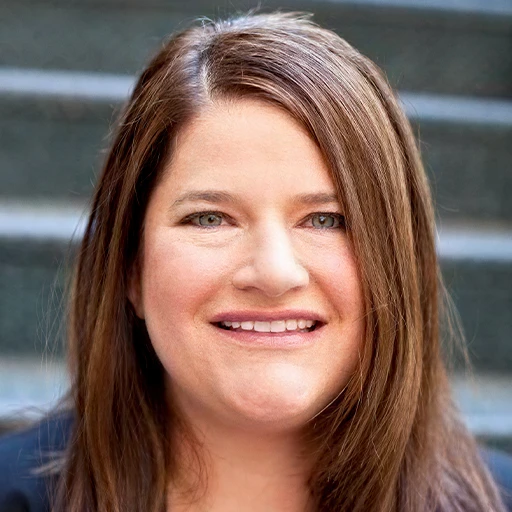
Miriam Wrobel
Senior Managing Director, Global Leader of Environmental, Social and Governance (ESG) and Sustainability
FTI Consulting
Miriam Wrobel leads FTI Consulting’s global Environmental, Social, and Governance (“ESG”) practice, representing more than 250 professionals across the company’s business segments focused on supporting clients across their ESG programs. Wrobel advises public and private companies and a wide range of investors on ESG evaluation, strategy, and implementation efforts, leveraging her 20 years of transactional and strategic experience and deep background in the energy transition to support the development and execution of multi-pronged sustainability programs.
Connect with Miriam on LinkedIn to stay up to date on all ESG matters and more, her LinkedIn is: https://www.linkedin.com/in/miriamwrobel/
John Shigerian: Do you have a suggestion for a Rockstar Impact Podcast guest? Go to impactpodcast.com and just click, be a guest, to recommend someone today. This edition of the Impact Podcast is brought to you by ERI. ERI has a mission to protect people, the planet, and your privacy, and is the largest fully integrated IT and electronics asset disposition provider and cybersecurity-focused hardware destruction company in the United States, and maybe even the world. For more information on how ERI can help your business properly dispose of outdated electronic hardware devices, please visit eridirect.com. This episode of the Impact Podcast is brought to you by Closed Loop Partners. Closed Loop Partners is a leading circular economy investor in the United States with an extensive network of Fortune 500 corporate investors, family offices, institutional investors, industry experts, and impact partners. Closed Loop’s platform spans the arc of capital from venture capital to private equity, bridging gaps, and fostering synergies to scale the circular economy. To find Closed Loop Partners, please go to www.closedlooppartners.com.
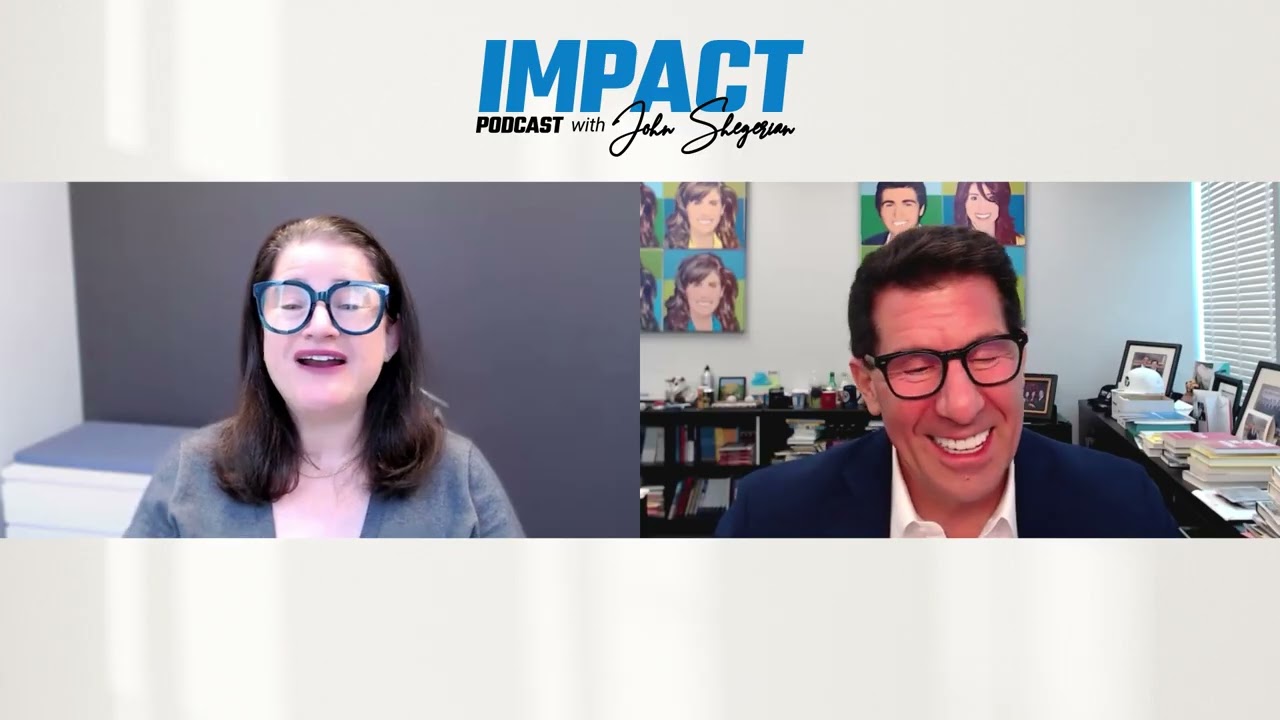
John: Welcome to another edition of the Impact Podcast. I’m John Shigerian, and I’m so honored to have with us today Miriam Wrobel. She’s the Senior Managing Director of FTI Consulting. Miriam, welcome to the Impact Podcast.
Miriam Wrobel: Thanks so much, John. Pleasure to be here.
John: So happy to have you here, and I’m so interested to get into all the great and important work you’re doing at FTI Consulting with your colleagues there. But before we do that, I want to always ask our guests first, where’d you grow up, Miriam, and how’d you get on this fascinating but also very important journey that you’re on?
Miriam: I grew up in San Francisco, where I still live. And my father was a savings and loan regulator, so I grew up in the 80s watching banks fail. And my mom was a cancer researcher. And so the appreciation for science and the capital markets were combined when I was growing up.
John: Yeah, and also good government. Regulators, in a good world, they’re doing the business of the good on a public certainty basis.
Miriam: Absolutely. And thinking about what it is to be responsible and to steward institutions was dinner table conversation in my family. So it’s all come full circle as my career has progressed.
John: So what started getting you thinking about the greater good in the environment? Was it besides having parents that were obviously highly intelligent and highly engaging in both their chosen professions? Was it before college, or was it when you went to Stanford? How did that work in your life in terms of what informed you, inspired you the most outside of your family?
Miriam: I was always really interested in doing good and making an impact. And in high school, I was a big volunteer, and I did a lot of leadership in San Francisco around mobilizing other young people to volunteer. And when I went to Stanford, I studied urban public policy, and I was very interested in how to affect change and how to do it from within institutions. I wasn’t interested in fighting current structures, or I wasn’t interested in making a lot of noise. I was interested in figuring out what made institutions run and figuring out how to orient that towards good outcomes. And so I was very interested in how to preserve an urban core. I’m still very interested in that and active in the San Francisco Public Library, where I raise money and I’m on the board of friends of the library. So I was always interested in how to work to strengthen institutions and encourage them to do the right thing. So through that work, I became interested in real estate development, urban real estate development, and affordable housing. And the summer that I was in business school, I worked in financing affordable housing, which is all done through tax credits in the United States. And I became fascinated with how to set up financing structures so that you’re rewarding behavior that you want to see in the market. And that led me actually to renewable energy because the solar tax credits hit the scene in the mid 2000s. And there was a need for people who understood those financing structures to come and help put some of these deals together. And so at that point, I really moved from real estate to energy to help put those sorts of deals together. And so I worked for a tax credit syndication shop that partnered with banks to place money in solar and wind deals. I ended up going to a bank. I went to Citi[?]and did renewable energy investing and worked on some energy efficiency investing. And so I have always been interested in how to align incentives properly to achieve outcomes that benefit society.
John: So you really were working, first of all, on public-private partnerships before it was cool to do so.
Miriam: Absolutely.
John: And you were in the sustainability world before the sustainability world became cool as well, no pun intended. You’re a sustainability OG. So that’s fascinating to me. And that’s why we wanted to have you on the show. When did you join FTI Consulting?
Miriam: I just hit my five-year anniversary at FTI Consulting, and I’m about four years in as the global leader of sustainability.
John: Great. So what we’re going to do is I just want to read this into our listeners and viewers who are not familiar with FTI Consulting. First of all, to find FTI Consulting, you can go to www.fticonsulting.com. You don’t have to write it down now. Stop driving your car, lifting weights, walking your dog. It will be in the show notes, so don’t worry about that. FTI Consulting, though, is a global business advisory firm specializing in areas such as corporate finance, forensic and litigation consulting, economic consulting, and strategic communications. This is a big organization, Miriam.
Miriam: It’s huge. And what I love about FTI is that we’re an expert firm. So we are not generalists who are going to buy a big data set and then tell you what the world is going to look like in 50 years or something like that. I guess we could do that, but that’s not generally what we do. We have very niche subject matter experts who we bring together to solve really hard problems. So in an ESG context, what’s so exciting to me is that we can bring together a climate economist who can get into the nitty-gritty of how carbon accounting works and the different ways of thinking about it, and a communications expert who can work with that economist and other folks like me to really put that story together of where a company is going, what it’s doing, some of the strategic trade-offs that it has to make. So our model is to get really deep really quick and get to the heart of the matter and then help you figure out the so what. What are you going to do about that? How are you going to communicate about that? How does that affect your plans for public policy, public affairs? And we can do all of those different parts of it at a very expert level by bringing those types of experts together.
John: You lead the FTI Consulting’s Global Environmental Social and Governance, ESG for others, practice, also sustainability practice, representing more than 250 professionals across FTI’s landscape. That’s huge, 250 people. So talk a little bit about what does that look like on a daily basis? You have clients around the world, you have partners and colleagues around the world, and you’re the leader. How do you- it’s fascinating because I’m sure no day’s the same and you’re never bored, but how does that work in practicality? What is your day-to-day, week-to-week, month-to-month, quarter-to-quarter look like to make the progress you want to make with both your firm and also on behalf of all your clients that you get to serve around the world?
Miriam: It is a fun challenge and definitely not the same thing every day. What I do is spend a lot of time with our clients listening to what’s top of mind for them. I think about where regulation is going in their markets, where their investors are and what their investors care about, what their customers care about, what some of the mega trends are. And I talk to my colleagues and I see what they’re seeing in the market and also what expertise they’re developing. For instance, right now, everyone’s talking about data centers and AI. We have data center experts across the company, and we have experts who know how they’re built and what the carbon and water implications are of how they’re built, and labor implications, power implications. We have communications folks who work with the tech companies to figure out how to talk to communities about what they’re doing and how to talk to politicians about some of the pressures on these companies and expectations of these companies. I bring that all together and say, how do we provide excellent service that helps our clients navigate these markets better, increase their profitability around these topics, and do it in a responsible way that makes for a, no pun intended, sustainable business? When we talk about sustainability, it’s about long-term persistence of markets. It’s not about anything in the short term or anything performative. It’s how do we construct this so that it’s built to last?
John: That’s great. I just love what you said, how on a day-to-day basis that you’re really trying to get in the heads of your clients to think about what they’re thinking about and talking about the most, regulations, investors, customers, and then you all[?] go back to your colleagues, data centers. I was just talking to a chief sustainability officer. She made me aware of terminology, emission enabler. I was asking her about AI and the benefit of AI in the sustainability world, which you and I are going to get into later on. As we were talking about that, she goes, as you know, John, AI is absolutely helping me do what I need to do and our colleagues at our company. It’s going to make us better at what we do. I’m like, that’s great. She goes, of course, we know AI is being powered by all these wonderful data centers, and they’re important too. We need them in this ecosystem. She goes, “Have you ever heard of the terminology?” She says to me, “They’re emission enablers.” I said, “I don’t understand that.” She goes, “John, they’re creating potentially more emissions because of all the energy they need, than[?] they’re really helping us save on the other side.” Given that this is a new part of our world, all of our worlds, this is every day when you and I turn on CNBC and Bloomberg or read the WSJ or NYT, this is what’s being talked about. That’s a new problem. It’s a new benefit for all of us. All of us are going to enjoy the further democratization of information because of AI, but the data centers do have an environmental challenge. Is that one of the big, big things that you’re tackling right now in terms of helping them get on the right side of their sustainability and other goals in that sector?
Miriam: Absolutely. We’re looking at data centers all over the world and looking at what some of the most important issues are, not just to the hyperscalers, but to the investors. We’re looking at the communities. We’re looking at what power prices are expected to do and forecasting out those power prices. We’re looking at interconnection and availability of turbines to power some of these. It is really complicated, and it’s not as simple as one data center equals a certain amount of emissions. There’s so much that goes into it, and there are ways of doing it responsibly. That is continuing to evolve in what that looks like. There are ways of involving the community, and there are ways of building where you’re not looking at that. I think that one of the big themes of my practice really is that none of this is one size fits all. It’s not that all data centers are negative. We can see a lot of economic development coming from some.
John: Good[?] point.
Miriam: We can see enablement of all sorts of knowledge and education benefits and just massive dissemination of information. We can also see bias from AI. That doesn’t have to do as much with the data center, but we see a lot of negatives as well. And we see a need for governance. So I think whenever you see these environmental or social topics, the nice part of the G that goes along with this is that there’s always an opportunity for governance to come in and say, let’s take a step back. Let’s do this the right way. What are the checks and balances we need to put in? How can we be responsible? How can we really bring a layer of discipline to everything we’re doing to make sure that we’re doing it in the most sustainable way possible? That is my definition of sustainable, which is this persistence of healthy markets over time.
John: Helping your clients stay great corporate citizens and responsible.
Miriam: Absolutely, which serves them in the long run.
John: 100 percent.
Miriam: This permission to operate that’s given by communities, that’s given by regulators, we’re not taking that lightly. I think that companies realize that for their long-term growth plans, they need to think about all stakeholders, be really mindful about who the most important stakeholders are, what is possible if you don’t do right by certain stakeholders, and have a really thoughtful, disciplined approach.
John: As we know, 15 to 35-year-olds, the next generation behind us are voting with their pocketbooks. They want to support companies that are aligned with their values, and they care about the environment, and they want companies that they support and that they buy products and services from to similarly care about the environment.
Miriam: And they are allergic to fluff[?]. I think this is a huge topic that we’re seeing of this generation is asking, show me the data. They don’t want a green label on something. They want a website that has the product carbon footprint. They want to be able to search controversies and see, have you done right by your employees? They want to know that there isn’t forced labor in the supply chain. They are not going to take a company at their word. I think that’s a huge generational shift where a company used to be able to say, we care about X, and that was enough. Now it is, show us proof, demonstrate this. That is really raising the bar.
John: Transparency matters.
Miriam: Absolutely.
John: You brought up a great point, what clients are talking about. Since you get to live in the world, you, I’m sure, have great pattern recognition of having to toggle among all the regs that exist now, the patchwork quilt of regs that are sometimes at crosshairs, European Union regs, North American regs, South American regs, Asian regs, the up and coming gulf in their regulatory system. One of the major beefs, not beefs I’m saying it the wrong way, rubs that chief impact officers, chief sustainability officers that I get to interview, I call them one of the greatest fraternities in the world because they love sharing information. They understand that it’s not a zero-sum game, that we all live in one world, and it’s very borderless when it comes to environmental harms. They’re constantly thinking of the bigger picture. One of the things that they always share with me, though, is that the regs are so disparate and sometimes at crosshairs that they’re finding so much of their work now, this delicate balance of regulatory versus actually doing the most of what matters, is getting tipped in the favor of just regulatory compliance because there’s no harmonization or rationalization. What says you? What’s the future look like? Can we get a better system? Not perfect, but can we get a better system so chief sustainability officers can be more enabled to do the greater good?
Miriam: First, I completely agree that CSOs are some of the most wonderful, collaborative, low-ego people around. They are resourceful. They will work with facilities and marketing and comms and investor relations and all sorts of different disciplines to get the right answer, and that’s one of the reasons I love working with sustainability people. I think a lot of sustainability people trained in their careers to envision projects and implement them to make a difference. They have found themselves in the last couple of years, especially becoming data collection experts and reporting experts. That is not what they trained for, and it’s not their passion. It’s what gets them fired up to do their jobs. You can see this at industry conferences. When I talk to CSO clients, there is this desire to get back to the real work and stop the reporting, or maybe not stop the reporting, but maybe have that live somewhere else. That’s how we address the market. I work with so many data scientists who are experts in ingestion of information, making sense of it, and reporting it, because the topic of the information actually doesn’t matter as much as the stewardship of the information. We’re at this point, because of regulation, that there’s massive fatigue on data collection and reporting. The different asks don’t agree. You have the regulatory asks, but you also have the investor asks. You have all the supply chain asks. It’s too much. This is what AI is going to be the most helpful with, is helping make sense of all of this data. I would say[?] the biggest issue right now, it’s ingesting that data. When we do an exercise where we’re helping a client take disparate data from all over the organization, we’ll often bring in M&A due diligence experts who really have this expertise in collecting information and making sense of it. I think a lot of the market thought that it would be the ingestion of the data or the calculations of emissions that was where the software was going to be most helpful. We saw this huge boom in all different GHG calculation software. Well, most of that’s arithmetic. It’s not that complicated of math. The real magic is in getting the right information, making sure it’s good information, and then getting it ingested in the right way. There’s some magic in applying scope three factors and all of that. But I think where we’re really going to see a big tipping point is in gathering the data and making sense of it and reality checking it. We’re not quite there yet. We’re still sending in our economists to double check what our client software is telling them and push back on some assumptions. But I think that’s where we’re going to see this real opportunity. And you even see in the market, the bifurcation of roles of ESG controller and CSO. And I think that’s really important because controller organizations and those who level up to a CFO have this expertise and this discipline already of collecting data, making sense of it, reporting it, and stewarding it, having it audited or checked by third parties. That’s not what a CSO is built to do. A CSO is built to then take the insights from that and other data and say, where can we really make a difference here? What’s material to our company? And what will help us be a stronger company over the long run and serve our stakeholders in a better way? And then implement some of those initiatives. Their highest and best use is not in data collection. And so I’m really encouraged by this evolution of the sustainability controller, ESG controller role, because that’s where it should live.
John: That makes perfect sense. Miriam, one of the exciting reasons I was so jazzed to speak with you today is you get to see so many companies and so many industries on regular basis and touch them and work with them across so many different countries around the world. Tell me where we are today in 2026. Where’s the puck going and where should companies be focusing now? As you point out, they’re being pulled in a lot of areas. We just spoke about regs, but you also brought up earlier. They got to be worried about their customers and their constituency, their investors, obviously. And then also all the other externalities that are happening around them, many of which they don’t have control over. Where should their focus be? When someone comes to you today, when C-suite[?] comes to you or chief sustainability officer, or both from XYZ company, iconic brand comes to you and they say, “Miriam, help us out. We’re being pulled in so many directions. Give us some clarity here. Where’s the best area to get the most bang for the buck in terms of our focus and our resources?”
Miriam: It is so much fun to partner with executives to help answer this question. And I think a lot of times the expectation is that there’s a single right answer for everyone. And it’s really what’s material to your business. And I will help walk you through that exercise. And it maybe isn’t a traditional materiality assessment where all voices are equal. And it’s definitely not a CSRD style double materiality assessment where sometimes every topic is important. I like to get- I’m practical as they come. What are the top three things where we can really focus and drive some results? What’s meaningful to your business? What’s meaningful to your revenue story that you’re telling investors that you’re building your whole business around? Let’s feed into that rather than having ESG sustainability be something on the side where you’re picking a cause and committing to it. Let’s commit to strengthening your business. Can that mean making a more resilient supply chain? Absolutely. Can it be investing in your employees more so that when they’re at a restaurant selling something on the front lines to your customers that they’re happy and providing great service? Absolutely. There are so many topics within the umbrella of sustainability that you can choose to lean into, but it’s only worth really focusing where you can drive results and have a meaningful impact on your business. So it gets back to doing that work and looking at the data of who really matters. Sometimes the squeakiest wheels aren’t where you want to spend the most money and attention. Sometimes it’s really boring stuff like energy efficiency. Sometimes it’s much more meaningful like figuring out how supply chain engagement can go from tick the box exercises to actually sitting at the same table as others in your supply chain and figuring out how to tackle some of these problems together. We work on everything from donuts to private equity. And within that, there’s just multitudes of issues of where you can really affect change and affect change that strengthens your business and not affecting change in a vacuum.
John: Donuts sound like a lot more fun than private equity. I got to tell you.
Miriam: It always depends what the PE is invested in.
John: I’m teasing[inaudible] I’m only teasing. Oh, that’s not to pick on anybody. But you bring up a great point about the diversity of clients you get to work with. Have you seen, given the new rise in tech, when I say new rise, of course, great companies like Chat GPT and Anthropic and Google’s expansion in Gemini, but then also great companies like AMD and NVIDIA. Have you seen any industry start in terms of velocity becoming clients of yours more than you’ve seen before? Has there been any recent changes in your diversity of client mix in different verticals of industry that is interesting to you and makes you think like, “Oh, interesting. There’s more coming from them now than ever before.” Does any industry stand out?
Miriam: I am spending a lot of time on tech clients just because their needs are increasing by the minute.
John: Right.
Miriam: And I think there’s a lot of really interesting work there, especially as there is a backlash against some of the rapid growth. And so really trying to dig into how do you do this responsibly? What are good ways of doing this? How can tech companies be more proactive in both having responsible practices and telling the story in the right way so that their stakeholders are engaged? I love working with food companies and consumer product goods because it’s something I see every day and it makes it very- I guess I see the tech as well, but it’s tangible. I started my career in real estate. I love a hard asset that you can touch and say, “I’m helping with this.” So those are fun. The whole evolution of how people are talking about health and the supply chain around food and food safety and food quality, I think is really interesting. The healthcare space and biotech has really evolved. A lot of very sophisticated buyers in that supply chain, putting a lot of pressure on their suppliers to have more responsible practices. I think that healthcare companies being in that business are looking to do good and looking to make sure that they’re responsible. So that’s been also really interesting to work on.
John: We talked about regs a little while ago. As we know, there’s no federal disclosure mandate in the United States. So if there’s no federal disclosure mandate, talk a little bit about business being good citizens, responsible citizens on reporting. Then what is driving the business’s reporting since there’s no mandate to do so?
Miriam: The history in the last 15 years of this industry has not been about regulation. I think we forget that because there was so much attention on the SEC rule and on CSRD. There were regulations against pollution and forced labor and things like that. But I think that the shadow regulators have consistently been investors and customers and that we’ve had investors and customers demanding more transparency for 10 plus years now. And so the regs on transparency haven’t come to be, we’ll see what happens in California and CSRD is slowly getting there. Australia is coming as you know, lots of different disclosure regimes around the world. But the stakeholders who’ve consistently been demanding disclosure have been investors and customers and we don’t see that letting up at all. We see an increased demand for not just the standalone data now, but the story of how are you using ESG? Are you incorporating this meaningfully when you’re looking at a new investment? Are you operating responsibly and taking the learnings from all of these exercises that you’ve had to do for regulation and saying, “Hey, this is a material topic we didn’t really consider well before.” So it’s really the so what and the story of how they’re using all of this knowledge and if they are pursuing the knowledge in the first place that these stakeholders want to know about. And regulation will catch up and we know that there’s always a swing back and forth and that in the US we have California going through different challenges and we saw what happened with CRD being challenged. And not I’ll tell you that clients are not taking their foot off the gas. They are continuing to prepare because they know that the arc of disclosure over the long term is going to require this. They also know interestingly, when they started pulling together the information for CSRD, they realized that they didn’t have the controls in place that they had for financial information. So CFOs said, “You’re going to disclose what to the market or you’re going to disclose what to regulators. We don’t have a process for this type of data. You’re getting one thing from facilities and one thing from tax and one thing from HR.” And this pause in regulation has really given our clients and the rest of the market ample opportunity to look at how that they can be ensuring that that data is more reliable. So they are continuing to work. A lot of it right now is not flashy. You won’t see it, but they’re building the infrastructure to make sure that they can stand behind those disclosures over the long term.
John: That makes so much sense. What do you- you get to work with big, small and companies not[?]- in over 20 countries. So the, again, the diversity and the cross section of knowledge that you get to have in so many industries is fascinating to me. What do you see- if we watch Tom Brady, we go, “Wow, that’s what makes him great.” Then as we watch other quarterbacks, we then use him as our benchmark. So what do you see the greatest, smartest, savviest companies doing now with regards to ESG and sustainability? And then is that something, then do you take those learnings and you share it with your other clients as well?
Miriam: We always share whatever is the best knowledge.
John: Right.
Miriam: So I would say that we see certain practices that are really encouraging and that we’ll never tell one company to do exactly. Someone will say, “Well, what’s a perfect company?” Or oftentimes Patagonia is used as an example of, well, this is ideal. Well, Patagonia makes consumer goods. They use a lot of plastic. They’re privately held. There’s a lot that’s special about Patagonia, right? And so when we say like, “What does good look like?” What it looks like is integration of ESG into the core business. Our clients more and more are not just CSOs, but our general councils and CFOs and boards. And this is a great indicator because it shows that they want to integrate this into their core business. So if we’re identifying a risk and suggesting mitigants and suggesting a course of action, doesn’t that belong with the general council? It can belong also with sustainability and risk and other groups. But let’s get back to the core business functions of who looks at finances, who looks at risks, who looks at regulation and have that more integrated. So where I’m most encouraged and where I encourage my clients to follow others is really in some of that organizational strength and governance around how these topics get tackled and making sure that it’s always a team sport. And that if Tom Brady doesn’t have anyone to throw the ball to, it’s probably not going to happen, right? I can’t believe that we’re both in California and Tom Brady is our example. But…
John: But he’s a Bay Area boy. Let’s give him credit. He is from your neck of the woods.
Miriam: I mean, we probably both grew up in the Joe Montana era. So that’s how my brain is wired.
John: You[?] did.
Miriam: Or Andrew Luck. I can always talk about Andrew Luck. [crosstalk] But it’s really about what is the approach? There is a good approach and there is a less good approach. And the best approach is always one that’s integrated, one that’s really thoughtful. Let’s not start with what we want the advertisement to look like. Let’s start with what really drives the business over the long term and then filling in from there. Let’s bring that discipline. And it’s not as exciting as going to a big conference and making a huge announcement. I’ll tell people that nobody gets out the giant scissors and a ribbon for a heat pump, right? We want these things to be flashy a lot of times, but a lot of times they’re not. And we need to recognize that putting those smart building blocks in place is what will guarantee longer-term success. So that’s always what I get back to when I’m saying, what does good look like?
John: Yeah, and I want to understand this also because I want our listeners and viewers to know your client profile a little bit. Is it the multinational company that becomes a client potentially, but then also are startups coming to you for help as well? And does government ever come to you for advice and consultancy and expert direction?
Miriam: So it is much more on the multinationals and governments front than it is startups. Even though I’m in the Bay Area and love learning about climate startups, it will sometimes be the investor in startups that will have us look at their portfolio or look at potential investments they’re going to make. But in terms of our main clients, it’s multinationals, it’s companies with really complicated supply chains, it’s companies that have polarized stakeholders where some are wanting one thing and others want another. It’s companies that are at a crossroads and need to figure out what is the best strategy going forward? How do we take a field that looks really crowded where there isn’t one single right answer and figure out what the best answer is for us? So being a former banker, I love to work with investors who are looking at companies, whether they’re startups or PE or other companies and saying, “How do we provide the right incentives? How do we diligence these investments properly? And how do we steward them through the process when the path forward is so unclear?”
John: Are you brought in sometimes by these PEs and other large banking investors to help with the due diligence on a company’s ESG or sustainability credentials?
Miriam: All the time. We do a lot of due diligence. And it’s fun because I get to put my banker hat on and I know what it’s like to be in that investment committee and have to make the case for why something is a good place to put some risk.
John: That’s great, yeah. So you get to really exercise a lot of muscles. You do.
Miriam: It’s really fun. And we bring in different, I used to say we’re a superhero model where we bring in different people to do different things. So I was a banker, I speak private equity, I speak investment, and I can pull out that finance MBA at a moment’s notice and make the case. I can build a model around why investing in leak detection for a natural gas company is not just the right thing for the methane story and the emission story, but it’s going to make more money in the long term. I have colleagues who can come in and talk about stakeholders and how to bring communities along or how to talk to politicians in a way that’s compelling and aligns interests. So the superhero model serves us very well because we can get really granular with strategies and with different stakeholders and be able to say, “This is what they’re looking for.” You need all of the- what I say is you need all of the stories you’re telling to harmonize. They need to all start with the same data set and the same strategy, but you don’t tell the story in the same way. You don’t bring stakeholders along in the same way. And increasingly, increasingly we need a highly tailored solution. So your community could be rural Texas and Manhattan. How are you telling that story in a way where information flow is seamless? You cannot contain a certain positioning to a certain market. How do you do that in a way that’s going to serve your company and serve those stakeholders and keep them all aligned over the longer term?
John: That makes total sense. Let’s go back to, do the PE or VC type of clients ever come to you and say, “Hey, I have this- Miriam, I have this investment. I love these guys. I love this team, but I need you to do the adult supervision when it comes to sustainability and ESG.” They need to get on the right side of it. They don’t know a thing about it. And they just hand the ball to you and say, “You’re now the adult supervisor over there. And you’re the master coach in ESG and sustainability for this great group of people who one day is going to be a big iconic brand. Right now, they’re just a small, but fast growing brand.” Does that happen?
Miriam: Absolutely. And even big brands sometimes, where sometimes we get to wear the hat of the chief sustainability officer where they either have a gap in staffing or something has happened and they say, “I need an interim CSO,” and we say, “Great, give me the company badge and let’s go.” Those are really fun as well. The way that we operate those is, again, to get really laser focused on materiality to the business. It is not the classic ESG materiality. It is, what is the most impactful thing you can do to make the company successful? How do we operationalize that as quickly and efficiently as possible with the right level of discipline? Those are really fun engagements because I get to work at a bunch of different companies and get to really coach folks up who want to do the right thing, want to see their companies grow, and need an expert to really be in the trenches with them.
John: Talk a little bit about your government work. Do governments like South Korea, Japan, Germany come to you and say- countries come to you and say, “We need help. We need your advice in this sector. We have seen some of your other great work with some of the great corporations from our country. We would love you to help us as well, get on the right side of this.” What does your government consultancy look like?
Miriam: Governments come to us a lot of times when they are the investor in a business or an enterprise, or they are trying to change markets, develop markets. We do a lot of work on how public money can be used as leverage to incentivize private market development. We will look at loan guarantees. I get to put on my old muni[?] banker hat and look at what is the right structure for public money sitting alongside private money. What are the best metrics to evaluate if public money is being used efficiently? What are the ways that the public sector can be most helpful to executing transactions, or building industries, or making certain policy initiatives come to life by using their capital, or their guarantee capacity, or their position as a buyer? A lot of governments right now are in a very powerful spot in that they can make a lot of demands on their suppliers. What does that mean in terms of how they can use that as a lever to influence markets? It’s often in how they can operate almost more like a business, but with some of the advantages of their credit profile, their position as a large entity in themselves, and having also a policy mission as opposed to purely a profit mission.
John: Miriam, you run a practice inside of FTI Consulting. For our listeners and viewers who have just joined us, we have Miriam Wrobel with us today. She is a Senior Managing Director of FTI Consulting. To find Miriam and her colleagues that are doing great and important work in ESG and sustainability, please go to www.fticonsulting.com. You have about 250 professionals across the world that work for you and in your group. What does communication look like for you? If the medium is the message, what different mediums do you use to empower, enrich, educate, and lead the great colleagues you get to work with?
Miriam: What I like to do is really shine a spotlight on the brilliance of the team. I think there’s nothing to motivate people and get them inspired as hearing about what their colleagues are working on. As much as possible, I like to encourage sharing of new capabilities, sharing of market observations, sharing of case studies of really interesting client work. I think that consultants always want to be working on the latest and greatest interesting project. We get bored easily. We want to have five million things going on. To show up and say, “I’d like this team to talk about how they’re serving an ESG controller and helping this new role figure out how to ingest data, what it means, how to take things off the plate of the CSO, how to work with a traditional controller, and what we can learn from our former auditors who are colleagues at FTI and our investor relations colleagues.” How do we really get those juices flowing so that we can inspire creativity and try to solve problems that haven’t been solved before? I get really excited when it’s time to collect case studies, which is a fun part of my job because I get to learn about what people are doing. Or when I travel around to different offices, I was just in the Paris office where we’re working on a bunch of greenwashing work and helping companies understand, were they accurate in their disclosures about environmental issues? If not, how could they have been more accurate? Is there a better way of talking about this? How can economists come in and parse through the data and say, have you considered talking about it this way? Have you considered doing an analysis that looks at the numbers in a different way? That’s really exciting. And when I can give that team a platform to talk to other teams around the world and say, “This is how we did it, this is how we got really creative when our client didn’t know where to go for the answer,” that’s the most exciting part. So making sure that I find human rights cases along with environmental cases, along with governance cases, so that we’re always cross-pollinating and making sure that we’re helping each other get smarter and more creative.
John: Miriam, I’m always fascinated and I like to get inspired by great leaders like you to understand, how do you spend your time? We’re all given a finite amount of time in terms of 24-7, 365, and how much do you leverage great technology, wonderful technology like Zoom or Teams, and how much time do you spend, as you just said, you just came back from Paris, doing your work in person? How does that toggle work and how do you manage that and think about your own personal resources and where you should be at any given time?
Miriam: It’s about half and half, I would say, in person and virtual. I would say, maybe some career advice is to not plan to lead a global practice from the Pacific time zone, it’s not ideal. I’m up at very weird hours and working- doing work in the Middle East, in Singapore, in Australia, all over the place. So that’s the first thing. There’s no replacement for human connection, and I wish there was. I don’t want to have this footprint, I want to be home more. There is nothing like sitting in the room with a C-suite executive and really hearing what’s top of mind for them and how to help them. There’s nothing like sitting with people and breaking through that initial formality, because where I can be most helpful is in those rooms with a shut door where we’re saying, “Okay, here’s the real deal.” And then I can say, “Great, I’m in there with you, let’s figure this out. Have you thought of this? Have you thought of that?” And it’s not a formal, I’m going to give you a deck and you’re going to react to a deck. We’re solving some real big problems, and these often get down to people and their motivations and their interests. And so I do really like to be in the room with my clients.
John: I’m so glad you say that, because that’s a skill set that, unfortunately, as you and I know, ’98, Google was founded, and the world, the technological revolution was off to the races, and the world became more and more isolated. The iPhone came out in 2007. I’m just looking at different watermarks. And again, more and more isolated. Then COVID happened, accelerated the isolation, and now we seem to have a wonderful and excited generation of young people that really want to do good and really see the need to do good and want to make an impact and leave a great legacy on this planet, but they really don’t have the people skills that you and I were forced to grow up with, because in-person was ubiquitous in our life. We didn’t have technology to lean on or use as an escape. So you saying that means a lot, because the importance of face-to-face, nose-to-nose is unbeatable. And I agree. At our company, I don’t have a travel and entertainment budget for my salespeople. I say, if you’re at your desk, I’d rather you on the field. Go travel. Go meet your clients in person. It’s going to pay dividends, and it always does. I don’t have a budget for them.
Miriam: And it’s never too soon to start. So I’ll often tell junior staff, do you know the junior staff at our clients? I know the CSO. I know the CEO. Do you know the people who are at your level?
John: Great point.
Miriam: Your careers are going to grow together, but also sometimes you can solve problems that we can’t solve. I don’t know where the most recent version of the deck is necessarily. Someone on the team[?] knows that, and someone on the client’s team knows where the data is about a certain office and how much electricity they use. We need them working together to solve those sorts of problems. And it’s those moments where you need to publish the report, and you can’t find the data, and you’re working between the consultant and the client late that you forge those bonds, where then you can call them later on and say, “Hey, I have a question that might be kind of stupid. Can I bounce it off of you?” That’s what you need in order to succeed when we are more and more isolated.
John: As a C-suite executive, what I would say is, if I’m going to have a Zoom call with you because I have a problem that I need you to help me solve, and I’m sitting in Shanghai, or you walk through the door, when you walk through the door, I’m like, “She really cares. She came all this way from the comfort and coziness of her house and her office in San Francisco to come meet with me in Shanghai on a weekday.” That’s impactful. That itself speaks volumes about who you are, because they know how busy you are running the practice here in ESG and sustainability and FTI Consulting with 250 plus colleagues underneath you. For you to walk through that door, that has to make a bigger impact than getting on a Zoom or a Teams call.
Miriam: I think giving that undivided attention is priceless right now, where everyone has five screens flashing at them at any moment. It is really important to spend time, especially with really senior people, and say, “You’ve got my brain and my full attention. Let’s do some work. Let’s solve some problems.”
John: I love it. We talked about AI earlier, and you brought up a great point that AI, one of its great benefits, one of its many great benefits, is going to be to work with ESG officers, chief sustainability officers, to help with all the regulatory paperwork and data sets they’re going to have to come up with, and make some sort of rationalization and organization out of it. Makes total sense. Where does AI come into practice in what you and your 250 or so colleagues are doing at FTI Consulting? How often do you leverage it yourself, and are you also becoming a master coach on AI with your ESG executives and sustainability executives across the planet that you get to work with?
Miriam: I’m not quite a master coach on AI yet. I am getting there on AI governance because we see some of the areas where it can go wrong. At FTI, I am very lucky that we have very smart people who are building and evolving AI-enabled tools constantly. We have a whole set of tools that are proprietary to FTI that we use that have been very helpful in distilling reams of information, making sense of them, helping to pull out the most salient points, looking at all sorts of message testing and what different stakeholders will respond to or not respond to, predicting what different news coverage will be of events. Really, interesting tools. With clients right now, we are spending a lot of time on if they can use certain AI elements of software that they already have. If there are new tools that can somehow run analysis more quickly and efficiently. But a lot of it is figuring out how AI is being used and making sure that there’s really an audit trail there so that they can have confidence in a lot of these outputs that are coming out. Because I think we’re not quite there yet. We’ll get there. I’m so excited about it. I’m excited because it means that we can start focusing on actually making change. But right now, there’s no killer AI app for sustainability, no matter what anyone tells you. This is February of 2026. I don’t know when you’re listening to this. Maybe the killer[?] app will already be out. But what’s really important is to know what’s out there, stay on the cutting edge of all of the different tools, and try things out, but not rely on them. It’s fun to be in that experimentation phase. With the Wild West of experimentation, it’s just always having controls, always having discipline, and asking some of these hard questions of, does this make sense? Does this number that it’s spitting out, is this realistic? And taking the confidence of AI with a grain of salt and always questioning it.
John: I love it. We’ve covered a lot of topics today, and I could talk with you for hours, Miriam. Is there anything I left out that you’d love to share with our listeners and viewers before we sign off for today?
Miriam: I think the only other theme that I’m spending a lot of time on right now is, now that we are ingesting the data, now that with all this reporting, we kind of have a sense of what it is, how do we use that to drive value at a company? And that is the most exciting part to me right now. It’s where private equity is focused. It’s where a lot of multinationals are focused. Let’s move from this tick the box, or gather the data and disclose, to the so what, to the what’s possible. How can we be better citizens, better stewards, better software providers, better fast food restaurants, right? Whatever it is that the core business is, how do we take some of these learnings and use that to supercharge our core business? So I think that’s what I keep coming back to, and that’s what I really want to encourage folks to think about, is this is not an end in itself. It’s a means to an end, and can be used for so much good, and to drive so much business growth.
John: Well, thank you, Miriam. And by the way, you’re always welcome back on the Impact Podcast to share. As you and I know, ESG and sustainability have no finish lines. It’s a continued journey. You’ve been on it a long time. You for sure are a sustainability and ESG OG, and it’s just a delight, and it’s enlightening to speak with you. For our listeners and viewers to find Miriam and her colleagues and all the great work they’re doing in ESG and sustainability, please go to www.fticonsulting.com. Miriam, thank you not only for the hour or plus so you gave us today on the Impact Podcast, but much more importantly, thank you for making the world a more sustainable and better place.
Miriam: Thanks so much, John. It was really fun talking with you, and I would love to come back and love to connect with folks out there who are doing interesting work. It continues to change and evolve, and I wouldn’t have it any other way.
John: This edition of the Impact Podcast is brought to you by Engage. Engage is a digital booking platform revolutionizing the talent booking industry. With thousands of athletes, celebrities, entrepreneurs, and business leaders, Engage is the go-to spot for booking talent for speeches, custom experiences, live streams, and much more. For more information on Engage or to book talent today, visit letsengage.com. This edition of the Impact Podcast is brought to you by ERI. ERI has a mission to protect people, the planet, and your privacy, and is the largest fully integrated IT and electronics asset disposition provider and cybersecurity-focused hardware destruction company in the United States, and maybe even the world. For more information on how ERI can help your business properly dispose of outdated electronic hardware devices, please visit eridirect.com.
 Spotify
 Apple Podcasts
 Amazon Music
 iHeartRadio
 YouTube
 YouTube Music
 Audible
 Pandora