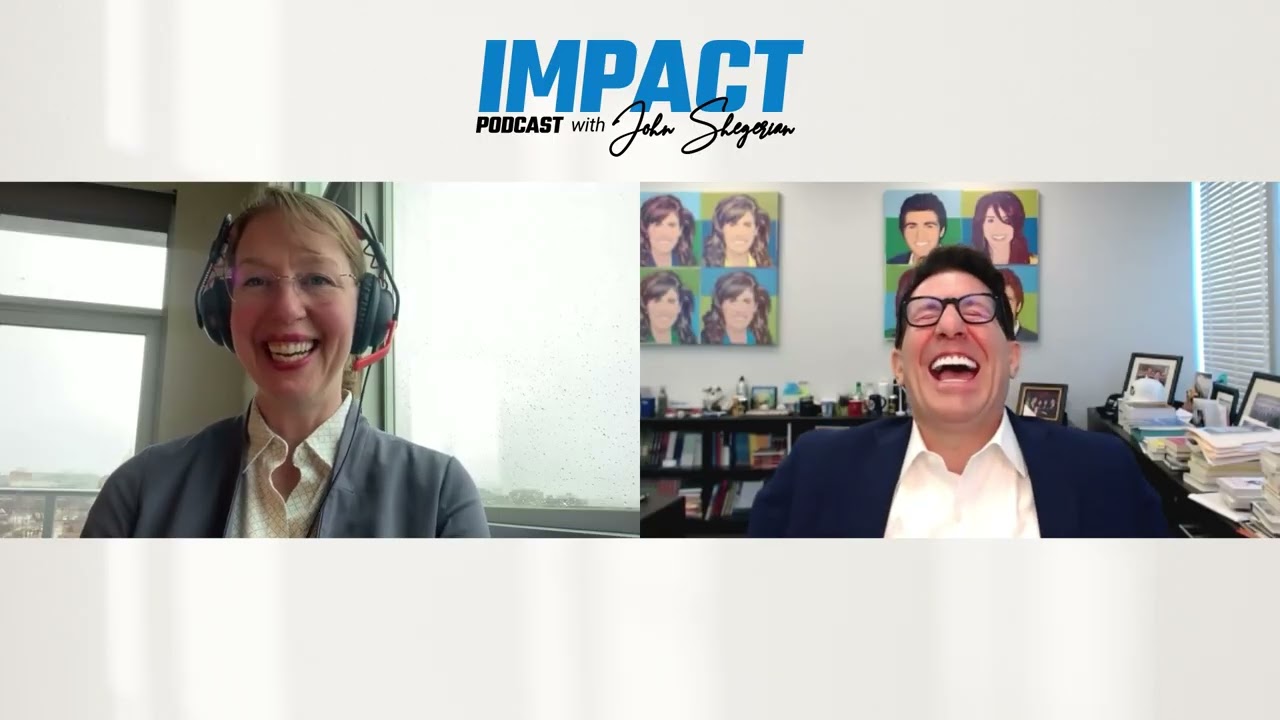
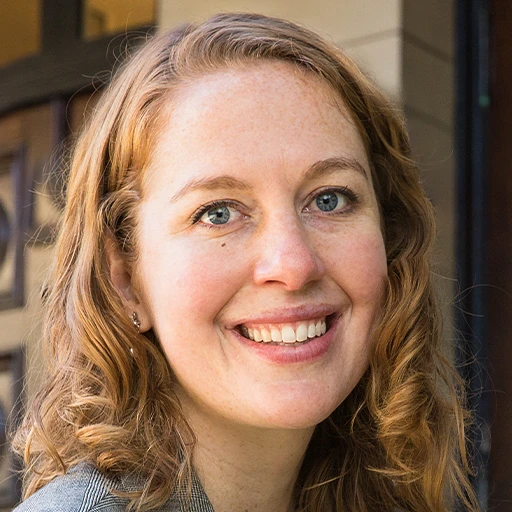
Dr. Julie Michelle Klinger is a geographer and an Associate Professor in the Nelson Institute for Environmental Studies at the University of Wisconsin, Madison. Dr. Klinger and her international, interdisciplinary research team have conducted extensive multilingual qualitative and quantitative fieldwork on four continents over the past two decades on three distinct yet interlinked initiatives: critical minerals supply chains, global space politics, and rural and Indigenous community resilience.
Klinger Lab link
https://klingerlab.com/open-letter-april-2026/
Book link
https://www.cornellpress.cornell.edu/book/9781501714610/rare-earth-frontiers/
NY Times Op-Ed link
https://www.nytimes.com/2026/02/06/opinion/china-us-rare-earths.html
John Shegerian: Do you have a suggestion for a Rockstar Impact Podcast guest? Go to impactpodcast.com and just click “be a guest” to recommend someone today. This edition of the Impact Podcast is brought to you by ERI. ERI has a mission to protect people, the planet, and your privacy, and is the largest fully integrated IT and electronics asset disposition provider and cybersecurity-focused hardware destruction company in the United States, and maybe even the world. For more information on how ERI can help your business properly dispose of outdated electronic hardware devices, please visit eridirect.com. This episode of the Impact Podcast is brought to you by Closed Loop Partners. Closed Loop Partners is a leading circular economy investor in the United States with an extensive network of Fortune 500 corporate investors, family offices, institutional investors, industry experts, and impact partners. Closed Loop’s platform spans the arc of capital from venture capital to private equity, bridging gaps and fostering synergies to scale the circular economy. To find Closed Loop Partners, please go to www.closedlooppartners.com.
John: Welcome to another edition of the Impact Podcast. I’m John Shegerian, and I’m so excited and honored to have with us today Dr. Julie Michelle Klinger. She’s the Associate Professor at the University of Wisconsin-Madison. Welcome, Dr. Klinger.
Dr. Julie Michelle Klinger: Happy to be here, John. Hi, everybody.
John: Yeah, and this is your first time on our show, and I’m so grateful that you’re here today. You are a geographer. You’re an Associate Professor in the Nelson Institute for Environmental Studies at the University of Wisconsin, but you have a much broader background than that. Dr. Klinger, where did you grow up, and how did you get on this fascinating and very important journey that you’re on?
Dr. Julie: Oh, I’m happy to share that story, especially as more and more people are coming to this wicked[?] problem of critical minerals, environmental dimensions, supply security, what have you. People are coming from a lot of different directions, and I’m no different, right? So I grew up on a farm in the Midwest, and I was awakened to the transnational trade dynamics really impacting people’s livelihoods, not through mining, but through, in the early 2000s, China and Brazil had some unprecedented historic talks in which China essentially said to Brazil, “Hey, China would like to buy every soybean that Brazil could produce.” And that combined with internal dynamics in Brazil to unleash this wave of deforestation, soy cultivation, expansion, all of this, and prices tanked. That affected my family, and so I was curious about that. And I had a little bit of an in to this issue and being attuned to Brazil because as a teenager, I had been a rotary exchange student to Brazil. So I lived there for a year, speak fluent Portuguese, and have cultural and personal connections to the place as well. So I was able to read the Brazilian news and compare to what was being said in Northern Illinois. And at the time, early 20s, the world’s wide open, very ambitious, cosmopolitan, I said, “Well, I think I should learn Chinese also, just to have better understand what’s going on. Clearly, this is important. Clearly, there’s lots of miscommunications, not just between China and Brazil at the time, but between our two countries, China and the US.” And so I found a way to move to China for a year and support myself. I worked as a middle school English teacher, learned Chinese. And when I came back to finish my undergrad, I connected with a geographer, Joshua Moldaven, who had lived and worked in rural China during the 1980s, documenting the de-collectivization process and the transition out of Maoism into a more liberal version of China and all of this. And I’d say once I found geography, I’ve stayed with it ever since. I moved back and forth between Brazil and China after college, freelancing, working as a research assistant, etcetera, doing some consulting work, mainly helping people on both sides communicate with each other around environment and development issues. And then I thought, “The bummer about being a consultant is that you answer somebody else’s questions, and what I really wanted to do was define the questions.” And so I thought, for someone who’s not from a PhD, heavily academic background, I thought, “Maybe that’s what a PhD is about.” And I went into academia at that point.
John: So when you were going back and forth between China and learned to speak both Chinese and Portuguese, that was when China and Brazil were part of what was then called the BRIC nations, right?
Dr. Julie: This was actually even… This was very early days. This was like 2003, 2004.
John: Wow.
Dr. Julie: Yeah.
John: Which part of China, were you living in back then?
Dr. Julie: So my very first year, when I was a provincial middle school English teacher, I lived in Chongqing in northeastern China, lived there for 11 months, about a year. And then I did a year of study at the Johns Hopkins University. And then my home base was in the southwest, in the eastern Himalayan foothills in Kunming for a little bit. And so for my dissertation research, which was on rare earth mining, processing, the global geography of rare earth elements, really asking why, given that rare earth elements are not rare, why are they mined in so few places, right? One of those key places being Bayan Obo in Inner Mongolia Autonomous Region in China. So a lot of my work focused there, right? Bayan Obo is located right in the north-central part of China, close to the China-Mongolia border.
John: So, like you said, these were early days. And I want to understand, so you grew up on a farm. Did your parents give you this extraordinary level of not only curiosity, but courage to be a young single woman going to Brazil and China? Even in 2026 takes a lot. Back in the early 2000s, that takes a lot, plus. Where did you get all that curiosity and courage from?
Dr. Julie: Well, I think that question would really make my parents laugh because I think I was a bit of a handful growing up. But I came of age post-Cold War cosmopolitanism was the way of the future, cosmopolitanism, the global spread of democracy, absolutely inevitable. Those are the things that really motivated me. And really, the Rotary Youth Exchange as a teenager helped me consolidate that as a core set of morals and commitments. And so I was always told to figure it out when I was growing up. And so when we take on these big global-scale problems, I do also think that it is up to us to figure it out, to develop the skill sets and the methodological toolkits that will help us answer the most pressing question of our age.
John: So you went to Sarah Lawrence undergrad, you then went to Johns Hopkins University, Nanjing University, and learned how to speak, study China studies, and then you got your PhD. As you just mentioned, you then went on the PhD journey to become a professor, and you got a PhD in geography from University of Berkeley. So you’re a bear and a badger.
Dr. Julie: It’s true. Lots of animals, actually.
John: So then how many years ago, after you got your PhD, did you start teaching at University of Wisconsin?
Dr. Julie: Okay, so I got my PhD in 2015. And true to those cosmopolitan values, my very first job after finishing my PhD was at the School of Global Studies at Boston University. And that was newly formed around a cosmopolitan mandate as well. And so I was really enthusiastic about contributing to that project. And Boston is just such an incredible city too, although the traffic there really reminds me of early 2000s China. If any listeners are in Boston, and you’ve been back and forth between the two places, you know what I mean.
John: I definitely know what you mean there. And then what did you do?
Dr. Julie: Yeah, I was there for about five years. And what I realized was that I was also becoming ready to supervise PhD students myself. Right. And so then I moved to University of Delaware to their Department of Geography. And I was there for about five years, Department of Geography and Spatial Sciences, and really worked hard to build the kind of research programs that harness the best of our discipline, I think, which is you have your qualitative muddy boots social science fieldwork side, and then you have your geospatial remote sensing satellite tech side, and everything in between. And so I recruited people with backgrounds not in the social sciences, but also in addition to recruiting people with backgrounds in the social sciences and the more human dimensions of environmental change and all of this, I was really happy to also recruit people who had been trained in geology and maybe even worked in mining engineering and were kind of ticked off with what they saw and wanted to understand better how things were happening. And I thought that was really a great match because there’s a lot of technical skills that they have that I do not. And so I’ve been able to- my approach really since the past five years has been to build up these multidisciplinary teams.
John: So while you were at Delaware, you had an aha moment to write this amazing book, Rare Earth Frontiers. Talk a little bit about where did you have that aha moment back in 16, 17, to publish this great book?
Dr. Julie: Oh, okay. So I published that book actually when I was at Boston.
John: Oh, really?
Dr. Julie: And that book, yeah. And so that book is an outcome of my PhD dissertation research, which unfolded over five years, between 2009 to late 2014, early 2015. And so that book, I did years of fieldwork, years of research in different parts of the world as part of my PhD program in order to gather the information, to talk to the people, to visit the archives, to collect the soil samples, to look at the maps, in order to be able to answer this seemingly deceptively simple question. They are not that rare. Why is the geography of their production so strange, right?
John: That’s so fascinating. I mean, and just like everything else and all superstars, most superstardom is not overnight. You publish this in 2017, and now in 2026, you’ve really truly become one of the rock stars of the industry. So how was it received when you published it, and why has it now become this unbelievably important and critical topic, comparatively speaking, nine years later?
Dr. Julie: Oh, my goodness. Well, that’s an interesting question. So I find myself now saying the same things that I’ve been saying for 15 years, more or less, but we’re in a very different historical and geopolitical and arguably environmental moment as well. And so whereas early on, I had to explain to people what rare earth elements are, that thinking about mining is important, that this technology that we use actually has a geographical dimension that connects us to people and places around the planet, I no longer have to start there. The conversation has shifted. The conversation, in my view, is much more sophisticated. And I think there is a much broader appreciation for the relationships that are embedded in our everyday technologies that connect us to faraway people, faraway places, faraway environmental change. And also those supply chains that transform a[?]rock into advanced technology, those cross all sorts of jurisdictions. They cross lots of different political and economic frameworks where people are treated more or less terribly, right? And so I think there is this kind of, there has always been in different places very real concern with this, but I think there is a much broader shared sense not only of responsibility but also of the promise and perils of this kind of global integration.
John: Right. So for our listeners and viewers who are not familiar, Dr. Klinger, can you talk a little bit about what exactly are rare earth elements and where are they found, and why are they so critical to the modern life that we are living through right now? Just start from the beginning, like what are rare earth elements?
Dr. Julie: So the term rare earth elements refers to 17 chemically similar elements. So if you can picture the periodic table, it’s the top bar of that line to the south, the island to the south of the periodic table. That’s the lanthanide series, elements number 57 to 71, plus scandium and yttrium as well. And each element is unique, but what makes this family collectively fascinating and really important to just about every kind of technology you can think of is that they have these fantastic magnetic, optical, or conductive properties. And so just to give you an example, I think a really familiar example is their really powerful magnetic capabilities. So neodymium and praseodymium, two of the rare earth elements, you combine those and you get a super powerful magnet. Now, at a big scale, that generates a magnetic resonance field, so you can do an MRI, right. It has really important medical applications. At a big scale as well, you can put those into a wind turbine or even a hydroelectric turbine, and they generate large volumes of energy, electricity. And then when you think about their optical properties, some are pink, some are blue, some are green. And so think about a laser, think about the lights on aircraft, think about decorative glass in your grandmother’s house, right? Rare earth elements are in all of these places.
John: Got it. And so it’s also been talked about, this Trump administration is focused on rare earth elements more than I’ve ever heard any other administration give voice to them. Why have rare earth elements become such a prominent national security issue and economic issue in terms of the health and safety of our economic condition here in the United States? But even now as the Iran war is underway for 33 days or so, as we record this episode, why is it also a national security issue? Where do they interplay with regards to both the economy and national security?
Dr. Julie: So that’s a really important question. I think the best way to start answering that is to set the baseline. The U.S. and China are the two most interdependent economies in the history of the world. And that’s not by accident, right? That’s decades of policy prescriptions from Washington, DC, and championed by major multilateral institutions, guiding China out of the Maoist period into the contemporary period. So basically from the 1980s onward, that entanglement between the U.S. and China’s economies was very much a core part of what we understand as economic globalization. And so what are the consequences of that? There are two consequences that help us understand our current moment and our current debates. One is with this kind of Washington, DC-driven economic globalization, especially in the late- beginning in the late1970s, early 1980s, it became a lot easier for companies to leave the West and encircle the globe looking for places with lower labor costs, which actually means fewer labor protections and fewer environmental regulations. And they found a happy home in China. A lot of companies did, right. The other part of that then is that as you had a lot of heavy industry, manufacturing, all kinds of factories, refineries, smelters leaving the West, especially the U.S., but the West more broadly, you had a couple of things happen. Communities, company towns, all of a sudden were bankrupt, right. And this impacted places across North America and arguably Western Europe as well. And then you also had a real ramping down of public and private sector investment in the kind of R and D that powers manufacturing, that pushes technology to the next level, because all that stuff had been outsourced. China, companies operating in China and exporting from China could do so much more cheaply than everywhere else. You had the rise then of big box stores, like Walmart, et cetera, that imported or re-imported these goods from China to the West, and those low prices for a while cushioned the declining middle class from inflation because goods were getting cheaper, even as inflation was increasing. Well, that could only hold for so long.
John: Right.
Dr. Julie: Right. So relations between the U.S. and China sour. All of a sudden that interdependence, which had been such an important part of economic security and distributing risk and all of that, all of a sudden that is a major vulnerability. And on top of that, the low cost offsetting the effects of inflation and declining wage rates in the United States also started to fall apart really intensely, especially during COVID.
John: Sure. Why are rare earths now, how did we end up in this position where if we were interdependent for all these years, the number one and number two economy, why did we fall behind as a country so badly on the rare earths issue? Because the way I read through your materials and this wonderful book, and I highly recommend this book to all our listeners and viewers who are interested in this topic, it’s really well done. That’s almost like China’s Strait of Hormuz, their monopoly on rare earth materials. And why did we fall so far behind? Is it just geography, or are there other extenuating issues that aren’t that easy for the eye to see?
Dr. Julie: Well, I think the main thing is rare earth elements aren’t rare. They are- we’re talking about 17 chemically similar elements, and 17 elements is a pretty good chunk of the periodic table. And so they’re found, there are well over a thousand identified reserves around the world. There are lots in the U.S., right? We’re talking just geological reserves, let alone if we think about the hundreds of thousands of landfill sites and waste sites and legacy industrial sites and airplane boneyards and shipbreaking yards and all of these places that have above-ground rare earth-bearing components that could be harvested, right?
John: 137 billion pounds of electronics come to their natural end of life every year in the world. That’s a lot of electronics too.
Dr. Julie: That’s a lot of electronics. That’s a lot of really useful elements that maybe we don’t need to dig new holes in the ground to get. Maybe we could actually be tackling our e-waste problem. Especially now with the supply security being a much more salient concern, it can take 10, 15, 20, 40 years to bring a new mining operation online. And that’s not simply because of regulations. That’s because every rare earth deposit is unique, and so it takes years of dedicated laboratory research to even figure out the right chemistry to separate stuff, right?
John: So it’s unlike drilling for oil, where you hit it or you do not hit it and the gusher comes out. Each mine is unique, you are saying.
Dr. Julie: Exactly. Each deposit is unique. And the thing that’s really different about, we will call all of these different waste types of waste above-ground sources. The thing that is different about those is that they are already with other electronics. Sure. But they are not present with hundreds of other metal and mineral materials, including maybe radioactive materials, which is a real problematic aspect of opening new rare earth mines. Radioactive materials tend to be present as well, right. But if you are talking about recovering rare earth elements from this- how much was it?
John: 137 billion pounds a year.
Dr. Julie: Yeah, if we’re talking about recovering earth elements from this 137 billion pounds a year of electronics, you are not digging into a deposit that also contains uranium and thorium, right?
John: Right.
Dr. Julie: So it is a different problem, but it is arguably less of a wicked problem than opening a new mine.
John: Right. And there are some companies that, when I got into my business, that was the holy grail, figuring out how to extract rare earth materials from old electronics without destroying the rest of the value of that electronic device. Now they have developed technologies such as re-element and cyclic materials that can do that. So the technologies, the innovation has happened just during your career. So that’s a really great opportunity in terms of urban mining. Talk a little bit about, you gave a great description of the economic insecurity that has come from our separation of the two economies and the problematic nature of it as it stands today. Hopefully it gets better. Talk a little bit about the national security issues and the pull in terms of our defense industry and our homeland security for the need for rare earth materials.
Dr. Julie: Yeah, I’m happy to address that. So the same fantastic magnetic and conductive and optical properties that make pretty glassware and MRI machines and personal technologies and all of this, those same properties are also really important for defense applications, right. So rare earth magnets are used in the navigation components for drones and smart bombs. They’re used in optical sensors, they’re used in lasers for precision-guided missiles. They’re used, some rare earth elements are mixed with glass to help create special alloys that can withstand high temperature and pressure. They’re also used in night vision goggles. They’re used in sonic weapons as well. And they’re also used to make metallic alloys that can withstand high temperature streams[?]. And so a lot of these, the weapons industry, believe it or not, is not that different from just about any other sector, right, where insofar as it’s characterized by a global supply chain, where components are manufactured in different places, and then parts are assembled here, and then that component is sent over to this factory over here, where it’s assembled into something else. And for years, decades, the overriding imperative was highest quality, lowest cost, right? And the highest quality, lowest cost, most reliable supplier for even weapons components was China. This was not unknown. The Department of Defense knew about this. Congress knew about this. The executive branch knew about this. The U.S. Trade Representative knew about this. And there was a level of confidence in the relation between the two countries, and also a level of commitment to a global free market economy that just made it almost, it made it nearly impossible, really, to legislate anything domestically that looks anything like, say, for example, the deal between the U.S. government and MP Materials in Mountain Pass[?]. It’s a long-term offtake agreement. There’s a price floor, right, so that they can invest in the best available techniques without having to compete with a lower cost good from China. And so we’re in a very different political moment. I mean, to be absolutely clear, from the beginning, communities that have lost their jobs, people who care about justice and equity across the supply chain, fair trade advocates, there have been critics of liberal economic globalization for decades. Right. We’re just in a political moment now where the executive, working with the different major departments, is taking unprecedented action, really without regard for the kind of free trade rules-based order that had been set up since the end of the Cold War.
John: Interesting. Do you, given that is the case, and I don’t want you and me to be political, but has that, is that a good turn of events for where we are in the desperate need for these rare earth magnets? Is this a good turn of events, in terms of having an executive that has taken that new turn and really gone all-in on promoting MP Materials, Cyclic Materials, re-Element? Is this, they have invested in these companies, both urban mining and also below-ground mining, so there seems to be a happy balance that they have struck in terms of the U.S. government’s investments. Is this the right approach, or is there some nuances there that I’m missing that you can bring to light?
Dr. Julie: Yeah, so I think this is a really important discussion because, look, we are finally having a discussion about industrial policy that I think politically and culturally across administrations, there has been almost like an allergy to for the past…
John: You’re right.
Dr. Julie: I mean, since the late 1990s. And so it is important that we talk about industrial policy and industrial planning. So for my part, I think that one of the really important kind of reconfigurations of economic policy is that governments really should have the discretion to support and subsidize industries that are important for national well-being, right. This is something that the WTO agreements made it really hard for member states to do, right. And this is one of the reasons why the WTO was so fiercely protested really since its inception around the world, because it basically hobbled the ability of governments to look after their domestic industries. And instead they had to open themselves up entirely to global free market competition, what have you. And so I will just say, I say that just to say broadly, we do very much need to be having a conversation around industrial policy with respect to rare earths in particular. I mean, it is kind of funny, shortly after the book came out, 2017, 2018, 2019, I spent some time in DC and was talking with folks about the possibility of a similar arrangement, but to build up industrial capacity, to build renewable energy technology, right. And so it is like, “Hey, there is this great facility.” At that point, it was just a few years into having been revived, right, in Mountain Pass, California. They had a hard time getting adequate support domestically and from the West. Firms from China provided much-needed startup capital for them to get started in the early stages, right. That’s just how off the radar it was domestically. But I was also told, “Price floor, offtake agreement, equity stake, that sounds like a planned economy. We don’t do that here.”
John: Right. It’s very different than the free market. Very different.
Dr. Julie: Yeah, precisely. And so what I will say, I think the current arrangement and the investments, they’re a step in the right direction, right? But my own personal values are really that we need to be moving away from war. We need to be moving away from conflict. And my concern around these supply chains that are being rebuilt is that they have a very heavy weapons industry focus, right? The problem is like, when you have a hammer, everything looks like a nail. When you’ve got a lot of weapons, you kind of want to use them, right? So I’m aware that we are in a really intense international geopolitical situation. But my concern is that the supply chains that are built up to feed the weapons industry are not actually very easily, without significant support and retooling, be converted into supply chains that, say, produce medical technology, energy generation technologies, information technologies, right? So the civilian sector of the U.S. economy has really been taken it in the chin for a long time. And these investments with their overwhelming weapons focus don’t entirely get us to where we need to be, right. However, this is where I draw hope, right? You can- we hear a lot of talk about dual use, dual-use technologies and all of this. So my hope is that dual use goes both ways, that perhaps now, under a much more bellicose political moment, we are rebuilding these industrial supply chains in the U.S. and across the global North and West. My hope is that when we get to more peaceful times, we will then with intention, with strategy, with foresight, with a primary concern for the well-being of our citizens and citizens in allied countries and across the world, retool those weapons supply chains to meet longstanding civilian needs in healthcare and education and transportation and information technology and so on.
John: That makes so much sense. For our listeners and viewers who’ve just joined us today, we have Dr. Julie Michelle Klinger with us. She’s an associate professor at the Nelson Institute for Environmental Studies at the University of Wisconsin. And she’s one of the premier rare earth magnet specialists on the entire planet. This is the book that she wrote, and she has come off some very high-profile appearances recently on 60 Minutes and also in The New York Times, which we will get to in a little bit. Dr. Klinger, talk a little bit about the dominance of China. When you look at, let’s just say, a map of the world, and if we were to make it sort of a heat map as to who has more rare earths underneath their ground, how did China come to dominate the supply chain so deeply? Is it because they have the most deposits underneath their ground? Did they develop the best technology to recover it? Were they first to recover it? Are other countries going to come online in the future, such as Greenland and Vietnam, to help balance this out? How did they get their dominance, and is that dominance sort of a foregone conclusion for them to keep in the next hundred years or so?
Dr. Julie: Oh yeah, that’s an interesting question. So if you look at the U.S. Geological Survey data, China has roughly one third of the world’s proven reserves of rare earth elements. Now, proven reserves, this is a little bit of geology speak, right? But proven reserves means that you have very carefully surveyed the site so that you can do much more than broad estimations, right. And those reserves under current market value- sorry. And those reserves under current market valuation are potentially economically viable, right? So to have a proven reserve, you have got to do a lot of research, right? Now, rare earth elements are relatively ubiquitous in the Earth’s crust. So that means a couple of things. Bigger countries with larger territories will have more rare earth elements. There’s been really extensive geological research in China, Canada, the United States, Brazil, Australia. And that’s why then, not coincidentally, these are the top five, right, rare earth-bearing places with proven rare earth reserves, right? So it’s more of an artifact of research and public and private investment in that geological research than it is a sort of law of geology. Now you mentioned Greenland and Vietnam, and this is where it gets really wicked. All right. So although rare earth elements are crucial for a whole host of applications, they are used in very small amounts, right? So global rare earth consumption is still measured in hundreds of thousands of tons per year, and that’s actually pretty small, because when you consider a bulk commodity like iron, it’s millions of tons, right? It’s an order of magnitude greater. And the other thing is that people hear the phrase rare earth elements, and I think the same part of our brains lights up as when we hear gold or platinum, things like this. Rare earths are at a very different price point. They’re much cheaper. And so what that means then, rare earth elements are not rare, they’re relatively ubiquitous in the Earth’s crust, and they are actually pretty cheap. They are not valued highly by the market. This means that it is a really tough business to actually succeed in. And so what that translates into at the individual industrial mining site level is that upwards of 50%, in some cases 70%, 80% of the rare earth elements that are dug out of the ground, preliminarily processed and pulverized, or what have you, they just get tossed in the waste heap. They don’t even move through the supply chain, right? And that is simple economic supply and demand, right? If industrial operations were to begin to operate at fuller recovery and efficiency, it would certainly solve our rare earth supply concerns, but it would also tank the price, right? So there is a really powerful disincentive to actually operating at fuller recovery and efficiency. In fact, the guys out of Mountain Pass are fond of pointing to one of their waste heaps and saying, “That’s the second largest deposit of rare earth elements in North America.” And I think they’re probably. The market really is tough for rare earth elements. It is peculiar, right. It’s not like gold or platinum in that things are very valuable, and it is not like iron or steel in that they are used in extremely small amounts, kind of like how you might use baking soda when you are making cookies, just a little bit does the magic.
John: Right. That’s so interesting. When I opened your book to start with, it was about a month ago when I knew you were going to come on the show, and I started reading your book. You dedicated it. It was very kind and very balanced in terms of- your dedication was to the people and the geography, both, that you came to know and love in Brazil and in China. So talk about the benefits and the burdens of rare earth mining. Obviously, you said, we know there’s a huge civilian economy that desperately needs rare earth magnets and minerals and a defense industry, and you’ve made that case. So we know where the benefits go, potentially. The burdens, though, you’re very balanced, and you’ve given voice to the tragic side of mining and the dangerous side of mining. Can you share a little bit more about who bears the cost and why it’s very important to keep that in the front of our minds too as we move forward here?
Dr. Julie: Thank you. Thanks for asking that question. It’s one of my responsibilities as a scientist and a scholar to look at as many facets of the issue as possible, including the ones that are uncomfortable, including the ones that are honestly anguishing. And that includes looking at the public health burden that has been borne by communities in where I research, especially in the rare earth capital of the world, in Bayan Obo and Baotou in China. So this was a place that was built up shortly after the Communist Revolution in China, 1949, the People’s Republic is founded. Mao Zedong traveled to Russia, met with Stalin, and they had lots of consequential discussions. And one of them was how they would build up an industrial foundation between, I think it translates as two brotherly states, right? And the iron deposits at Bayan Obo with the rare earth elements and the radioactive materials that had actually been identified in the early 1910s and then further verified in the 1930s, crucially through geological expeditions supported by Germany. Nazi Germany was sending geologists everywhere to find raw material to support their war effort, right. So that geological deposit had already been characterized. And so Mao and Stalin decided together that Baotou would become a priority industrial foundation place, right. And so just to paint a picture for you, 1949, 1950, it’s a tiny trading town. It’s not an industrial hub, right? There are Mongolian nomadic pastoralists, these are their ancestral lands. But within about a decade, they opened mines, they stimulated massive migration, they built research academies and all of this around the imperative to increase production and advanced science and technology development as quickly as possible. And for those who are familiar with that era of history, Mao and Stalin kind of broke up, they had a little bit of a fight, right. But not before Soviet scientists had transferred a lot of knowledge around metallurgy, around mining engineering, around weapons development, nuclear weapons chemistry, etcetera. And so all of that, the Chinese government continued to really foster and cultivate the growth of this industry. And so ultimately, when China liberalized and opened the door to foreign direct investment, there was this really nice, welcoming, sophisticated industrial research technology landscape to welcome Western firms into. However, because the priority was industrial development, weapons testing, hydrometallurgy, mining and smelting, human health and environmental protection definitely were sacrificed for this. Once more outsiders started traveling to China in the 1980s and 1990s, there was more of a discussion in what we would think of as environmentalist terms, although people everywhere, regardless of their vocabulary, get pretty mad when their water is poisoned, right, whether or not they frame it in terms of environmentalism. And so the Chinese government then adopted this stamp[?], clean up later. The UK had their Industrial Revolution, the sky was so polluted it blocked out the sun and children developed rickets. But look, now they have cleaned up, they do not have that anymore, right. And so that is the development doctrine that very much dictated quality of life in this place. And so I could tell when I was there who was a local. I could tell, not always, but often, people who had lived their lives there, who had been born there, who worked in the heavy industry. They were often stunted, they had bone deformities, skin lesions. It was really quite dramatic. And there’s a whole, and I learned a lot from a whole host of public health researchers in China who had been studying, for example, the cognitive development impacts of children born in this place, right. So the human cost of building China, building the rare earth capital of the world, the human cost is really difficult to actually, well, you can’t exaggerate it, I guess. That said, rare earth mining does not have to be that way.
John: Right. Where are we today? How much have we evolved? And I don’t, and again, mining itself is a hard, as you pointed out, is a very difficult industry. And with more environmental geological oversight than ever before, have there been the improvements that we have needed? So things will have gotten better when it comes to rare mining as a whole, but rare earth mining and the burden and the effects that are real that it creates on the communities that mines are put in around the world, not only in China, but even obviously in other countries as well.
Dr. Julie: Yeah, so I think there are a couple of important things to keep in mind. One, rare earth mining, like any other form of mining, is hazardous and dirty, right, as you stated. The particularity of rare earth mining and processing, though, there are two key things. One is that just about every rare earth deposit does contain some even trace amount of radioactive materials, right. And so there are exposure concerns over the long term, especially if that waste is not managed carefully. And so because of the particularities around rare earth deposits, right, they contain radioactive materials, many or most of them do, and the energy and chemical intensity of separations and refining, those are two very intense hazards that need to be very carefully managed in order to keep people, workers and environments safe. The good news is that best available techniques do exist, right? But it is up to our regulatory systems to not only mandate that the best practices be used, but also to support and incentivize firms who want to do the right thing.
John: Got it. So we are getting better. We are not there yet, but we are getting better at protecting the people who historically have been paying the price for mining rare earth materials.
Dr. Julie: I think so. Let’s see. I think so. And it is also important to note that China has shifted from the development acceleration phase to the cleanup phase. I’d say we are maybe about 12 years into China’s, it is called an ecological, actually maybe 15 years, 15 years into what is called an ecological civilization campaign. And so the idea is that it is time to clean up. China is prosperous. China is wealthy. China is globally powerful. And one of the things that China has done in recent years is they have forced the closure of a lot of smaller-scale mining operations. They have also really scaled down primary production domestically and have shifted more to that crucial midstream of the supply chain, the value-added processing, the advanced technology, and they’ve been pouring R and D into that while, through bilateral deals, particularly with Belt and Road partner states, providing a kind of off-ramp or exit ramp out of China to neighboring or Belt and Road partner states of Chinese mining and primary separations and processing firms. So that effectively also takes a page from the Western economic playbook, right? I mean, the West exported its industry to China 30, 40 years ago. China is now exporting its industry to other parts of the world. So the problem is moving elsewhere. It’s not necessarily being solved. But today, in contrast to 40, 50, 60 years ago, today we have the best available techniques to protect people, to protect water, to protect agricultural soil, right, to minimize the destruction of rare earth mining and processing. The key question is whether those best available techniques and protections are actually implemented and enforced on the daily, because that’s the scale at which it matters.
John: On a macro basis, I’ve been going to China for 33 years on business, and I’ve been massively impressed on a macro basis on how much they’ve cleaned up all the cities that I’ve gotten to visit over the years and continue to do so. So from a mining perspective, it’s great to hear what you’re saying. The progress is real, and it’s happening. Is it just being implemented enough to make the difference that we need to make so that people don’t pay the price anymore that do the mining?
Dr. Julie: Right, absolutely. And honestly, I think this is where we have a shared concern. I do hope that as the U.S. rebuilds its supply chain and domestic capacity, both domestically and with close allies, and I do hope that as relations with China improve in the future, that we’ll be able actually to connect on a scientific level, right, because there is a lot of expertise in China around dealing with these problems, because they are the ones who have had to deal with them.
John: Speaking of [inaudible], you’ve become a rock star in the industry, and let’s not, like I said, the New York Times article, which I still want to get to, in your recent appearance on 60 Minutes, are you then becoming sort of a focal point of this critical conversation between other academics and professionals and experts in this field in China and other parts of the world? Are you now the hub of the United States and one of the key spokespeople on this issue?
Dr. Julie: That’s a really interesting question. So, mainly my focus is people in the West who are trying to wrap their heads around this rare earth conundrum. Unfortunately, I don’t have a lot of close research contacts in China anymore. Part of that has to do with domestic political changes in China and some choices that I made in my book[?]. Again, it’s that scholarly intellectual responsibility, right? And that comes with a personal and professional cost.
John: That’s right.
Dr. Julie: But I think that it’s very important to help people understand, right? Rare earths are very particular, and a lot of people from many different backgrounds are trying to understand them. And so the bulk of my work, in addition to teaching, in addition to writing, in addition to supervising grad students and writing grant[?] proposals and all of that, is really talking with journalists, policymakers, curious members of the public who want to better understand not just rare earths, which are a fascinating world unto themselves, but also to try and do something constructive around this longstanding supply chain problem. It’s been problematic in so many different ways, and there’s so many different areas that really need improvement. And so I’m happy to help people think. I’m happy to be a co-thinker as we work on figuring this out together.
John: That’s awesome. You know, it was well reported over the years, how cobalt is a conflict material that comes out of the Congo and needed by manufacturers and OEMs around the world. And we spoke earlier about Greenland and Vietnam and the very fine balance that you pointed out between overabundance of rare earths and pricing and making it difficult and making the opportunity ripe for people who want to mine or recycle these rare earths and get enough to the marketplace to supply our needs. Talk a little bit about conflict dynamics and how they intersect with critical minerals in countries such as Ukraine, Myanmar, and Venezuela. You know, just like we had the issues from the cobalt and from the Congo, how is that interrelationship and that dynamic working out today with those countries?
Dr. Julie: Yeah, so this is really an intriguing geopolitical situation to be in, right. So let’s just say hypothetically, Ukraine, Venezuela, Greenland, they all have fantastic rare earth deposits, hypothetically. And those are all brought into production in the next decade. That would absolutely tank domestic efforts in the U.S. to revive our supply chain, right? Because it would increase- the global market is already so punishing that existing industrial operations operate in massive levels of inefficiency just to keep the full abundance of rare earth elements from actually entering the supply chain. That’s not nefarious, it’s simple business sense. Supply and demand or what have you. What I’ve seen over the years is that rare earths are often more of a pretext for conflict or for territorial claims, arguably even neo-imperialist activities like Russia and Ukraine, et cetera. And it doesn’t really bear correspondence to the actual everyday reality, the economics of the rare earth sector, right. So in terms of rare earths featuring in conflict, they do in the sense that they’re often invoked to justify unilateral military action. They’re held up as either an asset or a treasure to be captured or claimed. But it’s kind of like the geopolitical equivalent of hungry hippos. People are trying to lock down territories that have these fabled deposits because it might be valuable someday in the future. If scarcity were really the issue, which arguably it’s not, we would just recycle. We would just reprocess our existing and growing waste problems to capture not only rare earth elements, but many other designated critical minerals and materials from them. Because even under the best case scenario, it takes at least a decade to go from a mountain covered with trees, running water, deer, et cetera, to a mining operation.
John: Right. 10 years is the minimum, the floor.
Dr. Julie: Absolute minimum. Correct. Because again, every deposit is unique. And so you have to figure out that secret recipe for separating one material from the other for each deposit. And so again, if we really want to be growing the supply chain, we should be working with existing industrial producers to find a way for them to pull the material that’s already been dug up, but has been tossed aside in their waste heap.
John: So your approach is not to say no to the mines, or as you say, and I’ve read before, we can’t mine- baby[?] mine our way out of the rare earth problem and rare earth security issue. But we have to find a balanced approach with responsible mining, using the best technology available to them to protect their workers, with a balanced approach of recycling the industrial waste, mining waste, and old electronics that have come online in the world too. And find that right balance is the right approach. Is this pretty much how you’re approaching the topic as a state of the art[?] thinking today?
Dr. Julie: I think so. I mean, my sense is that the large-scale industrial producers really do want to do the right thing. The good news there is that the technology exists. The recyclers, they want to do the right thing. The problem there is that the logistical support doesn’t exist, but a logistical challenge is totally different than a technological challenge, right? We can figure out logistics. We figured out how to recycle paper and things like that. We can figure out how to recycle other things. These are all solvable problems. So earlier you were asking about my career and how I moved around. I moved here to UW Madison to the Nelson Institute for Environmental Studies precisely to build a critical minerals working group focused on above ground sources. Because not only are you achieving supply chain security if we figure out how to solve the logistical puzzle around recovering critical materials from waste, but also we’re engaging in longstanding needs for cleanup, right? A waste dump is a problem, and it is a problem that just exists until you make it not a waste dump anymore.
John: Right. You’re exactly right. So how is that working… How is that- what you wanted to create at the University of Wisconsin, Madison? How is that working out in terms of giving air and giving light to these important topics? And where is that spreading to?
Dr. Julie: So my current task right now is identifying all the different types of expertise, technical expertise, across the university and the broader innovation ecosystem that can help us achieve this paradigm shift, right? And a lot of it involves working with people who have spent their careers thinking about membranes and filtrations, but have never done so in relation to the question of rare earth elements, or people who are concerned with declining crop yields or contamination of agricultural land, bearing in mind that those contaminants are many metals and materials that are now considered critical and are being mined at different parts of the world, but have never thought about soil remediation in relation to critical mineral supply security. And so I’m just on a really enthusiastic fact-finding tour, honestly, to find the people with the expertise that we can bring under this umbrella of critical mineral supply security that also moves away from needing to open new mining operations.
John: Dr. Klinger, you wrote a fascinating and important op-ed piece in the New York Times that was published on February 6th called “Hiding in Plain Sight.” Can you give a little overview of that article and why that was so important and why it was so well received? As I shared with you before we started recording this episode, I referenced it in my comments in Washington, D.C. recently when I was in front of government officials and policymakers, and literally when I sat down with them in breakout sessions post my remarks, that was the article they were so fascinated by and wanted to, or many of them by the time we sat down had already consumed it because I referenced it from the stage and really appreciate it. Tell me what you wanted to convey in that “Hiding in Plain Sight” and how it’s been since that piece was published?
Dr. Julie: Oh, thank you. It was such an honor to have the opportunity to write that piece for the New York Times, given its broad and diverse readership. And I think it’s been part of really turning rare earth elements into a kitchen table issue, it’s something that people think about and talk about. But the message that I wanted to bring is not, now we have another thing to worry about in addition to everything else, which is rare earth elements, but actually the solution is right here staring us in the face. But the problem is that solution looks a lot like industrial waste, pollution from mining operations, e-waste, contaminated agricultural land, right? But if we look at actually what those contaminants are, it contains many designated critical minerals, metals, and materials, including rare earth elements, right? And so we can actually, I think, have it all. That’s the message I want to convey. And what do I mean by we can have it all? I mean that we can have our critical mineral supply security and we can have our environmental protection and we can have our environmental remediation. Environmental protection is about preserving what remains. Remediation is about restoring contaminated urban and agricultural landscapes so that they become more healthy and generative, safer places for our kids to grow up to.
John: More circular.
Dr. Julie: Absolutely.
John: I mean, according to the UN, only 22% of all electronics that come to their end of life out of that 137 billion pounds annually that we talked about earlier are being responsibly recycled. That leaves a delta of opportunity that’s just massive in terms of…
Dr. Julie: Exactly.
John: I mean just a massive opportunity. You also just recently, I was sharing with you that I was in Tokyo on business and one of my friends from the recycling industry forwarded me a clip of you recently on 60 Minutes. Talk about how that came to be and what the response has been since you appeared on the unbelievably iconic and important show called 60 Minutes.
Dr. Julie: Well, that was an extraordinary opportunity as well, and that story was really about the rise and fall and revival of the MP materials at Mountain Pass mining facility as well as their magnet production facility. And it’s about repatriating production in a big way. And they did a good job of tracking me down to provide some context, background, and information on rare earth elements. Now, the segment, I think they maybe used two or three, or maybe even four minutes of a four and a half hour interview. They were curious. They wanted to know all of the intricacies. They wanted to know about the history, the China piece, the chemistry, the potential for recycling, when were they first discovered, where were they first discovered. So I was happy to share all of that with them, but it didn’t quite make it into the 60 Minutes cut.
John: You made it in the cut. Even four and a half minutes is more airtime than most people ever get, so good for you. Talk a little bit about AI. How is AI affecting your work, and how is it affecting the work of both responsible recycling of these materials and also the responsible mining of these materials?
Dr. Julie: Yeah, I approach AI from a couple of different standpoints. One is its increasing role in data analysis and generation. AI is being used to fill gaps in geological data that is a little dicey. If anyone has interacted with one of these AI interfaces and experienced an AI hallucination, you can just imagine what the stakes are if it hallucinates or smooths over geological data, right? So I’m engaged with it from that standpoint. The other standpoint with which I’m engaged, is the actual physical infrastructure of AI, right? So this is something that we’re noticing a lot here in Wisconsin. Small towns are being approached by different data center companies or what have you, and we haven’t actually figured out a good baseline for integrating the AI stack into the landscape for addressing community and environmental concerns. And then also, what is actually the end of life? What is the recycling ecosystem that will be ready to take in, metabolize, and transform these stacks once they become obsolete or reach their end of life? That ecosystem is not yet there, right? But with the massive buildout of AI data infrastructure, that also is creating- another way to think about it, that that’s creating a tremendous above-ground source of rare earths and other critical minerals. You don’t have to dig new holes in the ground to get it. You just have to set up in the right place at the right time an adequate recycling facility to process it. That’s a logistical challenge, not a geological challenge. It doesn’t involve needing[?] a new mine. So in a way, it’s also creating or intensifying this above-ground abundance that I’d like to call everyone’s attention to.
John: We talked a little bit offline about this fascinating project you put together, and I want to give a link to it in our show notes so our listeners and viewers can access it and potentially contribute to it. Can you share a little bit about what that project is, why it’s so important, and then let’s give the link that we can put in the show notes for our listeners and viewers?
Dr. Julie: All right. Yeah, I’m happy to do that. Thanks for asking about that. So in the context of the global transition to renewable energy, which much of the rest of the world remains very much invested in, right? So in that context, there remains this really tricky question about where do actually the minerals and metals and raw materials come from to build the wind turbines, the solar panels, the EVs, the transmission infrastructure, all of that, right? And so my team and I, we’ve been contributing to multilateral discussions as well as treaty development around this material question. So there’s currently under discussion in a lot of different multilateral forums this real need for there to be a global data repository. Where are the deposits, the geological deposits of what they’re calling energy transition minerals, which is a set of what are called critical[?]- which includes rare earth elements and all of this. Our intervention is, well, actually most of those geological deposits are under biodiversity hotspots, they’re under indigenous lands, or they’re under agricultural and agrarian lands, and they’re dwindling and the ore grade is declining, right? And so why don’t we instead, maybe let’s not, we’re not saying keep the geological deposits out of this data repository, but let’s de-emphasize them and let’s instead identify the above-ground deposits, right, which your waste sites, all of this. And let’s make that the primary source of building the green economy, because would not that actually be fantastic to build a green economy by cleaning up, instead of this kind of sacrifice trade-offs, right? To build a green economy, we have to get dirty first. It takes some mining, et cetera. So we have an open letter put together, and it is on our website, Klinger Lab, and we are inviting signatories, all walks of life. If you agree with the principles, if you want to help out, if you have ideas to contribute, if you click on the signature form, there are lots of options in there. How you want to sign, which geography you do or do not want to be visible in, and if you have ideas to contribute or want to follow up, you can let us know, right?
John: And that’s KlingerLab.com or .org?
Dr. Julie: .com.
John: .com. KlingerLab.com. We’ll put it in the show notes for us so our listeners and viewers can easily access it. Dr. Klinger, no one has- the world changes faster than ever. Moore’s law has become obsolete. But if I was to ask you to take out a crystal ball, and I know it’s much harder today than it’s ever been in our lifetimes, what does your crystal ball say about the next three to five years? Are you hopeful about the direction we’re going? And how can we all do our part to help impact the great and important work that you’re doing to make a more circular and better world for all of us?
Dr. Julie: Oh, thank you so much for that question. It’s one that I get a lump in my throat actually thinking about it, because I’m deeply aware of the conflict, the anguish, the deprivation that seems to be getting worse instead of better globally, and in many instances and contexts domestically as well. But I’ll tell you what my hope is. I hope, and my hope I think is based on evidence and experience, most people would prefer to have the basic comforts and securities of everyday life without having to make that compromise, like, oh, if you want these conveniences, then we have to destroy these ecosystems or laborers have to live shorter lives with terrible pay or what have you. I think most people would agree that that’s neither desirable or arguably even necessary, right? If there’s anything that the current administration has done, they’ve shown us that if you decide to do something, you can actually just do it, right? And so my hope is that when it comes to environmental and occupational health and safety, when it comes to peace, and all of those wonderful, important values, that we’ll exercise courage and decisive action as well.
John: I hope you’re right. And, Dr. Klinger, I hope you continue your great work. I want to, first of all, thank you for spending over an hour with us today in this interview and coming on the Impact Podcast. I also want to thank you for this beautiful book here for our listeners and viewers. I bought this on Amazon.com. I’m sure you could buy it on Amazon.com, other great websites, and other great bookstores. You can find this very important book on this more and more important topic. Dr. Klinger, I just want to say thank you also for writing the New York Times piece and what you’re doing at Klinger Lab. We’ll have it in our show notes for our listeners and viewers to find that. Most important, from what I’m thanking you for, is thank you for also all your great and important work over a career and lifetime. And thank God you’re so young so you can continue to do this work. And thank you for making the world a better place.
Dr. Julie: Thank you, John. And thanks to all your listeners. Together we can do this.
John: This edition of the Impact Podcast is brought to you by Engage. Engage is a digital booking platform revolutionizing the talent booking industry. With thousands of athletes, celebrities, entrepreneurs, and business leaders, Engage is the go-to spot for booking talent for speeches, custom experiences, live streams, and much more. For more information on Engage or to book talent today, visit LetsEngage.com. This edition of the Impact Podcast is brought to you by ERI. ERI has a mission to protect people, the planet, and your privacy and is the largest fully integrated IT and electronics asset disposition provider and cybersecurity-focused hardware destruction company in the United States, and maybe even the world. For more information on how ERI can help your business properly dispose of outdated electronic hardware devices, please visit eridirect.com.
 Spotify
 Apple Podcasts
 Amazon Music
 iHeartRadio
 YouTube
 YouTube Music
 Audible
 Pandora