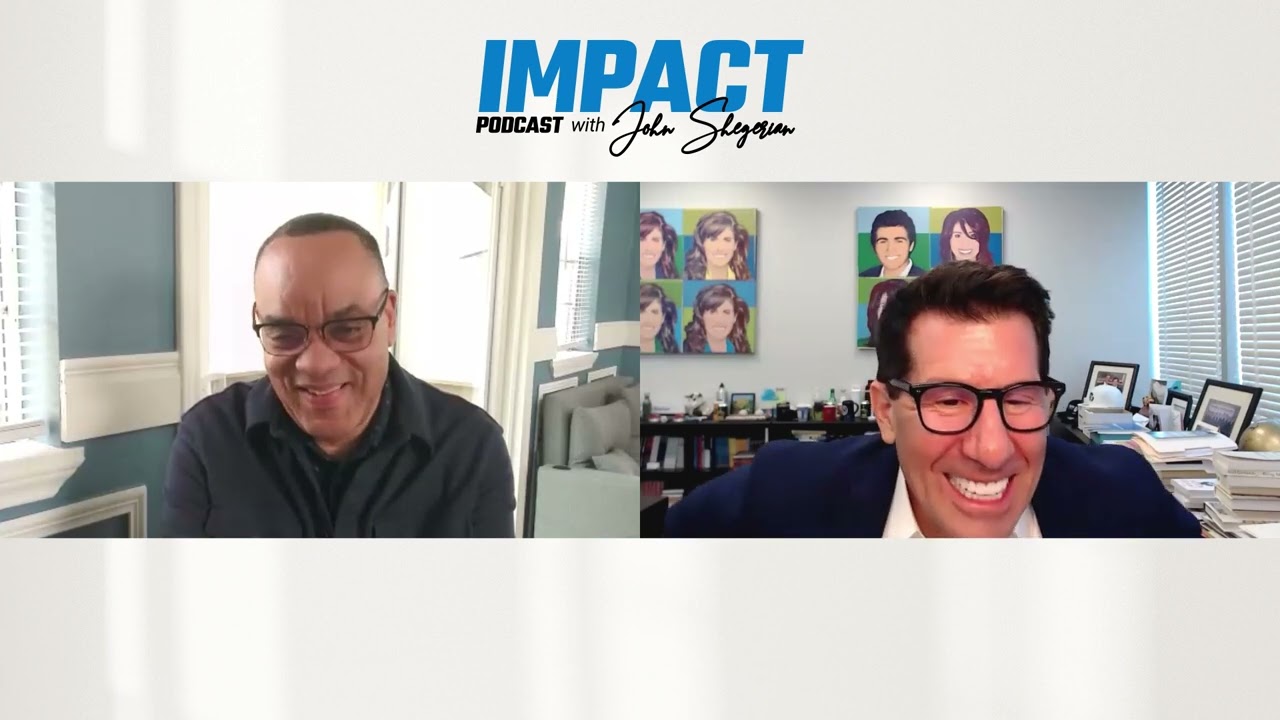
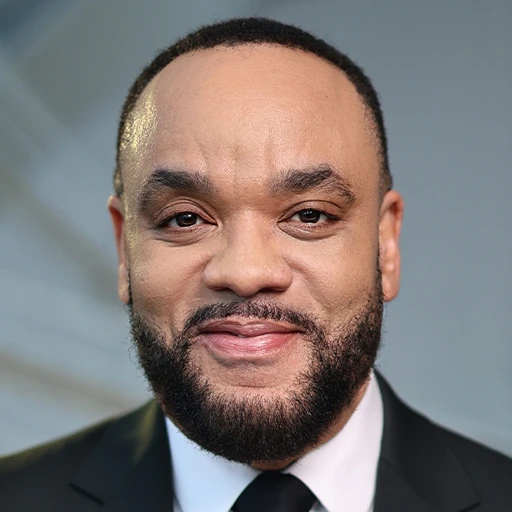
Brian Tippens is Senior Vice President and Chief Social Impact & Inclusion Officer at Cisco. In this role, Brian is responsible for advancing Cisco’s social impact across communities around the world, creating tangible business value, and fueling Cisco’s purpose to power an inclusive future for all.
As head of the Social Impact & Inclusion Organization, Brian oversees the Cisco functions taking on the most critical challenges facing our planet, society, and vulnerable communities. His organization includes the Cisco Foundation, Crisis Response, Economic Empowerment, Employee Community Impact, Accessibility, Inclusion, and Community Enablement. The Social Impact & Inclusion Organization brings together the unique strengths of Cisco’s people, technology, innovation, and ecosystem to address systemic causes of inequity, break down barriers, and create lasting generational change.
John Shegerian: Hit the latest Impact Podcast right into your inbox each week. Subscribe by entering your email address at Impactpodcast.com to make sure you never miss an interview. This edition of the Impact Podcast is brought to you by ERI. ERI has a mission to protect people, the planet, and your privacy, and is the largest fully integrated IT and electronics asset disposition provider and cybersecurity-focused hardware destruction company in the United States and maybe even the world. For more information on how ERI can help your business properly dispose of outdated electronic hardware devices, please visit eridirect.com. This episode of the Impact Podcast is brought to you by Closed Loop Partners. Closed Loop Partners is a leading circular economy investor in the United States with an extensive network of Fortune 500 corporate investors, family offices, institutional investors, industry experts, and impact partners. Closed Loop’s platform spans the arc of capital from venture capital to private equity, bridging gaps and fostering synergies to scale the circular economy. To find Closed Loop Partners, please go to www.closedlooppartners.com.
John: Welcome to another edition of the Impact Podcast. I’m John Shigeri, and I’m so honored to have with us today Brian Tippins. He’s the Senior Vice President and Chief Social Impact and Inclusion Officer at Cisco. Welcome, Brian, to the Impact Podcast.
Brian Tippens: Thank you for the kind welcome. I’m happy to be here. I’m looking forward to chatting with you today.
John: Oh, me too, Brian. You know, Cisco’s been on the show before, and we talked more about sustainability. Today, we’re going to be talking more about Impact. But before we get talking about all the important things you and your colleagues are doing in Impact at Cisco, I’d love you to share a little bit about the Brian Tippins story. Where’d you grow up, and how’d you get on this really important journey that you’re on?
Brian: I appreciate that opportunity, John. I think I grew up not far from where you are today, right? And then I grew up in Northern California, specifically Oakland, California, in the 70s, 80s, 90s, in a way that I was always committed to giving back in my community. I grew up in West Oakland, California, which at the time was very working class, you know, some might say one of the underdeveloped areas of town, but to parents who worked very hard and had an appreciation for education and made sacrifices to send us to the parochial Catholic schools and the best college preparatory schools. And so I always grew up with this appreciation for giving back to community. And my late father, Alan Tippins, was back in those days a programmer, computer programmer, even in the 1970s and 80s. Back in those days, we didn’t call coders or developers; they were programmers, like ones and zeros, assembly language, COBOL, all that good stuff. And for that reason, we always had computers in the home, even as I was a small child in the 70s, 8, 9, 10 years old, we always had computers in the home, well before any of my friends and colleagues had their IBM PC or Apple PCs in the home. And so I’ve always grown up with this appreciation for technology, being able to level playing field, technology, being able to uplift communities and change lives. And that was always part of my upbringing. I took that with me as I went through high school, through college, and then directly on into law school. Even before I finished undergrad, I had enrolled in and was getting started in law school with the intent of that time, not of becoming a lawyer or hanging a shingle, being a more distinguished IT professional, having more letters after my name, being able to magnify my Impact. So I started out my career in those legal roles, but my roles shifted very early on to purpose-driven roles for a number of reasons. I realized that work was more core to what satisfied me and built my cup again, giving back to communities. And it’s been an amazing journey that started really with that root in wanting to give back, wanting to make an impact in communities that still stays with me today. I’ll say I’m still naive enough to think I can change the world. I’m still driven by this desire to do well by doing good, right? And it really comes back, comes from those early roots.
John: I love it. I want to understand. So mom and dad poured themselves into you, and were they the ones who said, “We’re going to invest in you, and you’re going to get as much education. We’re going to do everything we can to spend on your education.” Because back then, that was a super education to have that desire to go right through law school. Was that mom and dad?
Brian: I think that was a big part of it from mom and dad. At that time, my mother went on to get a college degree later on in life, but originally was not college-educated. My dad had learned that programming from a trade school, from a programming Academy. So neither were college educated, but had this great value for education and made sure to make the sacrifices that myself and my 2 sisters had to that level of education. So it was partially that, but partially the environments that they put us into were environments of giving. We just grew up with a focus on family and community, and understanding the privilege that we had to be able to pour into others. And so, yeah, I’d say in a lot of ways, it started with that early upbringing.
John: And did that program for a living, or is that just a side thing you wanted to have as another skillset?
Brian: For a living. Yeah, for a living. That was his living at a time. He was very forward-thinking, right? He would work for companies like back in those days, United Airlines or Kaiser Aluminum, but always had these programming coding roles. Later on in his life, he became a trainer, but I learned how to code and program at an early age because of my father, and got the bug for technology, and have literally been a technologist my entire life because of that early influence.
John: How many years ago did you join Cisco?
Brian: So Cisco’s pretty new. I’ve only been with Cisco about 3 years. Cisco’s new for me. It’s a new company. We’re a 40-year-old technology company. We just celebrated our 40th anniversary a year ago. I’ve only been with them for about 3 years. I came to Cisco after having a long career in technology. I’d previously been 22 years with Hewlett-Packard. The Hewlett-Packard Enterprises did this separation [inaudible], it’s been a few years with Intel Corporation before that. I’d started out that early career in legal roles. Like I said, just did a law school and did legal intellectual property licensing deals, legal technology work for a while, but it didn’t take me long, John, to realize I wasn’t happy with that work. I was arguing and negotiating for a living, and that did not fill the cup. It didn’t tick the box on purpose that I was looking for. And so I made this migration in my career early on into the purpose-driven roles. I spent several years as a Chief Diversity Officer, several years as a Chief Sustainability Officer at HP, before taking a bit of a sabbatical and making a move over to Cisco and the work that we’re doing now. It’s been a great ride.
John: Talk about technology. I mean, your dad was a forward-thinking human being by being a programmer back in the 70s. And then, arguably, you’ve worked for 3 of the greatest, if not the most iconic, technology brands in the world. Intel during the Andy Grove generation. HP, which is the iconic start-your-company-in-a-garage generation, and brand, and now Cisco. I mean, talk about a trilogy of brands. Good for you. I mean, good on you. And like you said, [inaudible] you’re a recovering lawyer.
Brian: Exactly right. And it’s been a heck of a ride. I tell you, I’ve had the luxury, the honor of working for some iconic brands and some pretty iconic leaders along the way. You mentioned Andy Grove, and I’ve always had such a soft spot in my heart for what an amazing leader he was at that time across industry, but also some of that almost founder DNA having come from that small group of leaders, right? The Robert Noyce and those who had come through and built that organization. One of the things, I know you didn’t ask me this, but I think this is super interesting. One of the things I will always remember by Andy Grove is that this was at a time when he had just written this book called “Only the Paranoid Survive.” Do you remember that?
John: Of course I do. I’m going to be 64 this year. Of course, I remember that book.
Brian: So that’s one, if your listeners haven’t read that book, I’d say read that book. I think it’s like timeless reading. It was written at a time when he was talking about lessons that Intel learned as they were making a massive transition in their organizational model and their strategy, going from like a DRAM company to more of a microprocessor company. It was very much rooted in that time, but the lessons about always thinking strategically about what’s coming and being prepared for those next strategic inflection points, those are powerful lessons. I recommend that folks give that a read.
John: That’s awesome. Let’s talk a little bit about what you’re doing at Cisco. As you and I know, Brian, titles are one thing, but then what the actual mission around the title can always be read either narrowly or broad, depending on the DNA and culture of any organization, plus also the DNA and the situational awareness of the leader of that area. So, chief social impact and inclusion officer, a lot of companies read it narrowly. They have specific things they want to accomplish. Some read it broadly. If we were to ask you, broad or narrow, where do you fall out on what your title means, and what’s your day-to-day, quarter-to-quarter, year-to-year type of duties that fall under your 2 very important titles?
Brian: Sure. Thank you for that opportunity. I’ll tell you again, it’s only been about 3 years that I’ve been at Cisco. I’ve spent that long career with various companies, with Intel, with HP, always in purpose-driven roles for the majority of my career, focusing on inclusion, on engagement, on Impact, on foundation. I spent some time as a chief sustainability officer. So I’d spent time in various different roles of, you want to call it CSR or Communities Affairs or ESG, as those titles have changed over the years. I’ve spent many years in and out of those various roles. And I took in 2022 what I thought would be a sabbatical, just to take a bit of a break. Again, I’d been with Intel, then HP, 22 years. It was time to figure out what I was going to do when I grew up, and I intended to take a break for a while. And then Cisco came calling. And so that break didn’t last very long because I got to talk to the company, establish good relationships with the CEO, the senior leadership suite, and learned about the breadth and depth of the purpose-driven work that Cisco was doing. And I wasn’t fully aware of it at the time. And I thought it was interesting that I wasn’t aware of the depth of the purpose-driven work because I’d spent my life in Impact. I’d spent my life in Impact in Silicon Valley and still didn’t know the depth and breadth of the work that the organization was doing. Come to find out, it was a bit by design. Like I say, Cisco is a 40-year-old company, long run a good business that allows them to do good in the world. And quite candidly, for a while, it felt like the mantra was do the good work and don’t talk about it. You know, like many companies, you don’t want to sound too self-serving. But they were at a point where there was an acknowledgment that the customers care, our stakeholders really care about the great work we’re doing. It was an opportunity for me to come in and help elevate and integrate the programs. Again, the company had long been committed to doing work in communities, long run, to good business, and was doing good things across multiple different domains. A strong story around environmental sustainability, but a big story around Impact, whether it was philanthropic giving through the Cisco Foundation, which had been around for decades, or the fact that we’d long had this product called Cisco Networking Academy, where we’re giving away free skills development communities. The company had a significant social justice commitment that had come out of the racial reckoning of 2020, when many companies were making contributions around social impact, social justice. There were a number of good programs, but we had an opportunity at that time to bring them together better, right? I called it a term I coined back in those days, a crisis of abundance. We have all this great stuff going on, how can we better magnify our Impact by bringing them together? That’s indeed what we’ve done. So if you think about the work we do, social Impact and inclusion, it’s around how are we leveraging the best of Cisco’s resources, our people, our dollars, our advocacy, our volunteer hours, to make maximum quantifiable impact in communities around the globe, internal communities, and external communities. And so it’s a portfolio of offerings, stretching from the things we do within the 4 walls of the company, to drive and engage workforce that can give back in their communities as a focus on inclusion, to the things we do outside the four walls of the company, including how we show up in times of crisis. So it’s a great portfolio of goodness. And I agree with you. Many of us might have similar titles. Each one is doing a little bit different things. The mixes and the matches look a little bit different. I’ll say what makes us a little bit different at Cisco is the work that I do at Impact is really a component of our broader commitment to our purpose, which is to power an inclusive future for all. And it’s not just words in the elevator lobby of the headquarters, on the elevator, paced over, right? It’s things that we really embody and put into practice every day as part of our business model. So I say I’ve got one of the best jobs in the world.
John: Well, it’s like this goes back to what you learned from your dad, as you said earlier, technology, when used appropriately, can be the great democratizer.
Brian: It really can. And we do a lot of good work to kind of support that. You talked about connecting the unconnected and bridging gaps. I mentioned one of the things that we do or focus on as part of that Impact portfolio is showing up for communities in times of crisis. We’ve got this really cool capability, John, we call Cisco Crisis Response, the CCR team. So you know us, we’re a 40-year-old technology company. We have all these communications and networking assets. Well, we can bring those to bear when there’s a natural disaster, an earthquake in Morocco, or a typhoon in the Philippines, or wildfires in California or Mali, right? When communities have lost connectivity, and when it’s the most important time, and they need it the most, we can fly in and bring our devices and connect the unconnected, including first responders who need to be able to communicate to save people who are in harm’s way. We realize we’ve been doing that for many years. We realize that’s important not only when there are times of crisis, but we can also bring that capability to bear when there’s a refugee crisis. We learned this with refugees fleeing harm’s way after Syria and Ukraine, that it used to be that people who are leaving harm’s way, the first thing they asked for was food, water, or shelter. Now, the first thing they ask for, John, is do you have Wi-Fi? Because I need to reach my family. I need to get my bank accounts. I need to find a job. I need to, I need to, I need to, right? And so we’ve learned about this concept of connectivity as a basic human need. How could you live without your technology, without your phone? And so even though something as simple as providing connectivity and access to those who don’t have it is not only just a great equalizer, it’s like a basic necessity. And so it’s an honor to be in a position to help enable that.
John: Yeah, I love it. And for our listeners and viewers who are not specifically familiar with Cisco, even though it’s an iconic American brand and serves all the countries around the world, let me just go over a couple of stats just so people understand size and scope. 90,000 plus employees serving the world, and also doing about 57 billion a year in revenue. For people who want to find Cisco and, more importantly, find Brian and all of his colleagues that are doing very important work in technology, impact, and inclusion, please go to www.cisco.com. Brian, let’s talk about specifics. When I was doing some pre-read on a lot of the great work you’re doing in inclusion, talk a little bit about your 40 communities effort. We talk about communities, and these communities all around the world that benefit from Cisco’s great technology. Speak about the initiative that’s called 40 communities, a little bit, and share with our listeners and viewers what that truly means.
Brian: Yeah, thank you for the opportunity to talk about that. It’s an initiative that I’m incredibly excited about. We’re in the early days of this mission, this audacious goal that we have as a company to leverage all the resources of Cisco to help to create 40 connected, resilient, thriving communities around the globe. So let me step back and talk about how we got there first. We, like most companies, have big, audacious goals that we set. And it’s great to have this North Star, this audacious goal that helps guide your resources to make sure you’re pointing in the direction, achieving something big. And we had set a really big goal back in 2015, 2016 timeframe, back at a time when our current CEO, Chuck Robbins was at that time, our new CEO. And he came in, and he laid down a challenge and said, “You’ve got this great history of doing great work in lots of different ways. What if we targeted those resources towards a big goal? What an Impact we could make?” And out of that came a big, ambitious goal to positively impact a billion lives. That was our big, audacious goal back in 2015, 2016 timeframe. Then fast forward, we were able to do that through the work of our networking academy, the skills development, the access to learning. We were able to provide some of the work of the Cisco Foundation. We actually brought in a third-party auditor to ensure that we were doing what we said we were going to do. And we were able to meet that goal one year early, of positively impacting a billion lives. And so in 2024, we had an opportunity to say, “Well, what’s our next big goal going to be?” And we thought after lots of work and workshopping and thinking about what’s that best new goal, we said, “Well, we were able to prove we could drive Impact at big scale with that billion lives. Let’s prove what would happen if we brought all the resources of Cisco to bear in a community to really drive systems change,” whether it was a physical location with our employees or non-profit partnerships or learning academy skills development, or, or, or, and, and, and right? If we bring the best of what we could bring and work together with other partners, customers, and stakeholders, how can we drive systems change? So we set that goal, and in 2024, we were at a time when we were celebrating our 40th anniversary as a company, 48 years since our founding. And so everything was 40, 40, 40, 40. So we set this aspiration over the next 10 years to create those 40 connected, resilient, and thriving communities. And 40 may not sound at the outset like a huge number, but when you think about making significant investments and driving real systems change. That’s a lot. And it’s a lot to do over 10 years span. And so I feel good that we’ve embarked on the journey. Like many big, audacious goals, you set the goal without knowing how you’re going to actually get there, [giggles] right? Or how are you going to align the resources to get there? So we spent our first year and a half really building the foundation, building the playbooks, building the models of how we’re going to mobilize, but we’ve also begun to mobilize in the first few communities. I’m really proud of the progress that we’ve made.
John: Sometimes it’s great when you set those big, audacious goals, as you say, it’s almost better not to know about how tough it’s going to be, because otherwise you can just get caught up in thinking, “Are we really doing the right thing?” You make the goal, and then you figure it out. And I love that leadership way. I think that really works, especially under great leaders like you who have great brands like Cisco supporting their leadership in that. So that makes a lot of sense. You know, you used to be a chief sustainability officer as well. And back in the day, with the original, like I call them, the OG sustainability guys. When the C-suite used to hear about sustainability, they used to think, “Oh, how much is this going to cost me?” Until they started understanding sustainability really means resilience. It really means so many things, not there’s a huge ROI to sustainability. Similarly with Impact, a lot of people think that social Impact has to be separately tracked from a business strategy, that never the twain should meet. Can you disavow me of that thinking, just like we have to disavow sustainability from being a cost and basically a liability to an asset? Talk a little bit about how social Impact can actually accelerate purpose-driven work and can accelerate the innovation and actually a business strategy, and it doesn’t actually get in the way of business strategy.
Brian: Yeah, I love that topic, and I’ve been thinking about it for decades, and I’ve written about it from time to time in different articles and briefings about this concept of things can be good for the world and good for business at the same time. And those ideas are not at all mutually exclusive. And if they are separate inside of an enterprise, then the goodness programs won’t last long. If there’s not this line between the impact work that we do, whether it’s environmental or social impact across the globe, if there’s not a straight line that we can drive to durable growth, then the programs are always precarious and tenuous, and they don’t last very long. Years ago, when I was a supply chain diversity leader, early on in my career, when I was focusing on at that time, working for HP, increasing our spend with underrepresented businesses, because there were a number of reasons why we wanted to do that. And frequently I’d have to dust off and read, or, you know, resurface that business case as to the why we were doing it. I remember back at that time, I wrote my first article on the topic called the 3 C’s of supplier diversity. And it was around compliance, corporate social responsibility, and competitive advantage. And I drew out why there are these different categories of why we need to do this. And fast forward to now, I believe that that still holds with all areas of Impact. It’s about compliance at core. It’s just table stakes. We want the work that we do to support our business and not run afoul of any compliance requirements anywhere we do business. That justifies a lot of the work we do around a representative workforce, focusing on inclusion, environmental sustainability goals, or some level of compliance requirements. Many places we do business, not just in the U.S., in the states and municipalities, but around the globe, right? So you always want to be sure you’re meeting those compliance requirements. And that’s basic. That’s just fundamental. Beyond that is corporate social responsibility. That’s the touchy-feely, right thing to do message. We definitely want to be sure we’ve got programs that are ensuring that we’re focusing on things that represent the needs of the communities where we do business, et cetera. The most important C is the last, which is competitive advantage, that our programs, if positioned the right way, really create advantage. Whether you’re talking about inclusion programs that make sure we’ve got an inclusive workforce in terms of gender and ethnicity and age and all the factors to be sure that we’re bringing all the innovation to bear at a time when we’re trying to create the best products and services, or because we want to have a workforce that’s the best and brightest, and we’re in the fight for the best and brightest workforce, especially in the technology industry. And we’ve got this young generation that has their choice of all the different employers, and frequently they’re choosing the employers that have the morals and values that align with theirs, and their focus on Impact, right? So that helps us to attract and retain the best and brightest talent. Importantly, it helps our customers. We’ve got customers who care about who’s going to invest in their communities, who’s going to be a trusted ethical partner. So that work we do helps to open doors with our customers. Importantly, it helps to plant seeds. I’ve got a friend who leads governmental affairs for our company, Jeff Campbell. And he likes to say, “The best time to make a friend in Washington is before you need a friend in Washington.” I love the way he says that. I think the same thing can be said in Impact. You’re not doing the good work in the world to sell product, but doing good in the world helps endear you to those decision makers who sometimes have choices to make about who they want to do business with. And people choose to do business with the best product, the best service, the best capabilities, but also those who they can trust. And so investing in education, uplifting communities on the African continent or in India, or, or, or we do these things because it’s the right thing to do, because we drive positive Impact in communities. But if we do this right, we’re endearing ourselves to our customers and adding business value along the way. And again, it’s not mutually exclusive by any means. And if we don’t focus on that value proposition as social Impact leaders, we run the risk of our programs getting defunded or taken away if we don’t prove that we’re driving business value.
John: And it becomes an asset to the company. And I assume it becomes then an asset in another form, just like sustainability became an asset with regards to attraction and retention of the best and brightest employees.
Brian: Yeah, it really does. You mentioned Cisco. We’re 90,000 team members around the globe in a very competitive space, whether you’re talking about our cybersecurity workforce or engineering workforce. These are employees who are highly educated, highly skilled, and they have their choice of companies they want to work for. And I’m convinced that a good portion of our employees choose us largely because of our culture, because of our focus on purpose, because of our programs that allow them to invest back in their communities. For example, we have programs where if a team member wants to make a contribution to a nonprofit of her or his choice that’s been pre-screened and vetted through our database of literally tens of thousands of nonprofits, we’ll match their contributions dollar for dollar to $10,000 US. That’s important. That allows an employee to say, I can choose a cause that’s important to me. I can donate. And Cisco is going to match those gifts. We have a program we call “Time to Give,” where we incentivize our team members to take time away from their work, take up to 10 days a year to leave work and go volunteer, to invest in a community in the United States or abroad. It could be whatever that cause of choice is for them, but they know that their company supports their desires to invest in their community. It’s things like that that are investment in purpose that help us to attract and retain the best and brightest workforce. And we’re pleased to say every year, the last few years, we’ve been able to hit this metric that we have this big goal of 80%. That at least 80% of our team members report taking at least one action around purpose. They’ve made a donation to a cause. They volunteered an hour with a nonprofit organization. Of our 90,000 team members, over 80% each year take some action. I think that’s the proof is kind of in the pudding, right, John, that you could see that our team really values and it helps us to attract those important talent that we need at a critical time.
John: You see, Brian, you bring up a critical point. I love having young entrepreneurs who have fascinating innovations to talk about on the show, but the importance of having someone like you, a seasoned leader with an iconic brand. I mean, the numbers you just gave, 80% of 90,000, 72,000 people basically being impactful, making an impact on the planet that maybe they wouldn’t if they worked for a different brand and different leadership. So to me, the domino effect that you get to have, well, you know, you guys move the needle when you do all the things that you do in Impact and inclusion. It’s just fascinating from a numbers perspective and from an Impact perspective. Brian, do you have children?
Brian: I do. My wife and I have 3 adult children.
John: We’re going to talk about that. I want to talk about a great experience. It sounds like relatively great experience. Your parents poured yourself into you and your 2 siblings. So you started off with the blessings of being mentored by your parents, having great mentorship, leadership in your own household. Talk a little bit about your experiences as you talked about. You’ve got to work with some pretty cool people along the way, the Andy Groves of the world, and those kinds of iconic leaders. Talk a little bit about the importance of mentorship in your career, but then also how you pay that back in mentoring your own children, but then also young people outside of your own family?
Brian: Oh, that’s a great one. I’ve always been conscious to the fact that I have benefited from the efforts of others, whether it was them, the work that they do that opened up the doors and paved the way for individuals to be able to rise up as well, or people who spoke up for me as sponsors, even when I was in the room, or those who poured into me as mentors. And so I’ve always appreciated when folks have been able to do that for me. And I know I’ve benefited my career. I think I’m a decently bright guy, but I know there’s a little bit of luck involved in sometimes the efforts of others that pull you along. And so it’s always been part of my leadership also to be a mentor, sponsor, I would say player, coach at any point in my career, no matter how much I’ve risen on the org chart. I’ve always been the role of my sleeves, get my hands dirty, be there with the team members to help provide an example that helps them grow in their own careers. I also believe the role of a leader in many ways is to work for my team, right? I’m there to set a path, to set the North Star of the organization, but really to enable those who work for me to be successful. And I talked about HP. We talked about “Only the Paranoid Survive.” There was also some required reading back in those days, a book by Bill Hewitt and Dave Packard, the founders of the company, called “The HP Way.” You know, I can’t even remember what year they wrote The HP Way, but it was a collection of their lessons. And one of the fundamental lessons was that people are inherently good. And then, given the right opportunities, all people want to excel in a good leader, sets the environment for them to do that and provides that sponsorship and mentorship. So it’s always been part of my journey as my kids have gotten older, and they’re 34, 29, and 23 now [giggles]. I’m trying to do as much as I can along the way, even from their earliest days, to bring them along, to give them that exposure. And I’m sure they were tired of going to yet another chicken dinner fundraiser to see Dad talk on stage about this diversity thing and his Impact thing, right? But fast forward now, as they’ve grown up, I see that they took those lessons, right? They paid attention to the focus that we had on helping to uplift communities, pour into others, and support organizations that have been very much part of their individual identities. And I’m also lucky enough that in my roles, I have that impact focus, but I also get to be executive sponsor of one of our big talent development programs, where we’re bringing in early talent and taking them through rotations and thinking about their career. So I get to mentor and sponsor as part of my day job, which is really important to me.
John: You know, Brian, it’s so funny because I sit in an interesting position where I get to interview what I call, we talked a little bit about all fair a little bit, the coolest fraternity on the world, the chief impact officers and sustainability officers, and people just making a massive difference and impact and making the world a better place. And the one common theme I keep hearing among all of you, you as well, is that you’re loaded. I can’t sit here and assess your intellectual skills. Obviously, you’re a very bright person. Obviously, went to higher education, you slayed it, and then you got your law degree, you slayed it, but you’re loaded in people skills and just amazing people intelligence. And what I’m seeing, because I have a 39-year-old who’s about to be 40, which is even hard to say that out loud, and a 33-year-old.
Brian: Congratulations.
John: So, what I’ve seen, even in the younger generation, the kids that you guys are recruiting at Cisco, the kids that we’re recruiting here at ERI, there’s a whole difference. When we were kids, Brian, everything was done nose to nose, everything, every social interaction, face to face. We didn’t have technology to hide behind or to leverage or whatever these kids are doing now. The fact that I did the same exact thing you did with your kids, I brought them to everything. And of course, I’m sure, or half out of their mind, sitting with pops and some whatever, business meeting, business dinner, whatever. But I see now that we got lucky that my wife and I both did that, just like you poured yourself into your own children, in that we gave them the people skills that can transcend everything. Now that AI, and let’s just say ’98 is the starting line, because I just use that as a starting line, because that’s when Google was founded, of the technological revolution, just for fun sake. And so, we’ve gotten more isolated, more isolated from ’98 to what, 2020. Then COVID hit, the acceleration of the isolation happened, and now AI is here. And so, to me, the next generation, who seems to be somewhat more void of people skills, has to relearn that now from leaders like you, “Hey, education is wonderful, and technology is wonderful,” but put yourself in a room with other people on a regular basis and get to know people and get to hone your people skills. That’s what it seems like you have done your whole career.
Brian: And entirely, and I agree. And it’s important to have a mix of both. We have to have the education of whether it’s a university education or the tech school education, getting those certifications and the critical skills and the coding languages, whatever that education means, we need that, right? The tools in our tool chest, we need to have the network of individuals, but it takes the people skills to be able to bring that. It’s things like having that level of empathy that we need as leaders. You talked about COVID. We’re living in these interesting times, right? It’s a different thing than in ’98 in that we live in an environment where we would be mistaken if we think our team members don’t bring their fears and apprehensions to work when they come to work every day, that they leave them at the front door. We’re living in these challenging times, geopolitical, economic, whatever. And the importance of a company being able to step up and know that they play a role in being there to provide that safety for their employees is kind of new. And I think whether you’re a senior leader in your company or not, having that level of empathy, it’s just crazy important, right? Because we just provide that level of safety. I think it’s having that kind of understanding that, as leaders, we have to be able to inspire individuals to want to come along with us. So many people come along in these areas of Impact out of some level of personal passion, but we want them to be inspired, but also focused on the business journey. And so we’ve got to provide that leadership to them to kind of bring them along and have enough of a strategic point of view to connect their passions with the role of the business. And I agree it’s even more important than ever now as we’re moving into this AI world. We’ve been in technology; we’ve been around long enough to know there’s always some big inflection point. Your young listeners may not know of a thing called Y2K. The world was going to come to an end without the right technological interventions around the year 2000, or the migration of cloud, or there have been these massive inflection points along the way. This one feels a little different, right? And AI is not new by any means, but the current proliferation and the speed with which we’re coming up with these new advancements, I think, that’s new. I think it’s even more important for us now to think about the importance of humanity, humanity in AI, right? And not being supplanted by technology. The technology and the AI, especially genetic, are going to be a great enabler to help those things that we’re doing, not to replace those. We always say it’s probably trite now that you don’t have to worry about losing your job to AI. You should worry about losing your job to someone who knows AI better than you. And along with that comes that human-centered approach. And so I think it’s even more important than ever that we teach the younger generation about bringing a level of empathy, humanity, transparency to the AI future.
John: I agree. Well, you and I were forced to grow up with people skills because that’s all we had back then. It was all nose to nose. But now, like you said, when the young generation comes to me and says, “Is AI coming for my job?” Back to your answer. No, AI is coming for your job if you’re void of AI skills. The people who have AI skills are coming for your job. But more important, I tell them, hone your people skills, because now people skills will be the great differentiator, not technology. It actually is flipped. Whereas the [crosstalk] [inaudible] would be a great differentiator for many. Now their people skills will differentiate because there’s a whole group of people that aren’t coming on board with really honing their people skills, unfortunately. So I think people who really focus on putting themselves in the right rooms and mingling and understanding how to, like you said, empathy and emotional intelligence, all the stuff that were the catchwords 15, 20, 30 years ago are really stuff to really think about more than ever before.
Brian: I think so, too. We think a lot about that ourselves as we think about our own Cisco journey and AI, and have, even for the last few years, had this core set of ethical AI principles that ground us in everything we do. It’s easy just to think about the next whiz-bang technology or how we can make coders more efficient, right? But at the core, we know it’s about people. It’s a people-centric view. It’s a human at the core. It’s about transparency. It’s about thinking about the fact that if we’re not careful, we can make biases even more pervasive through AI. I think large language models, by their very nature, can enhance or proliferate additional biases and systems and promote a level of unfairness if we don’t think about it. So we think a lot about how we fight bias and think about a human-centric approach to AI. Beyond that, we have to think about demystifying AI and providing access to underrepresented communities to make sure that it’s very represented in the future. We think a lot about our skills offerings through the networking academy around cybersecurity, AI skills, and upskilling millions across the globe to be able to take advantage of this AI revolution. Then last, we think a lot about AI for good, right? How are we thinking about the technology we’re creating? To your point, not to get rid of roles or have roles go away. Use AI for good. Support those nonprofit organizations, those innovators who are thinking of ways to use the new technologies to make lives better and level playing fields to underrepresented folks across the globe.
John: Brian, we talked about the 40 communities initiative. What are some of the other initiatives that you have going now at Cisco that you’re really most proud of that get you excited to get out of bed every day?
Brian: I think that’s the biggest one because of just it’s such new days, and it’s so greenfield, the sky’s the limit, and we’ve got time to tool and learn along the way. We’ve announced 3 communities so far. We’re doing great in those. But like I say, you know, you set these goals without knowing exactly where you’re going. I’m excited to see where we continue to go as we advance and announce some new communities. I’m really excited about the work that we’re doing around crisis response, as I mentioned, to connect communities. You know, we face more natural disasters and crises these days than we ever have before. It’s exciting to me that even in these times of uncertainty, we’re able to step in and help communities. I’ve got team members who just finished a deployment in the African nation of Burundi, helping to connect refugee camps for those who are fleeing harm’s way in Democratic Republic of Congo. It’s like being able to step in and say there’s a crisis in the world, we can do something about it, and just play our own little role, right? I’m super excited about that. Then super excited about the future of AI and skills development, the impact that we can make in helping to upskill individuals. We mentioned a couple of times in Networking Academy. For those who don’t know Cisco Networking Academy, and people who are core technologists are probably familiar with it. It’s been around for over 2 decades, and it originally started as a way for us to train individuals on Cisco technology. You can get your Cisco certifications, your CCNA, CCIE, these designations that were hot and sought after by technologists. I can take these classes and get these certifications. That was good for Cisco. We learned over time things could be good for us, but also good for the world. So we expanded those offerings, not just to be around our own technology, but on IT essentials, cybersecurity skills, and AI courses. And we’ve got this suite of classes that we make available for free to anyone who wants to take the time to go on the website, to register for classes, and to learn. And we’ve made commitments alone and also in partnerships through a consortium to provide skills development to millions across the globe. And I’m excited about the fact that we are on the African continent. We’re in India. We’re setting goals to work with partner institutions to upskill individuals. And I think that’s a role that we’re playing in advancing the future from a skills development employability standpoint that creates opportunity, which is always super exciting.
John: Brian, in your role, do you have to travel a lot? Like you mentioned, India and the Congo and these places that seem so far away and distant, but fascinating and mysterious at the same time. Do you get to go to some of these communities as part of your role as Chief Social Impact and Inclusion Officer at Cisco?
Brian: I do. And I’m lucky that I do. I travel probably more than I’d like. People ask me from time to time, do you enjoy traveling? And I usually say, “I don’t enjoy traveling, but I enjoy what I get to do.” We can be with people and drive impact everywhere we are in the last several months. And I’m trying to slow this down, by the way. I was able to spend time in Mumbai, India, as we cut the ribbon on some of our 40 communities initiatives there, and partners, and creating a center for Cisco learning there to provide skills development. We spent time in Johannesburg, South Africa, in the last few months, working with some nonprofit organizations that are doing good community revitalization, leveraging our technology. We spent time in Western North Carolina with a Habitat for Humanity building homes for individuals who had been displaced by Hurricane Helene. You know, the list goes on and on. And it’s not just me, I’ve got an amazing organization, a team of individuals across the globe who get to drive these initiatives. But it’s important at times to be there with the folks and get proximate to communities to really be able to build those solutions. One of my philosophies, John, is the worst thing we can ever do is be perceived as flying in from Silicon Valley to somewhere in the world, saying, “We’ve got the answers for you.” Solutions have to be driven by the local communities that we’re just there to enable. So it means getting proximate, which means being on the ground. So, again, don’t love traveling. It’s not always easy, but I love what we’re able to do in those communities. Right?
John: I agree with you. I don’t like the business travel itself. The travel itself, as you said, is no fun, but once you’re there, it’s just wonderful being with the people.
Brian: It means a lot.
John: Yeah. Talk a little about, you know, you talked about the massive buy-in, which is just so heartwarming and so encouraging at Cisco, that you have an 80% buy-in out of 90,000 people. We’re talking about 72,000 people. But we have a lot of listeners, viewers, entrepreneurs, technologists out there that don’t have the blessing to have a chief impact officer, a chief inclusion officer at their company like you. How can they make a difference? How can they show up not only to do their work at their job, but also figure out how to make an impact at the same time, even if there’s no leader like you who’s on-premises and leading the way?
Brian: I think that there are a few different ways. One just takes advantage of what’s there, right? It may not be a company that has that same declared, stated commitment to purpose, or has it been woven into their business values. They may not have those senior executives who lead programs around social responsibility, social impact. But even if they don’t have those, they might have employee groups or clubs that they can align with the philanthropy clubs or community impact clubs. Maybe they’re not official clubs or organizations, but there’s periodic employee giving days where people, you know, go out and do a Habitat for Humanity build or clean the local stream or whatever, right? So, I’d say get involved in those things that already exist. And you’d be surprised to know when you do get involved, you’ll learn that there are many others who are like-minded and want to come along and do other things. I’d say step in and build it if it doesn’t already exist. Again, you’ll find that sometimes you see that catalyst to start the movement, whether it’s a toy drive or, or, or, right? To begin to start to do that thing that brings others along and helps build community. Importantly, once you do those things, you’ll find that it’s not just good for impact and good for giving back. It’s good for leadership development. That’s how leaders are developed, by taking responsibility on their own shoulders, right? To lean in and take those roles. Then I’d also say it’s, we can do these things within our companies, but also even in environments that are very competitive, we don’t compete on purpose, right? So, even though we might be competitors, we’re all aligned on wanting to make an impact. So, we could be building an alliance not just within your company, but other local companies in the area to come along and do those things. Last thing I’d say is you don’t have to reinvent the wheel. I’d say lean into others. You’ve got a long list of amazing leaders, John, who’ve been on your show. I’m sure would be welcome to take a phone call. I welcome people that connect with me. If there are ever ideas we could share about how people can come along on this journey.
John: Brian, you know, you’ve been at Cisco now 3 years, but you’ve had a storied career, and obviously, you bring a certain joy to view to what you do. It just emanates from you. It comes out of you. I mean, you can’t help but really get excited listening to you talk about the work because you love what you do. That’s obvious. But when, during the last 3 years, did you have one moment during the last 3 years where you said to yourself, Brian, because you never know going into a new job, like Brian, you made the right choice? This is a great place. And I’m so glad I decided to come here. Like, is there some inflection point or something that happened or something that you could point to that you said, “John, it was 3 months in, and this is what happened. It was 8 months in, this is what happened. It was 2 years in, and this is what happened. And man, I’m so glad I took that. I got out of my sabbatical, and I joined Cisco.”
Brian: Man, I can’t, I don’t know if I could point to one thing. I think it’s like every day there’s something new. I’d say one of the biggest things is the fact that I mentioned tumultuous times or times of crisis or times when things can seem kind of daunting when the world’s changing around us. And there are all the reasons why it might be easy for a company to stray away from purpose at a time when they might say, “Well, this thing might’ve been really important a few years ago, but investors are less invested in that. Or there are these headwinds around sustainability or impact.” You know, there’s always some reason to question the things that you’re doing. And just the fact that we are not, the fact that I work for the company, I have the environment where we know that the work that we do around impact and engagement drives business value that allows us to keep doing the things that we’re doing in the right ways. I think that’s empowering to know that I made the right decision. And then beyond that, it’s like every single day, there’s a thing that we get to do. I remember, I told you doing a Habitat for Humanity build in Western North Carolina a few months ago, where a bunch of us showed up and rolled up our sleeves on a very, very hot day to hammer nails and put our roofing on this house, which was great. Then you leave that and move on to the next thing. Well, it was great to learn just a few weeks ago that the family has now moved into that home, a family who had been displaced, to see the faces of the individuals who now have a home and a house because of the work that we are able to do. That’s crazy rewarding. So there are examples all the time. And for me, I’m a big advocate of the power of small numbers. It’s great to be able to say, we spent all these big dollars on a thing, or we’ve got these huge aspirations, or we’ve trained millions of learners. That’s great. But I like to know about the one or 2 individuals who we impacted through this one program, or the family members who we helped with this. So the 10 students who went, right, I’m really impacted by the anecdotal stories of the impacts that we make every day. And so I’m excited, excited every day to get up and do the work we’re doing.
John: But Brian, outside of your mom and dad, what’s the most sage advice you got from one person? What’s the best that you take with you all the time, and that you found yourself probably even repeating to your children in one way, shape, or form? Can you point to one piece of advice you got from a special mentor of yours?
Brian: All right. So this is going to sound a little crazy, but I love the advice. And I got this actually from the late Reverend Jesse Jackson, who just passed away recently. My wife and I were able to attend his funeral services last week in Chicago. He has been a dear friend and mentor for many years now. I was blessed to be able to spend time with him and learn leadership lessons from him along the way. And he told me this advice he had actually gotten from Rahm Emanuel, who was at one time the mayor of Chicago. He was a staff in the first Obama administration. The advice was never to waste a good crisis. Never waste a good crisis, right? And it sounds tough, but the idea is that you have to lean in, right? In times of uncertainty, or you don’t know where the next business cycle is going to take you, or there’s something going on outside the 4 walls of the company, or we’re in tough economic conditions, there are lots of times where it’s easy to just bury your head in the sand and say, “Let this thing pass over me.” I’m all in to having my team lean in. There’s a crisis. There’s some controversy. We can step back, or we can lean into it and find ways to be innovative, find ways to get through. Think about the long game, right? We’re in this for the long game. I’m a big advocate of the Simon Sinek book, The Infinite Game. I recommend that your listeners listen to that. It’s around having that long view. And so that’s a piece of advice that stuck with me. I tell people all the time, never waste a good crisis.
John: I love that. That’s great. And as you and I both know, Brian, there’s no end. Sustainability, impact, inclusion are a journey, and there’s really no finish line. So what I want to offer you is to come back and share your continued journey in impact and inclusion at Cisco, and what you’re doing in your fabulous and impactful career. I want to say, first of all, thank you for spending with us almost an hour today just to share some of the great stories you’ve had from your amazing career. I get inspired. Every conversation I get to have with wonderful people like you, I get re-inspired all over again. Makes me want to go and do more and more and realize how much there is really still to do. But for our listeners and viewers to find Brian and all his colleagues at Cisco, please go to www.cisco.com. We’ll be in the show notes. Brian, thank you again, not only for this time today, but more importantly, thank you for making the world a better place.
Brian: Thank you very much. Appreciate the time.
John: This edition of the Impact Podcast is brought to you by Engage. Engage is a digital booking platform revolutionizing the talent booking industry. With thousands of athletes, celebrities, entrepreneurs, and business leaders, Engage is the go-to spot for booking talent for speeches, custom experiences, live streams, and much more. For more information on Engage or to book talent today, visit letsengage.com. This edition of the Impact Podcast is brought to you by ERI. ERI has a mission to protect people, the planet, and your privacy, and is the largest fully integrated IT and electronics asset disposition provider and cybersecurity-focused hardware destruction company in the United States, and maybe even the world. For more information on how ERI can help your business properly dispose of outdated electronic hardware devices, please visit eridirect.com.
 Spotify
 Apple Podcasts
 Amazon Music
 iHeartRadio
 YouTube
 YouTube Music
 Audible
 Pandora