-

Johnny “Roastbeef” Williams
Actor, Author of Forthcoming book, ‘From 10029 TO 90210’
JOHNNY “ROASTBEEF” WILLIAMS
Martin Scorsese discovered Johnny “Roastbeef” in Rao’s Restaurant in East Harlem. Scorsese immediately cast Johnny in the eventual classic “GOODFELLAS” alongside Robert DeNiro. In fact, Scorsese was so impressed by Johnny’s handling of the role he renamed the character “ROASTBEEF” in his honor. With such initial success Johnny landed a role in the Orion Pictures “STATE OF GRACE” where he got to share his acting chops with such greats as Sean Penn and Gary Oldman. Johnny’s comedic magic was recognized by Andrew Bergman, who cast Johnny as fourth banana in the Castle Rock comedy classic “HONEYMOON IN VEGAS” opposite James Caan, Nicolas Cage, and Sarah Jessica Parker. Since then Johnny has proven his versatility as a feature film actor by playing a variety of roles, from gangster to auto mechanic with such talents as Billy Crystal, Jim Carrey, and Whoopi Goldberg.
Johnny’s recognition on screen has led him to many independent film projects, and he has worked with such talented directors in that area, namely Walter Hill, Marty Davidson, and Howard Duetch among others.
John Shegarian: Do you have a suggestion for a Rockstar Impact Podcast guest? Go to impactpodcast.com and just click, be a guest, to recommend someone today. This edition of the Impact Podcast is brought to you by ERI. ERI has a mission to protect people, the planet, and your privacy, and is the largest fully integrated IT and electronics asset disposition provider and cybersecurity-focused hardware destruction company in the United States and maybe even the world. For more information on how ERI can help your business properly dispose of outdated electronic hardware devices, please visit eridirect.com. This episode of the Impact Podcast is brought to you by Closed Loop Partners. Closed Loop Partners is a leading circular economy investor in the United States with an extensive network of Fortune 500 corporate investors, family offices, institutional investors, industry experts, and impact partners. Closed Loop’s platform spans the arc of capital from venture capital to private equity, bridging gaps, and fostering synergies to scale the circular economy. To find Closed Loop Partners, please go to www.closedlooppartners.com.
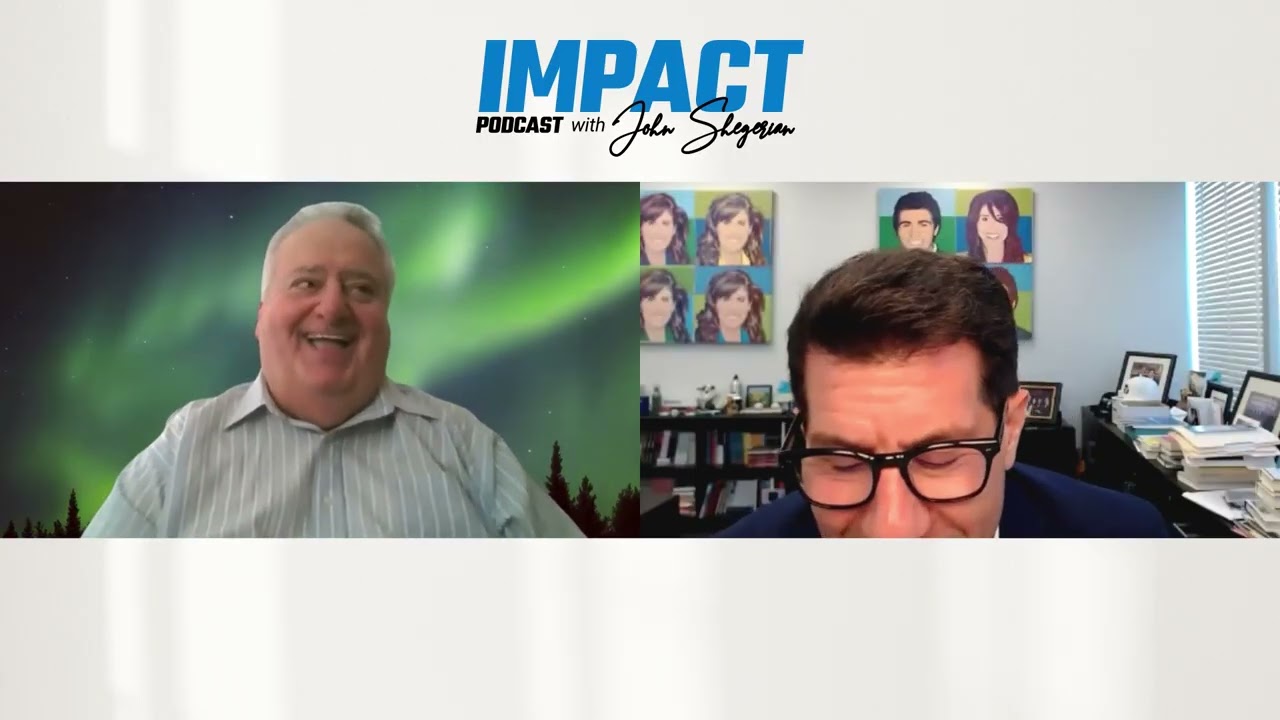
John: Welcome to another edition of the Impact Podcast, a very special edition. So I have a longtime friend on with me today. His name is Johnny Roastbeef-Williams. Welcome to the Impact Podcast, Johnny.
Johnny Roastbeef-Williams: Thanks for the invite. Always a pleasure, John, my friend. I’ve known you for the past, what, eight, nine years?
John: Yeah.
Johnny: And a great relationship with you.
John: Yeah, since you opened in LA, since- whenever you started working at the LA location, that’s when I’ve known you. We were there the first two weeks.
Johnny: Yeah, it’s over 12 years. Over 12 years.
John: 12 years. It’s just one of the great, great experiences in our life. And anyway, you have a book coming out, Johnny, from 10029 to 90210. We’re going to talk about that. I’m going to give out your website. It’s going to be in the show notes too, johnnyroastbeef.com. Johnny, before we get talking about your professional career and all the fascinating things you’ve done and are still doing now with the book coming out, can you share a little bit about your background? Where were you born? Where did you grow up? And how did you get on this very fascinating and important journey that you’re on?
Johnny: Thank you for that. Yeah, I was born, and my book will tell the whole story. I was born in East Harlem, New York. And basically, I was born in 1949. So at that time, the neighborhood was Italian American. And we had the predominant population. And at any given time, there was over 120,000 families living in East Harlem. And they were Italian American. I mean, it’s unbelievable. We had a church on every other block. It was a church, which is, of course, from Europe, Roman Catholic. And I went to St. Anne’s School on 110th. I was baptized in Our Lady of Mount Carmel on 115th, which is right around the corner from the original Rao’s. That was there from 1896. So yeah, so that neighborhood was predominantly ethnically very strong Italian. And we grew[?] up on the streets, and I got news for you. We would be considered in today’s standards, in abject poverty. But we did not know it. We loved our neighborhood. We didn’t think we were deprived. It was nothing like that.
John: You had a lot of friends, a big social network, right?
Johnny: Yes.
John: The streets were part of your extended home. We played-
Johnny: 100 percent. I grew up on the streets.
John: Yeah. I mean, wasn’t, because I’m part of your generation. I grew up in Queens. And so the streets are where we rode our bikes, played our stickball. You know, we did everything out there.
Johnny: Yeah. And the fact that the community had all these elements in common, same religion, economically in the same back-
John: Ethnic background.
Johnny: It was tight. It was tight because everybody was in the same boat. And you lend a hand where you can. My grandmother raised me. And my grandmother was from the mountains of Calabria. She spoke only Italian in the house. And I had to answer her in English because my mother forbid me to speak Italian. Because she was a product of immigrants and she didn’t want that for me. Anyway, my grandmother, I learned from her. She was the most generous woman with barely nothing that we had. She’d give stuff away. It was incredible. And I picked that up on her. So I’m not attached materially, financially to any given thing. I’ve never, and my children, they learned from me the way I am. They picked that up as well. And it’s a great inner strength to have the fact that you’re not attached to anything that would get you crazy and losing it. You know, some people can’t stand the fact that they lost something. They can’t handle it.
John: Yeah. You had something bigger. Are you still in contact with some of the original[crosstalk].
Johnny: Oh, yeah. I got friends over 70 years, 60 years that we stay in contact. As a matter of fact, I called- last night, I called Joey Ciccone in Rao’s in New York. He’s my friend over 60 years. And his mother worked for the priest in St. Anne’s on 10th. So we have that community. We know our rundown. There is, there’s no liabilities here. Everybody knows everything about everybody. It’s phenomenal.
John: And you still have that social circle, which is great.
Johnny: A hundred percent. I got friends over 65 years that we stay, even though this 2,800 miles apart, it doesn’t matter. A phone call. It’s like yesterday. It’s like we just played stoop ball. I mean, that’s literally what’s so strong and what’s so valuable. It’s not about money. It’s not about how many houses you own or what corporations you’re president of. It’s like you have, this is priceless stuff. Priceless.
John: So your childhood was overall a happy experience.
Johnny: Yeah. Well, you know, ups and downs. You[crosstalk]on the street.
John: Right. But overall it was a happy experience. It was good. And you still have those relationships, which is wonderful because so many people, they leave their old neighborhood and they never, they’re disconnected from that. And that’s the sad thing when people get disconnected from their past, from their friends. So you don’t have that. You’ve stayed connected, which, you know, in a world, Johnny, let me just say this, in a world where, as you know, with our children, grandchildren, now that’s gotten more and more isolated and lonely because of the technological revolution, you’ve done the opposite. You’ve stayed connected and plugged in. And that probably gives you one, why you’re such a great person to be around, because you’ve, I don’t think I’ve ever seen you… In person, I’ve seen you a lot over the last 12, 13 years, and you’re not down. You’re always up. You always got a positive thing to say to everybody, which is a great thing to be. Where did your nickname Roastbeef come from? I don’t know that story. I’m sure it’s going to be in your new book, but tell me where the Roastbeef moniker came from.
Johnny: Well, just to give you an example of the book, my nickname, my mother, 1949, wheeled me in the Italian American grocery store. Okay. 1979, 30 years later, that store became my first deli, Johnny’s Superheroes. And I was married. I had my son, John was born, and my wife was pregnant with my second son. And I took a shot and opened my own business. And that store became my first deli. Two buildings down from where I was born. So I always tell people, my mother always said I’d never get far. And that became my first deli, and the Roastbeef, I actually got my nickname in Rios in 1984, ’85. My friend was calling me, and I didn’t hear him over the bar because of the noise. And out of nowhere, he came and he had the raspy voice, Angelo. He was a wise guy. He passed away. And he went, “Roast beef.” And that was it. It stuck. So he actually gave me the nickname. He called me “Roast beef.”
John: Oh my God. So wait a second. So how many delis did you end up owning and then when did you.
Johnny: I end up with a second deli on 10th Avenue and 57th Street by CBS. That was in 1988. Then I was there about a year, and we had a big problem there. That’s another story that’s in the book. That’s another story. Then in ’89, I get discovered in Brails by Scorsese with Pileggi, and I do a movie, Goodfellas. And at the same time, Bonnie Timmerman meets me in Rao’s one night, and she says, “Johnny, come down to my office. There’s a movie that I need to cast a couple of parts, and I think you’re right for something.” So I went down there, and I get cast in State of Grace at the same time.
John: Okay. Before that, though. So when did you start working in New York at Rao’s? And explain to our audience who haven’t had the good fortune, because that’s what it really is, people who have, who I’ve taken to Rao’s in either when it was in Las Vegas, of course, when it was in LA, not even in Miami now, in New York, it’s an experience that they never forget. They talk about it forever. If it’s just one time I take them there or 20 times I take them there. Talk a little bit about your transition. When did you actually get employed there and what were you doing there? But explain what the New York original location is all about.
Johnny: Yeah, well, remember I’m East Harlem guy. So Rao’s, the bar is a legendary bar, legendary restaurant.
John: A landmark. It’s a landmark.
Johnny: It’s a landmark, 1896. Now as a kid, we played ball right across the street, Jefferson Park. Now the attraction of Rios is that the kids couldn’t go down there. The wise guys wouldn’t let us go down there. Okay. And the fact that it’s down three steps and it’s got that look of, it was always mystical for us. Now I got down there because 1970, my good friend, Bobby Pellegrino, which is Frankie Pellegrino’s first cousin, we became good friends. He got out of the army. He ended up in the neighborhood, and we became good friends. And he got the job bartending down Rao’s when Annie’s brother retired. So Bobby brought me down there as a customer because I came down to be with him, and I got to meet all the guys down Rao’s, which, you know, I knew who they were, but I never associated with them to have a drink with them. So that familiarity brought me down there, and the relationship was great. And anytime Annie needed help in the kitchen, she’d call me. I never was employed by Rao’s. It’s just that I helped out. I was there because I owned the delis, and then when Nicky got sick behind the bar, I was a bartender too when I was younger. So I would jump behind the bar and serve drinks, but I never filled out an application. The only time I became officially an employee of the Rao’s restaurant group was in Los Angeles here when everything was done the right way.
John: And now in New York, just so people understand, it’s a wonderful bar. How many tables are in the original restaurant?
Johnny: The original restaurant has four round tables and six booths. So 46 seats in the whole place.
John: So on any given night, people- aren’t those tables reserved for certain people on every given night? So you really can’t get in. So explain how that works because this is-
Johnny: Yeah, they all- at Rao’s in New York, they open the book in November, and in eight minutes, the book is full again because they’re only open five nights a week. They’re closed on Saturday and Sunday. So they fill up the tables Monday, Tuesday. The people that had the tables the year before get the first crack, and they say, they used to say to Frankie, “Renew me again for another year.” Now, in eight minutes, all the tables are done for another year, and the booths are done for another year. So the chances of opening a slot at nine o’clock, 9:30, they’ll see two more tables as a reserve type of thing. So they average about 62 to 64 dinners a night, five nights a week. That’s it.
John: That’s incredible.
Johnny: Yeah. So the place got to be like a club because how are you going to get a table if they’re all reserved?
John: Right. It’s like it’s own… It was really its own version of Studio 54 before there was Studio 54.
Johnny: Right.
John: So then now you’re there, you’re helping out. And now was it ever in your dream or ever part of your view of what you thought was your future that you were going to get discovered and come to Hollywood?
Johnny: No.
John: So explain. Let’s go through this again. Which movie were you cast for first? Nicholas, who wrote Goodfellas, famous writer, and Scorsese. They were regulars at Rao’s, and they were the ones who…
Johnny: No. Nick Pileggi wrote the book, Wiseguy.
John: Oh, that’s right. Okay.
Johnny: And Nick Pileggi knew all the real wise guys because he was originally with Associated Press. He was-
John: So he covered the Henry Hills. He covered the Henry Hills and everybody of the world.
Johnny: He was a reporter. And he comes down. He’s got a [inaudible] like me. He just had his 93rd birthday in Rios three weeks ago.
John: Did he?
Johnny: Yeah. Steven Spielberg was there, who’s my friend too. Steven, great guy. Nick came down the bar way before Goodfellas. He wrote the book about three or four years before Wiseguy. And he brought the book down to the bar. Of course. And we knew him as Nick. We didn’t think anything of it. As it turned out, Marty called him to do the book and said, “We’ve got to make a movie out of this,” or whatever. Now Nick wrote the screenplay with Marty for the movie Goodfellas. They were looking for guys. So of course, Nick opened the door to Marty that you’ve never been to Rao’s in Harlem. You’ve got to see the guys that are there. You’ve got guys there.
John: It was like saying- he probably says, it’s like Central Casting.
Johnny: Right. So Nick brought Marty down to Rao’s, and he met Angelo. He met all- he met all the guys.
John: The crew.
Johnny: It just happened that three days before, Frankie Pellegrino said to me, because I was going through my divorce and all of that, and I didn’t know what I was going to do. And I was babbling on commercial acting, babbling on it. And he says, “Hey, you want to…” like almost like a joke, “You want to be an actor? Go down to Julia Taylor’s office. They’re looking for guys.” I says, “Oh, yeah.” Now, I had met Julia Taylor about three or four years before, just by circumstance at the bar at Rao’s. We happened to drink, and we talked, and we got along so great. Oh, yeah. But for acting, just being in the bar at Rao’s. So I go down to Julia Taylor’s office, and Ellen Lewis is casting Goodfellas out of her office. So I go down there, and Ellen Lewis gives me a thing, and she goes, “Just read this.” And she says, “I love the way you talk,” she said to me. I said, “Well, call me Shakespeare.” And then Ellen came down with Marty that night that we were all down the bar.
John: Unbelievable.
Johnny: And she said, “Johnny, what are you doing here?” I says, “Ellen, what are you doing here?” I live up the block because I had the apartment on 114th when I got divorced from my wife. And so she says, “Oh,” and they sat down. Now I’m at the bar. Nick Pileggi, Marty Scorsese, Ellen Lewis, they’re sitting at a table. Angelo comes in. I remember Angelo was a wise guy, but he was like my father. I loved him. We broke balls every night. We drank. He walks past the bar, and he goes and sits with Nick. So about 20 minutes pass. I go over to the table, and I give Angelo a tap on the cheek like this. And Marty knows who Angelo is because Nick told him. And I go, “So you passed us up like a freight train passes up a hobo at the bar. You come and sit with these Hollywood people. You got some pair of balls like that.” And Scorsese’s looking at me going, “Who’s this guy?” To talk to this guy like that. But he doesn’t understand.[inaudible] And Angelo turned around and he looked at me with his voice[?]. He goes, “Hey [inaudible] you know, it’s another night.” Listen, being down at Rao’s in New York was being on a movie set. I mean, that was the mystifying, the magic. And you want to know something, John? You’ve been in Rao’s in Hollywood. I created the same mystifying romanticism in Hollywood with the staff. We had a great staff. We had the atmosphere. We had the vibe. We created that in Hollywood out of nothing. It’s one thing to say Rao’s in New York. Yeah. Well, it had a hundred-year traditional history. So when people walk down the bar down there, they already were mystified. But in Hollywood, we created that in a city of fruits, flakes, and nuts where there is no tradition.
John: Right. No history. It’s just a transit. It’s a transient city compared to…
Johnny: Very transient.
John: Right. Wow. It’s just- wow. What you created in L.A. is incredible. So now you get cast. Like when did you know you were the guy? Like when did you know…
Johnny: Ellen Lewis called me and said, “You got to come down to the Warner Center, Rockefeller Center. Marty wants to see you.” So I’m busy in my deli because at this time, I was on the West Side. I had the one on 10th Avenue. I’m going, “Look,” I didn’t even have time to change, I had to go home and change. So I threw a sport jacket over my [crosstalk] shirt and everything else that I had on. I just went down. And when I got to Rockefeller Center and I went to the office there, I saw all these characters that I’ve seen on TV. I said, “Oh my God, what the hell am I doing here?” Because I mean, really, it was overwhelming. But me being who I am, I’m a son of a bitch, I swear. I don’t get, I don’t fear anything. I say, hey, roll the dice.
John: You didn’t let that put you off or put fear…
Johnny: No, not at all. And so I went in and Marty’s sitting there and I thought I blew the whole thing, because when I went in to do, everybody read the scene of Onidaro when he tells Paulie, this guy comes in, this Tommy, he’s nuts and you got to help me out. He’s asking Paulie to take a piece of the restaurant. Everybody read that scene.
John: I remember that scene, I remember that.
Johnny: So I go in there, I’m ready to read the scene, but Marty starts talking to me. He says, “Hey, Johnny, I know you come from up there. I heard about you. I know you’re a pretty tough guy on the street and this and that.” I said, “Yeah, but it’s a great neighborhood.” And before you know it, the guy next to him starts doing the lines, doing the scene. So I had to stop for a minute. I said, “Oh, it’s time to do that.” So I’m answering him and he’s reading the lines from the script on the floor. So all I’m seeing is the top of his head. And I’m trying to look in his eyes. I’m answering, and I’m looking. After about 30 or 40 seconds of that, I said, “Hey, you know what? I’m sorry I bothered you people. I talk[?] to wise guys eye to eye on the penalty of that. This guy’s looking at his shoes. Oh, I’m sorry.” Marty starts laughing. Ellen Lewis, they start laughing on the side. And I thought I blew it. I said, “I’m sorry, I wasted your time. This is not for me. This guy, I don’t know where you got him from,” but I walk out. Next day, Ellen calls me. I’m in my deli on the West. “I’m nuts. You got a part in the movie.” I said, “Oh, is it a good part?”
John: [inaudible]What do you know, right?
Johnny: Yeah. And that got me, that actually got me the part in the movie, being who I am.
John: How soon after that, you own a deli, you’ve just gone through a bad divorce. You’re still living up in East Harlem. How soon after that do you have to show up to start filming?
Johnny: Oh, let’s see. That must have been around March. The first day that I worked was May 2nd.
John: Oh, so a couple months after you got that phone call.
Johnny: Yeah. And I- it just so happened, they filmed the death scene in the Cadillac the first day.
John: No.
Johnny: Of a four-month shoot. First day, with the pink Cadillac, and Frannie McGee played my wife, rest in peace, beautiful girl. Her and I are the only two actors in the movie, except the kids that find the car. So what do you think happens? The Daily News sent the reporter about this movie that Warner Brothers is shooting, a mob movie. So the reporter went, and who did he have to talk to? Frannie and I, because there’s nobody to talk to.
John: Oh my God. [crosstalk] Was the filming in New York? Was it in New York? Was the principal filming in New York for this?
Johnny: Yeah, Hillsborough Avenue, in Queens, in Jackson Heights.
John: No kidding.
Johnny: Yeah. And we can’t get out of the car because Marty put the car on a frame so that he could get the camera to go close and go around that whole shot. When they play Layla, Marty had it in his head. He’s a genius. The man is a genius. The camera rolling, slowly, it goes from where the kids’ point of view would see the license plate and the front bumper, it goes all the way around. Then it slowly goes up, you see the sticker on a car with bloodstains on it. And then you see Frannie and I dead in the front seat of the car. It’s a magical scene.
John: I know it.
Johnny: We couldn’t get out of the car. We had to sit in that car. We sat in that car for three hours.
John: Wow.
Johnny: At one point, Frannie says to me, she says, “Johnny, I have to go to the bathroom.” I says, “Hey, friend, listen to me. If you don’t act dead, I’m going to strangle you right here. You don’t have to go to the bathroom.” I said, “I got to go to the bathroom too. But do you hear me complaining?”
John: Wow. And that became one of the, like you said, it’s one of the first day of shooting. And it’s one of the best scenes of the whole movie.
Johnny: Yeah. It’s iconic.
John: It’s iconic.
Johnny: Layla.
John: Right. The music.
Johnny: The eeriness about it, the music and.
John: How many days were you on set like to do your, your whole thing?
Johnny: I only worked three days.
John: So talk to me. You mean you’re now, if we’re going to talk sports metaphors, you’re a rookie and you’re working with one of the greatest, if not the greatest director of all time, let’s be honest. And some of the greatest actors of all time, with De Niro and Leota and Pesci. And my God, I mean, talk about a murderous role of amazing.
Johnny: Oh my God.
John: I mean, how did you.
Johnny: I don’t know.
John: How were you not intimidated? Anyone is intimidated. Even the greatest actors say when they show up and any of those guys were there or Nicholson was there, they would always get intimidated.
Johnny: Never going to happen. And I’ll tell you why. My upbringing. I never got anything easy. I was on the streets. I had to fight my way for a lot of stuff. I had to put this bravado out there to be protected. Any fear that I had inside of me, I can never show, that’s growing up in East Harlem. And I brought that with me without even knowing what a quality that was is to go on and do performances with Sean Penn, Gary Oldman, De Niro, Virginia Mattson, the best people in the business. But to me, I’m there. They hired me to do a performance. I’m going to do what I know. What I know was my life. My life is what I know. I don’t know how to act.
John: Yeah. That scene where you walk into the- I think it was a bar restaurant and you talk about spending the money that you guys had just lifted at JFK…
Johnny: Look, I opened- we opened the scene with the music playing, Frosty the Snowman. It’s a party. How else am I going to be? I’ve been to a lot of parties.
John: Yeah. So but did De Niro or any of the other actors there who knew you from what you did at Rao’s or the deli or just knew who you were? Did they give you any words of advice or any notes for you to…
Johnny: No. What De Niro did… Well, first of all, Marty called me in his trailer when I was on the set. And he saw- I laugh. He calls me, I go in the trailer, him and I, and he says to me, “Johnny, I know your reputation. I know you come from a rough neighborhood, but what I need to see is that this guy, Jimmy, which is De Niro’s character. This guy killed over 30 guys. You know that. So I want you to see that. And I want you, when you’re dealing with them, I want you to know that in your head that this might be more serious than you think. And I want to see that.” I said, “Okay.” Because he asked me how I feel. I said, “I feel great.” What am I going to tell him? I feel great. So when I got to meet De Niro for the first time on the set, he introduced himself. I introduced myself. I had to break the ice with him. So I pulled an Abbot and Costello routine because this is me. This is me. And you say about intimidation, listen, you put on a pair of pants, I put on a pair of pants. So I did, if you’re familiar with Abbot and Costello, slowly I turn step by step, inch by inch. And I did it to De Niro. What I did was, I says, “Can I call you Bobby?” He says, “Oh yeah, call me Bobby.”
This is when they’re setting up the shot. I said, “Bobby, I can’t believe this.” He says, “What can’t you believe?” I said, “I can’t believe this. All these people, big movie. But I have to tell you something.” He says, “What?” I says, “I don’t know how I’m going to tell you this, but I got to tell you.” And as I’m speaking, I’m speaking more softly where he’s leaning in and his face was maybe five inches from my face. And I said to him, “Listen to me, only in the movie could you ever yell at me like this, because I’m a lot tougher than you are. You understand?” And I gave him the [inaudible], and he was this far from my, and he’s looking and he busts[?] it out. And he says to Marty, “Marty, where’d you get…” he says, “I told you about him.” I thought like Marty must’ve told him this guy is off the wall. I don’t know. And when I did that…
John: Broke the ice.
Johnny: … broke the ice. He said to me, he says, “Johnny, I don’t care where it is in the scene. Just tell me not to get excited.” I said, “Is that it? That’s all I want from you.” Okay. So he’s- women[?] that, yeah, that car, I love the car.[inaudible]As a matter of fact, I gave the line to the girl, Frannie. I said, “Listen, tell this guy something. He’s yelling at me.” She says, “But I had no lines.” I says, “Well, tell him you love the car.” She said, “What about Marty?” I says, “Don’t worry about Marty. If he likes it, you keep it. If he tells you, shut your mouth, you shut your mouth.” Right. So in the middle, I said, “Not only that, we’ll see if this De Niro could act, but you’re going to throw him a curve ball. He can hit the fastball. We already know that, but you’re going to throw him a curve ball. He’s not even going to know this line is coming.” Right. And that’s what she did. She says, “Oh, I love that car.” And he went, “Sweetheart.” He didn’t skip a beat. Marty, let her keep it.
John: Wow. So, Johnny, when you look up your IMD, which I’ve done 50 times before, it’s just so fascinating when people meet you. When I bring guests to rails, they meet you and they’re just so fascinated by your life. You’ve done life, theater, TV, films, everything. Do you have a favorite or is it, do you love it all? Do you love it?
Johnny: All I could tell you was that every job that I do, I get high[?] and I learned something from it. I take something away from it. I get enlightened. I get educated. I get knowledge I didn’t know. And it’s so interesting to perform when, to me, it’s not work, it’s pleasurable.
John: I’m going to throw some names at you that you’ve worked with before. Let’s do a little word association. Say, give me something that will define them to you, such as Jim Carrey.
Johnny: Jim Carrey was great, but after talking to him on the side for after about 30 or 40 seconds, you really see he’s nuts. He is a [inaudible], but he’s a great talent. And he would be impactly[?] played my partner in The Mask. We were mechanics and he’s talking to both of us and I’m looking at Tim and I’m going, boy, this guy was, he could get off the wall, but yet what he was telling us was, we didn’t realize it. But four years later, what he was describing to us was his movie about the camera following him all over the place.
John: Yeah. He’s a tortured genius. He’s probably a genius. Probably.[crosstalk]
Johnny: Yeah.
John: Nick Cage. What do you think about Nick Cage? Give me a word…
Johnny: Oh Nick Cage, I could describe Nick Cage as a six-month-old cocker spaniel, where you can’t get them to concentrate. They’re all over the place. That’s Nick Cage. Great guy. I love Nick. He’s a great guy, but he’s like, every word you tell him, it’s like he’s amazed, great guy.
John: The late, great Jimmy Kahn.
Johnny: Jimmy was my friend. Jimmy knew my background, very similar to his background. He grew up in Sunnyside, Queens, and we got along. Jimmy helped me with, I’m fourth lead in a major picture. He said to me, “If Angelo was going to tell you this, how would you respond to him?” Oh, and boom, the connection was immediate.
John: Ah, got it. Sean Penn. I just saw Sean Penn. My wife and I just watched him in that movie, the recent movie he did with Leo DiCaprio. He was fixating in that movie. What would you talk about- if you were to give a word or sentence about Sean Penn?
Johnny: Sean Penn is a very consummate professional. I got along great with him, by the way. And the funny thing about the movie State of Grace was when we were doing the scene, Phil Giovanna was from San Francisco, the director, and we’re filming on the pier on the West side by the Intrepid, New York City. Boom. I didn’t even get to Hollywood yet. This was 1989 and we’re doing the scene. And in my heart, I hated the scene because it was like stupid. It was like schoolyard crap. It wasn’t real. So what do you think happens? Giovanna turns around, he says, “Johnny, you’re a New York guy. What do you think about this?” And I told him the truth. I says, “The scene sucks.” What? I said, “Well, Vinnie Costa-Ferro is my partner in crime. We’re two mob guys. But we’re not two guys. We’re 200 guys. We’re in a family. My boss sent me to tell this Irish guy to pay his tab on the West side. And I’m not worried about anybody bothering me. I’m strong. Vinnie’s strong. We’re not there alone. We’re there on an assignment. The boss sent you there.” I said, “Now when we got these other two guys come in involved, we’re going to straighten them out too. Hey, listen, mind your business. Just get out of here.”
And they were going to be tough with us. They were going to get tough. But remember, we’re strong. You had it that we were there taking all this nonsense from these two guys, like we were on a schoolyard. Your mother sucked, your father sucked, right? No. So Sean Penn heard me because him and Joanna, they walked away. After they walked away with what I said, I says, “Oh my God, I hope I didn’t screw this up.” And remember, I don’t know anything about show business. And it came back and they said, “We’re doing this tomorrow, 6:00 a.m., where we shoot the whole thing.” And what they did was they corrected what I told them cinematically by having Gary Oldman and Sean Penn walk over and John C. Reilly, Stevie walk over to them with us being off camera so that when they talk, the audience could assume we didn’t even hear them. And then it crescendos into a fight. They know what they’re doing. I don’t… I just tell you the way I felt. I don’t know what you know.
John: Gary Oldman talk about Gary Oldman.
Johnny: Gary, we became friends, Gary and I. Great guy.
John: Hell of an actor. Another hell of an actor.
Johnny: Oh hell of an actor. But another guy that puts his heart and soul into it. A matter of fact, he kicked me in the wrong place when we were fighting.
John: Really?
Johnny: And we caught and I’m looking at the Hudson River and I’m saying, “Oh, man,” and he come over. And he says, “Johnny, I’m sorry.” I says, “Hey, listen, get away from me for a minute, because right now I want to punch you right in your face.” I says, “I showed you where the pads are. You could do whatever you want by the pads.” He says, “I’m sorry.” “Get away from me.” And he thought I was really going to be angry and mad. I just wanted to let him know. But then when we did the scene again and everything else, I came over and I said, it’s great. The manager, his manager came over and he said, “Johnny,” he says, “Great.” I says, “Yeah, wonderful. Everything good.” And Joanna wanted to sit me in the director’s chair and show me the scene. I says, “Phil, do me a favor. I don’t know what I’m doing. Don’t let me see, watch myself not know what I’m doing. Just let me be.” And it ended up being a great fight scene.
John: That’s awesome. When did you, Johnny, when did you move out to the West Coast from the East Coast?
Johnny: 1991. Two years later.
John: Two years later. Got it. And talk about…
Johnny: And the only reason that happened was my ex-wife moved to Florida with my children.
John: Oh, okay. And now your children live West Coast, East Coast, Florida, where do they live now?
Johnny: Florida, rural[?] Florida.
John: Got it. West Coast. Talk a little bit about your life on the West Coast compared to where you grew up.
Johnny: Professionally, my wife- my life on the West Coast professionally was nothing less than glamorous. I mean, not living, but professionally. I worked- without even meeting my agent, I booked a guest star on Hunter without meeting the agent yet. I got there on a Monday, went to an audition. Tuesday, got the job. I mean, literally. And that’s how it was for me in L.A.
John: All the stars aligned.
Johnny: All the time. TV. Then I get Honeymoon[?] in Vegas. All the time. Now, personally, there was another story. I had a roommate with a girl and she drove me crazy. And that lasted about three months. And I had to get out of there before there would have been a homicide. She was just… She drove me nuts.
John: Got it. And now what’s it… Now, you’re at rails for now twelve and a half, thirteen years. This last Saturday night, unfortunately, one of the greatest restaurants, I think, in Los Angeles. We threw so many Christmas parties there, holiday parties. You were a part of them. You met so many of my friends and relatives and so many important life landmark events that we not only have there as a Shegarian family, but also I saw so many other families, celebrities, non-celebrities that you just love to be with. And they love to have you part of their landmark events. Rao’s closed now in Los Angeles, shut their doors for the last time I went on Saturday night. Talk a little bit about beginnings and endings. And what is this? And you’re writing this wonderful book now that’s coming out soon that we’re going to be able to share with our listeners once it comes out, From 10029 to 90210 Talk a little bit about where you are now in your life with Rao’s shutting down over here. And you writing the book. What do you want to happen in the next year ahead?
Johnny: Well, I’ll tell you. Rao’s closing Saturday was a big negative, but out of that negative, I became a better human being.
John: Tell me why?
Johnny: And I’m going to tell you why. For the past three weeks that we knew we were going to close. The patrons that came in through those doors, they expressed themselves totally…
John: Unvarnished.
Johnny: Right. They unloaded. And it was a lot of sadness. People were being retrospective about the parties, just what you said. And I told them, I said, “Listen, take all of those good memories you had in this restaurant, you take that with you as a gift.” Because no matter what they do to the restaurant, you’ll always have that personalized for you for the rest of your life. Nobody could take that away. They could bulldoze the restaurant, they could make it rubble, but what you had. And in that opening for me, it made me a better human being to see that how we, the staff, the place, affected people that came in for a dish of pasta. This went way beyond a dish of pasta. This went way beyond. People, they were pouring their souls out to me for the past three weeks. I’m a little mentally fatigued over this, because it was a lot to hear, and it was a lot to absorb that these people got this deeply affected. And me being who I am, I can’t let that affect me, because like you said before, every time I see you, you’re happy. I have to be happy. And the reason why I’m happy is my definition of happiness is the lack of sadness. That’s happiness. So Saturday night, I didn’t get out of there till three o’clock in the morning, and I didn’t drink on purpose, because I didn’t want to get down. I didn’t want to get where my inner feelings would come to the top. I didn’t want to give that to anybody. I wanted everybody to celebrate, although I’m not celebrating. That’s what I took out of that place. In my book, it’s going to make my book even better, because when I’m writing my stuff, I got this feeling if God gives me the talent to put it on the page, my book is going to be sensational because of the way I feel.
John: Well, because you have authentic stories. You’re not, this is not fiction. This is your life. And your life is really one of dreams coming true.
Johnny: Yeah.
John: Dreams coming true. Well, do we expect the book to come out this year in 2026?
Johnny: Yes.
John: Great. I can’t wait. Talk a little bit about, what was your, I have my own favorites, so do all my family. My family always tell me what their favorites were. What was your favorite food at Rao’s, if you don’t mind me asking?
Johnny: Oh, Rao’s- I used to get in a different mood. If I wanted a dish of pasta, and it was early enough, I’d have the orecchiette with the broccoli rabe and the sausage.
John: Oh, that’s so good.
Johnny: Nice dish. And if it was too late, and I knew I’d have the aglio e olio, the garlic and oil, because that’s lighter.
John: Right. I don’t want the listeners or viewers who haven’t had the blessing and the opportunity to eat at Rao’s or meet you, to think that Rao’s closed because it failed. It’s actually quite opposite. Rao’s had a massive success story in terms of, what they’ve done in New York, Miami, Vegas was a huge success. I went there hundreds of times, and LA was a huge success. It was just that the landlord took the property back to do something more with the property in Los Angeles, right?
Johnny: Yeah.
John: And Miami’s open, and Miami’s a massive place. I’ve been there.
Johnny: Yeah, but Miami’s corporate. Miami’s on the bottom of the hotel of the Lowe’s. So look, we were, Hollywood was the closest thing…
John: To New York.
Johnny: … to Harlem. Frankie Sr., rest in peace, he put the place together, the same coloring of Harlem, the same principle behind it. How he ended up on that lonely street in Hollywood was almost, it was almost like it came to Harlem, it’ll come to this street. That same mentality.
John: It was a destination.
Johnny: Yes. And he put it there with that in mind, and he opened it, 14 years ago he built it, and he wasn’t sure it was going to work, because you got to remember, there was no tradition. There’s no tradition in Los Angeles. People are fickle. They go to opening of an envelope. It’s just the way they are.
John: He put Seward Avenue on the map of Los Angeles, right?
Johnny: Yeah. But the funny thing is, when Spielberg comes in, he came in a few times, he spent a lot of time on Seward, because Seward was, for the post-production of the old films, 35 millimeter, Seward Street had all of the facilities for ADR, the voice and the music, and Spielberg spent three months on ADR with the Close Encounters of the Third Kind. He told me himself, we had about a half hour discussion.
John: Oh.
Johnny: He’s looking, he’s reminiscing as we’re out in front of the restaurant. He [crosstalk] on this block.
John: He had a lot of good memories on that street.
Johnny: Yes, he did. He did.
John: You’re a unique and special storyteller. I think that’s one of the reasons people get so attracted to your stories, are just genuine, authentic, and unique. Talk a little bit about why that will translate to your book and what people can expect to learn and take away from your book that’s coming up soon.
Johnny: Well, I have a gift of memory. I remember incidents, I remember details, and I also remember dates. And the key to being a performer, I remember how I felt at the time. When you’re able to relate how you feel, remember the camera will detect a lie. So if you could tap into the way you felt at the time of, let’s say, an incident or something that happened. When I get a job and I have to recall something that was in my life, I can remember how I felt. And my talent is in bringing that in front of the camera. So I’m not lying. I’m not lying.
John: So that’s so interesting. I never heard someone explain like that, but that makes total sense. It’s not only your memory of facts and figures and stories, it’s your memory of feelings that helps make you so great at what you do.
Johnny: 100%.
John: Wow.
Johnny: And I am trying to translate that to words on a page. And I know that. I know that so-
John: Are you enjoying this process? Of the book? Are you enjoying the process of writing the book?
Johnny: Oh, yeah. Now I’m on a chapter with my marriage. So this is a little difficult for me, bringing up the way I felt and things that were going on. But I’m giving it a retrospective look from now, from here. And I have my collaborator. I told her, I said, “You know, if I had to judge my marriage and the failure of my marriage on a point system of 100, I’m 70% responsible.” And I acknowledge that because my book is about the truth. And as ugly as it could be, it’s going to be the truth.
John: People want- people expect and love from you authenticity, and you’re just going to give it to them straight in the book.
Johnny: Yeah.
John: What was I going to say? So now is this closing of the restaurant give you more time to act and to write? And what do you expect in the months and years ahead now? What’s in front of you for 2026 and 2027? More acting, more writing, a little bit of both? Are you going to go back East? Are you going to stay West?
Johnny: Well, I’m going to make you laugh on this one.
John: Yeah.
Johnny: On one hand, I have my ego that says I could do anything I want. On the other hand, I have my birth certificate.
John: And talk to me because…
Johnny: So today…
John: Because Warren Buffett’s 95, Johnny,[inaudible] the executive chairman of Berkshire Hathaway, you’re only 75. You’re a baby compared to Warren Buffett. Come on.
Johnny: As I sit here in front of you, I could tell you that I could pick up Rao’s restaurant on my shoulder and I could open it up any place right now. Tomorrow, I may have a problem getting out of bed for crying out loud. So that’s what I’m looking at right now. I have no enemies in my life. And I look at the rosy picture and it looks bright and it looks sunny right now. But the truth of the matter is, time is my enemy. 10 years ago, even 10 years ago, I would have not hesitated to jump in on something as exciting as opening a new place is opening up the wall[?]. I would jump on it. But the time, the energy level that you need to do things right. I don’t want to jump into something half-assed. I have to do it right.
John: Yeah. I get it. I understand that. I’m of your generation, too. And so we pick and choose where we spend our time more wisely than we did when we were 21 and 25 or 35. I get it. So that being said, that now with the wisdom that you have and the knowledge that you and I both have, that father time is undefeated. And it is. How are you going to… What’s your- Even though you understand that the world is your oyster now, because you’re not tethered to the restaurant anymore. What how do you how do you intend to spend your time in the months and years ahead?
Johnny: Well, right now, my immediate focus is on my book. My immediate focus is to get the book completed, but get it done the right way. And that’s why I’m doing a lot of introspection as I write. I’m looking. It isn’t even about editing. You know, look, I’m no Shakespeare. I’m no John Updike. But at the same time, I have something to say. And I think it would be entertaining for people to pick up the book and read it. I think they’ll get something out of it because it’s a kid on the block. I always keep saying. This kid from Harlem is creating. I created the sitcom. I didn’t sell it, but I created it. It’s a kid from the neighborhood. You get out of the neighborhood, but the neighborhood never gets out of you. It’s one of those deals. So I’m focusing pinpoint on the book to make it as best as I could make it. And not even to- it’s not even to make money. It’s to tell the story that [inaudible]. The Rao’s story, that’s another story in itself. It’s a postcard to a restaurant, a love story, if you want to say, to a restaurant. The magic that we created. Like I said, the closing of the place actually made a better person out of me because I got to see the impact of 13 years in a place like Los Angeles that doesn’t have nothing is impactful here. Everybody does whatever they want.
John: That’s right.
Johnny: So there was something there was something of substance here that I could positively take with me. And God willing, it’s going to go in the book. It’s going to make the book even better.
John: Got it. And for our listeners and viewers to find Johnny and to read his book in the future, we’re going to be able to buy it, of course, on Amazon. But you can also go to Johnnyroastbeef.com. It’s going to be in our show notes. What advice do you have for people today that want to follow their dreams and they think that they were born on the other side of the track so they think that their parents don’t have a lot of money or they feel that other people have more breaks than them, can almost anyone who live- follow their dreams and make it in this world?
Johnny: Well, I’m going to tell you something. My opinion. Of course, it’s coming from a 76 year old, but the most perilous times to grow up are now.
John: Why?
Johnny: And I’ll tell you why. Because the more technical our society gets, the more removed from your inner self, your own instinctual, the more technology that comes, the further away from that instinct human beings are going to be. And I think that that’s going to be the beginning of the end or the beginning of something that I can’t even describe. But something that’s- because we always… We know we’re animals. We’re the higher- they say we’re the higher echelon of the animal kingdom. I say we’re the lower end of the animal kingdom. And I’ll tell you why. Because as the years and as the generation and the societies progressed, they got further and further away from that inner instinct that said this is danger. Run. This is, you know, daylight is life. Darkness is death. So and now with technology, daylight isn’t daylight anymore. It’s something that they imagining. So how do we imagine instinct? You’re getting further and further away from who and what we are basically in existence. So it’s I say. That kids growing up today are in more danger and there’s more peril that they’re looking at than we had. We knew you went to a bad neighborhood. You knew you had to watch yourself. We had very distinctive avenues and options to take. Today, those options are clouded up with the Internet and with this electronics. And it’s my opinion. It’s the way I look at it. And yeah, I might be old fashioned. I might be the kind of guy or the neighborhood guy. But there is no neighborhood anymore. Technology took that all away from you. And when people go on the Internet and they see they think other people are having a ball because they put a party together and then you have all these suicides that happen.
John: Well, because people are getting isolated. Look at you. You’re still connected with your childhood friends from the neighborhood. And so am I. But we were forced to have personal skills because there was no technology. So we were connected. So now this whole generation, they’ve since 1998 when Google was founded, they’ve all been on their Internet. They’re all on their social media and they’re all isolated. They don’t even know how to do this. Johnny, they don’t want to do this. They’re afraid. They’re afraid of telling a story and feeling that someone doesn’t like them or doesn’t believe in them or something. You and I, we were born to be fearless and make friends wherever we go. We were born that way.
Johnny: Absolutely. I go over to a table of Rao’s. The young kids, they get mesmerized by me because nobody tells a story or looks at them in the eye and gives them a story. They were on Google or they were on, whatever.
John: They can’t even believe that you’re larger than life[?] in person. They don’t know that, though. They don’t know that.
Johnny: It’s funny. It really is funny.
John: When I bring the young people in with me and they meet you. All they tell me when they go in is two things. God’s honest truth. Make sure, John, I get to eat the purses, the little purses, and make sure I get a picture with Johnny Roastbeef. That’s all I get[?]. Two things. It was the one, two punch of Rao’s. They had their meal and make sure I get a picture with Johnny. That literally is everybody I brought there. That’s all they asked me to do. Make sure. Can I meet Johnny? Can I get a picture with him? And can I eat this? I’m like, “Yeah, you can eat whatever you want.” And of course, Johnny would love to take a picture with you. You never say no. I’ve never seen you say no to anybody ever.
Johnny: No. Look, I’m here. If putting a smile on somebody’s face is standing there with my arm around them and smiling. How good is that? What kind of gift can I give the world? That’s all it is. I told you my grandmother instilled that in me. You give it away. You give it. The pleasure is in giving.
John: Yeah. Did your mother and father get the pleasure to see you in any of your movies?
Johnny: Oh, my mother did. Yeah. My father was out of the picture. That was another thing. I grew up without a father, which gave me even more, that fighting ability.
John: Was your mother like Scorsese’s mother when she was in the movies? Is she that kind of little…
Johnny: My mother was tough. My mother worked a whole life. My mother was very tough. And education was the number one, pounded it in me. That was number one. My grandmother was the one that gave me the characteristics that I have, that mentality from the other side, the European kind of salt to the earth, you know, garlic in one pocket, onion in the other. And I love it.
John: Johnny, have you ever had the fun to ever go back home? Have you ever been back to Italy?
Johnny: No.
John: No, never been. Wow. One day, hopefully. Johnny, listen, I want when the book comes out, when it’s actually printed, we’re going to have you back on the show. I’m going to have you sign three cases of the book and then we’re going to give it away to our listeners and viewers. And for our listeners and viewers out there to get to know Johnny or to hire him or to buy some of his memorabilia, you can go to Johnnyroastbeef.com. It’s going to be in the show notes. If you like this show today, if anything in the show resonate with you, the book is going to be a thousand times better, From 10029 to 90210. Johnny Roastbeef, I just want to tell you something. Thanks for the memories. But this isn’t goodbye because we’re not…
Johnny: No.
John: You and I are going to stay in touch. We’re going to stay friends. Johnny, every memory you gave every guest that I’ve ever brought to your restaurant, they cherish it. They talk to me all the time and they just love you. And I love you. And I want you to just- I want to say this to you. Thank you for not only making the world smile, but thank you for making the world a better place.
Johnny: Oh, thank you. My pleasure.
John: This edition of the Impact Podcast is brought to you by Engage. Engage is a digital booking platform revolutionizing the talent booking industry. With thousands of athletes, celebrities, entrepreneurs and business leaders, Engage is the go-to spot for booking talent for speeches, custom experiences, live streams, and much more. For more information on Engage or to book talent today, visit LetsEngage.com. This edition of the Impact Podcast is brought to you by ERI. ERI has a mission to protect people, the planet and your privacy and is the largest fully integrated IT and electronics asset disposition provider and cyber security focused hardware destruction company in the United States and maybe even the world. For more information on how ERI can help your business properly dispose of outdated electronic hardware devices, please visit eridirect.com.
 Spotify
 Apple Podcasts
 Amazon Music
 iHeartRadio
 YouTube
 YouTube Music
 Audible
 Pandora