Itron’s Impact report:
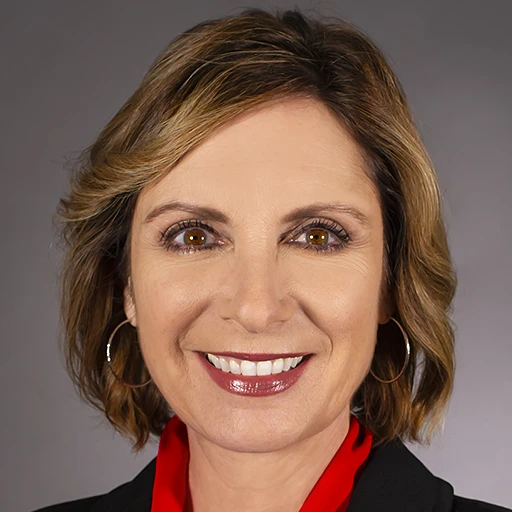
Marina Donovan has over 25 years of experience in global technology marketing and public relations, with expertise in data security, communications networks and mobile. She joined Itron in 2018 after serving as vice president of marketing at Silver Spring Networks. Itron is transforming how the world manages energy, water and city services. Its trusted intelligent infrastructure solutions help utilities and cities improve efficiency, build resilience and deliver safe, reliable and affordable service. With edge intelligence, Itron connects people, data insights and devices so communities can better manage the essential resources they rely on to live and thrive.
John Shegerian: Get the latest Impact Podcast right into your inbox each week. Subscribe by entering your email address at impactpodcast.com to make sure you never miss an interview. This edition of the Impact Podcast is brought to you by ERI. ERI has a mission to protect people, the planet, and your privacy, and is the largest fully integrated IT and electronics asset disposition provider cybersecurity-focused hardware destruction company in the United States and maybe even the world. For more information on how ERI can help your business properly dispose of outdated electronic hardware devices, please visit eridirect.com. This episode of the Impact Podcast is brought to you by Close Loop Partners. Close Loop Partners is a leading circular economy investor in the United States with an extensive network of Fortune 500 corporate investors, family offices, institutional investors, industry experts, and impact partners. Closed Loop’s platform spans the arc of capital from venture capital to private equity, bridging gaps and fostering synergies to scale the circular economy. To find Closed Loop Partners, please go to www.closedlooppartners.com.
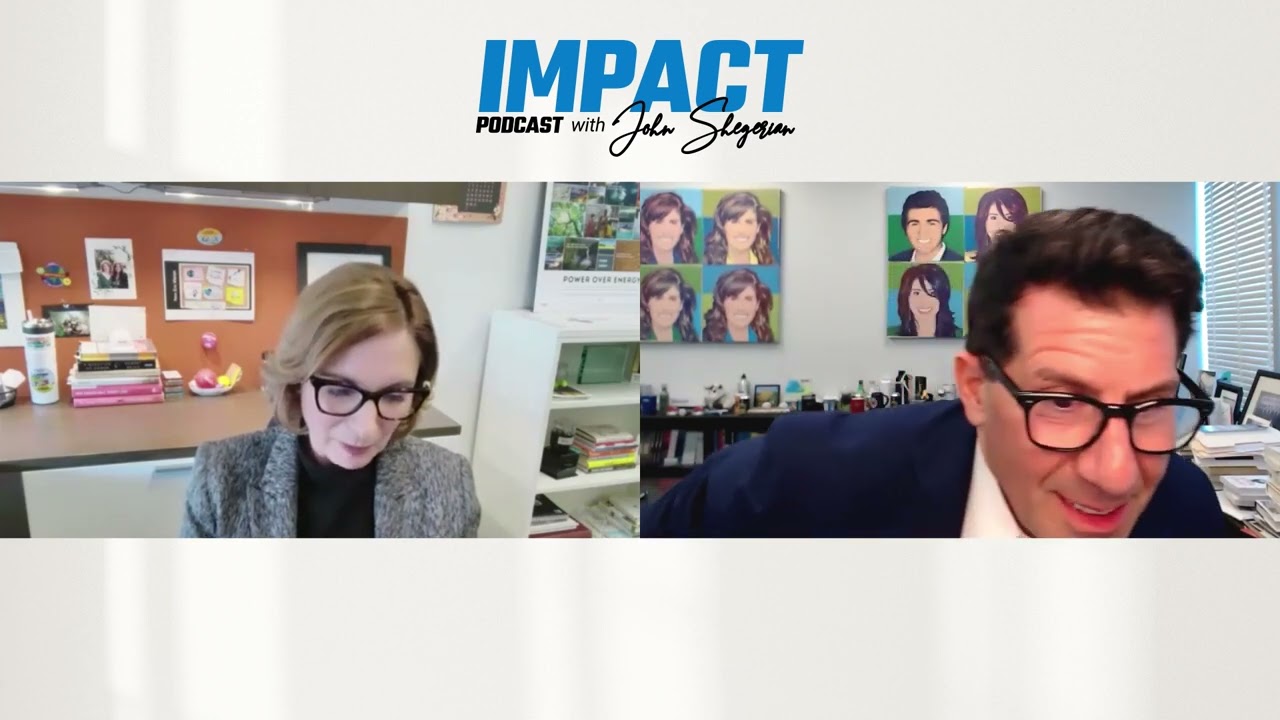
John: Welcome to another edition of the Impact Podcast. I’m John Shegarian and I’m so honored to have with us today Marina Donovan. She’s the Vice President of Global Marketing, ESG, and Public Affairs for Itron. Welcome, Marina, to the Impact Podcast.
Marina Donovan: Hi, John. Thanks for having me.
John: Hey, Marina, before we get talking about all the important work you’re doing in ESG, sustainability, and other important issues of our time with your colleagues at Itron, I wanna talk a little bit about the Marina Donovan story. Where did you grow up and how’d you get on this very important journey that you’re on?
Marina: I grew up in Southern California. Yeah.
John: Which part of Southern California?
Marina: In the Torrance, Redondo Beach area.
John: Got you. In the South Bay.
Marina: Exactly. That’s South Bay.
John: Yes. Okay. So you grew up in the South Bay and which is very close to the ocean. Very nice community. A lot of clean air. Talk a little bit about do you think as a child you were going to go into not only working for a great brand like Itron, but also doing things that had a greater purpose, much greater than ourselves?
Marina: I think I was trying to figure it out.
John: Okay.
Marina: One thing I knew, both my parents were super hard workers. My mom was a career woman, worked for the LAPD for a long time. My dad had his own business. So I always had jobs, but I wasn’t sure. I tried nursing and worked at a local hospital. I mean, I was a volunteer. And back in those days, there was no screening. Like, they would just throw you in the ER and see how you did. And I didn’t do too well. I thought I want to help people, but nursing’s not for me. It’s a little squeamish. So long story short, my mom, I think, was getting a little worried about me because I’m in high school and I really don’t know what I want to do. I mean, this is a long time ago. Like, now everybody’s on some triple counseling and test-taking regime. But I had a very important conversation with my cousin Jane who sat me down and is like, what are you passionate about? What do you like to do? Like, what do you think your strengths are? And at the time, it wasn’t science or math, but that wasn’t encouraged at that time. It was more about writing, communications, connecting people. And at the time, Jane, who was a former USC graduate, by the way, and has had an amazing career as a researcher and author, she sat me down and she says, boy, why don’t you try a career in public relations, which would those skills, like, you like to do those things, so that’s where you naturally gravitate toward. And she was working at a utility, I think Southern California Edison at the time. So I was super intrigued with, oh, that sounds like an important thing to do. And then the rest is history. I mean, I went to San Jose State, I graduated. I met amazing people because I was in the heart of Silicon Valley. My good friend’s husband was one of the first engineers at Apple, went to one of their launch parties, got a career in tech, this seems great. But the thing that was exciting for me, and for all your listeners and viewers out there, the thing I was so excited about it that it didn’t seem like work. Because I had jobs that were like work, I worked at Del Amo Fashion Center. I sold shoes, I mean, I did all these jobs that you were just counting the hours.
John: Isn’t that the beauty of youth though? We’re supposed to try different things until we find something that we fall in love with.
Marina: So from there, yeah, I just kind of worked my way up in different jobs, and here I am today many years later. But I have to say, it’s been so rewarding in so many ways. I love what I do. The fact that I get to work in both tech and in utilities, which is so important. I mean, we take it for granted until things don’t work. I mean, I’m excited to come to work every day. And I get to work with great people, so.
John: So if you were speaking to your 18-year-old or 21-year-old self, which goes to a lot of our listeners around the world, what’s your best advice then? Make sure that you love whatever you’re going to end up doing, fall in love with it to make sure that it never feels like work again?
Marina: That too. But I think it’s just like, hey, what are your strengths? Like, what do you gravitate toward and start there? Because now, as a result, I love learning about how everything works. I mean, just because now, I mean, you just can query anything. You can be curious and you can learn about anything. Because I think people just need to feel comfortable, like, “Hey, I’m good at something and I wanna pursue that.” But yeah, if you’re excited about the topic, it just makes it a lot easier, right? And I do think it’s important to try things too. Because in college I tried, I did a lot of video work and stuff and I go, “God, this is really hard, it’s so tiring.” But anyway.
John: Well, it’s so funny you said that. When I first, my wife and I moved from New York City to the South Bay, we first got married and we lived in Redondo. We know that area very well. We love that area. We know the Del Amo Fashion Center and of course Torrance. And by you moving to San Jose and going to San Jose State and being in the heart of Silicon Valley almost at the genesis of its ascent in the technological revolution, you put yourself, whether knowingly or unknowingly, you put yourself in the epicenter of literally one of the most important regions on the whole planet. And you credit that putting yourself in the right area at the right time with also part of the reason of your success.
Marina: Yeah, but I also think too, it’s like you can go back to important conversations in your life and that conversation with my cousin changed my life for the better. And for sure I wouldn’t have had the career I’ve had if I wasn’t here and the people I met and just had a lot of opportunities. I mean, a lot of opportunities for women too, right?
John: That’s great. For our listeners and viewers to know a little bit about Marina’s company, it’s Itron. It’s going to be in our show notes, itron.com. Here’s what I read, but I want you to elaborate a little bit more. Itron is transforming how the world manages energy, water, and city services. Elaborate on that a little bit more, Marina.
Marina: We’ve been in business about 50 years. And we work with water, gas, and electric utilities to help them do a better job of modernizing their water energy management. And we build and we help, I mean, ultimately the benefits we provide are providing more efficiency, building resilience, safe systems, and affordable service. And I think some of the big innovations of late are about our edge intelligence solutions. So what does that mean to people out there that aren’t in the business? You can take things like the meter that’s on the side of your house or in the ground, and that’s connected to a wireless network. And then on there, there’s more and more capabilities, intelligence as we say on there, that gives that utility really important information so they can make good decisions and kind of get ahead of things that are potentially going to create problems or, I mean, because the world has changed a lot, right? In the last 20 years, we’ve got more weather events, the infrastructure is aging, so we can help figure out like, hey, where are the biggest areas of weakness that we want to address? I mean, I could go on and on, and each type of utility has different problems that they’re trying to solve. So we partner with them to help them do that with the combination of hardware, software, managed services.
John: I mean, you see the 50-year-old company, but all of a sudden it seems like Itron’s about to have a star turn in that water and energy are two of the greatest issues now when it comes to the sustainability revolution that we’re living through, the circularity revolution, and the AI revolution. All three have converged and made energy and water two of the hottest topics, not only here in the United States but around the world. So I assume that Itron is literally going to have its Netflix star turn moment where it goes from making discs that we received at home and we’re so excited to receive at home, to becoming one of the most powerful, if not the most powerful Hollywood studio that’s on this planet today. So explain that, what you’re going through as an evolution of a brand.
Marina: That’s important because I think there’s never been a more exciting time to be in this space. And so maybe in the end we can talk about careers for people because it’s like utilities need you. But I think the change is like AI is coming on so fast and it’s coming. You’ve got the coupled with extreme weather events, aging infrastructure, consumers wanting more. So we’re having to move a lot faster than we’re used to. And see, for me, I mean, I’ve spent my career in Silicon Valley working at various tech companies that were in either networking, data security, software, telecom. And I think that’s the biggest thing that’s happening for utilities. And we’re part of the trying to help educate everybody to get them on board and make them feel comfortable that they can do these things. And we’re going to have to move a little bit faster. I mean, not only the vendors such as Itron, but our customers, the regulatory side of it as well. And everybody ultimately is trying to serve their customers. So I think it’s about, how we’ve operated isn’t going to suffice. We need to step it up and move a little quicker and get ahead of it. The good news is, I think, with our solutions is that people can incrementally upgrade stuff. They don’t need to rip and replace. Add functionality over time. It’s always backwards compatible. And we really are there to help them get ahead of some of these opportunities for improvement. And ultimately, it’s about serving their customers and their communities.
John: As I shared with you before we went to record this episode, I had lunch today with a person that was very near and dear to my heart. We used to work together at a brand that I started back in ’98, I call that the beginning of the technological revolution was 1998. 1998 is actually the demarcation point where Google was founded. So I started[inaudible] dot-com, didn’t know what I was doing. And this guy was my lead coder. And now he’s become an AI savant. So we were just talking about what you just brought up. And to use a Silicon Valley term he and I both agree that Moore’s Law is now a thing of the past. Things are moving so fast. That’s literally an old terminology that does not hold anymore. So let’s talk about your title, Vice President of Global Marketing, ESG and Public Affairs. YAs you and I know, ESG, even marketing and even public affairs could all be read very narrowly or of course very broadly. Talk a little bit about what’s your exact role at Itron and what’s your day-to-day, quarter-to-quarter, year-to-year type of work that you do to help the company forward its mission?
Marina: Okay, well, at a very high level, it is about creating visibility and awareness of our company and our solutions. And I think it’s about continuous education on several issues to all of our different stakeholders. Also, in terms of the sustainability program, I mean, I oversee the strategy working very closely with our CEO and many of our executive staff. I mean, it’s a, it’s a huge program. And team effort. I mean, honestly, the thing about Itron that I love is that the company has always been, cared about the environment. It’s always tried to provide solutions that would help our customers ultimately reduce greenhouse gas emissions, be more efficient, reduce water leaks, prevent gas leaks, things like that. So that was kind of inherent in the DNA, but now sustainability is more of a program and your stakeholders care about it. And the interesting thing to me, just as a marketeer, and I can unpack more about my day-to-day job, but as a marketeer, our sustainability report is the number one downloaded piece of content on our website.
John: Okay, let’s pause there. So Itron.com is your website. It’s going to be in our show notes. So does your annual sustainability report live in perpetuity every year on your website?
Marina: Our shareholders care about it, our customers, our employees. A lot of reason why people join Itron is because The reason why I think it is though is because honestly it’s a huge team effort. I mean, which I love this about my role is that I get to work across the company, supply chain, health, safety, environmental CSR, corporate social responsibility for the people that are out there. But people care about it. And in the old days in marketing, you would do a corporate brochure and it was like a fluff piece. This is not fluff. This has got tables, reports, a lot of substantiated data, and it’s published every year. So that’s the interesting thing to me. And the other thing that we do in addition to that is we publish, and this is all available on our website, anybody can download it. And of course, it’s ultimately sustainability is about being a responsible company and people want to do business with responsible companies, period. But in addition to providing our report, we also provide a thing called the Proven Benefits presentation, and that shows all of the results that our customers have achieved by using our technology. It’s all public information, but it’s out there. So if you want to see what different utilities are doing all over the world, you can see the benefits that they’ve achieved. And I think that’s the great thing about working in the utility space is that they’re not competitors. They all share information with each other.
John: I love that. So basically what you just shared with our listeners and viewers is that sustainability has gone from a want-to-have to now a need-to-have. Good sustainability practices. It’s evolved.
Marina: Yes, absolutely. And we have a very rigorous program where, I mean, it’s obviously figuring out like what’s important to our stakeholders, what’s important to us, what can we achieve, and then over time, we have a whole process to prioritize and then address things that we can over time.
John: I love it. So now let’s talk about AI. We know sustainability and circularity are trends that are not going away anytime soon, and neither is, as you said, whether we like it or not, AI is here to stay and growing, and data centers are, are here to stay and growing to support the AI revolution. One of the big news items, because we know the news loves to cover the sticking points in society, is that now these data centers are being built and what we’re seeing as net benefits to communities that they were going to are now potentially being seen as net negatives because they’re a huge drain on the energy, energy grid of that area. So talk about where then Itron gets to step in and say, we’ve got a solution, we can help with these problems and issues that are coming up during this AI and data center revolution?
Marina: A lot of our customers have that data center hyperscaler challenge. I think what a lot of people don’t realize is that a lot of those are being privately funded. So by the usual suspects out there. And and the thing that I like to see the benefit of AI is that AI ultimately is going to help our customers and communities solve problems better.
John: Got it.
Marina: So, for example, one thing on like on the issue of water we work with companies like Microsoft. We can figure out, hey, AI, tell me all the customers out there that have continuous flow of water. Which means that you’ve got a water leak. AI can help do that and provide that list. And then the utility has an opportunity to proactively reach out to the customer. Hey your bill seems super high. I mean, that’s a value added to a customer. Like, I don’t want to pay more than I have to. I want to pay what I use, but I don’t want there to be waste, right? So I think AI, there’s so many more positives than the negatives it’s getting. It can help determine, like, in the report, the resourcefulness report that’s also available available for anybody out there. They can go to itron.com/resourcefulness. You can get all that information that we surveyed 500 utility executives in North America. But a lot of things like predictive maintenance of equipment, that is so key to be able to put those sensors so you can say, okay, there’s a problem on this gas line, there’s a problem on this meter, there’s a problem somewhere. And then that can be collected and sent to the utility so they can proactively address it rather than having something bad happen and then address it. So I see more positives than negatives. I think, of course, the press is always focused on the negative because that sells more or gets more eyeballs. But I see it as a positive overall for the industry and for people ultimately.
John: You were talking about the terminology of predictive maintenance. Because you’re collecting so much data I assume that the predictive analytics you’re able to give is also on usage of water, usage of electric, and you’re able to help cities and municipalities and other organizations better manage their resources.
Marina: Exactly.
John: Is your client base made up of cities and municipalities, water utilities, gas utilities, and electric utilities? Or am I missing somebody in that? In your ecosystem of clients.
Marina: Yeah, I think you covered it. Yeah.
John: Talk about data. Where are we going with data? Is data management and predictive analytics a part of your growing suite of services and information?
Marina: Yes, absolutely. Because I mean, we already have our infrastructure out there. And so by adding certain functionality, we can provide more intelligence to our customers. And for us, it’s not something new really, it’s more of a continuous evolution of what we’ve been doing all along. And the thing with Itron that’s great is that we’ve been doing it at scale and we have 8,000 customers in 100 countries. And they come back. So I’m feeling good that we’re able to support them.
John: I know since it’s a 50-year-old company, I want to go back to something you just said a few sentences ago. You’re very bullish on the AI revolution. Is it also because AI takes what was and this is only being said with kindness and respect, what was Itron, maybe a sleepy brand that people took for granted because it wasn’t Apple or Nvidia or SpaceX. And AI is actually now helping power the solutions that Itron gets to deliver, but in such a way that everyone really needs the solutions now more than ever because you’re able to deliver the best because of your institutional knowledge of this space.
Marina: Yeah, it’s interesting. It all depends how you look at it. I mean, You know, we all used to take our utilities for granted.
John: 100%.
Marina: And it isn’t until something happens that you’re like, wait a minute. I remember it’s a long story, but a few colleagues and I were stuck in Hurricane Ian in Florida a few years ago. And when you start to lose your power you see the cell phone tower blow off the building and you’re like, you’re off the grid. And like water is a limited supply, you start to really appreciate it. It’ll be interesting to see how things evolve. But I also think consumers need to appreciate how fragile things are. And it’s a two-way street, right? Because when you hear about utilities, it’s usually because customers are unhappy about how expensive it is. And I know that from our utilities, affordability is a key imperative, but it is expensive to do all these things. And it depends on what state you live in too. I mean, California is an expensive state, but other states are a lot more affordable.
John: Marina, do we go back to the old adage of what you could better measure, you could better manage then? And Itron becomes a facilitator for better measurements, which then leads to better management of all.
Marina: Exactly. To me, Itron is maybe sexier than those people because it’s vital to society functioning. And I think people take it for granted. I’m hoping that there’ll be more of an appreciation of what the utility is providing and more of a connection with their consumers as opposed to being a ratepayer. It’s, “Hey, this is my customer.” And the data, in fact, in the report, we talk about customer experience and providing a better customer experience. I mean, utilities, it’s definitely on their charter for what they want to achieve. But, you’re right, it doesn’t get the headlines. But I will say that if you have known anybody that’s worked in the industry, all the utilities, like they’re of their own community of people. And same with Itron, it’s like a community of people and everybody’s working together. It’s just really pleasant.
John: It’s a collaborative approach instead of a zero-sum game.
Marina: Exactly. But you’re doing something very important, right?
John: Of course. Marina, is Itron limited just to North America, servicing North America, or your suite of services can be seen around the world?
Marina: Around the world, yes. We’re in 100 different countries, so.
John: So talk a little bit about that. Your position’s a very big position. Global marketing itself is one position. [inaudible] is a whole nother and public affairs. So it’s like 3 different titles wrapped up under one. How does the role of each of these, tasks that you have and leadership roles that you have, how do they translate from North America to Asia or North America to Europe? How different do you have to adjust things based upon the marketplace you’re serving?
Marina: I mean, I have folks in Asia and in Europe, and I was just with everybody last week at a big global sales meeting. It depends on the products we sell, but we’re very collaborative. I mean, in a lot of cases, I mean, we provide this generally the same products, but maybe there’s different technologies for the market because of regulations. I mean, so we have people locally in market providing, doing local marketing, but we work very closely to support each other as best as we can.
John: Got it. When I was studying about Itron, I saw some terminology I didn’t quite understand. So I’m going to throw it back at you and I want you to explain it to me and our listeners. I saw something that talked about good enough data, in quotes, good enough data. What is good enough data? How is that different than regular data in terms of how you interrelate with utilities and what does that mean? What does good enough data mean?
Marina: Well, I think it’s more about the notion of don’t wait for things to be perfect. You guys have the meter data coming from your meters to measure, right? So start with that. And there’s a lot of data that people already have that they can use today. And it’s a matter of adding on different functionality depending on what the priorities are for that utility.
John: Got it. So we don’t wait for perfect. Ship it if it’s good enough. Get it out.
Marina: Yeah, I would probably say do pilots and learn.
John: Right, got it.
Marina: Test and learn, yeah.
John: And another one I saw is, I don’t understand what AI at the grid edge means. What does that mean and how does that change the interrelationship between utilities and communities?
Marina: So as I mentioned, and again, thinking of this audience, because we have the unique ability, we are on the edge of your home, we’re on the ground, at your house. We have data that nobody else has. We can tell what’s happening locally. And so by adding extra intelligence and technology inside, like one or two of the key spokes meters, we can talk to the back office about what’s happening, right? Again trying to make sure there’s no, we call anomalies or potential problems that need to be looked at. And today I think we’re the only one that I think we’ve shipped about 16 million of these special devices. And you can have one per a group, like you don’t you can just add this one special meter, the DI meter. And so that’s what we mean about more intelligence at the edge of where stuff is happening. So whether it’s on the line the electricity line, whether it’s on a pipe and it’s detecting, like we have gas meters that will automatically shut off if they just detect something. That the pressure is not right and it will shut off for safety reasons. I was interviewing a customer at Inspire, a big customer event, and I said, well, don’t people just call when they smell gas? And he goes, no.
John: If I was a city council member or mayor of a city or municipality, has the acceleration of of them reaching out to you to come and help them be better public servants and stewards of their community? Has that accelerated over the years as people want to be good public servants and actually make their communities the best they could be in terms of managing their resources to the best of their abilities? And now they know that your technology exists, are they reaching out more and more and sharing it among each other to say, hey, You should call them or contact them. They can really help you get your city on the right side of sustainability and managing your resources to the best of their abilities.
Marina: Yeah, we are seeing more of that. I mean, keep in mind, when people buy our products, it’s very different than any other sale. It’s a 20-year commitment. It’s a marriage. And I think in a lot of cases many cities just don’t have the budgets to change things. So they’re not maybe the early adopters, but now as they’re getting more comfortable with how the technology works strategies used, and then we’re getting better about providing solutions that cities can easily deploy, not so complex because we’ve learned a lot through the years. Yes, we are seeing more of that. And yeah, so I’m excited about that.
John: And how does that translate that into trust, reliability, and accountability between regulators, customers, and the public at large? Because now, again, you’re not now seen as a want-to-have, you’re a need-to-have. This is almost non-negotiable now.
Marina: I agree. Well, I mean, the one thing I will say about ours, I’ve been here 10 years, people can count on us. I mean, we’re human and we deliver and we’re always trying to do a better job, right? So I don’t know. I mean, we wouldn’t be in business if we didn’t have a good track record. And always continuously trying to improve upon that too.
John: How many employees approximately do you have across the planet?
Marina: I want to say it’s around 5,000. Yeah, [inaudible] as well.
John: How do you then, as the head of marketing and ESG and public affairs, how do you educate them so they can not only be the best ambassadors for Itron and the work that you do and the services you provide, but actually become great evangelists for what you do?
Marina: In terms of our employee base?
John: Yeah, the 5,000.
Marina: We do a number of programs. I’m also in charge of internal communications, but honestly, I have to say, our CEO and executive staff they do walk the walk. And we do have regular quarterly meetings with our employees. We have a very active social media platform internally. We have a very kind of like our own editorial calendar. I was corresponding with somebody from India, our India office this morning. I mean, I don’t know. I think we’re pretty organized. So I don’t know. And you have to be consistent, right? It’s repetition, repetition and acting that way. So I think people come here and they care and they want and they care about what they’re doing. And so I think people are just naturally evangelists. And then we try to give them the tools they need so they can do that. And if we don’t, I hear about it. So that’s good too.
John: From an HR perspective, the work that you do and the importance of the work you do, given that it’s covering 3 of the fastest-growing, most impactful trends in the world today, circularity, sustainability, and AI in data centers, is it a great recruiting tool and also a retention tool with regards from an HR perspective?
Marina: Yes. And we work very closely with the HR team. I mean, so I think the interesting thing about my job, okay, one, it’s never the same day twice, but we are basically serving and supporting every organization in the company.
John: Wow.
Marina: So the business units, HR finance, and helping them. I mean, and a lot of it does stem around the communications, which is because it’s all about how you talk and educate, share information with people. But hopefully I’ve answered your question.
John: Yeah, no, it did. If there’s a great interrelationship between your core mission and how you do it and attracting and retaining the best people that you can have.
Marina: Yeah. I mean, yeah. And we try to project all the great stuff we’re doing and you can go to Itron.com to see that. And our careers page is probably one of the most sought after watched or viewed pages.
John: After sustainability.
Marina: After sustainability. Sustainability report is the number one downloaded.
John: Oh, I got you. I’m with you. Talk a little bit about the patchwork quilt of the world regulators when it comes to sustainability. How difficult of a maze is that and delicate of a high wire for you to constantly balance on when there’s really no true, yet there’s no true harmonization yet among the EU regulators, United States and North American regulators, Asia regulators, the Gulf regulators, South America regulators. How much do they get in the way and is harmonization just a Pollyanna hope for the future or at some point is there going to be some rationalization here of the rules and regs when it comes to sustainability and carbon emissions around the world?
Marina: Harmonization is an interesting word. I mean, obviously, from where I sit, I mean, Europe has always been at the forefront, right? And their standards are higher than other parts of the world. But I do think in the last few years they are kind of falling in line with the U.S. And I think unfortunately maybe there were some bad actors out there that published information that wasn’t accurate or misleading or whatever. So now I think one of the things that companies have to face is, hey, how are we going to really prove everything we’re saying, right? Which makes sense. It’s a reasonable request. It’s just very costly for companies, right? It’s a new cottage business. But I do think it is kind of lining up a little bit more than it used to be. So with the EU CSRD, and I think it depends on how much business you do in each country too. That impacts what rules you have to have to follow. So for us, it’s primarily the US and Europe, and Europe is always, I think a couple steps ahead. But we’re following all those trends and we’re going to be compliant with whatever’s required for our business.
John: Talk a little bit about some of your… You’re there 10 years, so you know what’s happened in the evolution and you’ve been through the hyper-scaling part of your business right now. Let’s talk about some of your favorite projects and initiatives. If today you and your team, lead team, were going to close one of the biggest deals ever in Itron’s history in the last 50 years, and you needed to put on one or two sheets, your best examples of your favorite projects and initiatives that just really sing off the page, share with our listeners and viewers a little bit what those projects and initiatives would be.
Marina: Wow. I think one of the big projects we did was our rebrand. 3 years ago. And that took a long time, a lot of convincing, just because we wanted to show the world that we weren’t the same Itron. We were building on all the solid foundation. And then from there, we really worked, I should say our executive team really worked on our values and behaviors and how we want to act with and changing the company culture, not ripping and changing, ripping out everything, but being more specific about how we show up and how we get work done. I think, I mean, and so one of the things that we did we’ll see, is we had our executives kind of act out each of these because some of them were nuanced. And I’m we’ve been rolling them out over the last few months. So we’ll see how employees embrace those. But I’m hoping that in terms of educating people, we try to make it edutainment, educate people like what does collaborative look like now? Because that’s a word that’s kind of tossed around. It means nothing. So what does that look like in terms of how we do business? And one of the things that came up, which I think is really good, is about speaking up and not just being nice. Well, it has to do with that being authentic. But again, obviously you need to be constructive.
John: Sure.
Marina: Yes. But now it’s okay to kind of bring things up more to the surface because personally, if I see an issue, I speak up right away because I don’t want it to become some big problem. I just want flag it right away. But I think that’s a really important initiative. But again, I don’t know if I’ll see the payoff for that for a long time, but I think that that’s super important. And in terms of what we’ve been able to do for our customers, I mean, we get to announce some of the things that we do publicly, and that’s really exciting. But I would say two of those are two of the big things that stand out.
John: This year, 2026, what is most exciting to you now this year that you’re working on that like makes you want to get out of bed and get over to the office every day?
Marina: Well, I mean, there are so many, like all these issues that I mentioned, aging infrastructure, environmental look at Hurricane Helene, all the damage that caused. I mean, I just think I do have more of a sense of urgency to get the word out there that these problems can be managed and maybe mitigated and just handled a little bit better. And we’re getting better and better. And I don’t know, the word for 2026 for me is opportunity. Even in things that we’re not doing well, like how can we do better? So I think it’s like, how can we do better? Like with our marketing programs, anything, how can I show up better? Because every day we have an opportunity to help our customers and their customers.
John: So you did continual improvement.
Marina: Absolutely.
John: I love it. Talk a little bit now to our next generation who’s coming up behind us. There’s a whole generation, Marina, of wonderful people, young people, let’s just call them between 15 and 35, that are listening to you today and go, I want to be her. I want to make a paycheck, be as happy as she is and as light as she is, but also make an impact every day. Ad that’s one of their thoughts. But then the other part that’s creeping into their thought process, and this is what they’re telling me on a regular basis, is either through traditional media sources or social media, all they keep hearing, they feel, is AI is coming for their job. AI is going to basically undercut their career possibilities. What advice could you give them to guide them through the fear of AI and the desire to become the next generation of Marina Donovans?
Marina: Right now we have to focus on what we can control right now. And I mean, the thing that I think that my advice would be to look at working for your local utility because it’s a great job, it’s a great life. And you’re going to be helping communities. And to apply for internships and maybe get in that way. I mean, it’s true, I think there’s a trend that some of the knowledge work may be impacted, and we’ll see how that plays out over time. But right now there’s jobs open. I mean, there’s a huge labor shortage in utilities right now because people retire in their early 50s. And we need to have smart, energetic people that want to help solve these problems. And you don’t have to be an engineer. You need people in every single function, finance, HR, your own supply chain, marketing, customer service, sales. I mean, there’s so many opportunities. So that’s what I would encourage people to do because if you want to like make a difference in your community, it’s a great place to be. If you want a good life, it’s a great career.
John: I love that, Marina. I just want to say thank you for spending the last hour or so with us today. To find Marina Donovan and her colleagues and all the important work they’re doing in ESG and managing energy, water, and city services around the world, please go to www.itron.com. Marina, not only thank you for your time, and the generosity of your wisdom today. But more important, thank you and all your colleagues at Itron for making the world a more sustainable and better place.
Marina: Thank you.
John: This edition of the Impact Podcast is brought to you by Engage. Engage is a digital booking platform revolutionizing the talent booking industry with thousands of athletes, celebrities, entrepreneurs, and business leaders. Engage is the go-to spot for booking talent for speeches, custom experiences, livestreams, and much more. For more information on Engage or to book talent today, visit letsengage.com. This edition of the Impact Podcast is brought to you by ERI. ERI has a mission to protect people, the planet, and your privacy, and is the largest fully integrated IT and electronics asset disposition provider cybersecurity-focused hardware destruction company in the United States and maybe even the world. For more information on how ERI can help your business properly dispose of outdated electronic hardware devices, please visit eridirect.com.
 Spotify
 Apple Podcasts
 Amazon Music
 iHeartRadio
 YouTube
 YouTube Music
 Audible
 Pandora