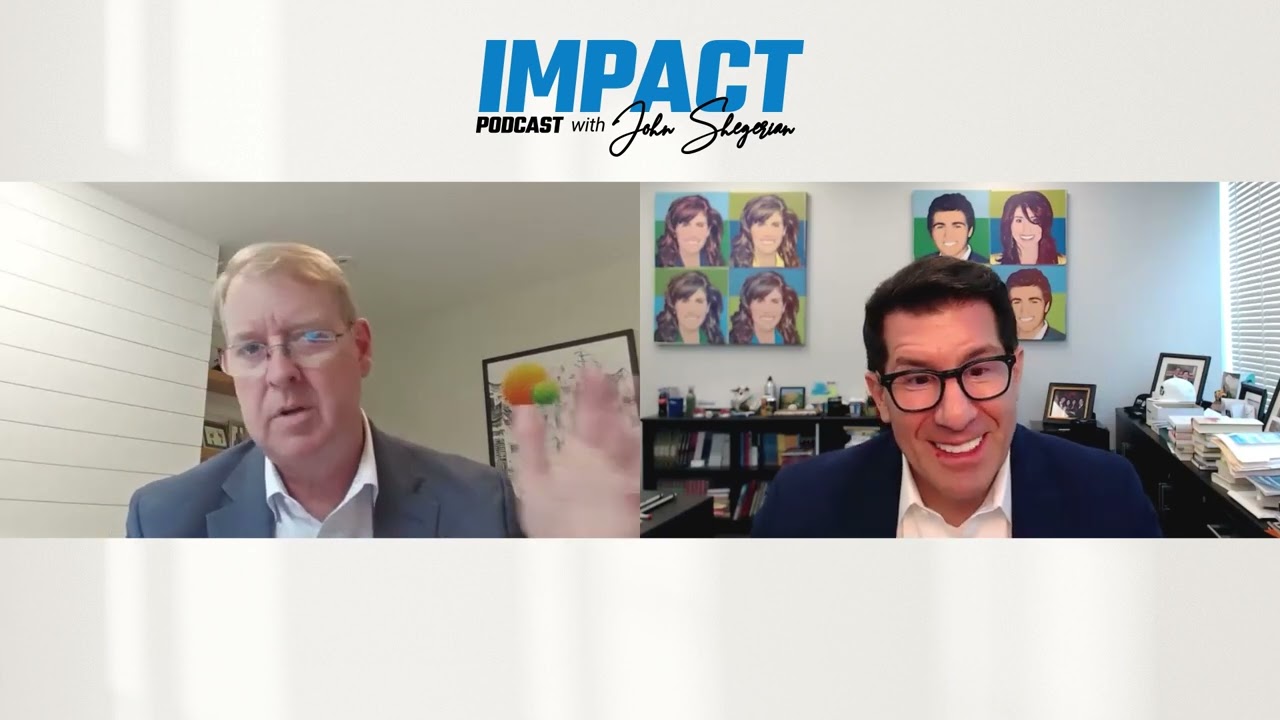

Jon Hixson is the Chief Sustainability Officer and Vice President of Global Government Affairs at Yum! Brands. In this role, he leads Yum!’s sustainability strategy, implementation, and disclosures across the organization in partnership with the Brands, franchisees and suppliers. He also leads U.S. state, federal, and international government relations activities.
John Shegerian: Do you have a suggestion for a Rockstar Impact Podcast guest? Go to impactpodcast.com and just click Be A Guest to recommend someone today. This edition of the Impact Podcast is brought to you by ERI. ERI has a mission to protect people, the planet, and your privacy, and is the largest fully integrated IT and electronics asset disposition provider and cybersecurity-focused hardware destruction company in the United States, and maybe even the world. For more information on how ERI can help your business properly dispose of outdated electronic hardware devices, please visit eridirect.com. This episode of the Impact Podcast is brought to you by Closed Loop Partners. Closed Loop Partners is a leading circular economy investor in the United States with an extensive network of Fortune 500 corporate investors, family offices, institutional investors, industry experts, and impact partners. Closed Loop’s platform spans the arc of capital from venture capital to private equity, bridging gaps, and fostering synergies to scale the circular economy. To find Closed Loop Partners, please go to www.closedlooppartners.com.
John: Welcome to another edition of the Impact Podcast. I’m John Shegerian, and I’m so honored to have with us today John Hixson. He’s the Chief Sustainability Officer and Vice President of Global Government Affairs at Yum! Brands. Welcome, Jon, to the Impact Podcast.
Jon Hixon: Thanks, John. It’s a pleasure to be here.
John: Well, John, before we get talking about all the important work you do in government affairs and sustainability at Yum! Brands, I’d love you to share a little bit about yourself. I know you’re in Virginia today, but where did you grow up and how did you get on this fascinating journey and important journey that you’re on at Yum! Brands?
Hixon: Thanks, John. Happy to share a little bit of it. I get my through line through my career, I say is really I’m a food nerd. I’ve been kind of in the food space one form or another my whole life. I grew up on a farm in Kansas, kind of wheat and cattle and corn and that kind of operation, and then got a degree in food processing, so stayed in food, worked in flour milling and decided I didn’t want to be in a flour mill forever, and had the opportunity to go to Capitol Hill and work on food, agriculture, environment, conservation kind of policies. Did that and then came off of Capitol Hill and really I was a lobbyist. I still I’m officially in the lobbying world, but what I did at my first employer off the Hill, Cargill, was really solve big challenges and that’s what got me motivated, and kind of led me into sustainability by first kind of working on early versions of the roundtable for sustainable beef. Worked for the cotton business in some really interesting challenges around kind of gender equality in Africa, around cotton farmers and who do you pay, and how does that impact household health and quality, so got to do really kind of interesting challenges and problem solvings, and then had the chance to move to Asia for a few years. Worked out there and did what I say was kind of a knockdown drag out negotiation on palm oil. Which was really probably my deepest engagement in sustainability, and that led to other kind of interesting projects. A lot of smallholder work, kind of how do you help producers be a little more sustainable, a little more efficient and survive and make money a little more, and I found that very emotionally rewarding and it was a great set of projects across not only palm oil, but coconut oil and cocoa and some other like livestock and feed operations for smallholders as well. Then joined Yum about 9 years ago and at Yum I lead, I’m the chief sustainability officer, lead our kind of all of our programs. We break it up into food, planet and people and lead kind of all of our goal setting and our execution and measurement, particularly in food and planet. Work a lot with our HR teams and people and culture teams on all of our goals around people, and a lot of our supply chain teams around like how we monitor human rights and those sorts of things in supply chain, so roll all those up and that’s kind of what the team does, and I always, the funny thing about government affairs, especially I say internationally, when you’re in the food world, once you cross the water’s edge, sustainability and government affairs are the same thing. Most of what we really follow are packaging laws, laws that impact our right to operate, our access to commodities and crops we might need or the systems we use for renewable power or incentives they’re in, to kind of run our restaurants and that sort of thing. It’s kind of more almost I call it the external affairs kind of category if you will, work with our investor relations teams, communicate up with the board what we’re doing and share that strategy, and can help try to pull it through the system overall with our internal operations as well as our franchisees.
John: That’s fascinating. John, as you and I know, Chief Sustainability Officers relatively in terms of corporate America, and actually corporations around the world, relatively a new title, new term in the last 20 years or so, were there someone who was in your shoes before you? Were you the first Chief Sustainability Officer at Yum! Brands?
Hixon: There was. I’m the second Chief Sustainability Officer at Yum. There was an individual here and did a great job of setting the foundations. Back then in version 1.0 in this company within the 4 walls, what we’re doing efficiently around building design, lighting, HVAC, that still, that core work of how do you run a restaurant with less water, less power, those sorts of things really is what still drives a lot of that program. I think what changed when I got here was all of a sudden we had lots of shareholder pressure for a few years around what are we doing in the broader ecosystem? What are we doing through our supply chain? So there was one other person here, and all my other prior work overseas in particular never had a sustainability title at all. It was in a totally different naming, but at the essence of it, it was that problem solving.
John: Interesting, and for our listeners and viewers, just to even be more familiar with just when you hear Yum! Brands, let me just share with you how big Yum! Brands is and how familiar you’ll be with the brands as well. KFC is owned by Yum! Brands, Pizza Hut, Taco Bell, Habit Burger and Grill. That’s just a few of the very iconic name brands. Over 8.2 billion in revenue in 2025, with over a million employees and franchise team members around the world, serving one hundred and fifty five plus countries. You’ve got a heck of a platform to manage and be involved with, so when you guys move the needle and do things in sustainability or circularity, it really is inspiration to others to how to act, how to go, and it really does move the needle. How does that look like from where you sit? How do you go about creating the areas you mentioned, food, planet, and people? Break that down a little bit in terms of there’s so much. We know sustainability can be this wide and it can be this narrow. How do you approach it with such a huge platform and make it doable?
Hixon: It’s a great question and a challenging one and when I think about a lot, actually. It’s a little bit of like how do you eat an elephant?
John: I was just going to say that.
Hixon: First, you got to find the elephant, so you can’t try to eat the whole herd. I think part of it is there’s like a lot of corporate strategy honestly. It’s got there’s some focus to it. We did a lot of work kind of retooling what our true focus needs to be, and I think we really drilled down into climate and packaging as kind of our quasi 2 north stars for any other stakeholder out there. That doesn’t mean we’re demonizing everything else, but I think to drive a system this large, if you don’t allow yourself to have some focus, you probably won’t have the impact that you want, so we have a couple of other categories that are usually in food. You have to worry about welfare of animals and your people and supply chain, so there are other areas that are very, very important, and we work on those too, but I think we early on kind of retooled our strategy to say these have consistently risen up to be the top priority, so we draw focus around those, and then try to figure out like one of my favorite books is by our old CEO from when I first joined him just starting my third CEO in the last nine years, but the first one wrote a book called Red, and it was about marketing, and red stands for relevant, easy and distinctive, and I’m always struck by that for how how relevant those initials are in so many things in the corporate world. Whether that’s really around building a brand, but that ease and distinctive things in particular, when things are complex and difficult, I just know they’re going to struggle to get through our system, so our team spends a lot of time on how do we remove friction? How do we drive progress, get some things done and make it as as easy for the system to evolve into doing the right things, rather than lecture and say, thou shalt do X, and it’s fifteen steps to do it. If we can find a simplified way to help drive that execution, that’s something we really try to focus on.
John: I love your idea of simplicity. That makes total sense. When I started this podcast just a mere 18 years or so years ago, chief sustainability officers were just coming into being titled. That was just a new a new title, and it was a lot of CEOs and C-suite people when they heard the word sustainability, they literally were like putting their heads in their hands saying, oh, my gosh, how much is this going to cost me? Talk a little bit about the evolution of chief sustainability officer roles and I assume, but I want you to share with our audience. You have a seat at the in the C-suite table because when done right, it creates an ROI for the company. It creates more resilience for the company. There’s so much return that you could get that’s meaningful. Share what what your experience is in the role of a chief sustainability officer. You started 9 years ago. Talk a little bit about that evolution.
Hixon: Yeah, to some degree, it’s maybe almost come full circle if you will. It felt like I started kind of career wise back in the crisis days a 100% around an ROI, some large customer might have an issue and say, if if you don’t do X, Y and Z on deforestation or on some some externality, some issue, you’re going to lose business. It was a super clear ROI. Then it evolved, I think, into, broader, more visionary, aspirational goals that were really hard to hit sometimes, and we may have lost a little bit of that focus on ROI, and I think it’s coming back to that even stronger now as kind of this pendulum has swung back. I’ll give you some little examples. One of the better ones we have was the Taco Bell, where when you have packaging around food, it performs a lot of things. I think it can be just as 1 person’s waste, but for another it’s a food safety barrier. It has to make the product delivered to the consumer and the customer with the right temperature, the right operating realities, be easy for the team to understand how and use it and how it fits in. One of the things that really can make packaging more challenging, more expensive is to have multiple layers of the packaging, have fiber packaging with a coating or with a plastic window. All those things. We did a work a few years ago that was really impactful where we realized when we removed just a plastic window that used to allow visibility into the quesadilla if you will. Prior to that, that piece of packaging was, never going to be recyclable, never going to be recoverable, was always going to have to go to landfill. You remove that out of there, work on the coatings, and all of a sudden that’s a recoverable, recyclable piece of packaging, and it had lower cost because you didn’t have to have the machine that cut the window out and glued in the piece of plastic in there, so it actually lowered the cost, saved money, and met sustainability needs. I think there are little things like that that, we try to do and also try to encourage. At the end of the day, it’s a great packaging engineer that’s going to figure that out and not me, but I think planting this seed of like, here’s the framework and sustainability we need. We need single laminate packaging, we don’t need multiple things that are impossible to recycle. You plant that seed in some packaging engineer and they can go, wow, wait a minute, we can see another way to redo this example. We have examples there. We have examples of Pizza Hut, similar deal with our wings. They’ve made the box that the wings comes in more recyclable and lower the cost. That’s the kind of win-win I think that we like to look for wherever possible. Not always achievable for sure but that’s the kind of wins I think that really make a lot of sense.
John: Well, since you’re dealing with so many iconic brands, how much of what you learn at KFC is transferable to Pizza Hut, which is then transferable to Taco Bell, which then gets transferable to Habit? Is it very transferable or are there enough subtleties and nuances to sometimes keep you up at night?
Hixon: It’s a blend. There are a few things that are transferable. When you look at like a automated building management system that can lower your utility costs, by automatically turning on and off equipment, that’s a similarity in the back of a restaurant that can be very similar, certainly across the Habit and Taco Bell and KFC. They have similar pieces of equipment, so there’s some learnings that we can pull there. We can also pull globally, which is great too. A lot of our best innovations, unfortunately, come from markets with the highest power cost. If you have a much higher cost of power, your incentives for trialing new things that save energy are a lot easier to evolve. Then at the same time, we did some early strategy work on when we set our climate goals, looked at the marginal cost curve. Where did you have savings? Where did you not? Where were your emissions? Just an understanding of where within your entire system are your emissions came up to beef, chicken, and dairy were our 3 primary largest emissions on the supply chain side of things, so that was great. We had nuances. We have regenerative grazing for Taco Bell and some programs that run from Colorado to Oregon. In Pizza Hut, we did more dairy work around methane reduction and what can you do with feed efficiency and methane reduction. Now on Chicken, it’s a little more around feed systems because the poultry themselves is a pretty efficient protein in terms of GHG efficiency. I think the reality is we use those elements in all of our brands. They may be anchored a little bit in 1 brand over another, but those proteins and that cheese has broad applicability throughout our whole system.
John: Understood. What happens though when you’re now looking at the general whole, you talk about climate. Packaging is important but climate. How does climate interrelate climate goals and your net 0 goals across all your platforms?
Hixon: I think where we’ve seen get the most traction is really the operational efficiency side within the 4 walls of the restaurant. Our emissions have come down. I’d love to take some grandiose credit for that. I think as power has gotten more expensive and renewable prices have declined, we can talk about the political lens in the US. It’s probably important to note of those sixty three thousand restaurants that Yum has, over forty thousand of them are overseas. It’s not a geopolitical lens of just in 1 geography or not. I’m thinking of the whole system at large. The reality of it is that as those 2 things occurred, where power got more expensive and the cost of renewables dropped, we saw a lot of natural adoption both of renewables, and of more energy efficient systems so far. Those haven’t got us all the way where we need to get to, but they’ve contributed nicely to our emissions goals on the restaurant side.
John: Interesting. If you’ve just joined us, we’ve got John Hixon with us today. He’s a Chief Sustainability Officer and Vice President of Global Government Affairs at Yum Brands. To find John and his million plus employee colleagues and franchise team members, please go to www.yum.com. You just brought up a really fascinating point. Sixty three thousand locations, forty thousand are out of the country. John, you’re operating in one hundred and fifty five countries around the world. Talk a little bit about the High Wire Act and the delicate balance you have to strike because of the patchwork quilt of laws, rules, and regulations across different continents with the lack of harmonization that really should exist but doesn’t exist. How do you and your team manage that delicate High Wire Act of trying to figure out how you run the most efficient and best operations, but under different rules and regulations given the vast amount of countries that you get to serve?
Hixon: I think part of it is we start looking for where those efficiencies are and looking where those stronger elements of control are, and where things are most material. Either in terms of volume of restaurants or volume of origin, where we source from. Don’t chase the last nickel, let’s start with the first dollar and really look at some of our franchisees, I always say, are like friends of Colonel Sanders or friends of Glen Bell in California, but some of them these days are very large, very sophisticated entities. We talk with Yum China once a quarter. We have a routine call set up with them. They themselves are publicly listed on the NYSE, very large, very sophisticated franchisee and really a great partner in all of ours at their size and scale. We talk to them a lot about what they’re doing in China and what can we look at here, because they’ve got some of that same shareholder pressure, and they’ve got a level of sophistication on what they’re doing. That really works in a nice kind of mutually supportive kind of dynamic, so we look for those areas. Some of our other franchisees are also publicly traded. That means they’ve got some of the disclosure requirements, so see where we can either find franchisees that have similar size and scale or aligned interests that are more naturally fit. Then we also have procurement in different areas like Yum China, given their size. They do their own, but they work with us in a larger council of our larger franchisees. Collectively, this council makes up well over 60-70% of our total procurement. You find those areas where you can really to your point, drive larger impact in a little quicker and more efficient manner. We want to use what we learn there to talk to those smaller ones as well, but there’s a practical reality again of that focus and simplification. You have to find those larger parts of the system where you can build a little momentum.
John: That’s internal inspiration, that’s internal best practices sharing. What about external? Because the food industry is so large and you’ve had such great experience in your career and have lots of relationships outside of Yum! Brands, how often do you now look to other food, locations, food brands for not only inspiration but also factual science-backed things that are working for them, that you could then deploy at Yum! Brands?
Hixon: I think we look a lot to our competitors, what they’re doing. We look a lot keenly to our suppliers too. I think some of our biggest achievements, some of the things are above the line in visibility and we talk a lot about. Some of them are things in resilience and risk reduction that you do for that side of the ledger. I spent a lot of time in the last month or 2 really looking at that ROI calculation around what kind of cost you reduce, what kind of cost do you avoid, what kind of revenue can you support and help add on and generate, and what kind of revenue can you protect and make sure that it doesn’t go away. What are the ways we can then look at those, and I think it comes back to those partnerships to see, we’ve joined some early collaborations around the whole poultry industry. A number of restaurants that were large in that industry probably now 8, 9 years ago maybe. Got together. We all realized we had kind of a joint welfare challenge around poultry welfare. A lot of consumers care greatly about it, got together and helped kind of get the International Poultry Welfare Alliance off the ground and the Roundtable for Sustainable Poultry and Eggs. Through that process we all got to collaborate, so rather than Yum asking us specific questions about poultry to suppliers, and some other company asking them just slightly differently, we could talk with our suppliers. Like what are you measuring today, what’s the science say is the right thing to measure, and again develop some kind of streamlined and simplifying key performance indicators that now allow us to really collectively engage, and try to improve welfare in a more holistic manner that doesn’t get antitrust violations, and anything of that nature. Keeps everybody where they need to be, but also kind of establishes a baseline of understanding so that we’re not using 1 language and our suppliers are using another. I think one of the things I heard a lot when we did early days of kind of listening to stakeholders, I met with all of our protein suppliers and they’re like, geez, John, you’re killing me. McDonald’s asked for one thing, Yum asked for another, Unilever asked for another, we’re all just growing 1 product here. Like can we find a way to simplify and harmonize? And I like to as much as possible lean in and support those initiatives wherever we can, because that allows you to then get onto the work of how do we collaborate and drive the right change.
John: I like that. Go back, because you’re in that unique role of not only Chief Sustainability Officer, but also Vice President of Global Government Affairs, you have a unique perspective, John, in that you get to see how different governments, and let’s just say that all governments have great positive points, and with good meaning people, and some have negative just because they sometimes can’t get out of their own way. When you’re dealing with the different governments across the planet, and we’re not here to throw eggs at any of them, but which government is driving good, rational sustainability goals the right way, that you wish others would harmonize towards? Is there a government or 2 that’s one of your favorites, in terms of using as a benchmark, that you hope other governments follow, so we get some harmonization here?
Hixon: That is a great question. I’m going to get into it as one fraught with pitfalls, might I add.
John: Yeah. I’m not trying to create anything.
Hixon: No. Yeah. I’ll give you some examples. I think a lot of what we see is like, who moves first and then what can we learn from where it goes, because like Australia is a good example. They tend to do a lot of things that were on the front edge of some of our energy reporting, our disclosure, some of our work around packaging as well, and what was nice, those smaller countries didn’t have all the extreme complexities. I think again what I like is, right now we’re dealing with packaging laws. Many of them like the one in California, I think we have to monitor and measure eighty nine or over ninety different sub-variations of what specific plastic type you’re using, paper type you’re using. Instead, some of the early systems were like, we’re going to charge you a fee that’s here for plastic, if you don’t like that much it’s harder to recycle, and here for paper, and where we have those examples of governments that make more simplified choices that allow, a little wind at your back to drive something, but not being stuck in a tornado. I think that’s the difference of what we’re talking about for good government and challenging government. You can look at regulations as wind in the face or wind in the back, but I try to look at the upside wherever we can, but you need that to be a gentle and steady wind not a tornado, and some of those countries I think they feel like they have like 1 political moment, so let’s just get everything we can possibly throw into this bill. You may miss the mark of like driving progress.
John: Interesting. Talk a little bit about opportunities and responsibilities. Given that you’re a huge brand and represent many iconic brands across the planet, there’s many things that cross your desk. Some are opportunities for you to take on in the right time, and some are more general responsibilities given your leadership as a massive brand that gets to feed hundreds of millions of people a year. How do you do that gentle balancing act of making sure the responsibilities get done, but the opportunities don’t get missed?
Hixon: One, I’m very fortunate. I have a great, great team, so I think the key thing you do in any leadership level of position is try to have as clear a direction of travel, clear as targets as you can, hire great people, and support them, so I think the main most important thing we do is really try to create that culture. We had a great kind of mid-year team meeting a couple weeks ago, where I talked about culture too especially in sustainability. We don’t have a big team because I don’t know that you always want a big team in sustainability. Most of what you want is actually embedded in your operating channels. Your folks that design restaurants are going to be the ones that can do the most success in getting the right equipment and prospects about what’s going to be happening there. Likewise, in supply chain we’ll have the lead on adherence and driving all those policies, so I talked with our sustainability team about the culture we need to create, is one where we need to be good actors. We want people to, we need people to want to work with us. If we’re the ones coming in when and being disruptive or not good partners to them and helping them think critically about what we can do, that’s not going to drive the change we need, so I think a lot of that change is the type of culture, type of leadership, type of engagement the team has with all those other elements that have to run and kind of drive the business.
John: Speaking of engagement, sometimes my friends who sit in your position at very large brands, with as many employees as you have always tell me, John, size is the enemy of communication. How do you communicate with your employees and get them to become not only ambassadors for sustainability, but evangelists for what you do?
Hixon: It is hard, and I like that quote. I hadn’t heard that one but I like it. It is a practical reality. I think again we do a number of things in our communication. We communicate around our annual reporting and what we do. We communicate around our projects. I think what people like to see is more than the investors and activists may want the measurable data on your annual disclosure. What we get the greatest feedback is when we do a trial. We did a great trial in Petaluma where we joined Starbucks, local restaurants, local coffee shops, and all collectively tried to do a trial and see what we can do in re usable cups, so how do we remove and eliminate as many paper clubs that have a plastic lining in them as possible, kind of the modern coffee or beverage cup, if you will. The feedback we got on that 1 trial was amazing, just because it gave people something to see that was concrete. It wasn’t abstract, it wasn’t a theoretical example of what a policy is. It was what an engagement is, so I think what people like to see when we communicate the most is when we write stories, tell examples of kind of what is it we’re doing in our packaging? What does our regenerative grazing project do in Colorado? What sort of work is done to repair a stream and get better performance yields? All those kind of things create better habitat. People like to see that essence, that story, and same on the people side for sure. Probably, more so on the people side. The work that the system does overall around creating opportunities, developing people, developing their communities along with those people. Those are the powerful stories that I think make people feel good about what they’re doing, where they’re working, and want to do more.
John: Internal storytelling is absolutely important. I love what you’re saying. Talk a little about your external storytelling. How do you make sure your shareholders, other constituents and stakeholders, and even almost more important the wonderful people, the millions and tens of millions of people that get to enjoy your delicious brands, understand about the important work that you’re doing, and the amount of time and effort and thought you put into this great work in sustainability that you and your colleagues get to do?
Hixon: It’s interesting. I’m in the nerdy side first and foremost, so I deal with investor relations. We have a cycle of how we engage with them. We always do it leading up to our shareholder meeting, an annual shareholder meeting. We do it as well on the off season as well, and make sure we hear from them what’s on the top of their minds, and they range in 2 categories, I would say. The very, very large, the caliper crowd, all the way down to smaller boutique funds that want to invest in us to create a conversation if you will. It’s a bit of a mix but I think listening to that crowd still is helpful. The other section that’s really started to just speak more loudly, and engage more with our restaurant and companies overall is also the government, so the regulatory side of how we communicate back and forth with them on what they’re trying to see, and then you touched on the internal population. The consumer is the most difficult one. It’s a fickle base. I always say nobody wants to be lectured to about what to eat or what to do from Taco Bell and I don’t blame them. We have an inherent nature of people want to see companies do the right thing. We have some great, fantastic market insights team that came back with some lessons for us when we think of sustainability. It was along that line of make it easy, but they reflected it and take the burden off of me. We know back on that cup example I used in California where we did the trial, the key success was making it easy for consumers. If you force a consumer to go stare at a 7 recycling bin, and I get overwhelmed too. It’s like, okay, what am I supposed to do with all of these individual things? There’s a handful that really can get their minds around that. I think where we see it is when we can make it easy for the consumer. The last bit I’ll use is another data point they had around sustainability may not be where you win, but it can definitely be where you lose. There’s a cultural element of it that you need to communicate with consumers that does not come off highbrow. It makes it align with their values and sense of doing good, but it may not be the most smack them in the head communications kind of thing. It’s subtle cues you have in the restaurants and little nuggets that tell a story for those that want to see so that you’re doing the right things. It’s a delicate balance I will say, and I would never in a million years profess to be a marketer but I listen a lot. It’s nice to see how they view the priorities of kind of the overall brand. I think you have to understand what your overall brand is also doing too, and then figure out how your space and sustainability can neatly fit in there.
John: The marketers and the experts that you get to hire to help you with that subtle messaging, is it their wisdom that they share with you that more and more your consumers, the consumer, and your consumers are voting with their pocketbook and they want to support brands that actually care? Is that more of a growing trend?
Hixon: I was nodding when you said vote with their pocketbook, but on the trends it’s interesting. I think right now, what we see in our space is the strain of the consumer, the value that they’re looking for. There’s a practical reality of inflation and the pressures and the realities of it. We have to be mindful and respectful of that. I think overall that’s why I say sustainability has got to fit into the brand, not the other way around where you’re trying to sustainabilize your brand if you will. It’s got to fit naturally into a part of it. Some of the things candidly that we do that make the most impact, are what I call the silent hand of sustainability, where we just work over the years. Our engineers work with manufacturers and slowly get efficiency standards more and more into the procurement list of the things that we buy, and the older ones that are less efficient come off the list. It’s making sure that in our Asian markets that do use palm oil, that it’s kind of built into the system to meet the sustainability requirements of the roundtable on sustainable palm, and those kind of things. Not things that are highly visible. In the US or Europe, you talk about palm and everybody gets kind of hair on fire at times, but for most of the world that’s the most common cooking oil out there, and we need to do it sustainably. You’ve got to pick where you use your voice if you will, but a lot of that requires a lot of listening.
John: John, there’s not a day that you and I can turn on Bloomberg or CNBC, or read the Wall Street Journal or New York Times or any great other publication without reading about another AI story. How much is Yum! Brands, leveraging AI to innovate and to continue to drive not only more innovation, but just more success and more sustainability opportunities for your great brand?
Hixon: I think greatly I would say, and that’s not limited to sustainability. Holistically across the company, AI is very important and this is the second time I’ve gotten asked this question this week, and I want to go back and look. We had a pilot project where we deployed AI across about ninety Taco Bells probably a year or so ago, and I’m reminded I want to go back and see. We went out and visited the restaurant. One of them was here in Northern Virginia, and it was great to see because I think we have a fear, rightfully so. I’m at the parenting age where I’ve got a son getting out of college, so like you’re worried about who’s getting jobs and not, and what impact it’s having. In our situation, it was fascinating to go see how the AI works in our restaurant, and it really is anchored around improving the team member experience and improving the consumer’s experience. When consumers go to quick service restaurants, the killers that will really frustrate them are wrong order, wrong food or cold or out of spec if you will, but not the right temperature and not the right product, and some of the tools that we have that like automatically have a scale underneath it, and when you put the bag there for the last check, and it sees what’s on your ticket, what’s in the bag, and goes, hey, did you miss a nugget on that meal? Like it’ll tell you like automatically, and it’s not something where we programmed in the weight of what the nuggets are. It just learned over time autonomously what sort of programs and what the system should, what the receipt should look like when it’s 100% accurate over time, and likewise in the back of the house it does some more predictive scheduling as consumers roll up, makes it easier for the employees in the back of the house to understand, maybe I should be… it’ll tell you, you don’t have to think about it, it’ll tell you like, hey, make X, Y, and Z ahead of time just to see what’s that may be popping up in the cycle again. In our system, it’s really been, and it had good feedback from the employees. They liked it, they valued it in making their jobs easier, and the consumer feedback was good as well, so, so far there are pockets of challenge out there for sure, and we use just a lot of technology. Our tropical oils do use kind of geospatial monitoring as well. Such a powerful tool to really see if you’ve got land conversion or deforestation around you, and if you do, can you rapidly, rapidly investigate it. When I first got into this business, it was almost impossible to do that. You didn’t have those locations, so there’s nice applications of technology from kind of AI to like lots of other uses that we’re leaning into that really add a lot of value.
Hixon: John, the more I have the honor and pleasure to interview what I call one of the greatest fraternities on the planet, the chief sustainability officers and impact officers of great brands like Yum! Brands, I’m learning more and more that there’s in the last twelve to eighteen months, walking away from these, what became an alphabet soup of acronyms that got highly politicized to more of the terminology around sustainability and the focus on resilience and materiality to the core mission of each brand. Is that what you’re finding as well at Yum! Brands?
John: I am but it is not a linear or fast journey. There’s still a sea of acronyms that we swim in in Europe, and I have to report to the board on them and like use this, but really it means this. We’re trying to do the right things for the workers in our supply chain. We’re trying to do the right things for the planet and the geographies where these products are grown. Like I said I grew up on a farm in a very, very rural part of Western Kansas. The more you can use simple understandable language, the better with me, and I think with most people, nobody wants to get into a sea of acronyms.
John: Acronyms. I’m with you. We’ve been talking about AI a little bit. Talk about you’ve been at Yum 9 years, so you have a lot of history behind you. Plus you were at other great food brands before that, Cargill and others. Talk a little bit about what you see in the future. Take out your crystal ball, John, and now predict a little bit. The changes or innovations that you think are going to reshape sustainability and the food system in the next 9 years.
Hixon: I think you’re going to see more technology use on finding scalable solutions. I always say in the sustainability world especially around climate, when you’re thinking of energy production, so coal, oil and gas, it’s a pretty straightforward and easily understandable emissions reality. Food is largely cyclical. It is a seed that’s in the soil for a little bit, comes up in the air, photosynthesis, the methane cycle, the gases, the emissions that are around it are largely above the ground. There’s a little bit that goes into that system, but it’s a pretty highly efficient system relative to petrochemical use. It’s really largely a cyclical nature. I think we’re going to learn over time, is that the right thing to focus on, or should we really focus on nature? Should we really focus on kind of biodiversity or water? I think you’re going to see a little more material like focus areas that will drive the change on the climate side, but probably more targeted to kind of other kind of key challenges, especially in food I would say, so I think there’s going to be great innovations and tools that will allow us to be a little more precise at finding those areas, where we have the highest impact and beginning to lean in a little bit more, and a lot of the other innovations I’m hoping that they come about the way that they are leaning, are in the regenerative space. Regenerative agriculture is a fuzzy word. It’s back to an acronym. It’s not easy to get your mind around, but in the main, I think it gets down to improving soil health and what benefits come from that. If you can do that in a way that is economical for the farmer and produces economic benefits for them, that’s a nice self-fulfilling cycle, and I think you’re seeing really nice innovations there. Sadly, again high price fertilizer, another one of those things, drives a lot of innovation and other people trying to figure out, is there a better way to do X, Y, and Z and help kind of meet the nutrient needs, improve the soil health but not do it in a way that we have been. I think innovation and technology overall will continue to yield great benefits and sustainability.
John: John, is it true that you guys put out an annual sustainability report? Is that correct?
Hixon: That’s correct.
John: What month does that usually come out in?
Hixon: It varies. We’re trying to speed it up to meet regulatory timelines, and hopefully align it a little closer to our annual report, so it should come out here in the next month or so.
John: Great, and for our listeners and viewers that then lives in perpetuity on www.yum.com?
Hixon: That is correct.
John: Listen, John, it’s been just a joy and an honor and a pleasure to interview you today, and for our listeners and viewers, to find John Hixson, who’s the Chief Sustainability Officer and the Vice President of Global Government Affairs at Yum! Brands, please go to www.yum.com. John, it’s not only been fun to interview you and a joy, but also I want to just thank you for making the world a more sustainable and better place.
Hixon: Thanks, John. I enjoyed our conversation. I had a great time today.
John: This edition of the Impact Podcast is brought to you by Engage. Engage is a digital booking platform revolutionizing the talent booking industry. With thousands of athletes, celebrities, entrepreneurs, and business leaders, Engage is the go-to spot for booking talent, for speeches, custom experiences, live streams and much more. For more information on Engage or to book talent today, visit letsengage.com. This edition of the Impact Podcast is brought to you by ERI. ERI has a mission to protect people, the planet, and your privacy, and is the largest fully integrated IT and electronics asset disposition provider, and cybersecurity focused hardware destruction company in the United States and maybe even the world. For more information on how ERI can help your business properly dispose of outdated electronic hardware devices, please visit eridirect.com.
 Spotify
 Apple Podcasts
 Amazon Music
 iHeartRadio
 YouTube
 YouTube Music
 Audible
 Pandora