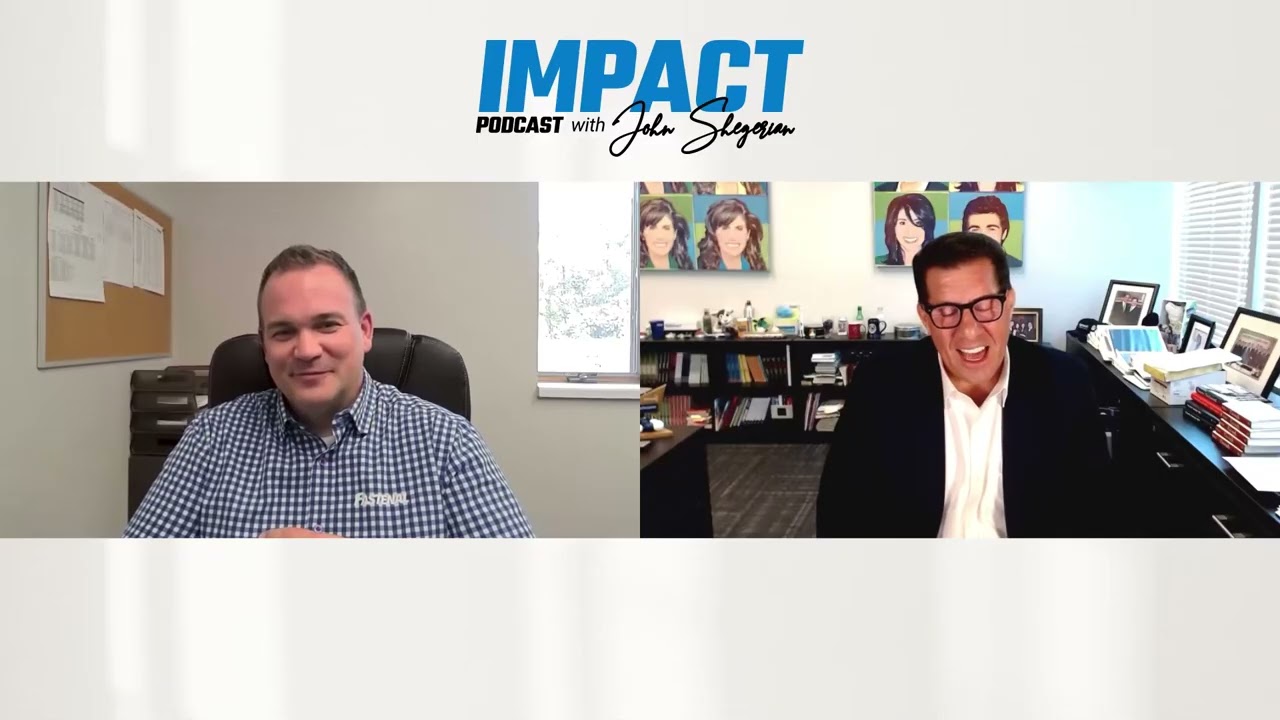
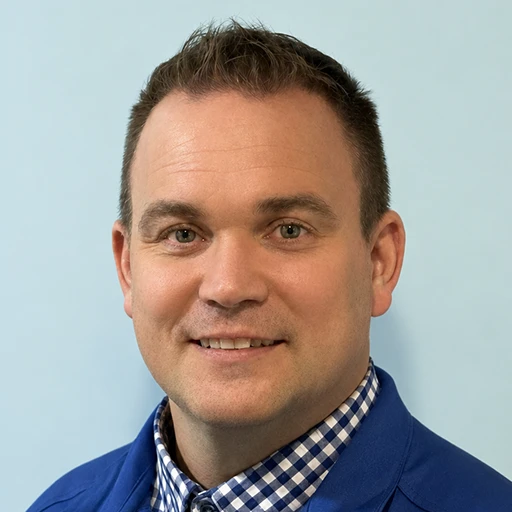
Dave Olson leads EHS & ESG efforts for Fastenal Company, a $8 billion dollar wholesale distributor. Fastenal has over 24,000 employees across 25 countries that continually solve challenges and develop solutions for the world’s largest organizations. Fastenal leverages its infrastructure of over 3,000 locations and 10,000 vehicles to provide millions of products and services to our customers.
John Shegerian: Get the latest Impact Podcast right into your inbox each week. Subscribe by entering your email address at impactpodcast.com to make sure you never miss an interview. This edition of the Impact Podcast is brought to you by ERI. ERI has a mission to protect people, the planet, and your privacy and is the largest fully integrated IT and electronics asset disposition provider and cybersecurity-focused hardware destruction company in the United States and maybe even the world. For more information on how ERI can help your business properly dispose of outdated electronic hardware devices, please visit eridirect.com. This episode of the Impact Podcast is brought to you by Closed Loop Partners. Closed Loop Partners is a leading circular economy investor in the United States with an extensive network of Fortune 500 corporate investors, family offices, institutional investors, industry experts, and impact partners. Closed Loop’s platform spans the arc of capital from venture capital to private equity, bridging gaps and fostering synergies to scale the circular economy. To find Closed Loop Partners, please go to www.closedlooppartners.com.
John: Welcome to another edition of the Impact Podcast. I’m John Shegerian, and I’m so honored to have with us today, David Olson. He’s the Director of Sustainability, EHNS, and ESG at Fast and All Company. Welcome to the podcast, Dave.
Dave Olson: Thanks, John. Appreciate you having us today. We look forward to the conversation. We’re excited about the topic, and we look forward to a great, great show.
John: A couple of things before we get going. We had a chance to catch up and chat a little bit before we started recording. First, I want to say for all our viewers, you are a veteran, and I want to say thank you for your service to this great country.
Dave: You bet. Absolutely, John. You know, I couldn’t do it without our fellow veterans out there, so I appreciate the kind words, and absolutely. Good crew to work with, so thanks for recognizing that.
John: Yeah, absolutely. It can’t be recognized enough, and we appreciate wonderful Americans like you that keep our country free and safe, and also fight for democracy to stay the beacon of hope for the rest of the world. So thank you again. Thank you again. Before we get going and talking about all the cool things you’re doing in impact and sustainability and the H&S and ESG at Fastenal, I want you to share a little bit about your backstory. Where did you grow up, and how did you get on this important journey that you’re on?
Dave: Sure. No, great question. Thanks for asking. You know, when I look at my past, I grew up in a small town in western Minnesota, very, very rural America, if you will, farming community. So I think ever since, as far back as I’ve known, you know, sustainability has been a theme. We’re very thoughtful about conservation and a lot of the areas that we work with from an agricultural standpoint. So that kind of kicked me off. My grandparents owned a dairy farm that I worked diligently as a young lad, if you will. So a lot of the things and practices I picked up on, you know, from a sustainability standpoint, reusing, being thoughtful about resources, and really understanding the long-term impacts of the decisions we make really went a long way from a pretty young age.
John: Where did you go to college?
Dave: So I moved down to Winona, Minnesota, and went to Winona State University. My degree and background is actually in finance, so…
John: Really?
Dave: Yeah, it worked really well in this area as ESG kind of evolved and came around. So I went and worked there, started school in Winona State in Minnesota, and then worked at Fastenal part-time as my first job, one of my first jobs coming towards the end of college. And I moved into international sales, and then true to Fastenal Forum, I worked in a number of different positions. They do a great job promoting from within. And then in about 2012, I started in health and safety for the organization, and then kept continuing to grow and scale and all things ESG and sustainability as you know it today.
John: Interesting. So for our listeners and viewers who aren’t familiar with Fastenal, a couple of facts. Founded in 1967, one of the major distributors of industrial construction supplies and the largest fastener distributor in North America, fastener distributor. And you provide supply chain solutions, including bin stock, vending machines, inventory management, and logistic services, over $8 billion in revenue, over 24,000 employees. It’s a big enterprise you’re managing in terms of sustainability, EH&S, and ESG. This is not a small enterprise on any level whatsoever.
Dave: No, Fastenal, you know, Fastenal is founded in Winona, Minnesota in 1967 with an idea that we could vend fasteners out of a vending machine. Our founder, Bob Kerlin, had this vision. That later on in the journey came to fruition through our FMI, Fastenal Managed Inventory Program, where now we have over 100,000 vending machines that manage, track, deploy product. We scale to other services. We have our own manufacturing. We have, you know, we’re on-site, inside customer facilities, helping them manage their supply chain very well. So a lot of the things that we started with evolved and became really aligned well with, well, you know, the sustainability theme. I think early on, you can probably Google it. I mean, our CEO or founder, Bob Kerlin, was well known in the industry to be frugal. So the thoughtful things, you know, when we think about back in my day, actually in the farming community, a lot of the same things resonated with our founder. And we’ve always been a sustainable organization. You know, we always were thoughtful about our resources. We were thoughtful about how we deploy our capital and make good decisions to ensure that we’re getting the best return on all the things that we consume. So it’s grown to a pretty large enterprise. We’re in 25 different countries today, a host of services, 25, almost 25,000 employees. So the organization has grown quite well. And we have strong customer partners, you know, that we are able to kind of grow along with and kind of continuing to innovate and work together to solve a lot of the challenges that were faced in the industry.
John: You know, you said you joined Fastenal, you know, and you worked through a lot of different positions, like you said, which is a great experience. You started moving into sustainability and EH&S in 2012. When did you get the director of sustainability role? And was there already somebody in it? Or did you come in with a proverbial white sheet of paper, whiteboard, and started from scratch?
Dave: Good question. So the sustainability role really was an extension of our EHS position. So I started, we took, we relaunched EHS as an organization to continue that journey in 2012. 2013 and 14, we enhanced that department or this area with more of an environmental focus. We continued to scale. As you know, COVID came along, and that was a pretty big disruptor in the industry. And we did a great job navigating that, those conditions. And then within that same timeframe, the ESG theme came along as well. But so, between, it was more of an evolution where we continually expanded on the scope of things that were considered sustainability within the department. So as when COVID kicked off, I guess, or kind of ended towards the end there, it took on a more formal approach. And a lot of the things that we see today in the industry is really what we are thoughtful about or what we think about when we speak to sustainability. So it was a slow and more rapid transition, if you will, with, along with the industry.
John: Got it. And how did your background and all the other divisions, including your finance education, make you even better at what you do today in the EHS, ESG, and sustainability as a whole?
Dave: Sure. So I was [inaudible]. I was in product development for a period of time. I was in sales for a period of time. And then I worked inside our finance team for a period of time. All of those things really coalesced within the sustainability space, because we can speak to the audience, you know, that we’re thoughtful about, or we can frame scenarios and speak to solutions in a way that makes sense to folks in other areas of the business. As you know, EHSG and sustainability is fairly complex. You know, there’s a lot of things under scope. So I think the ability to kind of walk in those shoes and speak that language really helped enhance a lot of the good things we’re doing. I think we’re fortunate in Fastenal, you know, because of our journey and our founder’s approach to growing a business. We were already doing things really well. You know, we might not, we’ve always been fairly humble as an organization. So we probably didn’t do, you know, there was an opportunity to tell our story in a much better fashion. So we published our first ESG annual report about five years ago, trying to kick off that journey. And we’ve enhanced it since then.
John: Talk a little bit about finance and sustainability as a whole, as a macro topic. Given that you have a finance background, and given that, I remember when I started my company, ERI, but even when I started the show in 2007, and started interviewing people who were working in and around the edges of sustainability, there weren’t even a lot of directors of sustainability or directors of impact back then. There were people working on the edges of it. CEOs and people in the C-suite used to sort of hit their head when they walked in their office because they said, oh, how much is this going to cost me? But it’s folks like you who take a disciplined approach to sustainability, and other organizations that now do, that prove out that sustainability could have a great ROI. Explain that interrelationship at Fastenal, and how you make that, turn that into a reality.
Dave: Sure. So, you know, we’re all about an ounce of prevention. So it’s kind of that old term where if we can work upstream far enough and make some good decisions, it not only has immediate bottom-line impact that magnifies as you work downstream through the organization. One great program we started with our friends over at Trax is we would bring in plastic material, plastic waste, plastic wrap that we would, the industry is known for wrapping pallets and plastic wrap. So we, for the longest time, you know, we didn’t have a really good solution to manage that plastic waste. So what we decided to do is partner with Trax Decking. They use plastic wrap in their decking product. So as material comes into our organization, we’re able to take that material, bail it, and now ship it off to Trax for reuse and additional manufacturing processes in their Trax Decking. But then at the same time, it’s kind of that multiplier effect. So now we’re able to take back material from customers, for example, as well. So now they’re not having dispose of it, paying that disposal fee. You know, we’re able to take it back on a truck that’s already going to their facility. So we’re kind of leveraging that infrastructure. And then we’re able to make sure it stays out of the landfill in the process. So that’s just one example of many processes that we really are thoughtful about when deploying some of the energy that we look to internally. And the same is true with vending. You know, when you look at our vending machines, one thing that we are thoughtful about is our ability to reduce consumption through a vending machine. Because now, instead of just taking products off the shelf, a customer can really hone in on where they’re consuming materials. So, you know, this one mechanism for deployment of materials. Now we have the ability to gain insight into what’s being consumed, how much is being consumed. We can focus on areas to reduce consumption and maybe enhance the types of products and materials going through that, that have a lower, lesser impact. You know, and all those things ripple downstream to now all those materials will, you know, we’re not only consuming less, but we’re sending less materials downstream as a result as well. So, there’s a whole host of things that kind of, you know, could contribute to some of that financial benefit. Even when you think of, you know, if we can strategically stage materials closer to the point of use, now employees don’t have to spend labor and time going over to their, you know, tool crib or, you know, going over to get parts and materials, because now they’re really leveraging that tool to optimize their labor as well. So there’s a quite a few avenues and approaches that we can use to really articulate the value proposition of sustainable efforts.
John: So, you’re in 25 countries, over 24,000, almost 25,000 employees, 10,000 vehicles in 3,000 locations. Are those numbers pretty much on point?
Dave: Yep.
John: So, talk a little bit about scale. How does scale work for and against you in what you do in terms of, obviously scale at your level can get you some great economies, but on the flip side, given that right now in the world, there’s a patchwork quilt of regulations and laws around sustainability, ESG, EH&S, and all that other stuff. How do you balance, do that fine? How do I say this the right way? High wire act of balancing the benefits that scale can get you in terms of getting economies of scale, but also manage the risks that a company of your size is faced with, given that we haven’t harmonized the rules and regs around sustainability, EH&S, and ESG around the world just yet?
Dave: You bet. No, great question. And I thought we, I think we experienced that really well during COVID, you know, the dynamic environment of changing regulations at a rapid pace. I think this is an extension of that, you know, that scenario playing out. Our old CEO, Dan Flornis, you know, he thinks of our business in terms of individual business units. So we’re a very decentralized organization. We have great leaders in the field and throughout the world that continue to make great decisions. And, you know, we work, from a corporate standpoint, we work with those folks to identify risks and opportunities and impacts and really be thoughtful about our approach and strategy for ensuring we continue to maintain a lot of those obligations. But then we’ll work with those folks on an ongoing basis. And it’s almost a social dialogue. We have a good cadence where we’re evaluating our strategy across various countries. You know, the way we go to market, the flip side of that is because we have such strong relationships and customer partners, you know, we’re always taking this journey along with someone. Our customers experience very similar or even more pain, if you will, in this theme. So we try to position ourselves as a solution as well. So we understand the challenges and obstacles they face. We might have some similar obstacles and then we can work together to kind of figure out the best way and resolve a lot of those conflicts or obstacles in a similar fashion. So, it’s quite dynamic. We’ve done a great job as an organization with those partnerships and kind of building on those customer relationships. And at the same time, you know, we’re learning alongside them. So it’s a very, it’s not just fast and all in Winona, Minnesota. It’s really a global organization that’s continuing to innovate and evolve to overcome those obstacles.
John: With you and your local partners around the world. That makes sense.
Dave: [inaudible]
John: Size. Size sometimes at scale can be the enemy of good communication. How do you take, you know, given where you sit and, given that sustainability is part, as you point out of your origin story back to 1967, it’s part of your DNA at your company. How do you continue to communicate all the wins and all the goals that you have in sustainability, ESG, and EH&S, given the size? So therefore you could create not only an organization full of sustainability ambassadors, but you could have an organization of 25,000 or so sustainability evangelists. How do you manage the challenges of communication at the size that you are?
Dave: Sure. We actually have, we’ve just made a internal adjustment to the way we approach our communication. So we would have some, you know, corporate internal communication channels that we are now reevaluating currently in the last probably 12 months. And we’re expanding upon, we’re leveraging more integrated tools that can customize communication to the local markets. So when, you know, the local business units, maybe log on, they’ll have custom communication that is really relevant to their business and tailored to them and some of the problems and issues that they face and they’re challenged with. At the same time, you know, we’re thoughtful about the use of things like AI is the theme, right? So that’s the one approach that we’re very thoughtful about and how we deploy information across the organization. So we have a whole effort around just that: how do we, what’s the future look like with understanding the challenges that we face at the local level, knowing that we have great local decision makers, you know, they’re solving problems alongside customers every day. So they do a fantastic job. We’ve done a great job doing that. How do we, from a, you know, corporate or, sustainability department enhance some of those decisions, or maybe we identify something that is scalable and then we’ll more aggressively approach that theme or topic with various business units. So it’s kind of a multifaceted approach where we empower people to make good choices. We kind of have a framework or some KPIs that we might deploy and communicate and then empower them to make good decisions to hit those. At the same time, we provide a solution or two where the Trex program, for example, might be a solution that they can take advantage of to help them hit their KPIs. So it’s certainly not an easy task if you will. It’s fairly messy. I think everybody in this industry today is comfortable navigating, you know, a lot of these dynamics. And we just strive to move forward as quick as we can.
John: If you’ve just joined us, we’ve got David Olson with us today. He’s the director of sustainability, EH&S and ESG at Fastenal Company. To find Dave and his colleagues and all the important work they’re doing in sustainability, EH&S and ESG, please go to www.fastenal, F-A-S-T-E-N-A-L.com. You don’t have to write it down or stop driving your car or lifting weights or whatever you’re doing, it will be in the show notes. And for those who understand and want to know more about Fastenal, let me share a couple of things. Um, Fastenal has achieved recognition as America’s safest company. That’s huge. Equivada’s silver medalist, huge. Newsweek’s most responsible company and greenest company and sustainability awards. These are a lot of awards you guys have won along the way, Dave. So, given that’s the case, how do you, you know, how do you keep safety first while you continue to drive your sustainability, EH&S and ESG goals? As they say, no good D goes unpunished. With all those awards, that’s a lot of pressure. You’ve set a high bar. Let’s just say that. How do you balance, you know, the critical nature of making safety first, but also keeping sustainability as part of your culture and DNA?
Dave: Sure. No, again, great question. Our leadership is, you know, I think our leadership as an organization, I think our culture is one of you know, it’s a very people-centric culture. So our founder is very much kind of, drove that into the business where we’re very thoughtful about taking care of the person to our left and to our right. I resonate obviously with the military service, you know, it’s a very fundamental aspect of what we do in team building. So when we think about ensuring how we sustain a high level of safety culture, it’s really driven by not only, you know, our top-level leadership, because we do value and care so much about our people. It’s really, that line level supervisor and in the individual, you know, you don’t have to be a supervisor to be a leader. So that’s, and that’s one thing we were thoughtful about when we look at our decentralized model is everybody’s in like empowered to make good choices and good decisions. So the fact that you might not be, you know, an executive vice president doesn’t mean that you can’t make really good decisions and take care of the person to your left or to your right or yourself in that case. So we’re very, from a safety standpoint, we’ve done a fantastic job with that philosophy. We strive hard to position our, you know, our department specifically as a service to continue to provide high-quality services and, you know, all the safety things that would go get involved, like inspections and solutions and behavior-based training. And you know, we work hard to provide those solutions and tools and empower people to make those good choices. Um, but it’s really just our management does a really good job empowering people to run incredible businesses. And I think we see that as a result and the same is true with, again, when we talked about partnering and becoming close with our customers, again, they have very similar challenges, you know, so they’re also, and so we work with our customers very closely on ensuring that we align with their expectations. You know, we are aligned with what their approach is to maintaining a safe and healthy culture. So those are all good things that kind of come together to really drive that performance going forward from a safety standpoint.
John: You bring up again, at the top of the show, I thank you for your service and you bring up your military background. That’s really important. We just said about, you don’t have to be a vice president [inaudible] to be a leader. Talk a little bit about your military background and what that taught you about leadership that you brought to Fastenal in terms of a democratized thought process around leadership that everyone could be a leader. You don’t have to have a fancy title to be a leader. How does that work? How do you instill that upon your colleagues and your employees at Fastenal?
Dave: Sure. You know, I think a lot of it stems from values. So we’re very thoughtful about the values we instill in our business. You know, we work hard to communicate those and bring those to light and make sure that, you know, it’s not like it’s hiding in the desk drawer of what values are. And the same was true in the service. You know, you were encouraged to ensure that you know, you might be a bad analogy, but once you get your, like in an airplane, if the airplane is an emergency, you put your mask on first, but then you go help the person to next to you. It’s the same kind of philosophy where folks that do a great job. You know, we look to those folks to kind of coach and help and support those other folks that might be new into the business. They’re new hires. They came from a different department and they’re new to the department. So there’s just a variety of different ways that we cultivate the social dynamics within the organization to, it might not, you know, we might not speak the word, hey, you’re a leader. It’s more, you know, you’re performing an act of service. You’re helping someone that might not be a report to you, or you don’t work in the same department, but you just have knowledge on how something works. It goes a long way in the safety area, especially we have folks with 20, 30 years of experience. So we’re very, very intentional on, you know, supporting those folks and sharing their knowledge. You know, so leveraging those skills and abilities, and communicating that with folks newly coming into the workforce to get some of that alignment, to make sure that we continue to kind of build on that culture of communication relationships. And the same is true with our, again, with our customers and even our vendors, it’s all about relationships. So we work hard to develop that theme.
John: My friends and colleagues that have military backgrounds love to talk about continuous improvement. Is that part of the mantra and part of the mission at Fast and All to continually improve the organization? And does that fit into your greater macro goals and sustainability, EHS and ESG?
Dave: Absolutely. [inaudible] pretty consistent theme, especially for Fast and All; you know, we’re always innovating, understanding new technologies. How do we improve upon our business processes and the way we go and approach our sustainability efforts, really understanding where the next opportunity is, is probably one of the biggest challenges because of the complexity and the speed at things that are changing. How do we ensure that we’re steering the ship in the right direction from a sustainability standpoint? So that’s always, that’s a pretty significant challenge, as you’re very well aware of. And I think the team has done a great job, you know, working through that complexity, but yeah, I think innovation is just in our DNA ever since the founder, Bob Kierlin, you know, had this vision of making vending machines that deployed fasteners and he was probably 10, 15 years ahead of his time. We brought the technology back, at the right time when the industry, you know, had the ability to create the vending machine and it became a huge success. So it’s just kind of one of those things that we focus on and we’re always looking for ways to improve.
John: You mentioned earlier, you know, there’s not a day that we wake up and we read the papers, whether it’s online or offline or watch Bloomberg or CNBC television, and we don’t hear the headlines and AI is part of the headlines somewhere, somehow, always. How is AI impacting the greater goals and missions of Fastenal, but also more specifically, your greater goals and mission with regards to sustainability, EHS, and ESG?
Dave: Sure. That is a great topic. John, we probably have, I know more about AI today than I probably ever thought I would. I have a lot more further to go in my journey with learning AI. We’ve deployed so many tools and solutions to our employees to leverage a lot of the things that AI provides. And I think one of the thing that we’re thoughtful about in the sustainability department is really, probably the speed at which we deploy some of the technology. So, it’s a very, there’s very powerful tools. I think people, you know, we know from a safety environment, we make people [inaudible] decisions. So we’re constantly trying to ensure that the deployment of the tools and solutions, people aren’t, you know, it’s not too much. It’s governed well, we kind of work through some complexities or points of friction as they come up, in some cases with safety, for example, you know, we’re thoughtful about the messaging that is deployed along with it. So when we go through our internal communication channels, we want to make sure that we’re getting feedback from the users often, to make sure that the information that’s being deployed through some of the AI tools is that as appropriate, and the solutions that are happening are the ones that we feel are within the scope of our hierarchy of controls. So there’s a lot of, I don’t know if testing is the right word, but there’s a lot of dynamics that play out there that take us on this learning journey. And we’re just thoughtful about how quickly we deploy a lot of the solutions and the tools. At the same time, we know there’s a ton of an incredible amount of, power behind these tools and it can create a lot of efficiencies, especially for our area and department. So we’re excited for the future and we just are very diligent in our deployment of some of these solutions.
John: Well, you just bring up a key word learning. You know, when I’ve talked to organizations that are having problems showing ROI with AI, it’s because they sort of encourage the use of it, but there wasn’t enough learning on how to use it prior to the encouragement of using it more. How does Fastenal balance the interest in getting the leaders like you, but then also the employees at Fastenal trained and learned on AI, so when they use it, it’s actually with purpose and intention?
Dave: Sure, you know, I think we have a great IT communication team, departments that are very well versed and deploying solutions across the organization, you know, so from a, probably the, for that group, it’s, it’s very much a, they have the ability and they’ve done a great job in the past deploying various types of solutions and technologies. Um, you know, I, I think from the user standpoint on our side as a sustainability department, you know, it’s very much seems to look and feel that they give us a level of confidence. They’ve done this a million times. So this is no different than that. So from our user side, being in sustainability, working with that group has been phenomenal, you know, I think they do a great job working across all the various business units, and again, we’re a very social network-oriented organization. So if I don’t have an answer, I might know someone that does. So, that’s kind of how we work through things. And we have online tools and we have the ability to, you know, search for some things internally, whether it’s safety or environmental stuff or compliance related information, but we always have, you know, we have, I always have a point of contact if there’s one in doubt; you can always reach out to your support person or communicate through one of seven different channels, they’re always available, and so we just navigate the complexity together, knowing that it’s a journey.
John: Got it. That’s fascinating. And it’s actually inspiring as well. Talk a little bit about EHS and ESG over the years. Those terms and the whole alphabet soup of acronyms in the sustainability field have gotten sometimes, unfortunately, over-politicized. And with that came some organizations, even just dropping the use of it, just rolling that into the greater macro impact or sustainability terminology. How does, you know, you have a large platform now at Fastenal. And it’s a big company. How do you choose what to pursue in terms of sustainability? Obviously sustainability, you can choose a lot of different topics to work on on a regular basis, but how do you keep that aligned with the mission of Fastenal going back to that new word that a lot of managers like you and directors like you and leaders like you are now leaning into, which is materiality, the materiality of sustainability to the main mission of your core brand, which is Fastenal. How do you choose important topics that stay aligned with the main mission, keeping the main thing, the main thing?
Dave: Sure. No. And I think, you know, our, I, we look at our department as, we provide a service. So we look at our business as serving four different stakeholder groups. We serve the investment community. We serve our customers. We serve our employees and we serve regulators or, you know, compliance. So we kind of think about our business and determining what’s the prior already for those customers or those stakeholder groups and really frame our business that way. So we might have multiple, competing priorities, but it’s a fairly, we try to keep it a short list. I know the ask is incredible by the industry and by, you know, the turbulence and the change and all those things, but we really refine our list of priorities and to make sure that we’re kind of hitting those top few things for each one of those stakeholder groups. And then we just, we keep progressing through that, you know, so there’s probably a host of things that are really important to our customers that we’re striving to align with, to ensure that we support them and their business. There is a host of things that we feel internally, we can make a significant impact. There’s, you know, regulations which we know we’re going to have to align with, some of those coming up, and then that’s kind of how we think about it. So, we try to simplify it, work through a lot of the complexity and…
John: I love it. So talk a little bit about things you’ve been doing this a while, but you’re still young and you have a lot of blue sky in front of you. What are one or two of your favorite accomplishments to date in sustainability, H&S, and ESG? And what are you looking forward to tackling at fast and all the next couple of years in sustainability and ESG and EHS?
Dave: Oh, sure. Oh, goodness. You know, I think, you know, you’ve listed off a handful of achievements and I know we very much appreciate the recognition. We’re a very humble organization, but I think what we value most is our ability to better serve our customers and knowing that, you know, we benefit, there’s a value internally from benefiting, but then we can also ensure our customers continue their journey and their ability to sustain a long-term, you know, business as well. So I think our, in this effort of ESG and sustainability and investing in all the infrastructure and processes and programs, it gives us a level of confidence and knowing that, you know, we’ll continue to be able to serve those customers no matter what the environment is, you know, I, again, I hate referencing COVID; ESG is probably COVID 2.0, but I think our ability to respond and, you know, stay aligned with, you know, our partners and our stakeholders is key for us. So really it’s just keeping a pulse on what those things are, and our ability to do that is probably more telling than maybe some of the recognition that we might receive in the broader industry.
John: Well, and what else, and what are you looking forward to, what’s cooking up for the next couple of years ahead? What gets you super excited?
Dave: Sure. You know, I think, so we have a number of regulations that were very thoughtful about. Some of these will probably entail a little bit more disclosure, you know, so that’s certainly exciting, but I think what we’re probably most excited about in the sustainability department is being challenged to take our performance and our continual improvement to the next level. And then at the same time, how do we add value to those folks, those customers downstream? And what does that look like? So it’s always new, you know, you might have a partner, a large stakeholder that is thoughtful, and they want to do, they might have a goal or objective, and we want to help support that. So we’re always thoughtful about that, staying in touch, you know, ensuring that we’re listening and we have that feedback and make sure that we align with kind of what the future looks like.
John: Given that sustainability is part of your DNA back to your origin story of Fastenal, has it turned out into you, has it been a great recruiting and retention tool for the next generation of employees that are being recruited at Fastenal?
Dave: Sure. Yeah. [inaudible] a group of folks that resonate really well with the theme and the topic, it’s probably more and more of [inaudible], we see folks coming into the business that, you know, I don’t know, safety, for example, when we started decades ago, and it had a little bit different flavor, a little bit different tone today, it’s more of a, it’s just the way we do business, you know, it’s kind of an expectation. So it’s very interesting to see, as folks come into our business, as new employees join the organization, what things they come into the organization with and sustainability has very much been a theme where it has an elevated status and kind of more of an elevated view from folks coming into the organization. So that’s exciting to see as well.
John: And they can, and, and on our listeners and viewers can find your sustainability EHS and ESG report, that you produce annually. There’s a link on it, on your website that lives in perpetuity there.
Dave: It does. Yep, fastall.com and there should be an impact reporting link, and we’ll see our ESG report there.
John: We’ll put a direct link to that on our website so our listeners can find it. And Dave, I just want to say, you’re always welcome back. We know sustainability that doesn’t have a finish line. It’s a continued journey. I really appreciate you coming on today for our listeners and viewers to find Dave and all his colleagues at Fast and All that are doing important and great work in sustainability, EHS and ESG, please go to www.fastenall.com. Thank you for not only the hour or so you shared with us today, Dave, but thank you more importantly for making the world a more sustainable and better place.
Dave: You bet. Thank you, John. I appreciate all your time.
John: This edition of the impact podcast is brought to you by Engage. Engage is a digital booking platform, revolutionizing the talent booking industry with thousands of athletes, celebrities, entrepreneurs, and business leaders. Engage is the go-to spot for booking talent, for speeches, custom experiences, live streams, and much more. For more information on engage or to book talent today, visit letsengage.com. This edition of the impact podcast is brought to you by ERI. ERI has a mission to protect people, the planet, and your privacy and is the largest fully integrated IT and electronics asset disposition provider and cybersecurity-focused hardware destruction company in the United States and maybe even the world. For more information on how ERI can help your business properly dispose of outdated electronic hardware devices, please visit eridirect.com.
 Spotify
 Apple Podcasts
 Amazon Music
 iHeartRadio
 YouTube
 YouTube Music
 Audible
 Pandora