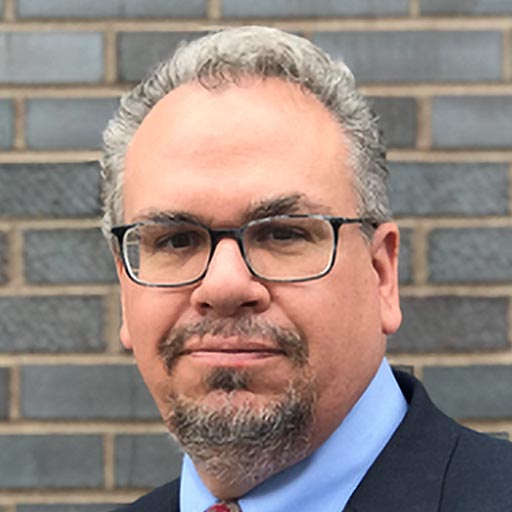
JOHN SHEGERIAN: Welcome to another edition of Green is Good, and we’re so honored to have with us today Scott Beckerman. He’s the Senior Vice President and Director of Corporate Sustainability at Comerica Bank. Welcome to Green is Good, Scott.
SCOTT BECKERMAN: Thank you very much. Pleasure to be here.
JOHN SHEGERIAN: Scott, before we get talking about Comerica and the iconic brand that you represent, talk a little bit about the Scott Beckerman story and your journey in sustainability and your journey in life.
SCOTT BECKERMAN: As a kid growing up in the Detroit area, I thought I was going to be an automotive engineer, but during one of the recessions, I ended up taking a summer job managing asbestos abatement projects in public schools. That really opened my eyes to the effects of environmental issues. I also had an opportunity to travel to the Far East in college with the men’s glee club from the University of Michigan. I got to see some beautiful countries, but some countries that had some horrible pollution challenges. When I got back, I changed my career path a little bit away from the automotive engineering, and ended up getting my Master’s degree in Environmental and Water Resources Engineering. It ultimately led to a career in consulting and an opportunity to join the Comerica team a few years back.
JOHN SHEGERIAN: Interesting. For our listeners out there who maybe haven’t heard of Comerica, can you share a little bit about the great brand that you represent, Comerica?
SCOTT BECKERMAN: Sure. Comerica is a super regional bank. We’re headquartered in Dallas, Texas, with our core operations in five states: Michigan, Texas, California, Florida and Arizona. Our roots go back to 1849, as Detroit Savings Fund. I think on the first day we took in $41 of deposits, so we’ve obviously grown a bit over the years. We now have about $69 billion in assets, and we’re the 11th largest commercial and industrial lender in the United States.
JOHN SHEGERIAN: Wow. For our listeners out there that would like to learn more about Comerica, you can go to www.comerica.com. To learn more about what we’re going to be talking about with Scott today, you can go to www.comerica.com/sustainability. Talk a little bit about Comerica’s approach to sustainability. Let’s hear just the macro overview, Scott, before we get into more specific questions.
SCOTT BECKERMAN: Sure. The way Comerica approaches sustainability, it’s a fairly standard definition, but it’s really a way of doing business that meets the needs of today in a way that doesn’t compromise the ability of future generations to meet their needs. We really want to take a holistic look at corporate sustainability. We have to consider not only the environmental issues, but the social, governance, and economic issues too. It’s really what our stakeholders are expecting from us. There’s a wide range of topics, whether it’s our carbon footprint or cyber security and data protection, diversity, all of those things are really interrelated in our approach to sustainable business.
JOHN SHEGERIAN: Like you said, when it’s holistic, it means nowadays social and environmental all wrapped up in one.
SCOTT BECKERMAN: Right. If you look at the issues closely, it’s hard to really separate them. They have an impact on each other, and it’s hard to have vibrant communities if we’re not taking care of both the social and environmental needs.
JOHN SHEGERIAN: Scott, when I started the show back in 2009, a lot of big brands didn’t even have Directors of Corporate Sustainability or Chief Sustainability Officers. Now that seems to be a growing title and a growing position, and a lot of students that I meet or speak with along the way now are aiming for those positions, the position that you have. Can you share a little bit about Comerica’s journey? When did they start taking their first steps towards sustainability, and when did they actually create the role that you now have of Director of Corporate Sustainability?
SCOTT BECKERMAN: For us, we’ve been doing various elements of sustainability for decades. We’ve had a comprehensive approach to diversity. We were doing really great things in credit risk management and looking at environmental issues from that perspective, but what we didn’t have was really that integrated approach. Our program was launched in 2008, after a 2007 shareholder resolution that called on the bank to prepare a sustainability report and start taking more of an integrated approach to sustainability. That opened up our eyes to the expectations of our stakeholders and the opportunity that we saw by taking that integrated approach to sustainability.
JOHN SHEGERIAN: Gotcha. That report, now, I’m looking right here on your website. Again, for our listeners out there, it’s Comerica.com/sustainability. Those reports are published right on your website very transparently.
SCOTT BECKERMAN: Yes, that’s correct. That’s a big part of what we were doing and the shift that we wanted to make from knowing that we were doing all these great things, but actually getting out and talking about them and demonstrating some of the things that we’re doing.
JOHN SHEGERIAN: From those first overt steps that we’re making, when did they actually create the office of Director of Corporate Sustainability?
SCOTT BECKERMAN: They came along in 2008. We took a strategic approach and wanted to craft this into our business strategy. We recognized that if we didn’t approach sustainability as a way to create value, then it was just another corporate initiative that was liable to go by the wayside when people quit paying attention to it. We really looked at it from a value creation approach and are focused on knowledge and innovation, cost and risk reduction, opportunities and revenues, and really ways to enhance our reputation and brand.
JOHN SHEGERIAN: Fast forward to where we are today. It’s 2015. You’ve got 6, 7, 8 years in the rearview mirror now. Talk a little bit about Comerica’s environmental footprint. What does it look like, and how do you go about managing it? What’s your approach to managing Comerica’s environmental footprint?
SCOTT BECKERMAN: The approach that we take may not sound super exciting, but it’s really based on incremental progress and it’s based on making progress each year in a broad variety of areas. As the years have rolled on, that’s really begun to add up for us in really meaningful ways. We operate about 500 buildings across the country, so our footprint environmentally is really related to the energy usage of our offices and data centers and bank branches. We set our first greenhouse gas reduction goal of 15 percent by 2014, and we were able to get past that by achieving 19 percent reduction by the end of 2013. So, we were able to meet our own goal, which prompts us to set more goals. This year, we’re releasing a new goal, not only on greenhouse gas emissions, but we’re also adding water reduction, waste reduction and paper usage reduction components to our goals as well.
JOHN SHEGERIAN: You have these 500 buildings. I’m on your sustainability report now. I’m looking at all these different subsectors. You have paper consumption. How do you go about reducing your paper consumption? What’s your approach to that?
SCOTT BECKERMAN: Paper, for us, is one of our largest purchases in consumable products, so we’re always looking for ways to reduce paper. Sometimes it’s really easy. Sometimes it’s as simple as pausing to ask yourself, “Do I really need to print that? Do I really need to print that in color? Can I take my laptop or my mobile device with me to a meeting instead of printing out a deck of slides to distribute to a bunch of folks?” Simple steps like that can help move the needle for us. We’ve also really looked at redesigning our processes and operations, specifically to avoid printing and consuming paper. It’s helped us be a more efficient company as well, so it’s a combination of business efficiency and environmental wins on the paper front.
JOHN SHEGERIAN: Before we get talking to the other subsectors that you report on and do a lot of great work in, let’s just start with one macro question, Scott, which is to me the ongoing fallacy that I love when experts like you and leaders like you come on and disarm this. A lot of people always say when I ask them why aren’t you greener, why aren’t you doing things more environmentally friendly or responsibly? The stock answer back in the day, 8-9 years ago, is that it’s more expensive. Have you proven at Comerica that it’s not more expensive and you actually save money because of all your great environmental practices?
SCOTT BECKERMAN: Absolutely. Again, back to our value creation approach. One of our tenets is around cost and risk reduction. By reducing the amount of energy that we consume, the amount of paper that we purchase, all of those things are directly helping the bottom line. The thought that being environmentally friendly or being green always costs more is, I think, a thing of the past in large amounts.
JOHN SHEGERIAN: For our viewers and listeners who just joined us, we’ve got Scott Beckerman on with us. He’s the Senior Vice President and Director of Corporate Sustainability from Comerica. To learn more about Comerica’s sustainability program, you can go to www.comerica.com/sustainability. Scott, talk a little bit about the other subsectors. There’s lots of great work you’re doing, and I want to highlight some of these things, a little bit about solid waste. How much solid waste do you divert? You’ve got 500 buildings that you’re managing and that you’re in across this great country of ours. How do you handle solid waste, and how successful have you been in that division?
SCOTT BECKERMAN: Solid waste is interesting. We’re not a manufacturing company, so we don’t have an opportunity to easily go to zero waste by using our manufacturing processes or things like that. Again, back to paper. We’re making sure that we’re capturing and recycling and securely destroying all of our paper. One of our most successful community events that we host has been our shred days. That’s where we invite the public in to bring in their documents for secure destruction. We work with Iron Mountain, who is onsite, and shreds and recycles all of their documents in a way that helps really prevent identity theft and helps secure information. We’ve even ended up with a couple of Guinness Book of World Records from our shred day events. Last year in Dallas, we collected, securely destroyed and recycled over 400,000 pounds of paper in a single day, which is about enough to run a 2.5-inch ribbon of paper around the entire planet. A lot of paper that was recycled, but also we ask our participants to come in and make a donation or contribute to one of the local food banks, so we’re able to really help people, the planet and identity protection as well. It’s kind of a triple bottom line success story for us.
JOHN SHEGERIAN: That’s amazing. We talked about paper a little bit, other solid waste, a little bit about greenhouse gas. Talk a little bit about some of the other very important things you’re doing. How about water use in your locations?
SCOTT BECKERMAN: Water is certainly a growing issue and a growing risk in many communities. With our footprint particularly in places like Texas and California, which have been really drought stricken states recently, that’s become a real priority for us. That’s an example of where we’ve turned to technology to help us reduce our water consumption. We’ve piloted a number of irrigation projects to reduce the amount of water that we’re using for irrigation. Those have seen dramatic results. A few of our pilots that we did saw reduction of water usage of over 40%, so some really amazing strides that can be made with water. Again, that’s water that we’re not buying. It’s water that’s not ending up as run-off and getting into local streams and the like, so it’s a win not only for us, but also for the communities that we operate in.
JOHN SHEGERIAN: For our listeners out there and some truth in advertising, my company is a client of Comerica, a very happy client of Comerica for now eight years and growing. We work with your environmental services division, obviously, and your banking sector. Can you talk a little bit about some of the work you do, both in community and economic development loan dollars you put out, but also in environmental services and how Comerica is really fueling the green economy, both in local communities that you work in, economic development and also environmental services?
SCOTT BECKERMAN: Certainly, we’re committed to supporting the communities where we operate. They’re the communities where we live and work and play, and we want those to be vibrant and successful communities. One of the ways that we do that, as you mentioned, is our support of what we call environmentally beneficial lending. Right now, we have roughly $1 billion in loan commitments out to a broad range of companies, from recyclers to renewable energy, from brownfield redevelopments to green buildings, as well as all of the brain power, the consulting and engineering work that goes into making those projects happen. It’s really been a matter for us not having specific green loans or products that we offer, but having the people on staff that understand these industries and really can be that trusted advisor to our customers and provide the financing and financial services that are needed to meet their needs as they try to green up their business, or develop a green product or service.
JOHN SHEGERIAN: Scott, obviously you’ve had massive success at Comerica in doing what you do, but nothing is done alone. We know that sustainability and social responsibility is a journey. How many people are in your department working with you as Director of Corporate Sustainability at Comerica?
SCOTT BECKERMAN: My department alone is very small. Myself and my colleague Kristen make up the Corporate Sustainability department, but we have a fantastic group of people throughout the corporation. We have executives from all our business lines participating in our sustainability council, and that’s the group where we really drive the action year over year through the various business units, whether it’s our lending groups, human resources, marketing, our real estate groups, our risk management groups. All of them have different components of our sustainability program. Really, that’s helped us be successful. By keeping our department small, we really needed to and ended up being successful in embedding sustainability into how we do our jobs on a daily basis.
JOHN SHEGERIAN: So you’ve made it very cultural and DNA, and you’ve built up a large group of sustainability champions within Comerica.
SCOTT BECKERMAN: That’s right. There’s always more work to be done. That’s certainly one of our challenges. You don’t really win at sustainability, but as you make progress, really, we all win.
JOHN SHEGERIAN: Talk a little bit about other challenges. What other challenges did you face when you were kicking this off and driving this through and making sustainability cultural and DNA at Comerica Bank?
SCOTT BECKERMAN: There are always challenges. I call them opportunities in disguise. The sustainability journey metaphor is maybe a little old and overused, but I like Ray Anderson and his analogy of all of us climbing Mount Sustainability. Along the way, there’s going to be some hiccups and some bumps. One of the ones, as an example, that we did, we had a mix-up in procuring our paper. A classic case of jumbled acronyms led us to buying paper that really wasn’t our desired standard for sustainably sourced forest products. We recognized that as an opportunity. We went and worked with our procurement staff, not only to train them on paper purchases, but the importance of green certifications, and in particularly, robust third-party certifications. Those are the kinds of things that, when we hit these bumps in the road, they often signal to us an opportunity to either improve communications or improve a process within the bank to improve our sustainability performance.
JOHN SHEGERIAN: Now that we’re in 2015, give me one or two things that you’ve got your eye on that you want to try to accomplish in the next 12-24 months.
SCOTT BECKERMAN: As I mentioned, we’ll be this year releasing some new goals, stretching out to 2020 to help guide us in further reducing our footprint. As we look at our impact on the economy and our impact on the environment, we have to look beyond ourselves. We look to our customers and to our supply chain, so it’s making sure that on the supply side, we are working with companies to ensure that they are performing in a way that meets our expectations. We’re scoring requests for proposals based on sustainability and diversity questions. We’re scoring our existing suppliers based on what they’re doing to be more sustainable and, more importantly, what they’re doing to help us be more sustainable. We think it’s a great way to engage the supply chain and really deepen a lot of relationships by having a positive impact on the environment.
JOHN SHEGERIAN: For our young people out there that are listening both in the United States and around the world, what are some last thoughts and some final thoughts of advice you can give them? People want to be the next Scott Beckerman.
SCOTT BECKERMAN: Sure. Focus in on some core technical skills, the skills around engineering, technology, science, mix in the business, add the sustainability and social elements and really become that internal change agent within a corporation to end up being that Sustainability Director.
JOHN SHEGERIAN: Thank you, Scott Beckerman. He’s the Senior Vice President and Director of Corporate Sustainability for Comerica. Learn more about Comerica at www.comerica.com/sustainability. Thank you, Scott, for being a sustainability superstar. You are truly living proof that green is good.
Top FAQs from the Episode
Here are answers to some of the most common questions from this conversation.
Scott Beckerman describes earlier efforts in diversity and environmental risk management becoming part of a more coordinated approach. He traces the program’s launch to stakeholder interest and a shareholder request for sustainability reporting.
Beckerman discusses energy and paper reductions as examples of environmental improvements that also lower operating expenses. He connects these efforts with Comerica’s focus on cost and risk reduction.
Beckerman describes financing activities involving recycling, renewable energy, redevelopment, and green buildings. He emphasizes staff expertise in understanding these industries and their financing needs.
 Spotify
 Apple Podcasts
 Amazon Music
 iHeartRadio
 YouTube
 YouTube Music
 Audible
 Pandora