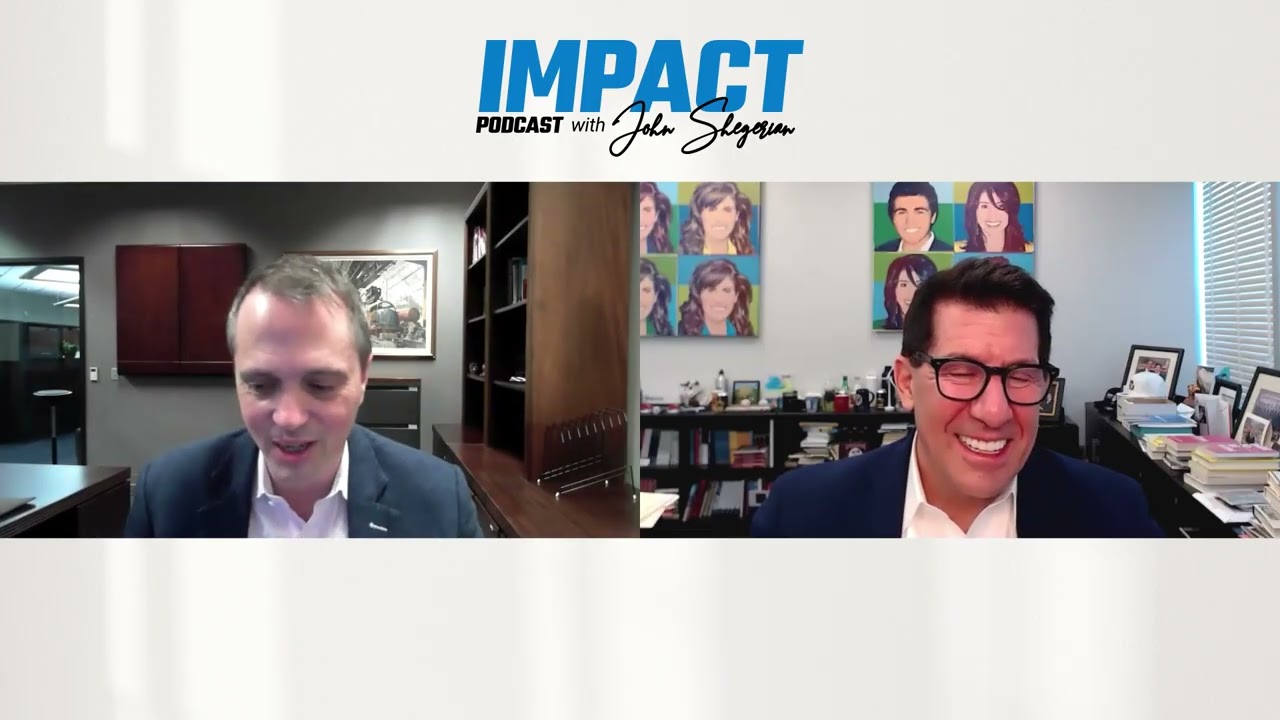
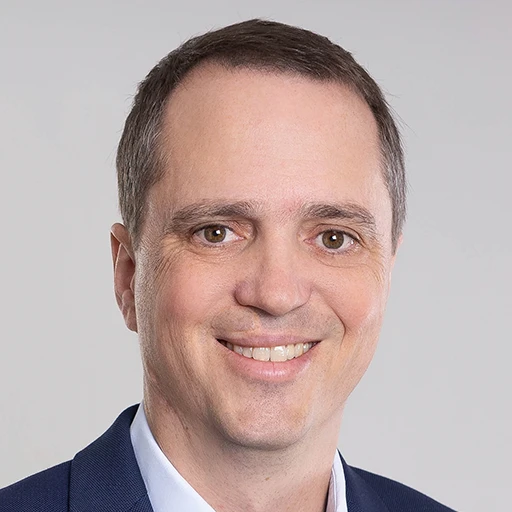
Emmanuel Guilhamon is vice president, Sustainability at Rockwell Automation. In this role, he advances the company’s global sustainability strategy and initiatives and leads the corporate sustainability team. With strong internal and external partnership, Emmanuel oversees Environmental, Social, and Governance (ESG) commitments; provides thought leadership to influence product strategy and roadmaps; and guides development of new solutions to help customers achieve their sustainability goals.
John Shegerian: Do you have a suggestion for a Rockstar Impact Podcast guest? Go to impactpodcast.com and just click be a guest to recommend someone today. This edition of the Impact Podcast is brought to you by ERI. ERI has a mission to protect people, the planet, and your privacy, and is the largest fully integrated IT and electronics asset disposition provider and cybersecurity-focused hardware destruction company in the United States and maybe even the world. For more information on how ERI can help your business properly dispose of outdated electronic hardware devices, please visit eridirect.com. This episode of the Impact Podcast is brought to you by Closed Loop Partners. Closed Loop Partners is a leading circular economy investor in the United States with an extensive network of Fortune 500 corporate investors, family offices, institutional investors, industry experts, and impact partners. Closed Loop’s platform spans the arc of capital from venture capital to private equity, bridging gaps, and fostering synergies to scale the circular economy. To find Closed Loop Partners, please go to www.closedlooppartners.com.
John: Welcome to another edition of the Impact Podcast. I’m John Shegerian, and I’m so honored to have with us today Emmanuel Guilhamon. He’s the Vice President of Sustainability of Rockwell Automation. Emmanuel, welcome to the Impact Podcast.
Emmanuel: Thanks for having me, John. It’s a pleasure to be here.
John: It’s a pleasure to have you. It’s an honor to have you, and thanks for taking the time. Before we get talking about what you and your colleagues are doing over at Rockwell Automation, all the impact that you’re making there, can you share a little bit about your own history? Where did you grow up, and how did you get on this important journey that you’re on, Emmanuel?
Emmanuel: Thanks for the question. Yeah. For starters, I’m French, so I was born in France, but I didn’t grow up in France. My father worked in the energy business, which is one of the ways of how I got interested in sustainability. For his job, we moved to New York, so I spent five years in New York. Then we lived in Sydney, Australia. I spent another three years there. Then we moved to Paris, so I spent six years in Paris, which is technically my hometown and the city I love dearly. After which, we moved to Montreal in Canada. I spent three years there, and then came back to Paris to study. Yeah. I’m French, but I’ve been in a lot of places. Then I moved internationally as an adult as well, so I’ve been all over the place. Yeah.
John: All those wonderful cities, and those are some of the probably on a bucket list for any human being on this planet that might be part of the greatest hits. That’s some of the top five cities in the world, Montreal, New York, Sydney, Paris. You were a global citizen before you were even 21 years old.
Emmanuel: Yeah, I got very lucky.
John: Where do you feel at home? Is Paris your home in your heart?
Emmanuel: Paris is home. Although I live in Milwaukee now, I’m very happy to be in Milwaukee. We moved here about a year ago, but Paris would count as home. Yeah.
John: That’s wonderful. How did that inform you as a young boy moving around so often in wonderful settings that have their own educational value themselves just by living there? How did that inform or inspire your work today in moving around and seeing the activity and the action in so many of those great cities and countries around the world?
Emmanuel: In so many ways. First of all, the beauty of diversity, of how we can all learn from each other. This has really been the most lasting impact for me. Also, how we’re all the same. In the end, humans are humans. It really does not matter where you’re from. There will be funny people, not funny people, tall, short. You will have everything everywhere. Deep down, we all have the same desires. The diversity, but also the uniformity of everyone is really what strikes me as I’ve lived around the world as a kid, but again, also as an adult.
John: What did you study in school when you went to university?
Emmanuel: I was in Paris. I studied engineering, electronics, computer science. I was a bit of a geek. It was all boys or all men. It was super interesting. It got me passionate about technology.
John: Was that going to be your future? You were going to be an engineer in the technology world?
Emmanuel: That was the plan. It worked that way for a few years, at least out of university. That was the plan at the time. Absolutely.
John: How did that evolve from there? After university, where did your career take you?
Emmanuel: Then I worked, interestingly enough, given my current responsibilities. I worked in the oil and gas business for 15 years, which is part of the journey that led me to sustainability, mind you. Having grown abroad, I really wanted to work abroad as well in the oil and gas. The energy business is extremely international. My father was in the energy business as well. That inspired me, of course. I wanted something at the cross-section with technology, electronics, computer science, as that was what I studied. I started working for a company called SLB. That’s their new name. They were called Schlumberger until recently. For them, I worked first in the field, so on oil rigs. I spent three years in Italy. Then I was a base manager in Brazil, including a base in the middle of the Amazon jungle, which was extremely remote from the rest of the country. Then I moved back to Paris. I spent a couple of years there. Then I moved to the Middle East. I was in Abu Dhabi for three years. Sorry, in Paris, I forgot to mention, I was in charge of recruiting. It was a very HR type of role. Then Abu Dhabi, where I was in charge of sales for a few years and moved to Oman for some more years, I was in charge of, again, in a sales role. After which, I moved to Houston, where I was an engineering manager. I’m telling you, all the oil and gas countries, I don’t know if you’ve noticed, but between Abu Dhabi and Miami, I’m checking all the bucket list of where we find oil underneath. Some more international experiences, but also a great because I think we’re going to go to the ultimate conversation of how I got into sustainability. One thing I will say is that I did a wide variety of different things. Because I was an engineer, I was in sales, I was in HR. All of that diversity led me to where I am today.
John: Yeah, that’s fascinating. Along the way, I see you graduated also from my alma mater, NYU.
Emmanuel: Yeah, you’re absolutely right, John. The story behind that is very simple. It’s just that when I was in Houston, I got tired of changing countries every two, three years. I was still thinking, I was like, I got to settle down somewhere. I wanted to leave the oil and gas business because I had the sustainability epiphany that came at that time. I thought I had to flatten a little bit my CV and my experience. I decided to do an MBA. Yes, it was jointly done by NYU and London School of Economics and HEC, which is in Paris. I did that and worked for a startup actually in sustainability in parallel, working in renewable energy. Then at the end of the MBA, then I joined Rockwell, where I worked a bit in sales and been now in charge of sustainability for over a year.
John: Walk back, you called it an epiphany. Where did that inspiration or epiphany come from? Coming from energy, where did you get that sustainability bug, or as you put it, epiphany?
Emmanuel: Yeah, I remember very clearly, the moment it happened was when I had a very precise story. I was talking with my brother who was working in WeWork in Barcelona. He told me about how he was sitting next to two guys who were working for Tesla and who were looking for space to buy superchargers, to put superchargers in Spain. I heard of Tesla, but I had not heard of superchargers. I was thinking, wow, so it’s not just a few electric companies in the US. They’re actually going European, so this is big. Secondly, they’re installing superchargers. I felt like there was a business plan behind it. It felt like it was more than just TVs. Then from there, I looked into Tesla, and I got very interested in what they were doing. Then I looked into electric vehicles as a whole, and I looked into sustainability. I realized that the guiding principle I had, which was I’m working on oil and gas, which pollutes, which is bad for global warming, but is an evil necessity. That was my crux. I suddenly realized it’s an evil that’s not a necessity. We don’t need oil and gas. That was while I was in Oman. It was not my last posting in the oil and gas, but my last before last. By looking at it, then I started crunching numbers. I remember for days on end, I was building Excel spreadsheets, looking at the cost of solar panels. When is it going to become more cost-effective to have solar panels and batteries versus coal power plants and whatnot? When are EVs going to be more cost-effective than normal cars? All of that appeared to me like, this is the future, obviously. Not only does it make sense for the planet, but it makes sense financially. That’s when I decided, it was at that point, I was like, I need to leave this company, I need to leave the oil and gas. That led to the MBA and then to Rockwell.
John: How many years ago did you join Rockwell?
Emmanuel: Six and a half years, yeah, in October 2019.
John: Okay. For our listeners and viewers who are not familiar with Rockwell Automation, first of all, you can find Emmanuel and his colleagues at Rockwell Automation at www.rockwellautomation.com. You don’t have to stop driving your car or lifting your weights or walking your dog. We’re going to have that in the show notes, so it’s easy to find. Just for people who don’t really know Rockwell Automation, which Emmanuel is going to tell us a lot more about, it’s the largest company in the world that’s dedicated to industrial automation and digital transformation. Annual revenue over $8 billion, 26,000 employees around the world serving over 100 countries. Were you the first Vice President of Sustainability at Rockwell Automation?
Emmanuel: No, I’m the second. Actually, I replaced a great guy called Tom. Tom arrived, he did a lot of things. He set up the team, he started to set the direction, etc. He was in the role for about two, three years when I was lucky enough to have the chance to replace him. One of the things that’s exciting is although my predecessor, Tom, had started everything, largely, there’s a lot to be done. It’s not at all a fully set in stone business. That makes the job extremely exciting. We still have a lot to do.
John: Well, I don’t think even if there were three Toms and two Susans before you, sustainability doesn’t have a finish line. It’s a continuous journey, which is, like you said, wonderful and exciting all at the same time. Talk a lot about your role, VP of Sustainability. As you and I know, sustainability can be read very narrowly, Emmanuel, and it can also be read very widely. What’s your mandate look like? How do you approach sustainability at Rockwell Automation, given that you do business across numerous continents where the laws are, as we know, the laws regarding carbon emissions and ESG and all the other alphabet soup of acronyms are very diverse around the world. How do you approach sustainability and make it material to the ultimate mission of Rockwell Automation?
Emmanuel: Yeah, absolutely. Thank you. The way we’ve divided it in Rockwell is we call it the three Cs. There’s a sustainable company. It’s what we’re doing to make Rockwell more sustainable. That’s very much in my remit. Sustainable customers, that’s how we help our customers become more sustainable. And sustainable communities. And really, that’s about what we’re doing to be part of the fabric in which we live and operate and the cities and how we contribute back to that. So under my personal scope, I look after the first two Cs, a company and customers. So in terms of sustainable company, it’s really about everything that we’re going to do to make Rockwell more sustainable. And that means what materials are we sourcing? How do we make our products more energy efficient? We’ve recently submitted our targets to science-based target initiatives to become a net zero company ultimately. So we’re waiting for that. A science-based target initiative is a third party organization that validates your targets. So we’re waiting for their validation. We’re undergoing review right now. But yes, it’s a strong commitment from the company to do our part in the world in terms of reducing our emissions. Sorry, go ahead, John.
John: Oh, no, it’s okay. I just wanted to ask you about this. What was your net zero goal made for? What’s your net zero goal? What year? Is it 2030, 2040, 2050?
Emmanuel: So for net zero, it’s going to be 2050. We’re going to have an intermediate year of a very ambitious decline, which is going to be set for 2033. We’re currently waiting for all approval. So as soon as we get it, we’ll be able to communicate formally on everything. And that will be posted on our website. And I encourage your viewers to come back in a few months and see all of that, viewers and listeners. But yeah, by and large, it’s about reducing our emissions. We’re going to be increasingly sourcing green energy, which comes at a cost to make sure that all of our facilities are operating on low carbon energy. We’re going to be gradually transitioning our vehicles to hybrid and EVs, and then gradually to more and more EVs as time goes by, and as they become more affordable, and as there are more charters around the world, and so on and so forth. So yeah, it’s a gradual plan. So ambitious targets midterm for 2033, and then a 2050 goal. It also involves our supply chain and our customers, right? So it’s our whole value chain that we need to be net zero on. So all the products that we will buy by 2050 will have to be zero carbon footprint, and our customers will need to be operating as well on a zero carbon footprint. But we believe that’s the trend the world is going on, and that our value chains, we’re going to help them in that journey, but they will also naturally converge towards that, because that’s where the world is going.
John: So you’re focused on the macro trend of circularity?
Emmanuel: Absolutely. Yeah, yeah. Circularity and carbon footprint reduction. Yes.
John: So let me talk a little bit about circularity with regards to your products and services, raw materials to end of life. How does that work at Rockwell Automation?
Emmanuel: Yeah, so there’s a team in my organization called Design for Sustainability, and the goal of that team is, when we start to think about, so we have thousands of products that we sell to our customers. When we thought about all of our products, how do we go and make them all more sustainable? It’s a Herculean task that is impossible. And so the best way to do it efficiently, we believe, is to not go, we can’t change the products that are made in the past, but for all the products that are coming to the future, that they’re going to be increasingly sustainable. And that means, as you mentioned, circularity, but also energy efficiency, repairability, all of that. And so what that team does is they aim to change the way we engineer products. We’re not trying to modify the past products. We’re trying to change our engineering principles so that they incorporate increasingly sustainability metrics in the way we design products. And so it’s going to be continuous improvement for our products to be increasingly more sourcing recycled materials that’s going to go into our products, for our products to be more recyclable, but also repairable, remanufacturable. We’re really looking at everything, right? And of course, more energy efficient, because that’s a topic today with energy demand skyrocketing with data centers, price of energies are increasing, and therefore energy efficiency of our products is high on the bucket list for our customers.
John: Emmanuel, when I got into the recycling business 23 or so years ago, all the OEMs that became my clients, and they’re still our clients, they didn’t have a design for sustainability division. Now they do. How many years ago was that established over at Rockwell Automation?
Emmanuel: How many years ago?
John: Yeah, approximately.
Emmanuel: Yeah. It’s about three, four years ago is when we started on that journey. It’s a pretty recent thing.
John: Right. But so that’s again, that seems like one of the biggest macro trends among all the OEMs, because everyone realizes that circularity is really, and materiality are two of the great trends that we’re trying to converge together. But those are the ones that are going to carry us forward on the sustainability journey. Is that sort of how you see it as well?
Emmanuel: Yeah, absolutely. You talked about materiality. I think that’s really the crux of it. What is material for Rockwell? What is material for our customers? What actually matters, right? And when I say matters, it has to be at the cross section of what matters in terms of sustainability, and what matters for your business, right? If it’s something that is good for your business, but bad for the world, bad for sustainability, it might go for a while, but at some point, it’s not going to work anymore. But if it’s good for sustainability, but it’s bad for business, it won’t go very far either, right? What you need is something that is really at the, you know, at the intersection. And that’s essentially what double materiality is all about, right? And I think that’s actually the right way to look at it. That’s what me and my team, we think about all day is how do we bring products to the market that are going to help our customers achieve their financial and operational goals, but also going to drive some sustainability outcomes.
John: So I so agree with you. Talk a little bit about automation and the impact that automation is going to have with regards to environmental impact. Where does automation make, where is the thumb on the scale out of these next categories, energy use, materials, uptime, or process automation? Where does automation, you know, really, really weigh in on all those when it comes to environmental impact?
Emmanuel: Yeah. So I’d like to define automation for a second for some of those maybe who don’t know it. If you think of any manufacturing process, whether you’re processing some raw materials, you’re making aluminum or steel, or whether you’re making ball pens, or whether you’re making paints, you’re going to have a plant factory that’s going to be operating. And there’s going to be a lot of humans operating in that factory. And there’s going to be a lot of machines doing work. The automation piece, what Rockwell does are they’re like computers, they’re industrial automation computers. They’re called PLCs, programmable logic controllers. And those will control all of the machines that operate in the plant and that do the work, right? So that’s what industrial automation is about. Around that, we have a lot of stuff. So you’re going to have sensors, because for automation, you need to sense the product went through, the product weighs this much. You’re going to need, this valve is open, this valve is closed. You’re going to need to have software that goes on top. You need to have drives that are going to operate, make the machines turn and move. Software layers on top of it that monitor everything, and artificial intelligence on top of that, that’s going to make recommendations on how to make this process faster and more efficient. So all of that is what Rockwell does, okay? In a nutshell. So how does it impact sustainability? Well, Rockwell is really in the business of making our industrial customers more efficient, right? And when you’re being more efficient, you’re consuming less. You’re consuming less energy, you’re consuming less material, you’re having less waste that’s going to go to scrap. You’re going to ultimately do more with the same amount of resources or less resources, ideally. So by essence, the work that we do is drive sustainability outcomes all the time. In all of the topics that you mentioned, I could give you the easy answers that we impact all of them, which I think would be very, very boring. I think one where today we see a lot of many conversations with our customers around energy. I cannot insist enough. It’s something that almost every time I sit down with a customer to talk about sustainability, energy is where they gravitate towards. It’s a problem for them because of the costs around energy, and it’s a problem for them for their common footprints, right? That their own customers and their investors will ask them to reduce. So it’s really something that we can help a lot with. Many of our products, whether it’s our drives will help reduce the energy consumption, or some of our softwares are really, really geared towards that. We have a software called FactoryTalk Energy Manager. And really the point of our energy management solution is to look at your plant and look at where it consumes energy. Imagine you’re at home, and you look at your energy bill from home, and you’re thinking, oh, why is it so high? I don’t understand. And then suddenly, you put sensors all around your home, and you’re seeing, well, actually, most of my energy is being drawn by my oven, right? It’s because we’re always cooking stuff in the oven. And actually, we could, I don’t know, microwave things, or we could put them on the stove. And when we’re using the stove, it consumes a lot less power. I’m making this up as I go, right? But I’m just making a point that this is what Energy Manager does for our customers. You put it in your factory, you look at where your energy is consumed, you look at trends, we can then have artificial intelligent components on top that look at all these trends and patterns and help our customers see where the energy is going, and ultimately help our customers reduce their energy consumption.
John: Which, like you said, if you’re looking for, out of all those areas I gave you, energy usage, materials uptime, and process automation, all of your clients, and I would say most organizations and most companies, are all looking to reduce their energy impact. So you’re really going for something that’s the most democratized issue of all your client base.
Emmanuel: Absolutely. Yeah, that’s the topic. And also, it has a huge impact for the sustainability goal, right? So double materiality, I’m going back towards that. But also, when I was talking about the two pillars, I talked to you about what we’re doing internally in the company. In Rockwell, so we’re obviously trying to improve the company, as I mentioned, we have mid-zero goals, and so on and so forth. The biggest impact for the world that we will have in terms of sustainability is going to be through our customers, because Rockwell is just one company. But every time we help our customers, it’s thousands of companies that we potentially can help. So really, if I look at my Rockwell’s impact in terms of sustainability for the world, it’s how we help our customers be more efficient. And energy is a key topic again.
John: That’s one. I mean, given that you sit in Milwaukee, but you have over 100 countries that Rockwell Automation serves, Manuel, how do you look at the patchwork quilts of regulations, Europe, Asia, North America, South America? Nobody’s on the same page right now. There’s not a lot of alignment. Is there going to be eventually some harmonization among the rules and regs around carbon offsets and energy reduction across continents? Or are we all going to be still operating in, like I said, a patchwork quilt or some version of crosshairs, which creates lots of redundancies for someone like you, who’s trying to stay compliant everywhere you do business with both your products and your services and your employees. How do you manage that high wire act?
Emmanuel: Well, first of all, it’s hard. And I can tell you by talking to all of our customers and our suppliers, it’s hard for everyone. And sustainability takes a, it’s an investment for companies. And that compliance piece is an investment. And the fact that regulations and requirements are different around the world, it multiplies these investments. And so you’re absolutely right, John, this simple fact is a detriment for sustainability because it just multiplies the amount of time that we need to spend on it and therefore our investment in it, and doesn’t help. So how we do it, well, like every company, we spend a lot of time on it. We have people around the world who are gathering all of the information and who are bringing everything back to headquarters. And we try to make sense out of it and what’s the best bang for our buck. Thankfully, Europe, and I’m European, so I will criticize them very lovingly, by being very stringent and sometimes over the top in their requirements, a lot of the work that we’re gearing up to do for the European Union, whether it’s for CSRD, which is a reporting requirement, ESPR, which is a product management requirement, is going to be more stringent than what we can see in most of the other places in the world. And so that’s really going to be, and is already today, kind of the North Star for us. So we do that, and then we can typically derive the rest of the worldly global requirements from this core reporting effort that we’re doing for Europe. So the silver lining here is that that helps us for all of the other reports. But no…
John: They set the highest bar. So once you hit their bar, everything else falls in place with regards to your compliance around the rest of the world. You can mix and match from there. But if you hit there, the EU bar, you’re going to be in good shape in terms of a compliance standard.
Emmanuel: Absolutely. Not 100%, obviously, but it’s a really good…
John: Right. It’s a macro principle.
Emmanuel: As a macro rule, you’re absolutely right. Yeah, that’s the idea.
John: That’s so interesting. Do you believe, I mean, like we said, it takes you and other great leaders like you around the planet who are doing such important work in sustainability and circularity and materiality, it takes you away from your core mission of the work that you do because of the redundancies and the minutiae that you get caught up in. Will there ever, do you feel hopeful that harmonization is on the horizon, or is it still too early in the ballgame to tell?
Emmanuel: I feel like harmonization must be on the horizon for this to be successful, and therefore, I believe it will be. But do I feel like we’re actually making progress towards it? Right now, from where I stand, it doesn’t feel that way. Maybe a listener is looking for a business idea. I have a business proposition because it’s something that would solve my life. If someone wants to tackle that problem, and mind you, many companies have tried, so it’s not easy, but we’re talking about this diversity of requirements around the world. It’s also in the way we talk to each other amongst ourselves as companies, so companies talking to companies. I talked about my net zero goals. For to achieve my net zero goals, as I told you, I need my value chain to zero out, so I need my suppliers and my customers to zero out. I need to know what they’re doing because unless I know customer X, Y, and Z is now buying renewable energy, I’m just going to assume that they are using great power, which will have a specific carbon footprint. In my reporting, that’s my assumption. Similarly, I need for my suppliers to know the product carbon footprint of all of their products, which they may or may not have. If they don’t have it, you make assumptions and whatnot. We all need to talk to each other to exchange on our carbon footprints because we all need to know our value chains. My customers need to know from me, I need to know from them, same for the suppliers. If there was a data platform that managed to be cyber secure, confidential for whom should not see the data, yet transparent for whom should see the right amount of data, that normalizes all of that because what happens is now we have thousands of customers, and all the big customers are sending us questionnaires. They’re all different questionnaires, and we all need to answer them if we want to keep on doing business with them. It’s a ton of work versus I have all this information available. It’s not just in my sustainability report because that’s an Excel, that’s a PDF that the customer would have to look at. It’s going to be different for all this. A data platform, a digital data platform that everybody pours their data in in the same format and is, again, cyber secure, private for who should not see the information, but transparent for who should see the information, that would be a game changer to all your listeners out there if you want to become rich.
John: There’s some 16-year-old out there right now that’s hearing you say, I can do that.
Emmanuel: That’s my hope. That was my biggest motivation to come on this podcast. It was to pass that message along.
John: It’s a call to action, I love it, I love that, that’s a good challenge. For our listeners and viewers we have today with us Emmanuel Guilhamon, he’s the Vice President of Sustainability at Rockwell Automation. To find Emmanuel and his colleagues and all the important work they’re doing in sustainability, please go to www.rockwellautomation.com. So do you produce an annual report, like a scorecard of the success that your team is having in sustainability at Rockwell Automation?
Emmanuel: Yeah absolutely, actually we just published ours that we’re very proud of, so I encourage everyone to go and take a look at it, it’s our sustainability report where we’re going to report on our own emissions and the progress we’ve made there and other sustainability initiatives. You were talking about circularity, we report on that as well and that also we tell us some of the success stories that we have with our customers, so there’s a number of things that we do to help our customers. One topic, again energy is coming up, one thing that customers are increasingly looking at is holistic solutions that solve the energy problem. So I talked about our solution, factory talk energy manager that looks at a plant and how the different assets in the plant will consume energy, but then there’s a question of what do you do with it? So you need recommendations on, oh look if you ran these machines at night when you’re in off-peak hours, you could save a lot of energy or if you could reorganize your flow of materials through your plant, you would also be able to save energy by doing this and that. So recommendations, but then also closing the loop, so being able to control the plant, so that’s what we do because we manage control systems, so our gear controls the assets in the plant. So by not only making recommendations but then you can do the action, we can use our equipment to go and actually act on the equipment that’s operating in the plant. And then in my holistic definition, one level above is working with grid companies, so being able to benefit from off-peak hours, on-peak hours or any auctions that are happening for companies to reduce power because that’s something that happens a lot in North America, there are auctions. Manufacturing companies, they might say okay I’m going to reduce power by this much for a couple of days and they’re going to get paid by the grid company who needed that extra power somewhere else, so there’s an auction basis. So being able to also understand all the optimizations that you can do on your grid to optimize your energy cost is something that our customers are increasingly looking at. So there’s a lot of things that we’re doing, we talk a lot about all of those in the sustainability report, we’re very proud of what we’re doing with our customers and yeah, thanks for mentioning that.
John: Out of 26,000 employees, what’s your best method as a leader to get as many of the 26,000 as your ambassadors or evangelists with regards to sustainability? How many of them are engaged in what you’re doing so you can hear some of the best ideas from the ground up? Because some of the sitting sometimes in our offices, we don’t know what’s going on on the floor, but to have as many of our employees as engaged as possible helps make the impossible possible in the future.
Emmanuel: Yeah, absolutely. So first off, I’m very lucky that sustainability is a topic that inspires a lot of people. You would be surprised how many employees raise their hands, come to my team and say hey, sustainability is not part of my job, but I would love to do my part, how can I help? And I kid you not, this happens on a weekly basis. Just someone yesterday bumped into our canteen in Milwaukee, just came and said hey, I would love us to talk about this and that. I had ideas around sustainability and this is so inspiring and it’s so great to hear. Truly for me, sustainability, I’ve been in this job for a year and a half now, it’s something that gives me a spring in my step when I get up. I’m doing something good and I can see how that motivates a number of people around the world. Secondly, I’m also lucky that in my sustainability umbrella, I have also our entire EHS organization, so health and safety organization. So this means that they are, in every plant that we have, there’s going to be some people from my team who are not there from a sustainability perspective, but they’re there from a health and safety perspective. And so they are my ears on the ground and I can hear directly from them how our plants are operating, what is going well, what is not going well from a health and safety, but also very much so from an environmental and sustainability perspective. So I have a direct line of sight on our plants. And then of course, I travel. I travel quite a bit. I go at least to, you know, in North America, I travel a lot. I go to Europe very regularly, if not for work, at least for pleasure. And then if I go for pleasure at being European, I also take the time to go and see our facilities there. So I make sure that I go to our manufacturing facilities everywhere I can whenever I travel, which is quite frequently. And then obviously, we have a lot of ways in the company, you know, internal methods to advertise what we’re doing for our own sustainability goals, you know, in our Microsoft tools and everything else you can advertise company-wide, some of the things that are happening. And again, it’s something that drags a lot of reactions and initiatives and feedback from the company.
John: Emmanuel, when you communicate and interact with the HR department and the C-suite at your great company, do you all feel, are you all aligned that sustainability and your commitment to sustainability as part of the DNA of Rockwell Automation is a great way to recruit and to retain employees?
Emmanuel: Oh, absolutely. It is really, and I would like to thank the young generation for being so sustainability-focused because it’s keeping us all old guys and old gals in check, right? By the way, John, do you know what the definition of sustainability is? I don’t know if you know this, maybe you do, but it’s to ensure that all the resources that any generation uses today, only the resources that they need without borrowing from future generations resources. And so I think future generations are, you know, obviously worried about us, you know, who have been living with plastic and driving, you know, fossil fuel cars and flying planes all around the world, which unfortunately I still do. And they’re keeping us in check. They’re saying, hey, those are my resources. Is there going to be enough for me, right? And for my kids. And they’re absolutely right. And in essence, that’s what they’re doing every time they come and they apply for a new job and they ask the company, what are you guys doing for sustainability? And then when they become an employee and they ask, I want to be part of the sustainability efforts, they are putting that pressure as they should because you and I won’t be around when those guys turn 60 or 70, right? So yeah, absolutely. It’s a big amount.
John: You’ve been in this position at Rockwell for a year and a half. Talk about a couple of your favorite success stories during that year and a half, and then talk a little bit about a couple of things you’re looking forward to in 26 and 27 that you’re working on.
Emmanuel: Yeah. So writing our net zero plan for me was, and getting it approved by our leadership organization, so the CEO and his team, for me was a very important milestone, right? The leadership team wanted it, they wanted to do net zero, but they wanted to see a plan that would work, that would make sense financially, that it was something that was feasible, right? So we had really the question of our plan was something that would have the integrity that it needed, but also the feasibility that was required and the impact, right? So these were really the three things. Integrity was we know what we’re doing and our data makes sense. Feasibility is it’s something we can implement and makes sense financially. And then the impact is that it will actually lead to emissions that reduce and will have an impact on the world. So coming up with that plan and having it approved, it took a huge amount of time for my team and we’re very, very proud of what we did. And so we’re happy to have submitted it and I’m looking forward to seeing those results. But then there’s also that’s on the company side, on the customer side, there’s so many projects that we’ve done that were really exciting. We did one, let me tell you a little bit about it. It’s one of our customers is using a lot of chillers. So they’re a manufacturing facility for semiconductors and they need to cool down their equipment. So they have chillers, which like any fridge takes a lot of energy and they had a lot of different chillers. And they’d asked us to use, how can we see how to optimize these energy flows? And so this was a pure software/AI project where we took all of their historic data. We built a 3D, sorry, not a 3D model, a twin of their facility. And by taking all this historic data and layering over the twin, they’ve been with an AI running in the background, looking for the patterns of all of the energy consumption, what worked, what didn’t work and look for all of these areas. It came out with a recommendation on how to optimize the energy consumption for future use, right? And it modeled that it would have a very, very significant energy reduction for this company, which again, use a lot of energy and therefore it’s a massive cost for them. And it’s only by combining our understanding of manufacturing processes with our AI abilities that we’ve been able to produce this result for this company, which is now rolling out the solution in many of their facilities globally. And so that’s also something that I’m very proud. It’s not something that I worked on directly, but something that Rockwell did that I’m very proud in the name of sustainability.
John: We’ve only touched on the terminology AI a couple of times during this conversation. You know, there’s not a day that you and I open up the Wall Street Journal, New York Times, or watch Bloomberg or CNBC for that matter, and don’t hear about the importance of AI. Talk a little bit about where you fall out. We know Rockwell Automation is, you have a ringside seat to this AI revolution. How transformative is it going to be? And is it going to be as fast as everyone’s saying it’s going to be, or is it going to be a longer tail here in terms of uplifting us and taking us to the next level of technology that everyone’s expecting it to be?
Emmanuel: Yeah, so great question, John. So first of all, the AI we do is not necessarily the same AI that you hear about. It’s not the same AI as what you will find in Gemini or ChatGPT or Copart, right? It’s not LLMs. We actually work a lot. So LLMs, large language models, we work a lot on small language models, SLMs. It’s not the only thing we do, but there are different types of AI. And the reason we do that is that an LLM, and I use LLMs all the time, so don’t take what I’m going to say as criticism, but they can get it wrong. They can get things wrong. Sometimes I ask something to an LLM, and I get an answer. And then next day, I ask the same question, and we’ll get a different answer. And sometimes they contradict each other, right?
John: And you can go on different LLMs at the same time, ask the same question, and get different answers.
Emmanuel: Absolutely. Exactly. So what we do is we work in industrial automation. We cannot have any errors. It has to be deterministic. You ask a question, you need to get the same answer, right? But what we do do that is similar to LLMs is that we are going to use machine learning, pattern recognition, a lot of those techniques, but they’re going to be applied to a much smaller data set, a small language model. And by virtue of operating on something smaller, it’s going to give you a much more definitive answer as an outcome, right?
John: So you learn from the pattern recognition, if I understand this right, which then will give you the best predictive analytics for that exact area that you’re looking for.
Emmanuel: That’s absolutely right. And so that’s just one example. We do a lot more in AI than that, and I don’t know as much as our CTO, obviously, so I can’t comment on everything that we do. But what I mean to say is that we use a lot of different AI techniques, but it’s going to be with different goals in mind than what LLMs do, because we need to be deterministic and we need to be in a business factory environment that needs to have very precise answers. Now, to answer your question on how fast it’s going to go, I think it’s going to go both fast and slow. And sorry to give this very boring noncommittal answer, but let me explain why. It’s going to go fast because you’re going to see benefits today, and our customers see benefits today. And I gave you an example of one project that we did. We do many of those. You’re going to see those benefits today. Where I think it’s going to be slow, or at least slower than the world seems to think, is to have a general AI that can solve any problem, right? And we’re seeing a lot of conversations around that, about world models and all sorts of things. We’re starting to see the limits of LLMs, and therefore, what’s the next step? And I think that’s going to take a little while. Don’t ask me how long, I don’t know. But we seem to think when AI came out, when it became mainstream in 2022, we thought that by now, for sure, we would have a general AI, right? And we don’t. And I think it’s going to take a few more years. But yeah, we’ll eventually see that happening.
John: Ray Kurzweil, who’s probably been the greatest predictor of technology that’s living today, said, we’ll get to AGI in around 2029. That’s his prediction.
Emmanuel: That’s his prediction?
John: That’s his prediction. But let’s go back to what you just said. I’m fascinated. One of the 50 reasons that I do this show is not only to meet great people like you, and for our audience and listeners to hear great people like you share your thoughts. But I never heard before, and I’m pretty much a voracious reader and also taker of news, I’ve never heard the term SLM. SLM, is that developed inside of Rockwell? So you develop your own SLMs off of LLMs? Or is it just a closed loop SLM that you self-develop at a company like Rockwell Automation?
Emmanuel: So I wouldn’t want to speak out of turn here, because I’m not an expert, John. So I’m a bit cautious in what I would like to say. I believe we build our own SLMs. So I don’t know. There’s probably some off the shelf that we use. But what we train them on is going to be proprietary to Rockwell, or it’s going to be proprietary to some data that our customers give us. Those bricks, did we develop them ourselves? Or did we get them off the shelf? To be honest, I’m not entirely sure.
John: It doesn’t matter, but that makes total sense. You’re doing it for specific issues and opportunities to meet the needs of your clients.
Emmanuel: Exactly. I’ll give you a silly example. It could be a maintenance manual for a machine.
John: Sure.
Emmanuel: You’re like, oh, this problem happens. Instead of going to go through the maintenance manual, and it’s like, where can I find this problem, and table of contents, and control F, and I describe the problem. If you have an AI that’s trained on that maintenance manual, and you ask it, I saw this red light appear in combination with this other problem. What could it mean? The AI would be able to spit out a solution for you. That’s a typical, very simple example of a small language model.
John: Right. Emmanuel, how do you get inspired? Do you benchmark Rockwell Automation against other automation companies? Or do you look for inspiration outside of your industry to look at best practices and sustainability in all sorts of other industries? What’s your general form of inspiration, and who’s enlightening you on a regular basis?
Emmanuel: My customers, our customers, and our suppliers. I think every company will find that they are ahead in certain things in sustainability, and they are behind in other things. I truly find that, well, it’s not that I find, I know, and everybody knows, there is no future in which some companies live in a sustainable world, and others don’t. We’re all going to be in this together. Therefore, there is no competition. It’s really a case of rising tide raises all boats. There’s almost no company, customers, suppliers. I don’t speak with our competition, but I’m sure that if I did, they would be willing to open their book on how they do things, because ultimately, we’re all in this together. Customers and suppliers, I love it. Every time I call one of my counterparts, a sustainability VP or Chief Sustainability Officer, and I tell them, hey, let’s find some time to talk and exchange on what we’re each doing. It’s almost immediately that they’re open for that conversation, and they’re opening their books.
John: Emmanuel, it’s so funny you said that. I’ve been doing this show 18 or so years, 17, 18 years. Again, it’s another reason I love doing the show. I find that the vast, vast majority of people I interview who do the work that you do and impact sustainability, it’s called all different things nowadays, but impact and sustainability are two of the main terms. You all are generous. You all see the world as a world of abundance and not a zero-sum game. I call it the greatest fraternity on the planet. You’re all willing to share your knowledge to help each other, because you all have your global citizen mindset that if we’re ruining the world here in the United States, it’s a borderless foul. If we’re making the United States better, and we can be an example of good sustainability practices here to other continents, it’s going to, like you said, it’s going to be a rising tide. We’re all going to make the world a cooler and better and more sustainable place. I just think you are part of one of the greatest fraternities in the world of people that I get to meet, and I got to meet over the years, and get to know, and our audience has gotten to know. Now, look back now. You had a head start. I think you had a head start. I think your background is fascinating. You were a global citizen because of just your childhood by the time you were 21. Talk to the young people that are listening to this show, that are listening to you, that want to be like you, that want to make, like you said, you get out of bed now with a pep in your step in what you’re doing as the VP of Sustainability at Rockwell Automation. There’s a whole generation of, let’s just call them 15 to 35 year olds now, that are listening to this show, that want to be like you, that want to not only make a paycheck to pay the bills, which we all have to do this, so there’s no shame in that, but that also want to make a difference every day, that want to make an impact every day. What good advice would you have for them in terms of how to get on this journey, and how to find their place where that impact and monetary compensation converge?
Emmanuel: Yeah, thanks, John. Just very briefly, by the way, you were saying that I’m part of this community, and you said a lot of you. I just want to say you’re also very much part of this community, John. I want to thank you for holding this podcast, because this is absolutely necessary for the work we’re doing. I would say for the younger folks who are listening to or watching the podcast today, what we need to do is we need to make sustainability sustainable. What I mean by that is that it stands on its own two legs. It does not require policymakers. It does not require us changing our way of life, because it’s not going to happen. We’re going to keep our way of life. Sustainability needs to be something that is self-propelled and that brings us sustainability outcomes, but also fits with our way of life, with our society as it is, operating around companies, operating around profits, earnings calls, and all of that. That is just something that is not going to go away. Sustainability needs to fit in that. The advice I would give to everyone is, as you go and you learn in the space of sustainability and as you work on sustainability, make sure you learn about everything around you. I came to sustainability late in my career. Before that, I worked in oil and gas, as I mentioned, but more importantly than working in oil and gas, which taught me a lot about energy, mind you, which is why I talk a lot about that topic. Within my two to three companies, I worked in HR, I worked in engineering, I worked in sales, and that has given me a pretty broad view of business. That helps me every day in my sustainability goals. If the people working on sustainability are only the sustainability experts, and there absolutely should be sustainability experts, but if there are only sustainability experts, it will not become a sustainable practice. It will become something that is not rooted in business. We need people who know business, people who know sales, people who know engineering, who are interested in sustainability. Therefore, my advice to all of you is learn. Learn as much as you can in every topic, even if this topic does not seem to be connected to sustainability. It will come back to you in spades, and it will come back to your efforts in sustainability in spades. Learn as much as you can. It is really the best investment you could ever make.
John: I love it. Emmanuel Guilhamon, I want to thank you for today, for our listeners and viewers, to find Emmanuel and his colleagues and all the great things they are doing in sustainability and impact at Rockwell Automation, go to www.rockwellautomation.com. Emmanuel, thanks not only for the hour that you generously gave us today and your wonderful wisdom and your thoughts, which were just really, really helpful for a lot of us to understand. I learned new things today, but thank you more importantly to you and your colleagues at Rockwell Automation for making the world a more sustainable and better place.
Emmanuel: John, thank you so much for having me and for the time you gave to me to talk about Rockwell and a little bit about myself. Thank you so much.
John: This edition of the Impact Podcast is brought to you by Engage. Engage is a booking platform revolutionizing the talent booking industry. With thousands of athletes, celebrities, entrepreneurs, and business leaders, Engage is the go-to spot for booking talent, for speeches, custom experiences, live streams, and much more. For more information on Engage or to book talent today, visit LetsEngage.com. This edition of the Impact Podcast is brought to you by ERI. ERI has a mission to protect people, the planet, and your privacy and is the largest fully integrated IT and electronics asset disposition provider and cybersecurity-focused hardware destruction company in the United States and maybe even the world. For more information on how ERI can help your business properly dispose of outdated electronic hardware devices, please visit eridirect.com.
 Spotify
 Apple Podcasts
 Amazon Music
 iHeartRadio
 YouTube
 YouTube Music
 Audible
 Pandora