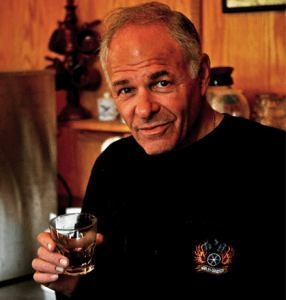
JOHN SHEGERIAN: Welcome to another edition of Green is Good. We’re today at the Green Festival in San Francisco, and we’ve got with us a very special guest. We’ve got Paul Katzeff. He’s the co-founder and CEO of Thanksgiving Coffee Company. Welcome to Green is Good, Paul.
PAUL KATZEFF: Nice to be here.
JOHN SHEGERIAN: Paul, we’re two New Yorkers. We were having a great conversation offline before we even started going today, and before we even get talking about all the great things you’re doing at Thanksgiving Coffee Company, can we first hear about your journey? How did you get here? You even said to me, “Look at us, we’re here, two New Yorkers today, sitting here. We’ve probably made a billion decisions along the way, most of them unconscious.” Talk a little bit about the highlights of your life and your journey getting to this point today, and how you came to founding Thanksgiving Coffee Company and how you got to being who you are today, in five minutes or less.
PAUL KATZEFF: How about two hours or less? Look, it all goes back to the beginning. When you live long enough, you look back and see decades of decisions and a thread that you couldn’t follow. We live our life in the present and the future, so we don’t know what’s coming. But when we can look back, we can see where things began. For me, things began in my father’s fruit and vegetable store in Astoria, Queens when I was eight years old. My father had a fruit and vegetable store in a poor neighborhood, and he believed that the luxuries that we all should share together should at least be the food. So he would buy the best food, the best produce, and sell it to poor people at honest prices because he believed that’s the way to be. When I went to work there, I picked up on the idea of quality, of value and authenticity. That’s where it began. And then that little seed grew through Cornell University, School of Agriculture, where I studied pomology, which is the study of apple cultivation and dairy farming. I moved from that into Greenwich Village when I got out of college in the sixties, and there I hung out in coffee houses. That harkened back to my Aunt Celia who lived next door to me in the Bronx, who, when she brewed coffee in her Silex maker, not her percolator, but her different method, the aroma would waft over to my parents’ apartment. I wasn’t drinking coffee, but it was there. Then, when I got to Greenwich Village and there were coffeehouses, I would sit at night at 2 in the morning writing lousy poetry in somebody else’s place. When I eventually left New York 10 years, the sixties was a good time to be in New York, in Greenwich Village. In my twenties, I left for Colorado. I have a Master’s degree in social work, and that was my profession, a community organizer in New York. I was the first director of Job Corps. When I got to Colorado, they didn’t need me as a social worker and community organizer. I said, “OK, time to do a café.” Now, I’ve lived in cafes all night long hundreds of nights. I didn’t have a job. In Aspen, Colorado, in 1970, I began to build a café. A friend of mine walked in and said, “What are you going to call this place?” I said I’m going to call it Thanksgiving. I don’t know where that came from. It was like I became a messenger. It was God given. And then,
three weeks later, when I was living in Harry Truman’s railroad car, the one he whistle stopped around the country in 1948, which was parked by the Roaring Fork River and I was the caretaker of it, that was the place I was living, a vehicle drove up, a Bronco, with three guys, and they thought I had run Robert Kennedy’s campaign for Senator in New York, which was not the case, but I didn’t tell them otherwise. They asked me if I would run a campaign for them. I said, “Who are you?” The guy said his name was Hunter Thompson. I said I had no idea who Hunter Thompson was, as an East Coast guy. He wrote for Rolling Stone. I ran Hunter Thompson’s campaign for Sheriff while I was building this café. That’s the thread of my life, all random, but not random, based on a seed that my father put into my head, not by telling me, but by showing me.
JOHN SHEGERIAN: Wow. Thanksgiving Coffee Company was born in Aspen. Talk a little bit about the evolution from that day to where we are today. Give us a little history on Thanksgiving Coffee. How did you evolve the brand? How did it do in Aspen, and where are we today? Go through that a little bit, then we’re going to get into more specifics about the fair trade coffee industry.
PAUL KATZEFF: Aspen Coffeehouse was an amazing experience, but it was in the early days of sharing. The concept of sharing was related also a little bit to the concept of taking. I didn’t want to sit in front of the register all the time, that wasn’t why I moved out of New York. My café failed because a lot of money every day was lost to my employees. I was a young kid. I wasn’t paying attention. I had a great place, and I left Aspen two years later, running, actually. We lost the campaign for Sheriff, and it was a cowboy town back then. It was time to get out of town, and I left running, basically. I tried to sell all the coffee equipment and everything I had. In Aspen, in my café, I couldn’t get good coffee, so I went back to New York and got in an old Italian grocery store an old coffee roaster, and I had remembered it was there. I went back to New York and got that roaster. I was in a U-Haul truck. I brought it back to Aspen and started roasting coffee. That’s how I started roasting coffee. It wasn’t just a café, it was like the hippie culture at the time was stringing beads, working with leather, making candles, and roasting coffee seemed like a craft that was right for its moment. When I left, I got on the road for two years. I had a broken heart. My girlfriend had left me, and I was lost. I spent two years on the road and wound up in a hippie campsite on the Navarro River in Mendocino in my 16-foot Mac truck with my waterbed and my cook stove, and liked the Mendocino coast. It was beautiful, and I stopped. I know that that was the right move because within six months, I had purchased a piece of land, I had met a woman and fallen in love on the land that I purchased, and I started Thanksgiving Coffee again. I had a business and that woman, who became the co-founder of Thanksgiving Coffee. We’ve been married for 43 years.
JOHN SHEGERIAN: Everything came together.
PAUL KATZEFF: Everything came together without trying, just random, wonderful
timing of everything. I think if you’re on your path, these are the kind of things that happen. When you stray from your path, but oftentimes we don’t know what our path is.
JOHN SHEGERIAN: It’s so true. Coffee has become so much of our lifestyle now in the United States and around the world, much more than when you and I were younger people. Now, with the whole sustainability revolution, environmental awareness, how did that happen? Explain that a little bit, and then the intersection of fair trade and sustainability with Thanksgiving Coffee and everything that you represent.
PAUL KATZEFF: I’m going to answer this in a convoluted way. I apologize for that. I have a Master’s degree in social work, and that was my profession all during the sixties. I worked in Harlem with Puerto Rican street gangs. I worked for the Department of Labor, setting up job training programs. I was a community organizer on the Lower East Side for Mobilization for Youth. That was my world. When I left it, because if you can’t do that 110% or at least 100%, you’ve got to get out. For ten years, I gave 110%. I gave my whole life to a concept of helping people, and I burnt out. I got tired, so I left. When coffee came into my life, I became the first social worker to become a coffee roaster in the history of the world.
JOHN SHEGERIAN: That’s not convoluted at all.
PAUL KATZEFF: Any time two professions that are not the same come together, new ideas stem from that. I became a messenger for social justice in the coffee industry, not because I wanted to, but because it was me.
JOHN SHEGERIAN: I just have to share with you, Paul, when I was reading all about you before we even had a chance to meet this morning, I saw that your motto is, “Not just a cup, but a just cup.” That’s so important, that phrase. Can you please tell me how it came about?
PAUL KATZEFF: I’m happy to do that. If I tear up a bit, you’ll have to forgive me. I learned to cry as a man from Robert Kennedy when I was Director of Migrant Education Programs. I happened to bump into him in Louisiana in a field. He was bringing a group of senators to see poverty in Louisiana in the sugarcane fields. I saw him stand in a field and cry for America. If I tear up, I’m comfortable doing it. Not just a cup, but a just cup happened in 1985. The first motto of my company was, “In search of the perfect cup,” and then another motto 10 years later was, “Many beans are picked, few are chosen” because I wanted to focus on the craft. Then there was another motto that preceded “Not just a cup, but a just cup,” which was, “Roasters to wine country” because Mendocino is in the northern part of California in wine country. But in 1985, a serendipitous thing happened. You can say serendipitous. It was probably the miracle that was supposed to happen. I got a phone call from a nurse from Sacramento who had just come back from Nicaragua. I’m a roaster for 15 years, and I had never seen a coffee tree in its own environment.
I had never seen a coffee plantation or a coffee family farm after 15 years. That was typical of 1985 and anything that was artisan coffee at the time. There was a fear by importers that if roasters started to deal direct, they would eliminate the middleman. The roasters were sort of kept away from jumping over that 10-foot wall. I got this call, and this woman said, “I have samples of Nicaraguan coffee I want to share with you. Can you roast them up for me and check them out yourself?” I said sure, so she sent them to me from Sacramento. I roasted them, and they were spectacular. The flavor was outrageous. I said, “I’ve got to go.” Three weeks later, I was on a plane to Nicaragua. I’m on the plane. I’m reading a book. I’ve got dollar signs in my eyes. I’m thinking I am going to score. This is it. I’m reading a book. I’m a businessman now. I’m not that guy that I just talked about. When we fly over Nicaraguan air space, the pilot said, “We are now flying over Nicaraguan air space,” and people in the plane start to sing a song. I had never been in a plane where people started to sing, a whole plane. They were singing “Nicaragua, Nicaraguita,” which is the equivalent of God Bless America.
JOHN SHEGERIAN: Their national anthem.
PAUL KATZEFF: No, not their national anthem, their song. God Bless America is not our national anthem. I looked around, I’m in the plane, 20 minutes to land, and I said to myself, “Oh my God, it’s all young people and older people. People as old as I am now.” I walked around the plane and said, “What’s going on? Why are you going to Nicaragua?” They were going to help the revolution. They were going to work in hospitals. They were going to work as coffee brigade people, to pick coffee so the contras wouldn’t fire at the Nicaraguans because they were Americans. They were going to build houses. I said, “Oh my God, I’m on the right of these people. These are my people. This is everything what happened to me.” I felt it, and I got scared because I had never been in a revolutionary country before, aside from my own. I’m walking down the stairs of the plane onto the tarmac, and a woman comes up to me and grabs me by the shoulder. She was absolutely exquisite. She had black hair, iridescent, she had almond shaped eyes, she was wearing combat boots, khakis, she had a red bandana and an AK-747 over her shoulder, and she said, “Mr. Katzeff, come with me.” I freaked out. I said, “They’re all going over there. I’ve got to get my luggage.” She said, “Come with me,” and she led me to a room where there were three pictures on the walls, about a 20 by 20 room. Nobody was in it. There were three pictures on the wall, Karl Marx, Che Guevara, and some other person who wound up being Daniel Ortega, who was the president of the country who I didn’t know. She leads me there. I’m alone in that room, and my heart is pounding. Then my host, Daniel Munez, who is the President of the Farm Workers’ Union, comes into the room with a translator, comes over to m. We shake hands. It’s the first time we’re meeting. He puts his arm around me and says, “Paul, here in Nicaragua, we know you’re a humble man, but we need you to be big.” What did that mean? My heart was still pounding. I was alone in a revolutionary country. He leads me to a door. We open the door. We’re going to walk through it, and in front of that door is a podium with about 25 microphones taped together and a room full of media people.
It was my first press conference as the President of the Specialty Coffee Association of America, which I was at the time.
JOHN SHEGERIAN: But this was unexpected.
PAUL KATZEFF: And not only that, I was still this kid from the Bronx. That began a romance with the Sandinistas. They took me around the country, they proselytized their point of view, they indoctrinated me, and I became a Sandinista in my heart. On the way home, in the airplane, I was thinking 10 days later, having toured the country, having met with six of the nine ruling comandantes of the revolution, I changed the name on the plane. I changed the motto from “In search of the perfect cup” to “Not just a cup, but a just cup.” That changed my life and the lives of millions of people around the world because that was the beginning of social justice in the coffee industry.
JOHN SHEGERIAN: That’s an amazing story.
PAUL KATZEFF: It amazes me.
JOHN SHEGERIAN: And that’s your motto today.
PAUL KATZEFF: Not just a cup, but a just cup.
JOHN SHEGERIAN: And that still is the motto today.
PAUL KATZEFF: And it leads a directs the lives of my staff, the people who sell the coffee to me, the co-ops that I work with. It keeps us on point.
JOHN SHEGERIAN: Where is all your coffee sourced from today in 2014?
PAUL KATZEFF: I work in six or seven countries. My coffee comes from Central America, and 25% of the million pounds of coffee that we roast a year, and a million pounds of coffee is a silo about two feet wide and 18,000 feet high, that’s how much coffee goes to our roasting machine. 25% of that coffee comes from Nicaragua. In Central America, Guatemala is another really important country. I work in Rwanda and in Uganda and Ethiopia. I only buy from cooperatives. A cooperative promotes democracy, one farm, one vote. That’s what fair trade is about. It’s not just about a minimum that the farmer is going to get in terms of money. It’s about promoting democracy because most of these countries, the people have been subjugated by dictators. How do you learn about democracy from the bottom up, not from the top down?
JOHN SHEGERIAN: Paul, one of the great things is not only having amazing guests like you on the show that share these journeys and stories and then the brands that they’ve created, but I want to make sure our listeners today understand a couple of
things about you and your brand. Where can they buy your brand? If they want to enjoy the quality that you’ve put forth, but also really your message of social justice resonates with them and they want to support that and continue that to grow, where can they find this commercially? Is this only online, or is this in stores around the United States and around the world?
PAUL KATZEFF: It’s online. It’s around the world. www.thanksgivingcoffee.com is our website, and those stories that we’re talking about are there. Our web store is available to everybody worldwide. Probably 75% of our coffee is sold in northern California. I would say 75% is sold in California. The rest is sold around the country.
JOHN SHEGERIAN: OK. I came out of the dot com world. You and I have lived through the dot com revolution, which is still, of course, booming in so many ways. When I walked up and met you this morning, you showed me something that blew me away, something I’ve never seen before. It was shocking that it hadn’t been invented, but you’re a visionary that’s constantly years ahead of the curve. I want to show our listeners and our viewers out there. This is your new app. It’s called the Smart Coffee app.
PAUL KATZEFF: It’s called Smart Coffee.
JOHN SHEGERIAN: Again, I’m showing our viewers out there and our listeners can go to the app store and download Smart Coffee. Explain to our listeners and our viewers what you just showed me. We’re coming to the last couple of minutes of the show, but it was so exciting and interesting, and it’s so important. I want you to finish up with this great piece of technology.
PAUL KATZEFF: You go into a supermarket, and you take a look at the bulk bins of coffee and all the various brands of coffee. If you’re a coffee lover or a coffee consumer, you have no idea what to do.
JOHN SHEGERIAN: I’m utterly confused at this point.
PAUL KATZEFF: Right. So I decided that I realized that roasters communicate well with themselves. But as an industry, we haven’t taught our customers, our coffee lovers, how to think and drink and even talk like a coffee professional. In your lifetime, if you drink two cups a day for 50 years, it’s 3,000 gallons. That’s a big lifetime journey. If you’re going to go on a lifetime journey, you might as well know what that journey is all about and how to select coffee that really appeals to your own personal taste buds. My taste buds are different than yours. Women’s taste buds are more intense than men’s. They have more taste buds. How do we relate the 50-75 different possibilities that everybody is faced with when they go to buy coffee? I discovered over the years that 80% of the flavor of coffee is determined by roast color, just like you’re making toast in the morning. You make light toast, medium toast, dark toast. People have different preferences. So I created an app that
has a flavor profile test that will enable a person to actually make some choices and then enable me to assess their taste buds and their preferences and recommend what they should do, how they can make their own blends right there in the store with the different roast colors.
JOHN SHEGERIAN: And it can also show them where the coffee is from, how it’s sourced, everything, right? There’s a whole history behind everything.
PAUL KATZEFF: There are 200 photographs in there, pictures that I’ve taken around the world, of coffee and how it’s grown and the people, basically giving people an education on coffee. Coffee now is expensive. It’s $15 a pound for really good coffee. If you make a mistake, you’ve lost $15. Why make the mistake over and over again? Why not just go and say, “I know what I want. I know the direction.” The app will not get you your perfect cup the first time, but it will lead you on a journey that you’ll know you’re on the path to getting your perfect cup.
JOHN SHEGERIAN: Perfect, Paul. We’re going to have you back on Green is Good. We’re so thankful for you coming on today. Your story and your journey and your brand is something why we started the show. This is exactly why we started the show, to share these stories with our listeners, now with our viewers. We’re so thankful for your time. We’re so thankful for your brand, and we’re so thankful just to hear how you’ve brought social justice to the coffee and created a sustainable brand that lives on today, all the way from the sixties from now. It’s just incredible and it’s continuing to grow. You’re taking technology and expanding it even further. We’re just grateful.
PAUL KATZEFF: That’s my gift to coffee lovers.
JOHN SHEGERIAN: Well, you’re our gift to the coffee world. I wish all of our listeners out there and our viewers out there can support Paul and his great brand. It’s thanksgivingcoffee.com. This is just great. The Thanksgiving Coffee Company, not just a cup, but a just cup. To learn more about all the great tastes out there, if you’re interested in matching your tastes and getting the right cup, the Smart Coffee app. I looked at it this morning. I’m downloading it today. This is something else, a true revolution in a cup. Thank you, Paul Katzeff. You are truly living proof that green is good.
PAUL KATZEFF: Thank you for having me.
Top FAQs from the Episode
Here are answers to some of the most common questions from this conversation.
Paul Katzeff recalls roasting coffee for years before seeing its origins firsthand. He describes samples from Nicaragua prompting a trip that connected his work more directly with producers.
Katzeff describes cooperatives as organizations where farmers participate in democratic decision-making. He connects that structure with his broader commitment to social justice in coffee.
Katzeff argues that Fair Trade involves more than the minimum payment a farmer receives. He emphasizes producer participation and democratic organization as important parts of its meaning.
 Spotify
 Apple Podcasts
 Amazon Music
 iHeartRadio
 YouTube
 YouTube Music
 Audible
 Pandora