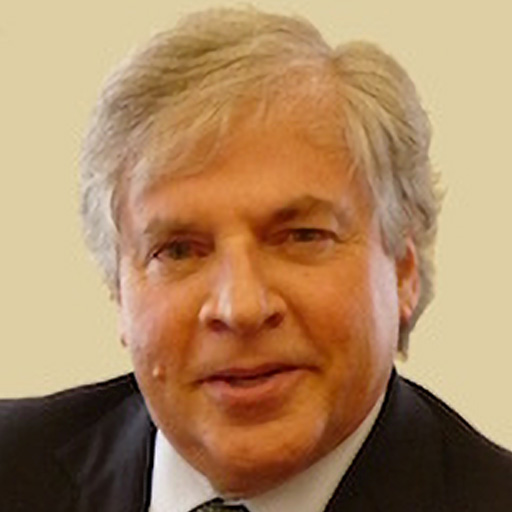
David Abel, President & CEO of ABL, Incorporated, publishes The Planning Report, which focuses on land use; and, the VerdeXchange News, which focuses on clean energy and sustainable technologies. For the last two decades, David has leveraged his professional experience and interests in civic affairs, clean & renewable energy, water technologies, last mile transportation, urban planning, blue-tech, and sustainability to also create the VerdeXchange Institute – an environmental think tank and host of the annual, global, clean tech and renewable energy Conference, VerdeXchange, which focuses on what is: in-market; about-to-be in-market; and needed in-market .. in the global, clean and green economy.
John Shegerian: Do you have a suggestion for a rockstar Impact Podcast guest? Go to impactpodcast.com and just click “Be a guest” to recommend someone today. This edition of the Impact Podcast is brought to you by ERI. ERI has a mission to protect people, the planet, and your privacy, and is the largest fully integrated IT and electronics asset disposition provider and cybersecurity-focused hardware destruction company in the United States and maybe even the world. For more information on how ERI can help your business properly dispose of outdated electronic hardware devices, please visit eridirect.com. This episode of the Impact Podcast is brought to you by Closed Loop Partners. Close Loop Partners is a leading circular economy investor in the United States with an extensive network of Fortune 500 corporate investors, family offices, institutional investors, industry experts, and impact partners. Closed Loop’s platform spans the arc of capital from venture capital to private equity, bridging gaps and fostering synergies to scale the circular economy. To find Closed Loop Partners, please go to www.closedlooppartners.com.
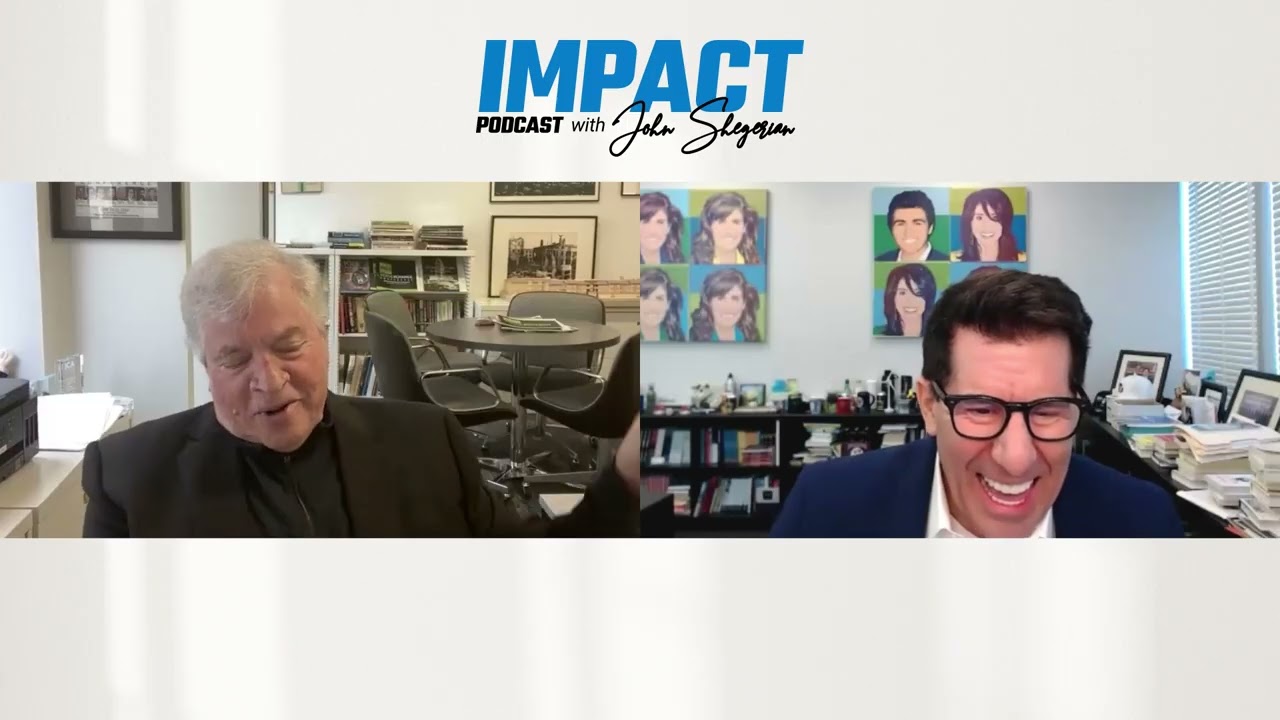
John: Welcome to another edition of the impact Podcast. I’m John Shegerian, and I’m so honored to have with us today my longtime friend David Abel. He’s back again on the Impact Podcast. Welcome, David. Welcome back to the Impact Podcast.
David Abel: Well, I so appreciate this, John. The last time we did this, it was a joy.
John: Well, thank you. And, as everyone knows, David is the chairman of ABL Reports and Verde Exchange, which we’re going to be talking about today. And to find Verde Exchange, you go to verdeexchange.org. David, before we get talking about your next conference that’s coming up, and I’m going to be there and I’m going to be speaking there again by the grace of your great invitation, which I always appreciate, talk a little bit about yourself for our listeners and viewers who didn’t meet you the last time you came on the Impact Podcast. Talk a little bit about where you even grew up and how you got on this fascinating career and lifetime journey of impact that you’ve been on ever since I’ve known you over now 33 years.
David: Well, John I’m only 25, but in the 50 years since I was 25 I’ve been engaged sort of in public-private enterprise. But I was born in Pittsburgh. If you look behind me, I’ve got a picture of Roberto Clemente and Forbes Field on my wall. But I left Pennsylvania in 1959 to California. Never regretted it. But when you rooted for a team that was horrible, you’re going to stick with that team forever. So I’m a Pittsburgh guy, came to California. My parents kept me from going to Berkeley, so I went to the Claremont Colleges, but they forgot and let me do a junior abroad in London. And all the things they were worried about, I was able to do in one year in London and changed my life. Eventually went into education, law, Found a beautiful woman in Cambridge, dragged her out to California against her will. She’s found her practice in architecture, done fabulously well. That’s when we got to know each other through the likes of Irie Ellen and others. And I’ve been part of LA’s civic and political culture for 50 years. But my enterprises have been in transportation and water and land use and publications. And now in my old age, I run for 18 years, a global clean tech conference. Honestly, mostly to keep in touch with my son who’s a green guy and I wanted to understand what he was doing. So we have lots of stuff we’ll talk about that we do at this conference.
John: Yeah, and that’s your son Elliot, who I’ve known since he’s a little guy. Now he’s a big, successful young man and it’s always great to run into Elliot at all the green conferences whenever I’m there and he’s there together. Talk a little bit about the Verde Exchange. Because your son is in the green industry and in a very big way talk a little bit about the aha moment for Verde Exchange how you started the journey, how it’s gone, because no journey is ever a straight line, or very few are, and where we are today and what this conference that’s upcoming, what does that hold in store for all of us who want to go and enjoy another one of your great events?
David: Well the 19 years of this journey has been amazing for clean tech and sustainability, but let me start at the beginning. Again, because of my son working for GE Renewables out of college, I went to some of their conferences, GE Renewable conferences. And then one of those at NBC Studios, ’cause they owned it, GE owned it, there were 17 CEOs on the stage with the CEO of General Electric. And I said to myself, this is not the environmental movement that I knew in college. This is a trillion-dollar economy and it’s fascinating. So eventually, years later, some people in LA came to me and said, fill a hole in our convention center. We just lost a convention. Do something on energy and water and clean tech. They gave me the Apple convention people to help me. We put together a conference. We called it Green Tech. I mean, Green Exchange, but they wanted to move it to Boston. I said, no, no, I’m an LA guy. We’ll just change the name in honor of Antonio Viragosa called VerdeXchange, and we began to invite people from all over the world because the Japanese consulate said, “We’d love to be under your umbrella rather than ours.” So we created this event and they’ve been with us all these years. In fact, we’ve opened the conference for a dozen years at the Consul General’s residence in LA of Japan. But Canada and Australia and Korea and Great Britain and Germany and others have all been a part of this conference. Interested in what California’s doing because we’re a market maker. And so what we’re doing in that sector on air quality, on energy, on water, on transport, they’re interested in the signals. Where’s it going? And our motto has been what’s in market, about to be in market, and needed in market. And we put together some 40 panels and plenaries that bring together the best in all those sectors. And it’s attracted an audience, again, globally for 18, this will be our 19th year.
John: California being, if it was a country, if I’m not mistaken, you correct me because you’re an expert on this stuff, fourth largest. Yeah, fourth largest in the world. Talk a little bit about where it is when you started it. Has it evolved? What’s happened that’s unexpected? Because that’s always the most fun. It’s great to forecast things that do become reality. But it’s also fun not to realize what’s also going to happen and what’s evolved that you weren’t expecting. And where is the conference now in terms of topics that you’re covering as opposed to topics you were covering at the advent of this great event?
David: Not only matters we’re covering now that we didn’t before, but matters I didn’t pay attention to until lately. For example, hydrogen. The last 4 years with 25 executives from Japan coming here every year to the conferences has blown up in our reference. But circular economy, which you know well, was like a policy issue when we started. And now it’s an enterprise, as you know well, globally. And so the built environment, the built environment was like planning and land use planning, and now it’s materials and fabrication and technology. And how you power it and how you generate it, how you distribute that energy. Water. When we started in water, Los Angeles and Southern California imported all its water. And now after about 8 years, we’re trying to figure out how to import less and develop the resources of water we have now. All those technologies of recycling water and making it, and pure water have changed the world. And then the ports, the ports of LA and Long Beach together are one of the largest in North America. And their evolution and trade and trade routes and greening their fleets and how they, how they discharge their energy and waste all new, all totally new. So I’m not even getting into energy and what’s happened to energy, and there have been headwinds from federal administrations and globally there have been winds blowing in our direction and winds blowing against us. But all this time, I think you’ve seen the scaling of these industries, the reduction in price, the economics that work regardless of the policy. So those have been the fascinating parts of this. And then I can find technologies that I never heard about, like holograms, and I incorporate them. And it just keeps you young. Even at 79, I feel young.
John: That’s awesome. David, when exactly is this year’s conference and where is it? And let’s give a shout out to where people can sign up and our listeners and viewers can sign up to attend it if they’re so interested in.
David: Well, VerdeXchange is VerdeXchange.org. There’s an X in the middle. VerityExchange.org is where all this information is. We’ve been doing it in LA all those 19 years. We spent a couple years in Toronto and Phoenix as well, but all in LA now because of age and enterprise. And we’re doing it at the Biltmore Hotel May 31st to June 3rd. And the last day of our conference is a boat tour of a working harbor, the San Pedro Bay, LA and Long Beach, ending at a place called AltaSea, which is an overnight success after 15 years of looking at what’s going on in the ocean from research to enterprise to education. And that’s the end of our conference, the beginning and then receptions and dinners and plenaries and panels, all of that’s online. And we’re going to talk about that as we go forward. But it’s May 31st to June 3rd.
John: David, as you and I record this episode together, it’s now early April 2026, and obviously there’s this very tragic Iran conflict that’s underway. And the Strait of Hormuz is right now closed. How much do supply chain issues come up at your conferences and how much are they going to be highlighted historically? And are they being highlighted and discussed more as you have evolved the topics at your conferences?
David: Well, as I said, the ports have been great sponsors of us for years. And even now, the supply chain issues, the air quality issues, the routes, the greening of these transportation issues. Australia, Japan, the United States, India. India has become a bigger part of our conference over the last 4 years. So those trade routes and what’s being traded and how it’s being dealt with from an energy point of view are huge topics. We have a whole sector on that in our conference and so you know well that we’re the entry point for most of the goods coming to the United States here in Los Angeles. And so this is a huge topic. People may think of us as the Hollywood center, but I always tell people the ports are bigger than Hollywood.
John: That’s so true. So interesting how your conference has evolved from, as you said, from the beginning, the Japanese consulate was very supportive and partners, and they’ve stayed with you on this whole journey. But now you’ve added, as you said, Australia and India, with a lot more. And that’s now known as the Quad, U.S., Japan, Australia, and India are the Quad. So that’s so fascinating that that’s how your conference has evolved. And basically now is a great representation of the Quad.
David: Well we had our mayor of L.A., Eric Garcetti, become the ambassador to India, and that opened the door and our eyes to the significance of India. And we’ve been very interested in attracting leadership. And in fact, we’re very supportive of India creating a conulate in L.A. The first time they’ve had one this year. And that consulate is deeply involved in our conference this year. So you know this well and you’ve been to Japan often enough to know what’s happening in Southeast Asia and Asia in that market. And we’re not going to neglect that because that’s part of the present and future.
John: I was in India last year and our intention is to open up a facility in India sometime between now and the end of this year. We know India is a major player in the world and is going to continue to grow and be such. So it’s so great that they’re there at your conference. Let’s brag about some of… You have, again, old terminology that you and I will understand. Hopefully our listeners and viewers get it as well. You have one of the greatest Rolodexes in all of LA history. Talk a little bit and brag about some of the great speakers that are coming to speak at your conference this year and the topics they’ll be covering so we can give a little taste of the greatness of your conference to our listeners and viewers.
David: Well, one of the best is this fellow from ERI, John Shegarian. I mean, not only what he’s doing fascinating. And you may think it’s just recycling electronic waste, but rare earth minerals are a big part of this, and it’s a big part of what Japan and the United States are interested in. But we’ve attracted the regulatory leadership of California from the beginning. The Air Resources Board and the PUC and the Caliso[?], all of these give us signals when they come, their leadership come to the audience that comes here to say, where is California now and where does it want to be? But people from Washington, we’re having leadership in energy from New York at the conference. We have private sector leadership in all those sectors from energy, water, transport, and finance. Our website, if you look at the speakers page and you can go back 20 years, has most of the significant players that are in this market or want to be in this market or want to scale in this market. Scale is a big word.
John: Talk a little bit about like when you’re talking to somebody who hasn’t been to your conference, what do the people that come give you as feedback after they’re there? What are the great takeaways that they get from coming to your conference?
David: Well, some of them say it’s the Davos of the West. They’re meeting people, they’re making relationships. All of them want to be on panels, the speakers and the elites that we attract. But the best part of the conference are the receptions, dinners in the hallway, because that’s where the interaction takes place. We only have 500, 600 players over those 4 days. That’s who we want. We want the market makers. So they have an opportunity. They learn, obviously they learn by listening to others on the conference of what’s on the cutting edge, but they have an ability to build relationships. We have extra rooms for private meetings that may be stolen from the best conferences in the world on how to do this, but we know what business people and even policy people want. They wanna learn, they wanna build relationships, and they wanna grow those.
John: Yeah, relationships. It’s so funny, David when you and I were kids growing up, there was no technology. So in-person meetings and doing business nose to nose was ubiquitous to our youth and our early careers. But you have the advent of the technology, like say Google was founded in ’98, so we’ll use that as a demarcation point and to say since the advent of Google, it seems like the world, as we got more technologized, have gotten more and more isolated. Then came COVID and that accelerated this isolation and this leaning on technology, which obviously has so many great points and has obviously made us more interconnected. But it’s also led to this almost antisocial or anti-personal stuff. So your exchange, what I found from it every time I’ve attended and participated is it’s like you said, the nose-to-nose stuff. It forces you to have personal relationships. And as you and I know, the meaningful, the best relationships, the most impactful that have the longest lasting value is all done in person.
David: The Japanese are a good example, John. We’re doing a Zoom here. I’m not even in the same city, but we know each other, personal relationships. We trust each other. I try to tell that to my son and the grandkids. You may have great opportunities to talk on your cell phone, but we know the people in our Rolodex and we know it from personal interaction. We try to emphasize that at our conference.
John: Which is why your conference is really such a cut above so many other conferences. The interpersonal interactions have been so meaningful to me and is the reason that I come every year to participate, not only to honor you and Brenda, who are of course two of my favorite people on this planet, but it’s really the in-person stuff that matters. And I think that’s never more important than now in a world that’s becoming now hyper-technologized with the advent of AI. By the way, how much does AI have to do with all these new and fascinating technologies and scalable commercial opportunities in the green sector? Is AI playing a role and is that going to be a topic covered at your conference?
David: It’s going to be almost in every one of the sectors, John. A couple of years ago, some of the people viewing this may know Kathleen Brown, Jerry Brown’s sister, ran treasurer of the state, ran for governor, done many things. She called me one day and said, if you don’t have AI, your conference is irrelevant. That was years ago. And how we’re distributing energy, what we’re doing with water, what we’re doing in built environment, are we seeing what AI is doing? We’re still learning about what AI is doing. And then you have all the cybersecurity issues and the responsibility that goes with that. Those are also topics embedded in this conference. We’re not a policy conference, but we’re about what are the signals that you have to be aware of to scale and be in business in these sectors. Obviously, AI is a huge part of it. Now, I’m 79. I thought I’d get out of this place before AI took over, but I can’t. I mean, it’s like everywhere.
John: I know you’re involved heavily at this in the School of Sustainability at USC. What do you see the next gen of leaders, these young kids in college now who now have the opportunity to study environmental science and other disciplines so they could come out and have a career like yours where you not only make a nice paycheck, but this is what I learned the most from you and Brenda, but you guys, before there was an impact world, before they were Chief Impact Officers, you guys you had mastered the art of making a paycheck, but making an impact. And everything you both did when we were much younger and that was before it was part of a discipline. It’s now become a discipline. There’s a whole generation of, let’s say, 18 to 35-year-olds that want to be you, that want to be, so what do you see in them that you could share? And that was also going to be represented at the conference so the young generation could come to your conference and come away with some very important information to help further their career, to make it more impactful.
David: Well, you’re right. There’s a demand out there for this kind of education and opportunities. I hire grad students who are working at USC, UCLA, and other institutions to help me every year. And they’re more and more and more qualified and underappreciated in this marketplace, by the way. When I put out a notice to hire 3, I get 30 unquestionably qualified people for those jobs. So we have to think about workforce, we have to think about opportunity. But I’ll tell you, some of those kids, despite the fact that I don’t understand what they’re saying, some of these people are brilliant. They’re doing studies in graduate school about water quality, about energy and recapture, about capturing carbon in the air. They’re all over this stuff and they’re looking for opportunities to get their feet wet with mentors like yourself. And we ought to be conscious of that and give them those opportunities. Sometimes you can get that in the classroom, but more often it’s the classroom complemented by the experience of being with you, John.
John: I fully agree with that. I think it’s our responsibility where we’ve evolved our careers, David, to of course mentor as many young people as we could fit in in our lives, because that’s just part of being the human experience and the human journey. It’s so important to share because there’s a lot that they can’t learn in the classroom. There’s a of real-life experience that guys like you and me can share with them that can really enrich and help them avoid some of the trees in the forest that you and I hit along the way when we were much younger.
David: We even have some high school STEM students that are part of the conference deliberately to begin to nurture that. And I’ll say one other thing. There’s a woman named Robin Beavers who was in my son’s class at Stanford, wanted to be in civil engineering and sustainability. There wasn’t a class she could take in 2000, not a class at Stanford. Now you have the Doerr Institute with $1 billion much later than her career. She took off in Google and other things. But at the time, there was nothing. Now it’s a school with a lot of all over the world. So it’s changing, it’s getting better, but we’ve got to give them some opportunities.
John: That’s so true. You mentioned hydrogen as a topic now that was never on the board before and now is being covered. How about nuclear? Is nuclear going to be covered at all?
David: Yeah. Not only nuclear, but fusion. That’s a good story, John. I tried to do a nuclear panel about 8 years ago in our conference, brought people in from Sandia Lab, from Europe, from New York, and some of my California mates at the conference boycotted the session. So I, wanting to protect my audience, didn’t do it for a couple of years. This year we’re all into it. We’re bringing down people from Livermore Lab and all over in the private sector in nuclear and fusion. And we’re going all out because we have investors at this conference with funds that are in those sectors. And so there’s now an audience and there’s a desire to understand, even though fusion may be way out there, they’re investing now in those companies. So you’re right on. And my audience doesn’t boycott anymore.
John: David, you’re sitting in Los Angeles today. I’m sitting in Fresno while we record this episode. Both cities have had massive histories dating back to the Chinatown stories and things with the DWP of LA. And of course, the ag belt of the United States now is Fresno in the Central Valley, all challenged by water issues. And it’s my understanding that the water technology has evolved to the point where we could take the technologies there to take black water and make it into absolute delicious, drinkable water for anyone who so desires, who has access to that technology. Is that true? Do we not truly have any more technology issue with regards to getting enough water supply to areas that are short on water? But it becomes then somewhat of a policy and political issue to allow these kind of treatment plants to be put in these communities.
David: 100%. I mean, first of all, we have a water charrette. We call it a charrette because I married an architect, but it’s a private meeting within the conference of water managers from all over to pick a topic every year they wanna focus in by an invitational meeting. We’re very interested in the recycling of water, the reuse of water and pure water. But as you know, because you spent time in LA, we had a mayoral campaign about 2 decades ago that said toilet to tap was unacceptable. It shut down that industry for almost 2 decades. It’s coming back and ferociously as a topic, as an interest. So you’re right, we have changed, flipped the script and from imported to using the water we have now better. And that’s been a policy decision. And it’s reflected in the Korean and Japanese and Australian and Israeli companies that come here to show their wares, to try to be part of that infrastructure, to change the way we use water.
John: That’s so awesome. David for our listeners and viewers, it will be in the show notes. You don’t have to write anything down here, but to find David and his great event, you go to VerdeXchange.org and, and obviously you click on to the 2026, which is May 31st to June 3rd. And I would really highly encourage, no matter what your age and where you are in your career, to come to this event, because if you’re on the West Coast during that time, you’re going to meet everyone you need to meet if you really want to have a career that not only makes a nice living for you and your family, but also you can have a huge impact anywhere you are.
David: I want you to know, John, you come back even though you put a glass of water on a piano at the Japanese Consulate General’s residence and were scolded, you still come back.
John: Wait a second. It wasn’t just the piano. It wasn’t just the piano. Do you want to say whose piano that really was originally?
David: No, John, you’re right. We value the audience that comes and we look for those people who want to take advantage of this opportunity. And we welcome those who want to look at our site and check us out. You can find in our archives going back 18 years who we’ve had. You can see video of the panels. One last thing, I know we’re running out of time, is we’re playing with holograms right now. We’ve met a company, Proto Hologram, that’s doing amazing stuff and we’re talking to them about having to bring people into the conference through a hologram. Now, the downside is we want the people to be there in a lot of ways. The other side is we can bring people from all over the world onto the stage. It’s really an interesting conundrum.
John: Are they going to make a display of it though? We’re going to be able to….
David: Oh no, I’m going to try to bring in one or two people from great distances and put them on the stage.
John: That’s so awesome, David. I can’t wait to see that.
David: You still have to come.
John: I’m coming in person, David. I want to be with you in person. I would never miss coming to see you and Brenda in person. That’s what I’m going to be doing. And I just want to say to you, thank you for not only coming and spending a half hour with us today, but thank you for all of our years of friendship and inspiration. You and Brenda have been truly inspirational people in my journey and helped me be a better person to make more impact than I could ever have dreamed of. That largely came from my relationship with you and Brenda. And you guys didn’t really mentor, you mentored by example and that’s really some of the greatest inspiration any young person can find in their career.
David: Well, thank you, John. And we’ve knew some great people along the way.
John: Oh, we knew some great people. And the ones that are still with us are great and we miss the ones that are no longer with us. But thank you, David, for everything you’ve done in the 19 years. And thank you for the friendship. And I can’t wait to see you and Brenda at May 31st to June 3rd, VerdeXchange.org. You can meet David Abel yourself in person. Thanks so much.
David: Thanks, John. Be well.
John: Thanks.
John: This edition of the Impact Podcast is brought to you by Engage. Engage is a digital booking platform revolutionizing the talent booking industry. With thousands of athletes, celebrities, entrepreneurs, and business leaders, Engage is the go-to spot for booking talent for speeches, custom experiences, livestreams, and much more. For more information on Engage or to book talent today, visit letsengage.com. This edition of the Impact Podcast is brought to you by ERI. ERI has a mission to protect people, the planet, and your privacy, and is the largest fully integrated IT and electronics asset disposition provider and cybersecurity-focused hardware destruction company in the United States, and maybe even the world. For more information on how ERI can help your business properly dispose of outdated electronic hardware devices, please visit eridirect.com.
 Spotify
 Apple Podcasts
 Amazon Music
 iHeartRadio
 YouTube
 YouTube Music
 Audible
 Pandora