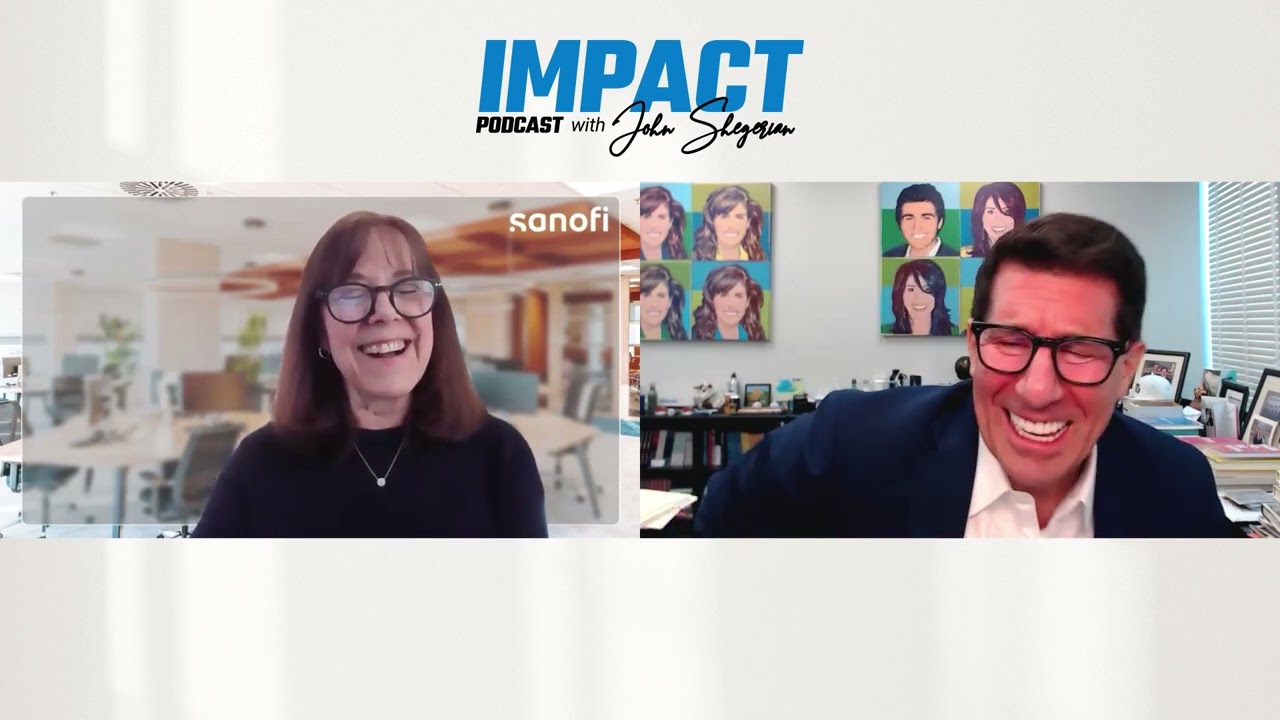
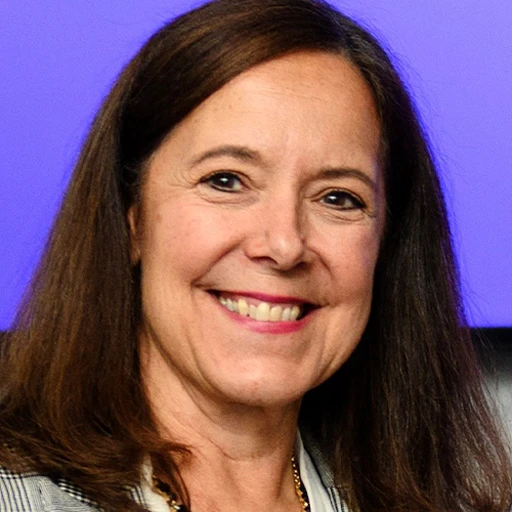
Diana Blankman Roberts is Head of U.S. Corporate Social Responsibility at Sanofi and President of Sanofi Cares North America, bringing more than 25 years of experience across the healthcare and nonprofit sectors. In her role, Diana leads the strategy and execution of Sanofi’s U.S. social impact agenda, overseeing community relations, employee engagement, and cross-sector partnerships that advance equitable health outcomes and strengthen communities through trusted, community-led partnerships.
John Shegerian: Get the latest Impact Podcast right into your inbox each week. Subscribe by entering your email address at impactpodcast.com to make sure you never miss an interview. This edition of the Impact Podcast is brought to you by ERI. ERI has a mission to protect people, the planet, and your privacy, and is the largest fully integrated IT and electronics asset disposition provider and cybersecurity-focused hardware destruction company in the United States and maybe even the world. For more information on how ERI can help your business properly dispose of outdated electronic hardware devices, please visit eridirect.com. This episode of the Impact Podcast is brought to you by Close Loop Partners. Close Loop Partners is a leading circular economy investor in the United States with an extensive network of Fortune 500 corporate investors, family offices, institutional investors, industry experts, and impact partners. Closed Loop’s platform spans the arc of capital from venture capital to private equity, bridging gaps and fostering synergies to scale the circular economy. To find Closed Loop Partners, please go to www.closedlooppartners.com.
John: Welcome to another edition of the Impact Podcast. I’m John Shegerian, and I’m so excited to have with us today Diana Blankman Roberts. She’s the head of corporate social responsibility at Sanofi. Welcome to the Impact Podcast, Diana.
Diana Blankman Roberts: Well, hi, John. Thanks for having me.
John: Hey, it’s an honor to have you on. We’ve never had you or Sanofi on, so this is going to be a great episode. But before we get talking about what you and your colleagues are doing over at Santa Fe in corporate social responsibility, I first wanna learn about the Diana Blankman Roberts story. Where were you born? Where’d you grow up and how’d you get on this very important journey that you’re on?
Diana: Yeah, sure. Well, I will say my career path to get to what I’m doing today is not a very traditional one. I was born in New York City, raised on Long Island. I am the daughter of a very artistic family. My father, before he started his own company, my own public relations company, was a musical theater composer. He was also a TV producer. I’m gonna date myself here, but he was one of the original producers of The Johnny Carson Show when it was still filmed out of New York City.
John: One of the most famous shows on the planet. Oh my gosh. Come on.
Diana: Me too. I’ve got this great picture of my father, who unfortunately is no longer with us, but with Johnny Carson standing in front of The Tonight Show curtain, which I love.
John: That was a famous curtain too, by the way. That was a very famous curtain.
Diana: Yes. I know. It’s nice to know that someone else remembers Johnny Carson. It’s not just me. But my stepmother was a professional ballet dancer. And so growing up, we always had music and theater, I mean, just surrounding us in the house. I can’t remember a time when my dad didn’t have a Broadway show album on the stereo, or even in the car, he used to have cassettes that were sort of a compilation of all of his favorite show tunes. But, so as a result, I think, I grew up thinking, “Okay, I’m destined to be a musical theater actress.” I did a lot of community theater growing up. I was a theater major in college, performed around the East Coast for a couple of years once I graduated. And it’s a great field, but it is a hard one. It’s like being on a constant job interview because you’re going from job to job to job. And so I reached a point where I thought, “Okay, I’m ready for something a little different.” I switched to the other side of the arts, which was the administrative side. And I worked for a number of years in nonprofit theater, mainly in community relations and fundraising. And it was there that I really learned about corporate and nonprofit partnerships, public-private partnerships, how the two can really work together to achieve common goals. So I did that for maybe 8 to 10 years, started to go through just some changes personally and needed a little bit more of a stable income and job. And so I applied for and got my first job in pharmaceuticals in marketing. I don’t mind saying, I’m not embarrassed to say, John, that I was horrible in the role. It is numbers, marketing, forecasting, not a specialty of mine. I remember many a wee hour in the morning sitting at my kitchen table trying to do forecasting spreadsheets thinking, oh my God, what have I done? It was just not a good time.
John: It was not your thing.
Diana: It just wasn’t my thing. You’re absolutely right. But I will say I stuck it out and I persevered and I eventually moved into corporate communications. Much better fit. But it was there that I realized the company was not really doing anything with their purpose-driven programming. So there weren’t really any formal volunteer programs for employees or engagement opportunities. If someone wanted to learn how to be on a board of directors, nothing available, no mentorship programs for employees. Employees. I also noticed that if a nonprofit applied for funding, if something came into the system chances are if there was money in the budget, the company would say yes. So it was a time where they weren’t really concerned about alignment to the business or strategy. And I thought to myself, I know what it’s like to be in the nonprofit world. I know what it’s like to work with corporations and nonprofits. I think I can add some value here. And I took it upon myself to write a job description. I pitched it to, I think, was the head of corporate affairs at the time. He must have said yes, because that ultimately is what started my 20-plus-year career in this field. I did go back to school. I went while I was working. I went to the Boston College Center for Corporate Citizenship and got my certificate in corporate community involvement. And I’ll just say I actually love sharing that story with young kids especially interns that come into the company, because I think it’s such a good example of not being afraid to ask for something that you want. You may get a no, but you may get a yes. And in my case, it’s really led to what has been one of the most rewarding careers I think I ever could have imagined.
John: Michael Jordan said, you miss 100% of the shots you don’t take.
Diana: Yeah, I love it.
John: And it’s really the truth about life, right?
Diana: Yeah.
John: And there’s no shame if you’re not happy and you don’t fully love what you’re doing, there’s no shame in changing.
Diana: You are 100% correct. And I will say that when you asked also at the beginning, who’s been a great influence, my father was such a great example of going through so many careers. We always referred to him as a Renaissance man, very much a self-made man. He did things that he loved, and when they weren’t working, he moved on into something else. And one of the things that he always said to my siblings and me that has stuck with me forever, and I raised my children saying the same thing, and that is to always be inquisitive, ask questions, stay interested in things, because if you do, you never know where life will take you. For me, my career has just been such a wonderful journey.
John: When did you join Sanofi, or when you went into corporate social responsibility, where was your first job, and how many years ago did you in Sanofi?
Diana: Yeah, it was a long time ago. So my first pharmaceutical position was with Wyeth Pharmaceuticals, which actually is now Pfizer. They had bought Wyeth. So you probably obviously have heard of Pfizer, maybe not Wyeth, but I started there a long time ago. I want to say 1996. So I’m old here. And then I worked for another Danish pharma for a number of years. And then I came to Sanofi in 2019. So I just hit my 7-year anniversary. And it was such a great opportunity for me because starting to work towards the latter part of my career, and it really gave me an opportunity to come in and sort of assess a program that was still very junior in terms of corporate social responsibility, be able to sort of take my experience experience from other companies and really build what I think is and has become a really meaningful and hopefully impactful program.
John: You hired as the head of corporate social responsibility, or was that the title you got hired for right from the get-go? Yeah.
Diana: Yes, I was hired that way. So I run the function for the US. We have a global head. While I don’t report into that position, we certainly do an awful lot together. I mean, ultimately, my role is to carry through the global approach priorities, but in a way that makes sense for the United States.
John: Got you. For our listeners and viewers who have just tuned in, we’ve got Diana Blankman Roberts with us. She’s the head of corporate social responsibility at Sanofi. To find Diana and all of her colleagues and all the important work they’re doing in corporate social responsibility, please go to www.sanofi.us. It’ll be in the show notes. You don’t have to stop driving your car, walking your dog, or lifting your weights. It will all be in the show notes. Diana, talk a little bit about your role. As we know, corporate social responsibility can be read very narrowly, but depending on who the leadership is and what the C-suite wants and what the person leading it is, or it could be read very broadly. Talk a little bit about what does your role look like and how did you define that role as head of corporate social responsibility?
Diana: Yeah, well, when I first started at Sanofi they were doing some really lovely things, really important things in CSR, but it was very much, I would say, of a nice-to-have function. One that was really defined by volunteerism and giving money away to local organizations that were doing great work in your community. And one of the reasons why I think I was brought in is because they knew that CSR could be something more, that it should be better aligned to the business. It really could be making a good impact. But they weren’t quite sure how to do it. And so I was lucky enough to get the role. And as I said earlier, I mean, there’s a lot of pressure, but it’s a great position to be in, to be able to come in, be able to take some time and assess the organization and really help to build an impactful program. I can say, and I teased earlier that I’m old, but when I entered this field, the terminology of corporate social responsibility really wasn’t widely defined. It was really more about corporate philanthropy. And being a good corporate citizen, as I said in the opening, sort of being a good neighbor and meeting your local community needs. But I’ve seen so many changes over the years to get where we are today with going from philanthropy to CSR evolving, I think, with a little bit more of a stronger focus on legal and ethical responsibility. Eventually, the concept of shared value came into…
John: [inaudible] legal and response. Talk about a little bit of accountability, responsibility, that it’s no longer just philanthropy, which is wonderful and important unto itself, but now it’s actually evolved and it’s grown up. Talk a little bit about what you mean by that.
Diana: Yeah, it absolutely has grown up. I mean, I think as companies started getting a little bit smarter, they started tying what they were doing in terms of donations and the kinds of organizations they support and the kinds of programs they support a little bit more to the business. This notion of shared value that I just mentioned is really where companies started recognizing that addressing social and environmental challenges could happen in a way that it also strengthened their business. I think what’s different today is that for many companies, social impact strategies are business strategies. And I think that’s been a huge shift. We see that when CSR is embedded as an operating principle, it really shapes how decisions get made across the organization. And benefits to the business can come in a lot of different ways. And this was something, to be honest with you, when I joined Sanofi, because I was asking them to look at things differently, was new. It was a new way of thinking for them. I was very lucky. I am very lucky to work for an executive team that understands the importance of this kind of work. In terms of benefits to the business, it’s opening new markets, strengthening brand and reputation, plays a major role. You said this a little bit earlier in attracting and retaining talent. And the younger generation really wants to come to work and make sure that what they’re doing matters, that they’re making a difference in the world. And so I think companies its number one greatest resource are its employees, and they can’t afford to, to lose good talent.
John: Having good corporate social responsibility work being done at any organization is just a great attraction tool for recruiting and a great retention tool for keeping the best of the best that your company took their time to recruit, right?
Diana: Yeah, absolutely. I think having a purpose-driven strategy has become absolutely something that’s a necessity, not just nice to have anymore. I can share with you a little bit about what sort of that business strategy now means at Sanofi. It’s really reflected in, we had a bit of a shift at the beginning of last year. We had a brand new global sustainability and CSR strategy that was introduced, and it’s called AIR. And it really focuses on the intersection of the environment and health, has 3 priority areas. The A is access, so focus on sustainable and equitable access to care. The I is environmental impact, and the R is the resilience of health systems. One of the things that, that we know is that health systems are responsible for about 5% of global CO2 emissions. So we absolutely have some work to do there. But for Sanofi, environmental health and human health are inseparable. We know that nearly half the world’s population lack access to essential healthcare. And unfortunately, the communities most affected by poor air quality and environmental conditions are often the same ones facing the greatest barrier to care. And because respiratory health is central to so many of Sanofi’s therapies, this isn’t separate from our business. It’s directly connected to, I would say, our purpose and long-term growth.
John: Diana, I should have done this earlier, but I just want for our listeners and viewers, I want you to understand who Sanofi really is. So I’m going to read this in because I do this, but it’s so important. Sanofi, yeah, first worldwide supplier of injectable polio vaccine, followed by the first influenza, meningitis, and rabies vaccines. Today, their portfolio vaccines protects half a billion people worldwide. So this is a very big organization. I don’t want to put you on the spot, but approximately how many countries do you does Sanofi do work in, and approximately how many employees does it have?
Diana: Yeah, so we operate in over 100 countries. In the US, we have about 13 employees, but globally, don’t quote me, it’s somewhere around 80,000. So it definitely is….
John: [crosstalk] Yeah, got it. And by the way, when they brought you on in ’19, how much were you informed by the other corporate responsibility executives at Sanofi in other continents around the world? How much of that cross-information and shared information did you do internally?
Diana: Yeah. It’s interesting. To be honest, when I started, John, I wish I could say that there was more of that. About 2 or 3 years into my time at Sanofi, they had a new global head of CSR, and sort of the world opened up. There was a lot more collaboration, and again, really my role is to take that larger global strategy and pull it through. And as I said, in a way that addresses our needs in the US, which are a little bit different than countries outside of here. When I look at the AIR strategy that I was just talking about, one of the things that really was a priority when they introduced this strategy last year was that it was to be embedded across the entire value chain globally. So from the way we develop our products to manufacture our products, package them, ultimately how we deliver care to patients. So for me, that’s what CSR really looks like when it moves from philanthropy to strategy.
John: That’s fascinating. I love what you said about AIR. So then talk about the interrelationship that you still sit in the middle of the intersection, it sounds like, Diana, between sustainability company and philanthropy and you. So is there constant cross-communication and shared values and goals between all three of those divisions at Sanofi?
Diana: Absolutely. The teams, we have separate functions, we’re all working together, right? We’re all working together for a common goal. So absolutely, there is a large sustainability and CSR community globally. At Sanofi we come together once a month. There are usually topics, different areas in these meetings, different countries get highlighted in the work that they’re doing. In our new strategy, we have some programs that we’ve launched this year that really will be building out through 2026 and ’27 that I think will really serve to be pilots for other companies to pull through. So I think you absolutely need that collaboration among just every single one of these departments. Also to make sure that you’re hitting what you’re trying to solve from every angle that you possibly can.
John: Give us some tips and tricks. I don’t say tricks in a weird way. I mean real tips of greatest hits from your experience over the last 20 years of doing this kind of work in terms of internal collaboration and how to make that really work. Because sometimes when you have leaders from each of those different silos, it could go the other way. You sound like you’ve become the glue in terms of working with sustainability and also philanthropy. And then externally, partnerships, what’s some of the greatest thoughts that you have on how you make partnerships work? Talk a little bit about both collaborations internally, partnerships externally.
Diana: Yeah, it’s a great question, John. I think, to be honest, they’re both integrated, both of those. And I will say right off the bat, there are two things both internally and externally that I think define the success of any partnership. And that is the fact that humility and trust are foundational. My team and I always say, whether it’s internally or externally, we never enter partnerships assuming we have all the answers. And that’s what partnerships are really about. I mean, essentially, you each bring something to the table. That the other doesn’t have. And so success is clearly defined by having that trust and mutual respect. And so I think, it’s important to have clearly defined roles, understand the outcomes that you’re hoping to achieve at the outset, and of course, true accountability. I can give you an example of an external partnership.
John: Please.
Diana: Oh, sure. So Sanofi has had a longstanding commitment to helping to build workforce capacity for community health workers, CHWs. So in the pharma industry, we love our acronyms. So CHWs really act as a bridge between healthcare systems and the communities that they serve. They meet people where they are, whether they’re in rural towns, urban areas, public housing. Really, they work to ensure that those in undersupported communities can access the care that they need. And I say that they’re really often considered trusted messengers, so to speak, because they come from and live in the very communities that they’re trying to help. Despite years of data, however, detailing their effectiveness, they still face a lot of challenges. I mean, primarily around reimbursement for their services. So Sanofi was one of a number of companies back in 2019, so just as I joined Sanofi, we helped the National Association of Community Health Workers form into an official nonprofit organization. And in 2021, they had a new executive director, one of the smartest and most inspiring people I’ve ever met in my life. And believing so much in what they do and how they enable equitable health, we reached out and we said, we’d like to help. But we didn’t come in with a what in mind, and I think that’s really important. Instead, we asked what do you see as your needs and your challenges? Where do you see perhaps our resources maybe helping you advance what you’re trying to do? And we ended up by having so many conversations, and I truly believe that by listening first, we were able to build that foundation of trust. That’s enabled us to do quite a number of things together. The first is, I think, really help them build an organization that helps other funders and partners understand how best to engage and support community health workers. One of the things that they mentioned when we had that initial conversation was that they didn’t have a digital platform. They didn’t have any way to unite community health workers across the country. We saw during the pandemic that was an issue. There was no way to mobilize them as a workforce, communicate en masse at that point. And so after many conversations with community health workers, we developed a program that sort of drove the importance of purpose-driven work within our company that would also help them achieve their goals. And so we ultimately devised a program that had 200 employees, cross-site, cross-functional, from manufacturing all the way up to the executive office, who volunteered their time over the course of 3 months or so to work with community health workers to build a roadmap for a platform which is now used by roughly 31 state networks of community health workers across the country, has information on benchmarking and policy and reimbursement. It gives them the opportunity to network with others. Something they would not have been able to do otherwise. We’ve also had our government affairs team really lean in and spend time training the workforce. They trained roughly 75 community health workers on how to advocate for themselves during legislative meetings on Capitol Hill. And currently, I’ll say that we’re working on a cross-sector collaborative to see how through collective impact, so this is a number of people from other pharma companies, others in the healthcare space, to see how we can help build workforce sustainability for CHWs with a focus on rural health and AI. None of this would have happened, really, without building that foundation of trust. That’s really good. Yeah.
John: And so how’s that gone so far? How’s that working so far?
Diana: So exciting. I think when you sort of look at the things since 2019 of what we’ve been able to achieve, we’re really starting to, I think, get past some of their hurdles that were getting in the way of them being able to deliver really good care. The collaborative, we’ve just started, we just had our first meeting. So ask me that question at the end of the year and hopefully I’ll be able to have some good stats for you. One other thing though, John, if I can say that in addition to trust and really building that basic foundation, I think, that makes partnerships effective is also committing for the long term. Social change doesn’t happen in a single grant cycle or even with just one pilot. It really requires that listening and consistent thinking. It also means that you need to believe, this is my opinion, in community-led and community-driven solutions. I think community-based organizations understand the lived experiences, the barriers, I think the needs far better than any outside partner could. And the last thing I’ll just say here is that I always say to my team, I strongly believe it’s okay to not be the smartest person in the room. Let others take the lead. Our role is to listen, learn, and help strengthen what’s already working.
John: I couldn’t agree with you more. Talk a little bit about how do you go about forming these partnerships? Are you sending outgoing missives to organizations that potentially you want to sit down with and partner with, or are you getting incoming, or is it some delicate dance of both and you’re examining opportunities on both sides of the equation?
Diana: Yeah, it’s definitely both. There are organizations like the National Association of Community Health workers who we believe so much in what it is that they do to enable equitable access to care that we made the intro and reached out first. On the same turn, we also have a number of partners because of, I think, our community presence and our belief in community-driven, community-led solutions who reach out to us and say, it’s not just about money, what are the other things that you can bring to the table? I’ll mention a program called A Million Conversations, which this kind of gets back to the trust, but also about sort of how you reach out and work with other organizations. Sanofi launched in 2022, I think, a research across 5 countries that focused on trust or the lack thereof, I should say, in healthcare among underrepresented populations. And the results were really sobering. Just a couple of quick stats here. 7 in 10 people from Black and ethnic minority communities reported that they felt unheard, judged, even unsafe at times. That same percentage exists, 7 in 10, when we look at people in disability communities, they felt very much the same way. And where intersectionality exists, so really people falling into one or more of those categories, the lack of trust is even worse. And so in 2023, our CEO Paul Hudson announced the launch of a program called A Million Conversations, really in response to that reality. It is an 8-year commitment, but the whole purpose of this program, it’s not about Sanofi. It is about how do we bring other companies, nonprofits, leaders in community service and community organizations, how do we bring them together to really help sort of move the needle in this lack of trust issue? So, A Million Conversations really focuses in 3 areas. The first is building a more inclusive pipeline of scientific leaders, and that’s through scholarships, internships. The second is creating a space for open dialogue with those affected by trust-damaging experiences, and we’ve had so many people willing to share their stories with us. And then the third is really sort of how do we influence systems-level change? In the US, our focus has been on a few things. First, I think turning listening into sustained action, both internally and in the communities that we serve. And again, this is key. We can’t even begin to think about what solutions may look like without talking and listening to those who are willing to share their experiences first. And I will say many of the community partners who have been part of these dialogues now serve as an advisory board, so to speak, where we meet with several times a year. What are we doing? What are we doing wrong? What can we do more of? Also, I should say, for the past 3 years, and this is for our internal partnerships as well as external, we have been holding, this year will be our 4th forth something that we call our Trust, Inclusion, and Equity Summit. And this really began as a way to raise awareness and understanding among our employees of the trust issues and the health equity landscape so that they could really look at the work that they are doing day in and day out and find ways to foster better trust. Back to a point we said earlier, it also helps to reinforce the importance of purpose across the organization. And so the summit has really broadened now to include external audience as well, which ensures that all voices are really being heard. Some great work has come out of this. I can share a couple of things on the….
John: Oh, please do.
Diana: Yeah, thank you. On the internal front, we have a diversity and clinical trials team who actually, as a result of the first summit, kind of went back to their offices and said, okay, we gotta do more. Let’s start thinking out of the box. And they actually created a cultural humility training video, or video series, I should say, for clinical trial investigators. So these are the medical professionals who conduct and oversee studies. And the video series was really created to ensure that their work represented all people and was done in a way that was inclusive and culturally relevant for all. I will say that, excuse me, the feedback was extremely positive because it used real people sharing their real experiences, some which are very hard to hear, but it hit home for many, many taking the training. The last thing, and stop me if I’m just going on too long, but the last one I’ll share on the community front is a partnership that we started last year. This will be 3 years with the AME Zion churches. We’re doing a pilot, two in Atlanta and one in Buffalo, where they are working to create community-based health hubs within the churches. So this includes ongoing engagement with local organizations that serve as sort of trusted community advisors and messengers in community healthcare.
John: Love it. Where does both your mission and your goals, but also these wonderful success stories, where do they reside? Do you have a CSR report every year? Is it part of your sustainability report? Where does it reside?
Diana: Yeah, we do an annual global sustainability report every year. And to be honest, it used to be an integrated report where it was part of our regular annual report. I can’t quite remember if it’s still that way. Two years ago, the what we call our culture inclusion and employee experience team and the US CSR team for the first time did our own report specifically focusing on the US. So I think there are a lot of great places. Our website, we have in the US as well as globally, there are great sections on the website that really talk about about the, I think, the meaningful impact that a lot of these programs have made. I will say, John, one other thing there is that while I would like to take credit for everything, it’s not just the work that we do. We had an amazing public affairs and patient advocacy team. We have an amazing government relations team. And even sort of all the way through to our leadership and our brand teams thinking about, okay, as we’re thinking about a program and rolling out a new product, how do we make sure everyone has access to these treatments? Well, I can take credit for some of it, certainly. I’s a whole host of really amazing people.
John: Sanofi is investing in science education and community-based initiatives. Talk a little bit about what you said earlier that you said if he takes the long view. What does that mean when you’re making these kind of important investments?
Diana: Yes. Well, I think this is really twofold for us. First, we face a projected, I think it’s 1.5 million worker shortfall in STEM-related roles by 2030 in the US. That’s less than 4 years away, which is crazy. So workforce development is key, but I would say this is also about many young people, especially those in undersupported communities, don’t often see themselves in science and healthcare careers because they’re not often exposed to those possibilities early on. And many children in these communities really have limited access to science resources. And I say that if you can’t see yourself in these roles, it’s really hard to imagine a future there. And so I think that’s why we’re investing in science education, community-based initiatives that spark curiosity and help young people see themselves as problem solvers and innovators. This May, we’ll be launching a new program, I’m so excited, called The Air We Share. That pulls through the AIR strategy, so our Global Sustainability AIR strategy, and it really connects environment, human health education through hands-on learning for students and educators and communities. The program is built through a partnership with the Association of Science and Technology Centers. They’ve got about a network of 500 or so science museums, and it’s really engaged to be creative, provide accessible experiences that make science easy to understand, but in a way that it reflects local environment and health realities in each city. It’ll be led by 3 anchor institutions. So we’ll kick off in May, I guess, with the Museum of Science in Cambridge, Massachusetts, and then a little bit later in the year we’ll launch at the Franklin Institute in Philadelphia and the Community Science Center in New Jersey. And participating institutions, there’ll be 14 in all in the first year that receive not only funding but adaptable assets and access to sort of a collaborative network to support community-centered learning at the intersection of the environment and human health. And I’m so excited, we’re actually working on a sort of creative virtual reality component component that will let students be able to experience lungs that are healthy and those that have been affected by, by poor air quality. And the learning is really going to be done through the eyes of this adorable cartoon character that participants will really be able to relate to and have some fun. And then the last thing I’ll say here is the program will culminate in a national science competition next year that will really gives students the opportunity to showcase their ideas and solutions to real-world environmental and health challenges, but with a focus on what’s happening in their own communities. So I think this will help bring to life the issues around the environment and health while at the same time really inspiring that next generation to think about solutions in new and creative ways.
John: Talk a little bit about that. There’s not a day that goes by that you and I read the New York Times or Wall Street Journal or watch Bloomberg or CNBC that AI is not discussed. Is AI helping you in the great work that you do with your colleagues [inaudible] Sanofi?
Diana: Yeah, I mean, absolutely, without a doubt. And honestly, I’m still learning an awful lot about it, but for the pharma and the healthcare industry as a whole it is amazing how it is accelerating sort of the development process. For us in the CSR world, it gives us an opportunity to take large-scale data, it could be global data, and process it so much faster. Look at what’s happening, what are the issues, how do we boil it down where we can then, I think, come up with faster and maybe better solutions to the problems that we’re solving. That said, AI does not at all take away from the human element in this work. Pretty much as I’ve said all the way through this, really ensuring that you’re working with those who are the boots on the ground, organizations and people who are willing to share their stories, who face these barriers to health. And to education every day you need to have that human touchpoint. So I honestly think there’s a place for both, and the two really intersect so well with each other.
John: I’m so glad you brought that issue up, Diana, because I go around and speak to university students around the country on a regular basis.
Diana: Yeah.
John: When they raise their hands at the end, I typically leave lots of time for Q&A, and one of the first questions they always ask me is this, they say social media, traditional media, everyone is telling us that AI is coming for our careers. Why am I even sitting here in this university? My career is over before I can even get it going. So it’s my theory that the secret superpower to anyone’s career at this point, and you and I, let’s just say, I’m 63, so we’re generally speaking from similar generations.
Diana: Yes.
John: Things of that up. And when we were kids and when our dads did business, because my dad was also a larger-than-life figure in my life as well.
Diana: Yeah.
John: Everything was done. There was no technology. It was all done in person.
Diana: That works.
John: Everything in person was ubiquitous to our life because that’s all there was.
Diana: Yeah.
John: Then 1998, Google was founded is the way I look at it and the rise of the technological revolution, we became more isolated and we started losing our people skills. Thank COVID hits and that accelerates the use of technology and the use of isolation. I mean, and then the trend of isolation. And so now you have a whole generation of young people that are great at technology because they are digital natives. We’re not. You and I are digital immigrants. They’re digital natives, right? But now they need to know, and they’re void of people skills. Like you and I have people skills because there was one in our generation. But in many ways they’re void, or at least lacking in people skills. And I go back and tell them, hey, make more friends, go out more often. You know, they say dating is down, but you’re going to bars is down. And not that I’m here advocating drinking, but drinking as a social lubricant to get these young people together to work on their people skills. I think people skills. And those who know how to use AI and those who have great people skills are the ones who are going to really succeed in the future. What do you say about those issues?
Diana: Oh yeah, 100% agree with you. I mean, I think my father would be mortified if he saw that people are even losing writing skills. I mean, even penmanship. I mean, something as simple as that. Even I’m a little horrified too. I don’t mean to blame it all call it my dad. But I do think, as I said earlier, there’s an important place for both. So I can say that yes, that AI with the healthcare industry, it’s going to bring products to the patients who need them much faster than ever before. That’s an amazing thing, right? I can say for me, I use AI. Again, I’m not by any means affluent in all of it. But I will say I use it where I need to. If I’m writing a speech or I’ve got to write a presentation, I might just go in and say, here are my thoughts, can you organize this better? Or can you give me I don’t know, a few paragraphs or whatever? And of course, eventually I have to take it and make it work in my own voice and my own thoughts. But it is amazing the time things like that save me in order for me to then be able to have the public-facing and people-facing piece of it as well. So I am 100% with you on people losing really necessary skills. It makes us who we are. We can’t lose those basic things.
John: Who inspires you and how do you look at how well you’re doing with the important corporate social responsibility work at Sanofi? Do you look at other CSRs at other healthcare? Do you look outside of the industry to other CSRs in other industries? Where are you looking for your inspiration and for your knowledge? And how much trading of information is there going on among great leaders like you among each other, which I call one of the greatest fraternities on the planet?
Diana: Yeah, I love that. Well, I always joke that one of the greatest things about our field in the pharmaceutical industry is we’re not working with trade secrets here. So it’s okay for us to talk to others within the industry and outside the industry because quite honestly, there are so many needs in the world today. There’s enough for all of us to do what we wanna do to make a difference. I do believe that collectively is where the greatest power happens. There are a number of industry groups. And when I say industry, I don’t just mean pharma. I mean sort of the CSR sustainability groups where there are quite a number of conferences where it’s all about sharing ideas and brainstorming ideas. We do have them in the pharmaceutical industry as well. Even in New Jersey where I’m based, there is a New Jersey group of corporate funders who spend time talking, hey, do you know this organization? Or I’m trying to move the needle in XYZ, anybody have any recommendations they can make? Or that’s a great program. I’ve got somebody for you to meet. I honestly believe connecting the dots is again, really where you can have the greatest impact. So I think that’s crucial.
John: We’ve talked a lot about trust and you’ve leaned into that to that, how important is it for companies, organizations, whether they’re in healthcare or others, to always maintain and nurture their connection with their constituency, with the people in communities and countries around the world that use their services or products? How important is it to continue to lean into them keeping the trust among their constituencies strong?
Diana: Yeah, I think in order to keep the trust strong, you have to be present. And so I believe that companies really have a significant responsibility to help address societal challenges, particularly in systems like healthcare and education, where access is not guaranteed for all. And so I think trust, resilience, opportunity are all connected, and progress in one really depends on progress in the other. And really the last thing I’ll say about this one, because I love this question, John, is that it isn’t just about giving back. It’s about leveraging the full range of corporate resources. Yes, money, but it’s also expertise, the time and talent of your employees to help build a healthier, more resilient society. Corporations are a big presence in local communities, and with their resources, it’s really amazing what they can help try to solve. That’s at least what we hope our programs really do.
John: We’re now in the beginning of 2026. What are you most excited about achieving with your colleagues this year?
Diana: Yeah, wow, there’s a lot of really good stuff. Well, I’ll say personally, my daughter’s getting married in June, so I’m very excited about that.
John: Congratulations. Is that the first one getting married?
Diana: The first one getting married. So very excited. And I would say work-wise, professionally, I described a number of the programs that we’re working on that are new this year, the Air We Share, certainly the work we’re doing with community health workers. But I think it all boils down to this: if we can reach one person, one community, help them enable better access to healthcare for those who have the hardest time getting the care that they deserve and that they have a right to. If we can help one person or one community get better access to education, it doesn’t just have to be science, it’s about education in general, I will feel that we have had a successful year and a very meaningful year.
John: Diana, thank you for not only spending an hour with us today. For our listeners who want to find Diana and all her colleagues and all the really impactful, important work they’re doing in corporate social responsibility, please go to www.sanofi.US. Diana, thanks not only for the hour today, but most importantly, I’m so grateful for you and your colleagues making the world a better place.
Diana: Thank you so much, John.
John: This edition of the Impact Podcast is brought to you by Engage. Engage is a digital booking platform revolutionizing the talent booking industry with thousands of athletes, celebrities, entrepreneurs, and business leaders. Engage is the go-to spot for booking talent for speeches, custom experiences, livestreams, and much more. For more information on Engage or to book talent today, visit letsengage.com. This edition of the Impact Podcast is brought to you by ERI. ERI has a mission to protect people, the planet, and your privacy, and is the largest fully integrated IT and electronics asset disposition provider and cybersecurity-focused hardware destruction company in the United States and maybe even the world. For more information on how ERI can help your business properly dispose of outdated electronic hardware devices, please visit eridirect.com.
 Spotify
 Apple Podcasts
 Amazon Music
 iHeartRadio
 YouTube
 YouTube Music
 Audible
 Pandora