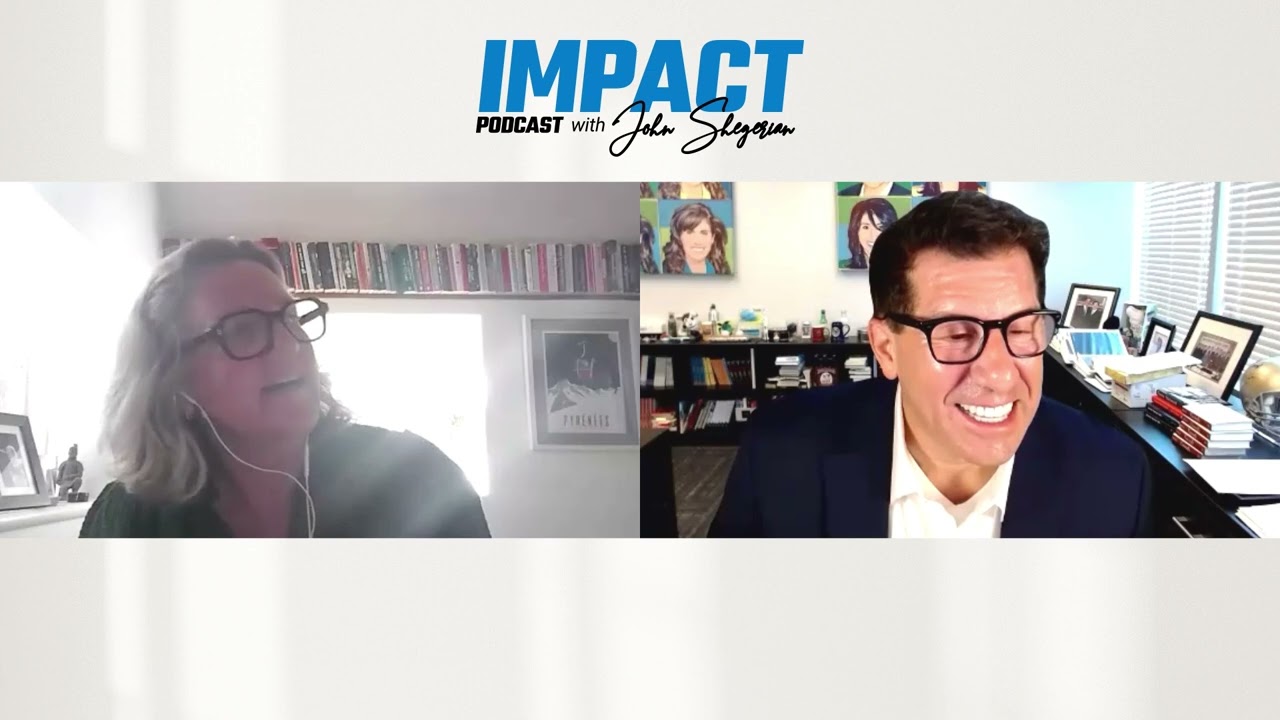
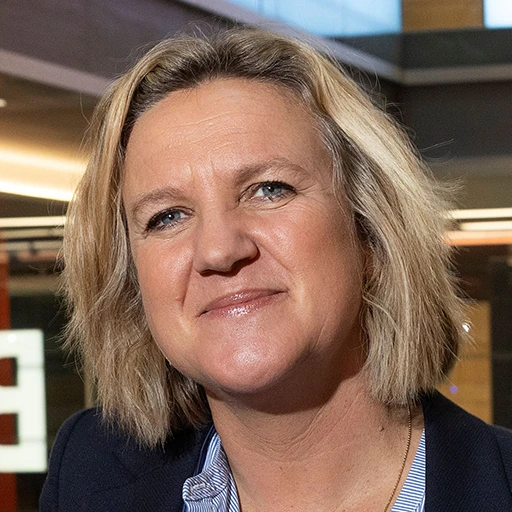
Danielle Mulder is the BBC Group’s Director of Sustainability, leading the Net Zero, Nature Positive and People Positive strategies across the BBC. Danielle was awarded UK Green Business Leader of the Year in 2023 and is a sustainability expert with more than 20 years’ experience at firms including KPMG, Accenture, and Carbon Intelligence.
Sustainability at the BBC:
https://www.bbc.com/sustainability
Net Zero Transition Plan:
https://www.bbc.com/sustainability/our-plan/
BBC Annual Report and Accounts 25/26 (p. 68 for environmental sustainability):
https://www.bbc.co.uk/aboutthebbc/documents/bbc-annual-report-and-accounts-25-26.pdf
John Shegarian: Do you have a suggestion for a Rockstar Impact Podcast guest? Go to impactpodcast.com and just click “Be a Guest” to recommend someone today. This edition of the Impact Podcast is brought to you by ERI. ERI has a mission to protect people, the planet, and your privacy, and is the largest fully integrated IT and electronics asset disposition provider and cybersecurity-focused hardware destruction company in the United States and maybe even the world. For more information on how ERI can help your business properly dispose of outdated electronic hardware devices, please visit eridirect.com. This episode of the Impact Podcast is brought to you by Closed Loop Partners. Closed Loop Partners is a leading circular economy investor in the United States with an extensive network of Fortune 500 corporate investors, family offices, institutional investors, industry experts, and impact partners. Closed Loop’s platform spans the arc of capital from venture capital to private equity, bridging gaps, and fostering synergies to scale the circular economy. To find Closed Loop Partners, please go to www.closedlooppartners.com.
John: Welcome to another edition of the Impact Podcast. I’m John Shegarian, and I’m so excited and honored to have with us today Danielle Mulder. She’s the Sustainability Officer at the BBC. Yes, the BBC. Danielle, welcome to the Impact Podcast.
Danielle Mulder: Thank you, John. Yeah, delighted to be here. Thanks for having me.
John: Of course. And Danielle, thanks again. You’re sitting in London. It’s six at night. It’s 10:00 in the morning here on the West Coast in California. So thank you for working overtime to do this interview with us today.
Danielle: Yeah, no problem at all.
John: Danielle, you have an amazing background in sustainability, awards and honors, and all sorts of things. And before we get to that, though, I want you to talk a little bit about your background. I want our audience to understand you a little bit. Where did you grow up, and how did you get on this fascinating and very important journey that you’re on?
Danielle: Yeah, thank you, John. So I grew up here in the UK, and I was actually born in the north of England, but we moved as a family quite quickly because my dad’s job down to the south of England. And I started my career actually in management consultancy. I used to work at Accenture, a firm you’ll probably know quite well in the States. So Anderson Consulting, which became Accenture. And I went on this sort of management consulting journey, I guess. And then I worked, I was very lucky to work on London 2012, which was the big Olympic Games here in London. And that really was my epiphany moment because it was the first time in my career I had an opportunity to work on a concept called sustainable development, which I hadn’t really worked on before at all. Previously, I’ve worked with big corporates doing sort of big programs of work. And this was a huge project. It was actually the biggest regeneration project in Europe at the time. And there was a huge focus on sustainability, and a huge promise was made to the IOC, the International Olympic Committee, on being the greenest games ever. You know, that’s what London aspired to be. And that was the promise that they set out to meet. And so I learned a lot in that project, and quite a few people inspired me. And it sort of changed me, and it made me realize, actually, you can create or work on programs of work that can deliver, not only economic benefit to London, and of course, it did deliver on that, but also sort of sustainability and development, sustainable development goals. And that was my first exposure. And we were looking at carbon back in 2005, on London 2012. So I think it was pretty leading at the time, was considered to be pretty leading anyway. And carbon was the enemy, we were thinking about it. And how do we, reduce the emissions and the impact of the overall, the negative impacts of the Olympic Games. And then, obviously amplify the positive impact of London 2012. And that really changed me that particular project, largely because I think the people I worked with as well. And then we moved to Australia. Prior to that, I should add, actually, when I was working as a management consultant, I worked in New York for a couple of years, actually, and absolutely loved it. I loved the States, went to Palo Alto, did some of the tech stuff, lived in Lower East Side, loved America, loved the directness, loved the communication.
John: The energy.
Danielle: Yes, you know what I mean? Like, it really suited me, actually, really loved it. But then London 2012, and then we decided to move to Australia, because my husband got a job out in Sydney. And we had two quite young kids. And I took it as an opportunity to sort of, essentially hang out at the beach and look after two very small children. And I will confess, I drank quite a lot of fizz and made some friends at the beach. But my husband said, “Are you going to go, you had a really good career, you’re going to go back to work?” And, in truth, we needed the extra income, we were missing it. And, and I said, “Look, the only thing I want to do is go back to that topic of environment and sustainable development.” And he goes, “Okay, well, if that’s what you’re really passionate about, that’s what you should do.” And so I did, I went and took myself back to uni, and did night school, and did an MSc in environmental science. And I remember my first lecture, I thought, “This is it.”
John: That’s it.
Danielle: “This is it. I found it, this is great, this is going to be, my next chapter.” And I remember friends of mine being quite skeptical about, the fact that this was going to sort of turn a coin for, my family and help John out, sticking with the outgoings. But it became, a really sort of, fulfilling career, it continues to fulfill me this career. And I’ve been very fortunate, with the people I’ve worked with, and the experiences that I’ve had. And to cut a long story short, that took me all the way to the BBC.
John: What was your first job out of uni after you got your master’s in environmental science?
Danielle: Yeah, I worked on the Sydney Metro, which was a huge infrastructure project. And they were really interested in my experience in London 2012. And they wanted to leverage that experience. And we’ve done some quite cool things in London, around the environment, actually, we’re quite progressive around our supply chain, in how we actually developed and built the Olympic Park. And how we how we actually went up and make carbon the enemy, how we create a new mix of concrete, for example, called the London 2012 mix, and how we set the whole Olympic Park up so that we didn’t have loads of trucks on the roads, we opened up the canal system. And so they were interested in that for the Sydney Metro. Fair play to the Australians, really, this is that they do tend to look outwards and say, “Okay, let’s have a look around the world and, and see where somebody’s done this and, and the challenges that they might face.” And they had a huge program of work, they continue to do so in places like Sydney on investing in infrastructure. So that was my first gig. Yeah. And I was very lucky. I didn’t think anybody would hire me because I’d been at the beach with the kids, back at college, but they were still interested in my experience.
John: Danielle, so you get recruited, right in the like the heart of COVID in 21, to come on BBC, and to be their first sustainability director, which I always love asking this question when I’m talking to a person who gets to be the first in sustainability in any organization, corporation, non-profit organization. So you had the proverbial white page, the whiteboard in front of you. What directed you in terms of, as you and I know, sustainability can be read very widely, or very narrowly, or somewhere in between. How did you decide with the leadership from the BBC to exercise what sustainability would mean at the BBC?
Danielle: Yeah. Well, you’re absolutely right. It was during COVID. So we’d had Glasgow, the COP26 happening just before I arrived at the BBC, literally the month before. So it’s actually quite an interesting story. And I’ve, I’ve told this story before that Tim Davey went on a staff call, because we do these staff calls at the BBC. I think he did it in like February 2021. And he was basically doing a bit of a me too, with all the other media organizations by saying, “We’re going to be net zero by 2030.” And there was a whole flurry of every organization in the UK was jumping on this net zero by 2030, 2040 kind of bandwagon and making announcements. So I actually was working at a company called Carbon Intelligence. And this is our specialist in net zero science based targets. How do you meet that brief? I got a slightly panicked phone call from somebody. And they said, “We’ve just made a commitment to all of our staff, bearing in mind that we’re a news organization. So there’s thousands of journalists on the call that we’re going to be net zero by 2030. Can you help?” And we’ve also just been told that we can’t attend COP as a major broadcaster unless we have a credible net zero strategy and position. Yeah. Which is fair enough. You can imagine the UN and the COP process, if you’re going to rock up as a major broadcaster, then you need to have a position and you need to be clear on what that position is. So I got brought in as an external consultant through Carbon Intelligence to basically figure this thing out and say, right, when- how can we be net zero? Put in place science-based targets. We didn’t have much time because this was like February and then the COP was happening in November. And so we undertook this project for BBC, which is a huge global complex organization. I had to call in a few favors and make sure we got the targets developed and then over the line and approved. And then we had a press release that went out and said, “Yes, we have a net zero position and we have- and it’s underpinned by science and science-based targets. And these are our targets.” And so that was the runway or the run-up to my position. And then somebody in the BBC made the decision, right, okay, that’s great that we’ve got this, that over the line, journalists can go, we can be a major broadcaster- few, great. Sky were already up there and Sky were leading on this agenda, by the way, in the UK. So, we had to sort of get a house in order quite quickly, but we also do need somebody to direct this work. We need a director of sustainability to come in and to lead this. So, friends of mine joke with me and sort of say, “I can’t believe you’re going for the job because it’s all very well set in targets, but if you’ve got to deliver it, that’s a completely different brief. Now, are you crazy enough to actually think you could deliver these targets?” And so, yeah, and it’s been a fascinating ride, John, genuinely.
John: That’s wonderful. And just for our listeners and viewers and our audience that are not perfectly familiar with the iconic BBC brand, one, you could go to their website, bbc.com, but two, you have about 22,000 employees and, of course, the BBC can be seen around the world. Like, I don’t wake up or go to bed at night without looking at bbc.com and getting the news from bbc.com. So, BBC is just such a trusted source of information and news and so known around the world. That’s amazing. So, do you publish an annual sustainability or impact report every year that lives on bbc.com?
Danielle: We do. We don’t get our own little impact report, although I’d love that. Imagine that, having a complete report. It is, I mean, it’s integrated in an annual report, which is actually good practice.
John: Wonderful.
Danielle: So, but yeah, we disclose our numbers, our climate risks, all our performance case studies, what we’ve been working against, and that all goes in our annual report. So, there’s a whole flurry of activity that happens annually, to get that out there.
John: So, okay. So, and for our listeners and viewers, we will link in the show notes to your sustainability part on bbc.com so they can go directly to the sustainability report and all the great work you’re doing in sustainability. Let’s then take it. So, ’21 to ’26, five years. Talk about, besides your carbon goals, your net zero goals, talk a little bit about your other goals, the pillars of your- what I read were your three pillars at the BBC in sustainability, and then let’s flesh them out a little bit.
Danielle: Yeah, no problem at all. So, as you said, we’ve got three pillars, and then another document that might be worth looking at that sort of outlines this actually, as well as the annual report, is we’ve got what’s called a transition plan, which basically outlines our strategy, but also says, it tells the story and the narrative of how we’re going to get to net zero as an organization, how we’re going to transition the business to a net zero future. So, the three pillars that are set out in that document as well are net zero, nature positive, and people positive. The net zero is, as you’d expect, it’s a carbon… It’s about our carbon position and the emissions that we generate as an organization, and how we’re going to meet net zero in a credible way, and our science-based targets, and our pathways to get there, and all of the decarbonization and mitigation that happens.
John: And what is the goal? When do you want to get to net zero by?
Danielle: We set our stall out for net zero by 2050. Yeah. And the reason we did that, I’m glad we did it actually, because at the time, it was all, 2030, 2040, and I am hearing, you may have some time to get onto trends and companies, I’ve heard recently from several sources, including ED and PwC and others, that tell me that a lot of organizations are resetting their targets because they were perhaps a little bit too ambitious on these, on the net zero by 2030, and obviously we’re in 2026.
John: Right.
Danielle: So, we adopted this science-based target initiative, which is called the SBTIs standard. So, we can only claim at the moment that we’re net zero business, if we’ve reduced our emissions by 90% across all scopes. Yeah. And that’s hard. That’s a big deal. Yeah. So, there’s no offsetting in that. There’s no cheat systems. We’ve actually got to change the business and decarbonize by 90%. So, that’s why we picked 2050. And we’re doing well. We think we can meet particularly direct emissions a lot faster than that, but we just thought, let’s just be sensible about this. And to help us on that journey to net zero, that 90%, we’ve got what we call science-based targets. So, we’ve got near-term targets that take us to 2030, ’31. And then we’ve got long-term targets that take us to 2050. And we’re doing pretty well. We’re ahead of target on our direct emissions. We’re at minus 38% against a target of minus 46%. And I am, hopeful and confident we’ll meet that target hopefully in the next 18 months. Yeah. Maybe sooner. And then scope three, which is all the indirect emissions with our supply chain. We’re also bringing that down. We’ve got a target of minus 28% and we are currently at minus 12%. This is all in our annual report, how we’ve achieved it the detail is in there. That’s the net zero element. And it gets a lot of focus because we are, as you said, a big news outlet. We’re the most trusted news I’m told in the world, most trusted news broadcaster in the world. And, we need to not live in a glass house. And we need to make this brief, yeah, because we’re- I’m sitting here in Kent at the it’s 26 degrees. We’re into our fifth heat wave. This is starting to get quite real over here, in Europe, I think we’re warming at[?] twice the global rate at the moment. So we need to meet that brief net zero. That’s very important to us.
John: Danielle, if I’m not mistaken, you correct me if I’m wrong, but I thought yesterday- came across my newsfeed that the United States announced that it’s been the hottest year on record ever in the United States to date. I mean, it’s real. This is real.
Danielle: It’s irrefutable now. [crosstalk]
John: It’s irrefutable. To that point, I want to go back to net zero, and I want to talk about all the pillars, but you come in and you have this, again, the proverbial blank whiteboard. When you’re looking and setting these very important goals that are going to have not only ramifications immediately, but ramifications on a long-term basis at the BBC internally, but also how you message because- when you say something, when the BBC speaks, it moves the needle. You’re an iconic, important brand that’s well-trusted. Are you looking to benchmark your goals and what you want to do and how you want to do it against other networks around the world that are also well-trusted and well-loved and well-appreciated? Or do you look outside the industry to other industries for inspiration and direction? How does that work? How does that process work?
Danielle: Yeah, no, we do actually, very much so. We benchmark ourselves annually against our peers. So the sort of UK public broadcasters are quite serious about this topic, and we have quite a lot of regulation against us here in the UK. We’re quite aligned with the European position on this in terms of regulation and disclosures and what we need to do and what’s expected of us to be a responsible business on this topic. So we always check ourselves and we’re very aligned, actually. We’re very aligned with our peers, Sky, ITV, Channel 4. Particularly ITV and Channel 4, we’ve got exactly the same targets and the same system, science-based. Sky have also got science-based targets. I don’t think they’re aligned to the net zero standard, but they’ve got ambitious targets as well. And then we keep an eye on the streamers, obviously, in the work that they’re doing. And there’s a mixed picture there, people adopting slightly different standards, different ways of doing it. And then we have looked outside of our sector as well, looked at peers like leaders like BT, for example, here in the UK. It has a good story to on this topic. And we’ve looked at tech companies, some of the hyper-scalers, what are they doing? What’s Google doing? What’s Amazon doing? Microsoft was a bit of a lighthouse for me. I wanted to follow their lead, really, because I was very impressed with the negative emissions story that they were trying to tell and the responsibility that they were taking against that. It’s been interesting, those guys, actually, because obviously the AI will probably come… I’m sure it will come on to AI. But the AI, the advent of AI is slightly changing their position and their ambition because of the scope three nightmare that they’re experiencing.
John: We’re going to come back to AI later. Let’s talk about the other pillars that make up your three pillars at the BBC. Nature positive, talk a little bit about that.
Danielle: So nature is a personal passion of mine, actually, because I think actually this whole thing is about the planet and nature and ecological overshoot. So I don’t just think about carbon emissions and climate. Climate change is a consequence of ecological overshoot, actually. So the whole thing is connected and it’s about planetary health and the planet being our life support system, which is why I consider nature almost carbon and climate as a subset of nature here. We need to respect our planet and start getting it back in balance. So nature positive is key to the BBC because actually our reputation, if you ask a lot of people globally, but even in the UK as well, you ask them, what do you know about the BBC? They will probably say they know a guy called Sir David Attenborough, and they’ve watched our nature programming, which we haven’t just started doing. We’ve been doing that for 75 plus years. It is one of our brand powers, apparently. It reaches huge global audiences. Blue Planet 2 reached over a billion people globally, had a huge effect on waste policies across the world and plastics in particular because of the emotional impact that that series had. We’ve got Blue Planet 3, by the way, coming up and being released in November. So we’re very excited about that. But we really do produce and we test this, by the way. We’re very proud of our environmental programming. Our natural history programming in particular is world leading. But we do other things as well. We’ve got our journalists, we’ve got our climate and environment team that focuses on the topic and reports against the topic. We’ve got our radio output as well. We’ve got a digital output. We’ve created the Climate Content Pledge[?]. It matters to us.
John: Let me ask you about that. That’s so interesting you say that. I travel the world a lot on business, and whenever I go to a strange land or a strange hotel, it’s always very comforting to turn on the BBC. They always have a BBC channel in a hotel room, typically where I get to go. And so there’s a lot of content. It’s like you said, 75 years you’ve been covering the environment. [crosstalk] It’s a DNA issue at the BBC. Do you, I just, this is again, just how sausages are made. Do you get a chance to be invited to give your wisdom on what content is hot and what they should be covering more of? Do you get to weigh in at all behind the scenes?
Danielle: You know what, I don’t. They’re very good with me. And then we do share, upcoming series and what they’re going to cover. And, so for example, I know what, the sort of, the Blue Planet 3 series is going to cover and the different ecosystems and marine ecosystems in particular that it’s going to cover. So I do get sides of these things. I am allowed to be asked questions by different teams. Because of my expertise and my background, I’ve been doing this a long time. But there is a clear swim lane between our corporate strategy and our editorial output. And we need to respect that. And we- particularly with news, in terms of that impartiality. So they need to be [crosstalk] yeah, they need to have the freedom to be able to report against the BBC, but also keep us in check, and cover the topic. But, I do have a team of experts, I’ve got a marine biologist in my team with a PhD, for example, so people do sort of fact check with my team on particular issues and programming or ask for directions. Sometimes we direct them towards organizations such as Climate Spring, for example, which actually directly helps editorial teams building climate into their storytelling and their editorial narratives. Yeah. It’s quite a craft. It’s quite a craft, I’ll be honest with you.
John: As an interested observer, obviously, I got to just tell you, I really think other networks should take inspiration from what the BBC does, because I think you cover the environment as a network and sustainability and climate more than most. Let’s just say that.
Danielle: Yeah, we do do make it part of our brand power. And it’s definitely, and a key kind of science in particular, actually. Science, we back the science, we believe in science. We take it very seriously. And that includes environmental science, climate and nature in particular. Nature in particular is one of our brand powers and what we’re sort of famous for. The trick is to integrate it across all of your output, which is a craft, right? So if it’s sort of explicit, we call it explicit content, like documentaries, like they’re talking about the David Attenborough. That’s quite clear. It’s a serious thing. We’ve got serious stuff at the BBC. And that’s a very explicit storyline. It is the main story. It’s talking about the environment, it’s talking about our natural world and how it’s changing. And then you’ve got more implicit storylines where it’s sort of built into, perhaps it’s referenced, so I’m watching a program at the moment here in the BBC, and it’s called The Rapture. And it’s like a drama. And it happens to be in the backdrop to this drama is that people are experiencing extreme heat and a changing climate. Yeah. So that’s more implicit, it’s reference. And then you’ve got incidentals. So incidental content could be that you see an EV whizzing around in the background, talking about recycling, perhaps food choices are changing, more subtle things, reference points. And that’s the key and the art form. My team do train everybody, by the way. So that’s quite a key role to embedding this. We’re trying to get everybody up to the same level in terms of eco literacy, as we call it. Not the detail on carbon accounting, like some of my team focus on, but eco literacy. So understanding the fundamentals of the science, where we are today, what the science is telling us, how can they leverage that and be more confident using that science, for example, in their programming, we have our mission at the BBC is to inform, educate and entertain. Yeah. So what we want is we want consistency of the science. We don’t want different output on the radio to be different from our TV or natural history. It’s all referencing the same science. So we need to get consistency. So that’s what- my team is responsible for that. So we train and we have special courses for sport, because that’s a very different genre to news, change the journalists. That’s about reporting on climate change. Then we have editorial teams in children’s drama, different radio output, digital output. We also have training on production. So behind the lens, how do you produce content in a sustainable way? And we actually developed a system called Albert that we gifted to the industry, which is under BAFTA Albert. And there’s a standard there that we’re very proud of that we created. And we do this with our peers. Now we’re developing a new toolkit around a new standard and elevating a little bit more improving it, raising the bar. And we do that with Sky ITV, streamers, Channel 4. It’s an industry that really collaborates. It surprises people how much we help each other.
John: Really.
Danielle: Yeah.
John: That’s fascinating. And I assume also that would even carry over to when you’re doing your content, as you point out, you have embedded messaging, but also I bet you also the filming itself, the sets themselves probably try to be very sustainable as well.
Danielle: That’s right.
John: Yeah. That’s fascinating.
Danielle: And that tends to, once you give ownership to teams of how they produce their content in a sustainable way, what we find is that inspires them to talk about it on screen as well. Do you see what I mean? Like, the topic comes to life a little bit more, as not just how you produce the content, but what goes on the screen as well through the content platform.
John: We have net zero goals, nature positive. Now let’s move over to people positive. The other pillar at the BBC. Explain what that means in terms of how you define it and how it’s then executed and fleshed out.
Danielle: Yeah. Just to finish off on the nature positive.
John: Sure.
Danielle: Ultimately what we want to do in nature positive, it’s not as clear as net zero because net zero, they’ve got all these standards and accounting protocols in place. Nature, we want to do more good for nature than harm at the BBC and we want to prove it. We want to measure it. Now some people argue, the BBC is doing more for nature anyway through its programming. I’m probably working in this sector because of David Attenborough programs I saw when I was a kid and I was like, “Oh my God, this is cool. I’d love to work in that.” But we’re not measuring that. We want to be able to prove it operationally as well in the way we do with carbon that we’re going to be doing more good for the planet than harm. That’s the ambition for nature positive. So we’re sort of trying to help some of the standards around them and the standards are coming. Things like TNFD, which I won’t go into now, but some of the nature disclosure systems are coming to help us out with that. And then the people positive side is actually more of the impact that we have with our audiences. So it’s the on screen and how we measure that. cause we do, we have surveys and tracking systems in place to make to measure that explicit implicit incidental content. We’ve actually started to use AI to help us with that, by the way. And how we track our content. Well, we’ve got so much output. It’s impossible to do this stuff manually. So how do we track our output and to make sure it’s consistent? As I said, so the audience aspect, there’s the supplier aspect, how we engage our suppliers and bring the whole industry with us. And that includes all the production companies, independent production companies that partner and work with the BBC. And then, the non-production suppliers are included in that as well. It includes our staff and how we engage them and raise the bar on eco-literacy so that everybody is schooled on the topic, is confident in the topic, knows our strategy, knows what we’re doing, knows what kind of different terminology. They’re eco-literate.
John: Let’s talk about that. Since you’re a communication organization, you have 22,000 employees around the world. How do you find it best in 2026 to communicate with your employees, your goals and the BBC’s goals and how to make your employee network, not only ambassadors for sustainability, but evangelists?
Danielle: Yeah. You want them to work with you on this topic. It can be doing- well, I think the training is key to that and having everybody having the same understanding on why we’re doing it. Well, so our mission, by the way, and it’s written in our strategy is to maximize the impact of our programming or content whilst minimizing the impact on our planet. So we want everybody to know that that’s the mission, to maximize the impact of our content whilst minimizing the impact on our planet. And then we built, there are different roles, obviously at the BBC, the more operational roles, there’s editorial roles, there’s roles in sport, technology, news. And so we have got nuanced, specific training, according to your job role and the opportunities that you’ll have with that role. Then we get the message out there so that everybody can play their part. And we focus very much on how we power ourselves, how we travel and how we feed ourselves. How we power ourselves, how we travel, how we feed ourselves. And these things that you can take home into your everyday life, right? So how I power this home, for example, how I get to work, public transport being a preference, cycling. I’m lucky enough to have an electric vehicle. Not everybody can afford one of those, but I’m very lucky I’ve got one through my BBC company scheme, by the way. And then, the choices that I make, you have to try and in fact, what we do find is when people take on more sustainable choices, if you like, personally, we find it feeds into their work. It benefits them from a health and wellbeing perspective. They feel like they’re doing something, they’re more connected with other people. They talk about it, they become more confident in it. They start to own it, right? That’s what we find. I do- we’ve just started more comms in the organization because now we’re making progress and we’ve got quite a bit of momentum and we’ve finished the sort of strategy piece. We’re now firmly in the delivery phase. Then we lean into the comms team, the internal comms in particular, as well as the external comms to communicate our strategy and what we’re doing to our staff.
John: So by getting this right, you focus on the substance of getting your colleagues to walk the walk first, no pun intended, and then now you turn to talking the talk because you have the street cred, you’re doing it, you’re actually doing the walk. So now you’re able to do the talk side of that equation.
Danielle: That’s right. That’s absolutely right because I think you need that in order to have a bit of credibility. We’re not perfect, John. [crosstalk]. No organization is, you know.
John: Nothing’s perfect, but it’s progress.
Danielle: Nothing’s perfect. It’s progress and people can see that and they get excited by it and they want to get behind it and it matters to people. So you’re just trying to connect with that and then give them the ownership. People come up with great ideas as well about what they can do in their specific area. We can innovate together, and actually, we’re under huge cost pressures here at the BBC. I’m not going to deny that. Actually, this agenda is helping us. It’s helping us…
John: But as you and I know, when done in the right way, sustainability has an impact on ROI, not just on the environment and the nature and the world around us, but on the organization that’s executing- it should have an ROI.
Danielle: So it does. And we’re proving that too and we’re doing it. I sit in finance, so if anybody’s going to call me out, it’s the finance guys. Trust me in terms of what are the numbers here and can they be verified? And they can be verified and they’re very real and we’re finding that carbon is just a proxy for energy. So if you go after carbon, you’re going after energy and if you go after energy, you’re going to save money, right?
John: That’s right.
Danielle: And we need to modernize and transform the BBC so it’s fit for the future and this agenda works perfectly for it.
John: You mentioned earlier the importance of words, of terms. Words matter, terms matter. As you and I know, the last years behind us, maybe 2018 to ’23, ’24, the world got caught up in this, how do I say this the right way? Alphabet soup of acronyms that got politicized, way too much politicized. So now there seems to have been a shift, Danielle, to the terminology of circularity, leaning into sustainability, materiality. Talk to me, share with our audience a little bit, what terms are important to you today in 2026 and beyond and what is the terminology both being used internally at BBC when it comes to these very important issues and what are you using externally in terms of how you communicate with the world? Are the acronyms still relevant or have we left them behind, got out of the politicization zone and moved more on to the terms of the broader circularity, the broader terms of sustainability and the broader terms of materiality?
Danielle: Yeah, I think it has, it’s definitely moved on. I think people got a bit over the alphabet soup, weren’t they, let’s be honest, and the acronyms never went down well. I had to sometimes go in front of the board, I had to go in front of the board for the transition plan release and get it approved. There’s an executive committee at the BBC, there was zero tolerance for these acronyms, nobody was particularly, I mean, you have to repeat yourself and [inaudible] one or two, it doesn’t mean much to people.
John: Great.
Danielle: So I think that’s welcome in some ways and there’s definitely been a rationalization of the disclosure market and the reporting standards that are in place. We want them to be the same globally ideally and there’s a bit of politics around that about which areas of the world are sort of embracing this and how it is reported and disclosed. But that’s fine, so I think the language- business value matters a lot, I think that’s how you need to think about this in order to be successful in any organization. You need to integrate it with business strategy and the business value. If you don’t do that, you’re going to fail, right? You can’t be some sort of, it’s all very well being passionate about the topic and caring about it and knowing that there’s a serious problem here, but if you can’t integrate it with the business strategy and prove that it delivers true value, I think you’re going to fail. At the moment I’m using the language of leaner, greener, resource efficient, tech enabled BBC and that lands really well, given what we’re trying to do. But I’m not scared of the fact that we need to decarbonize. We need to do what’s expected of us. The climate is clearly changing, we’ve got a problem here. We need to meet that, we’re going to be judged on this. We’ve put the targets out there, you can’t just change them. You need to meet those targets that we have, they’re science-based. We went through that whole process, we put it out there, we went through the board, we’ve got behind it, there’s a mandate there and we need to deliver on that mandate. We get very scrutinized at the BBC. I mean, that’s one of the harder things of the job. I feel that we’re scrutinized a little bit more than some of our peers, for whatever reason. So you need to be true to that. You need to be transparent, you need to be true about where you are, what you’re finding challenging. Business value, I’d say, is key to our success.
John: I agree. And it feels like the terminology materiality, which is just another term for business value, is one that is being used more and more and people are leaning into, which I think is just common sense and really smart. I like that word. I think sustainability officers now are using it more and more. And like you said earlier, when it comes to the BBC, when you’re executing sustainability the right way, there’s a great ROI to it. A great ROI.
Danielle: There is. Yeah. And that was one of the first questions I got asked, actually, when I got in the job, by the way, was, right, okay, how much is all this going to cost? Let’s run the numbers on this before we get overexcited about meeting net zero. And it was clear that there was a very… BCRs are benefit-cost ratios. We run the numbers and they were in excess. We’ve talked about achieving cost savings of 55.8 million was the number that we developed to meet our targets, our near-term targets. And so obviously I took this to the Exco and they were delighted. They were like, “This is great. It’s going to deliver.’ We’re actually tracking it, by the way. We’re tracking not just the promise, what we forecast, but the actuals. And it is contributing to significant cost savings at the BBC. So done in the right way, we will meet this brief and it will result in us meeting what’s expected of us and decarbonizing. But it does help the business out as well. So yeah, it’s great.
John: For our listeners and viewers, if you’ve just joined us, we’re so honored to have with us today, Danielle Mulder. She’s the sustainability officer at the BBC. To find Danielle and her 22,000 colleagues that are doing the great work of sustainability and also broadcasting us the news around the world, please go to bbc.com. We’ll put in the show notes, some of the links to sustainability and her annual sustainability report and other links from the BBC and all the great work they’re doing in sustainability. Danielle, we talked a little bit about, I mentioned earlier yesterday, the U.S. published that hottest year on record ever in the United States. And obviously, the fires in California are legendary. Now the fires are burning also in Canada. And as we know, it’s been an amazingly hot summer in Europe with Spain and France now having their own fire and smoke challenges as well. The interesting thing when it comes to the environment, though, as you and I know, in terms of nature and the environment is- there’s nobody that you and I know, both professionally or personally, that wants to leave a world that’s worse than they found it. There’s nobody that wants their family or friends or colleagues to drink dirty water or breathe dirty air. Everyone agrees we want to be cleaner in every aspect of what we do. But why does climate, the issue of climate, when you and I are living, you’re living on one side of the pond, I’m living on the other. And the city that I grew up in, New York, is hotter than it’s ever been ever. The city that I live in now, the state I live in now, California, hotter than ever. You’re talking about how hot it is by Ewing Kent. It’s nuts. Why is climate still such a dividing factor for the public at large?
Danielle: Yeah, it is. It’s very difficult. I think it’s becoming self-evident now. It’s irrefutable, isn’t it, in terms of people can look out the windows and sort of see the changes that are taking place. It’s tricky. I think people don’t want to be too glib about the future, I’ll be honest with you. That definitely is a part of it. And then I think the big political debate is about how we transition to a fossil free future and who pays for it. That is, in a nutshell, that’s what the big debate is not about net zero. The concept of net zero is, that’s a red hot potato right there. All that actually means is that we need to eliminate emissions ideally down to zero. That’s the definition of net zero.
John: You’re right.
Danielle: And the UK government actually, all parties signed up to [inaudible]. We have that enshrined in the Climate Change Act. So that’s in our law here in the UK. We’re one of the first OECD countries to do that, to make it non-political to say we’re going to be net zero as a nation by 2050. Right. So that is why I’m regulated the way I am, because I’m a large business operating in the UK. The political bit is how we get there and who pays for it, what the policy choices will need to be. We don’t like telling people what to do and we’re not allowed to do that at the BBC. We can’t tell people to stop eating meat, for example, or to make these personal sacrifices or choices that may help us to get to a fossil-free future. That’s the tricky bit and I think that will be an ongoing debate about how we get there and how economies need to transition and change. But a lot of businesses that I meet where you just literally embrace the topic and crack on with it are finding that they are reaping the rewards. There is a way of doing this, not for all sectors. Some sectors are harder to decarbonize and I accept that. Some sectors are at a disadvantage in terms of trying to make net zero, for example. If you’re a service-based industry, slightly easier. If you’re in the aviation business, it’s hard, right? Because we haven’t got synthetic fuels and, to transition that is going to be very difficult. If you’re in the chemical business, high impact industrial businesses, these things are harder. You’ve really got to make some choices and investments. So, how you smelt iron ore, for example. So, I accept that and I think we’ve got to be honest about that and we have a climate change committee here in the UK that has a carbon budget and it looks at the different sectors. It looks at the transport sector, the food sector, and it has a pathway for those about how we’re going to get there and the choices that we need to make in order to achieve the decarbonization targets that we’ve set out as a nation. And that’s the political bit and I think that will be ongoing, right? About- and is it equitable? That debate comes up as well, isn’t it? Who’s going to pay for it? Is it equitable? Is it fair? To people with more money, should they be paying more than people that perhaps on lower incomes and how will they make those choices as well? So, that’s what’s difficult, I think, about this topic. But I think everybody’s now recognizing we’ve got a problem and it’s real and it’s serious and it’s urgent, right? The best thing we can do is be honest and open about this and talk about it and do it together.
John: That’s right. It’s more fun to do. It’s more fun to do the journey together and succeed together and[?] the goals. It’s more fun.
Danielle: Yeah. It is more fun.
John: It is.
Danielle: It is. And to have the debate and have those difficult conversations sometimes, rather than making a sort of cultural war or debate or, making this difficult to navigate. Yeah.
John: There’s not a day that goes by, Danielle, that you and I wake up and typically I’ll pull up BBC, I’ll pull up the New York Times and the Wall Street Journal and also Bloomberg and some other great organizations. And AI is always the headline somewhere. Somewhere there’s AI all over the place. So, my question is to you, how much is AI today and in the future going to help you achieve your goals at the BBC with regards to sustainability, with regards to tracking KPIs and just helping you and your team and all your colleagues be more efficient in what they do and also get to your goals in a straighter line?
Danielle: Yeah. AI, it’s difficult, I’ll be honest with you. We are looking really closely at this. So, I think there’s lots of opportunity with AI. There’s also risk with all things that are new and unknown. So, I think people recognize, certainly across the BBC, that there’s hundreds of data centers going up, and all of those data centers require energy, the energy demand… And you can, take a top[?] down, we are tracking and looking at the electricity usage and consumption in the UK and then trying to compartmentalize that for data centers. Climate Change Committee has a view on this as well, you can read their reports on it. And I even met Chris Stark and was talking to him about it, about the risk of AI in data centers and what that does to his net zero emission, actually, to be a clean energy nation by 2030 and how that will affect that pathway. So, we are looking at it. At the moment, we think we’re grossly underestimating our emissions at the BBC. So, my job is to look at the BBC’s usage of AI and to measure that and to see how that would impact our scope three, for example, and whether our targets can be met as we rapidly adopt AI tools, because we’re a media business and we’re using what we call generative AI tools, as well as other AI tools, non-generative AI. So, text to video tools that help us create content, yeah? And there’s lots of packages out there that can do that for you, literally create content for you. Now, we’re working at industry on this. So, we work through an organization called Dimpact and we’re working with our peers and there are some instances which we have tracked and managed where we look at the end-to-end life cycle of a traditional, what we call VFX, content creation cycle and then we compare it to a generative AI scenario. There are some instances where that is more, that has less negative impact using the generative AI tools than it does with a traditional generation, right? Because you’ve got, imagine, teams of people flying to a place using, cameras and all the kit and technology that goes with it and using perhaps diesel generators, because they’re off-site and they can’t access grid power compared to using generative AI tools. So, we’re keeping an eye on it. It is difficult to navigate this topic because of all the complexity that comes with AI, all the training of these models, all the upstream impacts of these data centers, the price of silicon[?], for example, shooting through the roof. So, there’s clearly something going on with data centers and the rapid adoption of [inaudible]. There’s also the inference, so the prompts that you put into these tools and then, the electricity generation- that generates… They’re very energy intensive. Also, the timing of, and which grid you’re operating, where the data center actually sits, the geography of this thing. And, there’s been a lot of these tools, like they’re changing and growing and evolving so fast.
John: Fast.
Danielle: We don’t have the data, and, we don’t have access to that. And we ask them, “Give us your data, give us your electricity consumption or something.” So, we are looking at different methodologies for this. We know that we’re to use what we call a spend-based approach to take the cost of a license fee and then to apply an emissions factor to it or to look at the cost of tokens and to apply an emissions factor to it as well. Because that’s what we’re getting into now, token usage and energy demand. That underestimates because these tools are cheap at the moment because there’s an arms race going on. So, they give them [inaudible] on.
John: What I love is, Danielle, your approaches. What I love about your approach is you found the right balance between doing right by the environment, sustainability, but you’re always looking at things through a business lens, an ROI lens and a cost-effective lens. So, you’re saying, let’s [inaudible], what do they call it now, token maxing. Everybody starts using AI, willy-nilly and now all of a sudden, you’re sitting with a bill on your desk that, makes your hair stand up. You’re being very measured about how you go about this before you dive in the pool.
Danielle: Yeah, we are. We’re already[?] trying.
John: That’s great.
Danielle: We’ve got a responsible AI team, we’ve got quite a bit of governance around this as well because obviously our data is king as well. So, you’ve got to be careful with giving people access to that data. So, yeah, and I think, we’re trying to learn from other people, bring some experts in, we’re learning as we go on this. But yeah, I think that the responsible use of AI is the goal, right? That mitigates the impact, we use it carefully, we use it in scenarios that benefit the BBC. And the team, by the way, I’ve got this phenomenal team, super lucky. I’ve got an AI expert in my team. I’ve got a data team as well. They’re using these tools. They’re using Claude. They’re using different, co-pilot, looking at climate risks, using AI to do that. Climate content tracking, we’ve developed something using co-pilot as you can’t track this stuff manually. Our output is just too huge. And we’ve got too many platforms, too many genres, too many variables. AI is good for this. So, we are- I do recognize we’re underestimating and I do worry about it.
John: Got it. Danielle, you’ve been at the BBC now five years or so. Yeah.
Danielle: Yeah.
John: Talk a little bit about, Danielle, the next five years. What are you the most excited about? Obviously you love what you do. You’re so humble. You’ve got- won all sorts of awards over the years and things way before even you got to the BBC, you’ve won a ton of awards. Talk a little bit about the next, even the next two or three years. What really gets you excited? You’ve laid the groundwork. You’ve set the seeds at the BBC for sustainability. You’re all walking the walk now. You’ve got things aligned and now you’re going to even do the talk now more than ever. What gets you excited to accomplish and to, and to achieve the next two or three years at the BBC with regards to your sustainability efforts?
Danielle: Yeah. No, look, we want to hit the targets, meet the brief. That’s definitely the mission. And then we want to leverage our position at the BBC, our role as a communicator and as a storyteller. Yeah. So it’s the people positive side about how we reach, how we amplify our impact. So it’s about maximizing the impact of our content whilst minimizing the impact on our planet and proving it and measuring it. That’s what we need to do. And use our voice and leverage the BBC for good. And everybody at the BBC, we’re very fortunate at the BBC. Most people that work at the BBC are very passionate about the purpose and mission of the BBC as a public broadcaster and the role it plays on this topic. It really gets inside your skin actually, your DNA. So yeah, that’s the objective. To use the BBC for good.
John: Well, Danielle, thank you for joining us today at the Impact Show. Especially since it’s later at night, I took up some of your dinner hours. So thank you for your thoughts, your wisdom. She’s Danielle Mulder. She’s a sustainability officer at the BBC. To find Danielle and her 22,000 colleagues and all the wonderful work they’re doing around nature, environment, people, and sustainability as a greater whole, Please go to bbc.com. Danielle, thank you for your time, your wisdom. More importantly, thank you for making the world a more sustainable and better place.
Danielle: Well, thank you, John. Thanks so much for having me. It’s been great.
John: This edition of the Impact Podcast is brought to you by Engage. Engage is a digital booking platform revolutionizing the talent booking industry. With thousands of athletes, celebrities, entrepreneurs, and business leaders, Engage is the go-to spot for booking talent for speeches, custom experiences, live streams, and much more. For more information on Engage or to book talent today, visit letsengage.com. This edition of the Impact Podcast is brought to you by ERI. ERI has a mission to protect people, the planet, and your privacy, and is the largest fully integrated IT and electronics asset disposition provider and cybersecurity-focused hardware destruction company in the United States and maybe even the world. For more information on how ERI can help your business properly dispose of outdated electronic hardware devices, please visit eridirect.com.
 Spotify
 Apple Podcasts
 Amazon Music
 iHeartRadio
 YouTube
 YouTube Music
 Audible
 Pandora