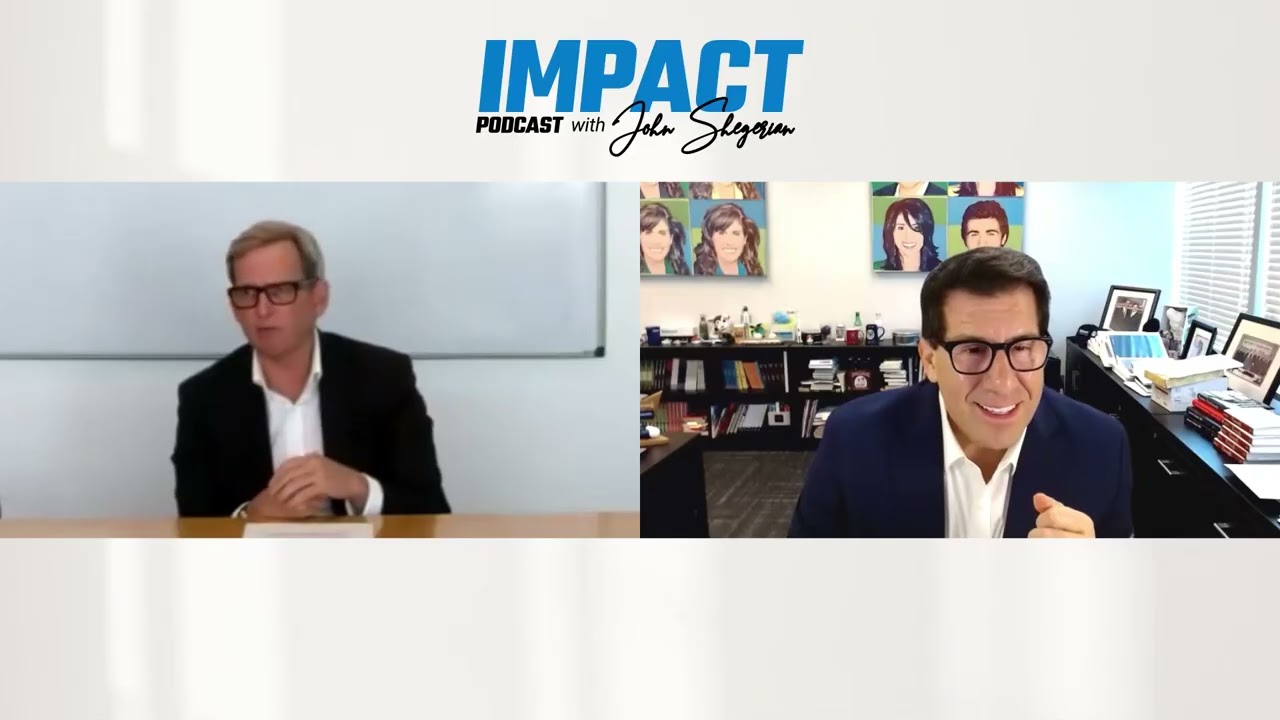
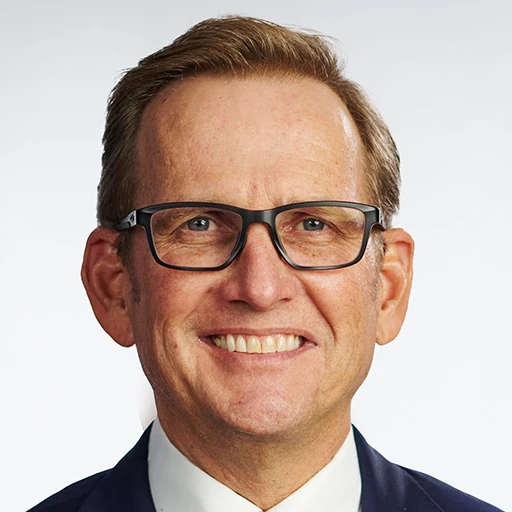
As Chief Sustainability Officer at HSBC, Julian Wentzel is responsible for setting the strategic direction for the transition to net zero across the HSBC Group and enabling the delivery of the bank’s net zero strategy. He has a particular focus on supporting the bank’s clients and customers to make progress in delivering their own transition plans by identifying opportunities to finance their diversification and decarbonisation strategies and invest in technological innovation.
John Shegerian: Do you have a suggestion for a rockstar Impact Podcast guest? Go to impactpodcast.com and just click “Be a Guest” to recommend someone today. This edition of the Impact Podcast is brought to you by ERI. ERI has a mission to protect people, the planet, and your privacy and is the largest fully integrated IT and electronics asset disposition provider and cybersecurity-focused hardware destruction company in the United States and maybe even the world. For more information on how ERI can help your business properly dispose of outdated electronic hardware devices, please visit eridirect.com. This episode of the Impact Podcast is brought to you by Closed Loop Partners. Closed Loop Partners is a leading circular economy investor in the United States with an extensive network of Fortune 500 corporate investors, family offices, institutional investors, industry experts, and impact partners. Closed Loop’s platform spans the arc of capital from venture capital to private equity, bridging gaps and fostering synergies to scale the circular economy. To find Closed Loop Partners, please go to www.closedlooppartners.com.
John: Welcome to another edition of the Impact Podcast. I’m so honored to have with us today Julian Wentzel. He’s the Chief Sustainability Officer for HSBC. Welcome, Julian, to the Impact Podcast.
Julian Wentzel: Thank you, John. It’s great to be here today.
John: It’s great to have you here. It’s the first time you’ve been on the show. It’s the first time HSBC’s been on the show, so this is a true honor. Julian, before we get talking about all the things that you’re doing in sustainability with your colleagues at HSBC, can you share a little bit about yourself, please? Where did you grow up, and how did you get on this important journey that you’re on at HSBC in the world of sustainability?
Julian: Absolutely, John. I actually grew up in South Africa, and maybe the listeners will hear that in my accent. I’ve had a very long and varied career. Actually, strangely started my career in fast-moving consumer goods. I worked for a global multinational called Unilever, and then for a very large brewing company called Saab Miller, and ultimately were acquired by AB InBev. My passion always was invest in banking. I’ve had nearly a 30-year career in investing in banking, but that journey has been very varied. I think maybe importantly for the listeners, your start point or your entry point in a career doesn’t always define your exit point. I think the most important thing in life is to keep reinventing yourself, but also, I think, as you mature, is the understanding about being humble and being a more active listener. I’ve really benefited from the counsel of incredible people in the journey I’ve had, both my colleagues, friends, and particularly, importantly, our partners and customers. My grandmother used to say to me, “Julian, you were born with two ears and one mouth. Work in that ratio.” As you mature, you start to listen more, and you learn so much more, and so I feel the privilege of my career has been the incredible people I’ve got to meet on this journey.
John: That’s wonderful. How long… at what point during your youth and then college-age, university years, did you start thinking about sustainability? When did it cross your radar that this is something that you were interested in and you wanted to apply yourself in with your love of investment banking as well?
Julian: I suppose, John, it started very early. I grew up in a very unusual household. My parents were pretty active politically. They were very strong around ensuring that we had a true democracy in South Africa, and part of that democracy ethos in my family was about ensuring that you gave all people an equal opportunity. I think part of sustainability is creating a society that gives all people a shot of life. South Africa was a very divided country, and so I suppose, inherently, my ethos is about how do you ensure, one, that we create a sustainable society, a society that treats all people fairly, no matter what your religion or creed is? Those are important foundations.
John: Got it. That makes sense. For our listeners and viewers who are not familiar with HSBC, it’s Europe’s second largest bank by assets with over $3 trillion in assets, over 71 billion in revenues, over 211,000 employees, and you operate in 56 or more countries. HSBC can be found at hsbc.com. You don’t have to write it down. It will be in our show notes. Julian, I always share that with our audience because it’s a very large company. When you make a move in sustainability and you make impacts in sustainability, it moves the needle, and it inspires other organizations, both in banking and outside of it, to move the needle and move in your direction as well. Talk a little bit about you joined HSBC in 2015, when did you shift over to Chief Sustainability Officer?
Julian: John, I’ve been in the chair for about two years now, and it’s been an incredible journey. I don’t have a sustainability formal background. I’m an investment banker. I have an incredible team of colleagues. They are incredible experts, scientists, subject matter experts. For me, it’s really about a really steep learning curve for my colleagues, but what I’ve brought is a real unique lens around what does it mean for the customer? One of the things that we’ve realized is that the way to really deliver outcomes is delivering our balance sheet at pace to help the transition. The new energy system for tomorrow is capitalizing at pace. It’s really dynamic, and it’s super exciting. The thing where HSBC is unique, we have an incredible global footprint, as you highlighted, but our core strategic pillars are China, Asia, Southeast Asia, and the Middle East. We have two home markets, as we call them, Hong Kong and the United Kingdom. This gives us a very unique lens on incredible transition that’s happening in those economies. Maybe just by way of example, half of the China energy system comes through renewable means. This is a remarkable data point. China accounts for 70% of global renewable facilities equipment, and it’s an incredible innovator. They’re the forefront of photovoltaic cells, battery technology, wind turbines, and not only are they high quality, they’re low cost. We, as the world’s largest trade bank, have a unique opportunity here, is to help transmit all that wonderful technology and equipment to the rest of the world and help the rest of the world transition. Why does the rest of the world need to transition? Well, the conflict that we’ve seen in the Middle East has created a real existential moment for many countries, particularly Southeast Asia, where 80% of the oil and gas through the Straits were tested for those economies. That created a real prescient moment around the importance of creating alternative sources of energy. The fastest way you can deliver new energy is through renewable means. Not only can you deliver it at a cost-effective basis, it gives you real long-term resilience. In a world that is going to require huge amounts of energy for AI and data centers, the way that’s going to come is through renewable energy. Baselode energy takes too long to bring on stream relative to the current demand ratio. Yes, it will always play a role, but the energy that we need today and at pace will come from renewable energy. For me, the transition economy, which is at about $2.3 trillion per annum, should be about 3.5 trillion if we were to meet our targets, is really accelerating. You add that to AI expenditure, we can see about $20 trillion being spent on re-engineering the entire energy system of the world, as we start to electrify and we become an electron-based economy globally.
John: I like it. When you stepped into the role as Chief Sustainability Officer two years ago, had there been one before you, or were you the first?
Julian: No. We had done an enormous amount in the space. The previous head of our sustainability function, Celine Herweijer, was there for four years. Prior to that, we had a Chief Sustainability Officer as well. It’s not a new function to the organization. We’ve always been focused on delivering the right outcomes for our customers and the society. We have very bold ambitions, and we’re very proud of our ambitions, actually. We are very focused on being net zero by 2050. We have a very ambitious target of delivering nearly a trillion dollars of sustainable finance. To date, we’ve achieved half of that. Half a trillion dollars, that’s a big number. Last year alone, we delivered $100 billion of sustainable finance.
John: Wow. Were you the first investment banker to step into the sustainability position?
Julian: The first in the last five to six years, yes.
John: I’m just going to assume, given the life of an investment banker, you traveled a lot. You got to see a lot of different areas and spent time not only in the home office, but you moved around a lot. How did that help better inform you? As you pointed out earlier, you really do have a tremendous worldview, Julian, in terms of what’s going on with renewable energy and things of that such, in terms of people really don’t understand what China’s really doing with regards to renewable energy and how much they’re really punching over their weight class, and their weight class is heavyweight anyway. How much of travel make you better at what you do today, your previous travel in your investment banking life, and, of course, now, you can still travel as Chief Sustainability Officer?
Julian: I think travel gives you a sense of perspective. I think also travel gives you a sense of humanity and humility. I think you have to embrace all cultures. I think the more open you are, the more you realize how much there is to learn. Also, what it helps you do is have better conversations with your core customers. I think one of the things that I hope to bring is greater connectivity, ability to really transmit and translate what customers need to what we can deliver. The thing that we’re really trying to do is ensure that we deliver on our promise to be the world’s most trusted bank and to be the most customer-aligned bank. Without customers, we don’t have a business. We have to live by that promise. We have to have a very strong customer-first ethos.
John: I love it. Julian, as you know, sustainability can be read by an organization very broadly, very narrowly. If you were to describe your approach and your leadership’s approach to sustainability at HSBC, what would you call it? How would you describe it best to our audience in terms of narrow focus, wide focus, and what you’re focusing on exactly?
Julian: We’re really focusing on the transition economy and serving our customers and serving societies in which we operate. We’re very focused on ensuring that we deliver on our promise as a responsible organization. The way we could best do that is deploy our balance sheet at pace and at scale. That’s what we can bring to the equation. What the transition economy needs is liquidity and capital, and we can really mobilize that. In addition to that, we have incredible capability through our innovation backing arm to also help catalyze new technologies, because the solution for tomorrow is not just going to be current technology, it’s going to be new technology. AI is going to help us evolve and develop technologies that we never, ever dreamt of. This is probably the most exciting time of our lives because the pace of change is electric, and we’ve seen what’s happening. We’ve seen firsthand the benefits of AI and how that’s enhancing battery technology. We’ve seen how it’s enhancing the way we develop EVs, and we’ve seen the unique opportunity that comes with that is to deliver a cleaner outcome for all of us and a more sustainable outcome.
John: I love it. Everything I hear, last night, I was watching Alan Zeman on Bloomberg talk about Hong Kong. He’s one of the great business leaders in all of Hong Kong. Hong Kong, where you have, like you said, you have this fascinating dual footprint of your big offices, Hong Kong and London, and I get to spend a lot of time in both cities, I’ve been going to Hong Kong since ’93, London, I get to spend a lot of time there as well. Well, Hong Kong seems to be going through a heck of a comeback post-COVID now. It’s on fire in terms of public offerings, people coming back to the city. Talk a little bit about what you’re seeing. London is, to me, one of the great… I grew up in New York City, so I’m very London-centric. It’s a great banking city, great cultural arts and entertainment city, and also, of course, investment banking city as well, and a big hub. Talk a little bit about the actual… I think you get to live in a very fascinating paradox a little bit, but also exciting. As you said, the transition economy is going to have to affect all of us, whether you’re in Asia, Europe, or here in North America, where I sit today. Talk a little bit about having your two hubs in London and Hong Kong, and how they inform you, just the two bookends of the planet right now, in terms of banking centers.
Julian: Well, look, Hong Kong is a super connector. It’s an amazing economy. It has an incredible capital market. In fact, we’ve seen huge pipeline of new IPOs, and many of those IPOs are really around new sustainable energy technologies. We’re the epicenter of that. At our heart as an organization, we’re a trade back. Hong Kong is an incredible trade hub, and so, really, for us, being at this epicenter of this wonderful conduit to the rest of the world gives us a unique opportunity to really intersect between the technologies in China, using the capital markets in Hong Kong, to help distribute all that [inaudible] goods and services to the rest of the world. Many people talk about a de-globalizing world, but the world is still super interconnected. Yes, supply chains are fragmented, but with that fragmentation, you need expertise in supply chains. We bring that expertise with a very different and unique lens to the rest of the banking community. I think that sets us apart versus our peers.
John: Julian, you brought up AI a little while ago, and I love your positivity, because I’m like you. I’m an optimist. Talk a little bit about two things. One, let’s focus internally for a second at HSBC. How early was HSBC onto AI in terms of adoption and using it to make your own bank more productive and give you better tools for the business that you do? Externally, how exciting are you about AI, generally, for the planet? We have these doomsdayers that come on, These scientists that work at Anthropic just in the last couple of days came on and said, “It’s going to kill everybody on the planet by 2030,” and there’s a bunch of the Frontier Lab guys, saying, “Oh, we must slow down.” Meanwhile, they don’t give any idea how to slow down or really who should be doing this. Is it the government’s job? Is it the industry’s job? Talk a little bit about your perspective, first, internally, at HSBC and then externally, the new AI economy, like you said, which is basically powering, as you put it, the transition economy.
Julian: John, I think the first and foremost, it’s about doing this responsibly. I think one of the things that our entire internal ethos is we will use AI in a responsible manner. We firmly believe in a world of what we call the AI and the human. Both need to be part of the equation. We have had and have been working in the AI sphere for a long time. Yes, it’s become a household buzzword now, but we’ve been doing AI-related infrastructure development for many years. Are we accelerating that? Yes. Are we embedding AI into the ways of working as an organization? Yes. What we’re doing it for is to amplify our capability to serve our communities and our customers. It’s about giving back people time for menial tasks. It’s not about disintermediating our teams; it’s about amplifying their ability to serve the communities, our customers, and generate returns for our shareholders. For us, it’s a huge productivity opportunity, but it’s also an innovation opportunity. Ultimately, in a digitized world, what we’re seeing is a huge opportunity to enhance the security of our products, the service levels to our customers, and the returns we give to our shareholders.
John: Love it. In terms of your own interior goals in sustainability in HSBC, if I were to say, what’s your three pillars? Is it net zero goals? Is it around carbon emission offsets? Or is it around water? Or is it about other things that you’re thinking about internally? And then, we’re going to talk about the external investments and the capital you’re deploying and into what kind of industries. Talk a little bit about the internal sustainability goals in HSBC that you guys create every year.
Julian: John, we have publicly stated goals to be net zero as an organization by 2050. That’s both in our own supply as well as external. There are challenges in external supply equation because we don’t have control over the entire supply chain. As an organization, critically, it’s really about deploying the balance sheet, as I said earlier, at PACE, delivering on our promise to be net zero by 2050, and doing this in a responsible way. For us, critically, disintermediating or removing capital from customers or transitioning, we don’t believe, serves the community. We believe that every single industry will effectively transform at their own pace. We need to be there to support them on the journey. It’s absolutely critical that we play our role in helping both show what the technology can do, using our global footprint to say, “By the way, we’ve seen success in this geography. Have you thought about using it in this geography?” That interconnectivity and the amplification that we get from that, really, I think, puts us in a unique position to play a very critical, unique role in the transition economy.
John: If I were to say to you, “Julian, what are you most proud of at the bank in terms of your work in sustainability?”, talk a little bit about what gets you excited, gets you out of bed every day.
Julian: I’m most proud of, first and foremost, our people. We have incredible people. We have a unique CEO. His humility is disarming. For me, I have huge pride in working for the organization, pride in that we actually stand for what we say. We have this philosophy. We do and then tell. We don’t tell and then do. As an organization, we’re humble, but we do a lot. I think that’s really important, is to do things the right way for the right reasons.
John: I like it. What do you see as big opportunities? You’ve been in the role two years, and there’s so much going on. Like you said, it’s probably… I’m in my 60s now, and I’m more excited about what’s going on on the planet today than ever before in terms of the transitions that are happening. It feels like we’re living through the fourth industrial revolution. Talk a little bit about what do you see as the next couple of big opportunities at HSBC for you to tackle.
Julian: I think first and foremost, John, I think we have to acknowledge the complexity in the world we live in. Navigating complexity is very important for us.
Secondly, the scale of the opportunity is enormous, but when you have a huge scale of opportunity, ruthless prioritization is absolutely critical. You have to focus on where it matters, and you have to deliver at speed and at scale. Really, what we’re trying to do is mobilize ourselves with great agility to deliver to the speed and the scale of the change that’s happening, but you also have to have an open mind and a curious mind, and you also have to ensure that you manage your risks accordingly, because when you have this pace of change, there is the risk of getting it wrong. You always have to have what I say that cold moment every week, look in the mirror, “Are we doing the right thing in the right way, and we are upholding our values?” That type of self-reflective way we operate, I think, will put us in good stead for the future.
John: Every year you produce an impact or sustainability report. What month does your report come out?
Julian: We have a December year-end, but we publish at the end of March, beginning of May, our annual report.
John: It lives on your website in perpetuity?
Julian: It does.We’ve just recently published a year ago on Net Zero Transition Plan that lays out very clearly our objectives and our philosophy around how we’re going to play the role in creating a safest, more sustainable society.
John: At the top of the conversation, Julian, you were mentioning the amount of capital you deploy with regards to sustainable finance and investment. Can you go over those numbers again? They seem really big. I want to understand, in what sectors you’re the most interested in investing and who’s coming to you for this kind of support? It’s really fascinating, your outward-looking view and your bank’s approach to sustainability and sustainable finance.
Julian: John, the numbers are, we have a stated target, a public target of $750 to $1 trillion. We have achieved half a trillion dollars already. Last year, we exceeded $100 billion of sustainable finance, which is a remarkable number. It’s across multiple sectors and multiple geographies. That’s our superpower. We are truly global. Because of our global footprints, we are able to really deploy capital where it’s needed most, and at scale, and at pace. That’s why I think we are playing such a critical role in the banking sphere in the transition equation. We’re not the only players. Everybody has a role to play, but we have certainly got a catalyzing role as a result of our scale. I think that sets us aside and apart from our peers.
John: Take the 100 billion. Let’s just use that as the unbelievably big, round number last year that you guys deployed in sustainable finance and investment. What sectors are you going to? What sectors is it? Is it data center buildouts? Is it wind farm buildouts? Is it geothermal? Is it nuclear? Who’s coming to you? What kind of brands are you financing?
Julian: John, it’s actually a span of things. In terms of data centers, we don’t have significant exposure. The data center ecosystem and the supply chain, absolutely, because that plays to our core strength as the world’s largest trade bank. Pinning us down to a sectoral map, I don’t think, gives you the true picture, because we are truly global and multi-sectoral. It’s really about how do we play the part, be it from creating water architecture, building photovoltaic plants, battery storage facilities, financing new technologies through our innovation banking capabilities. The span of what we do is significant and mirrors the broad span of the organization as a truly global organization. That’s really why I think we will continue to deliver on our promise to achieve the $1 trillion and more.
John: That’s a lot of capital. That’s impressive. Since you’re a global organization in over 56 countries now being served by HSBC around the world, talk a little bit about the diversity and complexity of the rules and regulations when it comes to sustainability and how your team works on that. Do you ever feel that there’s going to be some sort of logical harmonization? Because as we know, Asia is different than Europe. Europe is different than North America. South America is different. Every continent seems to have their own wish list of things to regulate and ways to go about that. How challenging is that for you at HSBC? Is harmonization in our future, you think?
Julian: That’s a great question, John. I think, first and foremost, we’re guests in every country we operate in. We have to abide by the rules and regulations in each economy that we intersect. Climate is a global issue. Unfortunately, we do have variegation in regulation across geographies. What we have tried to do is span all that regulation and create a common theme so that we can effectively deploy and deliver on our promise without effectively putting ourselves in harm’s way with the regulators. My wish and my desire is that the regulation moves from regulation that prevents you from doing stuff to facilitating people financing and enhancing the transition. Whilst I really acknowledge the requirement for regulation, to keep everybody honest, but I’d like to see more facilitatory-type regulation to help banks and other financial institutions mobilize capitalists at pace. We’ve just seen the recent UNEP report where we potentially can exceed 1.5 degrees. We need to acknowledge that the variegation and the amplitude of climatic change is going to play a significant role in the economic standing of societies, going forward. The higher the temperature, the more volatility we will have in climate, the more we’ll have to invest around adaptation and resilience to ensure that we can sustain ourselves into the future. Hopefully, AI will play a big role in helping us predict weather patterns better, forecast what we need to do in a more agile way, because we have a really unique sphere in the world where we’re able to ingest so much data today and analyze that data, and we’re finding out things every single day because of the scale of the data we’re able to interrogate.
John: Julian, there’s a large portion of our population, young people, 15 to 25, that are a little bit confused right now. They want to be like you. They want to make a nice paycheck, but also make a difference. But they’re also very worried now, anxious, I would like to even call it, about AI. They’re hearing from social media and also traditional media sources that AI is coming to take their job. AI is coming to take their career. If you’re giving advice to the new generation of young people out there, what would you tell them to focus on right now in terms of their formal and informal education to make themselves a good career? Would you tell them to double down on their AI studies? Would you tell them to double down on their social skills or double down on their university studies? Where do you fall out and what kind of wise advice can you give them? Because you have a fascinating background. You have investment banking, which fuels all economies and the new transition economy, as you put it, but also, you’ve got a bigger thought process in terms of you have a worldview when it comes to, “Hey, let’s also take care of this wonderful, beautiful planet that we all get to enjoy,” because of your work in sustainability. How do you advise the next generation? We have a huge part of our audience that listens to this show around the world, and I’d love you to share some of your advice to them.
Julian: John, first and foremost, I’m a father. I have three kids. This is a dinner table conversation. Really, I think, very importantly, you’ve got to be curious. You’ve got to show neural plasticity. You have to have what I would call learning agility. The pace of change is going to be radical, but you also have to be discerning. I think often, younger generations, they absorb or consume media, and everything they see that’s digital, they believe to be true. I think in the world of AI, you’ve got to interrogate everything. You’ve got to make sure that you have a sense of ballast around what you believe, what you don’t believe, but also, you have to show huge capability to adapt, pivot as the world changes. I think we all had a very slow graduation of the learning curve. Their learning curve is steeper than ours, and I also think that the way they absorb information, because of the speed and the scale of information they’re absorbing, they butterfly information. I think you have to be a lot more disciplined around information that you absorb, how you absorb it, to get real depth of capability and knowledge. Now, many people argue contrary to that and say, “With AI, why do I need to be a technical expert in anything?” Because I do think that it will be judgment. Your independent judgment is going to be a critical role in play and how you will differentiate yourself versus your peers in an AI world. Critical judgment, interpersonal skills, and real learning agility will define your success in the future.
John: I love it.
Julian: Become a super[?] user. Don’t feel you have to understand all the technical capability. Work out how you can amplify what you do. Also, critically, AI gives us the one finite resource that none of us can get back is time. In this podcast, if we haven’t learned something interesting, nobody will get this time back. Time is the most finite resource, but everybody needs to realize that time is now being given back to us, which is the greatest gift of all. Ask yourself the hard question. What are you going to do with that extra time?
John: I love it. That’s great advice. Julian, going back to the 100 billion you deployed last year and your very lofty goals of half a trillion or more dollars in sustainability finance, how do you balance, given that you work in over 56 countries and you’re a global organization, which, like you said, is one of your great strengths, how do you also balance that investment, not only your portfolio in terms of industry balance, but global balance in terms of Asia, Europe, South America, North America, and all the parts of the world that you get to serve?
Julian: Well, first and foremost, we have a number of things. One, we obviously had a very strong risk taxonomy. We have to define whether the cost of capital that we deploy is going to generate a sustainable return for the bank, which is absolutely critical. Secondly, we also prioritize where we spend our money and where we support based on our core strategic footprint. It’s really important that what we do and how we operate aligns to our strategic footprint. That’s, again, where our CEO, Georges Elhedery, is very focused on delivering where we’ve said that strategy matters to the bank— China, Asia, Southeast Asia, the Middle East, and our core home markets of the UK and Hong Kong. That level of acute focus and prioritization defines how we deploy our capital.
John: I love it. Any last words before I let you go? I know it’s getting into the supper hour in London right now. Any last words on HSBC and your role in sustainability there as a Chief Sustainability Officer that you like to leave our audience with?
Julian: I think to leave, John, is that we all want a better, safer, cleaner world, but we have to understand that the transition is going to happen at different speeds in different economies. First and foremost, I think we need to be kind, kind to each other and kind in the way we serve our communities. If we all start to work together as a one-world concept, because climate is a global issue, we all have to play our part. Not everywhere we’ll play the part at the same speed. Let’s work together. Let’s be kind, thoughtful, stop, and say hello to the least advantaged person. I think the minute you create that level of consciousness, we’ll create a better society, a more sustainable society for us all.
John: Julian, thank you. As you pointed out, time is our least renewable resource that we have. It’s really finite. Thank you for the time you’ve spent with us today. It’s been really enlightening and really important for our audience. For our listeners and viewers, to find Julian Wentzel and his colleagues at HSBC and all the great work they’re doing, not only in sustainability at HSBC, but also all the great work they’re doing, as we learned, in sustainability, finance, and investment, please go to www.hsbc.com. It’ll be in the show notes.
Julian, more important than the time you spent with us today, thank you for the great work that you’re doing with your colleagues at HSBC to make the world a more sustainable and kinder and better place.
Julian: Thank you, John.
John: This edition of the Impact Podcast is brought to you by Engage. Engage is a digital booking platform, revolutionizing the talent booking industry. With thousands of athletes, celebrities, entrepreneurs, and business leaders, Engage is the go-to spot for booking talent for speeches, custom experiences, live streams, and much more. For more information on Engage or to book talent today, visit letsengage.com. This edition of the Impact Podcast is brought to you by ERI. ERI has a mission to protect people, the planet, and your privacy and is the largest fully integrated IT and electronics asset disposition provider and cybersecurity-focused hardware destruction company in the United States and maybe even the world. For more information on how ERI can help your business properly dispose of outdated electronic hardware devices, please visit eridirect.com.
 Spotify
 Apple Podcasts
 Amazon Music
 iHeartRadio
 YouTube
 YouTube Music
 Audible
 Pandora